
10 Best Portable Sand Blasters in 2026
This post contains affiliate links. As an Amazon Associate, we earn from qualifying purchases.
For a versatile, leak-resistant tool perfect for detailed spot work, we recommend the InoKraft Leak-Proof Sand Blaster Kit as our best overall. For extended sessions on large outdoor projects, consider the high-capacity VEVOR 5 Gallon Tank, and for an affordable start, the TCP Global Gravity Feed Gun is our budget pick.
Choosing a portable sand blaster means matching your compressor’s power and your project’s scale. A mismatch leads to frustration, wasted media, and poor results. Our research compares ten models across feed types, capacity, and compressor demands to help you pick the right tool for your shop or garage.
Top 10 Portable Sand Blasters in the Market
Certain content that appears on this site comes from Amazon. This content is provided "as is" and is subject to change or removal at any time.
The Best Portable Sand Blasters, Reviewed
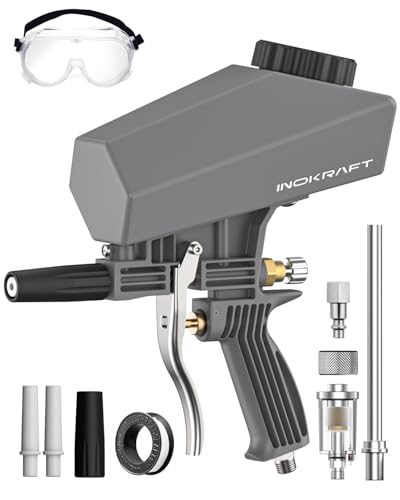
InoKraft Leak-Proof Sand Blaster Kit
What We Like
- On-demand trigger reduces media waste
- Includes oil-water separator for steadier flow
- Extension nozzle for hard-to-reach areas
- Complete kit with safety goggles and guide
Trade-offs
- 900cc hopper requires frequent refills on large jobs
- Recommends a 20+ gallon compressor tank for continuous work
- Small size limits blasting area per fill
Abrasive media only flows while the trigger is pulled, which provides precise on-demand control for spot blasting and detailed restoration work while helping to reduce waste and mess. This leak-proof trigger design, combined with the included oil-water separator to help reduce moisture, supports focused tasks like rust removal from small auto parts or tools. The kit is suited for detail-oriented work on smaller-scale projects where controlling media use is a priority.
The trade-off is its scale. The 900cc hopper is practical for portability but means you’ll be refilling it often on bigger jobs. For consistent blasting, the manufacturer explicitly recommends pairing it with a compressor that has a 20-gallon tank or larger, which is a significant consideration for your workshop setup. If your project involves blasting an entire car frame, the VEVOR 5 Gallon Portable Sand Blaster Tank’s larger capacity would be a more logical comparison, saving you from constant pauses to reload media.
VEVOR 5 Gallon Portable Sand Blaster Tank

What We Like
- Large 5-gallon tank for extended blasting sessions
- Includes oil-water separator to prevent media clogging
- Upgraded die-cast aluminum gun for durability and control
- Rubber wheels and 8 ft hose for easy mobility and reach
Trade-offs
- Requires a separate, substantial 5.5kW air compressor
- At 24.7 lb, it's heavier than most handheld blaster kits
- Media must be perfectly dry to avoid clogging the valve
A five-gallon capacity lets you handle large surface treatments, like stripping an entire iron gate or car frame, with fewer pauses to refill abrasive media. The unit includes an oil-water separator, which helps prevent clogs by removing moisture from the compressed air. Its two rubber wheels and eight-foot hose provide flexibility to move the unit and reach stationary objects outdoors.
Operating this sandblaster requires a separate, substantial air compressor capable of 5.5kW, as it consumes 6-25 CFM of air. The kit includes four ceramic nozzles in different sizes, offering wear and corrosion resistance for sustained use. Compared to smaller handheld units on the market, this tank-based system is designed for high-volume abrasive delivery over bigger areas.
Product photos
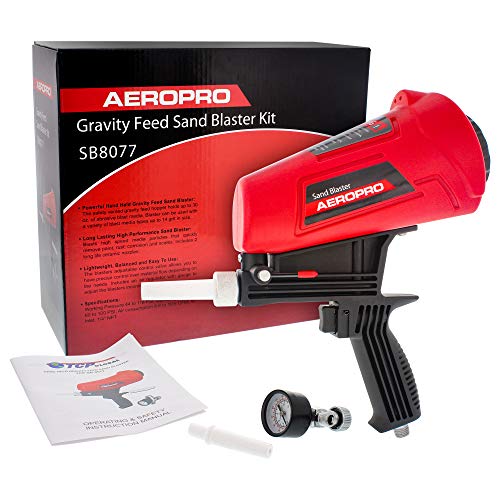
TCP Global Gravity Feed Sand Blaster Gun Kit
What We Like
- Lightweight and balanced ergonomic design
- Large 30 oz gravity-fed hopper for easy refills
- Adjustable material flow and built-in pressure gauge
- Works with various media like sand, soda, and beads
Trade-offs
- Requires a capable air compressor (8.8-10.6 CFM)
- Gravity-feed design limits continuous run time
A 30-ounce gravity-fed hopper sits on top of the gun, making refills straightforward for quick, targeted work. Its weight of 1.8 pounds creates a lightweight and balanced tool suited for occasional restoration or paint stripping on metal and wood. One expert round-up notes its low price makes it a great budget option for weekend warriors who use a sandblaster only for the occasional project.
The gravity-feed design prioritizes portability over capacity, so you refill the hopper more often than you would a larger tank-style blaster. It operates at 60-100 PSI with an adjustable material flow and pressure gauge for precise blasting control. According to a round-up, it may not have the build quality and features of other sandblasters, positioning it for periodic use rather than frequent, demanding jobs.
Product photos
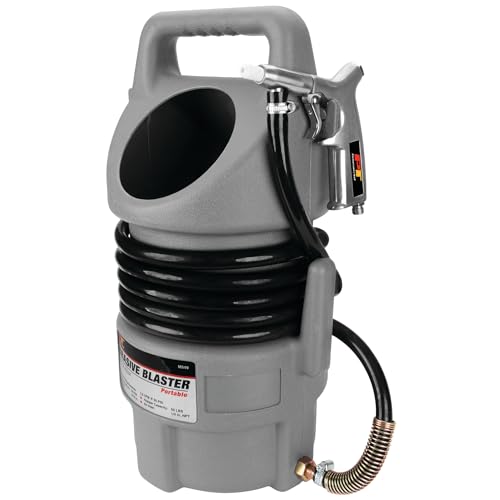
Performance Tool Portable Abrasive Blaster Kit
What We Like
- Large 50-pound hopper for extended work sessions
- Portable with a molded handle and built-in hose storage
- Works with any abrasive media like sand or glass beads
- Gravity feed design for a constant material flow
Trade-offs
- Requires a capable air compressor (3.5 cfm minimum)
- Large hopper size may be cumbersome for small storage spaces
With a 50-pound media capacity, this blaster handles large tasks like truck frames without frequent refills. Its gravity feed system maintains a constant abrasive flow, and the molded handle aids portability despite the high capacity. The design includes built-in storage for the hose and gun, keeping components together.
It requires an air compressor delivering at least 3.5 cfm at 50 psi, so a smaller pancake compressor is insufficient. While more compact units like the Zendex SpeedBlaster are lighter, this model’s 50-pound hopper is built for larger-scale work. The combination of its air demands and size suits it for substantial projects like servicing farm equipment.
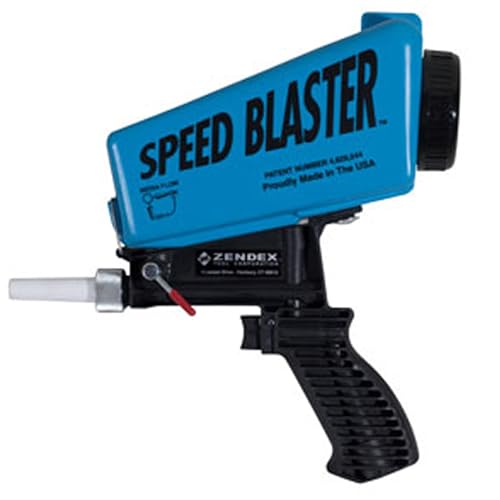
Zendex SpeedBlaster Media Blaster Gun
What We Like
- Large media reservoir reduces refill stops
- American-made with durable construction
- Adjustable material control valve for precision
Trade-offs
- Requires a 12 CFM air compressor.
A working pressure of 100-125 PSI gives this gun the muscle to strip stubborn rust and corrosion that would stall lower-powered models. Its hardened steel mixing chamber and ceramic nozzle are built to handle that extra force, making it a fit for someone tackling heavy-duty restoration on tools, machinery, or auto parts. The larger hopper means you can work longer between refills, which is a serious advantage on bigger projects.
Compared to a compact option like the LE LEMATEC gun, the Zendex is a more substantial tool designed for extended, powerful blasting rather than quick touch-ups. It’s a professional-grade piece of kit for the serious DIYer or small shop that needs to power through tough jobs without fuss.
Product photos
LE LEMATEC Portable Sand Blaster Gun Kit

What We Like
- High 150 PSI rating for fast rust removal
- Adjustable flow control minimizes media waste
- Lightweight design for easy handling on multi-surface projects
- Works with a wide range of abrasive media
Trade-offs
- Requires an air compressor delivering at least 7 CFM
- Gravity feed hopper is smaller than pressurized tank systems
The Le Lematec gun delivers a full 150 PSI of blasting power, which lets you strip rust and prep surfaces noticeably faster than many lower-PSI portable models. That makes it a solid fit for a workshop tackling regular automotive restoration or metal cleanup where time matters. Its gravity-fed design and adjustable valve give you good control over the media stream, so you can dial in the aggression for everything from delicate glass etching to stubborn corrosion without constantly changing setups.
Its 150 PSI maximum operating pressure provides quick rust and corrosion removal, so it tackles metal, wood, and glass surface prep faster than many models that operate at lower pressures. Research indicates many portable sandblasters need at least about 7 CFM from an air compressor, with larger or longer jobs requiring around 12 CFM. For extended, large-scale projects, a tank-style blaster like the VEVOR 5 Gallon Portable Sand Blaster Tank would hold more media, but the LE LEMATEC gun’s compact, gravity-fed design prioritizes maneuverability for targeted work.
Product photos
ATE Pro. USA 93240 Portable Sand Blaster
What We Like
- Large 30-pound hopper capacity
- Handles heavy-duty abrasive media
- Includes a 5-foot heavy-duty rubber hose
- Heavy-duty gun with hardened steel nozzle
Trade-offs
- Requires a substantial 3 HP, 90 PSI compressor
- Heavier duty components add bulk over compact kits
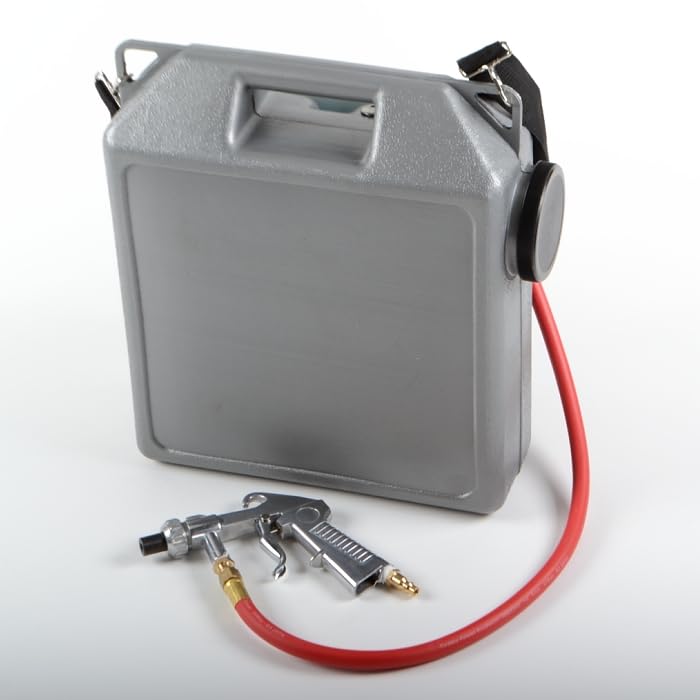
With a 30-pound hopper, the ATE Pro. 93240 holds enough abrasive to cover significant areas before needing a refill. Its polyethylene tank and hardened steel nozzle are designed to handle materials like aluminum oxide, which suggests it can withstand demanding abrasives. The brand has produced tools for over 25 years, a history often associated with professional and DIY use.
That capability comes with a real requirement: you’ll need a compressor that can deliver a minimum of 90 PSI and 3 HP. This isn’t a tool for a small pancake compressor. Compared to a compact option like the InoKraft Leak-Proof kit, the ATE Pro trades portability for endurance. It’s a workhorse for the workshop, not a spot-repair tool you toss in a truck bed. For the right user with the right air supply, it turns a day-long job into a few sustained sessions.
Product photos
NANPU Dual Feed Sandblaster Gun Kit

What We Like
- Dual feed system for heavy-duty or detail work
- Durable alloy body and ceramic nozzle construction
- Comes with comprehensive accessory kit
- Compatible with multiple abrasive media types
Trade-offs
- Requires a compressor delivering at least 7 SCFM
The ability to switch between siphon and gravity feed is the core advantage here. It means you can tackle a big rust removal job on a car part with the siphon setup, then swap to the gravity cup for etching a glass design without changing tools. That 90-150 PSI operating range and multi-media compatibility make it a versatile workshop companion for someone who needs one tool to handle both bulk cleaning and finer surface work. This flexibility suits a DIYer or small shop owner who regularly switches between different scales of blasting projects.
You will need an air compressor that can meet its 7 SCFM demand, and the siphon feed design means you must provide your own media tank. This kit is essentially a gun-and-hose setup compared to a dedicated tank system, which places the responsibility for media containment on you. It offers a lighter and more modular approach, but you are managing separate components instead of using an integrated unit. For extended, large-scale blasting, a self-contained tank involves less hassle.
Product photos
Campbell Hausfeld Siphon Feed Sand Blaster
What We Like
- Complete kit includes gun, hose, tube, and wrench
- Lightweight 2.0-pound gun for easy handling
- 10-foot hose provides good maneuverability
- Works with multiple media types for flexibility
Trade-offs
- Requires a separate air compressor and media
- Siphon feed is less aggressive than pressure tanks
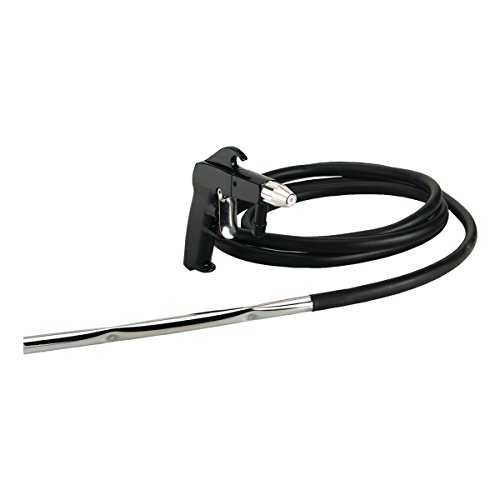
Weighing just two pounds, this siphon-feed gun is easy to maneuver for detailed work, making it a solid choice for hobbyists tackling small parts, etching glass, or weathering wood. The included 10-foot hose and steel pickup tube let you draw from any bucket, offering a simple, uncomplicated setup for craft and light refinishing tasks. It’s the right tool for someone who needs controlled, focused blasting without the bulk of a full tank system.
This siphon-feed sand blaster draws media from a separate bucket, which keeps the tool itself compact and simple. The included 10-foot hose and steel pickup tube let you position a container of abrasive away from your work area. That setup is intended for surface preparation on small parts and for craft applications like etching glass or weathering wood.
ElaraBerry Spot Sand Blaster Gun Kit
What We Like
- Precision design for spot repair on corners and edges
- Sealed nozzles and recovery system minimize dust
- Includes four specialized nozzles for different surfaces
- Lightweight gravity feed offers excellent control
Trade-offs
- Requires a consistent 90 PSI air supply to function properly
- Gravity feed hopper limits media capacity for larger projects
- Small footprint is not designed for broad surface blasting
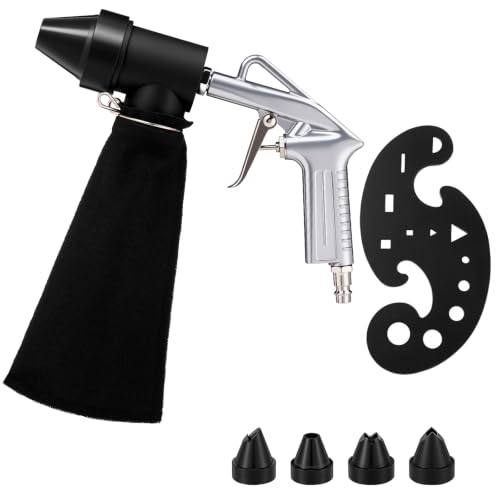
The ElaraBerry gun’s defining trait is its set of four specialized rubber nozzles, which let you seal tightly against corners, edges, and weld seams. This close-contact design, paired with an abrasive recovery system, makes it a clean and focused tool for surgically removing rust or paint from a specific spot without blasting the surrounding area. It’s the right fit for a workshop where you need to handle detailed repairs on tools, automotive parts, or furniture without creating a massive cleanup job.
This focused capability has an obvious limitation: it is not meant for large, flat surfaces. The gravity feed hopper has a small capacity, requiring frequent media refills for anything beyond spot work. Broad stripping jobs are better suited to a larger tank-style blaster. For the DIY enthusiast or mechanic performing detailed repairs in a garage, however, the kit’s precise control and cleaner operation are the key benefits.
Product photos
How We Evaluated Portable Sand Blasters
This selection is based on manufacturer specifications, expert round-ups, and consistent patterns in owner feedback. It focuses on three core criteria. The feed system design dictates workflow and job length. Compressor requirements are the most critical compatibility check. Finally, practical features like hopper capacity and included accessories affect real-world usability.
Our research-led approach has limits. We cannot verify long-term durability claims or measure exact media consumption rates. We rely on documented specs and aggregated user experiences to identify clear strengths and trade-offs for each model, helping you avoid a costly mismatch with your air supply or project goals.
What To Look For In Portable Sand Blasters
Your air compressor and project scope are the two non-negotiable starting points. A powerful blaster paired with a weak compressor will underperform, while a small gun on a massive job will waste time on constant refills. Understanding the different types of sandblasters is key to making the right match.
Focus on your compressor’s CFM output first, then choose a blaster with a feed system (gravity, siphon, pressure) that suits your typical job length and detail level.
Compressor Compatibility
This is the most critical factor. Every portable sand blaster requires a specific minimum air compressor output, measured in Cubic Feet per Minute (CFM) and Pounds per Square Inch (PSI). Our picks list requirements from 3.5 CFM for smaller kits to 12 CFM for heavy-duty models. Using a blaster with an undersized compressor results in weak performance and frequent clogging. Always verify your compressor’s sustained output against the tool’s needs before buying.
Feed System & Capacity
The feed system determines your workflow. Gravity-feed guns have a top-mounted hopper; they are simple and suitable for short, detailed work but require frequent pauses to refill. Siphon-feed models draw media from a separate container via a hose, allowing for longer sessions. Pressure tanks, like the high-capacity pick, hold media under pressure for the most continuous blasting but are bulkier. Your choice should align with your project type, such as quick spot repairs or stripping an entire vehicle frame.
Design & Usability Features
Look for features that reduce hassle and improve control. An on-demand trigger conserves media. An oil-water separator in the air line prevents moisture from clogging the media. Extension nozzles help reach tight spaces, and a complete kit with safety goggles saves an extra purchase. For larger setups, portability features like wheels and a long hose are essential. Our best sand blasters guide explores these practical considerations in more depth.
- Check the hose length and connection type for adequate reach and compatibility.
- Ensure the nozzle material (ceramic, steel) is suited for your chosen abrasive media.
- Look for adjustable material flow controls to manage blasting aggression.
- Verify the hopper or tank design allows for easy, clean refills.
- Consider the total weight and ergonomics if you’ll be holding the gun for extended periods.
Always use dry, sifted media specified for your tool to prevent clogs and ensure consistent performance.
Portable Sand Blasters Compared
The table below compares key specifications across all ten picks to help you weigh capacity against compressor demands at a glance.
| Product | Working Pressure (PSI) | Feed Type | Nozzle Material |
|---|---|---|---|
| InoKraft Leak-Proof Sand Blaster Kit | 60-120 PSI | N/A | ceramic |
| VEVOR 5 Gallon Portable Sand Blaster Tank | 60-110 PSI | N/A | ceramic |
| TCP Global Gravity Feed Sand Blaster Gun Kit | 60-100 PSI | Gravity Feed | N/A |
| Performance Tool Portable Abrasive Blaster Kit | 90 psi | Gravity-Fed | N/A |
| Zendex SpeedBlaster Media Blaster Gun | 100-125 PSI | Gravity feed | Ceramic |
| LE LEMATEC Portable Sand Blaster Gun Kit | 150 PSI | Gravity-fed | Steel |
| ATE Pro. USA 93240 Portable Sand Blaster | 90 PSI minimum | N/A | Hardened Steel |
| Campbell Hausfeld Siphon Feed Sand Blaster | N/A | Siphon feed | Ceramic |
| NANPU Dual Feed Sandblaster Gun Kit | 90-150 PSI | Siphon & Gravity feed | Ceramic |
| ElaraBerry Spot Sand Blaster Gun Kit | Recommended 90 PSI | Gravity feed | rubber |
Frequently Asked Questions
What is the best portable sandblaster for the money?
Our budget pick, the TCP Global Gravity Feed Sand Blaster Gun Kit, offers the most value for occasional DIYers. It provides a balanced feature set, including a large hopper and adjustable flow, at an affordable price point, making it a practical entry into home sandblasting projects. It requires a capable compressor, so ensure your air supply meets its needs to get the full value.
Are portable sandblasters any good?
Yes, for the right jobs. Portable sand blasters are excellent for DIY restoration, rust removal on automotive parts, and cleaning small to medium surfaces. They are not substitutes for industrial cabinet blasters or large pressure pot systems. Their effectiveness hinges entirely on pairing them with a sufficiently powerful portable air compressor.
Are Harbor Freight sand blasters any good?
Harbor Freight sells several models that fall into the budget category. Based on broader market analysis, these tools can be suitable for light, infrequent use but often have trade-offs in durability or consistency compared to higher-grade kits. As with any budget tool, closely matching it to a proper air compressor for sandblasting is even more critical for decent results.
Is there a sandblaster that doesn’t require an air compressor?
Traditional abrasive blasters all require compressed air. However, there are alternative systems like the Typhoon Power Pro, which is a mobile, engine-driven unit that uses water and sand. These are fundamentally different tools, more akin to pressure washers with sand injection, and are not covered in this guide focused on air-powered portable blasters.
What’s the difference between a siphon and gravity feed blaster?
A gravity-feed blaster has a hopper mounted directly on the gun, relying on gravity to drop media into the air stream. It’s simple and direct but limits capacity. A siphon-feed blaster uses air suction to pull media from a separate container through a hose, allowing for a larger media supply and longer run times. Choosing between them depends on your project size and preference for convenience versus continuous operation.
The Bottom Line
The InoKraft Leak-Proof Sand Blaster Kit is the best overall choice for the detail-oriented DIYer tackling spot repairs and small parts restoration, thanks to its on-demand trigger and complete kit. If your budget is tight, start with the TCP Global Gravity Feed Gun; if you’re facing large outdoor projects like fence rust, the high-capacity VEVOR 5 Gallon Tank is the tool you need.
No feature matters more than matching your blaster’s CFM and PSI requirements to your air compressor’s actual output. Getting this right is the foundation of effective, frustration-free sandblasting.
