
10 Best Rear Handle Circular Saws in 2026
This post contains affiliate links. As an Amazon Associate, we earn from qualifying purchases.
Our best overall rear handle circular saw is the Makita XSR01Z 36V for its automatic speed change and cordless power that rivals corded saws. We also highlight the DeWalt Flexvolt 60V for its brushless motor and the Skilsaw SPT77WML as the best lightweight worm drive.
A rear handle design offers superior leverage for ripping sheet goods and framing lumber, but choosing the right one involves balancing power, weight, and battery platform. Our guide is based on detailed research into specifications, manufacturer data, and patterns in professional user feedback to help you invest confidently.
Top 10 Rear Handle Circular Saws in the Market
Certain content that appears on this site comes from Amazon. This content is provided "as is" and is subject to change or removal at any time.
The Best Rear Handle Circular Saws, Reviewed
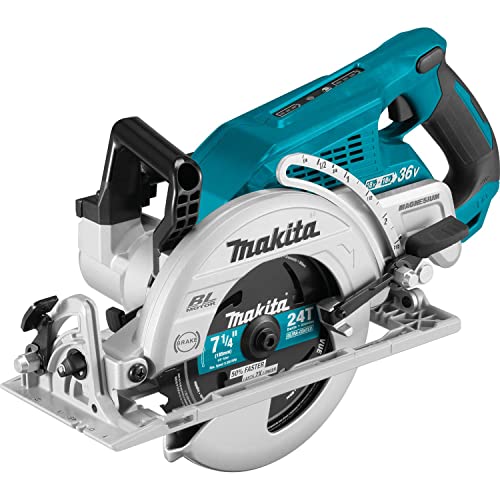
Makita XSR01Z 36V Rear Handle Circular Saw
What We Like
- Automatic Speed Change optimizes cutting power
- Brushless motor for longer life and run time
- Large cutting depth handles 3X material in one pass
- Electric brake increases job site productivity
Trade-offs
- Tool only: requires two separate LXT batteries and charger
- At 12.1 lb, it's heavier than some cordless competitors
- Bevel stops at 53°, not a full 60° for complex cuts
A 2-9/16 inch cutting capacity means you can rip through a double-thick 2×10 in a single pass, which is the kind of muscle framers and serious builders need. This saw delivers that with the freedom of cordless, thanks to its twin-battery 36V system. Makita’s Automatic Speed Change technology is the key, adjusting torque on the fly so it doesn’t bog down in tough lumber. It’s the complete package for pros who need cordless convenience without sacrificing the cut quality and depth of a traditional worm drive.
This saw runs on two Makita LXT batteries, delivering cordless convenience without sacrificing the power needed for framing and sheet goods. Its weight of 12.1 pounds requires a firm grip, especially when working on a ladder. The tool-only format means a significant investment if you are not already using Makita’s 18V batteries, but for existing users it becomes a logical and powerful addition. Expert round-ups note that the Skil cordless rear-handle saw, which also uses two batteries, delivered very similar cutting performance in their tests.
DeWalt Flexvolt 60V Rear Handle Circular Saw

What We Like
- Efficient brushless motor for long runtime
- Integrated dust blower clears line of sight
- Electronic brake for quick blade stop
- Convenient onboard blade wrench storage
Trade-offs
- Tool only: requires separate 60V Flexvolt battery purchase
- At 10.9 lb, it's heavier than the 8.2 lb Metabo HPT
- Bevel stops only at 45 and 22.5 degrees
Designed with the blade on the left and the handle at the rear, this DeWalt saw provides a clear, unobstructed view of the cut line. Its brushless motor and magnesium shoe work together for smooth, accurate cuts and long runtime. The electronic brake stops the blade quickly after the trigger is released for added control.
Weighing 10.9 pounds, this tool requires a compatible Flexvolt battery, which is sold separately. Expert comparisons mention the Flex 24V rear-handle saw achieved a faster cutting speed than other models tested. For users with DeWalt’s 60V batteries, this saw integrates directly into that existing cordless system.
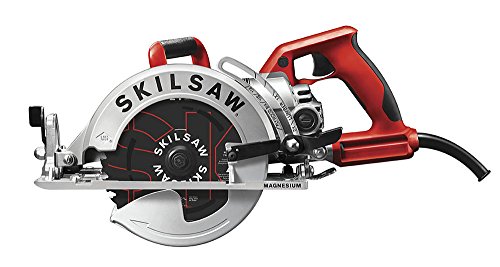
Skilsaw SPT77WML Lightweight Worm Drive Saw
What We Like
- Lightest magnesium build reduces user fatigue.
- 15 Amp motor provides strong cutting power.
- 53° bevel allows for a wide variety of cuts.
- Anti-snag lower guard for smooth operation.
Trade-offs
- At 11.5 lb, it's heavier than many cordless rear-handle saws.
Weighing 11.5 pounds with a magnesium body, this is the lightest worm drive saw available, which reduces user fatigue for longer work sessions. Its 15-amp motor provides the power to rip through lumber quickly. The design delivers traditional worm drive torque and durability in a more manageable form than heavier classics.
The saw’s 53-degree bevel capacity allows for a wider variety of angled cuts. A cut-ready depth system aids quick adjustments, and the anti-snag lower guard helps ensure smooth operation on small cut-off pieces. While powerful, its 11.5-pound weight is greater than several cordless rear-handle models from brands like Metabo HPT, Milwaukee, and DeWalt.
Skilsaw SPT70V-11 Magnesium Worm Drive Saw

What We Like
- Largest capacity worm drive for thick lumber
- Durable all-magnesium construction reduces weight
- Dual-Field motor runs cooler for sustained power
- Comes with a blade for perfect cuts
Trade-offs
- Weighs 27.3 pounds, a handful for overhead work
- Limited to only two tools on its battery platform
- Overall length of 24.5 inches requires ample space
A 6-1/4 inch cutting capacity lets you slice through 6x lumber in a single, clean pass, making it the obvious choice for framers and builders tackling the biggest timbers. The all-magnesium build provides the legendary worm drive durability while shaving off some heft, and that 15-amp Dual-Field motor is built to stay cool and powerful through a long day. This is a saw for the jobsite where maximum cut depth and relentless power are non-negotiable.
You pay for that capability with a 27.3-pound tool, so it’s less suited for finish work or frequent ladder use. Compared to a more compact rear handle like the Makita XSR01Z, the Skilsaw is a dedicated brute for heavy framing. The proprietary battery system is also a consideration, as it currently works with just one other tool, locking you into a narrower ecosystem.
Milwaukee M18 Fuel Rear Handle Circular Saw

What We Like
- Generates true 15 Amp corded power.
- Left-side blade visibility for accurate cuts.
- Electric brake and LED light for safety.
Trade-offs
- Heavier than some cordless rivals like the 8.2 lb Metabo HPT.
- Dust port on right side may not suit all set-ups.
- Designed for rough framing, not finish-ready edges.
This saw generates the power of a 15 Amp corded model, so you can rip through stacks of plywood for subflooring or sheathing without hunting for an outlet. That cordless freedom, combined with up to 570 cuts on a charge, makes it a natural fit for framers and builders who need to move fast across a jobsite. Its rear handle provides great leverage, and the left-side blade view lets you track your line without the shroud getting in the way.
This rear-handle saw prioritizes power and durability over a lightweight design, with a 10-pound build that provides leverage for pushing through material but isn’t suited for overhead work. Research indicates it cuts clean and fast, tracking well across plywood, making it a fit for rough carpentry like subflooring and sheathing where speed and balance matter more than a finish-ready edge. The tool’s design integrates a dust port on the right side of the blade shroud, which reviewers note allows a full view of the cutting line on the left.
Metabo HPT 36V Rear Handle Circular Saw

What We Like
- Brushless motor delivers 5,100 RPM for power
- High-capacity cutting for multi-layer sheet goods
- Electric brake for quick stopping and safety
Trade-offs
- Tool only: requires separate purchase of battery and charger
- Overall length of 18.5 inches may feel compact for some framing tasks
Weighing just 8.2 pounds, this saw significantly reduces arm fatigue during overhead cuts or long days of sheathing. That featherweight feel, combined with a brushless motor spinning at 5,100 RPM, makes it a standout for carpenters and builders who need cordless convenience without sacrificing muscle. The 53° bevel and clear sight lines support precise cuts from framing to trim. It’s built for the pro who values a tool that won’t weigh them down across a jobsite.
The major trade-off is that it’s a bare tool, so you’re committing to the Metabo HPT MultiVolt battery ecosystem. While its magnesium base is durable, the overall footprint is more compact than a traditional worm drive like the Skilsaw SPT77WML. That makes it incredibly maneuverable for detail work, but some framers might prefer the longer base and heft of a dedicated corded saw for continuous, heavy ripping. For cordless framing and general construction, its blend of power and portability is hard to beat.
Product photos
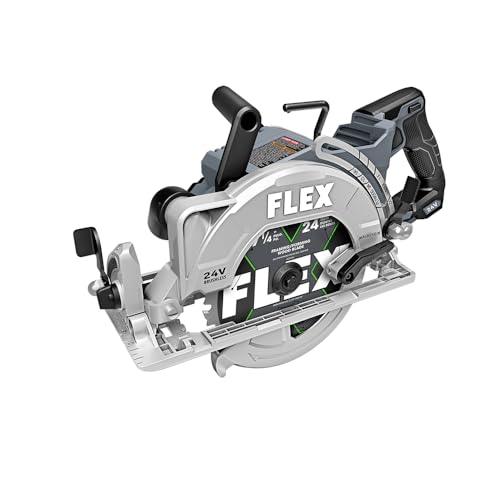
Flex 24V Rear Handle Circular Saw
What We Like
- Class-leading 6200 RPM for fast cuts
- Magnesium footplate and guards for durability
- Full cross-compatibility with all FLEX 24V tools
Trade-offs
- Tool only: requires separate battery and charger purchase
- Weighs 13.2 lb, heavier than some cordless rivals
With a no-load speed of 6200 RPM, this saw moves through lumber at a pace that outruns even top-tier cordless competitors. It translates to less bog-down and more efficient workdays, especially for framers and builders making hundreds of repetitive cuts. The magnesium construction holds up to job-site abuse while the deep cutting capacity handles 3x material in a single pass. For anyone already invested in the FLEX 24V ecosystem, this is a natural and high-performance fit.
The primary trade-off is the commitment to a single battery platform. While the runtime and power claims are substantial, you need FLEX’s batteries to realize them. This saw is also on the heavier side for a cordless model, which can be a factor over a long day of overhead work. If you prioritize absolute cutting speed above all else in a cordless rear-handle, the FLEX delivers, but those seeking a lighter tool might consider the Metabo HPT.
Product photos
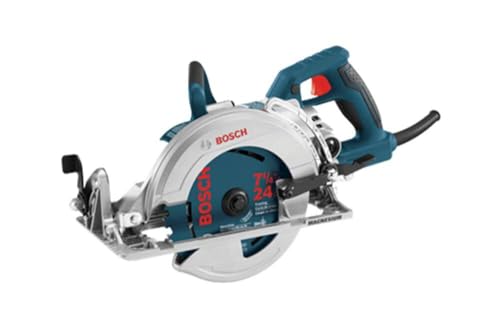
Bosch CSW41 Worm Drive Circular Saw
What We Like
- Left-side blade provides clear cut line visibility.
- Magnesium construction for a lighter worm drive saw.
- On-board multi-function wrench for blade and brush changes.
- Anti-snag lower guard for smooth operation on small pieces.
Trade-offs
- Worm drive design results in a 20.8-inch length, less compact than many rivals.
- Corded operation requires access to a power outlet on the job site.
The Bosch CSW41’s left-side blade design provides unmatched clarity of the cut line, a key feature for tracking marks accurately. Its worm drive design is noted for increased accuracy and precision. The 15-amp motor and worm drive gearing provide torque for a variety of applications, while the magnesium construction delivers a lighter weight saw to reduce user fatigue.
That worm drive construction, however, comes with trade-offs in size and weight. Compared to a tool like the Makita XSR01Z, it’s a dedicated corded strong performer best suited for stationary setup on a sawhorse or a big deck framing job where ultimate cut-line visibility trumps portability. You buy this saw for its legendary accuracy in cutting, not for its agility.
Product photos
Makita 5377MG Hypoid Saw

What We Like
- Lightweight magnesium construction for a 13.2 lb saw
- Oil-bath technology ensures 100% oil coating for less maintenance
- Large 2-3/8 inch cutting capacity at 90 degrees
- High-quality hypoid steel gears resist premature wear
Trade-offs
- At 13.2 lbs, it's heavier than the 10.9 lb DeWalt DCS577B
- Length of 21.8 inches is longer than most cordless rear-handle saws
- Tool requires a cord, limiting mobility on a spread-out site
A 2-3/8 inch cutting capacity lets you slice through thick dimensional lumber in a single pass, which is the core job of a framing saw. The magnesium build achieves a solid balance between durability and a manageable 13.2-pound weight, reducing arm fatigue over a long day. This saw is for the carpenter who values a proven, corded design and needs the consistent power and deep cut of a hypoid drive without the heft of a full worm-drive unit.
The magnesium construction and sealed gear housing add bulk. Its length exceeds 21 inches, so it requires more room on a sawhorse than a compact tool like the Milwaukee M18 Fuel. As a dedicated corded saw, it is less suited for moving between floors without power or working far from a generator, where a cordless model saves time. For stationary cutting or jobs with ready power access, its oil-bath reliability and deep cutting capacity are significant advantages.
Product photos
Skilsaw Sawsquatch Worm Drive Saw
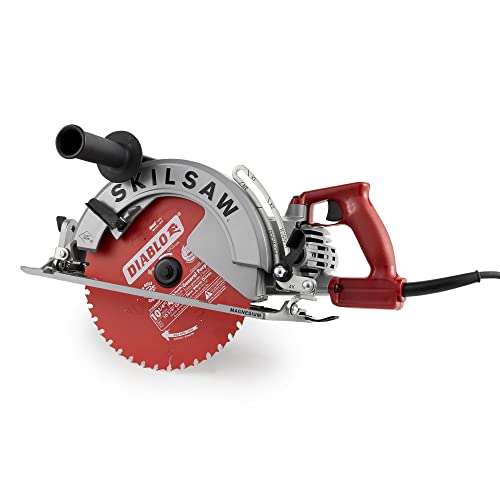
What We Like
- Massive 10 1/4-inch blade for deep cuts
- 15-amp motor delivers top-tier cutting power
- Worm drive design for maximum torque
- Electric brake for enhanced safety
Trade-offs
- Weighs 16.4 pounds, making it the heaviest in the guide
- At 25.2 inches long, it requires more storage space
A 10 1/4-inch blade is the biggest you’ll find in this category, letting you slice through thick timbers and dimensional lumber in a single pass. This is the saw you want when your project list includes heavy framing, deck posts, or timber work. The 15-amp motor and traditional worm drive gear system generate the raw power and torque needed to push that large blade without bogging down, which is exactly why it stands out for demanding cuts.
That capability comes with real heft. At over 16 pounds, this is a two-handed tool best suited for stationary cuts on a sawhorse rather than overhead work. Its cordless battery system is also currently limited, so it won’t integrate into a large cordless fleet. For a more portable, full-featured cordless option that still delivers serious power, the DeWalt Flexvolt 60V rear handle saw is nearly six pounds lighter and part of a vast tool ecosystem.
Product photos
How We Evaluated Rear Handle Circular Saws
We compared specifications from manufacturer documentation and analyzed expert round-ups to understand performance across brands. Our primary criteria were cutting power and capacity for framing lumber, weight and ergonomics for all-day use, and the practical implications of choosing corded or cordless platforms. We also examined patterns in professional owner feedback regarding durability and real-world job site performance. As a research-led evaluation, we cannot verify the exact runtime of cordless models, but we can report their published specifications and common user experiences.
What To Look For In Rear Handle Circular Saws
A rear handle circular saw puts the motor’s power directly behind the blade for powerful, controlled ripping cuts through sheet goods and dimensional lumber.
Focus on cutting capacity for your common lumber sizes, choose between cordless freedom and corded reliability, and prioritize a weight you can comfortably manage overhead.
Cutting Power And Capacity
Cutting capacity, measured at ninety degrees, determines the maximum lumber thickness you can cut in a single pass. For framing dimensional lumber, a sufficient depth is standard, but some worm drive models offer a greater depth. Consider blade size alongside motor amperage or voltage; a fifteen-amp corded motor or a high-performance brushless cordless system provides the sustained power needed for all-day framing. Dedicated cordless rear handle saws from major brands are designed to match the output of their corded counterparts.
Corded Vs. Cordless Operation
The choice between corded and cordless operation defines your job site mobility. Corded models offer unlimited runtime and consistent power, ideal for stationary cutting stations or sites with easy outlet access. Our guide includes several powerful corded circular saws, like the magnesium Skilsaw worm drives. Cordless saws provide complete freedom of movement, crucial for roof work or spread-out sites, but require investment in a specific battery platform. Ensure the platform has other tools you need, as you’re buying into an ecosystem.
Weight And Ergonomics
A rear handle saw is often heavier than a sidewinder, making weight a critical factor for reducing fatigue. Magnesium construction is a common feature to reduce heft while maintaining durability. Consider not just the tool’s base weight but also its balance and overall length, as a longer saw can feel cumbersome in tight spaces. For a deeper dive into this classic, powerful design, see our guide to worm drive circular saws. Ultimately, the best saw is one you can control accurately and comfortably throughout your workday.
- Check the tool’s overall length to ensure it fits in your work vehicle and job site spaces.
- Look for features like an integrated rafter hook or blade wrench storage for convenience.
- Assess the visibility of the cut line; a left-blade design often offers a clearer view.
- Verify the bevel capacity and adjustability for making angled cuts.
- Ensure the dust port location aligns with your preferred dust extraction setup.
The ideal rear handle saw delivers the power you need without being so heavy it slows you down.
Rear Handle Circular Saws Compared
The following table compares the key specifications of our top picks to help you see the differences at a glance.
| Product | Weight | Cutting Capacity (90°) | Motor / Drive Type |
|---|---|---|---|
| Makita XSR01Z 36V Rear Handle Circular Saw | 12.1 pounds | 2-9/16 inches | Brushless |
| DeWalt Flexvolt 60V Rear Handle Circular Saw | 10.9 pounds | 2-7/16 inches | Brushless motor |
| Skilsaw SPT77WML Lightweight Worm Drive Saw | 11.5 Pounds | N/A | Worm drive |
| Skilsaw SPT70V-11 Magnesium Worm Drive Saw | 27.3 pounds | 6-1/4 inches | Worm Drive |
| Milwaukee M18 Fuel Rear Handle Circular Saw | 10.0 Pounds | N/A | POWERSTATE brushless |
| Metabo HPT 36V Rear Handle Circular Saw | 8.2 pounds | N/A | Brushless |
| Flex 24V Rear Handle Circular Saw | 13.2 pounds | 2-5/8 inches | Sensor-free brushless |
| Bosch CSW41 Worm Drive Circular Saw | 15.0 Pounds | N/A | Worm drive |
| Makita 5377MG Hypoid Saw | 13.2 lbs | 2-3/8 inches | Hypoid gear |
| Skilsaw Sawsquatch Worm Drive Saw | 16.4 Pounds | N/A | Worm Drive |
Frequently Asked Questions
Which circular saw has the best rear handle?
Our top-rated rear handle circular saw is the Makita XSR01Z 36V for its excellent blend of cordless power, automatic speed control, and cutting capacity. It’s designed for professionals who need cordless convenience without sacrificing the performance of a corded worm drive saw.
Is a rear handle circular saw worth it?
Yes, a rear handle saw is worth it for framers and builders who frequently rip sheet goods or cut dimensional lumber. The rear handle design provides superior leverage and control for straight, powerful cuts, making it more efficient for heavy-duty tasks than a standard sidewinder saw.
Which brand of circular saw is considered the best?
There is no single “best” brand, as it depends on your needs and existing tool ecosystem. Makita, DeWalt, Milwaukee, and Skilsaw are all top contenders for rear handle saws, each offering powerful models. Your choice should factor in whether you prioritize cordless battery compatibility, lightweight design, or maximum cutting capacity.
What is the best all-round circular saw?
For an all-around circular saw suitable for many tasks, a standard 7-1/4-inch sidewinder is often recommended. However, for professionals focused on framing and sheet goods, a rear handle model becomes the best all-round choice for its specialized power and control. You can explore our broader circular saw reviews for other types.
How do I choose a circular saw blade?
Choose a blade based on the material you cut most often. A 24-tooth framing blade is standard for fast, rough cuts in lumber, while a higher-tooth-count blade produces cleaner cuts in plywood. Always match the blade diameter and arbor hole to your saw. For detailed blade recommendations, consult our dedicated guide.
The Bottom Line
The Makita XSR01Z 36V is our best overall pick, ideal for professional framers already invested in the Makita LXT platform who demand cordless power equal to corded saws. For those seeking a premium brushless motor on a different system, consider the award-winning DeWalt Flexvolt 60V, while budget-conscious builders should look at the value offered by corded worm drive options. Ultimately, the most important factor is matching the saw’s power, weight, and cutting capacity to the specific demands of your daily work.
