
10 Best Reciprocating Saw Blades For Thick Metal in 2026
This post contains affiliate links. As an Amazon Associate, we earn from qualifying purchases.
Our best overall pick for cutting thick metal is the Diablo Steel Demon Carbide Reciprocating Saw Blade. It wins for its carbide teeth, oversized blade body, and non-stick coating. For demolition pros, the Lenox Demolition Bi-Metal blade is excellent, and the Bosch Edge Pro-Metal Set offers balanced value.
Cutting thick steel, cast iron, or structural pipe demands a blade designed to withstand extreme impact without snapping or gumming up with heat. A general-purpose blade will fail quickly and waste your time. Our selection is based on specifications, manufacturer data, patterns in professional feedback, and expert round-ups to guide you to the right tool for your toughest metalwork.
Top 10 Reciprocating Saw Blades For Thick Metal in the Market
Certain content that appears on this site comes from Amazon. This content is provided "as is" and is subject to change or removal at any time.
The Best Reciprocating Saw Blades For Thick Metal, Reviewed
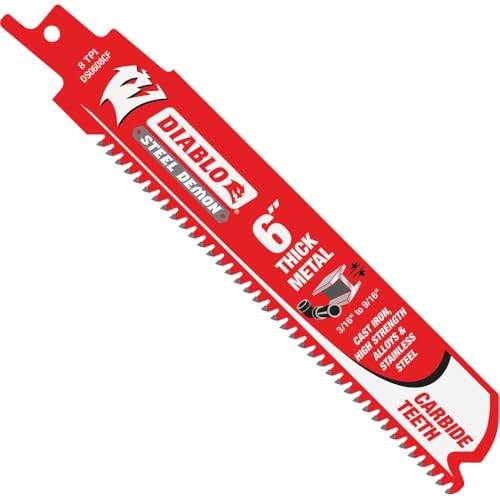
Diablo Steel Demon Carbide Reciprocating Saw Blades
What We Like
- Carbide teeth cut high-strength alloys and cast iron
- Oversized blade body reduces vibration for straighter cuts
- Non-stick coating resists heat and prevents gumming
- Extreme impact resistance from enhanced tip connection
Trade-offs
- Designed for 3/16" to 9/16" metal, not for thin sheet or wood
Diablo’s claim of up to 50 times longer life than standard bi-metal blades in extreme metal is based on their specialized carbide. One worker reported cutting about thirty 1.25-inch steel dowels, using only the first couple of inches of the blade. Another owner found the blades made short work of seized control arm bolts after other methods failed, finishing the job with the first blade.
These are specialized tools for metal between 3/16″ to 9/16″, not for general demolition. For mixed materials, a versatile bi-metal set like the Milwaukee SAWZALL pack is more practical. In one reported instance, a user cut off a worn tip to reuse the blade, highlighting the extreme durability built into each one for dedicated metal cutting.
Product photos
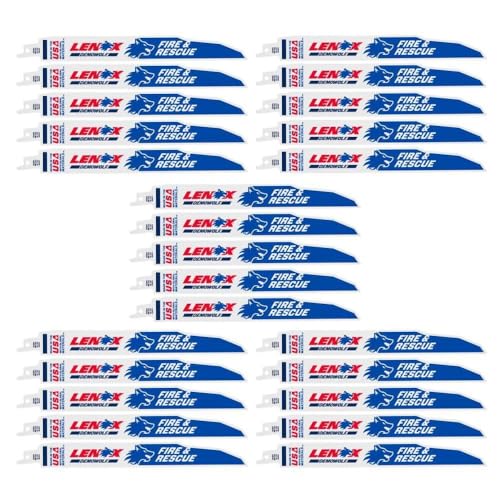
Lenox Demolition Bi-Metal Reciprocating Saw Blade
What We Like
- Power Blast Technology reduces blade breaks
- Bi-metal construction for maximum durability
- Thicker profile prevents bending during cuts
- Aggressive 10 TPI for fast cutting in thick metal
Trade-offs
- Blade length is 9 inches, limiting reach in tight spaces.
- Pack contains 25 blades, a large quantity for casual users.
The Lenox blade’s thicker, 9-inch bi-metal profile is built to handle the violent shock of hitting nails and dense material without bending or snapping. That makes it the go-to for demolition jobs where you’re tearing through layers of unknown material, not just clean, prepared metal. It suits the contractor or serious DIYer who needs a blade that can take brutal punishment and keep cutting, which is exactly why it stands out for demolition work over more delicate specialty blades.
Its aggressive 10 TPI and durable build come with a trade-off in finesse. For cutting clean, precise lines in known thick metal stock, a dedicated carbide blade like the Diablo Steel Demon might be a better fit. The Lenox excels at powering through the unpredictable, but if your project is strictly about slicing through thick steel plate without embedded surprises, you might find its demolition-focused design a bit overbuilt.
Product photos
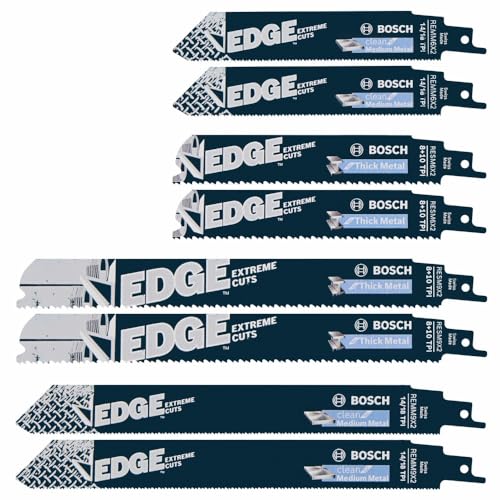
Bosch Edge Pro-Metal Reciprocating Saw Blade Set
What We Like
- Turbo-Teeth last up to 3x longer than standard blades
- Thick metal blades cut straighter with less vibration
- Includes a balanced set of medium and thick metal blades
- Micro-Blast teeth start sharp and stay sharper
Trade-offs
- Set includes only 8 blades, fewer than some bulk packs
- No carbide-tipped blades for hardest alloys like some competitors
This set delivers excellent cuts in high-performance applications because it’s engineered for extreme work. The thick metal blades have increased height and thickness, which translates directly to straighter cuts and less chatter when you’re pushing through heavy stock. That makes it a solid foundation for anyone who needs reliable, repeatable performance in thick metal without constantly swapping to a fresh blade. The inclusion of four thick and four medium metal blades provides a practical range for different gauges.
This Bosch set includes eight Swiss-made blades engineered for metal, with a mix designed for both medium and thick stock. Its Turbo-Teeth technology is claimed to last up to three times longer than standard blades, which means fewer changes during a job. While the Diablo Steel Demon from the comparison list uses carbide teeth, the Bosch blades employ a Micro-Blast tooth design to stay sharper, positioning them as a versatile pro set for a range of metal cutting.
Product photos
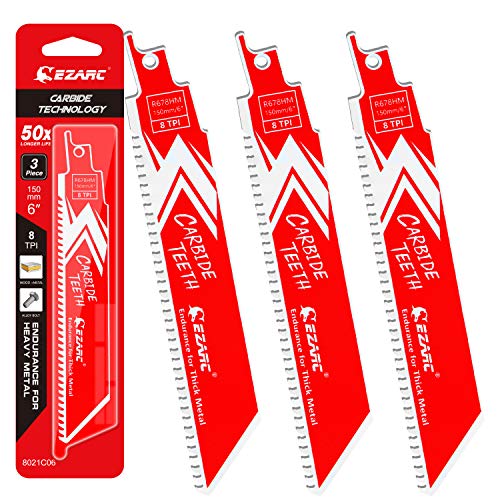
EZARC Carbide Thick Metal Reciprocating Saw Blades
What We Like
- Carbide teeth last up to 50x longer than bi-metal
- 8 TPI design ideal for thick, high-alloy steels
- Universal shank fits all major reciprocating saws
- Individually welded teeth for impact strength
Trade-offs
- 6-inch length limits reach in deep cuts.
- Only three blades in the pack for bulk jobs.
- Specialized 8 TPI tooth pitch is less versatile for thin sheet metal.
With a carbide tooth design claimed to last up to 50 times longer than bi-metal blades, this 3-pack is built for demanding metalwork. That extended life means fewer interruptions for blade swaps when cutting through tough materials like stainless steel, rebar, or car beams. It targets situations where standard blades fail quickly, aiming to provide the impact strength needed for heavy-duty demolition.
The 6-inch length focuses on controlled cuts in thick metal up to 1/2 inch, rather than the deeper reach of longer demolition blades. Its 8-teeth-per-inch design and carbide teeth are intended for high-alloy steels and hardened materials. For a variety of tasks including wood or thin metal, a comprehensive multi-material blade assortment could be a more versatile choice.
Milwaukee SAWZALL Ultimate Demolition Blade Set

What We Like
- Durable, job-site storage case included.
- Thicker blade stock for maximum durability.
- Double relief angle reduces tooth stress.
- Includes blades for wood, plastic, and metal.
Trade-offs
- No carbide-tipped blades for hardest metals.
- Maximum blade length is 9 inches.
The job-site durable case adjusts to hold blades up to 9 inches long, which keeps the entire 12-piece set organized in a truck or on a shared crew. This multi-material set includes bi-metal blades with tooth counts ranging from 5 TPI for aggressive cuts to 18 TPI for finer work. Features like thicker blade stock and a double relief angle are designed to reduce tooth stress, aiming for long life during demolition tasks.
The set provides a range of blade lengths and tooth counts for wood, plastic, and metal. All blades are constructed from bi-metal material. For applications exclusively involving thick metal, other products on the market are listed as carbide-tipped.
DEWALT Heavy Metal Reciprocating Saw Blade Set

What We Like
- Tall, thick profile for straight cuts in heavy metal
- Bi-metal construction for flexibility and edge durability
- Patented tooth form for efficient chip removal
Trade-offs
- 6.5-inch length is shorter than many 9-inch demolition blades
- Set contains 6 pieces, fewer than some bulk packs
A tall, thick blade profile is the key here, providing the rigidity needed for straight cuts in heavy metal instead of wandering or flexing. That makes the DEWALT set a solid choice for demanding fabrication or demolition where cut accuracy matters. This set suits a pro or serious DIYer who values a durable, American-made blade that can handle thick steel plate, pipe, or structural members without failing prematurely.
The 6.5-inch blade length is the trade-off. It’s effective for most heavy-duty tasks but offers less reach than a longer demolition blade when you need to cut through a deep stack of material or make a cut far from an edge. You get six blades in a handy case, which is a practical kit for a specific heavy metal focus, rather than a huge multi-material assortment. Compared to a carbide-tipped option, these bi-metal blades offer a balance of durability and cost-effectiveness for the majority of thick metal cutting jobs.
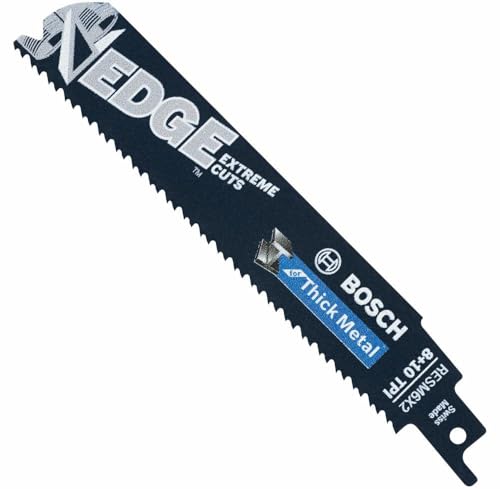
Bosch Edge Thick Metal Reciprocating Saw Blades
What We Like
- Turbo-Teeth technology for extended blade life.
- Precision ground blade for sharp, lasting cuts.
- Engineered for extreme, high-performance applications.
- Premium Swiss construction for reliable performance.
Trade-offs
- 6-inch length limits reach in deep cuts.
- Five-piece set offers fewer blades than some bulk packs.
- Specific 8/10 TPI is optimized for thick metal, not versatile.
The Turbo-Teeth technology is the star here, promising a blade life up to three times longer than standard. That’s a concrete benefit when you’re burning through material on a demanding job site, where stopping to change a blade kills your rhythm. Combined with its precision-ground, Swiss-made bi-metal construction, this blade is built for the user who needs reliable, sharp cuts in thick metal without constant downtime. It’s for the professional or serious DIYer who values sustained performance over a low initial cost.
The trade-off is in the blade’s specialization. At 6 inches long, it won’t have the reach of a longer demolition blade for deeper cuts. The five-piece count is also modest compared to larger sets. For a high-volume shop needing to cut a wider variety of materials, a more versatile set might be better. But for pure, repeated cuts through thick metal where longevity is paramount, this Bosch blade’s engineered focus delivers.
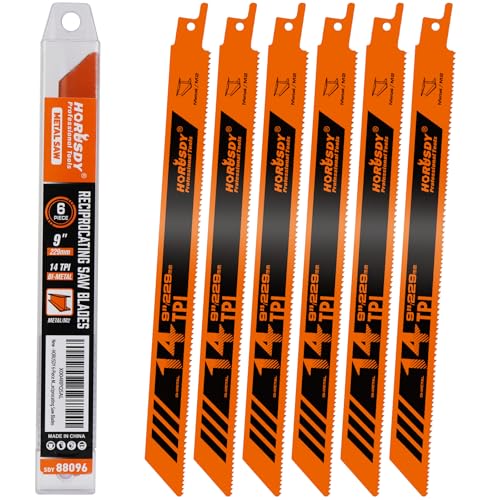
HORUSDY Heavy-Duty Bi-Metal Reciprocating Saw Blades
What We Like
- Six-piece set offers good backup supply.
- Bi-metal construction resists heat and wear.
- 14 TPI geometry for clean cuts in thick metal.
- Sturdy case protects blades and keeps them organized.
Trade-offs
- 14 TPI may cut slower in very thick, solid steel than lower-TPI blades.
- Set is specific to metal; lacks blades for wood or other materials.
A six-pack of 9-inch blades with 14 teeth per inch is built for cutting steel pipe, rebar, and thick sheet metal. The bi-metal construction provides resistance to heat and wear during long sessions, which helps the blade stay durable. Its universal half-inch shank fits most reciprocating saws, and the included sturdy case keeps blades organized and protected between jobs.
The 14 TPI tooth geometry balances speed and a reasonably clean cut for its intended materials. Compared to a blade with a lower tooth count, it may cut slower on very thick solid stock. This set is designed for predictable performance on common thick-walled metals, not as a universal solution for every demolition material.
Product photos
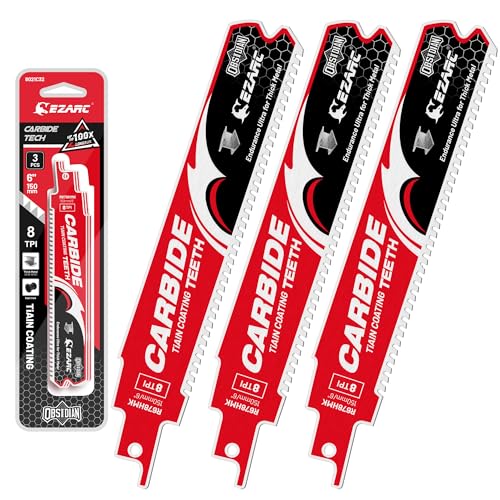
EZARC Obsidian Carbide Reciprocating Saw Blades
What We Like
- TiAlN coating provides heat-resistant, stable cutting.
- Up to 100x longer life than standard bi-metal blades.
- Optimized tooth design reduces friction for smoother cuts.
- Fits all major reciprocating saw brands.
Trade-offs
- 6-inch length limits reach in deep or confined cuts.
- 8 TPI design is specialized for thick metal, not versatile.
- Carbide teeth can be brittle for prying or twisting.
The advanced TiAlN-coated carbide tip is the key here. It sheds heat incredibly well, which is critical when you’re pushing through thick stainless or angle iron without constantly stopping to cool the blade. That heat resistance, combined with the industrial-grade carbide, is what delivers the dramatically extended lifespan owners report. This blade is built for the professional or serious DIYer who faces a steady diet of heavy-gauge metal and needs a blade that won’t quit after a few cuts, justifying its premium positioning.
You do trade some versatility for that endurance. The 6-inch length and 8 TPI tooth design are specified for cutting thick metal from 1/8 inch to 1/2 inch, so it is not intended for thin sheet metal or general demolition. For other applications, a separate general-purpose blade from the product list, such as the Lenox Demolition or Milwaukee SAWZALL sets, would be required. When the job specifically calls for slicing through rebar or heavy steel, the EZARC Obsidian’s specialized design makes it a focused performer.
Product photos
INWELL Tungsten Carbide Reciprocating Saw Blades

What We Like
- Carbide teeth last up to 50x longer than bi-metal.
- Cuts thick metal, cast iron, and stainless steel.
- 8 TPI design minimizes vibration for control.
- Universal shank fits most major saw brands.
Trade-offs
- Only two blades in the pack.
- 9-inch length may be unwieldy in tight spaces.
Industrial-grade tungsten carbide teeth are the headline here, promising a blade life up to fifty times longer than a standard bi-metal option. For anyone facing a day full of cutting thick metal, cast iron, or stainless steel, that durability translates directly into fewer interruptions and less money spent on disposable blades. The 8-tooth-per-inch profile and individually ground teeth are engineered to reduce chatter, giving you a steadier hand when working on car frames or high-alloy steel. This is the set you grab when the job demands a blade that simply won’t quit before you do.
The trade-off is in versatility and quantity. You get two excellent, long-lasting blades, but that’s it. For a mixed-material demolition project, you’d need to switch to a different blade type. A comprehensive demolition set offers a range of blades in one package. The INWELL blades are specialists. They excel at making the toughest metal cuts last, but they won’t handle the wood or plastic that a more general-purpose set might tackle.
Product photos
How We Evaluated Reciprocating Saw Blades For Thick Metal
Our research focused on manufacturer specifications and documented performance claims, cross-referenced with patterns in expert round-ups and extensive owner feedback from professional forums. The key criteria were blade material, tooth design, and structural features like thickness and coating, which directly determine longevity and cut quality in thick metal.
We prioritized what actual metalworkers and mechanics report about durability and performance on hardened steel, cast iron, and structural pipe. The clear limit of this research-led approach is that we cannot replicate the wear patterns of long-term, heavy-use job-site conditions, so we rely heavily on the consistent experiences shared by professionals.
What To Look For In Reciprocating Saw Blades For Thick Metal
Choose a blade built specifically for the strain of thick, hard metals. Using the wrong blade leads to rapid failure, dangerous breakage, and poor-quality cuts.
For thick metal, prioritize carbide teeth or premium bi-metal construction, a low-to-medium TPI (8-14), and a thicker, wider blade body for vibration control and straight cuts.
Blade Material
Carbide-tipped blades, like our best overall pick, offer extreme longevity and can tackle the hardest alloys and cast iron, but they can be brittle. High-quality bi-metal blades, which combine a flexible carbon steel body with hardened high-speed steel teeth, provide excellent durability and flexibility for demolition and general thick metal cutting, making them a go-to for many professionals. Understanding the different types of reciprocating saw blades helps explain this fundamental trade-off between ultimate wear resistance and impact toughness.
Teeth Per Inch (TPI) and Design
A lower TPI (like 8 or 10) is best for thick, solid metal as it provides aggressive, deep-cutting teeth that clear material quickly without clogging. Blades for cutting hardened steel often feature this aggressive pitch. Medium TPI (14-18) offers a good balance for cutting steel pipe and thick plate with a smoother finish. Look for tooth designs like “Turbo” or “Micro-Blast” that are engineered to start sharp and stay sharper longer under heavy loads.
Construction and Features
A thicker, wider blade resists bending and wandering, promoting straighter cuts in heavy material, a feature noted on several of our top picks. A non-stick or heat-resistant coating, such as TiAlN, reduces friction and heat buildup, which prevents material from welding to the teeth and extends blade life. These features are crucial for the best blades for cutting thick metal.
- Use cutting fluid or a lubricant like WD-40 to cool the blade and significantly extend its life.
- Match the blade length to your task; shorter blades (6″) offer more control in tight spaces, while longer blades (9″) are needed for deep cuts.
- Let the blade do the work; excessive force generates heat and dulls teeth faster.
The single most important rule: slow and steady with lubrication wins the race against heat and wear.
Reciprocating Saw Blades For Thick Metal Compared
The following table lets you compare the key specifications and applications of our top picks at a glance.
| Product | Blade Length | Blade Material / Construction | Pack Quantity |
|---|---|---|---|
| Diablo Steel Demon Carbide Reciprocating Saw Blades | 8.6 inches | TiCo Hi-Density Carbide | 3-Pack |
| Lenox Demolition Bi-Metal Reciprocating Saw Blade | 9 inches | Bi-metal | 25 blades |
| Bosch Edge Pro-Metal Reciprocating Saw Blade Set | 9.0 inches | N/A | 8 pieces |
| EZARC Carbide Thick Metal Reciprocating Saw Blades | 6 inches | Carbide teeth | 3 blades |
| Milwaukee SAWZALL Ultimate Demolition Blade Set | 6-inch and 9-inch | Bi-metal | 12 pieces |
| DEWALT Heavy Metal Reciprocating Saw Blade Set | N/A | Bi-metal | 6 Piece |
| Bosch Edge Thick Metal Reciprocating Saw Blades | 6 inches | Bi-Metal | 5 pc. |
| HORUSDY Heavy-Duty Bi-Metal Reciprocating Saw Blades | 9.0 inches | Bi-Metal | 6 pieces |
| EZARC Obsidian Carbide Reciprocating Saw Blades | 6 inches | TiAlN-coated carbide | 3-Pack |
| INWELL Tungsten Carbide Reciprocating Saw Blades | 9 inches | Tungsten carbide teeth | 2 blades |
Frequently Asked Questions
What is the best reciprocating saw blade for cutting thick metal?
The best blade depends on the metal and your needs. For repeatedly cutting the hardest thick metals like cast iron and high-strength alloys, a carbide-tipped blade like the Diablo Steel Demon is top choice. For general demolition involving nail-embedded thick metal, a heavy-duty bi-metal blade like the Lenox Demolition is often the professional’s pick.
What TPI is best for cutting thick metal?
For thick, solid metal like steel plate or structural beams, a lower TPI between 8 and 14 is ideal. These larger, more widely spaced teeth can take bigger bites and clear metal chips efficiently without clogging, which is essential for cutting thick metal effectively. A higher TPI (14-18) is better for cleaner cuts on steel pipe or thick sheet metal.
What Sawzall blade will cut through hardened steel?
Carbide-tipped blades are specifically designed to cut through hardened steel, along with thick cast iron and stainless steel. Their teeth are significantly harder and more wear-resistant than bi-metal.
How thick metal can a reciprocating saw cut?
The thickness a saw can cut is more a function of the blade than the tool itself. With the right carbide or bi-metal blade, a powerful reciprocating saw can cut through several inches of solid steel, such as structural beams or large bolts. The practical limit is often the blade length; a 9-inch blade can typically cut through material up to its length, though cutting technique and cooling are critical for cutting metal that thick successfully.
Can I use one blade for both metal and wood?
You can, but you shouldn’t for serious work. Demolition blades are designed for mixed materials, but they are a compromise. For clean, efficient cuts and maximum blade life, use a blade designed specifically for the material. Switching to a dedicated metal blade for cutting metal with a reciprocating saw will produce better results and save you money on ruined blades.
The Bottom Line
For metalworkers and mechanics making repeated cuts in thick steel, stainless, or cast iron, the Diablo Steel Demon Carbide Reciprocating Saw Blade is the best overall choice. Its extreme carbide teeth and vibration-damping design handle tough materials. If your budget is tight but you still need carbide performance, look to the EZARC Carbide Thick Metal blades for exceptional value. For those tackling heavy demolition with nail-embedded metal, the Lenox Demolition Bi-Metal blade offers unmatched durability in bulk.
No matter which blade you choose, remember that using a lubricant and letting the tool work without forcing it are the two most critical factors for success and safety when cutting thick metal.
