
10 Best Sawzall Blades For Hardened Steel in 2026
This post contains affiliate links. As an Amazon Associate, we earn from qualifying purchases.
The best sawzall blade for cutting hardened steel is the EZARC Carbide Reciprocating Saw Blades for its durable carbide teeth that power through thick, tough metals. For extreme applications, the Diablo Steel Demon offers premium performance, while USEWIN’s Expert Carbide blades promise exceptionally long life.
Hardened steel, found in rebar, bolts, and structural pins, wrecks standard blades quickly. You need a blade specifically engineered for its density and abrasion resistance. We researched specs, expert advice, and patterns in owner feedback to narrow down the choices.
This guide explains which blades stand up to the challenge and what to consider before you buy.
Top 10 Sawzall Blades For Hardened Steel in the Market
Certain content that appears on this site comes from Amazon. This content is provided "as is" and is subject to change or removal at any time.
The Best Sawzall Blades For Hardened Steel, Reviewed
EZARC Carbide Reciprocating Saw Blades
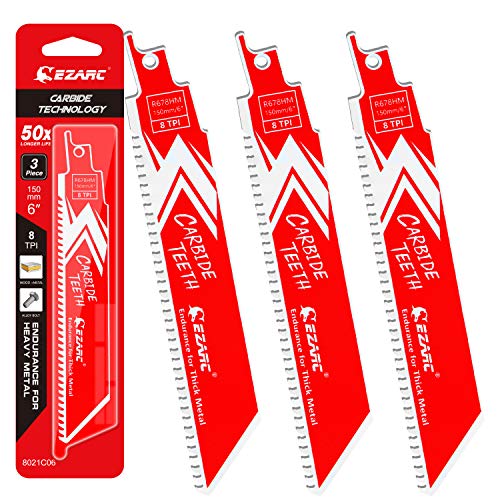
What We Like
- Carbide teeth for up to 50x longer life than bi-metal
- Optimized 8 TPI design for thick, hardened metals
- Universal shank fits all major reciprocating saw brands
- Individually welded teeth for high impact strength
Trade-offs
- Shorter 6-inch length limits reach in deep cuts
- Only three blades in the pack for a premium product
- Aggressive 8 TPI is too coarse for thin sheet metal
Carbide teeth give this blade up to 50 times longer life than bi-metal versions, which means you can cut through stainless steel, rebar, and high-alloy construction steels without constantly swapping out a dull blade. That longevity turns demanding demolition work from a blade-consuming chore into a more manageable job. It’s built for tradesmen and serious DIYers who need a blade that lasts through tough materials.
The trade-off is reach. At six inches, you won’t be plunging through a thick beam from one side. For those deeper demolition cuts, you’d look at a longer carbide option like the Diablo Steel Demon. But for cutting off bolts, automotive frames, or embedded rebar, the blade’s stamina and aggressive cut are exactly what you need.
Diablo Steel Demon Carbide Reciprocating Saw Blade
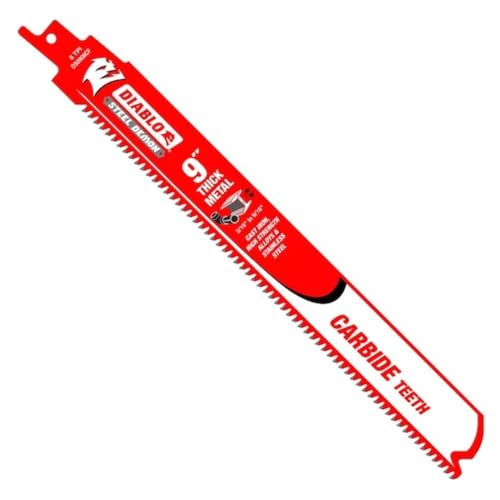
What We Like
- TiCo carbide teeth cut high-strength alloys and cast iron
- Perma-SHIELD coating resists heat and prevents gumming
- Oversized blade body stabilizes cuts and reduces chatter
- Extreme impact resistance from enhanced tip connection
Trade-offs
- At 1.0 pounds for a 9-inch blade, it's a substantial piece of steel
- The 9-inch length requires ample clearance in tight spaces
Diablo’s proprietary TiCo Hi-Density carbide offers a much longer service life than standard bi-metal blades, lasting up to 50 times longer when cutting extreme metals between 3/16″ and 9/16″ thick. This means you spend less time changing blades on tough jobs. The high-performance carbide tip has an enhanced connection to the blade body for extreme impact resistance, which is crucial for cutting high-strength alloys, cast iron, and stainless steel. Research mentions note it can cut through almost anything. An oversized blade body stabilizes the blade for straighter cuts with less vibration and chatter, which helps maintain accuracy even in demanding materials.
This blade is a specialist designed for extreme metal cutting, not a general-purpose tool. Its carbide teeth and construction are optimized for relentless work in hard metals rather than for speed in softer materials. When a project requires slicing through hardened steel, stainless, or high-strength alloys all day, this premium performer justifies its place in the kit.
USEWIN Expert Carbide Reciprocating Saw Blades
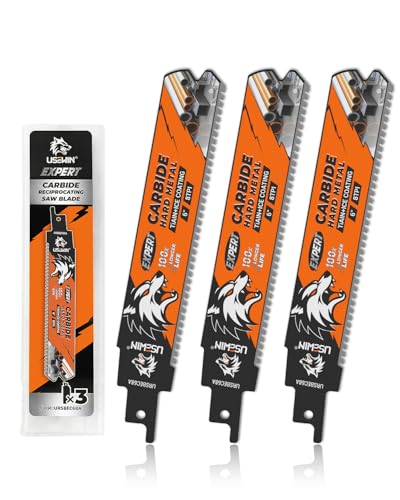
What We Like
- Carbide teeth promise 100x longer life than bi-metal.
- TiAlN + ICE coating for longevity in demolition.
- 8 TPI optimized for fast cutting in thick metals.
- Universal shank fits all reciprocating saw brands.
Trade-offs
- Six-inch length limits reach in deep cuts.
- 8 TPI is too coarse for thin sheet metal.
- Three-blade pack offers fewer spares than bulk sets.
The promise of a 100x longer lifespan than standard bi-metal blades is the headline here, built on premium carbide teeth with a specialized TiAlN + ICE coating. For someone regularly chewing through hardened steel, stainless, or thick plate, this translates directly to fewer blade changes and lower cost per cut over time. It’s a solid pick for the metalworker or demolition pro who values blade endurance above all else and needs a universal shank for any saw.
The carbide teeth with TiAlN and ICE coating are built for longevity during metal demolition, which means they can last through demanding jobs without frequent changes. At six inches long, this blade is designed for thick metals like steel plate and rebar, though deeper cuts would require a longer option such as the nine-inch Diablo Steel Demon. Each tooth is individually welded and precision ground for greater durability, making this three-pack a focused choice for tough materials rather than high-volume disposable use.
Product photos
LENOX Diamond Grit Reciprocating Saw Blade
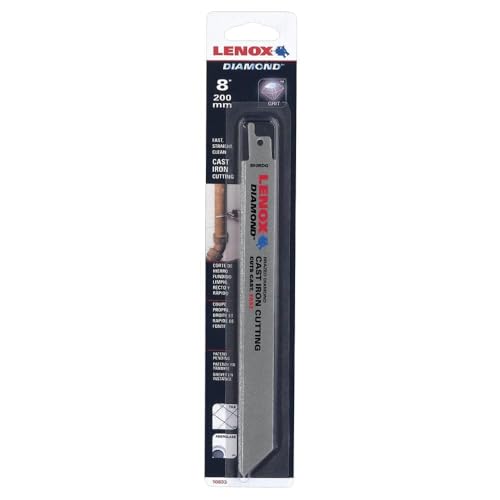
What We Like
- Diamond grit edge lasts longer than traditional teeth.
- Narrow kerf design enables faster, thinner cuts.
- Chrome-alloy backing provides extra stability during cuts.
- Produces straight, clean cuts instead of ragged edges.
Trade-offs
- At 8 inches, shorter than some carbide blades like Diablo's 9-inch model.
- Single blade, no multi-pack option like many competitors.
Nickel-alloy diamond particles give this Lenox blade a sharpness that lasts longer than typical designs, which means fewer blade changes on tough jobs. Its narrow kerf makes thinner, faster cuts, so you waste less material and expend less effort. Chrome-alloy backing steel adds stability for straight, clean cuts that avoid the ragged edges left by bulkier tools.
This is a single blade, so it lacks the immediate value of the multi-packs offered by brands like EZARC, GRENPRO, or USEWIN. The diamond grit edge is designed for lasting sharpness, not necessarily for the fastest cutting rate. Choose it for projects where blade longevity and cut quality are the priorities.
Product photos
GRENPRO Carbide Reciprocating Saw Blades

What We Like
- Carbide teeth offer up to 50x longer life than bi-metal
- Aggressive 8 TPI cuts hardened steel and rebar
- Individually welded teeth for strength and flexibility
- Universal shank fits most major saw brands
Trade-offs
- 6-inch length limits reach in deep or confined cuts
- Blade is designed for 3/16-inch to 1/2-inch material only
The headline feature is a potential service life that far outlasts standard bi-metal blades. This longevity comes from the carbide teeth, which simply don’t wear down when chewing through hardened steel, rebar, or thick alloys. For a contractor facing a day of demolition or a fabricator cutting stacks of structural metal, that means fewer blade changes and more time cutting. The GRENPRO blade is built for the user who values relentless cutting speed and needs a blade that won’t quit mid-job, trading some versatility for pure endurance in the toughest metals.
These blades are built specifically for tough metals like stainless steel, hardened steel, and rebar, which means they target demanding demolition and metal-cutting jobs. The carbide teeth are claimed to last far longer than conventional bi-metal blades, reducing the frequency of blade changes during heavy work. With an aggressive 8-tooth-per-inch pattern designed for material between 3/16-inch and 1/2-inch thick, they focus on fast, controlled cuts in dense stock rather than versatility.
Product photos
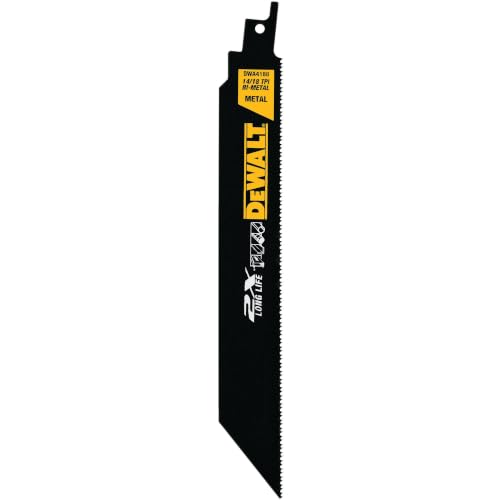
DEWALT Bi-Metal Reciprocating Saw Blades
What We Like
- Taller high-speed steel strip reduces breakage
- Aggressive shank angle maintains cutting speed
- Patented tooth geometry for faster cut rates
- Bi-metal construction for flexibility and edge life
Trade-offs
- Blade length is 9 inches
- Pack contains 5 blades
A 14-tooth bi-metal blade built around an aggressive shank angle is engineered for sustained performance in heavy metal. This design increases tooth contact as the blade wears, which directly translates to maintaining your cut speed longer instead of bogging down. For the tradesperson or serious DIYer facing a mix of steel, pipe, and rebar, these blades offer a reliable, durable workhorse option. They deliver the flexibility and longevity you expect from a premium bi-metal, making them a solid choice for demanding job site use where snapping a blade mid-cut isn’t an option.
These blades are built for heavy metal cutting with a bi-metal construction that combines flexibility and a long-lasting edge. Their patented tooth geometry and aggressive shank angle are designed to maintain cutting speed as the blade wears. This makes them a practical choice for extended work on common materials like structural steel, pipe, and rebar where predictable performance matters.
Product photos
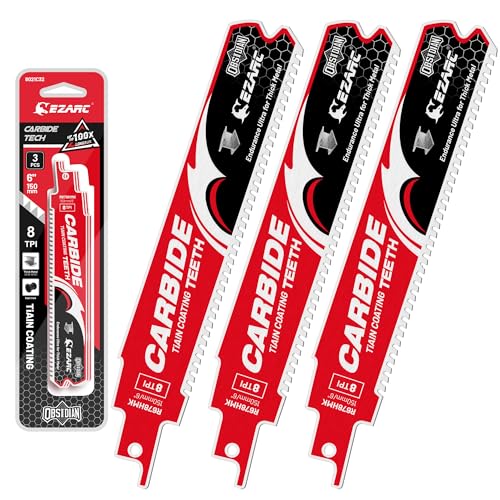
EZARC Obsidian Carbide Reciprocating Saw Blades
What We Like
- TiAlN coating provides heat-resistant, stable performance.
- Up to 100X longer life than standard bi-metal blades.
- Individually welded teeth for impact strength.
Trade-offs
- 6-inch length limits reach in deep or confined cuts.
- 8 TPI design is optimized for thick metal, not thinner sheet.
- Carbide construction is specialized, not a general-purpose blade.
Industrial-grade carbide tips with a TiAlN coating offer heat-resistant performance, so the blade maintains its edge when cutting stainless steel or rebar where friction builds. An optimized 8 TPI tooth design is engineered for thick metal cutting, which provides stable and controlled cuts in demanding applications. This construction is intended for heavy-duty demolition work and cutting thick metal from 1/8 inch to 1/2 inch.
The blade is designed specifically for thick metal cutting. For other materials or metal thicknesses, a different blade type would be required. When cutting hardened materials like rebar or angle iron, the carbide teeth and specialized coating are engineered to handle the task.
Product photos
Cylrod M42 Cobalt Bi-Metal Saw Blades

What We Like
- High cobalt content for heat and abrasion resistance.
- 25-pack provides extensive supply for big projects.
- Universal shank fits most major saw brands.
- Includes a portable plastic storage case.
Trade-offs
- 6-inch length limits reach in deep cuts.
- Bi-metal construction may wear faster than carbide on hardest steel.
- Composite TPI design is a compromise, not specialized.
The pack of 25 M42 cobalt blades is built for volume work where you expect to burn through a few. That 8% cobalt content gives these bi-metal blades a fighting chance against the heat generated by cutting hardened steel, letting you push through more material before a blade goes dull. For a mechanic dismantling cars or a contractor facing a pile of mixed metal demo, this bulk pack means you can grab a fresh blade without a second thought and keep the saw running. It’s the definition of a workhorse supply for frequent, demanding use.
Crafted from bi-metal steel with 8% cobalt, the Cylrod blades offer enhanced fracture, abrasion, and heat resistance, which helps them withstand demanding metal-cutting jobs. The 14/18 TPI composite design allows for faster cutting with a cleaner cross-section in complex scenarios, though for harder materials a reduced speed is recommended. This 25-pack provides a substantial supply of 6-inch blades, suitable for tasks like automobile dismantling, and they come in a transparent plastic case for easy portability and organization.
Product photos
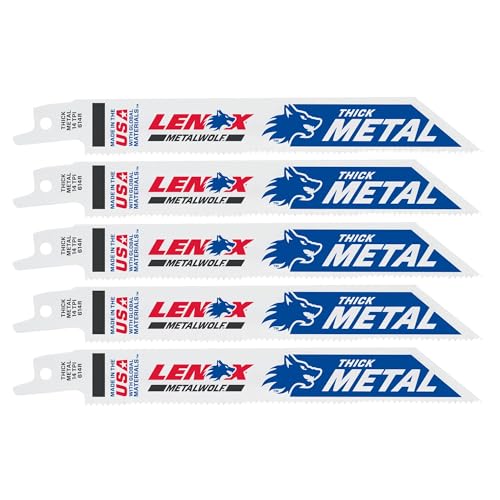
LENOX METALWOLF Wave Edge Saw Blades
What We Like
- Thin blade profile for quick cuts in various metals
- Patented T2 technology for reduced cutting force
- Spring steel backing reduces blade breakage
Trade-offs
- 6-inch length limits reach in deep or thick materials
- 14 TPI may cut slower in very thick steel than lower TPI carbide blades
That thin, 0.035-inch blade profile slices through metal with less resistance, making it a strong choice for a shop that needs one blade to handle conduit, pipe, and structural steel. Its high-speed steel edge and spring steel backing aim for durability without the brittleness of carbide, suiting pros who need reliable performance across a range of metal gauges.
For applications requiring a blade specifically for thick metal, other products such as the Diablo Steel Demon or EZARC Carbide blades are listed with that focus. The Lenox blade’s application list includes ferrous metal, structural steel, pipe, conduit, and stainless steel. Its design prioritizes a balance of cutting life and aggressive performance across that range of materials.
Product photos
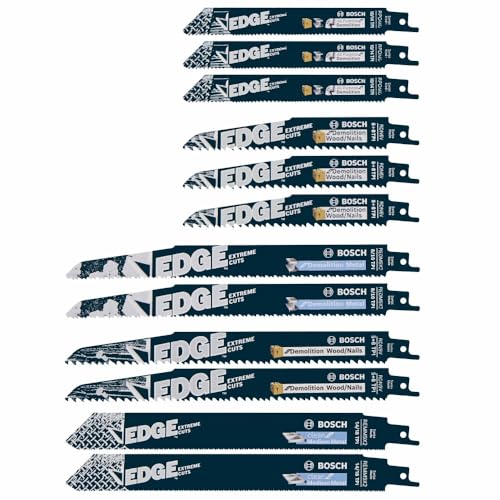
Bosch Edge Pro-Demo Blade Set
What We Like
- Engineered for extreme cuts and demolition
- Turbo-Teeth last up to 3x longer
- Increased thickness reduces vibration
- Versatile 12-piece pro set
Trade-offs
- 1.2-pound set weight adds bulk to a kit
A blade that lasts up to three times longer than conventional bi-metal is a major advantage when you’re buried in a demolition project and don’t want to stop. The increased blade thickness and shoulder height mean less flex and chatter when you’re pushing through nail-embedded lumber or medium metal, which translates to straighter cuts and less fatigue. It’s the logical choice for a pro or serious DIYer who needs a reliable, all-around demolition set that won’t quit halfway through the day.
The trade-off is in the specialization. For continuous cutting of materials like hardened steel bar stock, a focused carbide option such as the Diablo Steel Demon would be a more targeted, albeit less versatile, solution.
Product photos
How We Evaluated Sawzall Blades For Hardened Steel
Our evaluation was research-based. We reviewed manufacturer specifications and expert articles from metalworking sources to understand the key features that define a blade capable of handling hardened steel. We also studied patterns in professional feedback to identify which blades deliver on promises of longevity and performance in real-world conditions.
The criteria that mattered most were blade material, tooth design, and physical durability. Carbide teeth, which are far harder than standard bi-metal, were a primary focus because they resist the heat and wear that hardened steel inflicts. Blades with an aggressive tooth-per-inch (TPI) count, typically between six and ten, are optimized for thick, hard metals. Construction features like individually welded teeth or an oversized blade body were also considered to reduce chatter and breakage under stress.
This guide relies on manufacturer specifications and user reports. While this reveals strong trends in durability and specialization, it cannot replicate the precise feel or cut speed experienced during actual use.
What To Look For In Sawzall Blades For Hardened Steel
Choosing the right blade for hardened steel is about matching extreme durability with the right cutting action. A poor choice will dull in minutes, turning a simple cut into a long, frustrating ordeal.
Look for carbide teeth and a low TPI (6-10). Carbide is significantly harder and more heat-resistant than bi-metal steel, making it the go-to material. A lower TPI count provides a more aggressive, faster cut in thick material, while a higher TPI is for thinner metals.
Blade Material
The choice between carbide and bi-metal is critical. Carbide-tipped or full-carbide teeth are the top choice for hardened steel because the carbide material is far more resistant to the abrasion and heat generated by the cut. Many of the best blades for hardened steel, like our top pick, claim up to 50 times or even 100 times longer life than bi-metal blades in these punishing applications.
Premium bi-metal blades with high cobalt content, like the Cylrod M42, offer a more affordable option for less frequent use or general metal demolition, but they will wear faster on the hardest materials. For a deeper dive into the different blade constructions available, our guide to blade types explains the trade-offs.
Teeth Per Inch (TPI)
The number of teeth per inch dictates how the blade attacks the material. For thick, hardened steel, a lower TPI is better. Blades in the 6 to 10 TPI range, common among our top carbide picks, have larger, more aggressive gullets that efficiently clear metal chips and prevent clogging.
This design powers through rebar, thick plate, and cast iron. A blade with 14 TPI or higher, like the LENOX METALWOLF, will cut slower in thick steel and is better suited for mixed metal work or thinner sections. Understanding the right TPI for your material thickness is key; a blade meant for thick metal will have a vastly different profile than one designed for sheet metal.
Durability & Construction
Look for features that reinforce the blade against the violent, percussive action of a reciprocating saw. Individually welded carbide teeth, as found on the EZARC and GRENPRO blades, help prevent teeth from snapping off under impact. An oversized blade body, like on the Diablo Steel Demon, adds stability to reduce wobble and chatter, leading to smoother cuts and less user fatigue.
Coatings also play a role; advanced coatings like TiAlN or Perma-SHIELD help dissipate heat and reduce friction, which can extend blade life. For other tough materials, you might need specialized blades for cast iron or blades for stainless steel, which share similar durability requirements.
- Match TPI to thickness. Use a lower TPI, such as six to ten teeth per inch, for thicker materials.
- Secure your workpiece. Vibration is the enemy of blade life.
- Let the blade do the work. Avoid forcing or bending the blade.
- Use cutting oil if possible. It reduces heat and extends life.
- Start with a pilot notch. This helps prevent the blade from walking.
The single most important rule: use carbide for hardened steel if you want the blade to last.
Sawzall Blades For Hardened Steel Compared
The following table compares key features like material, TPI, and blade length across all ten picks to help you see the differences at a glance.
| Product | Blade Length | Tooth Material | Pack Quantity |
|---|---|---|---|
| EZARC Carbide Reciprocating Saw Blades | 6 inches | Carbide | 3 blades |
| Diablo Steel Demon Carbide Reciprocating Saw Blade | 9 inches | TiCo Hi-Density Carbide | N/A |
| USEWIN Expert Carbide Reciprocating Saw Blades | 6 inches | Carbide with TiAlN + ICE coating | 3 blades |
| LENOX Diamond Grit Reciprocating Saw Blade | 8 inches | Diamond grit | N/A |
| GRENPRO Carbide Reciprocating Saw Blades | 6.0 inches | Carbide-tipped | 3 blades |
| DEWALT Bi-Metal Reciprocating Saw Blades | 9 inches | Bi-metal | 5 blades |
| EZARC Obsidian Carbide Reciprocating Saw Blades | 6 inches | TiAlN-coated carbide | 3 blades |
| Cylrod M42 Cobalt Bi-Metal Saw Blades | 6.0 inches | M42 steel with 8% cobalt | 25 blades |
| LENOX METALWOLF Wave Edge Saw Blades | 6 in | N/A | 5 Pack |
| Bosch Edge Pro-Demo Blade Set | N/A | N/A | 12 pieces |
Frequently Asked Questions
What is the best sawzall blade for cutting hardened steel?
The best blade for cutting hardened steel is a carbide-tipped blade with a low TPI, typically between 6 and 10 teeth per inch. Carbide is much harder than bi-metal and resists the heat and abrasion of hardened steel. Our top overall pick, the EZARC Carbide blade, is designed specifically for this purpose, offering dramatically longer life than standard blades.
What will cut through hardened steel?
Hardened steel requires a cutting tool with an extremely hard edge. For reciprocating saws, this means carbide-tipped blades. For drilling, you would need specialized bits for hardened steel. In both cases, the tool material must be harder than the workpiece to effectively penetrate it without dulling immediately.
Are titanium or carbide blades better?
Carbide blades are superior to titanium-coated blades for cutting hardened steel. Titanium nitride is a coating applied to bi-metal blades to reduce friction; it wears off. Carbide refers to the actual tooth material, which is a hard, sintered compound. Carbide teeth retain their cutting edge far longer under the extreme conditions of cutting hardened metals.
Are carbide sawzall blades better?
Yes, carbide sawzall blades are definitively better for cutting hardened steel, thick metal, cast iron, and stainless steel. They are more expensive but offer a vastly longer lifespan, often cited as 50 to 100 times longer than bi-metal blades in these applications. For general-purpose or thin metal cutting, a quality bi-metal blade may be more cost-effective.
What TPI is best for cutting thick hardened steel?
A TPI between 6 and 10 is best for cutting thick hardened steel. This lower tooth count provides larger gullets to clear the substantial metal chips produced, allowing for faster, more efficient cutting. Higher TPI blades (14+) are designed for thinner materials and will cut more slowly and generate more heat in thick sections.
The Bottom Line
For professionals and serious DIYers tackling hardened steel, rebar, or high-alloy metals, the EZARC Carbide Reciprocating Saw Blades are the best overall choice. Their carbide teeth and optimized 8 TPI design deliver the durability and cutting speed needed for this demanding work. If your budget is tight but you need volume for general metal demolition, consider the Cylrod M42 Cobalt pack. For those facing extreme applications like thick cast iron or high-strength alloys, the premium Diablo Steel Demon is worth the investment.
Ultimately, the most critical factor is choosing a blade built for the specific hardness and thickness of your material. Using the wrong blade is a waste of time and money, while the right one makes a tough job straightforward.
