
10 Best Sanders For Cabinets in 2026
This post contains affiliate links. As an Amazon Associate, we earn from qualifying purchases.
The Bosch ROS20VSC Random Orbital Sander is our best overall for its ability to deliver a smooth, swirl-free finish on cabinet surfaces. For tight spaces, the Mirka DEOS II excels, while the DEWALT 20V MAX Orbital Sander is the best low-profile cordless option. Each pick solves a different cabinet sanding challenge.
Refinishing cabinets demands a sander that balances power with finesse. The wrong tool can leave marks, create dust clouds, or simply not fit into the intricate spaces of face frames and corners. A research-based evaluation looks beyond marketing specs to what actually works for this specific task.
This guide breaks down the key features for cabinet work, from dust collection to ergonomics, so you can match a sander to your exact project scope and workshop setup.
Top 10 Sanders For Cabinets in the Market
Certain content that appears on this site comes from Amazon. This content is provided "as is" and is subject to change or removal at any time.
The Best Sanders For Cabinets, Reviewed
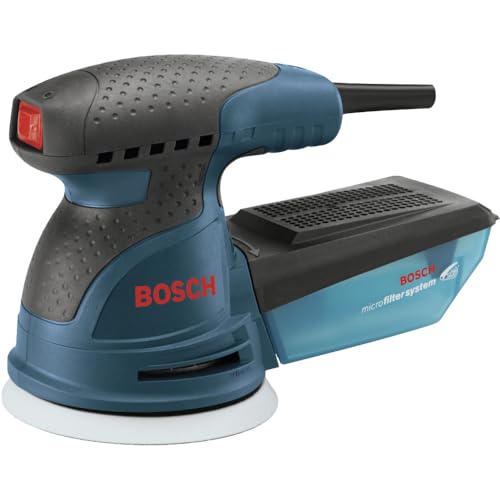
Bosch ROS20VSC Random Orbital Sander
What We Like
- Pad dampening system minimizes swirl marks.
- Variable speed control for different tasks.
- Excellent dust collection with micro-filter system.
- Compact 3.5 lb weight reduces fatigue.
Trade-offs
- Corded design limits mobility compared to cordless models.
- At 3.5 lb, it's heavier than some compact sanders like the Mirka DEOS II.
With a 2.5 AMP motor driving orbits from 7,500 to 12,000 OPM, this sander has the power for stripping old finish and the variable speed for preparing a smooth topcoat. Its pad dampening system is designed to minimize swirl marks on flat and contoured surfaces, which is critical for final prep work. The tool weighs 3.5 pounds, and its variable speed control allows adjustment for different sanding tasks.
The trade-off for that consistent power is the cord. You won’t be wandering far from an outlet, which can be a constraint in an unfinished space. For dedicated shop work, that’s a minor inconvenience. Compared to a dedicated detail sander like the Mirka DEOS Delta II, its standard 5-inch pad is less nimble for tight corners and intricate moldings. But for the vast majority of flat cabinet surfaces, the ROS20VSC’s combination of smooth results, effective dust collection, and straightforward operation is hard to beat.
DEWALT 20V MAX Orbital Sander

What We Like
- Brushless motor for efficient runtime
- Variable speed control matches application
- Texturized rubber grip for comfort
Trade-offs
- Tool only: requires separate battery and charger purchase
- Dust collector (DWV010/DWV012) is a separate accessory
The DeWalt 20V MAX Orbital Sander’s low-profile height allows users to get close to the work surface for precise sanding. This cordless tool’s variable-speed control ranges from 8,000 to 12,000 OPM to match the speed to the application, while its brushless motor provides runtime and efficiency. Its compact size and cordless operation make it suitable for tasks where maneuverability and freedom from an outlet are priorities.
You are buying into the DEWALT 20V MAX system here. The tool arrives bare, so factor in the cost of a battery and charger if you don’t already own them. For dedicated shop work where corded power and higher speeds are preferable, the corded DEWALT DWE6423 is a more traditional choice. But for maneuvering around installed cabinetry, the cordless convenience and slim footprint of this model are hard to beat.
DEWALT DWE6423 Random Orbit Sander

What We Like
- Separate counterweight drastically reduces vibration
- Improved dust-sealed switch for longer life
- Rubber overmold improves grip in critical areas
- One-handed locking dust bag for easy use
Trade-offs
- Corded design limits mobility in large spaces
- At 3.4 lb, it's heavier than many cordless options
The separate counterweight design in the DWE6423 makes a tangible difference in how your hands feel after hours of sanding cabinet faces and edges. That 3.4-pound weight sits comfortably with the rubber overmold, and the shorter body lets you get right into corners without the housing getting in the way. For anyone facing a full kitchen refinishing project, this sander turns a fatiguing chore into manageable work. It’s built for the long haul, with a dust-sealed switch that stands up to the fine powder sanding cabinets creates.
A corded power source means you’ll need an outlet or extension cord, and the dust port fits directly only to DeWalt’s DWV010 or DWV012 dust collectors. To connect it to other vacuum systems with 1-1/4 inch hoses, you must use the DWV9000 Universal Quick Connector. If you prioritize consistent power from a wall outlet over cordless portability, this sander is built for extended use with features aimed at user comfort.
Mirka DEOS II Compact Sheet Sander

What We Like
- Extremely compact 4x3x3.9-inch body for confined areas
- Lightweight 2.1-pound design reduces arm fatigue
- Brushless motor provides consistent power delivery
- Bluetooth connectivity for monitoring vibration exposure
Trade-offs
- Small 3×4-inch pad covers less area per pass
- Requires Mirka dust extraction system for dust-free operation
- Bluetooth features rely on a separate app for full utility
Measuring just 4 by 3 inches, this sander fits into the tight spaces and hard-to-reach areas where bulkier tools simply can’t go. That compact, low-profile design makes it a specialist for refinishing cabinet face frames or sanding inside corners. At 2.1 pounds, its featherlight weight allows for precise maneuvering without fatigue during extended use. The efficient brushless motor delivers smooth, reliable performance across a range of sanding tasks.
Its compact size comes with a smaller sanding pad, which covers less area per pass than a full-size orbital sander. This model is designed to work with a Mirka dust extraction system for a cleaner workspace. Bluetooth connectivity also allows pairing with the myMirka app to monitor vibration exposure, a feature aimed at optimizing settings for safer, more efficient sanding sessions.
Product photos
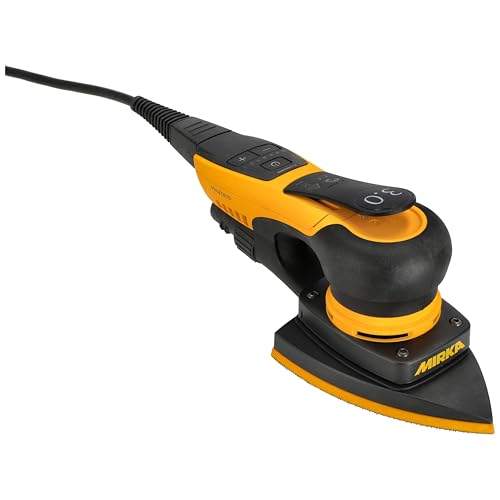
Mirka DEOS Delta II Orbital Sander
What We Like
- Delta shape excels in corners and profiles.
- Ultra-compact, low-profile design improves maneuverability.
- Ergonomic with low vibration for reduced fatigue.
Trade-offs
- Small 4×6 inch pad covers less surface area.
- Specialized shape is less versatile for large flat panels.
A 4 x 6 inch triangular pad and a body less than 4 inches high let you get into cabinet corners, detailed profiles, and tight spaces that frustrate round sanders. This makes it the clear choice for woodworkers and painters who need precision on intricate work. The brushless motor maintains consistent speed, while the ergonomic design and low vibration mean you can focus on detail work for longer sessions without your hands going numb.
Its delta shape and compact size make this sander ideal for corners, profiles, and hard-to-reach areas, where larger tools simply cannot fit. This design focuses on precision sanding in woodworking and decorative painting, rather than speed on large, flat surfaces like cabinet doors. The tool’s role is to ensure a perfectly smooth finish in the detailed spots that other sanders might miss.
Product photos
Makita BO4556K Finishing Sander

What We Like
- 14,000 OPM delivers fast, smooth finish sanding.
- Rubberized palm grip improves comfort during use.
- Through-the-pad dust collection keeps work area clean.
- Ball bearing construction reduces vibration and noise.
Trade-offs
- A 16.7-inch length is cumbersome in tight cabinet corners.
- Corded design limits mobility compared to battery-powered models.
With a sanding speed of 14,000 orbits per minute, the Makita BO4556K is designed for faster finishing work. Its precision ball bearing construction reduces vibration and noise during use, which can lessen fatigue over long sanding sessions. A contoured, rubberized palm grip improves operator comfort, while the through-the-pad dust collection system connects to a vacuum for a cleaner work environment.
The sander’s dimensions make it less suited for confined spaces. Compared to compact models like the Mirka DEOS II, which is just 4.0 inches long, the Makita’s larger footprint is better for open, flat surfaces. A large clamping lever allows for quick and easy paper installation during these bigger projects.
Festool RTS 400 Finish Orbital Sander

What We Like
- High-power 250-watt motor for aggressive material removal
- Effective dust extraction keeps the workspace clean
- Improved ergonomic grip reduces fatigue during long sessions
- Durable power switch built for heavy, repeated use
Trade-offs
- At 8.2 lb, it's significantly heavier than most palm sanders
- Weighs 8.2 pounds.
The Festool RTS 400 packs a 250-watt motor, a 25% increase over its predecessor, which provides the power for tasks like stripping old polyurethane from a kitchen’s worth of cabinets. Its design prioritizes extended use on big projects, with a power switch built for a long lifecycle and a rubberized grip for handling during hours of sanding. An interlocking dust port works with the latest Festool extractors to capture debris at the source, which helps maintain a cleaner workspace when spraying primer and finish coats indoors.
Its size and weight reflect that powerful, built-for-durability design. The tool measures 15.6 inches long and weighs 8.2 pounds. For sanding inside unfinished cabinet boxes or other confined spaces mentioned in project plans, a more compact tool like the triangular Mirka DEOS Delta II could be considered.
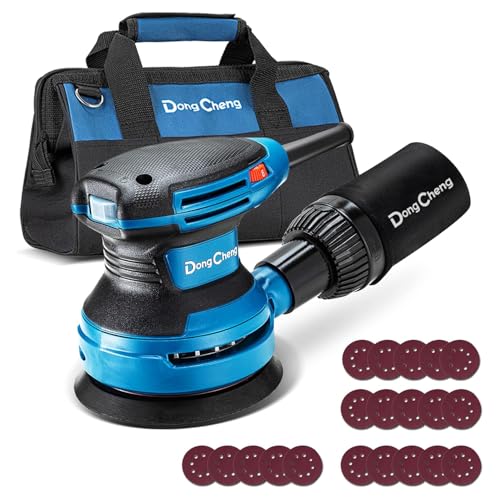
Dong Cheng Random Orbital Sander
What We Like
- Includes 20 sandpaper sheets and a tool bag.
- Comprehensive dust box and vacuum port (32mm).
- Ergonomic rubber handle for vibration control.
- Hook-and-loop pad for fast paper changes.
Trade-offs
- Corded design limits mobility compared to cordless models.
- Weighs 3.3 lb, slightly heavier than compact sanders like the Mirka DEOS II.
A 380-watt motor paired with a 5-inch pad delivers enough power to tackle cabinet faces and doors without bogging down. Its six speed settings let you dial in the aggression from rough shaping to final prep. With the included sandpaper assortment and dust handling system, you can start a project immediately without hunting for extra accessories.
This ready-to-work value involves some trade-offs in refinement and portability. It’s a corded tool, so you’re tethered to an outlet, and at 3.3 pounds, it has more heft than premium compact models designed for all-day overhead work. For a dedicated cabinet refinishing project where budget is key, the Dong Cheng kit covers the essentials. If your work demands untethered movement for hours, a cordless model like the DEWALT 20V MAX would be a more suitable, though more expensive, platform to invest in.
Product photos
Bosch GEX18V-5N Cordless Orbital Sander

What We Like
- Compact and lightweight 2.4-pound design.
- Brushless motor for longer tool life.
- Cordless 18V operation for worksite mobility.
- Uses standard 5-inch hook-and-loop discs.
Trade-offs
- Battery and charger are sold separately.
- Smaller 5-inch pad reduces surface coverage.
- Cordless runtime depends on separate battery purchase.
Weighing just 2.4 pounds, this Bosch sander reduces arm fatigue during extended cabinet finishing sessions. Its compact footprint, barely larger than the sanding pad itself, lets you maneuver into tight corners and work comfortably on vertical surfaces. The brushless motor delivers efficient power for smooth material removal, and the cordless 18V platform offers genuine freedom from outlets, making it a strong candidate for mobile workshops or kitchens under renovation. It’s a tool built for the cabinetmaker who values agility and a clean workspace over brute force.
This cordless sander runs on Bosch 18V batteries, which are sold separately, so you need to already own that battery platform. Its 5-inch pad is well-suited for detailed finishing and surface prep on materials like wood. The tool weighs 2.4 pounds, contributing to its easy handling during extended use on cabinetry or remodeling tasks.
Product photos
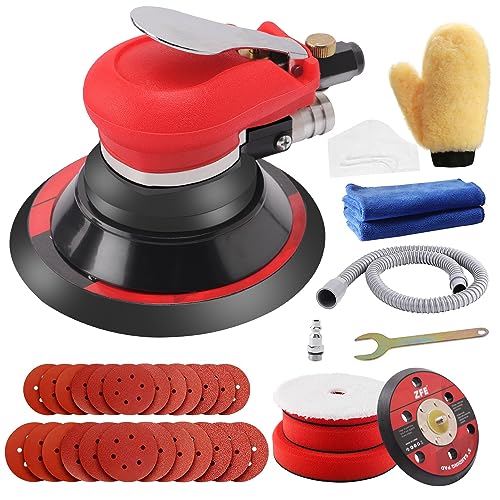
ZFE Pneumatic Random Orbital Sander
What We Like
- Extremely light weight at just 1.5 pounds
- Integrated regulator for variable speed control
- Comprehensive kit with multiple backing plates and abrasives
- Includes a practical dust collection bag and tube
Trade-offs
- Requires a dedicated air compressor to operate
- No electric cord or battery for standalone use
- Pneumatic hose limits mobility compared to cordless
Weighing just 1.5 pounds with a palm-sized design, the ZFE sander is notably lighter than many electric sanders, which helps reduce arm fatigue during extended tasks like cabinet finishing. Its all-steel internal construction and variable speed up to 10,000 rpm are designed for durability and control when smoothing wood or paint. The pneumatic design means it relies on an air compressor, making it a straightforward choice for workshops already set up for air tools. The included kit provides both 5-inch and 6-inch backing plates along with sandpapers and polishing pads to start a project immediately.
The trade-off is complete dependence on your air supply. You’re tethered by a hose, and the sander is useless without the right compressor setup and adequate CFM. For a shop already plumbed for air, it’s a streamlined, hard-working tool. However, someone needing to sand cabinets on a job site without easy compressor access would find a corded model like the DEWALT DWE6423 or a capable cordless option more practical, despite their added weight.
Product photos
How We Evaluated Sanders For Cabinets
Our research method centered on manufacturer specifications, expert project round-ups, and patterns in owner feedback. We focused on criteria proven to matter for cabinet projects. These include dust collection effectiveness to keep the workspace clean, vibration control for user comfort during long sessions, and the tool’s physical profile for accessing tight spaces inside cabinets and corners.
We also prioritized features like variable speed for different sanding stages and the overall system, noting whether a tool is part of a cordless ecosystem or requires a separate extractor. As a research-led guide, we cannot speak to long-term durability over years of use, but we highlight build quality and design based on documented specs and consistent user reports.
What To Look For In Sanders For Cabinets
Choosing a sander for cabinets means finding a balance between surface-finishing power and the ability to work in confined spaces. The right tool makes prep work efficient and sets the stage for a flawless paint or stain job.
Prioritize a sander with effective dust collection and low vibration. A compact design helps in tight spaces, while variable speed control allows you to adjust for material removal or fine finishing.
Dust Collection
Cabinet refinishing creates a lot of fine dust that can ruin a finish and your shop air. Look for a sander with a sealed micro-filter system or a reliable port for connecting to a shop vacuum. Integrated systems, like that on the Bosch ROS20VSC, are highly effective, while some models require a separate accessory. Good collection keeps your line of sight clear and minimizes cleanup.
Vibration Control & Ergonomics
You’ll be holding the tool for extended periods when sanding multiple doors and drawers. Vibration is the primary cause of hand fatigue. Features like separate counterweights (found on the DEWALT DWE6423) and rubberized overmold grips make a significant difference. A lighter tool, such as a compact cordless or pneumatic model, also reduces strain.
Form Factor & Pad Size
Cabinet boxes, face frames, and detailed mouldings demand different tool shapes. A standard 5-inch or 6-inch random orbital sander is ideal for large, flat door panels. For corners and tight spaces, a compact sheet sander or a delta-shaped detail sander is essential. Consider a tool’s profile; a low-profile body like the DEWALT 20V MAX can reach into tighter spots than a bulkier model. Using the proper sandpaper grit sequence is critical for a professional finish on any wood project.
- Check the sander’s weight and grip shape for one-handed operation.
- Ensure the dust port or bag doesn’t significantly increase the tool’s footprint.
- Verify the pad uses a common, easy-to-find abrasive type (hook-and-loop or sheets).
The best sander for your project is the one that fits the spaces you need to sand while keeping you comfortable and the workspace clean.
Sanders For Cabinets Compared
The following table compares the key specifications of our top picks to help you see the differences at a glance.
| Product | Power Source | Weight | Sanding Pad Size/Type |
|---|---|---|---|
| Bosch ROS20VSC Random Orbital Sander | Corded Electric | 3.5 pounds | Hook and Loop system |
| DEWALT 20V MAX Orbital Sander | Cordless (20V MAX) | 2.5 Pounds | Replaceable hook-and-loop |
| DEWALT DWE6423 Random Orbit Sander | Corded Electric | 3.4 pounds | N/A |
| Mirka DEOS II Compact Sheet Sander | Corded Electric | 2.1 pounds | 3 x 4 inches |
| Mirka DEOS Delta II Orbital Sander | Corded Electric | 2.1 pounds | 4 x 6 inch triangular |
| Makita BO4556K Finishing Sander | Corded Electric | 2.5 pounds | 1/4 Sheet |
| Festool RTS 400 Finish Orbital Sander | Corded Electric | 8.2 pounds | N/A |
| Dong Cheng Random Orbital Sander | Corded Electric | 3.3 pounds | 5-inch (125mm) |
| Bosch GEX18V-5N Cordless Orbital Sander | Cordless (18V battery) | 2.4 pounds | 5 inches |
| ZFE Pneumatic Random Orbital Sander | Pneumatic | 1.5 pounds | 5" & 6" |
Frequently Asked Questions
What is the best sander to use on kitchen cabinets?
For most kitchen cabinet projects, a random orbital sander like our best overall, the Bosch ROS20VSC, is an excellent choice. It provides a smooth, swirl-free finish on flat panels and doors. For the inside of boxes, corners, and intricate trim, you will need a complementary detail or compact sheet sander, such as the Mirka DEOS II.
What kind of sandpaper should I use to sand my kitchen cabinets?
Start with a coarser grit, such as eighty or one hundred, to remove old finish and level the surface. Progress through medium grits to eliminate scratches, and finish with a fine grit before applying primer or stain. Always sand with the wood grain when using a non-orbital sander.
Which sander is better for cabinets, an orbital or a palm sander?
For cabinet work, “orbital” and “palm” often refer to the same type of finishing sander. The more critical distinction is between a random orbital sander (excellent for flat surfaces) and a detail sander (for corners). A standard sheet palm sander is a good budget-friendly option for flat areas but may be less effective at preventing swirl marks than a random orbital model.
What is the best way to sand cabinets?
Remove all doors, drawers, and hardware first. Sand large, flat surfaces with a random orbital sander, moving through progressively finer grits. Use a detail sander for edges, corners, and intricate profiles. Always clean the surface thoroughly between grits to remove dust, and sand final passes by hand with the grain for a perfectly smooth base.
Can I use a belt sander on cabinets?
We do not recommend using a belt sander for cabinet refinishing. It is too aggressive and can quickly remove too much material, gouge the wood, or destroy thin veneers. Stick to controlled, fine-finishing tools like random orbital, detail, and finishing sanders for predictable, safe results.
The Bottom Line
For most workshop-based cabinet projects, the Bosch ROS20VSC Random Orbital Sander is the best overall tool, offering a superior balance of smooth finishing power and dust control. If your priority is cordless freedom for installs or a sander that slips into tight spaces, the DEWALT 20V MAX Orbital Sander is the clear choice.
Budget-conscious DIYers tackling a one-time refinishing job should look at the complete kit offered by the Dong Cheng sander. Ultimately, matching the sander’s form factor and dust management to your specific cabinet spaces is the single most important factor for a successful, less frustrating project.
