
10 Best Hand Sanders For Furniture in 2026
This post contains affiliate links. As an Amazon Associate, we earn from qualifying purchases.
Our best overall hand sander for furniture is the Bosch ROS20VSC, a 5-inch random orbital model that excels at minimizing swirl marks while offering excellent dust collection. For a premium finish, the Festool ETS 125 REQ-Plus is ideal, and the SKIL SR211601 serves as a capable budget pick. Choosing the right tool prevents fatigue and ensures a smooth, professional-quality surface on your furniture projects.
The wrong sander can leave unsightly swirl marks, struggle in corners, or tire your arm quickly. For furniture, you need a tool that transitions from aggressive material removal to fine finishing while managing dust and vibration.
We built this guide by researching specifications, manufacturer features, and patterns in owner feedback across dozens of expert round-ups. The result is a clear breakdown of ten top-performing sanders, so you can match a tool to your specific furniture refinishing needs.
Top 10 Hand Sanders for Furniture in the Market
Certain content that appears on this site comes from Amazon. This content is provided "as is" and is subject to change or removal at any time.
The Best Hand Sanders for Furniture, Reviewed
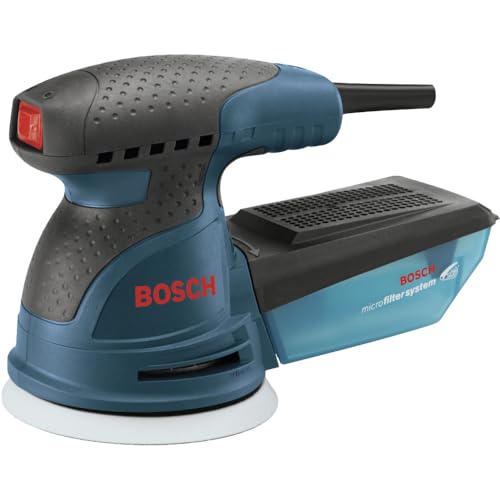
Bosch ROS20VSC Random Orbital Sander
What We Like
- Pad dampening system minimizes swirl marks
- Variable speed control for different tasks
- Excellent micro-filter dust collection system
- Compact and lightweight at 3.5 pounds
Trade-offs
- Corded design limits mobility compared to battery models
A 2.5-amp motor driving a variable-speed pad from 7,500 to 12,000 orbits per minute gives you the flexibility to tackle everything from aggressive stock removal to final finishing without switching tools. The real star for furniture work is the pad dampening system, which actively fights the swirl marks that can ruin a smooth finish. Combine that with a dust collector that traps particles as fine as half a micron, and you have a sander designed to deliver a clean, ready-to-finish surface right out of the box. It’s the complete package for a woodworker who needs one reliable sander for an entire project.
A dampening system in its pad helps minimize swirl marks, delivering a smooth finish on both flat and contoured surfaces. The dust collector with a micro-filter traps particles as small as half a micron, keeping your workspace cleaner. Its variable-speed motor runs from 7,500 to 12,000 orbits per minute, allowing adjustment for different materials.
Festool ETS 125 REQ-Plus Orbital Sander

What We Like
- Ergonomically formed for comfortable, extended use.
- Step-less variable speed for precise application control.
- Balanced vibration stop for smoother operation and finish.
- Efficient Jetstream dust removal keeps work area clean.
Trade-offs
- At 8.2 pounds, it is significantly heavier than many 5-inch sanders.
- Larger physical footprint than compact palm sanders for detail work.
The balanced vibration stop design is the core of this sander, translating directly to a markedly smoother handoff and a noticeably finer scratch pattern on your final coat. That, combined with its step-less variable speed, makes it a tool for the furniture maker who views sanding not as a chore but as the critical final step to a flawless surface. It’s built for those long sessions where ergonomics and consistent, high-quality results are non-negotiable.
Weighing 8.2 pounds, this sander requires more arm strength than lighter models like the 3.4-pound DEWALT DWE6423, particularly for overhead work. Its ergonomic form is designed to fit comfortably in any size hand for extended use, but the heft trades some one-handed maneuverability for stability. The balanced Vibration Stop design contributes to a smooth operation that can deliver better finish results.
Festool RTS 400 REQ-Plus Orbital Sander

What We Like
- More powerful 250-watt motor for consistent speed
- Interlocking dust port for secure extraction hose connection
- Rubberized grip and textured surfaces for control
Trade-offs
- At 8.2 pounds, it is heavier than many palm sanders
- Tool is larger than compact models like the Bosch ROS20VSC
- Requires a compatible dust extractor for full system benefit
The Festool RTS 400 REQ-Plus orbital sander features a 250-watt motor with MMC electronics, a design that delivers more power than its predecessor. Improved ergonomics include rubberized grip textures for secure handling. An interlocking dust port works with the latest generation of CT Connector for improved dust extraction retention.
That capability comes with a physical presence. At 8.2 pounds and with a larger footprint, it demands more arm stamina than a lightweight sander like the DEWALT DWE6423. The design is clearly part of a system, with its interlocking dust port offering superior performance when paired with a Festool extractor. For general stock removal or quick touch-ups, its heft is overkill, but for dedicated finish work, it delivers a uniquely refined result.
DEWALT DWE6423 Random Orbital Sander

What We Like
- Low-profile height for getting close to work
- Separate counterweight reduces vibration
- Rubber overmold improves grip in critical areas
- Dust-sealed switch for longer life
Trade-offs
- Requires universal adapter for non-DEWALT vacuums
- Corded design limits mobility
A shorter height profile is the standout feature here, letting you sand right up to edges and into corners where taller sanders simply can’t reach. This makes the DWE6423 a natural fit for furniture work, where sanding drawer fronts, table aprons, and detailed trim is common. It’s a corded workhorse with a proven motor and a grip designed to stay in your hand, built for the long haul of refinishing projects.
Dust collection is a key consideration. The sander features improved dust collection with a one-handed locking bag and a dust-sealed switch for longer life. Its dust port fits directly to DEWALT’s DWV010 or DWV012 dust collectors; for other vacuum systems, you need the DWV9000 Universal Quick Connector adapter.
Makita BO5041 Random Orbit Sander

What We Like
- Variable speed dial for material matching
- Ergonomic rubberized grip for comfort
- Lock-on button for continuous use
- Adjustable front handle for confined spaces
Trade-offs
- Corded design limits mobility
- Length of 10.8 inches requires clearance
At just over three pounds, the Makita BO5041 is one of the lighter sanders in its class, which combined with its rubberized palm grip is designed for improved operator comfort and control. The adjustable front handle allows for sanding in corners and confined areas, while the variable speed control dial lets users match the sanding speed from 4,000 to 12,000 OPM to the application.
As a corded tool, it requires access to a power outlet. The 3.0 AMP motor provides power for smoother and faster sanding, and the tool’s dimensions are 10.8 inches long, 4.8 inches wide, and 6.0 inches high.
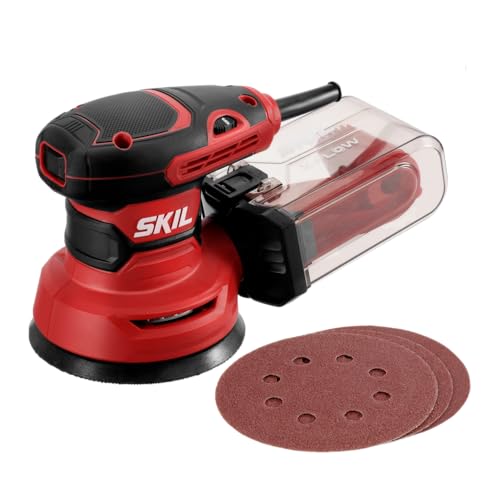
SKIL SR211601 Random Orbital Sander
What We Like
- Compact size for sanding in tight spaces
- Low-vibration design with rubber grip reduces fatigue
- Easy-to-empty transparent dust container
- Dust-sealed on/off switch for simple operation
Trade-offs
- Corded design limits mobility versus cordless models
A 2.8 amp motor spinning at 13,000 orbits per minute provides enough power for most furniture refinishing tasks without intimidating a beginner. This sander is built for the cost-conscious woodworker who needs a reliable tool for weekend projects. Its compact frame and ergonomic grip make it easy to control on contoured edges, while the variable speed dial lets you dial down for delicate veneers. The cyclonic dust box is a straightforward solution for keeping your workspace relatively clean.
At its approachable price, the SKIL sander trades a direct dust extraction port for an integrated container, requiring pauses to empty it on larger jobs. Its 2.8 amp motor and 13,000 orbits per minute deliver a smooth performance suitable for stripping paint or preparing bare wood. While it lacks the premium features of some models, the core functionality gets the job done.
Product photos
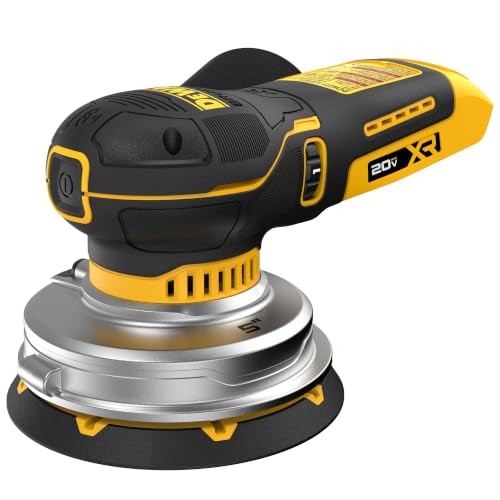
DEWALT DCW211B Cordless Orbital Sander
What We Like
- Industry-leading material removal speed for productivity.
- Lowest profile design for working in tight spaces.
- Five variable speed settings for different applications.
- High-efficiency dust collection minimizes cleanup.
Trade-offs
- Dust extraction requires a compatible, separately sold vacuum.
The ability to sand up to 50 square feet on a single charge is what cordless freedom is all about. You can move from the workshop to the dining room table without hunting for an outlet. This makes the DEWALT a natural fit for anyone tackling furniture projects in a garage without dedicated power, or for those who simply hate being tethered. Its low-profile nose and up to 40% reduced vibration mean you can work comfortably in corners and on edges for longer stretches. This is essential for the multi-hour sessions furniture refinishing often demands.
The trade-off for that cordless convenience is that you’re committing to a battery platform. The tool itself doesn’t come with a battery or charger, so this is a clear value for existing DEWALT 20V MAX users and a more significant investment for newcomers. Compared to its corded sibling, the DWE6423, you gain mobility but accept the management of charge cycles. For a large, stationary piece like a dining table top, a corded sander might still be the relentless choice, but for moving around a chair or working on a porch, the cordless advantage is tangible.
Product photos
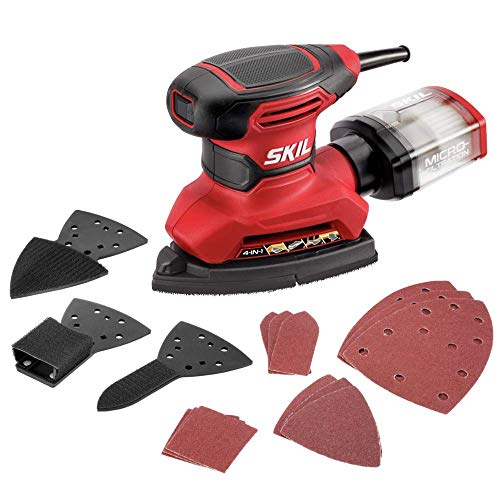
SKIL SR232301 Multi-Function Detail Sander
What We Like
- Four-in-one versatility with three tool-free attachments
- Effective micro-filtration dust box and vacuum port
- Hook and loop system for quick sandpaper changes
- Low-vibration, ergonomic grip reduces hand fatigue
Trade-offs
- Lacks variable speed control for different materials
- Corded design restricts mobility compared to battery models
The ability to swap between three tool-free attachments for corners, edges, and contours makes this sander a specialist for furniture details. Its 2.6-pound weight and low-vibration design let you maneuver it into tight spaces without your hand tiring quickly, which is crucial when working on intricate carvings or complex mouldings. The dedicated dust management options, including a micro-filter box, help keep your workspace clean for better finish visibility.
As a 4-in-1 detail sander, it is designed for a variety of sanding applications rather than one specific task. Compared to a dedicated random orbital sander for broad panels, this model trades its 13,500 orbits per minute for versatility with different attachments. Its compact size, under ten inches long, allows it to fit into spaces where larger tools cannot operate.
Product photos
Makita BO4556K Finishing Sander

What We Like
- Lightweight at 2.5 pounds for minimal arm fatigue.
- High 14,000 OPM speed for efficient material removal.
- Effective dust collection system keeps the workspace clean.
- Large clamping lever allows for quick paper changes.
Trade-offs
- Fixed speed limits control for different materials or finishes.
- Smaller sanding surface than a 5-inch random orbital sander.
For flat surfaces and final prep, 14,000 orbits per minute gets the smoothing done quickly. This sander is built for the woodworker who values a clean, controlled finish on cabinet faces, tabletops, and other broad, flat areas. Its contoured rubber grip and ball-bearing construction make it comfortable for long sessions, reducing the buzz in your hands so you can focus on the feel of the surface. The efficient dust collection is a serious plus for indoor furniture work, hooking directly to a shop vacuum to keep your lungs and workspace clear of fine particles.
This sander’s 14,000 orbits-per-minute speed is designed for faster and smooth finish sanding, focusing its capability on creating a consistent final surface. Unlike a variable-speed random orbital sander such as the Bosch ROS20VSC, this model operates at a fixed rate, which is a simpler choice for straightforward finishing tasks. Its traditional quarter-sheet, straight-line sanding motion is ideal for working with the grain on flat surfaces, making it a dedicated tool for that specific finishing style.
Product photos
SHALL Random Orbital Sander
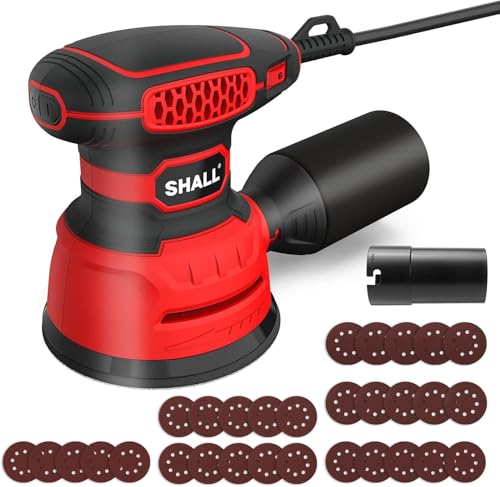
What We Like
- Includes 30 sandpaper sheets for immediate start
- Six continuously adjustable speed settings
- Lightweight, ergonomic, and double-insulated handle
- Removable dust bag for effective dust capture
Trade-offs
- Corded design limits mobility away from outlets
- Dust collection relies on a bag, not a vacuum port
The SHALL sander arrives with a full complement of 30 sanding discs. This means you can tackle an entire refinishing project from coarse stripping to fine finishing without a trip to the store. Combined with its wide 6,000 to 13,000 RPM speed range, it becomes a practical, ready-to-work choice. It’s a solid fit for the furniture restorer who wants a single kit to handle everything from aggressive varnish removal to final smoothing, and for the DIYer who values convenience and a complete out-of-the-box solution.
You trade some finesse for that convenience. The dust collection system uses a bag, which is serviceable but can’t match the near-dustless performance of a sander like the Festool ETS 125 REQ-Plus when hooked to a dedicated vacuum. The motor is capable, though the tool’s weight is noticeable compared to lighter models like the Makita BO5041 during extended sessions on vertical surfaces. For detailed work on intricate furniture parts, a dedicated detail sander would be more appropriate, but for general surface prep, this SHALL kit has you covered.
Product photos
How We Evaluated Hand Sanders for Furniture
This guide is based on a review of manufacturer specifications, expert tool comparisons, and patterns in user feedback. While no physical testing was performed, the analysis of extensive product data highlights models that are frequently recommended for furniture-related work.
We prioritized criteria critical to furniture work. First is a sander’s ability to deliver a swirl-free finish. Next are its ergonomics and weight for long sessions. We also considered dust collection effectiveness for a clean workspace, plus the design for accessing edges and corners. The right combination of these factors separates a good sander from a great one for furniture.
This method shows which tools are commonly chosen for specific tasks, but it cannot reflect personal preferences like hand size. A final consideration should be the scope of your project, such as refinishing one piece of furniture or an entire set of cabinets.
What To Look For In Hand Sanders for Furniture
Furniture sanding demands a tool that can handle both broad surfaces and intricate details without leaving marks or causing fatigue. The right choice depends on your project scope, the shapes you need to sand, and how much you value a dust-free shop.
Key considerations include the sander’s orbit style for finish quality, its weight and grip for comfort, the effectiveness of its dust collection, and its physical profile for reaching into tight spaces and corners.
Sander Type & Orbit
Random orbital sanders are the most versatile choice for furniture, using a combined spinning and orbiting motion that minimizes swirl marks compared to a plain orbital sander. For large, flat surfaces like tabletops, a sheet sander or a high-speed finishing sander can be very efficient. When dealing with corners, carvings, or complex shapes, a dedicated detail sander with a triangular or rectangular pad is essential. Our research on sanders for furniture restoration highlights how different pad shapes suit different parts of a project.
Ergonomics & Vibration Control
Comfort is paramount when sanding an entire dresser or table. Look for tools with rubberized overmold grips and features marketed for vibration reduction, like counterweights or dampening systems. A lighter tool, around 3 to 4 pounds, is easier to manage overhead or on vertical surfaces, while heavier models may offer more power but can lead to faster fatigue. Extended use of a poorly balanced sander can cause significant hand and arm strain.
Dust Collection & Profile
Effective dust collection isn’t just about cleanliness; it keeps abrasive particles off your fresh sanding surface for a better finish and protects your lungs. Integrated bags are convenient, but a port for a shop vacuum is more powerful. A low-profile sander design allows you to work flush against edges and inside corners, which is crucial for furniture frames and drawers. Many top orbital hand sander models include these low-profile designs as a key feature.
Practical Checks Before You Buy
- Assess the sandpaper type and size (hook-and-loop is standard) and ensure your preferred grits are readily available.
- Check if the dust port uses a standard size or requires a brand-specific adapter for your vacuum.
- For cordless models, verify battery compatibility with your existing tool ecosystem.
- Consider variable speed control for versatility, allowing you to slow down for delicate veneer or speed up for paint removal.
- Look at the warranty length as an indicator of the manufacturer’s confidence in the tool’s durability.
The most important rule is to match the sander’s shape and strength to the majority of your work. Don’t buy a bulky sander for detailed chairs, or a light detail sander for stripping large tabletops.
Hand Sanders for Furniture Compared
The following table compares the key specs and features of all ten sanders at a glance to help you spot differences in power, weight, and design.
| Product | Weight | Speed Range | Dust Collection |
|---|---|---|---|
| Bosch ROS20VSC Random Orbital Sander | 3.5 pounds | 7,500-12,000 OPM | 1/2-micron particles |
| Festool ETS 125 REQ-Plus Orbital Sander | 8.2 pounds | Step-less variable speed | Jetstream design |
| Festool RTS 400 REQ-Plus Orbital Sander | 8.2 pounds | N/A | Integrated dust port |
| DEWALT DWE6423 Random Orbital Sander | 3.4 pounds | 8,000 – 12,000 OPM | Fits DEWALT collectors |
| Makita BO5041 Random Orbit Sander | 3.1 Pounds | 4,000-12,000 OPM | N/A |
| SKIL SR211601 Random Orbital Sander | 3.4 pounds | 13,000 orbits per minute | Cyclonic dust box |
| DEWALT DCW211B Cordless Orbital Sander | 3.8 pounds | 8,000 – 12,000 OPM | Up to 95% with vacuum |
| SKIL SR232301 Multi-Function Detail Sander | 2.6 Pounds | 13,500 orbits per minute | 1-1/4 inch for vacuum |
| Makita BO4556K Finishing Sander | 2.5 pounds | 14,000 OPM | Through-the-pad with port |
| SHALL Random Orbital Sander | Approx. 1.3 kg | 6,000 – 13,000 RPM | Detachable Dust Bag |
Frequently Asked Questions
What’s the best hand sander for furniture?
For most woodworkers, a 5-inch random orbital sander like the Bosch ROS20VSC offers the best balance of power, finish quality, and dust control for all stages of furniture work. It efficiently removes material and, with proper technique, leaves a surface ready for stain or finish without deep swirl marks.
What is the best handheld wood sander?
The best handheld sander for wood depends on the task. For fast stock removal on flat surfaces, a random orbital sander is ideal. For final smoothing and polishing, a finishing sander excels. For intricate moldings and corners, a detail sander is the correct choice. Our guide to hand sanders for woodworking explores these types in more detail.
What type of hand sander should I buy?
Start with a random orbital sander if you only buy one; it’s the most versatile type for general furniture refinishing. If you frequently work on pieces with lots of corners and details, prioritize a detail sander. Your choice should be guided by the most common shapes and surfaces in your projects.
What is the best hand sanding tool for a smooth finish?
Tools designed for finish sanding, like the Festool ETS 125 REQ. Plus, incorporate features such as step-less speed control and advanced vibration dampening to promote a silky-smooth surface. Using a progressive sanding grit sequence is equally important for achieving that final, flawless result.
How do I avoid swirl marks when sanding furniture?
To avoid swirl marks, use a random orbital sander with a pad dampening system, don’t apply excessive pressure, and always progress through finer grits of sandpaper. Move the sander slowly and consistently across the wood grain. For more techniques, see our dedicated resource on how to avoid swirl marks.
The Bottom Line
The Bosch ROS20VSC is our best overall hand sander for furniture, offering woodworkers a reliable tool that delivers a smooth finish with minimal swirl marks and excellent dust control. It’s a strong first sander for anyone serious about refinishing.
Budget-conscious DIYers should look at the SKIL SR211601, while those needing cordless freedom in tight spaces will appreciate the DEWALT DCW211B. For furniture covered in intricate carvings or tight corners, the SKIL SR232301 multi-function detail sander is the specialized tool for the job.
Ultimately, the single most important factor is matching the sander’s shape and capability to your furniture’s geometry, ensuring you can sand every surface, from broad tops to cramped corners, with confidence and comfort.
