
8 Best Saw Blades For Composite Decking in 2026
This post contains affiliate links. As an Amazon Associate, we earn from qualifying purchases.
Our best overall saw blade for composite decking is the Diablo TrexBlade Circular Saw Blade, which excels at preventing melting for exceptionally clean cuts. We also highlight specialized options, like the best pick for standard 7-1/4-inch saws and a long-life value blade for large projects.
Cutting composite material is different from wood; using the wrong blade can lead to gummed-up teeth, melted edges, and a rough finish. This guide is based on research into manufacturer specifications, expert recommendations, and patterns in owner feedback to help you match a blade to your specific saw and decking material.
Top 8 Saw Blades For Composite Decking in the Market
Certain content that appears on this site comes from Amazon. This content is provided "as is" and is subject to change or removal at any time.
The Best Saw Blades For Composite Decking, Reviewed
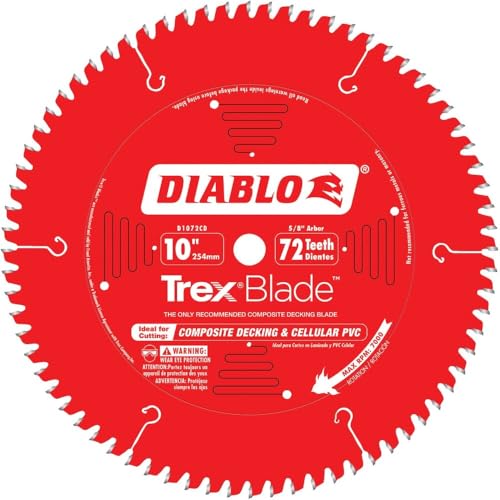
Diablo TrexBlade Circular Saw Blade
What We Like
- TiCo carbide maximizes life in composites.
- MTCG grind prevents melting for clean cuts.
- Non-stick coating reduces drag and gumming.
- Thin kerf design works well with underpowered saws.
Trade-offs
- A 10-inch diameter limits use to larger saws.
- 1.8-pound weight adds heft for a circular blade.
The Modified Triple Chip Grind is the key here, actively managing heat to prevent the fused, messy edges you get when composite materials melt. That feature, combined with the non-stick Perma-SHIELD coating, makes this blade a specialist that excels at its named task. It’s the right pick for the contractor or serious DIYer who needs clean, precise cuts in composite decking and cellular PVC without constant blade cleaning. The thin kerf is a thoughtful addition, ensuring even a jobsite saw won’t bog down.
Designed specifically for composite decking and cellular PVC, this blade’s Modified Triple Chip Grind keeps material cool to prevent melting, which is critical for a clean finish on modern deck boards. Its 10-inch diameter and 1.8-pound weight require a full-size circular or miter saw, so it won’t fit smaller 7-1/4 inch tools. The thin kerf design also reduces the power needed for a cut, making it a good match for jobsite saws that might be underpowered.
Product photos
Norske Tools Composite Decking Saw Blade

What We Like
- MTCG tooth profile prevents melting composite
- Non-stick coating reduces drag and gumming
- Ultra-thin kerf yields fast, clean cuts
- Specifically designed for composite and PVC
Trade-offs
- 1-inch arbor limits compatibility to larger saws
- Specialized design offers less value for general wood cutting
With a 12-inch diameter and 1-inch arbor, this blade is designed for larger stationary saws like miter or radial arm models. Its modified triple chip grind tooth profile is specifically made for clean, cool, and ‘melt free’ cutting in composite decking and bamboo, which helps prevent the material from gumming up the blade. The ultra-thin kerf design also provides fast and clean cuts with minimal material removal.
The 1-inch arbor means this blade is a direct fit for saws built to that specification, but it will not work on the more common 5/8-inch arbors without an adapter. For those saws, other dedicated composite blades like the Diablo TrexBlade come in standard sizes. The blade’s non-stick coating is intended to reduce drag and shield against gumming and corrosion during use on abrasive composite materials.
Product photos
Freud Trex Composite Decking Saw Blade

What We Like
- Designed specifically for Trex composite decking.
- Brand-specific engineering for a dedicated material.
- Freud's reputation for blade manufacturing.
Trade-offs
- Material focus may be too narrow for mixed-use decks.
The Freud Trex Composite Decking Saw Blade is designed specifically for Trex composite decking. Its Amazon listing categorizes it as a specialist tool for that single material. This makes it a logical choice for projects exclusively using that brand of decking.
Its listing does not include specifications like diameter or tooth count. This requires a buyer to verify compatibility with their own saw before purchase. The blade’s material focus may be too narrow for mixed-use decks.
DEWALT Composite Decking Circular Saw Blade

What We Like
- Modified triple chip grind teeth for composite decking
- Laser-cut plate for cooler, metal-free cuts
- Standard 7-1/4-inch size for common circular saws
- 5/8-inch arbor fits most common saw models
Trade-offs
- 7-1/4-inch diameter limits depth of cut versus 10-inch or 12-inch blades
Designed specifically for composite decking, this DEWALT blade pairs with the most common handheld circular saws thanks to its 7-1/4-inch diameter. Its modified triple chip grind tooth design is intended for that abrasive material. This makes it a straightforward, dedicated option for breaking down boards on site with a standard circular saw.
That 7-1/4-inch size does limit the depth of cut possible in one pass compared to a 10-inch or 12-inch blade. For thicker stacked cuts or complex miter work on a stationary saw, a larger diameter blade would be necessary. This one excels at the sheet-by-sheet breakdown and trimming typical in deck construction.
Product photos
Bosch Composite Decking Circular Saw Blade
What We Like
- 84-tooth count for fine, clean finishing cuts.
- Triple chip grind geometry for abrasive composites.
- Extra-hard steel body resists bending for accuracy.
- Thinner kerf design for faster cuts with less waste.
Trade-offs
- Specific 12 in. miter saw requirement limits tool compatibility.
An 84-tooth count is the real story here, delivering an exceptionally smooth edge on composite decking where tear-out is a constant worry. The triple chip grind tooth geometry is specifically engineered to slice through the abrasive fibers and plastic without chipping or melting the material. This blade is built for the craftsman who prioritizes a pristine, ready-to-install finish straight off the saw, saving time on sanding or trimming ragged edges. Its extra-hard steel body ensures those clean cuts stay straight and true, even on long miters.
The trade-off is its heft and specialization. At 2.6 pounds, it’s a substantial blade designed for the stability of a stationary 12-inch miter saw, not a lightweight circular saw you’re hauling around a job site. For dedicated trim and finish work on a miter station, it’s a premium performer. If you need a more versatile blade for a portable saw, the DEWALT Composite Decking Blade at 7-1/4 inches offers a different balance of size and application.
Product photos
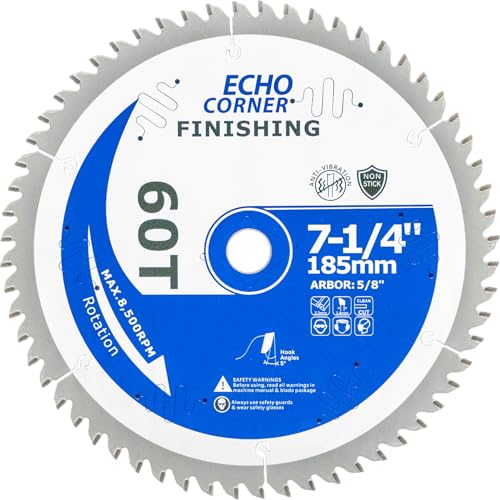
Echo Corner Thin Kerf Circular Saw Blade
What We Like
- Thin 0.086-inch kerf reduces cutting resistance.
- Non-stick coating reduces friction and gumming.
- Laser-cut stabilizer vents minimize vibration and noise.
- 60-tooth ATB design is suited for fine finishes.
Trade-offs
- 7-1/4 inch diameter limits cutting depth vs. 10-inch or 12-inch blades.
A thin 0.086-inch kerf and 60-tooth ATB grind make this 7-1/4-inch blade a capable, low-effort cutter for composite decking and other general-purpose jobs. The non-stick coating and laser-cut stabilizer vents are smart design choices that directly address the sticky, resin-heavy nature of composite materials, helping to keep cuts clean and the blade running cool. For the DIYer tackling a deck project on a standard circular saw, it delivers solid performance without demanding a premium investment.
Its 7-1/4-inch diameter is a common size for handheld circular saws, so it fits most standard tools for decking and trim work. This blade is listed for cutting composite decking, plywood, lumber, and plastic, covering many project materials. A 0.086-inch thin kerf design requires less motor power, which can help on older saws or with dense laminates.
Product photos
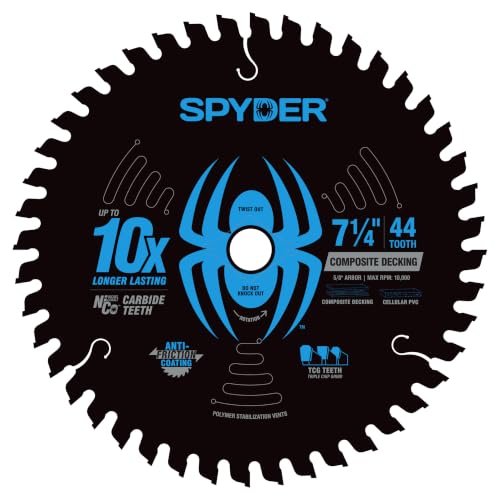
Spyder Composite Deck Circular Saw Blade
What We Like
- Up to 10x longer lasting than regular blades
- Lightweight at just 0.5 pounds
- Designed specifically for composite decking
- Compact 7-1/4-inch diameter fits most standard saws
Trade-offs
- 44-tooth count may produce a less fine finish than 72-tooth blades
- 7-1/4-inch diameter limits cutting depth compared to 12-inch blades
A blade that lasts up to ten times longer than a standard one changes the math on a decking project. For the contractor or homeowner facing a large composite deck, that durability means fewer blade changes and less downtime, which translates directly to time and money saved over the long haul. This is a blade built for the grunt work of the job, where longevity trumps having the absolute finest finish on every cut. It’s a straightforward solution for anyone who wants to buy a blade once and forget about it for the next several builds.
The trade-off for that extended life is in the cut quality. With 44 teeth, you’re getting a functional, workmanlike cut on composite material, but it won’t rival the glassy-smooth edge you’d get from a dedicated fine-finish blade like the Diablo TrexBlade with its 72 teeth. That makes it a perfect companion for rough framing and cross-cutting where the cut will be hidden, but you’ll want to reach for a finer-toothed option for those highly visible picture-frame borders or mitered corners.
Product photos
JSOEMTUZL Multi-Tooth Carving Blade

What We Like
- Unique U and V-shaped grooves for carving and slotting.
- 95mm diameter fits most trim routers and small saws.
- Multiple tooth counts for different material finishes.
- Carbide tips for cutting wood, plastic, and aluminum.
Trade-offs
- Small 95mm diameter limits cutting depth for deck boards.
- Primarily a carving blade, not designed for long rip cuts.
Its 95mm diameter and 20mm arbor make this blade a dedicated accessory for trim routers and compact circular saws. For the DIYer working on detailed edges, custom grooves, or intricate trim work on composite panels, the unique U and V-shaped tooth profiles are the main draw. They’re engineered for carving and creating clean decorative slots, not just straight cuts. This is a specialist tool for finish work, which is why it stands out for smaller power tools.
Unlike a full-sized decking blade designed for cutting boards to length, the JSOEMTUZL Multi-Tooth Carving Blade is a smaller, specialized tool. Its 95mm diameter and multi-tooth design with U and V shape grooves are intended for slotting, carving, and creating clean edges on materials like wood, plastic, and non-ferrous metals. This makes it suitable for detailed work in DIY woodworking, furniture making, or processing aluminum composite panels, rather than for primary construction cuts.
Product photos
How We Evaluated Saw Blades For Composite Decking
Our evaluation started with manufacturer data on tooth geometry, carbide grade, and specialized coatings designed for composite and PVC materials. We consulted expert round-ups from decking specialists to understand which blade features truly prevent chipping and melting, a common frustration noted in owner feedback.
The most critical criteria were the tooth grind design for clean cuts, blade diameter and arbor compatibility with common saws, and features like non-stick coatings that reduce gumming. We also considered value, balancing upfront cost against reported longevity for large projects. Since this is a research-based guide, we cannot verify real-world cutting speed or the exact lifespan in feet of material cut, which can vary based on user technique and saw power.
What To Look For In Saw Blades For Composite Decking
The right blade turns a potentially messy job into a clean, efficient process. Focus on specifications that combat the unique challenges of cutting plastic-based materials.
Look for a carbide-tipped blade with a Modified Triple Chip Grind (MTCG) to prevent melting, a non-stick coating to reduce gumming, and a thin kerf for easier cutting. Always verify the blade diameter and arbor size match your specific saw.
Tooth Geometry Is Critical
The tooth design is the most important factor for a clean cut. A Modified Triple Chip Grind (MTCG) is highly recommended by experts. This alternating tooth pattern shears through the abrasive composite material without generating excessive heat, which prevents the plastic from melting and welding back onto the cut edge. For a fine finish, a higher tooth count generally yields smoother results, though very high counts can increase drag.
Blade Specifications & Compatibility
You must match the blade to your tool. The diameter (like 7-1/4″, 10″, or 12″) determines cutting depth and dictates which saws it fits, circular, miter, or table saws. The arbor hole (commonly 5/8″ or 1″) must fit your saw’s spindle. A thin kerf blade removes less material, reducing strain on the motor and producing less dust, which is beneficial for battery-powered or less powerful saws. For other specialized cuts, you might need different tools like a jigsaw for curves.
Specialized Features & Materials
Carbide-tipped teeth are essential for longevity, as composite material is highly abrasive and will dull standard steel blades rapidly. A non-stick coating, often a polymer like Perma-SHIELD, helps prevent melted plastic residue from sticking to the blade, which maintains cutting performance and reduces cleanup. For the cleanest possible finish on other materials, you might explore dedicated blades for plywood or laminate flooring.
- Mark your cut line clearly with a pencil and speed square.
- Support long boards fully to prevent binding and uneven cuts.
- Feed the material at a steady, moderate pace; forcing it causes heat buildup.
- Always wear appropriate eye and respiratory protection.
- Clean blade teeth periodically to remove built-up residue.
Let the blade do the work, rushing the cut is the fastest way to melt the decking edge.
Saw Blades For Composite Decking Compared
Use the table below to quickly compare the key specifications and strengths of our top picks side-by-side.
| Product | Diameter | Tooth Count | Tooth Grind/Profile |
|---|---|---|---|
| Diablo TrexBlade Circular Saw Blade | 10 inches | 72 teeth | Modified Triple Chip Grind (MTCG) |
| Norske Tools Composite Decking Saw Blade | 12 inches | 72 teeth | Modified Triple Chip Grind (MTCG) |
| Freud Trex Composite Decking Saw Blade | N/A | N/A | N/A |
| DEWALT Composite Decking Circular Saw Blade | 7-1/4 inches | 40 teeth | Modified triple chip grind |
| Bosch Composite Decking Circular Saw Blade | 12 in. | 84 teeth | Triple chip grind |
| Echo Corner Thin Kerf Circular Saw Blade | 7-1/4 inch | 60 ATB teeth | N/A |
| Spyder Composite Deck Circular Saw Blade | 7-1/4" | 44 teeth | N/A |
| JSOEMTUZL Multi-Tooth Carving Blade | 95mm | 6/8/12T carbide | U & V shape |
Frequently Asked Questions
What is the best saw blade for cutting composite deck boards?
The Diablo TrexBlade is our best overall pick for its dedicated design that prevents melting and delivers clean cuts. The ideal blade for you, however, depends on your saw; the DEWALT blade is best for common 7-1/4-inch circular saws, while the Norske Tools blade is made for 12-inch miter saws.
How many teeth blade to cut composite decking?
For cross-cutting deck boards to length, a blade with 40 to 84 teeth on a 10-inch diameter is commonly recommended by experts to achieve a smooth finish. Our picks range from 44 to 84 teeth, with higher counts like on the Bosch blade providing a finer finish for visible edges.
What blade do you use for composite decking?
Use a carbide-tipped blade specifically marketed for composite or plastic decking. These blades feature a Modified Triple Chip Grind (MTCG) tooth geometry and often have a non-stick coating. They are distinct from general-purpose circular saw blades for wood and are essential to avoid gumming and melting.
Can I use a regular wood blade to cut composite decking?
You can, but it’s not recommended. Standard wood blades dull quickly on abrasive composites and are more likely to melt the plastic edges, creating a rough, messy cut. For a professional finish and to save time, a dedicated composite blade is a worthwhile investment. Understanding the difference between carbide and steel explains why material matters.
How do I cut Trex decking to make perfect cuts?
Ensure you have a sharp, dedicated composite blade like the Freud Trex blade. Mark your line accurately, fully support the board, and cut with the finished surface facing up. Use a steady feed rate without forcing the material. For precise right-angle crosscuts, a miter saw with a quality blade is ideal.
The Bottom Line
For most deck builders tackling composite or PVC materials, the Diablo TrexBlade Circular Saw Blade is the best overall choice, engineered to deliver clean, melt-free cuts that require minimal cleanup. Its specialized design justifies the investment for a dedicated project blade.
If you’re on a tight budget, consider the Echo Corner blade for solid performance. For a blade that will last through an entire large deck, the Spyder Composite Deck blade offers notable longevity. Those using exclusively Trex brand material will find the Freud blade is purpose-built for that task.
Ultimately, the single most important factor is matching a carbide-tipped, composite-specific blade to the diameter and arbor of your saw. This simple step ensures safety, efficiency, and a professional-looking result on your finished deck.
