
10 Best Saws For Drywall in 2026
This post contains affiliate links. As an Amazon Associate, we earn from qualifying purchases.
The Goldblatt Folding Drywall Jab Saw is our best overall pick. Its sharpened tip quickly punches through drywall, and the secure folding lock makes for safe, compact storage. For those who frequently need to smooth cutouts, the Klein Tools Fixed Blade Rasping Jab Saw is our top choice with its integrated feature. The IRWIN Tools Standard Drywall Jab Saw offers a dependable, balanced hardwood handle for general-purpose work.
Cutting drywall requires a saw that starts cuts cleanly, removes material quickly, and feels comfortable during repetitive use. This is important for installing new sheetrock or making cutouts for outlets and pipes, as the right tool makes the job faster and the results cleaner.
Our recommendations come from analyzing specifications, manufacturer data, and patterns in expert round-ups and owner feedback. This guide ranks ten saws to help you find the best one for your specific needs.
Top 10 Saws For Drywall in the Market
Certain content that appears on this site comes from Amazon. This content is provided "as is" and is subject to change or removal at any time.
The Best Saws For Drywall, Reviewed
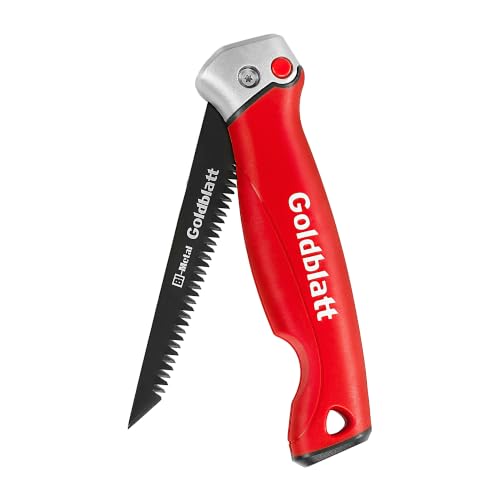
Goldblatt Folding Drywall Jab Saw
What We Like
- Sharpened tip quickly punches through drywall
- Foldable design with secure lock for safe storage
- Ergonomic handle fits most hands, resists slipping
- Deep gullets keep blade clear of debris
Trade-offs
- 5.2-inch blade length is shorter than some 6-inch models
- Folding mechanism adds complexity versus fixed blades
- At 0.5 pounds, slightly heavier than some basic jab saws
A bi-metal blade with 8 TPI teeth ground on both sides means every stroke cuts, whether you push or pull. Owners report this aggressive, two-way action can be up to 50% faster than using standard blades. That efficiency pairs with a sharpened tip for easy plunge cuts and an anti-slip handle, making this the saw you grab to open up a wall cleanly and move on. It’s a balanced choice for a contractor who needs reliability or a DIYer who appreciates a tool that won’t fight them.
The trade-off for its portability is the folding mechanism itself. While the lock is secure, it’s one more moving part compared to a simple fixed blade like the Klein Tools model. For someone who lives out of a tool belt and uses a jab saw constantly, that durability question might lean them toward a non-folding option. But for the vast majority of users who value a compact, safe tool to store in a bag, the Goldblatt’s folding design is a smart solution that doesn’t sacrifice cutting performance.
Product photos
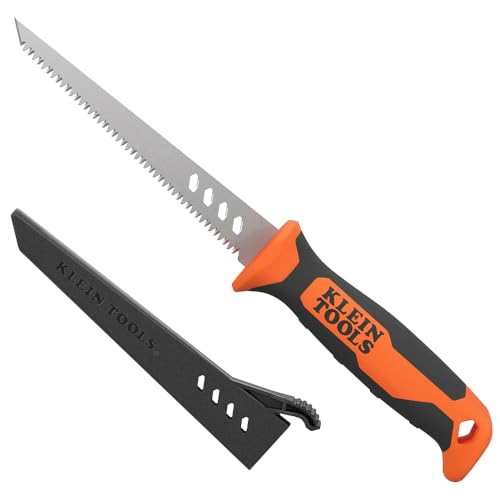
Klein Tools Fixed Blade Rasping Jab Saw
What We Like
- Integrated rasping holes for fast material removal
- Triple-ground teeth cut smoothly in both directions
- Secure locking sheath for safe transport
- Cushioned handle reduces strain during punching
Trade-offs
- Fixed blade lacks compact folding design for tool bags
- At 12.7 inches long, it requires more storage space than folding saws
Integrated rasping holes allow quick enlargement of cutouts and smoothing of edges without a tool change, saving time when fitting electrical boxes or pipes. Triple-ground teeth cut smoothly in both push and pull directions, which aids control in confined spaces. This fixed-blade saw is a straightforward, durable tool for professionals or dedicated DIYers who perform enough drywall work to value a dedicated rasp.
The blade is fixed and does not fold, requiring the included protective sheath for safe transport and storage. At 12.7 inches long, it occupies a fixed space in a tool bag. For those who prioritize compact carry in a crowded pouch, a folding saw like the Goldblatt model may be more practical, but this tool excels at combined cutting and finishing tasks.
Product photos
IRWIN Tools Standard Drywall Jab Saw

What We Like
- Hardwood handle is comfortable and balanced
- Rigid blade delivers solid cut control
- Bi-ground teeth for fast, smooth cuts
- General-purpose design for multiple material openings
Trade-offs
- Fixed-blade design does not fold for storage
- Handle lacks a rubberized or soft-grip surface
The IRWIN Tools Standard Drywall Jab Saw features a comfortable and balanced hardwood handle, providing solid control for starting plunge cuts or navigating openings. Its rigid blade delivers solid cut control for roughing in drywall and cutting openings for HVAC, plumbing, and electrical work. This saw is built to handle the tough tasks you face when working with drywall and other materials like ceiling tiles.
Research mentions that other IRWIN models, like the ProTouch, feature a rubberized grip for comfort during extended use. The Standard model’s fixed-blade design does not fold, unlike some other products such as the Goldblatt Folding Drywall Jab Saw. It is a dependable tool for many home improvement projects, with a design focused on helping you get the job done efficiently.
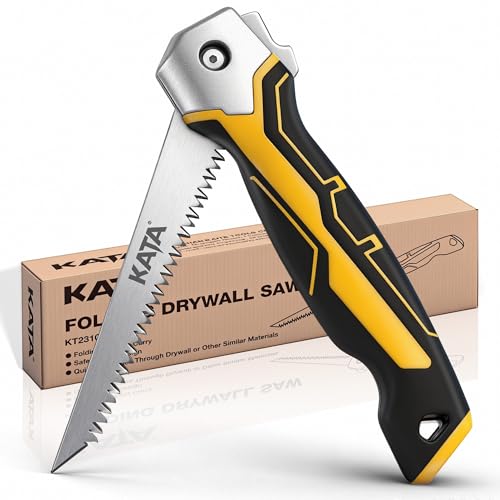
KATA Folding Drywall Jab Saw
What We Like
- Sharp pointed blade tip for fast cut starts
- Secure folding lock for safe storage and carry
- Comfortable soft grip handle reduces hand fatigue
- Aggressive tooth pattern for controlled cutting
Trade-offs
- Shorter 6.9-inch folded length limits blade reach
- Folding mechanism adds complexity versus fixed blades
- Primarily for drywall; not for heavy-duty materials
Folding down to just under seven inches, this jab saw stows easily in a tool bag or kitchen drawer. That compact design, combined with its rubberized grip handle, makes the KATA a practical choice for homeowners handling occasional repairs. Its 65Mn steel blade uses a 7 TPI pattern and a pointed tip to start cuts in drywall, supporting controlled work in small openings and light remodeling, not for tearing out entire walls.
This saw’s main advantage is its compact, folding design, which trades off some blade length and raw cutting power. When you need to make deeper plunges or longer cuts, a fixed blade will feel more substantial and direct. The KATA excels at quick, contained jobs like cutting in an outlet box or trimming around a pipe. For those tasks, its thoughtful ergonomics and secure locking mechanism deliver a level of finesse and safety that bulkier saws can’t match. Keep it in your kit for the surprises, not as your primary cutter for a full-room install.
Product photos
GreatNeck Rasping Jab Saw and Sheath

What We Like
- Includes a durable sheath for blade protection.
- Built-in rasping holes smooth rough cut edges.
- Pointed blade tip aids in starting plunge cuts.
- Induction-hardened blade for long-term durability.
Trade-offs
- No folding mechanism for compact storage.
The inclusion of a durable sheath is a major practical advantage, transforming this from a simple blade into a complete, storable kit that protects both the tool and everything else in your bag. Combined with an induction-hardened 8 TPI blade and a pointed tip for easy plunge starts, the GreatNeck is built for repeated use on job sites. It’s a straightforward, no-fuss tool that delivers core functionality for drywall pros and serious DIYers who prioritize having their gear ready and protected.
Its fixed-blade design means this saw doesn’t fold down like the Goldblatt model, so it requires more space in a tool belt. The 14.9-inch overall length is manageable, and the included sheath protects the blade during transport. An ergonomic, anti-slip handle provides added comfort to reduce hand fatigue during extended use.
Product photos
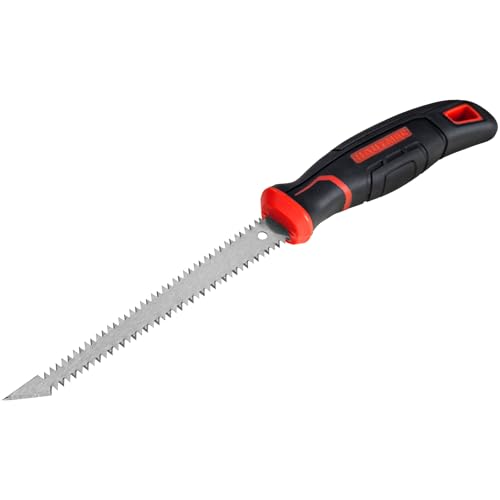
HAUTMEC Double-Edge Drywall Jab Saw
What We Like
- Double-edge blade for cutting in any direction
- Sharp tip pierces drywall without pre-drilling
- Thick, heat-treated blade resists flex and stays sharp
- Comfortable, non-slip soft grip handle
Trade-offs
- Fixed-blade design lacks folding mechanism for storage
- At 12.2 inches long, it requires more storage space than folding models
A double-edge blade is the real advantage here, letting you cut from an edge or plunge into the center of a sheet without flipping the tool over. That’s a genuine time-saver when you’re making multiple electrical box or vent cutouts. Combined with a 1.5mm thick carbon steel blade that minimizes flex, this saw delivers fast, controlled cuts. For the DIYer or pro who wants a single, high-performance drywall saw that feels professional-grade, the HAUTMEC’s durable construction and efficient design make it a standout choice.
Because it’s a fixed-blade design, this saw doesn’t fold for compact storage like the Goldblatt model. You trade portability for a balanced, professional-grade feel in the hand. Its 7TPI heat-treated teeth stay sharp longer than average, so the saw maintains cutting performance over many projects.
Product photos
IRWIN Tools ProTouch Drywall Jab Saw

What We Like
- Exceptionally rigid blade for superior cut control
- Aggressive tri-ground teeth for fast, smooth cutting
- Ergonomic ProTouch grip provides comfort during extended use
Trade-offs
- Fixed-blade design lacks the compact storage of a folder
- At 12 inches, it is longer than some compact jab saws
The ProTouch rubberized grip is what makes this saw stand out, offering comfort and control that you’ll appreciate after the twentieth cut of the day. It’s built for the repetitive work of roughing in drywall, cutting HVAC and electrical openings, or tackling ceiling tiles. That thick-body blade stays rigid where cheaper saws flex, so your cuts stay on line, and the aggressive tri-ground teeth zip through drywall with minimal effort. This is the tool I’d hand to a DIYer or pro who values a secure, comfortable hold above all else and needs a saw that can handle a full day’s work without causing fatigue.
This saw’s solid, professional feel comes from its fixed 12-inch blade. It won’t tuck into a pocket like a folding model, so it’s meant for your belt or toolbox. Owner feedback consistently notes it cuts faster and lasts longer than many competitors, making it a reliable single saw for serious drywall work. If your priority is a comfortable, high-performance tool for frequent use and you don’t need it to fold, this is the one to grab first.
DEWALT Jab Saw
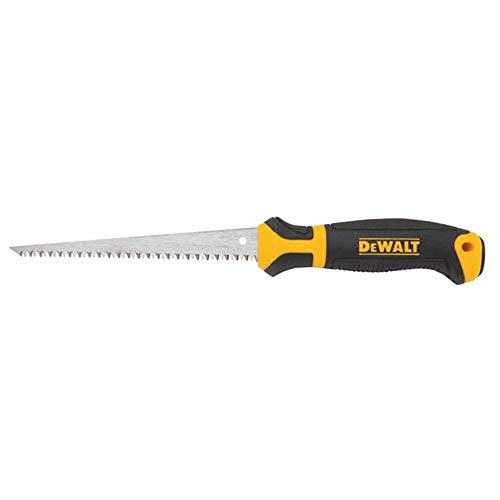
What We Like
- Induction-hardened teeth resist dulling
- Extremely lightweight at just 0.1 pounds
- Versatile for drywall, plastic, and other materials
Trade-offs
- Fixed 7-inch blade offers less reach than longer models
- No folding mechanism for compact storage
That, combined with induction-hardened teeth that stay sharp, means you can power through multiple drywall cutouts or plastic pipe jobs without the blade turning into a butter knife. It’s a straightforward, no-frills tool built for a single, critical task: getting through material fast with minimal effort.
Its design prioritizes speed with a simple, fixed blade. At 7 inches, the blade is shorter than options like the Klein Tools Fixed Blade, so it’s less suited for deep, reach-in cuts. This makes it a specialist for quick, surface-level work. For a pro who needs to rough in a dozen electrical boxes in a morning or a DIYer who values efficiency over a feature-packed handle, this DEWALT delivers pure cutting performance without complication.
Shark Rockeater Drywall Saw

What We Like
- Diamond-ground teeth for sharper, longer-lasting edge
- Dual cutting edges for efficient push and pull strokes
- Sharp puncturing point for easy scoring and plunge cuts
- Professional-grade carbon steel construction
Trade-offs
- Fixed blade design requires more storage space
The Shark Rockeater’s diamond-ground teeth are individually shaped and sharpened, which creates a keener and more durable edge than stamped alternatives. Its sharp puncturing point and carbon steel construction allow for clean, controlled plunge cuts into drywall. The teeth feature two cutting edges to cut on both the push and pull stroke, which can speed up the work.
Its fixed blade design does not fold for compact storage, unlike the Goldblatt Folding Drywall Jab Saw. The blade requires a protective cover when stored in a tool bag. Compared to the Klein Tools model with 8 TPI, this saw has a blade with 7 teeth per inch.
Product photos
Jorgensen Bi-Metal Drywall Jab Saw

What We Like
- Bi-metal blade resists corrosion and reduces friction
- Triple-ground teeth cut 50% faster than traditional
- Ergonomic TPR handle lessens hand fatigue
- Hanging hole for easy, organized storage
Trade-offs
- Fixed 6-inch blade limits pocket carry
- No sheath for blade protection
The bi-metal blade with its black coating and triple-ground teeth is the main event here. It’s built for speed and smooth cuts, and the corrosion resistance means it stays sharp and clean through a lot of drywall and plywood. That combination makes it a standout for anyone who needs a reliable, fast-cutting jab saw that won’t gum up or bind mid-cut. It’s a smart pick for the DIYer or pro who values a clean, efficient cut above all else and does enough work to appreciate the blade’s durability.
Designed for stationary storage, the Jorgensen saw includes a hanging hole for wall mounting instead of a sheath. This makes it a workshop tool rather than one for easy belt carry on mobile job sites. For pocket portability, a folding model like the Goldblatt would be a different choice.
Product photos
How We Evaluated Drywall Saws
Our evaluation is based on research, not physical testing. We compared specifications, manufacturer documentation, and a range of expert tool round-ups to identify key performance and design features. We also looked for consistent patterns in the experiences reported by owners to gauge real-world reliability and comfort.
We prioritized criteria critical for drywall work. This includes the ability to start a plunge cut easily, the blade’s cutting efficiency and durability, and the handle’s ergonomics for control and comfort. Overall design for safe storage and transport also matters. A saw that excels in these areas helps you work faster and with less fatigue.
Because this is a research-based evaluation, we cannot verify the exact longevity of blade sharpness or the precise feel of a grip in hand. We rely on widely reported owner experiences and expert consensus to inform our rankings. For a deeper dive into the options available, you can explore our comprehensive guide to drywall saws.
What To Look For In Drywall Saws
Choosing the right saw makes cutting drywall for electrical boxes, pipes, or repairs much easier. The best models combine a sharp blade, a comfortable grip, and smart design for your work style.
For clean, fast cuts, look for a saw with a sharpened or pointed blade tip for easy plunging. An aggressive tooth pattern helps clear debris, and a handle that provides a secure, comfortable grip is key for extended use.
Blade Design and Teeth
The blade is the heart of a drywall saw. A pointed tip is essential for piercing the paper face of drywall to start a plunge cut without needing to pre-drill. Tooth pattern matters for cutting speed and debris clearing; look for triple-ground or bi-metal teeth for faster cutting in both directions. Some models integrate rasping holes into the blade itself, which is ideal for smoothing cut edges in one tool.
Handle Comfort and Grip
You’ll be applying pressure and making precise movements, so handle design directly impacts control and fatigue. Ergonomic shapes and rubberized or soft-grip surfaces improve comfort during long sessions. A hardwood handle offers a classic, balanced feel, while a larger finger guard can prevent your hand from slipping onto the blade. The handle should fit your hand well for maximum control.
Storage and Safety Features
A sharp blade poses a safety risk when not in use. Folding designs with secure locks are excellent for compact storage in tool bags and prevent accidental nicks. Fixed-blade saws often include a sheath or a hanging hole for organized storage. Consider how you’ll carry and store the tool daily; a folding saw is safer for a packed tool belt, while a sheath protects a fixed blade in a toolbox.
–
- Check for a secure locking mechanism on any folding saw.
- A pointed blade tip saves time starting cuts in the middle of a sheet.
- Look for deep gullets between teeth to help clear drywall dust.
- Rubberized grips provide better control, especially with sweaty hands.
- A sheath protects the blade and everything else in your tool bag.
A good drywall saw should make starting a cut effortless, clearing debris efficient, and holding it comfortable.
Saws For Drywall Compared
The following table provides a quick glance at how our top picks compare across essential features for drywall work.
| Product | Blade Length | Blade Type | Handle Type |
|---|---|---|---|
| Goldblatt Folding Drywall Jab Saw | 5.2 inches | Bi-metal, triple-ground | Anti-slip super grip |
| Klein Tools Fixed Blade Rasping Jab Saw | 6 inches | Fixed, triple-ground | Wide, cushioned base |
| IRWIN Tools Standard Drywall Jab Saw | N/A | N/A | Hardwood |
| KATA Folding Drywall Jab Saw | N/A | 65Mn steel | Soft Grip |
| GreatNeck Rasping Jab Saw and Sheath | N/A | N/A | Ergonomic anti-slip |
| HAUTMEC Double-Edge Drywall Jab Saw | 6 inches | 65Mn high carbon steel | Soft Grip |
| IRWIN Tools ProTouch Drywall Jab Saw | 12.0 inches | Thick-body, fixed | ProTouch rubberized grip |
| DEWALT Jab Saw | N/A | N/A | N/A |
| Shark Rockeater Drywall Saw | 6 inches | Diamond-ground | N/A |
| Jorgensen Bi-Metal Drywall Jab Saw | 6 inches | Bi-Metal D6A+M2 | PP and TPR |
Frequently Asked Questions
What is the best type of saw for cutting drywall?
A jab saw, also called a drywall saw or keyhole saw, is the best type for most drywall work. Its pointed tip allows you to start a cut anywhere on a sheet, and its narrow blade is ideal for making cutouts for outlets, switches, and pipes. For long, straight cuts, a utility knife is often used to score the drywall first.
Can I use a regular hand saw to cut drywall?
You can, but it’s not ideal. Traditional hand saws have teeth designed for wood, which can tear the drywall’s paper face and gypsum core, leading to ragged, messy edges. A dedicated drywall saw has finer, sharper teeth that slice cleanly through the material for a more professional finish.
What’s the advantage of a folding drywall saw?
The primary advantage is safety and portability. A folding saw allows you to safely store the blade inside the handle, protecting it from damage and preventing accidental cuts when the tool is in a bag or pocket. This makes it an excellent choice for professionals who carry their tools or DIYers with limited storage space.
Are there drywall saws that can also sand edges?
Yes, some models feature integrated rasping holes along the blade. After making a cut, you can use these rough, file-like holes to quickly smooth and bevel the drywall edge. This is a convenient feature for installers who need to refine openings for a perfect fit without switching tools.
Do I need a power tool for cutting drywall?
For most standard cutting tasks, a hand-powered jab saw is sufficient and offers great control. For cutting large quantities of drywall or making very long, straight cuts, professionals often use an oscillating tool or a rotary tool with a specific drywall bit for speed. However, for the vast majority of cutouts and repairs, a manual saw is the right and most economical tool. Our related guide on oscillating tool blades can help if you decide to go the power-tool route.
The Bottom Line
The Goldblatt Folding Drywall Jab Saw is the best overall choice. It combines a sharp piercing tip with effective cutting teeth and a secure folding mechanism. This makes it ideal for DIYers and pros who need a reliable, portable tool.
If you’re on a budget, consider the GreatNeck Rasping Jab Saw and Sheath for its included protective sheath and useful rasping feature. For tasks demanding maximum comfort during long sessions, the IRWIN Tools ProTouch Drywall Jab Saw stands out with its exceptional grip.
Ultimately, the most important factor is matching the saw’s design, whether it folds for safety or includes specialty features like rasping holes, to how you actually work and store your tools. The right choice will make your next drywall project faster and cleaner.
