
10 Best Power Saws in 2026
This post contains affiliate links. As an Amazon Associate, we earn from qualifying purchases.
The best power saw for most people is the Makita 5007Mg Magnesium Circular Saw for its blend of power and durability. For cordless flexibility, consider the DEWALT 20V MAX XR Circular Saw, and for tight spaces, the SKIL MS6306-00 Miter Saw excels. Choosing the right saw means matching the tool’s strengths to your specific tasks and workspace. We researched specifications, expert round-ups, and owner feedback to compile this list. You’ll find a breakdown of key features and a direct comparison to clarify your choice.
Top 10 Power Saws in the Market
Certain content that appears on this site comes from Amazon. This content is provided "as is" and is subject to change or removal at any time.
The Best Power Saws, Reviewed
Makita 5007Mg Magnesium Circular Saw

What We Like
- Lightweight magnesium construction for balance and durability
- Powerful 15-amp motor delivers 5,800 RPM
- Two built-in LED lights illuminate the cut line
- Large bevel capacity with positive stops at common angles
Trade-offs
- Corded design limits mobility compared to cordless models
- Weighs 10.6 pounds, heavier than newer compact cordless saws
- One-year warranty is shorter than some competitors' offerings
A 15-amp motor spinning at 5,800 RPM gives this saw the guts to power through tough lumber all day, which is why you’ll find it scarred and battered on countless job sites. The magnesium build keeps it surprisingly light and well-balanced at 10.6 pounds, so it feels steady in your hand during long rips. It’s a saw built for relentless, accurate work, with LED lights that ensure your cut line stays visible in dim conditions. This is the definitive choice for carpenters and serious DIYers who need a corded saw they can absolutely trust.
The trade-off for that proven power and durability is the cord. For quick cuts or working far from an outlet, a cordless option like the Makita Sub-Compact Brushless Circular Saw offers greater freedom. However, if your primary concern is having a saw that will start every time and handle the abuse of framing or deck building, the cord is a non-issue. Owner feedback consistently points to its legendary jobsite toughness, making it a tool you buy once.
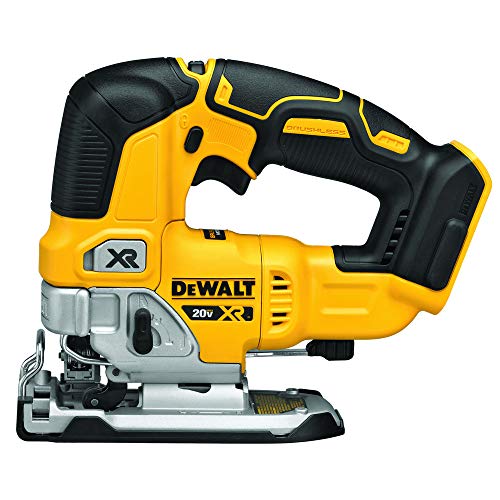
DEWALT 20V MAX XR Jig Saw
What We Like
- All-metal, keyless shoe bevel with positive stops
- Compact size for easy grip and control
- Bright LED light for dim work surfaces
- Keyless blade change for quick swaps
Trade-offs
- Tool only: requires separate battery and charger purchase
The all-metal, keyless shoe bevel with its four positive stops is what sets this jigsaw apart. You can switch between 0, 15, 30, and 45 degrees with a flick of a lever and feel it lock securely into place. That precision is a godsend when you’re working on a beveled cabinet face or fitting trim. Combine that with a compact, 4.2-pound frame and a variable speed trigger, and you get a tool built for detailed, controlled cuts where accuracy matters more than raw speed. This is the saw you grab for furniture projects or finish work where clean angles are non-negotiable.
Since it’s a bare tool, you must already own a DEWALT 20V MAX battery to use it. A tool like the heavier DEWALT 20V MAX XR Circular Saw is listed for larger construction tasks like cutting framing lumber. This jigsaw’s orbital action and dust blower, however, are designed for controlled, intricate cutting where line-of-sight matters.
DEWALT 20V MAX XR Circular Saw

What We Like
- Brushless motor for high efficiency and runtime
- Electric brake for precise, controlled stops
- High cut capacity for dimensional lumber
- Cordless design with substantial power
Trade-offs
- Tool only: requires separate battery and charger purchase
- Bulkier footprint compared to more compact saws
With a maximum depth of cut of 2-9/16 inches, this saw can handle framing lumber and sheet goods in a single pass, making it a true jobsite workhorse. The brushless motor and 5,500 RPM top speed deliver corded-like performance without the cord, a key reason it stands out for contractors and serious DIYers who need to move freely around a project. The electric brake is a critical safety and control feature, stopping the blade quickly once you release the trigger.
This saw’s capability comes with some heft and bulk. At nearly 10 pounds without a battery, it demands respect on the saw horses. That size and weight are a direct result of its sturdy construction and motor, which is the right compromise if your priority is cutting performance over ultimate portability.
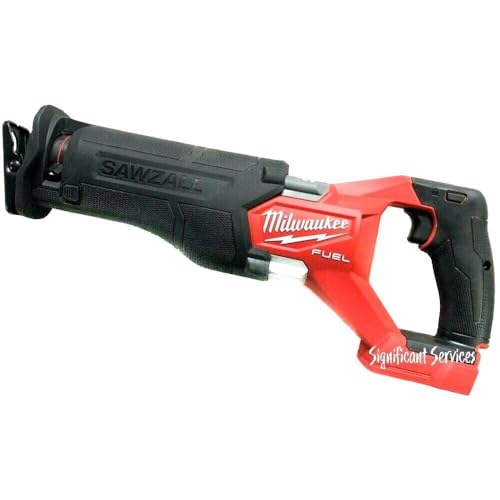
Milwaukee M18 Fuel Sawzall
What We Like
- Lever-actuated clamp enables fast blade changes
- Built-in LED illuminates the cutting surface
- Metal-reinforced battery connection improves durability
Trade-offs
- Battery and charger sold separately
- Weighs 6.8 lb, heavier than some compact cordless saws
- Bare-tool format requires an existing M18 battery system
Blade changes are fast and easy with the wear-resistant lever-actuated clamp, a feature designed for one-handed operation even with gloves. This is the core advantage for tasks like demolition or plumbing where frequent switching between wood and metal blades is required, saving time during complex projects.
The tool weighs 6.8 pounds without a battery, giving it a substantial feel. Since the listing specifies it is sold without a battery or charger, it represents a premium addition for users who already own Milwaukee M18 batteries rather than a standalone kit for first-time buyers.
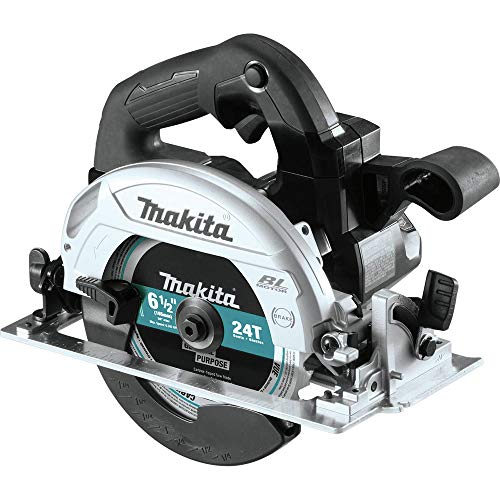
Makita Sub-Compact Brushless Circular Saw
What We Like
- Compact, blade-right design at 10-5/8 inches long
- Large 2-1/4 inch cutting capacity at 90°
- Includes dust extraction attachment and blade
Trade-offs
- Tool only: requires separate Makita 18V battery and charger
- Smaller 6-1/2 inch blade limits depth versus 7-1/4 inch saws
- Right-blade design can obscure cut line for some users
Weighing only 6.4 pounds with its battery, this saw is built for control in tight spaces and overhead work. Its compact, blade-right design measures just over 10 inches long, so it fits easily on a crowded workbench or in a packed tool bag. The generous 50-degree bevel capacity handles most common angles with ease, making it suitable for a variety of trim and finish tasks.
That compact size does mean using a 6-1/2 inch blade, which limits your maximum cut depth compared to a full-size 7-1/4 inch model like the Makita 5007MG. That larger saw is the undisputed workhorse for framers, but it’s over twice the weight. Think of this sub-compact as the perfect partner for your primary saw, or as a capable standalone for anyone whose projects don’t routinely demand cutting through thick material. Owner feedback consistently praises its balance and how it manages to feel substantial without being a burden.
BOSCH PROFACTOR Cordless Miter Saw

What We Like
- Lightweight 26-pound design with a carry handle
- Powerful cordless brushless motor for job site mobility
- Tall fence supports taller material for accurate cuts
- Smooth sliding bars and easy-read bevel detents
Trade-offs
- Tool only: requires a separate Bosch 18V battery and charger
- Single-bevel design limits compound cutting versatility
A 26-pound weight and cordless operation make this miter saw uniquely easy to move from the truck to the job. It’s built for the carpenter who needs pro-level crosscuts, handling 8-1/4-inch boards and nested crown molding, without hunting for an outlet. The design centers on portability without sacrificing a tall fence for support or smooth sliding action for clean cuts. This saw is for the tradesperson whose workbench is a pair of sawhorses and whose power comes from the same battery pack running their drill.
This cordless miter saw requires a compatible Bosch 18V battery, sold separately, which adds to the initial cost. For stationary shop use, a 10-inch corded miter saw like the Metabo HPT C10FCG2 provides a larger blade diameter. However, the Bosch PROFACTOR’s cordless design eliminates trip hazards, delivering pro cutting capacity directly to driveways or finished rooms.
Product photos
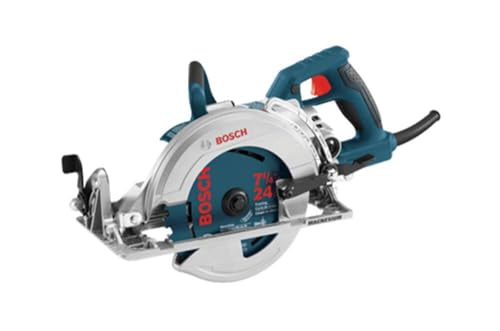
BOSCH CSW41 Worm Drive Circular Saw
What We Like
- Left side blade for clear cut line view
- 15-amp motor provides strong torque
- On-board wrench and tool hook for convenience
Trade-offs
- Corded design limits mobility compared to battery-powered tools
The Bosch CSW41’s left side blade design gives you an unobstructed view of your cut line, a critical advantage for making precise, straight cuts in framing or sheet goods. Its worm drive gearing translates the 15-amp motor’s power into smooth, controlled torque, which helps prevent binding in tough materials. This saw is built for the user who prioritizes accuracy and control over raw portability, with a magnesium body that trims some weight but still delivers a solid, planted feel during operation.
That solid feel comes with a trade-off in heft. At 13.2 pounds, it is heavier than a cordless option like the 9.9-pound DEWALT 20V MAX XR Circular Saw, and the cord tethers you to an outlet. For repetitive cuts on a job site, the visibility and power may be worth the effort, but the weight and cord are noticeable compared to lighter, cordless models.
Product photos
Metabo HPT C10FCG2 Miter Saw
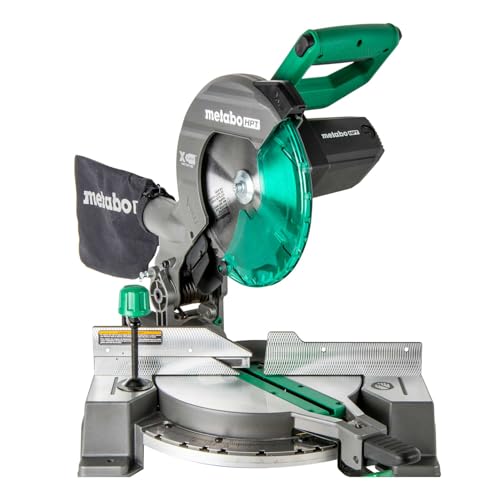
What We Like
- Lightweight 24.2 lb design for easy transport
- Powerful 15-Amp motor at 5,000 RPM
- Large table and vice clamp for workpiece stability
- 5-year Metabo HPT warranty for durability
Trade-offs
- Single-bevel design limits compound cuts to one direction
- Corded design requires access to a power outlet
Weighing only 24 pounds, this saw is easy to maneuver and transport to any job site, and its compact design allows for easy storage. Its 15-Amp motor delivers high power for effortless cuts, generating a no-load speed up to 5,000 RPM for precise cuts. The improved miter scale and controls allow for accurate adjustments, while the large table provides better material support.
You gain portability with its single-bevel design, though you’ll have to flip wider workpieces for compound cuts on the opposite side. For a stationary shop setup where weight is less concern, a model like the heavier SKIL MS6306-00 might offer different features. But if your projects demand a full-size 10-inch miter saw that you can easily carry to a deck build or a basement remodel, the Metabo HPT C10FCG2 delivers capable performance without the bulk.
Product photos
Milwaukee M18 Fuel Hackzall

What We Like
- Pivoting shoe reduces bucking and vibration
- Brushless motor for increased cutting speed
- One-handed design offers superior control
- REDLINK intelligence provides overload protection
Trade-offs
- Bare tool: battery and charger sold separately
Its one-handed design provides superior control and versatility over standard reciprocating saws, making it easier to manage in confined areas. A 7/8-inch stroke length removes more material with each stroke for faster cuts, while the pivoting shoe maintains constant contact with the workpiece for smoother operation with less bucking and vibration. The POWERSTATE brushless motor and REDLINK PLUS intelligence combine to provide up to three times longer tool life than competitive one-handed reciprocating saws.
The Hackzall’s compact, one-handed form prioritizes control over the raw power of a full-size saw. For heavy demolition where speed is paramount, the heavier Milwaukee M18 Fuel Sawzall offers a different capability. This tool is built for applications where its single-handed operation and reduced vibration deliver an advantage in precision and access.
Product photos
SKIL MS6306-00 Miter Saw

What We Like
- Compact rail system minimizes wall clearance
- LED shadow line for accurate cuts without a laser
- Quick miter lock and preset detents for common angles
Trade-offs
- Fixed rail limits crosscut capacity to 10 inches
- Single-bevel design cannot tilt in both directions
A fixed compact rail system is the key feature here, letting you set this saw flush against a wall where a sliding model simply wouldn’t fit. That makes the SKIL MS6306-00 a logical pick for anyone working in a cramped garage or shop. Its 10-amp motor handles trim and 2×10 lumber, while the LED shadow line provides a clear cut guide without the fuss of aligning a laser. This is a saw built for the DIYer who needs decent miter capacity but values a small footprint above all else.
You trade some cutting versatility for that space-saving design. The non-sliding rail means you’re limited on width compared to a sliding compound miter saw. And while it’s precise, owner feedback notes the dust collection leaves a mess, so factor in cleanup time. For more demanding trim jobs or larger stock, you’d look to a model like the Metabo HPT C10FCG2 with its larger blade, but that tool takes up significantly more room behind the bench.
Product photos
How We Evaluated Power Saws
Our evaluation is based on manufacturer specifications, expert tool round-ups, and patterns in owner feedback. We prioritized motor power and type, cutting capacity, and ergonomics because these factors determine a saw’s ability to handle different materials and user comfort over long projects. We also weighed design features like blade visibility and adjustment mechanisms, which are critical for accuracy and ease of use. Since this is a research-based guide, we cannot comment on long-term durability beyond what the warranty and material construction suggest.
What To Look For In Power Saws
Selecting a power saw starts with understanding the job. A saw perfect for framing a deck may be overkill for installing trim. The key is matching the tool’s capacity and features to your most common tasks.
Focus on power source (corded for constant use, cordless for mobility), cutting capacity (blade size and depth), and specialized features like bevel adjustments or blade-change mechanisms that suit your workflow.
Power Source & Motor
Corded saws, like our best overall pick, deliver consistent, high power ideal for heavy-duty, stationary work like framing. Cordless models, powered by brushless motors for efficiency, offer complete job site mobility, a major advantage for roofers or deck builders. Your choice hinges on whether you value unlimited runtime or the freedom to work anywhere without an extension cord. For a deeper look at the trade-offs, our guide to cordless saws covers runtime and platform considerations.
Cutting Capacity & Blade Type
The blade size dictates the maximum depth of cut. A standard 7-1/4-inch circular saw handles dimensional lumber, while a 6-1/2-inch blade is better for plywood and overhead work. Miter saws are defined by their crosscut capacity, crucial for crown molding. Blade position also matters; a left-blade circular saw offers a clearer view of the cut line for right-handed users. For projects that demand precision on wood, our resource on saws for woodworking details which types excel at joinery and finish cuts.
Design & Ergonomics
A saw’s design directly impacts control and accuracy. Features like built-in LED lights, as seen on several of our picks, illuminate the cut line in dim spaces. A lightweight magnesium build reduces fatigue during all-day use, while a one-handed design, like the Hackzall, provides access in tight spots. Easy adjustment mechanisms, such as keyless blade clamps or positive bevel stops, save time and improve repeatability on complex projects. Always review the manufacturer’s power tool safety guidelines before operating any new tool.
.### Key Features Checklist
- Weight & Balance: Heavier saws can be more stable for long cuts but cause fatigue. Lighter saws, often under 11 pounds, are better for overhead work.
- Dust Management: Look for a dust port or blower to keep your line of cut clear, especially when working indoors.
- Warranty: A longer warranty period can indicate the manufacturer’s confidence in the tool’s durability for professional use.
-## Safety First
Always wear appropriate safety glasses, hearing protection, and follow the tool’s manual for safe operation.
Power Saws Compared
The comparison table below lays out the core specifications side-by-side to help you quickly identify the right tool for your needs.
| Product | Motor / Power Source | Weight | Blade Size / Type |
|---|---|---|---|
| Makita 5007Mg Magnesium Circular Saw | 15.0 AMP | 10.6 pounds | 7-1/4-Inch |
| DEWALT 20V MAX XR Jig Saw | Brushless | 4.2 pounds | N/A |
| DEWALT 20V MAX XR Circular Saw | Brushless | 9.9 pounds | 7-1/4 in. |
| Milwaukee M18 Fuel Sawzall | Cordless | 6.8 pounds | N/A |
| Makita Sub-Compact Brushless Circular Saw | Brushless | 4.0 Pounds | 6-1/2 inches |
| BOSCH PROFACTOR Cordless Miter Saw | 18V cordless | 26.0 pounds | 7-1/4 inches |
| BOSCH CSW41 Worm Drive Circular Saw | 15 amp | 15.0 pounds | 7-1/4-Inch |
| Metabo HPT C10FCG2 Miter Saw | 15 Amp | 24.2 pounds | 10-Inch |
| Milwaukee M18 Fuel Hackzall | POWERSTATE Brushless | 4.0 pounds | N/A |
| SKIL MS6306-00 Miter Saw | 10 Amp | 31.0 pounds | 7-1/4 inches |
Frequently Asked Questions
What are the best brands of power saws?
Makita, DEWALT, Milwaukee, and Bosch are consistently seen as top choices for professional-grade power saws, offering durable construction and strong performance. For DIY and home projects, brands like SKIL and Ryobi provide reliable options with good value. The best brand often depends on your existing battery tool ecosystem if you are choosing cordless tools.
What is the best power saw?
The best power saw depends entirely on your primary task. For a versatile, durable corded saw suitable for framing and sheet goods, the Makita 5007Mg Circular Saw is an excellent choice. For a homeowner tackling varied projects, a compact circular saw or a basic miter saw might be the most practical first purchase.
What is the best electric saw for home use?
For general home use, a compact circular saw or a basic miter saw is often the best choice. They handle common tasks like cutting lumber for decks, trimming boards, or installing flooring. Look for user-friendly features like clear cut-line visibility and lightweight designs, which are covered in our list of saws for DIY.
What is the best cordless saw on the market?
Among cordless options, the DEWALT 20V MAX XR Circular Saw is a strong choice for general construction, offering cordless convenience without sacrificing cutting depth. For one-handed demolition in tight spaces, the Milwaukee M18 Fuel Hackzall is a leading specialized cordless tool. Your existing battery platform will heavily influence this decision.
What is the difference between a circular saw and a miter saw?
A circular saw is a handheld tool designed for making straight cuts, including rip cuts along the length of a board. A miter saw is a stationary tool mounted on a stand or bench, optimized for making precise crosscuts and angled miter cuts, making it ideal for trim work and framing. Understanding the types of power tools can clarify these core differences.
The Bottom Line
The Makita 5007Mg Magnesium Circular Saw is our best overall pick for its proven durability, powerful motor, and excellent cut-line visibility, making it ideal for professional framers and serious DIYers. If you need cordless freedom for job site mobility, choose the DEWALT 20V MAX XR Circular Saw, or for precision in confined spaces, select the SKIL MS6306-00 Miter Saw.
Ultimately, the most important factor is matching the saw’s core capability, be it cutting depth, portability, or specialized function, to the majority of your planned projects. Buying a saw that excels at your most frequent task ensures it becomes a trusted tool, not a regret.
