
10 Best Sawzall Blades For Cast Iron Pipe in 2026
This post contains affiliate links. As an Amazon Associate, we earn from qualifying purchases.
Cast iron pipe quickly destroys standard reciprocating saw blades, so choosing the right one is crucial for avoiding wasted time. The Diablo Steel Demon Carbide Reciprocating Saw Blades stand out for their exceptional carbide tooth life and stable cut, making them the top overall choice. For the fastest cutting speed, consider the Milwaukee Torch Carbide blade. The INWELL Tungsten Carbide is the Best Budget Pick, offering great performance for the price. This list of ten top blades is based on a review of specifications, expert round-ups, and patterns in owner feedback to help you cut confidently.
Top 10 Sawzall Blades For Cast Iron Pipe in the Market
Certain content that appears on this site comes from Amazon. This content is provided "as is" and is subject to change or removal at any time.
The Best Sawzall Blades For Cast Iron Pipe, Reviewed
Diablo Steel Demon Carbide Reciprocating Saw Blades
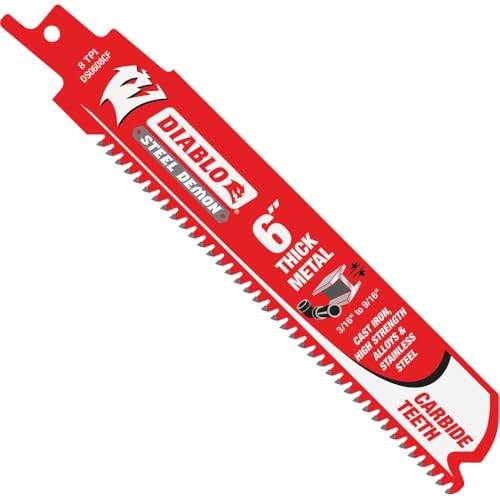
What We Like
- Carbide teeth cut cast iron 50X longer than bi-metal
- Oversized blade body stabilizes cuts, reducing chatter
- Non-stick coating resists heat and gumming
- Enhanced tip connection for extreme impact resistance
Trade-offs
- Up to 50X longer life only in 3/16" to 9/16" material
- Requires purchase as a 3-pack
Diablo’s carbide-tipped blades are engineered for extreme metal cutting, with a specialized TiCo carbide edge that can last up to 50 times longer than standard bi-metal blades in applications like cast iron and stainless steel. This extreme durability means fewer blade changes on demanding jobs. The design includes a 1-inch oversized blade body, which stabilizes the cut to reduce vibration for straighter, more precise results.
The upfront cost per blade is significant, a point noted in owner feedback. This investment is justified for the longest possible blade life in the toughest materials. For general-purpose cutting where extreme longevity isn’t critical, a standard bi-metal blade may be a more economical initial purchase.
Product photos
INWELL Tungsten Carbide Reciprocating Saw Blades

What We Like
- Tungsten carbide teeth last far longer than bi-metal.
- 8 TPI design provides steady cuts in thick material.
- Universal shank fits most major reciprocating saw brands.
- Two-blade pack offers immediate backup.
Trade-offs
- Only two blades per pack, fewer than some competitors.
- No 6-inch length option included in this specific 9-inch pack.
The industrial-grade tungsten carbide teeth are the main feature, promising a service life that can be fiftyfold greater than typical bi-metal options. This means you can expect fewer work stoppages and lower costs for new blades over time. Its 9-inch length and 8-teeth-per-inch profile are designed to handle thick metal with good control, making it a solid pick for demolition and industrial jobs.
The main trade-off is the pack size. You get two blades, which is enough for most projects, but if you’re facing a massive demolition job, you might find yourself wishing for the three-pack offered by something like the Diablo Steel Demon. Still, the INWELL blades deliver longevity and cutting power for thick metal, cast iron, and stainless steel.
Product photos
Milwaukee Torch Carbide Reciprocating Saw Blade
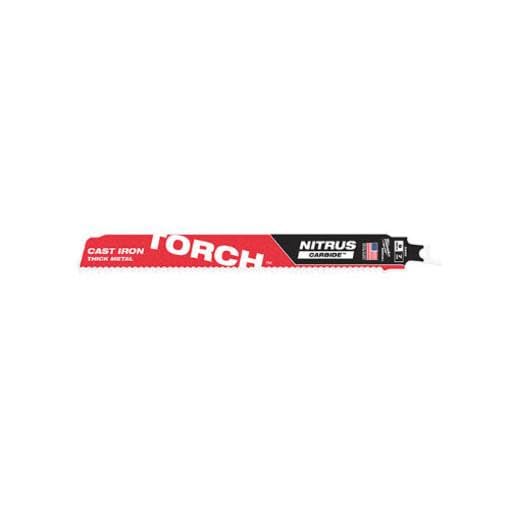
What We Like
- Carbide teeth for 50X life in thick metal
- 7 TPI configuration for fast, efficient cutting
- 25% more carbide per tooth for longest life
- Cuts cast iron, stainless steel, and alloys
Trade-offs
- 7 TPI is coarse for thin metals or fine finish work
The 7 TPI carbide teeth are built for aggressive speed in dense materials, making it the blade you reach for when you need to get through thick cast iron pipe in a hurry. It’s designed for the contractor or serious DIYer facing a heavy demolition or plumbing job where time is a factor. The carbide construction promises extreme durability, so you can expect it to handle multiple cuts without dulling, turning a messy, time-consuming task into a series of quick slices.
Milwaukee’s Torch blade targets thick and extreme metals, with carbide teeth that reportedly offer a fiftyfold lifespan increase in these tough conditions. Its 7-tooth-per-inch design focuses on fast material removal, positioning it as a specialist for demolition and heavy cast iron rather than an all-around tool. That coarse tooth pattern can leave a rougher finish on thinner materials compared to a finer blade.
Bosch Carbide-Grit Reciprocating Saw Blade
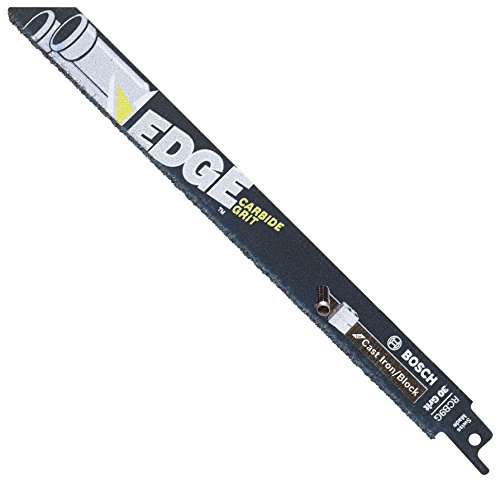
What We Like
- Turbo-Teeth tech lasts up to 3X longer.
- 30-grit carbide edge for aggressive cuts.
- Precision ground to start and stay sharp.
- Swiss-made with premium materials.
Trade-offs
- Single-piece pack lacks backup options.
The 30-grit carbide-grit edge is what makes this blade excel at grinding through cast iron pipe. It’s designed for extreme cuts, which means you can lean into the job without worrying about dulling a traditional toothed edge. This is the right pick for a pro or a serious DIYer who needs a blade that can handle repeated, punishing cuts in hard materials and wants to avoid changing blades mid-project. The Swiss-made construction and precision grinding signal a tool built for reliable performance, not a disposable accessory.
Bosch’s RCB9G blade uses Turbo-Teeth technology, which Bosch states can last up to three times longer than standard reciprocating saw blades. This extended life is engineered for extreme cuts in demanding materials like cast iron and block. The blade is sold as a single piece, so its longevity is critical as there is no immediate backup in the pack.
Product photos
USEWIN Carbide Reciprocating Saw Blades
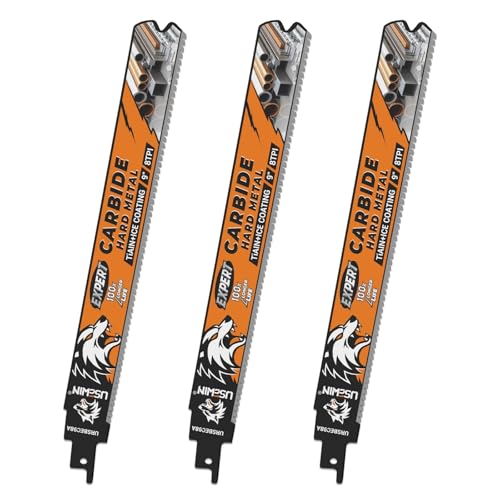
What We Like
- Carbide teeth offer 100x longer life than bi-metal
- TiAlN + ICE coating enhances durability in demolition
- 8 TPI design optimized for fast cutting in thick metals
- Universal shank fits any reciprocating saw tool
Trade-offs
- 3-pack may be less economical for a single large job
- No single-blade purchase option listed
The carbide teeth feature a TiAlN + ICE coating, which is said to provide a hundredfold lifespan increase over common bi-metal blades. This allows for extended work on hardened steel or iron with fewer blade changes. An 8-teeth-per-inch pattern is tuned for thick metals like steel plate and rebar, promoting faster cutting with less binding. This focus on endurance over upfront cost makes it a high-end choice for serious metal-cutting.
At 9 inches long, this blade matches the length of several other carbide options like the INWELL and PAYA TOOLS blades. Its universal shank fits all reciprocating saws, providing versatility for the materials listed, including stainless steel and metal pipe. Compared to a carbide-grit blade such as the Bosch model designed for cast iron, the USEWIN uses a toothed design for faster cutting in the metals it specifies.
Product photos
EZARC Obsidian Carbide Reciprocating Saw Blades
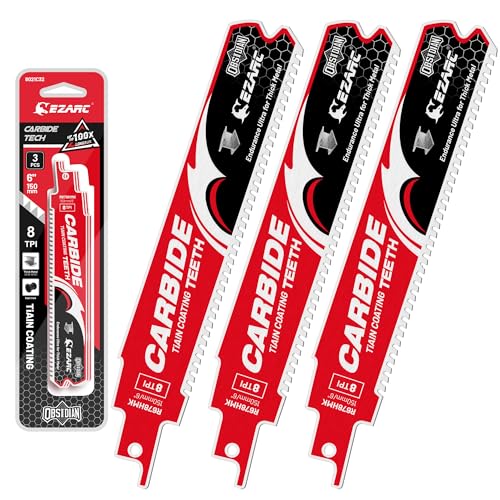
What We Like
- Advanced TiAlN carbide tip for heat resistance
- Up to 100x longer life than standard bi-metal
- Individually welded teeth for impact strength
Trade-offs
- 6-inch length limits reach in deep or confined cuts
- Optimized for thick metal, not general-purpose tasks
- Shorter blade may increase vibration on heavy pipe
The claim of up to 100 times longer life than a standard bi-metal blade means fewer blade changes and lower long-term cost on a big job. That endurance comes from industrial-grade carbide teeth with a TiAlN coating, which resists the heat and abrasion that dulls other blades. The manufacturer states these blades are engineered for demanding thick metal applications like stainless steel, rebar, and angle iron.
The 6-inch length is the real trade-off. While the universal shank fits any Sawzall and the 8 TPI design is for thick metal, the shorter blade may struggle in deep or awkward demolition scenarios where a longer blade would provide more reach. For a single, straightforward cut, a longer carbide blade like the Milwaukee Torch might be easier to manage. The product’s durability claim is based on its carbide construction compared to standard bi-metal blades.
Product photos
Lenox Demolition Bi-Metal Reciprocating Saw Blade
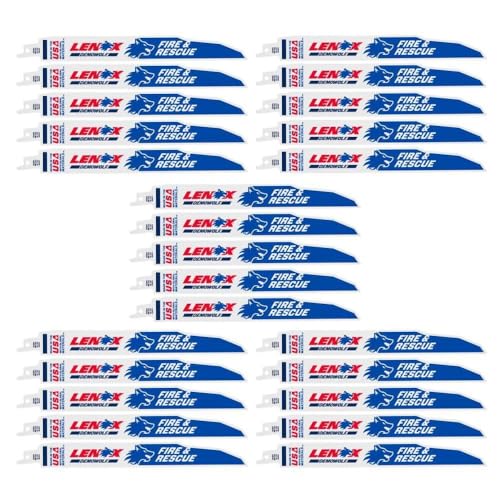
What We Like
- Taller, thicker blade profile resists bending.
- Shatter-resistant bi-metal construction for durability.
- Power Blast Technology strengthens blade to reduce breaks.
- Aggressive 10 TPI design for fast cutting.
Trade-offs
- Bi-metal design may cut slower than carbide competitors on cast iron.
- At 10 TPI, cutting speed trades off some smoothness in finish.
This blade’s 9-inch length and thicker, shatter-resistant bi-metal profile are built to power through nail-embedded wood and demolition debris without snapping, which is exactly what you need when you’re tearing out old, unpredictable plumbing. The Lenox Demolition blade is a solid, durable workhorse for the pro or serious DIYer who needs a blade that can handle a mixed bag of materials on a job site and keep going. Its strength comes from a design meant to survive abuse, not necessarily to set speed records on a single material.
This demolition blade is built for tough, unpredictable jobs where hitting nails or mixed materials is likely. Its bi-metal construction and Power Blast Technology are designed to reduce breaks, while a thicker profile helps prevent bending during aggressive cuts. The blade is promoted for versatility across nail-embedded wood, thick metal, and fire and rescue applications.
Product photos
Jinmg Bi-Metal Reciprocating Saw Blades
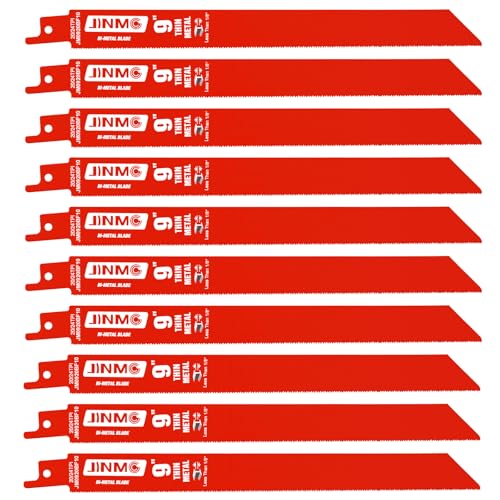
What We Like
- Ten-blade pack maximizes value for frequent use.
- 0.9mm thickness enhances durability and reduces breakage.
- Extra cobalt in bi-metal construction extends lifespan.
- Universal compatibility fits most major saw brands.
Trade-offs
- Material thickness limited to under 1/8-inch
- Finer 20/24 TPI for general use, not specialized cuts
The ten-blade pack is the most concrete fact here, turning this into a bulk supply purchase for a workshop that goes through blades. That high count, combined with a thicker-than-average 0.9mm bi-metal body and extra cobalt, is built for the user who faces repeated metal-cutting tasks and wants to minimize downtime for blade changes. It suits a contractor or serious DIYer who values having a ready blade on hand for the next cut across various materials, not just cast iron.
The compromise lies in the tooth configuration. Cutting through thick cast iron soil pipe will be slower and create more heat than using a dedicated coarse carbide model such as Milwaukee’s. You are exchanging some cutting speed and job-specific efficiency for broad versatility and the convenience of having plenty of blades on hand.
Product photos
Hardwin Carbide Reciprocating Saw Blades
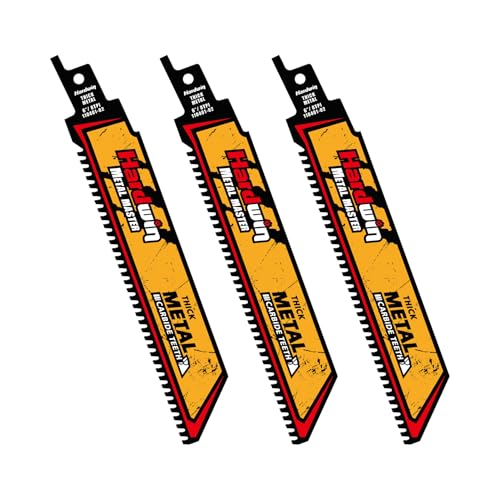
What We Like
- Carbide teeth for 30x longer life than bi-metal
- 6-inch length ideal for tight, confined spaces
- 8 TPI optimized for thick metal and cast iron
- Fits all major reciprocating saw brands
Trade-offs
- Shorter 6-inch length limits cut depth on large pipes
- 3-pack may be insufficient for large demolition projects
- Not the longest blade for deep, through-cut applications
These blades use premium carbide teeth, which the manufacturer states can last up to 30 times longer than conventional bi-metal blades. This extreme wear resistance is designed for heavy-duty demolition of materials like stainless steel and high-alloy metals, aiming to reduce blade changes on a tough job. The 6-inch length provides a balanced design for controlled cutting in confined spaces where longer blades won’t fit.
You give up some reach for that improved maneuverability. When cutting a long, free section of pipe on a bench, the shorter stroke can feel restrictive next to a longer 9-inch option. For those deep, single-pass cuts, a longer blade is preferable. However, for precise and controlled work in confined spaces, this Hardwin pack offers exceptional durability exactly where it counts.
Product photos
PAYA TOOLS Carbide Reciprocating Saw Blade
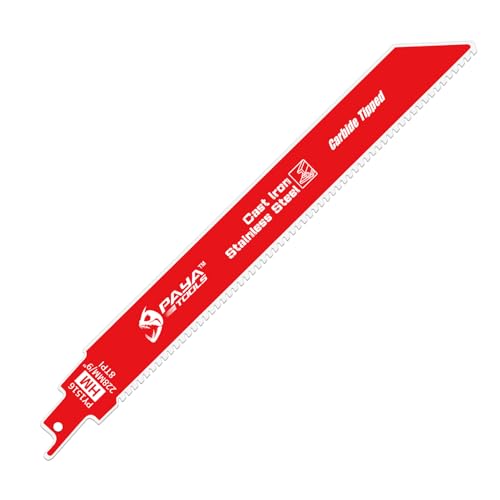
What We Like
- Carbide teeth individually welded for durability
- 8 TPI design specifically for thick metal and cast iron
- Fits all reciprocating saw brands with 1/2 inch shank
- Precision-ground teeth for improved cutting performance
Trade-offs
- Sold as a single blade, not a multi-pack.
- Total length is 228mm (9 inches).
The single most decisive feature here is the individually welded carbide tooth strip. That construction gives this blade its bite against tough materials like cast iron pipe, resisting wear far better than standard bi-metal teeth. It’s a straightforward, no-frills choice for the user who needs one reliable blade for a specific, heavy-duty metal-cutting job and doesn’t want to buy a pack. The 8-teeth-per-inch tooth pitch is the sweet spot for aggressive cuts in thick, brittle cast iron without bogging down.
The main trade-off is that it comes as a single blade. For a big demolition project with multiple cuts, you might burn through it and need to order another, whereas a pack like the INWELL or USEWIN offers immediate spares. Compared to a specialized option like the Bosch carbide-grit blade, this PAYA TOOLS blade uses traditional teeth, which will cut faster but may struggle more with embedded sand or particularly abrasive cast iron. It’s a focused tool for a focused task.
Product photos
How We Evaluated Sawzall Blades
Our evaluation focused on manufacturer specifications, documented expert recommendations from plumbing forums, and consistent patterns in owner feedback. The key criteria were blade material and tooth design for longevity, teeth-per-inch (TPI) for cutting speed in thick material, and blade length and shank compatibility for practical use. We looked for blades specifically marketed for thick metal and cast iron applications. Since this is a research-based guide, we cannot comment on hands-on cutting speed or the exact number of cuts per blade, only on the documented performance claims and user reports.
What To Look For In Sawzall Blades
Choosing the right blade prevents frustration and wasted money on a tough material like cast iron. The right combination of material, tooth count, and length makes all the difference.
Prioritize carbide-tipped blades for longevity, a coarse tooth count (6-10 TPI) for speed in thick pipe, and a length that matches your workspace. Universal shank compatibility is a must.
Blade Material: Carbide vs. Bi-Metal
For cast iron, carbide-tipped blades are the clear winner. Expert sources and user reports consistently state that carbide teeth last dramatically longer, often cited as 50 times or more, than standard bi-metal blades when cutting this hard, abrasive material. While bi-metal blades like our demolition pick are more affordable and excellent for mixed-material jobs, they will dull and fail much faster on dedicated cast iron work. If you’re facing more than a quick cut, investing in a carbide blade saves time and money on replacements.
Teeth Per Inch (TPI) For Speed
A lower TPI number means fewer, larger teeth, which is ideal for thick, hard materials. For cast iron pipe, look for blades in the 6 to 10 TPI range. Our top picks for fast cutting, like the Milwaukee Torch at 7 TPI, use this coarse configuration to power through material efficiently.
A finer tooth count is for thinner sheet metal and will clog, overheat, and cut slowly on thick cast iron. Understanding the different types of Sawzall blades and their tooth designs is key to selecting the right tool for any metalworking job.
Blade Length & Shank Compatibility
Blade length affects control and cut depth. A 9-inch or 12-inch blade is standard for through-cutting larger pipes, while a 6-inch blade, like our compact pick, offers superior maneuverability in tight spaces under sinks or between joists. Always ensure the blade shank is universal (“fits all major brands”) to work with your Sawzall, whether it’s from Milwaukee, DeWalt, Makita, or another major manufacturer. For other plumbing tasks, you might also explore specialized blades for PVC pipe.
- Check your saw’s manual for confirmed blade shank compatibility.
- Measure the workspace clearance to choose an appropriate blade length.
- For deep cuts, a longer blade prevents the tool’s shoe from hitting the pipe.
- Ensure the blade is securely locked in the saw’s chuck before starting.
A good rule of thumb: use the shortest blade that can complete the cut for better control.
Sawzall Blades For Cast Iron Pipe Compared
The table below compares key specifications for all ten blades at a glance.
| Product | Blade Length | Teeth Per Inch (TPI) / Grit | Tooth Material / Type | Pack Count |
|---|---|---|---|---|
| Diablo Steel Demon Carbide Reciprocating Saw Blades | 8.6 inches | N/A | TiCo Hi-Density Carbide | 3-Pack |
| INWELL Tungsten Carbide Reciprocating Saw Blades | 9 inches | 8 TPI | Tungsten carbide | 2 blades |
| Milwaukee Torch Carbide Reciprocating Saw Blade | N/A | 7 | Carbide | N/A |
| Bosch Carbide-Grit Reciprocating Saw Blade | 9 inches | 30 grit | Carbide-Grit | 1-Piece |
| USEWIN Carbide Reciprocating Saw Blades | 9 inches | 8 TPI | Carbide with TiAlN + ICE coating | 3 blades |
| EZARC Obsidian Carbide Reciprocating Saw Blades | 6 inches | 8 TPI | TiAlN-coated carbide | 3-Pack |
| Lenox Demolition Bi-Metal Reciprocating Saw Blade | 9 inches | 10 | Bi-metal | 25 blades |
| Jinmg Bi-Metal Reciprocating Saw Blades | N/A | 20/24 TPI | Bi-metal | 10 blades |
| Hardwin Carbide Reciprocating Saw Blades | 6 inches | 8 | Carbide | 3 blades |
| PAYA TOOLS Carbide Reciprocating Saw Blade | 9-Inch | 8 teeth per inch | Carbide tooth strip | 1-Pack |
Frequently Asked Questions
What is the best sawzall blade for cutting cast iron pipe?
For most users tackling cast iron pipe, a carbide-tipped blade with 6 to 10 teeth per inch (TPI) is best. Our top overall pick, the Diablo Steel Demon Carbide, exemplifies this with its long-lasting carbide teeth and 8 TPI design for efficient cutting. Carbide significantly outlasts bi-metal blades on this hard material.
Can I use a sawzall to cut cast iron pipe?
Yes, a reciprocating saw (Sawzall) is a common and effective tool for cutting cast iron pipe, especially in place during renovations. Success requires using the correct carbide-tipped blade, securing the pipe to minimize vibration, and using a steady, controlled feed rate. For a detailed step-by-step guide to cutting cast iron pipe, check our dedicated tutorial.
What is the best tool to cut cast iron pipe?
Besides a Sawzall with a carbide blade, other effective tools include a ratchet-style soil pipe cutter for clean, precise cuts or an angle grinder with a metal cutoff wheel for speed. The best tool depends on your workspace access, desired cut quality, and what you already own. The Sawzall is often favored for its versatility in confined spaces.
What blade to use for cast iron?
Use a reciprocating saw blade specifically designed for thick metal and cast iron. These are typically carbide-tipped with a coarse tooth count (6-10 TPI). Avoid general-purpose wood blades or fine-toothed metal blades, as they will dull instantly. Our research into the best blades for cutting metal confirms carbide is essential for hard metals like cast iron and stainless steel.
How do I prevent my blade from breaking when cutting cast iron?
Minimize blade breakage by ensuring the pipe is well-supported and cannot shift to pinch the blade. Use a firm grip and let the blade do the work without forcing it. Applying too much pressure or using a blade not rated for the material’s thickness are common causes of failure. Starting with a blade for thick metal designed for impact resistance is your first line of defense.
The Bottom Line
For durable, reliable performance on cast iron pipe, the Diablo Steel Demon Carbide is our best overall pick, ideal for pros and serious DIYers who value blade life over upfront cost. If you’re on a tight budget for a single project, the INWELL Tungsten Carbide offers excellent value, while the Milwaukee Torch Carbide is the go-to for raw cutting speed.
No matter your choice, the single most important factor is selecting a carbide-tipped blade. It’s the difference between a smooth, completed job and a frustrating series of broken, dull blades.
