
10 Best Sawzall Blades For Cast Iron in 2026
This post contains affiliate links. As an Amazon Associate, we earn from qualifying purchases.
The Diablo Steel Demon Carbide Reciprocating Saw Blades are the best overall for cast iron, thanks to carbide teeth that last far longer than standard blades and an oversized body for straighter cuts. For a durable value pick, the EZARC Carbide blades deliver. If you need extreme longevity on abrasive cast iron block, the Bosch Diamond Grit blade excels.
Cutting cast iron is uniquely punishing on blades, generating intense heat and quickly dulling standard teeth. Choosing the right blade material and tooth design isn’t just about speed, it’s about finishing the cut without snapping a blade or burning up your budget.
This guide is based on research into blade specifications, manufacturer data, and patterns in professional and DIYer feedback. We compared ten leading options to help you find the right balance of performance, longevity, and value for your specific cast iron project.
Top 10 Sawzall Blades For Cast Iron in the Market
Certain content that appears on this site comes from Amazon. This content is provided "as is" and is subject to change or removal at any time.
The Best Sawzall Blades For Cast Iron, Reviewed
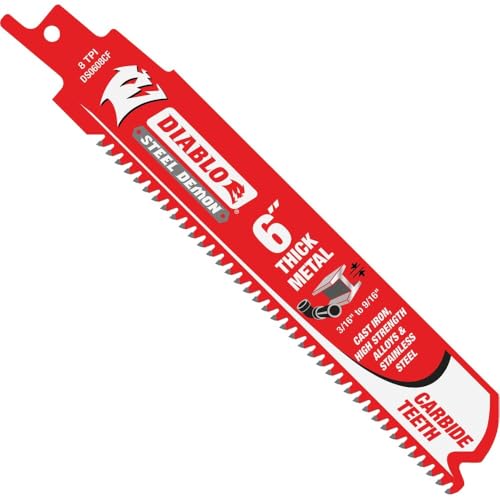
Diablo Steel Demon Carbide Reciprocating Saw Blades
What We Like
- Carbide teeth for extreme metal and cast iron.
- Up to 50X longer life than bi-metal in metal.
- Non-stick coating resists heat and gumming.
- Oversized body stabilizes blade for straighter cuts.
Trade-offs
- Premium carbide construction is a higher initial investment.
- Single pack contains only three blades.
The first carbide-tipped blades designed for extreme metal cutting means you’re getting a tool built to survive what destroys standard blades. For cutting through stubborn, old-school cast iron, this is the blade that changes the math. Instead of burning through a pack of bi-metal blades on one job, the Diablo Steel Demon’s specialized carbide and hardened design is built for maximum durability. It’s the right pick for the pro or serious DIYer who needs reliability and can’t afford a blade failure mid-cut.
These blades are carbide-tipped, a design specifically for extreme metal cutting like cast iron and stainless steel. They are built to handle materials that quickly destroy standard blades. The research mentions these Diablo blades are considered pricey within their category. For regular work on hard metals, the potential for up to 50 times longer life compared to bi-metal blades could justify the cost. One user noted cast iron can consume multiple regular blades in a single cut.
Product photos
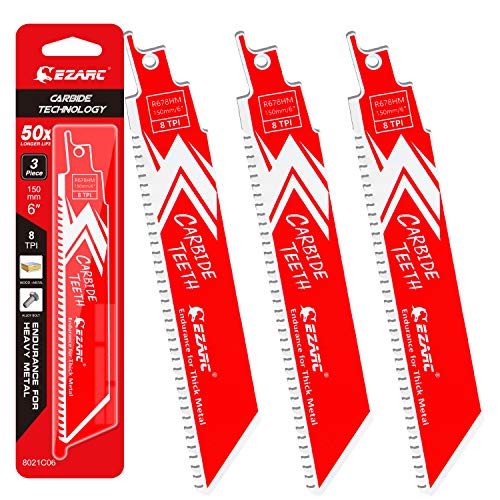
EZARC Carbide Reciprocating Saw Blades
What We Like
- Carbide teeth for extreme longevity
- Ideal 8 TPI design for thick metal
- Cuts tough alloys where bi-metal fails
- Fits all major reciprocating saw brands
Trade-offs
- 6-inch length limits reach in deep cuts
- Shorter blade may deflect on very thick stock
- Only 3 blades in the pack
The carbide tooth construction is the key here. It tackles the abrasiveness of cast iron and hardened steels that would shred a standard bi-metal blade in minutes, so you spend less time swapping blades on a demolition job. This makes the EZARC a smart pick for the budget-conscious user who needs to power through occasional heavy-duty metal cuts but doesn’t want to invest in a premium single-purpose blade. You get serious cutting technology at a very accessible point.
Its 6-inch length is ideal for most on-site cuts like pipes or brackets, but it lacks the reach of longer blades for deep cuts through large castings. For those bigger jobs, a longer carbide blade would be needed. Still, for common cast iron tasks in plumbing or automotive work, this three-pack offers the durability to get the job done.
Bosch Diamond Grit Reciprocating Saw Blade

What We Like
- Diamond grit excels on abrasive cast iron and block.
- Three-times longer life than carbide grit blades.
- Vacuum brazing suits heavy, demanding use.
- Cuts up to three-times faster than carbide grit.
Trade-offs
- Single blade, not a multi-pack like many competitors.
Designed for the toughest abrasive materials, this blade uses a vacuum-brazed diamond grit edge to tackle cast iron, cinder block, and brick. Bosch claims it can last up to three times longer and cut up to three times faster than standard carbide grit blades, making it a heavy-use tool for sustained demolition. That makes it a specialist pick for professionals or serious DIYers regularly facing hardened, gritty substances. The research mention notes one user found a Diablo ‘thick metal’ blade cut cast iron pipe faster than a Lenox diamond blade, and that many manufacturers now offer similar ‘extreme thick metal’ options.
So, consider this Bosch blade an investment in longevity for high-volume or commercial work where changing blades costs more in downtime than the blade itself. For a big one-time plumbing repair or a series of cuts on old, deteriorated cast iron, its ability to power through grit and scale is a major advantage. But if your project list is more varied or you prioritize raw cutting speed on clean metal, a high-performance carbide blade like the Diablo Steel Demon might be a more pragmatic choice for the toolbox.
Product photos
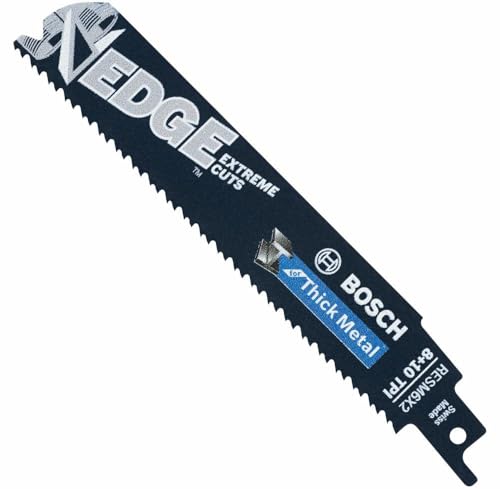
Bosch Bi-Metal Reciprocating Saw Blades
What We Like
- Turbo-Teeth technology for extended life.
- Precision ground blade for sharp, lasting cuts.
- Engineered for extreme, high-performance applications.
- Premium Swiss construction for reliable performance.
Trade-offs
- 6-inch length limits reach in deep cuts.
With Turbo-Teeth technology designed to last up to three times longer than standard blades, this Bosch set is built for extended use on thick metal. That endurance means fewer blade changes during repetitive cutting tasks, a clear advantage for pros or serious DIYers where durability often trumps raw speed. Its precision-ground, Swiss-made construction starts sharp and is engineered to stay sharper through demanding applications.
The research indicates that some carbide blades, like Diablo’s thick metal option, can cut through materials like cast iron significantly faster than other blade types. Since this Bosch blade is a bi-metal design focused on longevity, it may not match the cutting speed of those dedicated carbide alternatives. For a large project with many cuts, that potential speed difference could become a practical consideration.
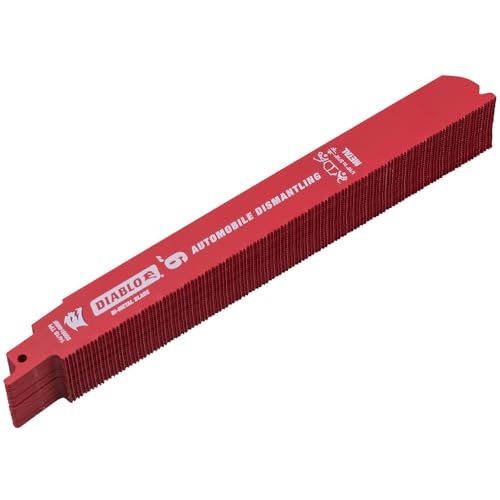
Diablo Bi-Metal Reciprocating Saw Blades
What We Like
- Dual tooth design accelerates material removal.
- Demolition body reduces vibration for straighter cuts.
- Perma-Shield coating protects against heat and corrosion.
- 25-pack offers significant supply for large projects.
Trade-offs
- Bi-metal construction may wear faster than carbide on cast iron.
- Large 25-pack is bulkier to store than smaller sets.
A 25-pack of bi-metal blades with a specialized dual tooth design makes this a logical stock-up choice for contractors or serious DIYers facing a lot of cast iron pipe. The arched cutting edge and Perma-Shield coating are built to minimize heat and extend life, which owner feedback confirms can outperform standard blades. This bulk buy is about keeping you cutting without constant trips to the store, ideal for renovation crews or a major plumbing overhaul where time and blade availability are critical.
Cast iron’s hardness can still consume a blade or two on a single cut, even with a high-performance option. One owner found Diablo’s ‘thick metal’ blades cut cast iron faster than Lenox diamond blades, but notes that regular blades might require two for one cut on this tough material. For a one-off job, a single, more durable blade like the Bosch Diamond Grit might be practical, but for high-volume work, this 25-pack delivers speed and value in quantity.
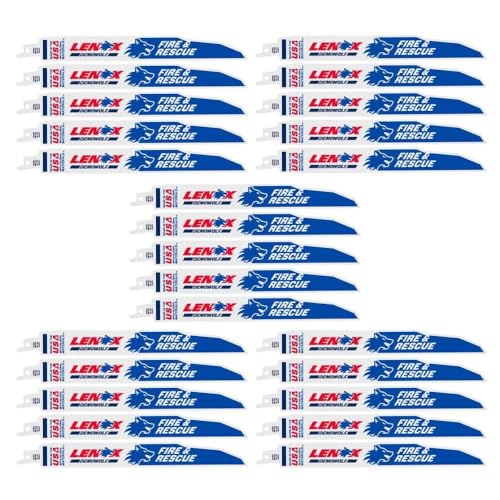
Lenox Demolition Bi-Metal Reciprocating Saw Blade
What We Like
- Taller, thicker blade profile prevents bending
- Shatter-resistant bi-metal construction for durability
- Power Blast Technology strengthens blade to reduce breaks
- Aggressive, fast cutting for demolition applications
Trade-offs
- Owner feedback notes carbide blades can cut cast iron faster
- Weighs 1.0 pounds for a 25-pack
A 9-inch bi-metal blade built with a thicker, taller profile delivers the control and break-resistance needed for demolition. The Lenox blade is for the pro or serious DIYer who regularly tackles mixed-material jobs like nail-embedded wood and thick metal, where a blade that won’t snap or wander is more critical than ultimate speed. Its shatter-resistant design and Power Blast Technology mean you can lean into the cut with confidence on unpredictable jobsites.
This Lenox blade is built for demolition, tackling nail-embedded wood and thick metal with a design focused on durability. Its bi-metal construction and Power Blast Technology aim to reduce breaks, while a taller, thicker profile helps prevent bending during aggressive cuts. The blade is presented as a versatile option for fire and rescue jobs or general demolition where material variety is expected.
Product photos
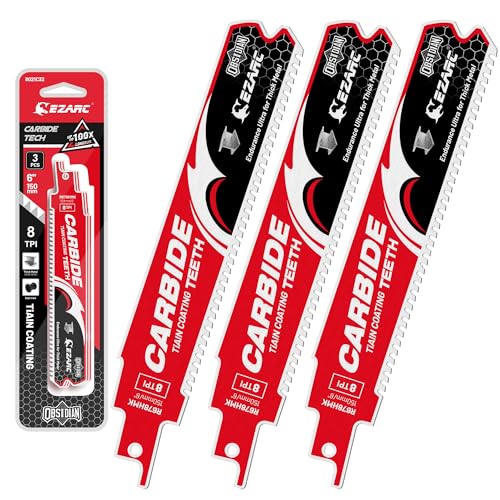
EZARC Obsidian Carbide Reciprocating Saw Blades
What We Like
- Engineered for up to 100X longer life than bi-metal.
- TiAlN coating reduces friction for faster, smoother cuts.
- Individually welded teeth provide high impact strength.
- Universal shank fits all major reciprocating saw brands.
Trade-offs
- 6-inch length limits reach in deep or confined cuts.
- Specific 8 TPI design is less ideal for thinner materials.
- Carbide construction is more brittle than bi-metal blades.
These blades promise up to 100 times longer life than standard bi-metal versions, which means a single blade can handle demanding jobs like cutting stainless steel or rebar without frequent swaps. This durability comes from industrial-grade carbide tips with a TiAlN coating, a combination the manufacturer states reduces friction for over 50% higher cutting efficiency. They are built for pros or serious DIYers prioritizing blade endurance in heavy-duty demolition and thick metal applications.
The trade-off for that extreme durability is a blade that’s purpose-built for thick sections. The 6-inch length and aggressive 8 TPI design excel on cast iron soil pipe or heavy brackets but aren’t as versatile for thinner metals or plunge cuts. For those needing a longer reach in cast iron, the Bosch Diamond Grit blade is a dedicated alternative, though it uses a different abrasive-cutting technology. The EZARC Obsidian is about brute-force longevity in its specific thickness range.
Product photos
THYENTUL Cobalt Bi-Metal Sawzall Blades

What We Like
- High cobalt content boosts heat resistance.
- 25-pack offers extensive blade supply.
- Universal shank fits most Sawzall brands.
Trade-offs
- 6-inch length limits reach in deep cuts.
- Blade length is 6 inches.
A 25-pack of blades at this price point is hard to ignore, especially when they’re built with M42 cobalt teeth. That cobalt content is the key for cast iron, as it helps the blade withstand the abrasion and heat that can kill a standard bi-metal blade mid-cut. If you’re facing a project with multiple cast iron pipes or fittings, this bulk pack means you can swap in a fresh blade without hesitation and keep working. The 6-inch length and 14/18 TPI pattern are a practical match for most common pipe and bracket work, though you’ll want to take it slow to let the teeth do the work.
The trade-off is in specialization. For the occasional cut or a job with mixed materials like nails and steel pipe, this THYENTUL pack is a sensible, cost-effective kit filler. For a job that’s purely thick cast iron, a more specialized blade will likely save you time in the long run, even if it costs more upfront.
Product photos
Fritzfurt Carbide Teeth Reciprocating Saw Blades

What We Like
- Carbide teeth for wear resistance on hard metals
- Specifically designed for cutting cast iron and alloys
- Universal shank fits most reciprocating saws
- Three-pack provides backup blades for long jobs
Trade-offs
- 6-inch length limits reach in deep or confined cuts
- Three-pack offers fewer blades than some bulk options
- Carbide construction is less flexible than bi-metal
Fritzfurt’s blades use 8 TPI carbide teeth, a construction the manufacturer states resists wear from hard metals better than traditional bi-metal blades. This means they are built for demanding materials like stainless steel and cast iron, aiming to support extended usability in repeated metal-cutting applications. The three-pack offers convenience for continuous projects, providing a backup to maintain workflow when a blade wears.
The blade length is six inches, which provides a specific cutting depth for tasks like plumbing or fabrication. For applications requiring greater reach, other listed products like the Diablo Steel Demon are longer at 8.6 inches. The universal shank fits most major brand saws, enabling quick blade changes to match the job’s requirements.
Product photos
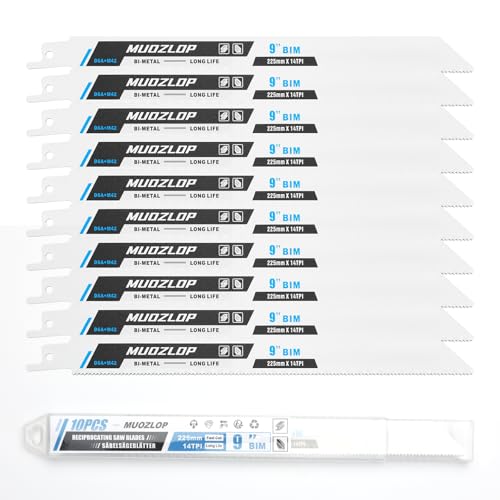
MUOZLOP M42 Cobalt Bi-Metal Blades
What We Like
- M42 cobalt bi-metal construction for heat resistance and durability
- Thin, flexible 0.92mm blade for accessing tight corners
- Universal shank fits all major reciprocating saw brands
- Explicitly listed for cutting cast iron and stainless steel
Trade-offs
- A 9-inch length may be unwieldy for extremely confined spaces.
- Flexible thin blade design can sacrifice rigidity in very thick, hard materials.
- 14 TPI is a finer cut, which can be slower on heavy demolition than lower-TPI blades.
A 0.92 mm flexible thin blade defines this product, providing just the right springiness to work into corners for cutting tasks. This flexibility allows it to access confined areas where a rigid blade would not fit. Its M42 bi-metal construction with 8% cobalt provides durability and heat resistance for cutting materials like cast iron and stainless steel.
That flexibility involves a trade-off with ultimate stability compared to more rigid blade designs. For straight cuts through massive material where blade tracking is critical, a stouter, purpose-built blade like the Bosch Diamond Grit option for cast iron may be a more suitable choice.
Product photos
How We Evaluated Sawzall Blades For Cast Iron
This guide is based on product specifications, manufacturer details, and a review of professional and user feedback.
Key criteria were blade material, tooth design, and construction features. Carbide teeth are the standard for longevity against this hard, abrasive metal, but premium bi-metal and diamond grit blades have their places. We also considered practical factors like blade length for reach and pack size for project scale.
A research-led evaluation cannot replicate the exact feel or speed of a cut in your specific material. Our goal is to arm you with the technical details and real-world application notes so you can make an informed choice for your job.
What To Look For In Sawzall Blades For Cast Iron
Cast iron demands a blade built for punishment. The right choice balances cutting speed, blade life, and the specific form of your material, whether it’s pipe, block, or embedded brackets.
Prioritize carbide teeth for the longest life, a low TPI (like 8) for thick stock, and a blade length that matches your access needs. A non-stick coating helps manage heat and gumming.
Blade Material
Carbide-tipped blades are the top choice for dedicated cast iron work. The carbide teeth resist the heat and abrasion that destroy standard bi-metal teeth in seconds, offering dramatically longer life. For less frequent use or mixed-material demolition, a high-quality cobalt or bi-metal blade like the Bosch Bi-Metal option can be a capable, more affordable alternative. Diamond grit blades, like the Bosch pick, are a specialty option for heavily abrasive materials like cast iron block.
Tooth Design (TPI)
Teeth Per Inch (TPI) dictates cutting speed and finish. For thick cast iron, a low TPI, typically 8, is ideal. The larger, more aggressive gullets clear material quickly and reduce heat buildup. A finer TPI, like 14 on the MUOZLOP blade, is better for thinner metals or where a smoother cut is needed, but it will cut slower on heavy cast iron.
Blade Length & Construction
Blade length determines reach. A common 6-inch length works for most pipe cuts but may limit deep or confined access. Longer 9-inch or 12-inch blades offer more reach but can be less rigid. Look for features like a thicker demolition body or an oversized design, as seen on the Diablo Steel Demon, to reduce vibration and blade deflection for straighter cuts. A non-stick Perma-Shield or similar coating also helps by reducing friction and material adhesion.
- Secure the workpiece firmly to prevent movement that can pinch and snap the blade.
- Let the blade do the work; avoid forcing it, which generates excess heat.
- For pipe, cutting slowly with steady pressure often produces a cleaner, faster result than rapid, aggressive strokes.
- Wear appropriate safety gear, including eye protection and gloves.
A single high-quality carbide blade often outlasts a pack of cheaper blades, making it the smarter investment for serious work.
Sawzall Blades For Cast Iron Compared
The table below details key specifications to help you compare our top picks at a glance.
| Product | Blade Type | Length | Teeth Per Inch (TPI) | Pack Quantity |
|---|---|---|---|---|
| Diablo Steel Demon Carbide Reciprocating Saw Blades | Carbide-tipped | 8.6 inches | N/A | 3-Pack |
| EZARC Carbide Reciprocating Saw Blades | Carbide teeth | 6 inches | 8 TPI | 3 blades |
| Bosch Diamond Grit Reciprocating Saw Blade | Diamond Grit Edge | 9 in. | 50 grit | 1-Piece |
| Bosch Bi-Metal Reciprocating Saw Blades | Bi-Metal | 6 inches | 8/10 TPI | 5 pc. |
| Diablo Bi-Metal Reciprocating Saw Blades | Bi-Metal | 9 inches | 14/18 TPI | 25 blades |
| Lenox Demolition Bi-Metal Reciprocating Saw Blade | Bi-metal | 9 inches | 10 | 25 blades |
| EZARC Obsidian Carbide Reciprocating Saw Blades | TiAlN-coated carbide | 6 inches | 8 TPI | 3-Pack |
| THYENTUL Cobalt Bi-Metal Sawzall Blades | Cobalt Bi-Metal | 6 inches | 14/18 TPI | 25-pack |
| Fritzfurt Carbide Teeth Reciprocating Saw Blades | Carbide | 6 inches | 8 TPI | 3 blades |
| MUOZLOP M42 Cobalt Bi-Metal Blades | M42 bi-metal | 9.0 inches | 14 TPI | 10-pack |
Frequently Asked Questions
What kind of Sawzall blade will cut through cast iron?
A carbide-tipped reciprocating saw blade is the best type for cutting cast iron. Carbide teeth are extremely hard and heat-resistant, allowing them to last many times longer than standard bi-metal blades when cutting this abrasive material. Look for a blade specifically labeled for thick metal or cast iron with a low TPI, like 8, for the most efficient cut.
What are the best reciprocating saw blades for cutting cast iron?
Our top pick is the Diablo Steel Demon Carbide blade for its outstanding longevity and stable cut. Other excellent choices include the value-focused EZARC Carbide blade and the extremely long-lasting Bosch Diamond Grit blade for heavily abrasive cast iron block. Choosing the right blade for cast iron pipe depends on your project frequency and budget.
What is best for cutting cast iron?
For power tool users, a reciprocating saw with a carbide blade is often the fastest, most practical method. Proper cutting technique is critical for cast iron pipe: secure the workpiece, use steady pressure, and let the blade’s teeth do the cutting to avoid overheating. For drilling into cast iron, you would need specialized drill bits for cast iron.
What blade to use for cast iron plumbing pipe?
Use a carbide-tipped reciprocating saw blade, ideally 6 to 9 inches long with 8 TPI. This combination provides the durability and aggressive cutting action needed for thick cast iron pipe walls. Ensure the pipe is well-supported to prevent pinching the blade during the cut.
Can I use a regular metal-cutting blade on cast iron?
You can, but it will wear out very quickly. Standard bi-metal blades for metal are designed for softer steels and may fail mid-cut on cast iron. For a one-time, small job, a premium bi-metal blade might suffice. For any significant amount of cutting, however, investing in a carbide blade made for thick metal is far more efficient and cost-effective in the long run.
The Bottom Line
For contractors and advanced DIYers regularly facing cast iron, the Diablo Steel Demon Carbide Reciprocating Saw Blades are the best overall investment. Their carbide teeth and stabilized body deliver the longevity and straight cuts needed for plumbing, machinery, and structural demo.
If you’re on a tighter budget for a single project, the EZARC Carbide blades offer excellent value. For large-scale removal jobs, the Diablo Bi-Metal 25-pack provides a high-volume solution. For plumbers and fabricators, learning the proper technique for cutting metal is as important as the blade itself.
Ultimately, blade material is the most important factor. Don’t let a cheap blade burn up on your first cut; choose carbide for serious work, and you’ll save time, money, and frustration.
