
10 Best Sawzall Blades For Stainless Steel in 2026
This post contains affiliate links. As an Amazon Associate, we earn from qualifying purchases.
Our best overall blade for stainless steel is the Diablo Steel Demon Carbide Reciprocating Saw Blades, which wins for its extreme durability and ability to cut high-strength alloys. We also highlight an advanced carbide pick for extreme heat and a straight-cut bi-metal design for thick materials. Cutting stainless steel requires a blade that can resist abrasion and high temperatures without dulling. This guide, built from manufacturer data and expert analysis, names ten top performers to help you match a blade to your specific metal and project demands.
Top 10 Sawzall Blades For Stainless Steel in the Market
Certain content that appears on this site comes from Amazon. This content is provided "as is" and is subject to change or removal at any time.
The Best Sawzall Blades For Stainless Steel, Reviewed
Diablo Steel Demon Carbide Reciprocating Saw Blades
What We Like
- Carbide teeth cut stainless steel and high-strength alloys
- Oversized body stabilizes blade for straighter cuts
- Perma-SHIELD coating resists heat and corrosion
- Extreme durability for dozens more cuts than bi-metal
Trade-offs
- 9-inch length can be cumbersome in tight spaces
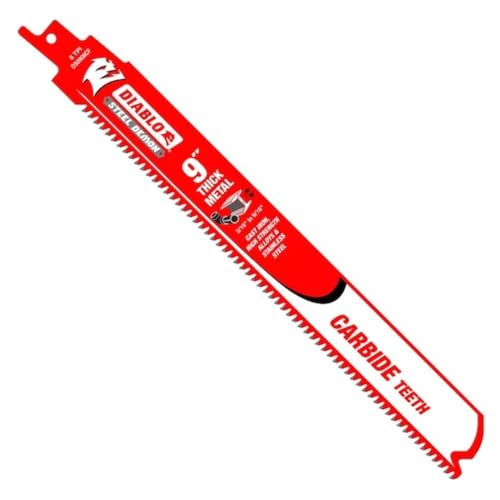
Diablo’s carbide teeth are engineered for extreme metal cutting, including stainless steel and cast iron, which means they resist rounding off and last far longer than standard blades. The 1-inch oversized blade body stabilizes the tool for straighter cuts with less vibration, a critical feature for precision in demanding materials. This construction makes it a primary choice for professionals tackling high-strength alloys or dedicated DIYers on substantial metal projects.
Of course, that durability comes with a trade-off. That’s the practical comparison. If your work is purely demolition through wood with occasional nails, a bulk pack of Diablo’s own bi-metal blades makes economic sense. But the moment metal becomes a frequent part of the job, whether it’s stainless steel, cast iron pipe, or hardened fasteners, the Steel Demon’s carbide construction becomes the only logical choice. It turns a consumable into a long-term asset.
EZARC Obsidian Carbide Reciprocating Saw Blades
What We Like
- TiAlN carbide tip for extreme heat resistance
- Claimed 100x longer life than bi-metal blades
- Optimized 8 TPI design for thick metal
- Fits all major reciprocating saw brands
Trade-offs
- 6-inch length limits reach in deep cuts
- 3-pack offers fewer blades than bulk options
- 8 TPI is aggressive for thin-gauge sheet metal
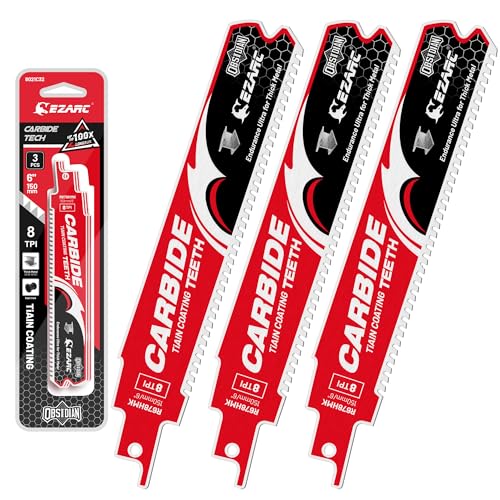
A TiAlN-coated carbide tip and an optimized 8-tooth design deliver stable, heat-resistant performance for tough materials. This blade is built for the contractor or serious fabricator who regularly tackles stainless steel, rebar, and thick angle iron. It’s a premium choice where blade life and cutting speed in demanding applications outweigh the higher initial cost per blade. The 100x longer life claim versus standard bi-metal speaks to a focus on endurance over disposability.
The six-inch length means these blades trade reach for durability in thick metal. They are not suited for large-diameter pipes or beams where a longer blade, like the 9-inch Diablo Steel Demon, provides more stroke. For demanding cuts in materials like stainless steel and rebar, the EZARC Obsidian’s carbide construction is engineered for a long life and smooth cutting action.
Product photos
USEWIN Expert Carbide Reciprocating Saw Blades
What We Like
- Carbide teeth last 100x longer than bi-metal.
- TiAlN+ICE coating extends blade longevity.
- 8 TPI design reduces binding in thick metal.
- Universal shank fits all saw tool brands.
Trade-offs
- 6-inch length limits reach in deep cuts.
- Only 8 TPI, not optimal for thin sheet metal.
- Three-blade pack offers fewer spares than bulk sets.
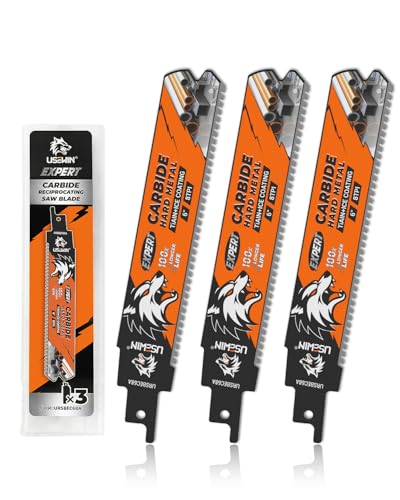
A carbide tooth blade with a specialized TiAlN+ICE coating is built for endurance in the toughest demolition cuts. It’s designed for the user who needs to power through thick stainless steel plate, rebar, and angle iron without stopping to swap blades constantly. The 8-tooth-per-inch pattern bites aggressively into dense material, and that carbide construction means you’ll likely burn through the project long before the blade gives up. This is a blade for heavy, repeated metal cutting where blade life is the primary concern.
The 6-inch length and 8-tooth-per-inch design are optimized for thick metals, which means it’s not intended for fine work or thin materials. Compared to a blade like the Bosch RM618 with its 18 TPI, this configuration focuses on reducing binding in heavy-duty cuts. For big jobs involving thick steel plate or rebar, this specialization is an advantage, but for mixed metalwork that includes thinner gauge materials, a more varied set might be a more practical choice.
Product photos
DEWALT Bi-Metal Reciprocating Saw Blade Set

What We Like
- Tall, thick profile resists bending for straight cuts
- Patented tooth form designed for 50% longer average life
- Bi-metal construction balances durability and flexibility
- ToughCase container for organized storage and transport
Trade-offs
- Six-piece set offers fewer blades than some 25-packs
- Bi-metal design may not outlast carbide in extreme abrasion
- Heavier at 1.3 pounds compared to some sub-1-pound sets
The tall, thick blade profile is the key here, providing the rigidity needed to fight deflection when pushing through heavy stainless. This makes the DW4896 set a logical choice for the fabricator or remodeler who needs predictable, straight cuts in plate or structural sections without the blade wandering. The bi-metal construction and tooth geometry focused on chip removal aim for a long service life, which suits pros who burn through blades on demolition and metal cutting jobs.
While the bi-metal design offers good all-around durability and flexibility, it will likely wear faster than a carbide-tipped blade when tackling highly abrasive alloys or materials with embedded grit. This set shines in general heavy metal and demolition work where straightness is critical. For dedicated, high-volume stainless cutting where pure abrasion resistance is the goal, a carbide alternative might be the next step up.
Product photos
Lenox Power Blast Reciprocating Saw Blades
What We Like
- Bi-metal construction for durability and long life
- Power Blast Technology reduces blade breaks
- T2 tooth design for efficient cutting in wide material range
- 25-pack size supports high-volume cutting tasks
Trade-offs
- 8-inch length limits reach in deep or confined cuts
- 18 TPI design is less aggressive on very thick metal
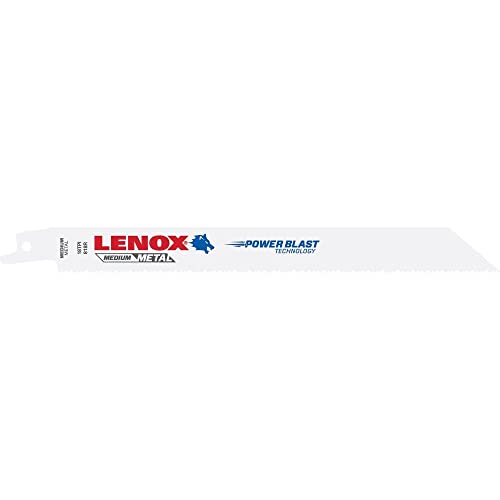
A 25-pack of blades built with bi-metal durability and Power Blast Technology is designed for the user who burns through blades on a jobsite. The 18 TPI tooth count is a solid match for stainless steel and other medium-thickness metals, while the T2 tooth geometry aims to extend blade life across a variety of materials. This setup is for the professional or serious DIYer who needs a reliable, bulk supply of blades to keep a Sawzall running without constant trips to the toolbox for a fresh edge.
The 25-pack offers a bulk supply for contractors and high-volume users, reducing downtime from frequent blade changes. Its bi-metal construction provides durability and flexibility, which helps the blade bend without breaking during demanding cuts. Lenox’s Power Blast Technology further strengthens the blade to reduce breaks, supporting consistent performance in stainless steel and medium-thickness metals.
Product photos
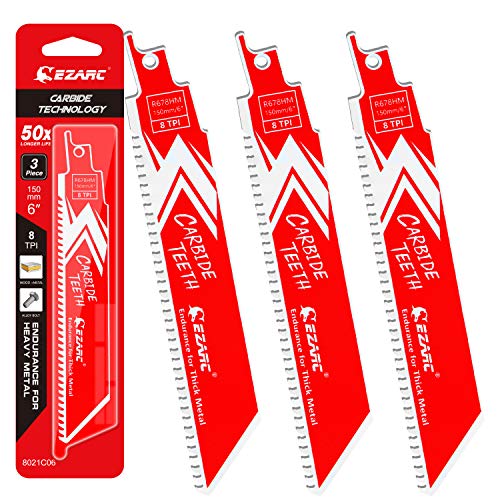
EZARC Carbide Reciprocating Saw Blades
What We Like
- Carbide teeth for vastly longer blade life
- Ideal tooth design for stainless and high-alloy steels
- Individually welded teeth for impact strength
- Universal shank fits all major reciprocating saws
Trade-offs
- 6-inch length limits reach in deep cuts
- Only 8 TPI, not optimal for thinner gauge metals
- Three-blade pack offers fewer spares than bulk sets
The claim of up to 50 times longer life than bi-metal blades is the headline here, and it’s what makes this blade a specialist. That carbide construction means it chews through stainless steel, rebar, and car beams where standard blades would dull in minutes. This is the blade you pull out for the jobs that destroy others, demolition work on heavy alloys or cutting hardened steel. It’s built for the user who needs a blade that won’t quit when the material gets serious, saving multiple blade changes on a single tough cut.
The trade-off is in its specific focus. That aggressive 8-tooth design is perfect for thick stock, but you wouldn’t want it for thin-wall tubing where a finer blade would produce a cleaner cut. You’re also committing to a shorter 6-inch blade, which can be a limitation on deeper cuts. For pure, abrasive cutting power on the toughest metals, however, this EZARC blade delivers a clear and durable advantage.
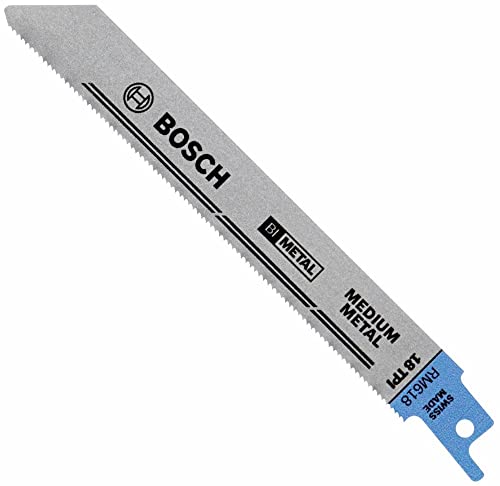
Bosch RM618 Metal Cutting Reciprocating Saw Blades
What We Like
- Bi-metal construction for durable cutting edge
- Thin 0.035-inch body for accurate, easy-starting cuts
- 0° hook angle for clean cuts in sheet metal
- Optimized 3/4-inch blade height aids straight cuts
Trade-offs
- 18 TPI count is too fine for thick plate or pipe
- Specifically designed for 10-16 gauge, not heavy structural work
With an 18 TPI count and a zero-degree hook angle, these Bosch blades are engineered specifically for clean cuts in sheet metal. Their design targets ferrous and non-ferrous metals from 10 to 16 gauge, which keeps the cut controlled and reduces snagging. A flexible, thin-kerf body helps with accurate starts, while the pair-setting tooth geometry aims for both cutting speed and longer blade life.
The trade-off is in the name of specialization. That same 18 TPI will load up and stall if you try to push it through a thick stainless steel pipe or plate; it’s simply the wrong tool. For those heavier, more abrasive cuts, you’d want a blade with a lower TPI and tougher teeth, like the carbide-tipped EZARC Obsidian. Think of the Bosch RM618 as a precision scalpel for sheet goods. It excels in its defined range but will disappoint if you ask it to perform outside the parameters stamped right on the blade.
Product photos
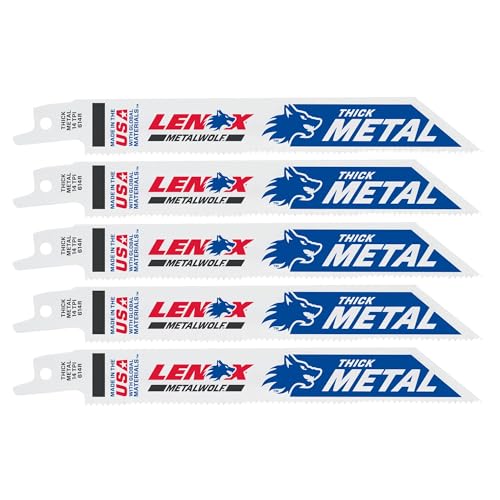
Lenox MetalWolf Wave Edge Reciprocating Saw Blades
What We Like
- Patented t2 tech reduces cutting force.
- Thin 0.035-inch design for quick cuts.
- High-speed steel edge on spring steel backing.
Trade-offs
- 6-inch length limits reach in deep cuts.
- Pack of five may be fewer than bulk sets.
That 3-stage tooth formation, combined with its thin 0.035-inch profile, is engineered to slice through metal with less resistance. This blade is built for the user who values blade longevity and smooth cutting action in ferrous metals and stainless, where heat and wear are the real enemies.
This 6-inch blade is designed for metal, a shorter length compared to some 9-inch options. Its application focus covers ferrous metal, stainless steel, pipe, and conduit. For high-volume work on a wider range of materials, a larger multi-pack could be considered.
Product photos
GRENPRO Carbide Reciprocating Saw Blades

What We Like
- Carbide teeth for up to 50x longer life than bi-metal.
- Aggressive 8 TPI design for tough metals like stainless steel.
- Individually welded teeth for strength and impact resistance.
- Universal shank fits most major reciprocating saw brands.
Trade-offs
- 6-inch length limits cutting depth in thick material.
- Coarse 8 TPI is less suited for thin-gauge sheet metal.
The claim of up to 50x longer life than standard bi-metal blades is the headline here, translating directly to fewer blade changes when you’re buried in a tough cut. This is the blade you reach for when you know you’ll be chewing through stainless, hardened steel, or thick rebar where other blades simply wear out. It’s built for the jobs that make a sawzall groan, where longevity and sustained cutting speed matter more than a delicate finish.
That carbide toughness comes with a trade-off. The 6-inch length and aggressive 8-tooth design are optimized for controlled demolition in dense, thick metals up to 1/2-inch, not for fine work on thin sheet stock. For a more versatile approach to stainless that includes thinner materials, you’d look at something like the Lenox MetalWolf with its 14 TPI wave edge. But when the metal is stubborn and thick, the GRENPRO’s carbide teeth will outlast a drawer full of standard blades.
Product photos
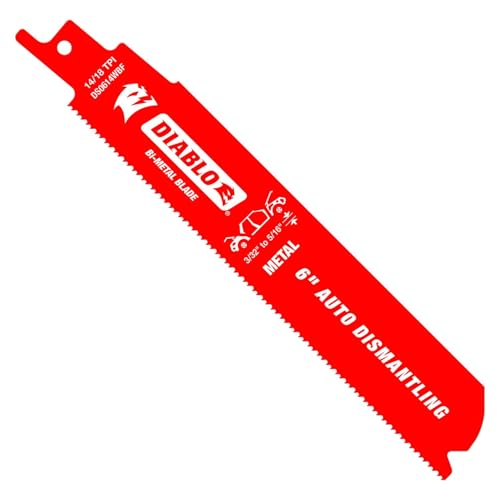
Diablo Bi-Metal Reciprocating Saw Blades
What We Like
- Ultra-hardened edge for up to 5x longer life
- Full Contact Arched Design for faster, cooler cuts
- Reduced vibration body for straighter cuts and comfort
- Fits all major reciprocating saw brands
Trade-offs
- Bi-metal construction wears faster than carbide in metal
- Not the best choice for frequent or thick metal cutting
A 25-pack of blades with an ultra-hardened edge means you can tackle a big job like auto dismantling without constantly stopping to swap blades. The 14/18 TPI teeth and Full Contact Arched Design are engineered for medium metals up to 5/16 inch thick. This makes them a solid, versatile choice for general metalwork and rescue ops where you need a reliable cut without the premium price tag. It’s the bi-metal blade you grab when you need a good balance of speed and durability for a project with a known scope.
These Diablo blades deliver up to 5 times longer life than standard bi-metal, which means fewer blade changes during a project. Their 14/18 TPI configuration and Full Contact Arched Design are intended for faster cuts in medium metals from 1/16 to 5/16 inch thick, useful for tasks like auto dismantling. While they fit all standard reciprocating saws, research indicates bi-metal blades like these are less expensive but do not last nearly as long as carbide options, which can last dozens of times longer in metal.
Product photos
How We Evaluated Sawzall Blades For Stainless Steel
This guide compares blade specifications and manufacturer performance claims, focusing on tooth material, such as carbide versus bi-metal, for its effect on blade life in hard alloys. Blade length, teeth-per-inch (TPI) count, and body design are also key factors for selecting the right blade for applications like thick plate or thin sheet metal. The information is based on available product data and specifications.
What To Look For In Sawzall Blades For Stainless Steel
Choosing the right blade prevents frustration, wasted blades, and unsafe cutting conditions. Your primary considerations are the blade’s construction, its tooth configuration, and its physical dimensions.
The key is matching the blade’s hardness to the metal’s abrasiveness. Carbide teeth last dozens of times longer in stainless than bi-metal. A coarse tooth count (8-10 TPI) handles thick material, while a fine count (18+ TPI) is for sheet metal. Blade length determines your reach in deep or confined cuts.
Tooth Material
Carbide-tipped blades are the standard for cutting stainless steel. Their carbide teeth are vastly more resistant to the abrasion and heat generated by hard alloys. Manufacturers claim they can last up to 100 times longer than bi-metal blades. Bi-metal blades combine a high-speed steel edge with a flexible spring steel body. They are more affordable but wear significantly faster, making them better suited for occasional use on medium-thickness metals or for choosing a metal-cutting blade for general tasks.
Teeth Per Inch (TPI) & Design
Tooth count dictates cutting speed and finish. For thick stainless steel plate, pipe, or structural members, a coarse 8 or 10 TPI blade makes aggressive, efficient cuts. For thin-gauge sheet metal (10-16 gauge), a fine 18 TPI or higher blade produces cleaner, controlled cuts and reduces vibration. The tooth geometry also matters; blades designed for cutting thick metal often have an aggressive rake angle and large gullets to clear chips, while sheet metal blades may have a zero-degree hook angle for precision.
Length & Body Profile
Blade length affects your tool’s reach and maneuverability. A 9-inch blade is ideal for deep cuts in thick material but can be cumbersome in tight spaces. A 6-inch blade offers better control in confined areas but limits cutting depth. The blade’s body profile influences cut straightness; a taller, thicker body resists bending and wandering, which is crucial for accurate metal cutting. A thinner body, often around 0.035 inches, allows for easier starting and more precise cuts in sheet metal.
- Check your saw’s specifications for maximum recommended blade length.
- Ensure the blade shank (the end that locks into the saw) is a universal 1/2-inch tang for compatibility.
- For repetitive cuts, consider a bulk pack to ensure you always have a sharp blade ready.
- Remember that a worn blade creates excessive heat, which can work-harden stainless steel and make it even tougher to cut. Pairing the right blade with the correct stainless steel drill bits ensures your metalworking projects go smoothly from start to finish.
When in doubt, choose a carbide blade with a lower TPI for thick stainless; it will last longer and cut more efficiently than a fine-tooth bi-metal blade.
Sawzall Blades For Stainless Steel Compared
The following table provides a quick overview of how our top picks compare across key specifications.
| Product | Blade Length | Teeth Per Inch (TPI) | Tooth Material | Pack Count |
|---|---|---|---|---|
| Diablo Steel Demon Carbide Reciprocating Saw Blades | 9 inches | N/A | TiCo Hi-Density Carbide | N/A |
| EZARC Obsidian Carbide Reciprocating Saw Blades | 6 inches | 8 TPI | TiAlN-coated carbide | 3 blades |
| USEWIN Expert Carbide Reciprocating Saw Blades | 6 inches | 8 TPI | TiAlN+ICE coated carbide | 3 blades |
| DEWALT Bi-Metal Reciprocating Saw Blade Set | N/A | N/A | Bi-metal | 6-piece set |
| Lenox Power Blast Reciprocating Saw Blades | 8 inches | 18 TPI | Bi-metal | 25-pack |
| EZARC Carbide Reciprocating Saw Blades | 6 inches | 8 TPI | Carbide | 3 blades |
| Bosch RM618 Metal Cutting Reciprocating Saw Blades | 6 inches | 18 TPI | Bi-metal | 5 Pack |
| Lenox MetalWolf Wave Edge Reciprocating Saw Blades | 6 inches | 14 TPI | N/A | 5 Pack |
| GRENPRO Carbide Reciprocating Saw Blades | 6.0 inches | 8 | Carbide-tipped | 3 blades |
| Diablo Bi-Metal Reciprocating Saw Blades | 6 inches | 14/18 | Bi-metal | 25 blades |
Frequently Asked Questions
What is the best sawzall blade for cutting stainless steel?
For most professionals and serious DIYers, a carbide-tipped blade is the best choice. Our top pick, the Diablo Steel Demon Carbide, uses oversized carbide teeth and a specialized coating to withstand the heat and abrasion of stainless steel, offering dramatically longer life than standard bi-metal blades.
Can I cut stainless steel with a sawzall?
Yes, you can cut stainless steel with a reciprocating saw, but you must use the correct blade. A standard wood-cutting blade will be destroyed immediately. You need a blade specifically designed for metal, and for stainless steel, a carbide-tipped blade is highly recommended for its durability and heat resistance.
What blade is best for cutting stainless steel?
The best blade depends on the thickness. For thick stainless steel plate, pipe, or castings, use a coarse carbide blade with 8-10 TPI. For thin stainless sheet metal, a fine-tooth bi-metal blade with 18 TPI or higher provides a cleaner cut. Understanding the different types of Sawzall blades helps you make the right selection.
What TPI is best for cutting stainless steel?
A lower TPI (teeth per inch) is best for thick stainless steel. An 8 or 10 TPI blade has larger, more aggressive teeth that can power through the material. For thin stainless sheet metal, a higher TPI of 18 or more is necessary to make multiple, finer cuts and prevent the blade from catching and tearing the material.
Are bi-metal blades okay for stainless steel?
Bi-metal blades can cut stainless steel for occasional, light-duty tasks, but they wear out much faster than carbide. For frequent use or cutting thick sections, the cost per cut is often higher with bi-metal due to frequent blade changes. For demanding jobs, a carbide blade made for hardened steel is a more reliable investment.
The Bottom Line
The Diablo Steel Demon Carbide Reciprocating Saw Blades are the best overall for anyone regularly cutting stainless steel or other hard alloys, thanks to their exceptional durability and stabilized cutting body. For budget-conscious users tackling a defined project, the Diablo Bi-Metal blade offers a capable, affordable entry point, while those needing to slice through sheet metal should look to the Bosch RM618.
When selecting a blade, the single most important factor is the tooth material. Investing in a quality carbide blade saves time, money, and frustration on any stainless steel cutting job.
