
9 Best Small Metal Lathes in 2026
This post contains affiliate links. As an Amazon Associate, we earn from qualifying purchases.
Our best overall pick is the VEVOR 7×16 Benchtop Metal Lathe for its digital speed control and comprehensive threading capability. We also highlight the Erie Tools 7×14 for its digital readout and the WEN 7×12 as a top budget option. Choosing a small metal lathe means balancing capacity and features within limited workshop space. You need a machine that can handle your intended materials and projects without overwhelming your bench. This guide compares nine top models based on specifications and owner feedback to help you invest confidently.
Top 9 Small Metal Lathes in the Market
Certain content that appears on this site comes from Amazon. This content is provided "as is" and is subject to change or removal at any time.
The Best Small Metal Lathes, Reviewed
VEVOR 7×16 Benchtop Metal Lathe
What We Like
- Wide 150-2500 RPM range with digital speed control
- Comprehensive threading capability for metric and imperial work
- Multiple safety switches including emergency stop
Trade-offs
- At 86 pounds, it requires a sturdy, dedicated benchtop
- Smaller 16-inch bed limits work on longer stock
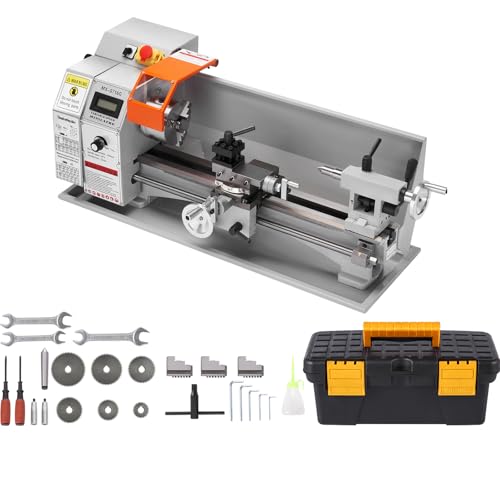
An 800W brushless direct-drive motor powers the VEVOR lathe, a design that removes belts and their maintenance. Speed adjusts continuously from 150 to 2500 RPM in both forward and reverse directions, controlled from a digital display. The lathe can cut 19 different thread types, covering common metric and imperial pitches for small-scale fabrication.
Its 16-inch working length sets the limit for part length. Compared to a belt-driven lathe like the JET 9×19, this model uses electronic speed control. The casting is HT200 iron, and components include metal gears and aluminum handwheels.
Erie Tools 7×14 Bench Top Metal Lathe

What We Like
- Variable speed motor reverses for left-handed threads
- Comes with 5-piece carbide cutter kit and chuck jaws
- Thread indicator handles both metric and imperial
Trade-offs
- At 103 pounds, it requires a sturdy, dedicated bench
- No brushless motor mentioned, unlike the INTSUPERMAI
- 14-inch work length is shorter than the VEVOR 7×16
The Erie lathe’s variable speed motor adjusts up to 2500 RPM, which provides a solid range for working on small metal, wood, or plastic parts, and it can reverse direction to cut left-handed threads. It also includes a thread indicator for cutting screw threads from 12 to 52 TPI in metric or imperial units. The package arrives well-equipped with a five-piece carbide cutter kit, internal and external chuck jaws, and multiple feed rate gears.
Weighing 103 pounds, this lathe requires a sturdy, permanent bench for stable operation rather than casual movement around a workshop. Its 14-inch capacity is practical for many projects, though the VEVOR 7×16 model offers a longer work area for longer stock. For a hobbyist or small shop prioritizing a comprehensive kit and variable speed control, this Erie model delivers capable benchtop machining.
Product photos
WEN 7×12 Benchtop Metal Lathe

What We Like
- Full variable speed control in both directions
- Includes threading dial for screw cutting
- Offers both manual and automatic feed operation
- Two-year warranty provides peace of mind
Trade-offs
- 12-inch maximum length limits longer stock work
- Smaller capacity than the VEVOR 7×16 model
A 7-inch swing and 12-inch capacity make this lathe a solid entry point for common small-scale projects in aluminum, brass, and steel. Its two-direction variable speed, threading dial, and choice of manual or automatic feed give a beginner or hobbyist a genuine taste of real lathe work without overwhelming complexity. For the workshop just starting its metalworking journey, this package delivers the essential functions in a straightforward, accessible format.
The trade-off for that accessibility is found in its limits. The 4-amp motor and 12-inch bed mean you’ll be taking lighter passes on shorter stock, which is fine for crafting parts and prototypes but not for heavy-duty production. When you need to handle longer workpieces, you’ll quickly outgrow it and look toward something like the Erie Tools 7×14 with its longer bed. This WEN gets you in the game with capable basics, knowing an upgrade path exists.
VEVOR 8×16 CNC Metal Lathe
What We Like
- Touchscreen CNC for automated parameter setting
- Gearless drive eliminates manual gear changes
- Quick-change tool post reduces setup time
- Powerful 1100W motor for strong cutting torque
Trade-offs
- At 156.5 pounds, it requires a very sturdy, permanent bench
- The 8×16 capacity limits work to medium-sized parts
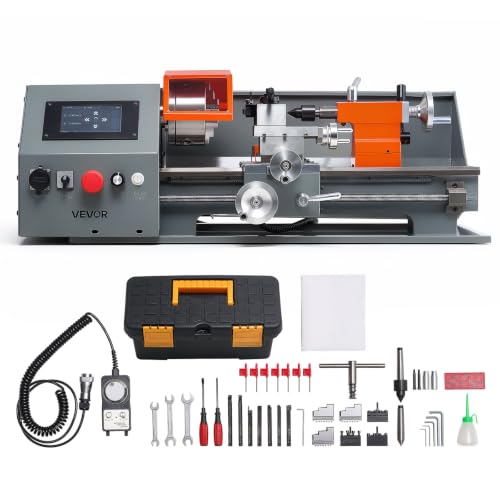
A touchscreen CNC control system on a benchtop lathe means you can program cuts for repetitive parts and switch to a manual handwheel for one-off jobs. This makes the VEVOR 8×16 a solid fit for a hobbyist or small shop ready to step up from fully manual operation. The 1100W motor and gearless drive deliver the smooth, stable power needed for both roughing and finishing in metals, all contained in a relatively compact 36-inch footprint. It handles the kind of small batch production or complex individual projects where setup consistency pays off.
The trade-off is the machine’s heft and sophistication. At over 150 pounds, this isn’t a lathe you’ll move around the garage. It demands a solid mounting surface. For someone who only needs manual control, a simpler model like the JET 9×19 Belt Drive Bench Lathe offers more swing capacity without the CNC learning curve. But if you’re aiming to bridge manual skill with automated precision, this VEVOR’s integrated control system is the central feature that justifies its place on your bench.
JET 9×19 Belt Drive Bench Lathe

What We Like
- Quick-change gearbox for inch and metric threads
- Power longitudinal feed for threading operations
- Built-in emergency stop for safety
- Backlash adjustments throughout the carriage
Trade-offs
- At 250 pounds, it requires a very sturdy, permanent bench.
- Its 41-inch length demands significant workshop floor space.
A quick-change gearbox provides a wide range of inch and metric threads, so you can switch between threading tasks without manually changing gears. The 3/4 HP motor and 9-inch swing let it handle larger workpieces than many benchtop models. A full-length splash guard and an emergency stop positioned within easy reach contribute to a cleaner and safer operating environment.
That capability comes with a substantial physical footprint. It demands a dedicated, sturdy stand. That trade-off is clear: you gain mechanical precision and threading versatility for production-style work, but sacrifice some of the compact convenience and instant speed adjustment of lighter-duty models.
Proxxon PD 250/E Precision Lathe

What We Like
- Quiet and vibration-free operation
- Low weight and slim design
- Includes automatic feed function
- Compact 24.8-inch length
Trade-offs
- Specific horsepower and RPM range not provided
Quiet and vibration-free operation allows for extended use in a home shop without the fatigue of typical machine noise. Its slim design and low weight make the Proxxon PD 250/E easy to position on a benchtop. An automatic feed function aids in achieving consistent finishes on small workpieces.
Its overall size is 24.8 inches long, a more compact footprint than many benchtop lathes like the Erie Tools 7×14, which is 35 inches long. This smaller envelope suits workshops where space is limited. The design prioritizes a quiet, precise workflow for detailed tasks.
ZHRUI 4-Axis Micro Metal Lathe
What We Like
- 4-axis machining with a rotating A-axis.
- All-metal construction with no plastic parts.
- Integrated crash guard and multiple safety features.
- Compact 11-pound weight for easy benchtop placement.
Trade-offs
- 60W motor limits it to soft metals and light materials.
- Lacks the mass and rigidity for heavy-duty steel cutting.
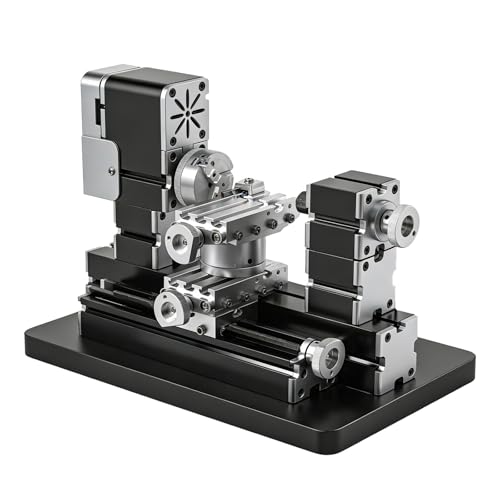
A four-axis configuration with a rotating A-axis is what sets this micro lathe apart. It allows for multi-face and angled machining without realigning the workpiece, a capability rare in machines this size. That makes it a compelling choice for detailed model work, intricate jewelry from soft metals, or precise educational projects where complex geometry is needed. The all-metal build and thoughtful safety features, like the crash guard and 12V low-voltage operation, provide a durable and secure platform for a beginner or a meticulous hobbyist working on small-scale creations.
The trade-off for that multi-axis flexibility is in raw power and capacity. Its 60W motor and compact bed are designed for acrylic, plastics, and soft metals like aluminum and silver. For turning steel or handling longer stock, you’d quickly hit its limits. If your projects demand more heft, a model like the VEVOR 7×16 Benchtop Metal Lathe offers substantially more power and a longer bed. It sacrifices the intricate multi-axis capability and bench-friendly footprint of the ZHRUI.
Product photos
INTSUPERMAI 7×12 Brushless Metal Lathe
What We Like
- All-metal gear and body construction for durability.
- Infinitely variable speed control from 50 to 2500 RPM.
- Large 21mm spindle hole for longer workpiece feed-through.
- Includes both 3-jaw and 4-jaw chucks for flexibility.
Trade-offs
- 12-inch bed length limits work between centers.
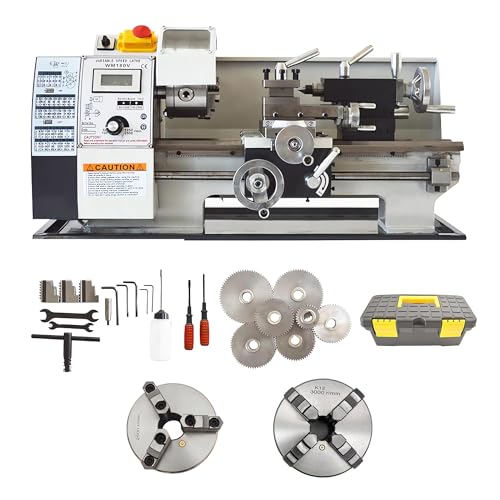
An all-metal gear train and cast iron bed make this a solid, vibration-resistant foundation for a hobbyist’s bench. The 50-2500 RPM variable speed brushless motor is quiet and gives you fine control for different materials. The inclusion of both 3-jaw and 4-jaw chucks right out of the box means you can tackle round or irregular stock immediately. This lathe is built for the user who values a purely mechanical, serviceable machine over digital aids, offering a classic turning experience where you feel the cut through the handwheels.
An all-metal construction with no plastic parts gives this lathe a durable feel that can handle shop use, while its 21mm spindle through hole allows long stock to pass through for more convenient drilling. The 50-2500 RPM variable speed range offers quiet operation and control for different materials. This is a straightforward, fundamental machine prioritizing mechanical reliability over advanced features.
Product photos
AcmeFlare 36W Elevated Mini Lathe
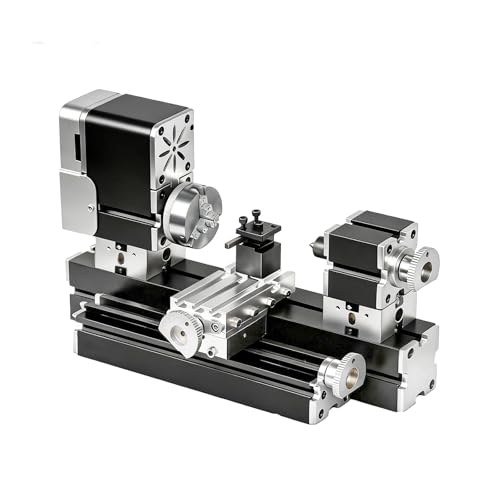
What We Like
- All-metal construction for durability
- 0.02mm precision handwheel for fine control
- Built-in over-current and over-voltage protection
- Compact 9.9 lb weight for easy portability
Trade-offs
- 36W motor is limited to soft metals and plastics
- A 9.9 lb machine lacks mass for heavy cutting
At 9.9 pounds and with a 36W motor, the AcmeFlare is built for the bench, not the machine shop. Its all-metal frame and 0.02mm precision handwheel deliver surprising control for detail work in wood, acrylic, and soft metals like aluminum. The built-in electrical protections and rounded corners show a genuine focus on safety. This makes it a sensible choice for a classroom, a first-timer’s home studio, or any space where a larger lathe would be overkill and a potential hazard.
This is a tool for making small parts, not machining steel. Its lightweight design and high 20,000 RPM speed are perfect for fine crafting and model making, but you won’t be taking deep cuts on hard materials. If your projects demand threading capability or you need to work with tougher metals, a heavier, more powerful machine like the VEVOR 7×16 Benchtop Metal Lathe is the logical next step. The AcmeFlare excels within its intentionally narrow, safety-first design envelope.
Product photos
How We Evaluated Small Metal Lathes
This evaluation is based on manufacturer specifications, expert reviews, and consistent patterns in user feedback. The focus is on documented features and reported user experiences.
The most critical criteria for a small lathe are its swing and distance between centers, which define what you can physically make. We also prioritized motor control, threading capability, and overall rigidity, as these determine precision and versatility in a compact package.
A limitation of a research-led review is that we cannot verify claims about surface finish quality or long-term durability under load. Our recommendations are a starting point for your own research.
What To Look For In Small Metal Lathes
Selecting a benchtop lathe requires matching its physical limits and features to your specific projects. A machine that’s too small will frustrate you, while one with overly complex controls can overwhelm a beginner.
Key considerations are the maximum workpiece size (swing and length), the motor’s speed range and power for your materials, and the availability of features like threading capability or digital readouts for your precision needs.
Capacity and Footprint
The “swing” is the largest diameter workpiece that can rotate over the bed, often 7 or 8 inches on small lathes. “Distance between centers” is the maximum length of stock you can mount, typically from 12 to 19 inches in this category. These numbers directly limit your project scope. A machine’s weight and bed length determine the bench space and sturdiness required; a 250-pound lathe like the JET 9×19 needs a permanent, heavy-duty stand.
Motor and Speed Control
Motor power, measured in watts or horsepower, dictates what materials you can cut effectively. A 36W motor is only suitable for soft metals and plastics, while a 1100W motor can handle steel. Variable speed control is essential for matching the spindle RPM to the workpiece material and diameter. Electronic variable speed (EVS) or digital control, like on the VEVOR 7×16, offers the widest, most convenient range without manual belt changes.
Features for Precision and Safety
Threading capability requires a leadscrew and often a gearbox or thread indicator, like those found on the VEVOR and WEN models. A digital readout (DRO) system, as on the Erie Tools 7×14, provides exact measurement feedback for superior accuracy. Safety features are non-negotiable; look for an emergency stop switch and proper guarding. For detailed projects, a quick-change tool post and multiple chuck types (3-jaw and 4-jaw) drastically reduce setup time.
–
- Check the spindle bore size if you plan to feed long bar stock through the headstock.
- Verify the included tooling; some models come with a basic cutter kit, while others require separate purchase. Consider future accessory compatibility, like adding a digital readout (DRO).
Prioritize a rigid, well-built machine within your size limits over one with extra features but poor construction.
Small Metal Lathes Compared
The table below compares the key specifications of all nine lathes to help you see their differences at a glance.
| Product | Swing over bed | Motor power | Speed range |
|---|---|---|---|
| VEVOR 7×16 Benchtop Metal Lathe | 7 inches | 800W | 150-2500 RPM |
| Erie Tools 7×14 Bench Top Metal Lathe | 7 inches | N/A | 2500 RPM |
| WEN 7×12 Benchtop Metal Lathe | 7" dia | 4-amp | 100 to 2500 RPM |
| VEVOR 8×16 CNC Metal Lathe | 8 inches | 1100W | 0-2500 RPM |
| JET 9×19 Belt Drive Bench Lathe | 9 inches | 3/4 HP | N/A |
| Proxxon PD 250/E Precision Lathe | N/A | N/A | N/A |
| ZHRUI 4-Axis Micro Metal Lathe | N/A | 60W | 12,000 RPM |
| INTSUPERMAI 7×12 Brushless Metal Lathe | N/A | 600W | 50-2500 RPM |
| AcmeFlare 36W Elevated Mini Lathe | N/A | 36W | 20,000 RPM |
Frequently Asked Questions
What is the best small metal lathe for the money?
The best value combines essential features at an affordable price. Our budget pick, the WEN 7×12 benchtop metal lathe, offers variable speed, threading capability, and a two-year warranty, making it a strong starting point for new machinists without a premium investment.
What is a good mini lathe for metal work?
A good mini lathe has enough power for your target materials and the precision features you need. For general small-part work, the VEVOR 7×16 provides a wide speed range and threading. For ultra-fine detail in soft metals, the Proxxon PD 250/E excels with quiet, vibration-free operation.
Are Harbor Freight metal lathes any good?
Central Machinery, the Harbor Freight brand, offers entry-level models similar to other budget imports. Owner feedback suggests they can be suitable for learning basics on soft materials but often require careful setup and tuning for better accuracy. They are a budget entry point, not a precision tool.
What is the best lathe machine for home use?
The best home workshop lathe fits your space and project range. For most hobbyists, a 7×14 or 7×16 benchtop model like our top pick offers a great balance of capability and size. If you have more space and frequently cut threads, a model with a quick-change gearbox like the JET 9×19 provides professional-grade features.
Can a small metal lathe cut threads?
Yes, many small lathes can cut threads if they are equipped with a leadscrew and a threading dial or gearbox. Our top picks from VEVOR, WEN, and JET all offer this capability for both metric and imperial threads, which is essential for making screws, bolts, or repairing threaded parts.
The Bottom Line
For most users starting with small metal lathes, the VEVOR 7×16 Benchtop Metal Lathe is the best overall choice. Its digital speed control and threading capabilities cover a wide range of fundamental operations in a compact form.
If your budget is tight, the WEN 7×12 delivers core functionality at an affordable price. For those ready to automate repetitive tasks, the VEVOR 8×16 CNC Metal Lathe brings computerized precision to the benchtop.
Ultimately, honestly assess the maximum size of the parts you need to make. Choosing a lathe with a swing and bed length that meets your actual project needs is the single most important decision to avoid immediate limitations.
