
8 Best Tile Cutting Blades For Oscillating Tool in 2026
This post contains affiliate links. As an Amazon Associate, we earn from qualifying purchases.
The Bosch OSL212CG Starlock Carbide Grit Blade is our best overall tile blade for its professional-grade Starlock interface and segmented design that excels at grout removal. For budget-conscious versatility, the KELIN Diamond Oscillating Multi Tool Blades set offers great value as the Best Value Diamond Set, while the Makita B-67147 is our top pick for dedicated grout removal.
Choosing the wrong blade can leave you with chipped tiles, a worn-out edge, and a frustrating, stalled project. The right blade matches your tool’s connection, the tile material, and the specific task at hand, be it cleaning a grout line or making a precision cut.
We researched specifications, manufacturer data, and patterns in owner feedback to bring you eight reliable options, each with a clear purpose.
Top 8 Tile Cutting Blades For Oscillating Tools in the Market
Certain content that appears on this site comes from Amazon. This content is provided "as is" and is subject to change or removal at any time.
The Best Tile Cutting Blades For Oscillating Tools, Reviewed
Bosch OSL212CG Starlock Carbide Grit Blade

What We Like
- Segmented shape for removal between tiles
- Starlock interface for professional performance
- Color-coded and laser-etched for quick identification
Trade-offs
- Single-purpose design for grout and tile only
This blade suits a professional or serious DIYer who demands a reliable, long-lasting accessory for their Starlock tool. Its segmented shape and Swiss-made precision translate directly to controlled, predictable cuts right where you need them.
At 2.5 inches wide, the blade is compact for maneuvering in confined areas between tiles. This is a focused, single-purpose accessory for grout and tile, not a multi-pack of general-purpose blades. You are paying for a specific, high-quality solution from a known brand.
Product photos
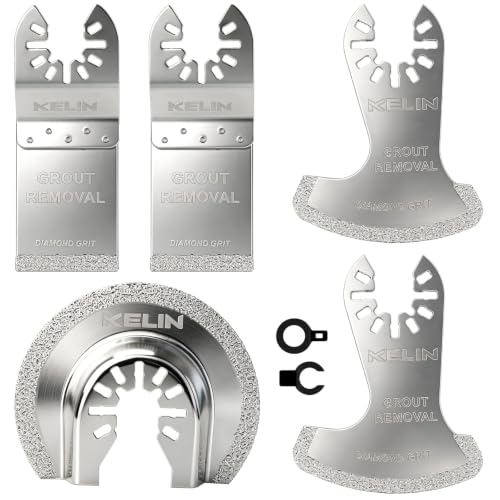
KELIN Diamond Oscillating Multi Tool Blades
What We Like
- Five-blade set offers multiple replacements
- Diamond grit coating for hard materials like concrete
- Segmented design aids precise grout removal
- Wide brand compatibility increases versatility
Trade-offs
- 4-inch blade length is shorter than some dedicated grout blades
- Set lacks a dedicated extra-long blade for deep mortar joints
A five-piece set of diamond-coated blades provides substantial value for anyone facing a series of tile or masonry projects. The diamond grit is specifically designed for grout, mortar, and tile, making these blades versatile for common renovation tasks. This set suits the DIYer or contractor who needs a reliable stock of blades for multiple jobs without a premium investment. The wide compatibility means it’s likely to fit your existing oscillating tool, eliminating guesswork.
These diamond-coated blades are built for grout and tile work, with a four-inch length that handles standard jobs without issue. That size fits into tight spaces between tiles for precise removal, but it doesn’t reach as deep as a longer blade like the Makita B-67147 for recessed mortar. For most removal and regrouting tasks, the set provides capable performance.
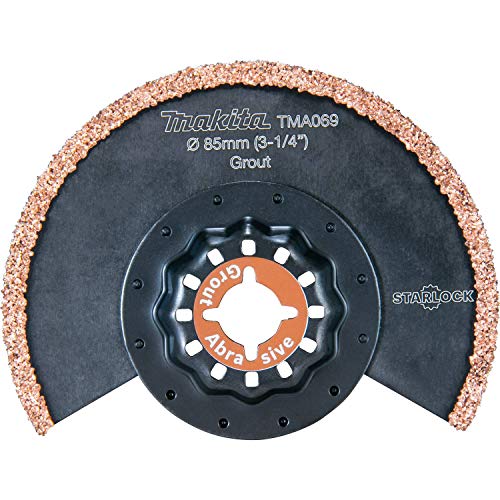
Makita B-67147 Starlock Grout Removal Blade
What We Like
- Tungsten carbide edge for long life
- Starlock interface for maximum performance
- Also removes hard caulk and glue
Trade-offs
- Single blade design, not a multi-pack set
Engineered with a tungsten carbide edge, this blade resists wear when grinding through tough materials like old grout or hardened glue, making it a durable choice for renovation work. The Makita B-67147 serves tile installers and dedicated DIYers who need a specialized accessory focused on abrasive removal. Its design prioritizes longevity for that specific task over versatility for cutting other materials.
The trade-off is its specialization. It’s not a general-purpose blade for cutting wood or drywall. For detailed work in very tight spaces, a multi-pack set like those from KELIN or HEMUNC includes narrower options. On a standard tile floor, however, this Makita’s stout construction and aggressive edge provide consistent performance for the primary job.
Product photos
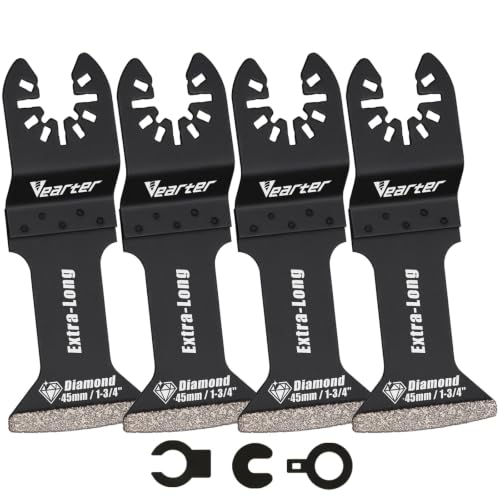
Vearter Extra Long Diamond Oscillating Blade
What We Like
- Extended 55mm depth for hard-to-reach gaps
- Longer life than carbide grit in applications
- Efficiently clears old grout and residual grit
- Universal fit for most oscillating tools
Trade-offs
- For soft surfaces only, not hard ceramic or porcelain
A 55mm operational depth gives this blade the reach to clean out narrow tile joints and gaps that standard blades simply can’t touch. That extra length is the whole point for the DIYer or pro tackling bathroom renovations or floor prep, where accessing old grout in tight spaces is the most frustrating part of the job. It’s a specialized tool for precision cleaning, and the diamond grit construction promises to outlast carbide in that specific, abrasive role.
Its design is strictly for soft materials, a limitation clearly stated by the manufacturer. This blade set works on soft tiles and marble-look surfaces but cannot handle hard ceramic, porcelain, or granite. That makes it a focused solution for grout removal and cleaning in standard bathroom renovations, not a universal cutter for all tile types.
Product photos
HEMUNC Diamond Oscillating Tool Blades Set

What We Like
- Flat side swing design for tight corner access
- Diamond grit provides 5X longer life than carbide
- Set includes two kerf choices for different tasks
- Wide compatibility with major oscillating tool brands
Trade-offs
- Designed for soft tile and grout, not hard ceramics
- Set contains only two blade shape types.
These diamond blades have a flat side swing design that fits right into corners and tight spaces where other blades cannot. This makes the HEMUNC set a smart choice for meticulous tile repair, especially when cleaning out old grout or notching a tile in a confined area without damaging its neighbors. Their diamond grit construction lasts significantly longer than standard carbide when grinding through tough mortar, so you can tackle a larger project without constantly swapping worn blades.
The trade-off is in material specialization. These blades are intended for soft tile, grout, and porous concrete, not for cutting through hard porcelain or stone. For a more aggressive, all-purpose carbide blade that can handle a wider range of materials in a single shape, the Bosch OSL212CG is a more versatile, if less corner-specific, option. The HEMUNC set excels at its intended niche but requires you to own other blades for different cutting jobs.
Product photos
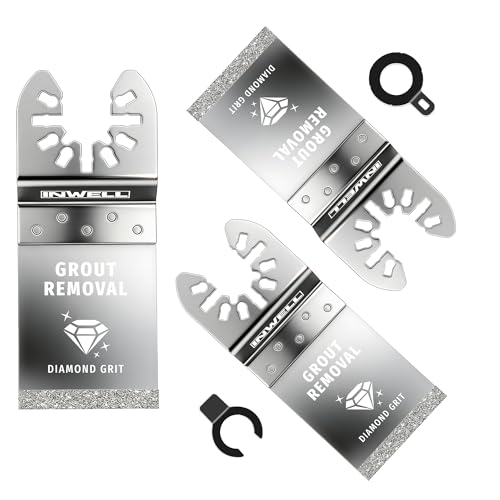
Inwell Diamond Oscillating Tool Blades
What We Like
- Diamond grit edge for up to 5X longer lifespan.
- Thin-kerf design enables clean, precise cuts with minimal chipping.
- Straight-edge design improves control for flush and straight-line cuts.
- Fits most major oscillating tool brands.
Trade-offs
- Not compatible with Starlock oscillating tool systems.
- Primarily for soft tile, grout, and mortar, not hard ceramics.
A thin-kerf diamond blade delivers clean, precise cuts with minimal material loss, which is exactly what you need for delicate jobs like trimming tile edges or cleaning out grout lines without damaging surrounding surfaces. The Inwell blade is for the detail-oriented renovator who values control and a clean finish over raw cutting speed. Its straight-edge design and diamond grit make it a focused tool for controlled removal in tight spaces.
A universal fit for most major tool brands means these blades slide right into popular oscillating tools from DeWalt, Milwaukee, Bosch, and Ryobi, so you can get to work without hunting for an adapter. They are not, however, compatible with Starlock tool systems. The thin-kerf design allows for clean and precise cuts with minimal chipping, which is ideal for detailed tasks like grout removal and edge trimming in tight spaces.
Product photos
HEMUNC Universal Carbide Blades Set

What We Like
- Includes three distinct carbide blade shapes for different tasks
- Universal fit works with most major oscillating tool brands
- Narrow and triangular blades are designed for tight spaces
- Assorted set provides a versatile introduction to tile work
Trade-offs
- Carbide grit blades are less durable than diamond for hard tile
- Set lacks a dedicated, long grout removal blade for large jobs
The HEMUNC set delivers immediate versatility with its three distinct carbide blade shapes, making it a solid first kit for someone new to oscillating tool tile work. You get a finger rasp for detail sanding, a semicircle blade for joints, and a triangle rasp for corners, all with a universal fit. This assortment lets you tackle a range of introductory tasks like cleaning up adhesive, shaping filler, or cutting into soft tile without committing to a single, specialized blade. It’s a practical way to learn what your tool can do across several common scenarios.
Carbide grit handles concrete and soft stone but wears faster than diamond on hard ceramic or porcelain. This HEMUNC set includes three blade types for tasks like shaping fillers or cutting into tile joints, making it a versatile starter kit for various materials. For projects focused solely on grout removal, the Makita B-67147 offers a longer 3.8-inch width.
Product photos
Vearter Diamond Grit Grout Set

What We Like
- Includes three spacer adapters for universal compatibility
- Diamond grit construction for longer life than carbide
- Curved and half-circular shapes for precise gap and corner work
- Five-piece set provides multiple blade shapes for one job
Trade-offs
- For soft surfaces only, specifically not for hard ceramic or porcelain
This set’s inclusion of three spacer adapters solves a common headache right out of the box, ensuring it will physically connect to most oscillating tools on a job site. That practical focus, combined with a mix of half-circular and curved diamond-grit blades, makes it a ready-to-go kit for anyone facing a grout removal project. It’s built for the renovator who needs to clean up tile joints and trim soft materials without swapping between multiple brands’ proprietary systems.
This set covers the basics for grout work with five diamond-grit blades and three spacer adapters, so you can start a bathroom renovation without hunting for separate parts. The blades are strictly for soft materials, however, so you’ll need a different solution for porcelain or granite. Its universal compatibility means it fits most oscillating tools, which is a major convenience for anyone who doesn’t want to check proprietary mounting systems.
Product photos
How We Evaluated Tile Cutting Blades
This guide is based on manufacturer specifications and documented patterns from expert reviews and user feedback. Key criteria for comparison include blade material, such as diamond grit or carbide. We also consider the cutting edge design, like segmented, flat, or curved shapes, along with compatibility with various oscillating tool interfaces and the intended application for specific tile and grout types.
We prioritized blades that owners reported as durable and effective for their stated purpose, like removing grout without damaging adjacent tiles. A limitation of this method is that we cannot provide comparative wear data or precise lifespan numbers for each blade in real-world use.
What To Look For In Tile Cutting Blades
Your oscillating tool is only as good as the blade you put in it. For tile work, the right blade prevents chipping, reduces vibration, and saves you from constantly swapping out worn edges. Understanding the core differences in material and design is the first step to a clean, efficient job.
Key buying criteria include the blade material. Diamond grit offers longer life on hard materials, while carbide is cost-effective for grout work. Also consider the cutting edge shape for your task, like segmented for removal or straight for flush cuts, and universal versus proprietary tool compatibility.
Blade Material and Durability
The blade’s cutting surface determines its lifespan and suitable materials. Diamond grit blades, made by bonding diamond particles to a metal plate, are extremely durable and excel at cutting through hard materials like concrete and tough mortar. They are often rated for up to five times the life of a carbide blade.
Carbide grit blades use a coating of tungsten carbide granules and are more affordable, making them a solid choice for frequent grout and soft tile removal where extreme hardness isn’t required. For general grout removal, carbide blades are often sufficient, but for tougher jobs like cutting cement board or grinding concrete, a diamond blade for your oscillating tool is a wiser investment.
Cutting Edge and Blade Shape
The shape of the blade’s working end dictates its function. A segmented or “grit edge” design, with a toothed or serrated profile, is ideal for aggressive material removal like clearing out grout lines or old mortar. A straight-edge blade provides more control for flush, precise cuts along a tile edge. Curved or half-moon shapes are designed to access inside corners and tight spaces. Choosing the right blade types is as important as the material; a segmented blade for demolition won’t give you a clean cut line.
Tool Compatibility and Fit
Not all blades fit all tools. The most common system is a universal 1-inch tang, which works with most major brand oscillating tools. However, professional-grade systems like Bosch’s Starlock offer a more secure, vibration-dampening connection for higher performance. Always verify your tool’s interface before buying. If you’re unsure about your tool’s capabilities, reviewing a guide to oscillating tool blades can clarify the differences. For a new user, learning the multi-tool basics is essential for safe and effective operation.
- Check your oscillating tool’s manual for the compatible blade interface (e.g., universal, Starlock, Fein).
- Confirm the blade’s stated fit against your tool’s brand and model.
- For universal blades, ensure the set includes any necessary spacer adapters for a snug fit.
Match the blade’s primary stated purpose to your most common task to get the best performance and value.
Tile Cutting Blades For Oscillating Tools Compared
The table below compares key features across all eight blades to help you see the differences at a glance.
| Product | Blade Coating/Grit | Interface/Compatibility | Blade Count/Type |
|---|---|---|---|
| Bosch OSL212CG Starlock Carbide Grit Blade | Premium carbide grit | Starlock | N/A |
| KELIN Diamond Oscillating Multi Tool Blades | Diamond grit | Fits Milwaukee, Ryobi, Rockwell, Fein | 5 pieces |
| Makita B-67147 Starlock Grout Removal Blade | Tungsten carbide edge | Starlock | N/A |
| Vearter Extra Long Diamond Oscillating Blade | Diamond Grit | Universal quick-release | 4 pieces |
| HEMUNC Diamond Oscillating Tool Blades Set | Diamond grit | Universal fit for many brands | 6 pieces (2 types) |
| Inwell Diamond Oscillating Tool Blades | Diamond grit | Universal-fit (excludes Starlock) | 3 blades |
| HEMUNC Universal Carbide Blades Set | Carbide grit | Universal Fit: Yes | 6 pieces (3 types) |
| Vearter Diamond Grit Grout Set | Diamond | Universal Compatible System | 5 pieces (2 half circular, 3 curved edge) |
Frequently Asked Questions
What are the best oscillating tool blades for cutting ceramic tile?
For cutting ceramic tile, you need a blade designed for hard materials. Diamond grit blades are typically recommended over carbide for ceramic, as they provide a longer lifespan and cleaner cut with less chipping. Look for blades specifically listed as suitable for ceramic or porcelain tile.
What is the best blade for tile cutting?
The “best” blade depends entirely on your specific task. For general grout removal between tiles, a segmented carbide or diamond grit blade is most effective. For making precise cuts in the tile itself, a straight-edge diamond blade with a thin kerf is ideal to minimize damage.
Can you cut tiles with an oscillating tool?
Yes, an oscillating tool can cut tiles, but it is best suited for smaller cuts, notches, and trim work rather than long, straight cuts best handled by a wet saw. It excels at plunge-cutting holes for pipes or making intricate cuts in already-installed tile.
What is the best blade for cutting ceramic tile?
A diamond-coated oscillating blade is the best choice for cutting ceramic tile. The diamond grit is hard enough to abrade the ceramic surface cleanly. Ensure the blade is described as suitable for ceramic or hard tile, as blades for “soft tile” may struggle and wear quickly.
How long do diamond oscillating blades last?
Diamond oscillating blades last significantly longer than carbide blades, especially on hard materials. Manufacturers and user reports often cite a diamond blade lasting up to five times longer than a comparable carbide grit blade when used on appropriate materials like mortar, concrete, or tile.
The Bottom Line
For the professional or dedicated DIYer with a compatible tool, the Bosch OSL212CG Starlock Carbide Grit Blade is the best overall choice. It offers a secure connection and a segmented design perfected for grout and tile work. If you’re on a budget or need multiple blades for various tasks, the KELIN Diamond Oscillating Multi Tool Blades set provides exceptional value and wide compatibility.
For those focused solely on efficient grout removal, the Makita B-67147 is the blade to get. Ultimately, the most important factor is matching the blade’s material and shape to your specific tile or grout job, this ensures a clean result and saves you from premature wear and frustration.
