
8 Best Worm Drive Saws in 2026
This post contains affiliate links. As an Amazon Associate, we earn from qualifying purchases.
Our best overall worm drive saw is the SKIL 16-5/16 Inch Magnesium Worm Drive Skilsaw for its unmatched capacity to slice through thick lumber in a single pass. For a high-torque classic, consider the SKILSAW SPT78W-01, while the Makita 5377MG is our best lightweight professional choice.
These saws are built for demanding work, but choosing the right one means balancing raw power with practical concerns like weight and maneuverability on the job site. We researched eight top models, comparing specifications and owner experiences to highlight the key differences that matter most for framers, roofers, and serious builders.
Top 8 Worm Drive Saws in the Market
Certain content that appears on this site comes from Amazon. This content is provided "as is" and is subject to change or removal at any time.
The Best Worm Drive Saws, Reviewed
SKIL 16-5/16 Inch Magnesium Worm Drive Skilsaw

What We Like
- Largest capacity for deep, single-pass cuts
- Durable magnesium construction reduces weight
- Dual-Field motor runs cooler for sustained power
- Includes quality blade for immediate use
Trade-offs
- At 27.3 lb, it's the heaviest saw in the guide
- 24.5-inch length requires more storage space
- Overkill for common 2x lumber and trim work
A 6-1/4-inch cutting capacity means you can cleanly slice through 6x timbers in a single pass. This is the saw for framers and builders tackling the biggest dimensional lumber on site. Its all-magnesium build delivers the durability worm drives are known for while shaving off some heft, and the 15-amp Dual-Field motor is built to stay cool under relentless use. For the user who regularly needs maximum depth and proven job-site endurance, this Skilsaw is the benchmark.
The saw’s large 6-1/4 inch cutting capacity allows for single-pass cuts through thick timbers like 6x lumber. This capacity comes with a substantial 27.3 pound weight, which demands respect and a strong arm during use. For cutting standard dimensional lumber, other hypoid-drive models are available in lighter packages.
SKILSAW SPT78W-01 8-1/4-Inch Worm Drive Circular Saw

What We Like
- High-torque motor for demanding cuts
- Precision-machined worm drive for durability
- Die-cast aluminum housings for rugged use
- Anti-snag guard for smooth cutoff work
Trade-offs
- Heavy at 18.5 pounds for overhead work
- No electric brake for instant blade stop
Built around a high-torque 15-amp Dual-Field motor designed specifically for worm drive operation, this saw is engineered to deliver relentless power for demanding cuts. Its die-cast aluminum housings and precision-machined worm drive gears are built for durability on a jobsite. The design descends from the classic Skil 77 worm drive saw, which one historical account notes has been a reliable tool for professionals over many decades.
That legendary toughness comes with the expected heft and length of a traditional worm drive. Compared to a lighter hypoid saw like the Makita 5377MG, the Skilsaw feels more substantial and planted in the cut, which can be an advantage in straight-line ripping but a drawback for detailed trim work. Owner feedback and expert evaluations consistently point to it as a benchmark for raw, dependable power, even as newer designs aim to be more user-friendly.
Makita 5377MG Magnesium Hypoid Saw

What We Like
- Lightweight magnesium construction for all-day use
- Large 2-3/8-inch cutting capacity at 90 degrees
- Positive bevel stops at common angles for speed
- Oil-bath technology reduces gear maintenance
Trade-offs
- Hypoid drive differs from traditional worm gear mechanics
- At 13.2 lb, it's heavier than some compact cordless saws
At 13.2 pounds, the Makita 5377MG is the lightest saw in its class, a critical advantage for professionals making repetitive cuts all day without arm fatigue. Magnesium components in the motor housing, blade guard, and plate create this job-site-tough tool that is also well balanced. The writer of a research article noted the saw kept disappearing because workers were sneaking it away to the job site.
The trade-off is its drive system. While it looks and acts like a traditional worm drive, the hypoid gearing is a different animal. It’s a technical distinction that matters to purists who swear by the specific torque feel of a classic worm drive, like the SKILSAW SPT78W-01. For most tasks, however, the performance is indistinguishable, and you get the benefit of a lighter saw. This model is for the tradesperson who wants the rear-handle power and depth of cut but prioritizes saving their energy for the work, not carrying the tool.
Makita 5477NB Hypoid Saw

What We Like
- Hypoid gears deliver more power than conventional worm drive
- Oil bath and sealed gear housing reduce maintenance
- Wide 51.5-degree bevel capacity for rafter cuts
- Heat-treated gears for long-term durability
Trade-offs
- At 18 pounds, it's heavier than magnesium-housed hypoid models
- Gearing design differs from a traditional worm drive
A 15-amp motor paired with efficient hypoid gearing means this saw won’t bog down in dense framing lumber, making it a reliable workhorse for all-day cutting. The oil bath technology and sealed housing are built for job-site neglect, so you can focus on production instead of maintenance. It’s the right choice for carpenters who need consistent power for repetitive cuts and appreciate the positive stops at 45 and 51.5 degrees for precise roof work.
Weighing 18 pounds, the Makita 5477NB carries more mass than magnesium-bodied saws, which can increase fatigue during extended overhead work. Its hypoid gearing differs from a traditional worm drive, though research mentions it looks and acts like one. The 15 AMP motor and efficient hypoid gears are engineered to deliver power for demanding cuts, making it a choice for framers who value torque over minimal weight.
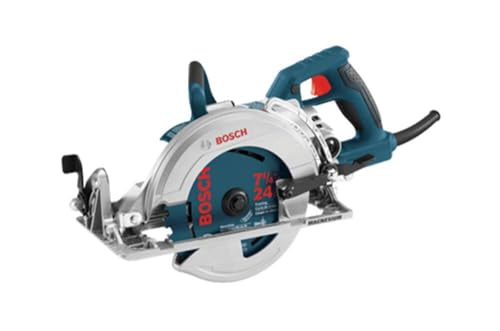
Bosch CSW41 Worm Drive Circular Saw
What We Like
- Left-side blade for clear cut line visibility.
- Magnesium build reduces weight for less fatigue.
- On-board multi-function wrench for blade changes.
- Anti-snag lower guard for smooth operation.
Trade-offs
- Weighs 15.0 pounds per Amazon specs.
- No electric brake mentioned.
With the blade positioned on the left side, the Bosch CSW41 provides a clear, unobstructed view of the cut line from a common working stance. This clarity is enhanced by a worm drive design that increases accuracy, making the saw suitable for precise, long cuts in framing or decking. Its magnesium construction results in a 13.2-pound weight to help reduce user fatigue, and the 15-amp motor delivers torque for demanding applications like cutting wet lumber.
You do feel that weight after several hours, especially when compared to lighter hypoid options like the Makita 5377MG. It’s a trade-off for the saw’s solid, planted feel in the cut. For general construction and framing where line-of-sight is critical, the CSW41’s design is a significant practical advantage. But if your work involves constant carrying up ladders or repetitive overhead cuts, the heft of the worm drive system is a factor to consider.
Product photos
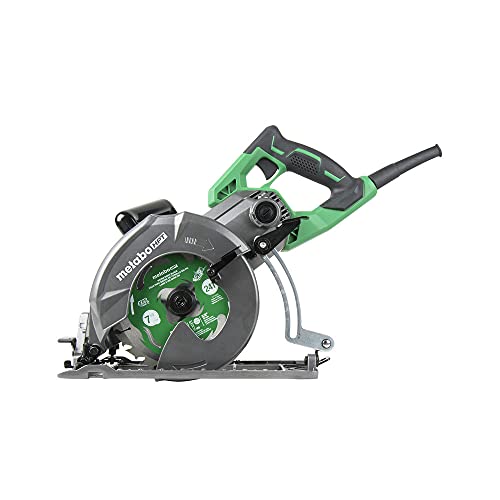
Metabo HPT C7WDM Worm Drive Circular Saw
What We Like
- Includes a premium framing blade ready for work
- 53-degree bevel capacity for complex cuts
- Soft, non-slip grip for better control
- Rafter hook for safe on-site placement
Trade-offs
- At 14.7 lbs, it's heavier than magnesium models like the 13.2 lb Makita 5377MG
- Weighs 14.7 pounds
A 15-amp motor spinning at 5000 RPM delivers the grunt needed for framing and decking all day, and it arrives ready to go with a 24-tooth framing blade. This makes it a solid, no-fuss choice for carpenters and serious DIYers who need a reliable worm drive saw without a premium price tag. The 53-degree bevel capacity lets you tackle compound cuts for rafters and stair stringers, while the on-tool rafter hook is a thoughtful touch for keeping your workspace safe.
The Metabo HPT C7WDM worm drive saw weighs 14.7 pounds, a weight that provides stability for demanding cuts but can be a factor during extended use. Its durable worm drive gearing is built for long-term professional use. The saw comes with a 7-1/4-inch framing blade and wrench, providing a complete kit ready for the job.
Product photos
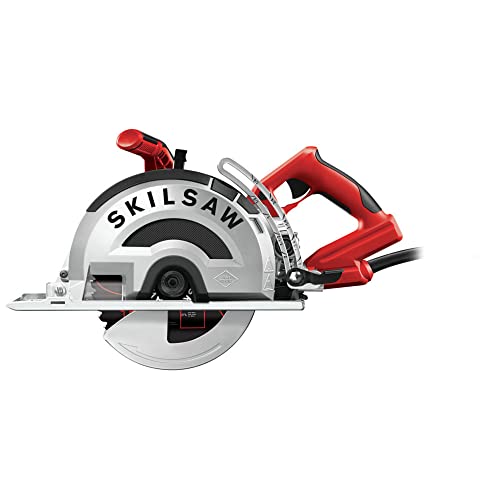
SKILSAW Outlaw Metal Cutting Worm Drive Saw
What We Like
- Worm drive geared specifically for metal
- Large chip tray reduces cleanup frequency
- Blade window provides clear cutting line
- Convenience lever for easy plunge cuts
Trade-offs
- 8-inch blade limits depth versus 10-1/4 inch models
This saw packs a 15-amp motor and a worm drive gear train built specifically for metal, which means it won’t bog down when you’re cutting through thick stock or hardened material. The standout feature is the chip tray that holds a third more debris than other saws, so you can make more cuts before stopping to empty it. That combination of dedicated power and thoughtful design makes it the clear choice for anyone whose project list is full of steel studs, conduit, or plate. It’s built for the jobsite where metal is the main event, not an occasional chore.
Built specifically for metal, the SKILSAW Outlaw uses a worm drive gear system designed for that tough material. At 15.3 pounds, its weight falls between lighter hypoid models and heavier worm drive saws, which affects how it feels during extended overhead work. The design includes a metal chip tray that holds a third more debris than other saws, so you can cut longer before needing to clear it. A blade window gives a clear sightline to your cut, and a convenience lever raises the lower guard to start plunge cuts safely.
Product photos
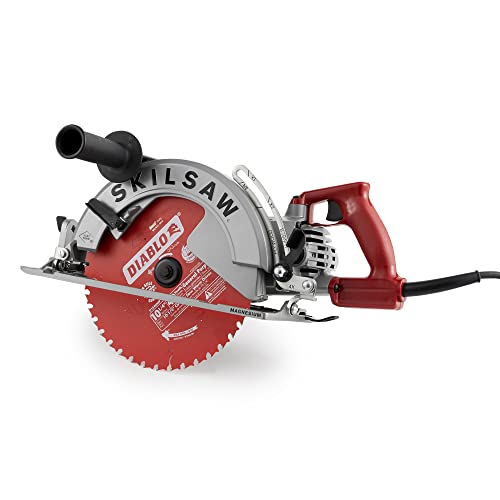
SKILSAW SPT70WM-22 Worm Drive Saw
What We Like
- 10 1/4-inch blade for deep cutting capacity
- 15-amp motor provides substantial power
- Includes an electric brake for safety
- Magnesium construction reduces weight for its size
Trade-offs
- At 25.2 inches long, it requires more storage space.
- Weighs 16.4 pounds, which is heavy for overhead work.
- Its large size makes it less nimble for detailed cuts.
A 10 1/4-inch blade lets you slice through thick timbers and dimensional lumber in a single pass, making it the obvious choice for framing crews and builders tackling heavy-duty projects. The 15-amp motor has the guts to power through wet or dense wood without complaint, and the magnesium build keeps the heft manageable for a saw of this capability. This is the tool you grab when the job involves deep cuts and all-day production.
For general carpentry or trim work where a 10 1/4-inch blade is overkill, a more compact model like the SKILSAW SPT78W-01 will be far easier to maneuver. This Skilsaw is built for maximum cut depth, not for fitting into a crowded tool bag.
Product photos
How We Evaluated Worm Drive Saws
Our evaluation is based on detailed research into product specifications, manufacturer engineering data, expert round-up reviews, and consistent patterns in owner feedback from professional users. We focused on three core criteria: motor power and torque for cutting thick, dense materials; cutting capacity and blade placement for practical job-site versatility; and overall weight and durability for all-day use. For a deeper dive into the mechanics, our worm drive saw reviews explain what sets these tools apart.
A research-led approach like this cannot replicate the feel of a saw in your hand over weeks of daily use. We rely on documented specs and the aggregated experiences of professionals who use these tools for a living. This guide synthesizes that information to point you toward the models that consistently earn praise for their performance and reliability in the field. You can explore more options in our broader comprehensive circular saw guide.
What To Look For In Worm Drive Saws
Worm drive saws are defined by their gear design, which places the motor parallel to the blade for exceptional torque. This makes them favorites for framing and heavy construction, but the specifics of power, visibility, and heft vary.
Prioritize torque and amperage for tough cuts, left-side blade placement for clear visibility, and magnesium construction to reduce weight. Consider cutting depth for your common materials and whether features like an electric brake or rafter hook fit your workflow.
Power and Torque
The core advantage of a worm drive is its high-torque output, which powers through wet lumber, dense timbers, and tough cuts without bogging down. Look for a 15-amp motor as a baseline for professional-grade power. While torque figures are rarely published, the worm drive or hypoid gear mechanism itself is the key indicator, as it provides significantly more rotational force than a standard sidewinder saw’s direct-drive system. For a detailed breakdown of the differences, see our comparison of sidewinder and worm drive saws.
Cutting Capacity and Visibility
Cutting capacity determines the maximum depth of a single pass. Common 7-1/4 inch blades handle 2x lumber, but larger 10-1/4 or 16-5/16 inch blades are needed for 4x or 6x material. Blade placement is equally crucial; a left-side blade gives right-handed users a direct, unobstructed view of their cut line, a signature feature of traditional worm drives. Bevel capacity, which can exceed 50 degrees, is vital for complex cuts like rafters and stair stringers.
Weight, Build, and Features
These are heavy-duty tools, so weight directly impacts user fatigue. Magnesium housings significantly reduce weight compared to steel or aluminum. Durability comes from features like sealed gear housings, anti-snag blade guards, and rugged die-cast components. Practical extras include an electric brake for quicker stops, a built-in wrench, and a rafter hook for safe, convenient placement. Your blade recommendations are also critical, as a quality blade is essential for clean, efficient cuts.
- Check the saw’s length to ensure it fits in your standard tool storage.
- Verify the oil level sight glass, if present, for easy maintenance checks.
- Confirm the handle grip design for comfort and control during long sessions.
The best saw is the one with enough power and depth for your toughest jobs, without being so heavy it wears you out before the day is done.
Worm Drive Saws Compared
The table below summarizes the key specifications and our award categories for all eight worm drive saws we researched, making direct comparisons easy.
| Product | Motor | Weight | Blade Size |
|---|---|---|---|
| SKIL 16-5/16 Inch Magnesium Worm Drive Skilsaw | 15 AMP Dual-Field | 27.3 pounds | 16-5/16 In. |
| SKILSAW SPT78W-01 8-1/4-Inch Worm Drive Circular Saw | 15 Amp Dual-Field | 18.5 pounds | 8-1/4 inches |
| Makita 5377MG Magnesium Hypoid Saw | N/A | 13.2 Pounds | 7-1/4" |
| Makita 5477NB Hypoid Saw | 15 AMP | 18.0 pounds | 7-1/4" |
| Bosch CSW41 Worm Drive Circular Saw | 15 amp | 15.0 pounds | 7-1/4-Inch |
| Metabo HPT C7WDM Worm Drive Circular Saw | 15 Amp | 14.7 lbs | 7-1/4-Inch |
| SKILSAW Outlaw Metal Cutting Worm Drive Saw | 15 Amp | 15.3 Pounds | 8 Inch |
| SKILSAW SPT70WM-22 Worm Drive Saw | 15 Amp | 16.4 pounds | 10 1/4 inches |
Frequently Asked Questions
Which worm drive saw is better, DeWalt or Milwaukee?
Our research did not identify a current DeWalt or Milwaukee worm drive model that ranked among the eight finalists in this specific category. The top-performing models in our evaluation come from brands like SKIL, SKILSAW, Makita, Bosch, and Metabo HPT, each excelling in different areas like capacity, weight, or value.
Are worm drive saws worth it?
For professional framers, roofers, and builders who regularly cut thick, dense lumber, a worm drive saw is absolutely worth it. The high-torque gear system provides sustained power that resists stalling, and the left-blade design offers superior cut-line visibility. For light DIY or finish carpentry, a standard sidewinder or compact cordless saw is often a more practical and affordable choice.
What are the disadvantages of a worm drive saw?
The primary disadvantages are weight and size. Worm drive saws are significantly heavier and longer than sidewinder saws, making overhead work and all-day carrying more fatiguing. They are also generally more expensive and can be overkill for common tasks like cutting plywood or 2x4s. Their gearboxes require periodic oil checks and maintenance.
Are worm drive table saws better?
The term “worm drive” typically refers to handheld circular saws, not table saws. Table saws use a different motor and drive system. For stationary cutting power, you would evaluate table saws based on horsepower, rip capacity, and safety features, not a worm drive mechanism.
What size worm drive saw do I need?
For general framing with standard 2x lumber, a 7-1/4 inch saw is standard and capable. If you regularly cut 4x material or need deep bevel cuts for rafters, a 10-1/4 inch model provides greater capacity. The largest 16-5/16 inch saws are specialized tools for timber framing or cutting 6x lumber in a single pass.
The Bottom Line
The SKIL 16-5/16 Inch Magnesium Worm Drive Skilsaw is the definitive choice for professionals who need the deepest possible cutting capacity for timbers and large dimensional lumber. It is built for the most demanding site conditions.
For those on a tighter budget, the Metabo HPT C7WDM offers excellent value and comes ready to work with a quality blade included. If your work involves cutting metal studs or plate, the dedicated SKILSAW Outlaw is the clear specialist pick.
Ultimately, your decision hinges on matching the saw’s capacity and power to your most frequent tough cuts, while keeping its weight manageable for how you work. A very lightweight saw might lack torque, but one that is too heavy will slow you down.
