
Clipped Head vs Round Head Nails: Which Should You Buy?
This post contains affiliate links. As an Amazon Associate, we earn from qualifying purchases.
Clipped head vs round head nails comes down to one thing: building code compliance. Round head nails are universally accepted for structural framing, while clipped head nails are often prohibited. The round head’s full circle provides maximum surface area to resist pull-through, making it the code-approved standard for load-bearing work. The clipped head’s D-shape allows more nails per magazine strip, but offers measurably lower withdrawal resistance.
That code line is the deciding factor. It is not a suggestion or a regional quirk. Post-hurricane forensic engineering has identified nail pull-through as a major failure point in high-wind zones. The physical advantage of a full round head became a legal requirement.
The rest of this guide walks you through the specs, the tool compatibility, and the real-world consequences of the clipped head vs round head nails choice. You will know which nail fits your Bostitch or Senco nailer, which projects you can use clipped heads on, and how to talk to your inspector before you buy a single box.
Key Takeaways
- Round head nails are the code-approved standard for structural framing; clipped head nails often fail inspection for load-bearing walls, roofs, and floors.
- The D-shaped head on a clipped nail allows more nails per magazine strip, meaning fewer reloads during non-stop sheathing or fencing work.
- Match the nail to your nailer, the required head type, angle (e.g., 21° or 34°), and collation are printed on the tool’s magazine. They are not interchangeable.
- For exterior or pressure-treated lumber, you must use Hot-Dip Galvanized (HDG) or Stainless Steel nails; bright nails will corrode and fail within a few years.
- A documented failure mode for clipped head nails is reduced withdrawal resistance and pull-through under load, specifically in high-wind and seismic zones.
Clipped Head vs Round Head Nails: A Side-by-Side Breakdown
The difference is visible in your hand. A round head nail has a full, circular head. A clipped head nail has a “D” shape, with a flat side where a segment of the circle is missing.
A 34-degree clipped head nail has a “D” or clipped shape, allowing nails to be collated tightly together in a strip. A round head nail has a full, circular head, providing maximum surface area for holding power. The clipped shape yields higher magazine capacity, while the round head offers superior withdrawal resistance and universal code acceptance.
That missing segment changes everything. The clipped shape allows the nails to fit more tightly together in a collated strip. But it also reduces the surface area pressing against the wood.
Here is how they stack up across every factor that matters:
| Feature | Clipped Head Nail | Round Head Nail |
|---|---|---|
| Head Shape | “D” or clipped shape. | Full circular head. |
| Magazine Capacity | Higher. More nails fit in the same strip length. | Lower. Full heads create space between nails. |
| Workflow Speed | Fewer reloads, faster for production work. | More frequent reloads. |
| Holding Power | Good, but measurably lower withdrawal resistance. | Excellent. The industry standard for maximum strength. |
| Code Acceptance | Often NOT permitted for structural applications. | Universally accepted and often required (e.g., IRC). |
| Primary Use Case | Non-structural sheathing, fencing, non-code projects. | Structural framing, roof trusses, floor joists, any load-bearing work. |
The “measurably lower” holding power is not a guess. Post-hurricane forensic engineering consistently points to fastener pull-through as a failure point, with the clipped head’s reduced surface area being a physical liability.
The Code Compliance Elephant in the Room
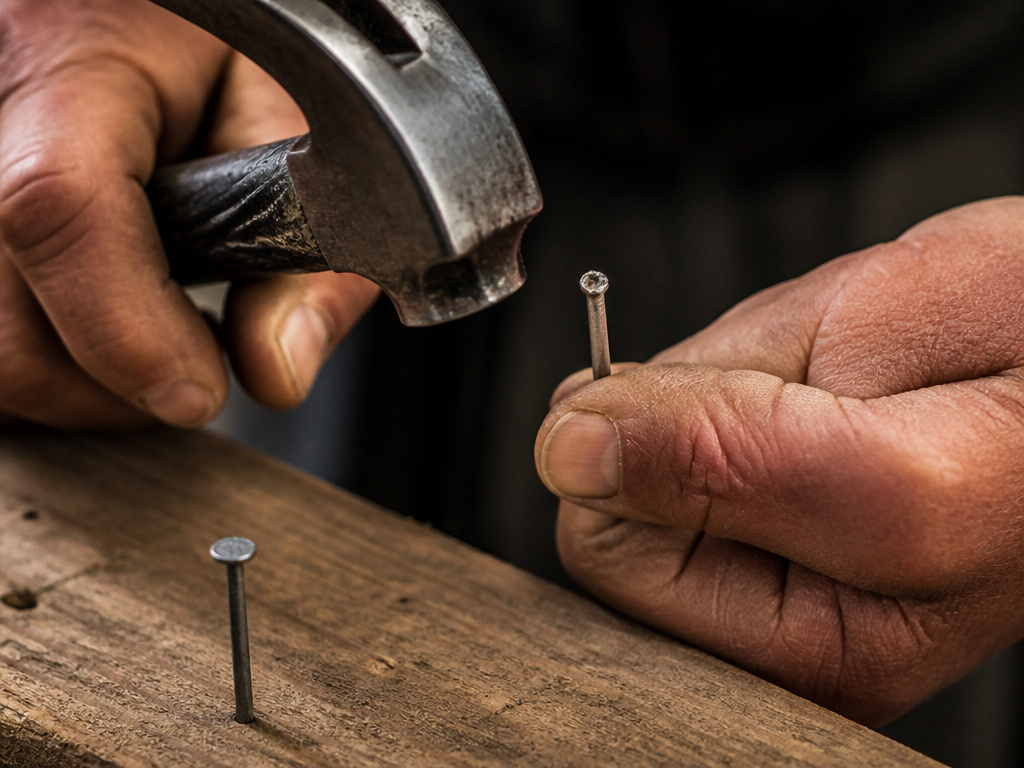
This is the mandatory requirement. For a structural frame, the bones of a house that hold up the roof and resist wind, Many U.S. Jurisdictions follow the International Residential Code (IRC). That code, and the inspectors who enforce it, universally accept full round head nails.
Clipped head nails are often not permitted for structural framing, sheathing, or roof trusses.
Common mistake: Assuming a local hardware store carries code-compliant nails for your framing project. Many big-box stores stock clipped head nails for 34-degree nailers right next to the lumber. Using them on a load-bearing wall will fail inspection, forcing you to pull every nail.
The confusion is understandable. Forum users report that some inspectors in their area don’t check nail heads closely. But betting your project’s approval on an inspector’s oversight is a massive, costly risk. The rework, pulling hundreds of non-compliant nails, is a headache you can avoid by buying the right box from the start.
The rule is simple: if the building department requires a permit and inspection for the work, use round head nails. Save the clipped heads for the fence, the garden shed, or interior non-structural walls where the code is silent.
Nailer Compatibility: You Cannot Swap Them
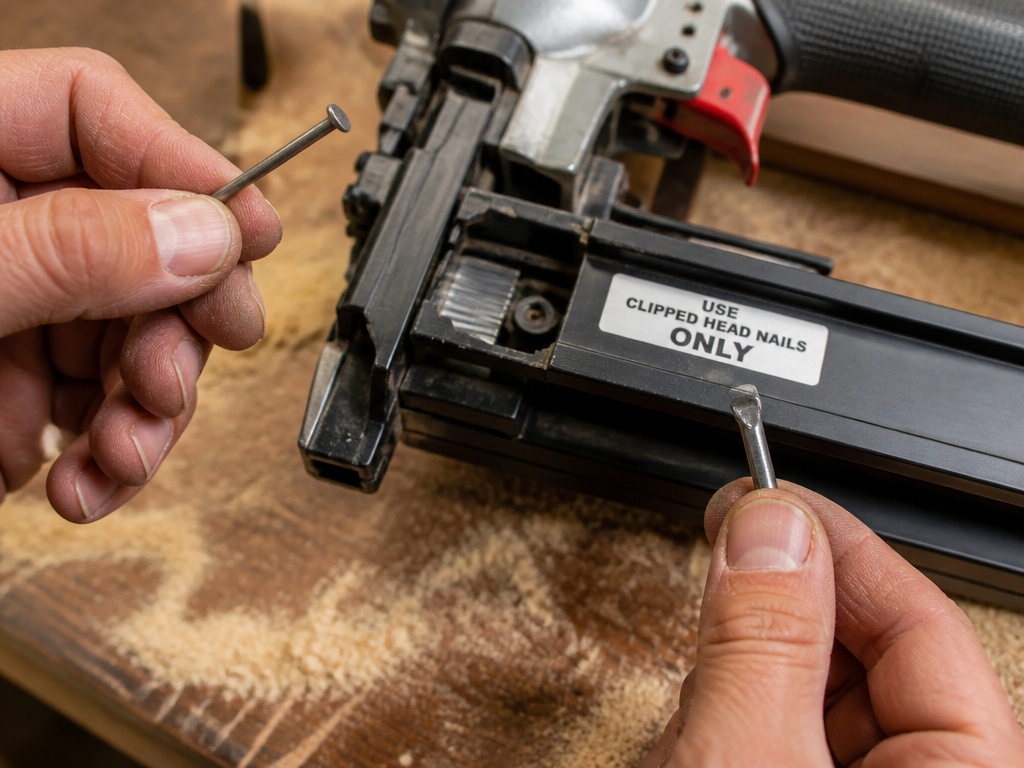
Your nail gun is not a universal tool. It is engineered for a specific nail head type, collation (plastic, wire, paper), and angle (21-degree, 28-degree, 34-degree).
Always match the nail to the nailer. The required specifications are almost always stamped or printed on the tool’s magazine.
- Round Head Nailers: These are common for 21-degree and 28-degree angles. The Bostitch F21PL is a classic example, a pneumatic nailer that drives plastic-collated round head nails from 1-1/2 to 3-1/2 inches and wire-collated nails from 1.5 to 2.5 inches. It operates at 90-120 PSI and uses a 21-degree nail angle.
- Clipped Head Nailers: These are typically 34-degree nailers. The Senco 601 is designed for clipped head nails. Some users report limited success with “offset round head” or modified D-head nails in these tools, but manufacturers like Senco generally do not recommend it and it may void the warranty.
There is a noted disagreement on one popular tool type. Forum sources state that Paslode nail guns that use gas cartridges use clipped head nails, while other tool reviews refer to gas-powered Paslode models as competitors to round-head nailers without explicitly confirming the nail type. However, other tool reviews refer to the Paslode 902600 as a gas-powered competitor to round-head nailers without explicitly confirming the nail type. When in doubt, check the manual for your specific Paslode model.
Trying to force the wrong nail type causes jams, misfires, and can damage the tool’s driver blade or magazine. It is never worth the supposed convenience.
Choosing the Right Nail for Your Project: A Step-by-Step Guide
Follow this sequence before you purchase any nails. It starts with your tool and ends with your local building department.
- Identify Your Nailer. Check the magazine for the head type (round or clipped), angle, and collation type. This is your shopping list. If you own a Bostitch F21PL, you need 21-degree, round head, plastic or wire-collated nails.
- Define the Project’s Purpose. Ask one question: Is this structural? If you are nailing a floor joist, a roof rafter, or a shear wall, the answer is yes. Round head nails are your only choice. If you are installing fence pickets, exterior sheathing over existing framing, or building a workbench, clipped heads may be an option.
- Check Local Building Codes. Do not guess. Call your local building department or visit their website. Ask: “For structural wood framing, are 34-degree clipped head nails acceptable?” Get the answer in writing if possible. This five-minute call can save you days of rework.
- Select the Correct Coating. The coating is as critical as the head shape.
- Use Bright nails only for interior framing with untreated lumber.
- For exterior projects or pressure-treated lumber, you must use Hot-Dip Galvanized (HDG) or Stainless Steel nails. The chemicals in treated wood will corrode bright nails within a few seasons, turning a solid frame into a crumbling one.
Where this goes sideways: Storing paper-collated nails in a damp garage or truck bed. Moisture turns the strip into a solid, rusty brick overnight. Keep nails in a sealed plastic tote in a dry place.
This process eliminates uncertainty. You buy one box of the right nails, once.
Offset Round Head Nails: The Hybrid Solution?
You might hear about “offset round head” or “modified D-head” nails. These are a hybrid designed to try to bridge the gap. They have a nearly full round head, but it is shifted (offset) so the nails can still collate in strips designed for clipped heads.
The intent is to offer more holding power in a 34-degree clipped-head nailer. In practice, it is a compromise with caveats.
- Tool Compatibility: They are meant for 34-degree nailers. Do not try to use them in a 21-degree round head nailer like the Bostitch F21PL.
- Manufacturer Stance: Companies like Senco design their 34-degree nailers (e.g., the Senco 601) for true clipped heads. Using offset rounds is generally not recommended and can void the tool’s warranty.
- Code Status: Their code acceptance is murky. An inspector looking for a full round head may reject an offset head. Always verify with your local authority before using them on permitted work.
For non-structural, non-permitted work where you want a bit more grip from your 34-degree nailer, they are an option. For anything that must pass inspection, stick with standard, full round head nails in a nailer designed for them.
The Real-World Consequences of Getting It Wrong
Choosing the wrong nail has tangible, physical outcomes. It is not just about failing an inspection.
For clipped head nails in a structural application, the documented failure mode is reduced withdrawal resistance and pull-through under load. In high-wind events or seismic activity, the nail can literally be pulled straight through the wood sheathing because the smaller head has less material to grip against.
The root cause is simple physics: less surface area.
For round head nails, the consequence of error usually involves your tool. Using a round head in a clipped-head nailer causes constant jams. The magazine and driver mechanism are not designed for that head profile. You will spend more time clearing misfires than nailing.
The other major error is corrosion mismatch. Driving bright nails into pressure-treated deck joists might look fine for a year. Over time, the nail heads will rust and the holding power will be gone. The fix involves replacing the entire deck. HDG or stainless steel nails cost a bit more upfront but prevent a total rebuild.
Is There a Difference in Holding Power?
There is a proven difference. Round head nails are considered the industry standard for maximum holding strength, with excellent withdrawal resistance. The full, circular head provides maximum surface area to press against the wood. Clipped head nails have good, but measurably lower withdrawal resistance. The ‘D’ or clipped shape provides less surface area, which can lead to reduced resistance and pull-through under load, particularly in high-wind and seismic zones. This documented failure mode is why round head nails are universally accepted and often required by building codes for structural work, while clipped heads are often not permitted.
Frequently Asked Questions
Can I use clipped head nails for framing?
You can, but you probably should not for structural framing. Most building codes do not permit clipped head nails for load-bearing walls, roof trusses, or floor systems. Using them will likely fail your inspection. They are acceptable for non-structural framing, like interior partition walls that carry no roof load, or for non-code projects like a shed or fence.
Do clipped head nails really have less holding power?
Yes, by a measurable amount. Independent engineering tests show that the full 360-degree head of a round head nail provides superior resistance to being pulled through the wood. The “D” shape of a clipped head has less surface area pressing against the wood, which translates to lower withdrawal resistance, especially under high stress from wind or seismic forces.
Will 34-degree nails work in a 21-degree nailer?
No. Nail angle is specific to the tool. A 34-degree nail strip has a different curvature and will not load correctly into the magazine of a 21-degree nailer like the Bostitch F21PL. Attempting this will cause immediate jams and can damage the tool.
Are round head nails more expensive than clipped head nails?
Typically, yes, but not prohibitively so. Round head nails are typically more expensive than clipped head nails. When you factor in the risk of failed inspections or the superior holding power for structural work, the round head nail is almost always the more cost-effective choice in the long run.
The Bottom Line
Your nail choice is dictated by three things, in this order: your local building code, your nail gun’s specifications, and the load-bearing nature of your project. For the vast majority of permitted, structural work, the answer is a full round head nail.
If you remember one thing, let it be this: before you buy nails for a framing project that requires inspection, call your local building department. That single verification trumps any forum advice or store shelf label.
For non-structural speed work, sheathing a fence, building a garden box, a clipped head nail in a 34-degree nailer is a fine tool for the job. Just keep it out of your home’s frame. The right nail in the right gun makes the work flow. The wrong one guarantees a headache.
