
How to Clean Saw Blades: Step-by-Step (Without Damage)
This post contains affiliate links. As an Amazon Associate, we earn from qualifying purchases.
To clean saw blades, you need to match the cleaning agent to the blade material and the type of buildup. For hardened gum on steel blades, the DeWalt DCS573 manual lists kerosene, turpentine, or oven cleaner. For general pitch and resin, a mild degreaser in a shallow soak can be used. Never immerse the saw tool body, and always wear ANSI Z87.1 eye protection when blowing out dust.
The DeWalt DCS573 manual lists kerosene, turpentine, or oven cleaner as agents to remove hardened gum from the blade. Hardened gum can cause the lower guard to become sluggish and affect cutting performance. For more details, consult the manual’s section on how to clean saw blades.
What follows: the step-by-step clean that works, the one cleaning rule that changes by brand, and how to know when scrubbing won’t fix a blade that’s actually just dull, which is the core of the how to clean saw blades process.
Key Takeaways
- Match the solvent to the job: use kerosene, turpentine, or a dedicated blade cleaner for hardened pitch; a mild degreaser works for fresh resin.
- Soak blades in a shallow container; never immerse any part of the saw into a liquid.
- Use a soft brush for scrubbing to avoid damaging the blade.
- Blow out the saw’s air vents with clean, dry air; the DeWalt DCS573 manual recommends doing this at least once a week, while the Ozito manual recommends doing it after each use.
- Cleaning fixes gunk; it doesn’t sharpen edges. If the blade still drags after cleaning, it’s time to sharpen a saw blade.
Before You Start: The One Safety Rule That’s Non-Negotiable
Before you start: Wear ANSI Z87.1 approved safety glasses. The DeWalt DCS573 manual mandates them specifically for the step of blowing debris from air vents, where sawdust can easily kick back into your face. Also, always disconnect the saw from power or remove the battery before you touch the blade.
This isn’t just good practice. It’s the line between a routine clean and an ER visit. Carbide teeth are brittle, and a slip with a brush can send a metal splinter flying. The lower guard spring is under tension. And every manual I’ve read agrees on one point: never let liquid inside the saw’s housing.
The Cleaning Agent Split: What the Manuals Actually Say
Here’s where most online guides get fuzzy. They recommend a generic “degreaser.” The manuals don’t.
The DeWalt DCS573 Circular Saw Manual is blunt: “Hardened gum on the blade can be removed with kerosene, turpentine, or oven cleaner.” It’s talking specifically about the blade, the metal cutting surface caked in pine sap or composite glue.
Then you have the Ozito CSW-7000U manual. It states, “If the enclosure of the saw requires cleaning, do not use solvents but a moist soft cloth only.”
Both are right. They’re cleaning different things. The aggressive solvents are for the blade steel. The moist cloth is for the saw’s plastic housing, where solvents can craze the plastic and weaken it over time. Getting this wrong means either leaving pitch on the blade or melting your saw’s handle.
| Cleaning Target | Recommended Agent (Per Manuals) | What Happens If You Use the Wrong One |
|---|---|---|
| Blade (Hardened Gum) | Kerosene, Turpentine, Oven Cleaner (DeWalt) | Pitch remains, blade binds in cut, motor strains. |
| Saw Housing/Enclosure | Moist Soft Cloth Only (Ozito) | Solvents degrade plastics, cause cracking, void warranty. |
| Blade (Fresh Pitch) | Mild Degreaser (e.g., Simple Green) | Effective clean without harsh chemical exposure. |
| Air Vents & Lower Guard | Clean, Dry Compressed Air (DeWalt) | Dust buildup leads to motor overheating, guard jams. |
The takeaway? Your workshop needs two cleaning kits: one for the blade, one for the tool, a fundamental principle in how to clean saw blades correctly. Don’t cross them.
The 3-Step Cleaning Process (Soak, Scrub, Dry)
You’ll need a shallow pan (a disposable aluminum baking tray works), your chosen cleaner, a brass brush, gloves, and a towel.
Step 1: Remove and Submerge (The Right Way)
First, change a saw blade safely. Unplug the saw, lock the arbor, and loosen the bolt. Once the blade is off, place it in your shallow pan. Pour cleaner into the shallow pan. Never fill the pan so deep it submerges the blade’s center hub or arbor hole. Why? Prolonged soaking can weaken the brazing that holds carbide teeth in place on some blades. You’re dissolving pitch, not pickling metal.
Step 2: Scrub with a Brass Brush
Let the blade soak. Then, wearing gloves, take your brass-bristle brush and scrub along the tooth gullets, following the direction of the blade’s rotation. Brass is soft enough that it won’t scratch the steel plate or damage carbide tips. A steel brush will. Scrub until the metal shines and no sticky residue remains.
Where this goes sideways: Using a steel brush on a carbide-tipped blade. Carbide is harder than the brush, but the steel brush can knock off the microscopic coating that reduces friction, and it will absolutely ruin any anti-stick coating the blade might have. You’ll hear a gritty, grinding sound instead of a soft scraping.
Step 3: Rinse, Dry, and Protect
Rinse the blade thoroughly if you used a water-soluble cleaner. For solvent-based cleaners like kerosene, let the blade air-dry completely away from any heat source, the fumes are flammable. Once dry, you may apply a light coating of a rust-preventative. This stops flash rust, which can form in minutes in a humid shop.
TL;DR: Soak teeth-only, scrub with brass, dry completely, oil lightly. Skip the oil and the blade may rust in a damp environment.
Is It Dirty or Just Dull? How to Diagnose
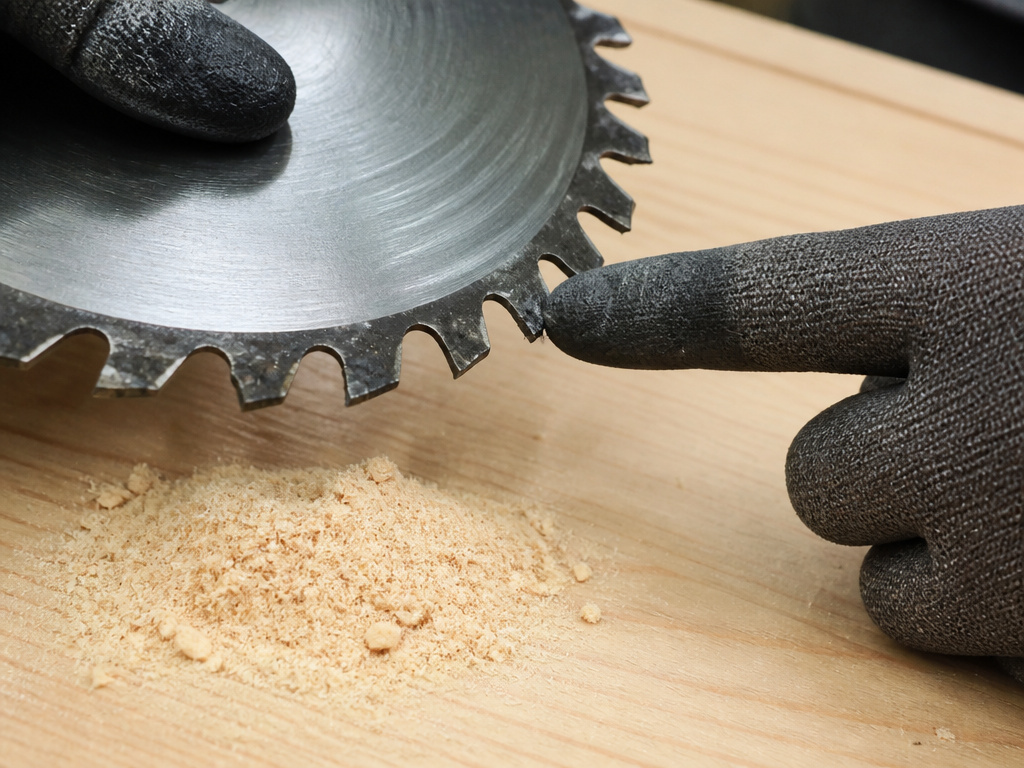
Cleaning and sharpening solve different problems. A dirty blade has visible pitch (a black, shiny glaze) and feels sticky. A dull blade has rounded-over or chipped teeth and produces fine, powdery sawdust instead of chips.
The DeWalt manual gives a functional test: “Change blades when it is no longer easy to push the saw through the cut, when the motor is straining, or when excessive heat is built up in the blade.”
Run this check:
- Clean the blade using the process above.
- Make a test cut in a scrap piece of the wood you use most.
- Listen and feel. Does the saw motor bog down? Do you have to push significantly harder? Does the cut edge look burned?
If you answer “yes” after cleaning, you’re not dealing with dirt. You need to checking for dullness or replace a saw blade. A clean, sharp blade should pull itself into the cut with minimal pressure.
Weekly and Monthly Maintenance That Actually Matters
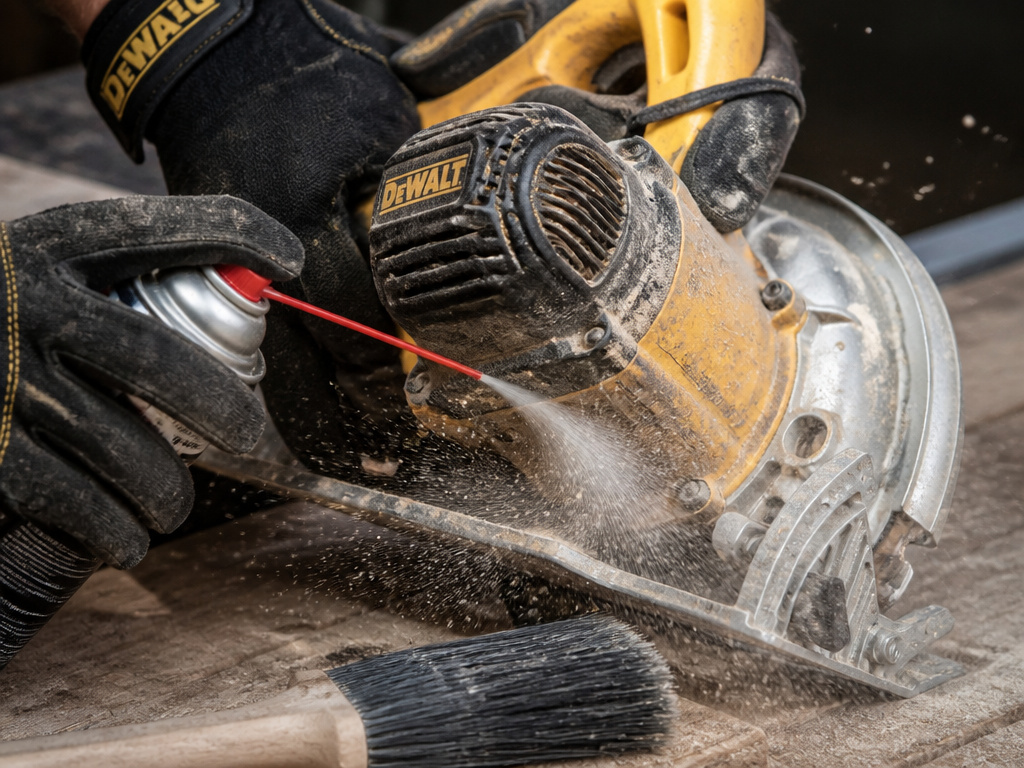
The step-by-step clean is a reaction. These steps are prevention.
Weekly:
- Blow Out Vents: As per the DeWalt DCS573 manual, use clean, dry compressed air to blow dust from all air vents. This prevents the motor from overheating.
- Check the Lower Guard: Manually retract the lower guard and let it snap closed. If it’s sluggish, debris is building up in the spring mechanism. Clean it with a dry brush or compressed air, the manual says do not lubricate this area.
Periodically:
- Inspect the Blade: Look for pitch buildup, missing or cracked carbide teeth, and rust. A quick visual can tell you if a clean is due.
- Wipe Down the Tool: Use that moist cloth (no solvents!) on the saw’s housing to remove grime. This keeps the depth and bevel scales legible.
This routine takes five minutes. It’s the difference between a saw that lasts a season and one that lasts a decade. It’s also the core of knowing how to clean power tools properly.
Special Cases and Edge-Cut Blades
Not all blades or materials are the same. The manuals call out specific scenarios.
Anti-Stick Coated Blades: The DeWalt manual mentions these for “applications where excessive build-up is encountered, such as pressure treated and green timber.” These blades have a slick coating (often PTFE) that pitch has a harder time sticking to. If you have an anti-stick coated blade, clean it carefully to avoid damaging the coating.
Carbide-Tipped Blades: Remember, “Carbide is a hard but brittle material,” as the DeWalt manual notes. Avoid impacts. Never drop the blade on a concrete floor.
Cutting Forbidden Materials: The DeWalt DCS573 manual explicitly states, “Do not cut metal, plastic, concrete, masonry or fiber cement materials with this saw.” Doing so not only wrecks the blade but can load it with contaminants that are much harder to clean than wood pitch. If you must cut these, use a blade designed for it and expect a different, more intensive cleaning rust and abrasive residue process.
Storing Blades After Cleaning
A clean blade can rust in storage if you put it away wet or in a damp place. After the dry-and-oil step, store blades in a dry environment. Store blades in a dry environment. The goal is to keep them from knocking into each other, carbide teeth are brittle.
Think of it like clean sanding belts. The abrasive surface is the product. Protecting it between uses doubles its life.
Can You Use Oven Cleaner on Carbide Blades?
Manual advice can be contradictory. One manual states hardened gum on a blade can be removed with oven cleaner, but this refers to the steel body of the blade, not the carbide tips. Carbide is a hard but brittle material. The harsh chemicals in oven cleaner can degrade the brazing that holds the carbide tips to the steel plate, potentially weakening the bond. For the tool’s body or housing, the Ozito manual warns against using solvents and recommends only a moist soft cloth, while the DeWalt manual allows solvents like kerosene for cleaning hardened gum from blades. The safest approach is to avoid aggressive chemicals on any part of a carbide-tipped blade. Use dedicated blade cleaners or mild solvents applied only with a soft brush, taking care to protect the brittle carbide teeth from impact.
Frequently Asked Questions
What is the best way to clean saw blades?
The best way is the method that matches the buildup. For hardened sap, use a solvent like kerosene or a commercial blade cleaner as a soak, then scrub with a brass brush. For light pitch, a degreaser soak works. Always finish with a thorough dry and a light protective oil coating.
Will WD-40 clean saw blades?
WD-40 is a water-displacer and light lubricant, not a heavy-duty solvent. It can help loosen light, fresh pitch and is excellent for preventing rust after cleaning. For the baked-on gum the manuals describe, you’ll need something stronger like kerosene or a dedicated cleaner.
What cleans pitch off of saw blades?
Hardened pitch requires a solvent. The DeWalt DCS573 manual authorizes kerosene, turpentine, or oven cleaner. For less severe pitch, a mild degreaser can work well.
Can you use oven cleaner on all saw blades?
No. Oven cleaner is caustic and can damage certain blade coatings, including anti-stick coatings. It is explicitly listed in the DeWalt manual for removing “hardened gum,” which implies it’s a last-resort option for uncoated steel blades with severe buildup. Test on a small area first, and never use it on coated or specialty blades.
Before You Go
One rule that reframes everything: cleaning is maintenance, not repair.
The manuals give it to you straight. The DeWalt test, hard to push, motor straining, excessive blade heat, is your signal to stop cleaning and start sharpening or replacing. Everything above assumes the blade is still viable. A truly spent blade is faster to swap out than to revive. Keep a sharp spare on hand, and you’ll never lose a weekend to a gummed-up cut again.
