
How to Use Power Tools Safely as a Beginner: Step-by-Step
This post contains affiliate links. As an Amazon Associate, we earn from qualifying purchases.
To use power tools safely as a beginner, match your gear to the job, follow a strict power-on/power-off sequence, and treat the manual as law. Start with eye protection that meets ANSI Z87.1, secure every workpiece with clamps, and always disconnect power, or remove the battery, before any adjustment. A clean, well-lit workspace isn’t just nice; it’s your first layer of defense against distracted mistakes.
That last point is where most new users trip up. A cluttered bench or dim light is a major contributor to a fumbled cut, a misplaced hand, or a tool rolling off the edge. Safety is a system you build around yourself before you even pick up the tool. Understanding how to use power tools safely as a beginner is the foundation of that system.
What follows is that system. We’ll walk through the gear you actually need, the pre-work ritual that helps prevent accidents, and the specific handling rules for corded versus cordless tools. You’ll also get a clear action plan for when, not if, something doesn’t go as planned.
Key Takeaways
- Always wear ANSI Z87.1-rated eye protection; standard glasses don’t stop high-speed debris.
- Remove the battery or unplug the tool before changing blades or bits, a cordless drill can start with a bump.
- Match your extension cord gauge to the tool’s amps and distance; a cord that’s too thin overheats, creating a fire hazard.
- Secure every workpiece with clamps; holding material by hand invites kickback and direct contact with the blade.
- If a battery case is cracked, do not charge it; this can cause a short or fire, per Bosch’s safety instructions.
Before You Start: The Universal Safety Checklist
This isn’t a suggestion box. The Power Tool Institute, DeWalt, and Bosch manuals all repeat these points because they prevent the most common, serious injuries. Treat this as your pre-flight check.
Before you start: Disconnect the tool from power. Secure the workpiece with clamps. Ensure all guards are in place and functional. Verify your eye protection complies with ANSI Z87.1. Doing these four things eliminates the majority of preventable workshop accidents.
First, read the manual that came with your tool. I know it’s tempting to skip. But that booklet contains the specific hazards, maintenance steps, and operational limits for your exact model, which is central to how to use power tools safely as a beginner. The Power Tool Institute and other manufacturers emphasize the critical importance of reading the manual. A drill rated for wood can behave unpredictably on metal; a saw’s guard is designed for a reason. The manual tells you those reasons.
Next, audit your workspace. Bosch states to keep it clean and well-lit, a fundamental part of how to use power tools safely as a beginner. Clutter is a tripping hazard that can send you into a spinning blade. Poor lighting hides cutting lines and tool edges. Sweep the floor, clear the bench, and point a work light directly at your task. This takes two minutes and pays off immediately.
Finally, dress the part. Loose sleeves, dangling necklaces, and untied hair are entanglement hazards. The moving parts of a drill press or angle grinder don’t stop for fabric. Tie back long hair, remove jewelry, and wear fitted clothing. A shop apron is a good option as it is durable, covers the torso, and typically has no loose ends.
The 5 Non-Negotiable Pieces of Safety Gear
PPE is your last line of defense. It doesn’t make you invincible, but it turns a trip to the emergency room into a bad story. Don’t buy the cheapest option; buy the one you’ll actually wear correctly.
| Gear | Standard / Certification | What Happens If You Skip It |
|---|---|---|
| Eye Protection | ANSI Z87.1 | Sawdust, metal shavings, or broken drill bits can travel at high speeds, causing permanent corneal scratches or blindness. |
| Hearing Protection | ANSI S12.6 (S3.19) | Sustained exposure to loud tools like circular saws causes permanent, cumulative hearing loss. |
| Respiratory Protection | NIOSH/OSHA/MSHA | Inhaling fine dust from sanding wood or cutting concrete can lead to chronic lung disease and has been linked to cancer. |
| Gloves | Task-Specific (e.g., cut-resistant) | Protects against splinters, sharp metal edges, and abrasive surfaces, but never wear them near rotating tools like drill presses. |
| Footwear | Closed-toe, non-slip soles | A dropped saw or heavy workpiece can crush toes; slippery soles can cause a loss of balance at a critical moment. |
Eye protection is the absolute minimum. ANSI Z87.1 is the code stamped on safety glasses or goggles that have been tested to withstand impact. Your everyday prescription glasses are not rated for this. A pair of Uvex goggles or 3M safety glasses is a trivial investment.
Hearing protection is where most people cheat. They’ll wear muffs but let them rest on the arms of their safety glasses, breaking the seal. That leak allows damaging noise to enter. For loud, sustained work like using a miter saw or grinder, go with over-ear muffs that comply with the relevant safety standard. For quick drills, foam earplugs are fine.
Respirators are for invisible threats. Sanding wood or cutting drywall creates dust fine enough to bypass your lungs’ defenses. A simple NIOSH-rated dust mask is a common choice for many DIY tasks. If you’re generating a lot of dust, a half-face respirator with P100 filters is the next step. Your future self will thank you.
Power On, Work, Power Off: A Safe Routine for Any Tool
Adults learn by routine. Building a consistent startup and shutdown sequence trains your muscle memory so safety becomes automatic, not an afterthought. We will use a common cordless drill as the example.
- Inspect the Tool & Workspace. Check the drill for cracks, ensure the chuck is tight, and verify the battery is seated. Look for tripping hazards on the floor and adequate lighting. Skipping this can mean drilling into a hidden knot that snaps the bit, sending fragments flying.
- Secure the Workpiece. Use clamps or a vise. Never hold the material with your hand or body. A spinning drill bit can catch and spin the workpiece with enough force to break your wrist.
- Don Your PPE. Glasses first, then hearing protection if needed. This is the ritual that signals “work is starting.”
- Insert the Battery or Plug In. For corded tools, ensure the switch is OFF before plugging into the outlet. For cordless, insert the battery last. The Power Tool Institute warns that cordless tools can start anytime the switch is ‘on’ unless the battery is removed.
- Perform the Task. Maintain a firm, balanced stance. Don’t overreach.
- Power Down & Disconnect. Release the trigger. For cordless, remove the battery. For corded, switch off, then unplug from the outlet. This prevents accidental startup while carrying the tool or changing the bit.
- Clean Up. Brush away debris from the tool and work area before putting it away. A clean shop is a safe shop.
This seven-step flow seems meticulous. After a dozen uses, it takes 30 seconds. It builds the discipline you need for more dangerous tools like circular saws and routers.
Electrical and Battery Safety: The Hidden Hazards
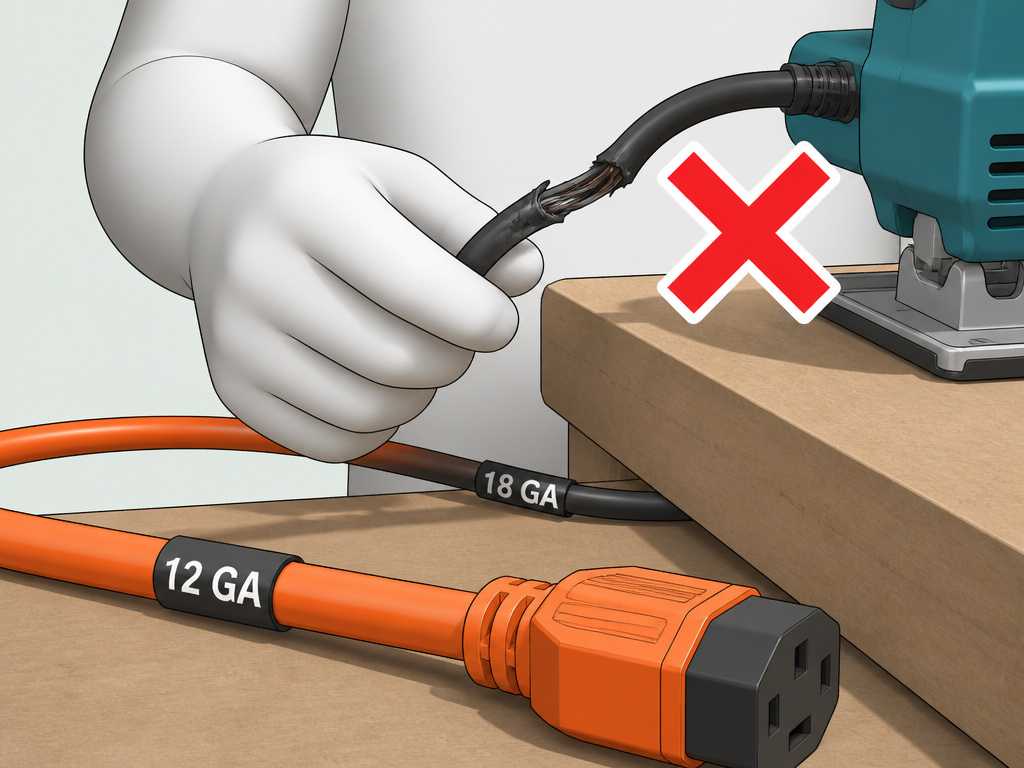
The cord and the battery pack are often treated as an afterthought. They shouldn’t be. Electrical shock and battery fires are real, severe risks with simple preventions.
For corded tools, the rule is simple: never abuse the cord. Don’t yank it to unplug, don’t let it contact heat or sharp edges, and don’t use it if the insulation is damaged. If you must work in a damp location, like a garage floor or outdoors, you must use a Ground Fault Circuit Interrupter (GFCI) outlet or a portable GFCI adapter. DeWalt, Bosch, and the PTI all mandate this. It can be the difference between a nuisance trip and a fatal shock.
Extension cords need to be the right thickness (gauge) for the job. A cord that’s too long or too thin for the tool’s power draw will overheat, melt, and can start a fire. Here’s the gauge rule from the DeWalt DWD210G manual for 120V tools:
Battery safety is its own world. A Bosch PS21 manual gives specific edge cases: never charge a battery with a cracked case, and only use the charger specified by the manufacturer (like the BC330 or BC430 for that model). Mismatching chargers can be dangerous. Also, store batteries where temperatures won’t exceed 120°F (49°C), like in a hot car or shed, to prevent serious cell damage.
Where this goes sideways: Using a cheap, undersized extension cord on a high-amp tool like a miter saw. The cord heats up, the voltage drops, the motor strains and burns out, and you’re left with a dead tool and a potential fire. Spend on the right cord.
What to Do When Things Go Wrong
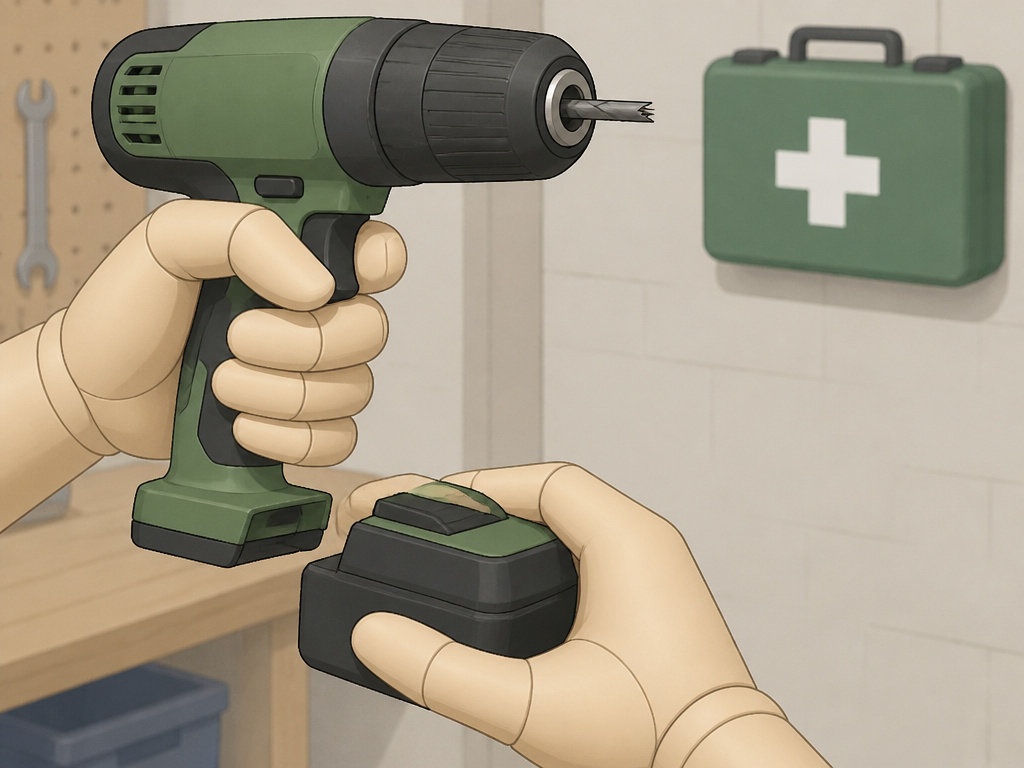
You can follow every rule and still have a close call. A piece of wood pinches a saw blade, causing kickback. A drill bit snaps. You get a minor cut. Having a mental protocol stops a small incident from becoming a big one.
- Stop Immediately. If the tool is binding, kicking, or making a strange noise, release the trigger. Don’t try to power through it.
- Disable the Tool. For cordless, remove the battery. For corded, unplug it. This is mandatory.
- Assess the Situation. Are you injured? Is the tool damaged? Is the workpiece secure? Take a breath.
- Address Injuries First. Have a dedicated first-aid kit mounted in an obvious spot. For a minor cut, clean and bandage it. For anything more serious, seek medical attention. Don’t be a hero.
- Diagnose the Cause. Once the immediate issue is resolved, figure out what happened. Was the workpiece not clamped? Was the blade dull? Was I forcing the tool? This is how you learn.
This is about having a plan so that a moment of surprise doesn’t turn into a moment of panic. My rule to always unplug came from a near-miss with a table saw years ago. The saw was off, I thought. My hand brushed the still-spinning blade as I reached to adjust the fence. The motor had taken a few seconds to wind down. Now, the plug comes out before my hand gets within two feet of the tool.
How to prevent and handle kickback on saws
Kickback is the sudden, violent jerk of a saw back toward you, and it’s a major cause of injury. The key to preventing it is proper setup and control. Always secure and support your workpiece using clamps and a stable surface. Never force the tool; let the blade cut at its own pace. Forcing a cut or making a cut where the blade can bind, like in a pocket cut into a blind area, dramatically increases kickback risk. Keep a firm grip with both hands, maintain proper footing, and do not overreach. If the blade binds, switch off the tool and hold it motionless until the blade stops completely.
Frequently Asked Questions
What are five basic safety rules for using power tools?
The five core rules are: 1) Always wear ANSI Z87.1 eye protection. 2) Disconnect power (unplug or remove battery) before any adjustment. 3) Secure the workpiece with clamps or a vise. 4) Keep your workspace clean, dry, and well-lit. 5) Read and understand the tool’s manual before first use.
What is the safest way to use a power tool?
The safest way is to follow a deliberate sequence: inspect, secure, gear up, power on, work, power down, disconnect, and clean. This routine builds safe habits and ensures you never skip a critical step, like removing the battery before a blade change.
What are some basic power tools for a beginner?
Beginner should start with a cordless drill/driver, a circular saw, an orbital sander, and a jigsaw. These cover most basic cutting, fastening, and finishing tasks. Master these, and their safety protocols, before moving to more specialized tools like routers or miter saws.
What is the first thing you should do before using power tools?
The very first thing is to read the operator’s manual for the specific tool you’re about to use. The second thing is to ensure you are wearing the appropriate personal protective equipment for the task, starting with certified safety glasses.
Do I really need hearing protection for quick jobs?
Yes. Hearing damage is cumulative and permanent. A few seconds of a high-pitched grinder or saw exceeds safe exposure limits. Consistent use of hearing protection, even for “quick jobs,” is the only way to prevent long-term hearing loss. Keep ear muffs on your bench or plugs in your pocket.
The Bottom Line
Safety provides the structure that allows you to work confidently for years without a major injury. Start with the gear, glasses, ears, lungs, then build the routine of disconnecting power and clamping work. Finally, respect the electricity and chemistry in your tools’ cords and batteries.
If you take one action after reading this, make it this: find your tool’s manual and skim the safety section. Then, check the rating on your safety glasses. If they don’t say ANSI Z87.1, order a pair that does today. That single, specific step does more to lower your real-world risk than any generic advice ever could.
