
Power Tool Safety Rules: The OSHA Guarding Standard
This post contains affiliate links. As an Amazon Associate, we earn from qualifying purchases.
Power tool safety rules are defined by OSHA Standard 1910.243, which mandates specific mechanical guards and safety switches for portable saws, grinders, drills, and sanders based on their size and power source. The law requires constant-pressure switches, automatic blade guards, and the immediate removal of cracked saws from service.
That federal text establishes the line between a close call and a reportable incident. The manual for your tool fills in the specifics, when to use a GFCI, what a flashing red battery light means, why you never wear cloth gloves near a reciprocating saw.
What follows breaks down the two rulebooks you’re actually accountable to: the federal guarding standard and the manufacturer’s fine print. We will look at the four required categories, the edge cases that trip people up, and the critical pre-use check that catches many hazards before you pull the trigger.
Key Takeaways
- OSHA Standard 1910.243 is the enforceable law for guards and switches on circular saws, grinders, and drills.
- OSHA requires a constant-pressure switch for circular saws with blades over 2 inches, most grinders, and reciprocating saws, but for tools like some drills and sanders, a lock-on control is permitted if turnoff can be accomplished by a single motion of the same finger.
- Use only manufacturer-specified accessories, the Dremel US40 manual explicitly warns that others can cause injury or damage.
- If operating in a damp location is unavoidable, a GFCI-protected supply is mandatory per Bosch and Skil manuals.
- Cracked saws must be removed from service immediately, and all tools must be inspected regularly per OSHA.
The OSHA Guarding Standard 1910.243 (Decoded)
The law isn’t vague. OSHA Standard 1910.243 names tools by type and size, then assigns a guard or switch as part of the power tool safety rules. Miss one, and you’re working with an illegal tool.
Portable circular saws with a blade diameter greater than 2 inches must have upper and lower guards covering the saw to the depth of the teeth. The lower guard must automatically and instantly return to covering position when the tool is withdrawn from the work.
That’s the technical snippet, verbatim from the regulation. It means your saw’s lower guard is a required, spring-loaded mechanism that must snap closed the moment the blade leaves the cut. A guard that sticks open is a violation.
Constant-Pressure Switches vs. Lock-On Triggers
The standard draws a bright line between tool categories. For large, aggressive tools, a lock-on trigger is illegal.
| Tool Type | Blade/Wheel Size | Required Switch Type | Rationale |
|---|---|---|---|
| Circular Saw | > 2 inches | Constant-Pressure | Prevents runaway saw if operator loses grip. |
| Angle Grinder | > 2 inches | Constant-Pressure | Stops wheel immediately if tool is dropped. |
| Reciprocating Saw | Blade shank > 1/4 inch | Constant-Pressure | Eliminates risk of uncontrolled blade motion. |
| Jigsaw | Blade shank ≤ 1/4 inch | Lock-On Permitted | Lower kickback risk allows for user convenience. |
The logic is kinetic energy. A larger blade or wheel stores more of it. A constant-pressure switch, one that stops the tool the instant you release the trigger, is the only way to cut that energy off before it does something you can’t control. A lock-on button on a 7-1/4″ circular saw isn’t a feature; it’s a design failure.
The Cracked Saw Mandate
One line in the standard carries more weight than most entire manuals: “All cracked saws must be removed from service.” Not “might be risky” or “should be replaced soon.” Must be removed. A hairline crack in a diamond blade or an abrasive wheel is a structural failure waiting for the right RPM to turn it into shrapnel. A cracked saw is a structural failure waiting for the right RPM to turn it into shrapnel. If you hear it, the inspection is over.
The Manufacturer’s Rulebook (What They Actually Say)
OSHA sets the floor. Your tool’s manual builds the walls of the power tool safety rules. They aren’t repeating generic advice; they’re listing the specific conditions that void your warranty and transfer liability to you.
Accessory Mismatch: The Quickest Way to Void a Warranty
Every manual has a version of this warning, but the Dremel US40 Multi-Max Universal Saw states it with zero wiggle room: “Requires only Dremel US40 high-performance accessories; other accessories may lead to personal injury or property damage.” The Bosch IXO manual is equally blunt: “Do not use attachments/accessories other than those specified by Bosch.”
Common mistake: Assuming universal accessories are truly universal. A 4″ abrasive wheel from Brand X might fit the Dremel US40’s 11mm arbor, but if it’s not rated for the tool’s 13,000 RPM speed, it can disintegrate.
The mismatch concerns matching the accessory’s maximum rated speed to the tool’s no-load speed. A wheel rated for 10,000 RPM on a 13,000 RPM tool is a bomb. The manual’s spec sheet, like the Dremel US40’s listed “Rated speed: 13,000/min”, is your first check.
Damp Locations and the GFCI Rule
The manuals agree: keep tools dry. But they also plan for reality. The Bosch JS572 and Skil jigsaw manuals state: “If operating a power tool in a damp location is unavoidable, a Ground Fault Circuit Interrupter (GFCI) protected supply must be used.”
This is the required mitigation for a known hazard. Water increases conductivity. A GFCI is a critical safeguard against electrocution in conductive environments. Using a tool on a damp patio without a GFCI is playing odds your manual explicitly tells you not to play.
Your Four-Layer Safety System
Treating safety as a checklist leads to skipped steps. Treat it as a system of layers, if one fails, the next should catch the hazard, and you build redundancy into every job.
1. The Mechanical Layer (Guards and Switches)
This layer is mandatory and legally enforced. It includes the guards and switches mandated by OSHA 1910.243. Your job is verification. “Inspect” here means a physical test. For a circular saw, hold the lower guard retracted and release it, it must snap back instantly. For a grinder, the side guard must be installed and secure, covering the spindle, nut, and flange as required. A guard in your toolbox is a guard that isn’t working.
2. The Electrical Layer (Power Integrity)
This layer protects you from shock and fire. It has three components:
- Tool Condition: Check cords for fraying or cuts before every use. A damaged cord isn’t just a shock risk; it’s a point of heat buildup.
- Circuit Protection: Use a GFCI outdoors or in damp areas. For workshops, consider a GFCI breaker for the entire circuit.
- Extension Cord Gauge: The DeWALT manual provides a clear table: for a tool drawing 0-6 amps, use a 16 AWG cord up to 25 feet; for up to 50 feet, 16 AWG is also specified, with thicker gauges for longer lengths. Longer or higher amps demand a thicker gauge (14 or 12 AWG). An undersized cord overheats, saps power, and can melt.
3. The Personal Layer (PPE and Position)
PPE is your last line of defense, not your first. It assumes something has already gone wrong.
- Eye Protection: ANSI Z87.1-rated safety glasses are the bare minimum for any power tool operation. Face shields are for grinding or cutting operations that produce larger debris.
- Hearing Protection: For sustained use of tools like saws and grinders, wear ear muffs or plugs. For sustained use of tools like saws and grinders, wear ear muffs or plugs to prevent hearing damage.
- Glove Rules: Here’s the critical distinction: wear cut-resistant gloves when handling sharp materials or blades. Never wear cloth work gloves when operating a tool like a reciprocating saw, as they may become entangled. The Makita JR3070CT manual explicitly warns: “Do not wear cloth work gloves which may be entangled.” The material can catch and pull your hand into the blade or bit in milliseconds.
4. The Administrative Layer (Procedure)
This is the layer you control completely: your own habits.
- Secure the Workpiece: Bosch, Skil, and Makita manuals all state: “Use clamps or another practical way to secure and support the workpiece to a stable platform.” Holding a board with your knee is not a stable platform.
- Disconnect Power for Adjustments: Every major manufacturer’s manual repeats some form of this: “Disconnect the plug from the power source and/or the battery pack before making any adjustments, changing accessories, or storing power tools.”
- Allow Full Speed Before Cutting: The Bosch RS7 and Skil manuals warn: “Before starting to cut, turn tool ‘ON’ and allow the blade to come to full speed. Before starting to cut, turn tool ‘ON’ and allow the blade to come to full speed.” Let the tool reach its working RPM before you touch it to the material.
Battery Tool Specifics: Beyond the Cord
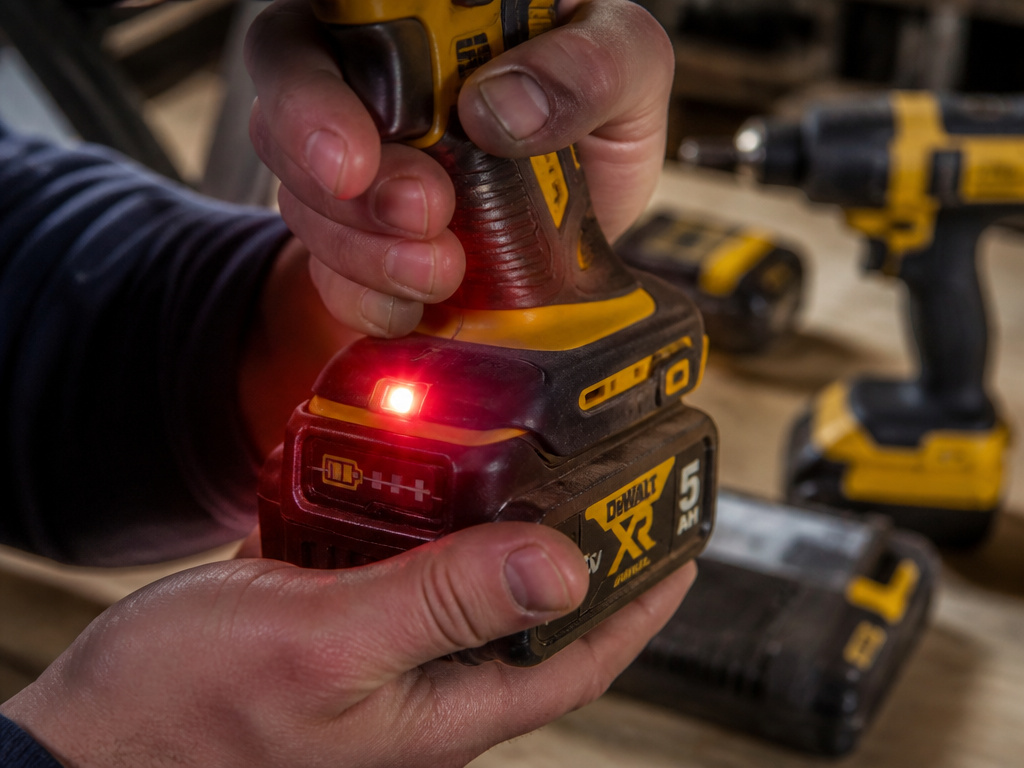
Cordless tools shift the hazards from the cord to the cell. The rules are in the charge indicator lights and temperature warnings.
Reading the Charge Indicator
The Bosch IXO manual details a specific diagnostic sequence. A flashing red light doesn’t just mean “low charge.”
- Solid Red: Battery capacity is below 33%.
- Flashing Green: Charging in progress.
- Solid Green: Charge complete (light turns off after ~5 minutes).
- Flashing Red: The tool is overloaded. Stop and let it cool. If it keeps flashing red after cooling, the battery is damaged and must be replaced.
That last point is a direct command. A persistently flashing red light after a cool-down period isn’t a suggestion to keep going; it’s an instruction to retire that battery.
Charging and Storage Limits
Lithium-ion batteries have strict thermal boundaries. For the Bosch IXO:
- Permitted charging temperature: +41°F to +113°F (+5°C to +45°C).
- Recommended charging temperature: +41°F to +95°F (+5°C to +35°C).
- Permitted operation/storage temperature: -4°F to +122°F (-20°C to +50°C).
Charging a battery below its permitted temperature range (for the Bosch IXO, below +41°F / +5°C) can cause damage and is not recommended. Store batteries in a climate-controlled space, not in an unheated garage.
How to use pneumatic and air tools safely
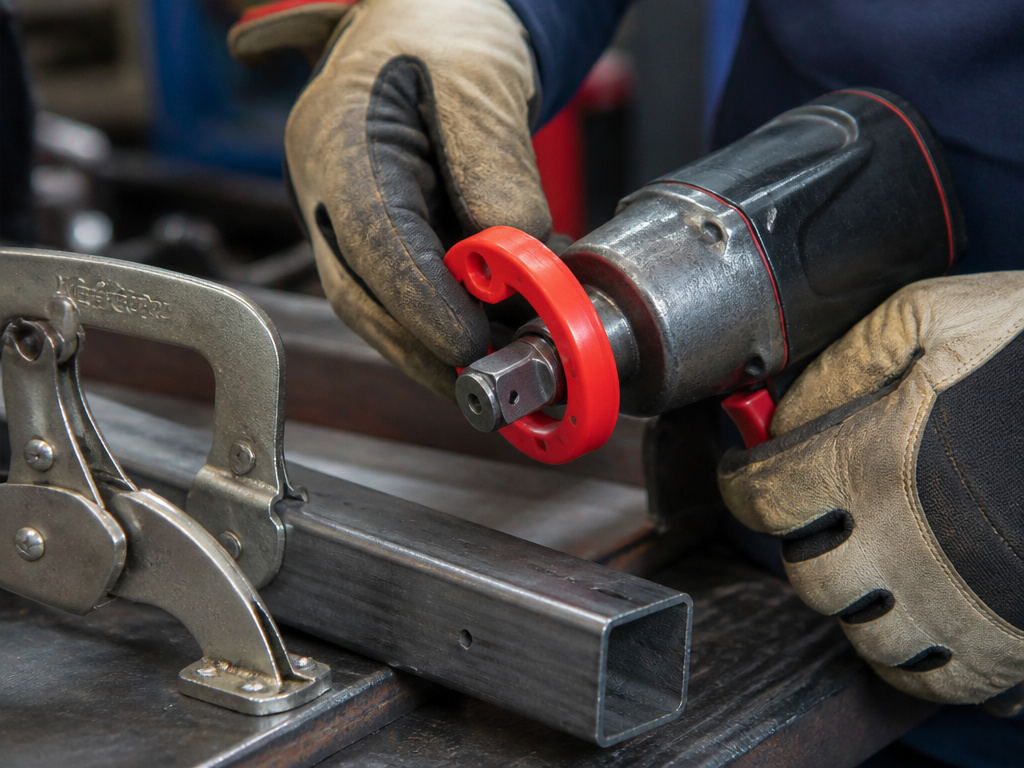
Air-powered tools require specific precautions. A tool retainer must be installed on any equipment that, without one, could eject the tool during operation. This prevents the accessory from becoming a dangerous projectile. Tools must be inspected regularly and any found not in proper working order must be removed from service immediately. For powder-actuated tools, a protective shield or guard is required at the muzzle end. Always use clamps or another practical way to secure and support the workpiece to a stable platform before operating any tool.
Safety rules for saws, drills, and grinders
Tool-specific guarding is required. Portable circular saws must have upper and lower guards, with the lower guard automatically and instantly returning to cover the blade when withdrawn from the work. Hand-held drills, tappers, fastener drivers, horizontal/vertical/angle grinders with wheels >2 inches in diameter, and reciprocating saws with blade shanks >1/4 inch must have a constant pressure switch or control. Abrasive wheels must only be used on machines with proper safety guards that cover the spindle end, nut, and flange. For any saw, a cracked blade must be removed from service. Always hold the tool by insulated gripping surfaces when the accessory might contact hidden wiring.
Why training is essential before using power tools
Proper training ensures you understand both the manufacturer’s instructions and the regulatory requirements for safe operation. It covers critical steps like disconnecting power before making adjustments, using only the accessories specified for your tool, and securing the workpiece with clamps. Training reinforces the need for regular tool inspection and maintenance, including keeping cutting tools sharp and clean. It also instills the habit of using personal protective equipment, such as safety goggles and a dust mask. Without this knowledge, users are more likely to misuse tools, leading to damage, injury, or regulatory violations.
Frequently Asked Questions
What are the OSHA requirements for power tool safety?
OSHA Standard 1910.243 specifies guarding and switch requirements for portable powered tools. Key rules include: automatic lower guards on circular saws (>2″ blade), constant-pressure switches on circular saws, large grinders, and reciprocating saws, mandatory removal of cracked saws from service, and safety guards on abrasive wheels covering the spindle, nut, and flange.
Do safety rules differ for cordless tools?
The core rules for safe operation, guarding, PPE, workpiece securing, are identical. Cordless tools add specific rules for battery safety: using only the manufacturer-specified charger, observing temperature limits for charging and storage, and heeding battery indicator warnings (like replacing a battery that flashes red after cooling).
What is the single most important safety rule?
Critical safety rule emphasized by multiple manufacturer manuals is to disconnect the power source before any adjustment or accessory change. This means unplugging corded tools or removing the battery from cordless tools. This one action prevents accidental startups that cause severe lacerations, amputations, and electrocutions.
When is a GFCI required for power tools?
GFCI (Ground Fault Circuit Interrupter) is required whenever you must operate a power tool in a damp or wet location, as stated in Bosch and Skil manuals. This includes outdoor use on patios, decks, or grass, or in damp basements or garages. The GFCI is a critical safeguard against electrocution in conductive environments.
How often should I inspect my power tools?
Perform a visual and functional inspection before each use. Check cords, plugs, guards, and switches. OSHA mandates that tools be inspected regularly and that any tool not in proper working order be removed from service immediately. OSHA mandates that tools be inspected regularly and that any tool not in proper working order be removed from service immediately.
Can I use any accessory that fits my tool?
No. Manufacturer manuals, like those for the Dremel US40 and Bosch IXO, explicitly warn against using non-specified accessories. Using an accessory not rated for your tool’s specific speed (RPM) or torque can lead to accessory failure, tool damage, and serious personal injury.
The Bottom Line
Safety rules are the protocol that lets you do the work again tomorrow. The system is simple: the law (OSHA 1910.243) defines the guards and switches, the manual defines the accessories and environments, and you define the habits.
Start your next project with a ten-second scan: guard present and functional, cord intact, battery charged within its limits, workpiece clamped. That scan addresses 90% of the variables. The other 10% lives in knowing that a flashing red light after a cool-down means “replace,” not “retry.” Respect the specific numbers, the 2-inch blade diameter, the 13,000 RPM rating, the 41°F charging floor, because the tools don’t negotiate. Your job is to match their conditions.
