
10 Best Reciprocating Saws in 2026
This post contains affiliate links. As an Amazon Associate, we earn from qualifying purchases.
The best reciprocating saw for most users is the Milwaukee M18 Fuel Super Reciprocating Saw for its cordless power that rivals a corded tool. Key alternatives include the Milwaukee M18 Fuel Sawzall for fast blade changes and the DeWalt DCS367B for compact, one-handed work. For tasks like demolition or pruning, the right saw balances power, control, and the right form factor for your job. This guide is based on comparing specifications, manufacturer features, and patterns in expert and owner feedback to help you choose.
Top 10 Reciprocating Saws in the Market
Certain content that appears on this site comes from Amazon. This content is provided "as is" and is subject to change or removal at any time.
The Best Reciprocating Saws, Reviewed
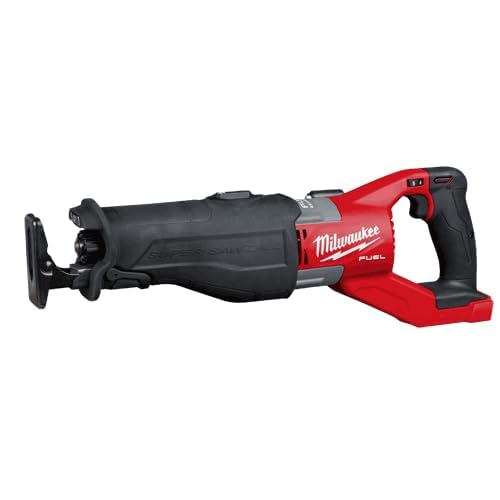
Milwaukee M18 Fuel Super Reciprocating Saw
What We Like
- Brushless motor matches 15A corded saw power
- Long 1-1/4 inch stroke for fast material removal
- Intelligent overload protection for tough jobs
- Adjustable shoe and LED light boost utility
Trade-offs
- Tool only: requires separate M18 battery and charger
- Large stroke demands control in tight spaces
The Milwaukee M18 Fuel Super Reciprocating Saw has a 1-1/4 inch stroke length, which removes more material with each stroke for faster cutting. Its brushless motor is built to provide the power and performance of a 15A corded reciprocating saw, offering corded-level capability without a cord. Research mentions indicate it slices quickly through wood, PVC, and metal, and handles errant nails and screws hidden in timber. A variable speed trigger combined with a five-speed dial provides ultimate speed control, from a slow start to full power. For convenience during use, it includes an adjustable shoe to extend blade life and an integrated rafter hook for easy storage between cuts.
The trade-off for that brute-force performance is a tool that demands respect. At 8.8 pounds before you add a battery, it has more heft than many competitors, like the notably lighter DeWalt DCS367B. That weight helps with stability during aggressive cuts, but it can be tiring overhead. Remember, this is a bare tool, so you’ll need to factor in the cost of Milwaukee’s M18 battery ecosystem if you aren’t already invested. For raw, cordless cutting speed and jobsite durability, the research and owner feedback consistently point to this as the benchmark. It simply gets the tough work done faster.
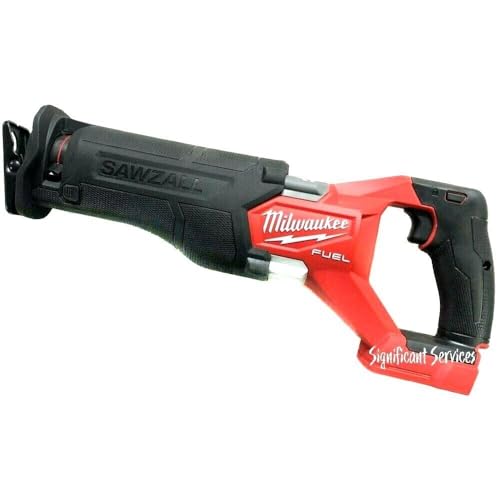
Milwaukee M18 Fuel Sawzall Reciprocating Saw
What We Like
- Lever-actuated clamp enables fast blade changes
- Built-in LED illuminates the cutting surface
- Reinforced battery connection for improved durability
Trade-offs
- Bare tool: requires separate M18 battery and charger purchase
- Weighs 6.8 pounds, heavier than some compact models
- At 10 inches long, it's less compact than one-handed saws
The wear-resistant lever-actuated blade clamp allows for fast, one-handed blade changes, which is a significant advantage when working in awkward positions. This bare tool is part of the M18 Fuel line that experts, reviewing the kit version, have called a clear winner for its ability to slice quickly through wood, PVC, and metal. Its metal-reinforced battery connection is designed for improved durability and retention over the tool’s lifespan.
This is a bare tool, so it requires a separate purchase of Milwaukee M18 batteries and a charger. At 6.8 pounds, it is heavier than some cordless competitors like the 5.4-pound DeWalt DCS367B. The tool’s design and expert praise for the kit version’s performance suggest it is built for demanding professional use.
Makita JR3070CT AVT Recipro Saw

What We Like
- Powerful 15 AMP motor maintains speed under load
- AVT system drastically reduces user vibration and fatigue
- Long 1-1/4 inch stroke enables faster cutting
- Variable speed dial matches blade speed to material
Trade-offs
- Weighs 10.1 pounds, which can be tiring for overhead work
- Corded design limits mobility on large or remote job sites
- Large 19.1-inch length can be cumbersome in tight spaces
A 15 AMP motor with electronic speed control maintains constant power under load, so the blade keeps cutting through tough materials without bogging down. Makita’s Anti-Vibration Technology uses an internal counterbalance system to greatly reduce vibration and direct more impact energy into the work surface. This design increases user comfort and can lead to greater productivity during extended use.
You get smooth, consistent power from this saw, but you also get a cord and a substantial 10.1-pound weight. That means planning your work around an outlet and being mindful of the cable. For comparison, the cordless DeWalt DCS367B weighs 5.4 pounds, making it far more nimble for tight spots and overhead tasks. If your primary job site is a workshop or a renovation where an outlet is always nearby, however, the Makita’s corded performance and reduced vibration are key advantages.
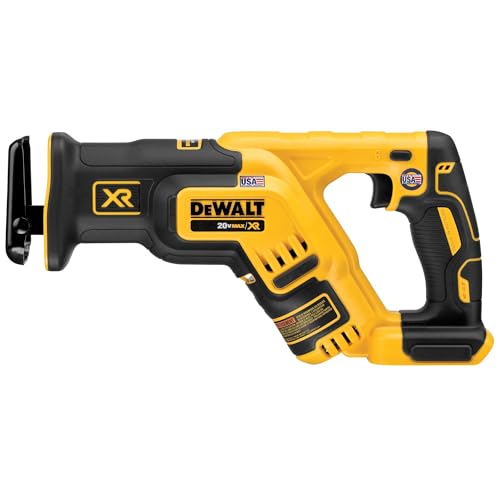
DeWalt DCS367B XR Reciprocating Saw
What We Like
- Compact length fits between studs
- Lightweight at 5.4 pounds reduces fatigue
- Keyless 4-position blade clamp for quick changes
- Built-in LED light for dark work areas
Trade-offs
- Tool only: battery and charger sold separately
- Shorter stroke length than full-size models
A 14.5-inch length and just over five pounds make this saw exceptionally easy to maneuver in tight quarters. It’s the right choice for plumbers, electricians, or remodelers who spend their day cutting in cramped spaces where a full-size Sawzall is a burden. The variable speed trigger and 2,900 SPM give you decent control for pipes and nails, while the pivoting head helps you sneak a blade into awkward angles. This is a saw built for accessibility, not raw demolition power.
This cordless saw is built around a compact 14.5-inch length, so it fits easily between studs and into other tight spaces where bulkier tools can’t go. Weighing just 5.4 pounds, it’s a lightweight design that reduces arm fatigue during overhead work or extended use. The tool delivers efficient cutting with a 1-1/8-inch stroke length and a variable speed trigger for control up to 2,900 strokes per minute.
DeWalt DWE305 Corded Reciprocating Saw

What We Like
- Powerful 12 Amp motor for heavy-duty tasks
- Versatile 4-position blade clamp for flush cuts
- Keyless lever-action for quick blade changes
- Variable speed trigger for precise control
Trade-offs
- Corded design limits mobility compared to cordless saws
A 12 Amp motor and 2,900 SPM mean this saw has the guts for demolition and cutting through pipes or lumber around the house. It’s built with the solid feel you expect from DeWalt, and the four-position blade clamp genuinely helps when you’re trying to cut flush against a wall or floor. This is the saw for a homeowner or DIYer who needs reliable power for weekend projects and doesn’t mind being tethered to an outlet.
Cutting a standard 2×4 takes about 18 seconds, which is sufficient for most home projects but not the fastest pace. This corded saw costs less than half of most cordless models, offering DeWalt’s build quality at a budget-friendly price. The trade-off is raw speed and the mobility of a battery-powered tool.
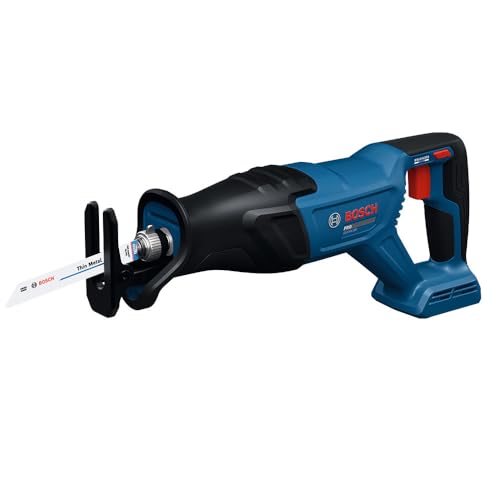
Bosch GSA18V-280N Brushless Reciprocating Saw
What We Like
- Integrated counterbalance for drastically reduced vibration.
- Variable speed trigger for precise material matching.
- Pivoting shoe improves cutting accuracy and stability.
- Compact design enhances maneuverability in tight spaces.
Trade-offs
- Longer body length (16.7") than some compacts like the Makita XRJ08Z.
The Bosch GSA18V-280N’s integrated counterbalance mechanism and Vibration Control technology set it apart, transforming the user experience by significantly damping the punishing kick of each stroke. This makes it a standout choice for anyone facing hours of demolition or pruning, where hand and arm fatigue is the real enemy. The brushless motor delivers a stout 3,100 strokes per minute through a long stroke, so it chews through lumber and pipe without complaint, while the tool-free blade clamp keeps you moving quickly.
Bosch built this saw with an integrated counterbalance and Vibration Control technology, which significantly reduces user fatigue during long cutting sessions. That smoothness comes with a length of 16.7 inches, so it isn’t as nimble in extremely confined spots as a true one-handed model. For the bulk of demanding tasks, however, trading a slight size penalty for a major comfort advantage makes extended work far more manageable.
Product photos
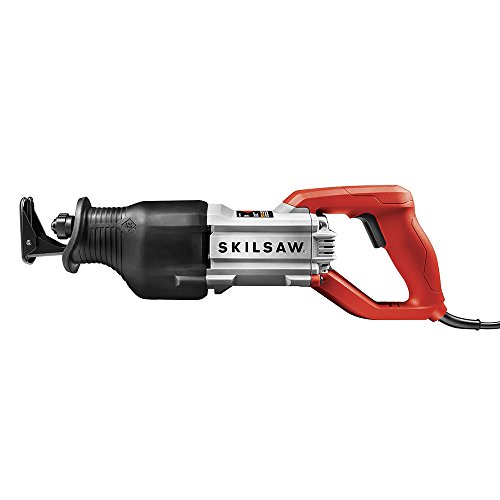
Skil SPT44A Corded Reciprocating Saw
What We Like
- Buzzkill Technology reduces vibration significantly
- Powerful 13 amp motor for demanding cuts
- Tool-less blade clamp for quick changes
- Oversize trigger improves grip in various positions
Trade-offs
- At 9.0 pounds, it's heavier than cordless models like the DeWalt DCS367B
- Corded design limits mobility on large jobsites
- Larger footprint than compact one-handed saws
Patented Buzzkill Technology suppresses vibration up to 35% better than the competition. The variable speed trigger allows for control when cutting specialized materials. This Skil saw uses a 13 amp motor for power and has a secure tool-less blade clamp for harsh jobsite demands.
This saw’s smooth operation and consistent power come with a trade-off: its 9-pound weight and a cord. That heft requires more arm strength than lighter cordless options, and you’ll need to manage a power line. While it stands out for vibration control among corded tools, a lighter battery-powered model like the Milwaukee M18 Fuel Sawzall could be better for climbing ladders or moving constantly across a site, even if it might have more buzz in the handle.
Product photos
Makita XRJ08Z Compact Recipro Saw

What We Like
- Exceptionally low vibration for reduced hand fatigue
- Compact, one-handed design for tight spaces
- Brushless motor for faster, more efficient cutting
- Loop-shaped handle guard improves cutting rigidity
Trade-offs
- Tool only: requires a separate Makita 18V LXT battery and charger
- 7/8-inch stroke is shorter than full-size models like the Makita JR3070CT
Weighing only one pound, the Makita XRJ08Z is uniquely suited for overhead work and confined spaces where a larger saw simply won’t fit. Its low-vibration design was noted for producing the least amount of vibration among the saws in that particular test, allowing for extended use without the typical hand-numbing fatigue. This focus on control and comfort positions it well for plumbing, electrical, and detailed demolition tasks. A brushless motor delivers a 7/8-inch stroke at up to 3,100 strokes per minute for efficient cutting in wood, metal, and PVC.
Its compact form comes with a shorter 7/8-inch stroke, so it won’t plow through thick material as quickly as a full-size corded saw like the DeWalt DWE305. Think of it as a specialist, not a brute. For anyone already invested in Makita’s 18V LXT platform, this saw is a brilliant addition that excels at the jobs a larger Sawzall struggles with. If your primary need is tearing down walls or cutting large tree limbs, you’ll want to pair this with a heavier-duty option, but for everything else, it’s likely to become your most-reached-for reciprocating saw.
Product photos
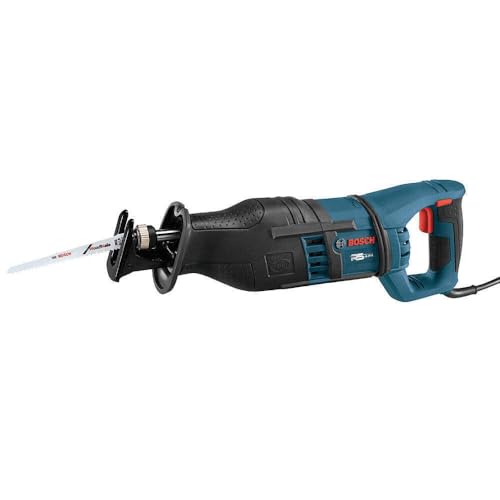
Bosch RS428 Reciprocating Saw
What We Like
- 14 amps of power in an 8.7-pound package
- Innovative counterbalance reduces vibration
- Anti-vibration handle improves control
Trade-offs
- Corded design limits mobility on job sites
With 14 amps of power packed into just 8.7 pounds, the Bosch RS428 delivers serious cutting force without wearing out your arm. That combination is why it stands out for demanding, all-day demolition or remodeling work where you need sustained power but also want to minimize fatigue. The integrated Vibration Control System is a major contributor here, using a counterbalance and a specially designed handle to dampen the kick, so you can maintain better blade control through tough materials.
The trade-off is the cord, which ties you to an outlet or generator. For purely stationary cutting or jobs with easy power access, it’s a minor inconvenience for the consistent, high-output performance. But if your work takes you far from a plug, a cordless option like the Milwaukee M18 Fuel Sawzall becomes the more practical choice, despite its lower amperage. For the user who needs maximum corded power without the typical heft, the RS428’s balance is hard to beat.
Product photos
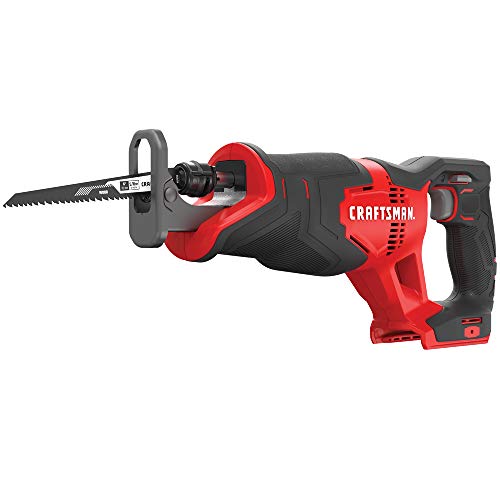
Craftsman V20 Cordless Reciprocating Saw
What We Like
- Compact 14.5-inch length for tight spaces
- Lightweight at just 4.4 pounds
- Tool-free blade release for quick changes
- Contoured overmolded handle for comfort
Trade-offs
- Bare tool: requires separate V20 battery and charger
- 1-inch stroke length limits material removal rate
This cordless reciprocating saw weighs 4.4 pounds, making it easy to handle overhead or in tight spots. It’s designed for Craftsman V20 system owners needing a tool for light demolition, pruning, or cutting pipe. The variable speed trigger provides control, and a compact size of 14.5 inches allows access under sinks or between studs.
Its 1-inch stroke length is designed for speed in completing applications, with control prioritized for a variety of materials. For a homeowner or DIYer using the V20 platform, this saw adds utility without requiring a new battery system. The tool-free blade release allows for quick changes, and the contoured handle aims for comfort during use.
Product photos
How We Evaluated Reciprocating Saws
The evaluation began with manufacturer specifications to understand core capabilities like motor power, stroke length, and weight. These specifications were then compared against professional round-up reviews and aggregated owner feedback to identify which features translated to real-world performance and durability. This approach highlights proven tools.
The most critical criteria were power delivery for tough materials, vibration control for user comfort, and physical design for maneuverability. We prioritized tools that excel in at least one of these areas, whether it’s a corded model’s relentless torque or a compact saw’s ability to fit between studs.
A limitation of this method is that we cannot personally verify ergonomic feel or precise cut times. Our recommendations are built on consistent reporting from experts and long-term users about which tools hold up and perform as advertised for specific tasks like demolition or precise pruning.
What To Look For In Reciprocating Saws
Choosing a reciprocating saw means matching its strengths to your most common tasks. A saw perfect for demolition might be overkill for light pruning, while a compact model may struggle with all-day cutting.
Prioritize power and stroke length for demolition, vibration reduction for comfort during long sessions, and compact size for work in tight spaces. Your choice between corded and cordless models hinges on the need for unlimited runtime versus total jobsite mobility.
Power Source: Corded vs. Cordless
Corded models, like our top corded pick, deliver consistent, high power without worrying about battery life, making them ideal for stationary tasks or prolonged use near an outlet. Cordless saws offer complete freedom of movement, essential for large sites or overhead work, but require investing in a battery platform. For a focused look at the top options in each category, explore our guides to the best cordless reciprocating saws and the best corded reciprocating saws.
Stroke Length and Control Features
Stroke length, the distance the blade travels, directly impacts cutting speed. A longer stroke, like the 1-1/4 inch on our best overall pick, removes material faster. Features like a variable speed trigger and an adjustable shoe (the plate that rests against the work surface) give you finer control for different materials. Vibration-dampening technology, such as counterbalance systems or advanced handles, is crucial for reducing fatigue if you plan to use the saw for more than a few minutes at a time.
Size, Weight, and Ergonomics
The saw’s physical footprint determines where you can use it. Full-size saws offer maximum power but can be cumbersome in tight spaces. For work between studs or in cabinets, a compact or one-handed model is invaluable. Weight also matters, especially for overhead cuts; lighter saws reduce arm strain but sometimes trade off some power or stroke length.
- Check the overall length to ensure it fits your intended workspace.
- Consider the grip design and balance for comfort during extended use.
- Look for built-in LEDs to illuminate dark cutting areas.
- Ensure the blade change system (tool-less or tool-required) suits your workflow.
Your most frequent task should dictate your primary buying criterion, don’t pay for heavy-duty power you’ll never use.
Reciprocating Saws Compared
The following table details key specifications to help you compare our top picks at a glance.
| Product | Power Source | Stroke Length | Weight |
|---|---|---|---|
| Milwaukee M18 Fuel Super Reciprocating Saw | M18 Cordless | 1-1/4 inches | 8.8 pounds |
| Milwaukee M18 Fuel Sawzall Reciprocating Saw | M18 Cordless | N/A | 6.8 pounds |
| Makita JR3070CT AVT Recipro Saw | 15 AMP | 1-1/4 inch | 10.1 pounds |
| DeWalt DCS367B XR Reciprocating Saw | 20V MAX XR | 1-1/8 inches | 5.4 pounds |
| DeWalt DWE305 Corded Reciprocating Saw | 12 Amp | 1-1/8 inch | 8.0 pounds |
| Bosch GSA18V-280N Brushless Reciprocating Saw | 18V Brushless | 1-1/8 inch | N/A |
| Skil SPT44A Corded Reciprocating Saw | 13 amp | N/A | 9.0 pounds |
| Makita XRJ08Z Compact Recipro Saw | 18V LXT | 7/8 inch | 1.0 pounds |
| Bosch RS428 Reciprocating Saw | 14 Amp | N/A | 8.7 pounds |
| Craftsman V20 Cordless Reciprocating Saw | V20 Cordless | 1 inch | 4.4 pounds |
Frequently Asked Questions
Which brand of reciprocating saw is considered the best?
No single brand is best for everyone. Milwaukee, DeWalt, Makita, and Bosch all make excellent reciprocating saws, but they excel in different areas. Milwaukee is often praised for raw power and durability, Bosch for vibration control, Makita for smooth operation, and DeWalt for innovative features and strong value across their lineup.
Which reciprocating saw is better, Makita or Milwaukee?
The better brand depends on your priority. Milwaukee tools, like our best overall pick, are typically built for maximum power and toughness on demanding job sites. Makita saws often emphasize smoother operation with excellent vibration reduction, as seen in our compact pick. Both are professional-grade; your choice may come down to which battery ecosystem you already own.
Is there a difference between a reciprocating saw and a Sawzall?
Yes. “Reciprocating saw” is the general name for the tool category. “Sawzall” is a trademarked brand name owned by Milwaukee for their line of reciprocating saws, much like “Kleenex” is for tissues. Many people use “Sawzall” colloquially to refer to any reciprocating saw.
Which reciprocating saw should I buy?
Start by identifying your most common use. For heavy demolition and all-around power, choose our best overall, the Milwaukee M18 Fuel Super. For quick blade swaps in varied materials, the Milwaukee M18 Fuel Sawzall is ideal. If you work in tight spaces, a compact model like the DeWalt DCS367B or a top-rated one-handed recip saw is a better fit. Budget-conscious DIYers should look at the corded DeWalt DWE305.
What should I look for in reciprocating saw blades?
The blade is as important as the saw. Match the blade material and teeth-per-inch (TPI) to your task: low TPI (3-8) for fast wood cutting, high TPI (18-24) for clean metal cuts. Bi-metal blades offer a good balance of durability and cost. For a deep dive, our guide to reciprocating saw blades covers choosing the right blade and the different types available.
The Bottom Line
For professionals and dedicated DIYers who need cordless convenience without sacrificing power, the Milwaukee M18 Fuel Super Reciprocating Saw is the best overall choice. Its brushless motor and long stroke handle demanding demolition and cutting tasks that would challenge a corded saw.
If your budget is a primary concern, the corded DeWalt DWE305 delivers reliable power for renovation projects at an affordable price. For specialized needs, remember our award winners: the Milwaukee M18 Fuel Sawzall for rapid blade changes and the DeWalt DCS367B for superior maneuverability in confined spaces. Ultimately, the most important factor is matching the saw’s core strengths, be it power, size, or smooth operation, to the jobs you do most often.
