
9 Best Cordless Reciprocating Saws in 2026
This post contains affiliate links. As an Amazon Associate, we earn from qualifying purchases.
The Milwaukee 2821-22 Cordless Reciprocating Saw is our best overall pick for its wear-resistant blade clamp and smart electronics that protect the tool. For users who prioritize speed, the DeWalt 20V MAX XR is the best for fast cutting, while the Makita 18V LXT Brushless Compact is the top choice for one-handed work. Choosing the right saw balances power, control, and the specific demands of your job.
Cordless reciprocating saws excel at demolition and rough cuts in wood, metal, and PVC, but they aren’t precision instruments. The key is matching the tool’s stroke length, weight, and power system to your most common tasks, from pruning branches to tearing out walls.
This guide is based on research into manufacturer specifications, expert round-ups, and patterns in owner feedback. We’ll help you understand the trade-offs between speed, power, and size to find a saw that fits your battery platform and workload.
Top 9 Cordless Reciprocating Saws in the Market
Certain content that appears on this site comes from Amazon. This content is provided "as is" and is subject to change or removal at any time.
The Best Cordless Reciprocating Saws, Reviewed
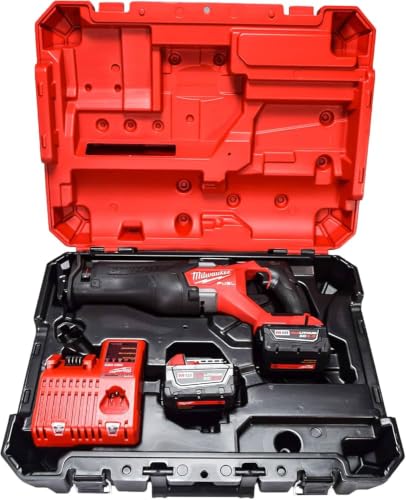
Milwaukee 2821-22 Cordless Reciprocating Saw
What We Like
- Wear-resistant QUIK-LOK clamp for fast blade changes
- REDLINK PLUS electronics optimize performance and protection
- Integrated LED illuminates the cutting surface
- Advanced battery chemistry for more work per charge
Trade-offs
- At 6.8 lb, it's heavier than many 18V competitors like the Makita XRJ08Z
- Its 22-inch length requires more clearance in tight spaces
Milwaukee’s 2821-22 uses a brushless motor and the REDLINK intelligence system, which communicates with the battery to provide overload protection. This electronic management aims to optimize performance and extend the tool’s lifespan under load. It’s a design geared toward users who prioritize system durability and electronic safeguards.
The tool weighs 6.8 pounds, a factor to consider during extended use. Its QUIK-LOK blade clamp is wear-resistant and lever-actuated for faster blade changes between materials. A built-in LED light helps illuminate the cutting surface in low-light conditions.
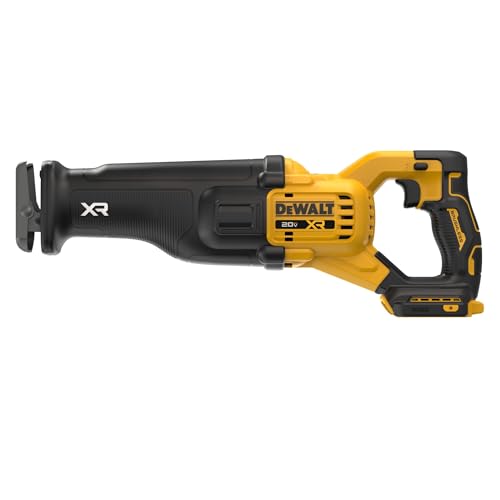
DeWalt 20V MAX XR Brushless Reciprocating Saw
What We Like
- Fast cutting speed and long stroke length
- Brushless motor for powerful, efficient performance
- Keyless blade clamp for quick changes
- Pivoting shoe and counterbalance for control
Trade-offs
- Tool only: requires separate battery and charger purchase
DeWalt’s fastest cutting 20V reciprocating saw gets its speed from a 1-1/8-inch stroke and brushless motor, which means you can power through demolition or pruning jobs quickly. A vibration-reducing counterbalance and 4.5-pound weight help you keep cutting with less arm fatigue, and the keyless blade clamp lets you swap blades in seconds without stopping to look for a tool.
Its performance fits between compact and heavy-duty categories. Compared to a more powerful 60V saw, it may not be the first choice for the thickest materials. Against a notably smaller, lighter model, it is less ideal for prolonged overhead work in confined spaces. For a 20V tool, it is designed to deliver high cutting speed in a balanced package.
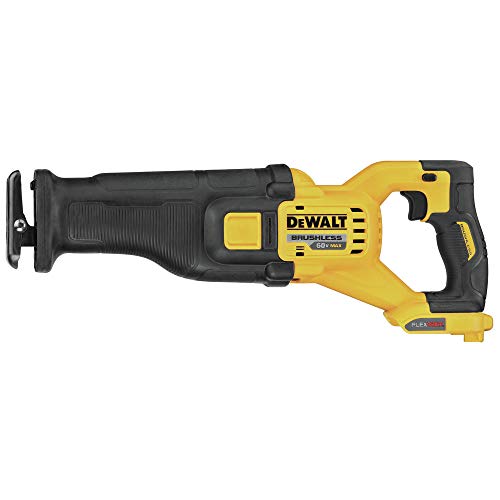
DeWalt FLEXVOLT 60V Reciprocating Saw
What We Like
- Long 1-1/8-inch stroke for aggressive cutting
- Pivoting shoe provides leverage in tough cuts
- LED light illuminates dark work areas
Trade-offs
- Tool only: requires separate 60V FLEXVOLT battery and charger
- At 7.4 pounds, it's heavier than many 18V models
The DeWalt FLEXVOLT 60V platform provides the power of a corded tool with cordless freedom. Its 1-1/8-inch stroke length and a speed range from 0 to 3000 strokes per minute allow for efficient material removal. A variable-speed trigger gives the user direct control over the cutting pace.
Weighing 7.4 pounds for the tool alone, this saw has a substantial feel in the hand. Its dimensions are 19.4 inches long, 7.3 inches wide, and 4.2 inches high. The rubber overmold grip is designed for user comfort during operation.
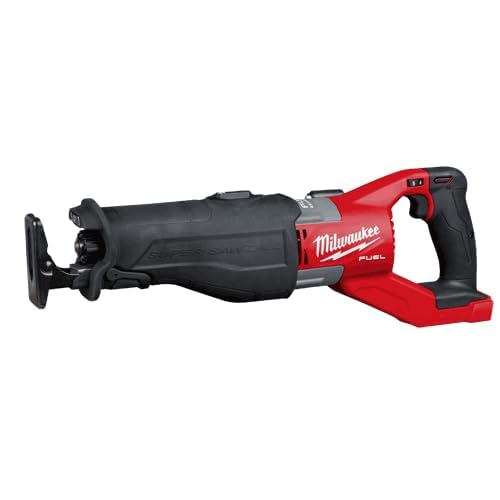
Milwaukee M18 FUEL SUPER Reciprocating Saw
What We Like
- Brushless motor delivers corded-level power
- Intelligent overload protection for tough jobs
- Adjustable shoe extends blade life
Trade-offs
- At 8.8 lb, it's the heaviest saw in this guide
- Tool only: requires a separate M18 battery and charger
A 1-1/4-inch stroke length means this saw pulls more material out with every pass, turning dense demolition into quicker work. That extended reach combines with a brushless motor built to match a 15-amp corded saw, making it a logical choice for tradespeople facing heavy daily cutting. The variable speed trigger and five-position dial give you fine control from delicate pipe to aggressive wood. An integrated rafter hook is a simple but crucial touch for safe staging on a ladder or scaffold.
The power and stroke come with real heft. At 8.8 pounds before adding a battery, this is not a tool for overhead work or one-handed pruning. Its substantial feel is better suited to ground-level wrecking or cutting through thick timbers on a sawhorse. If your projects demand maximum cutting speed and you’re already invested in the M18 platform, this saw delivers. For lighter duty or overhead work, the more compact Makita XRJ08Z presents a significantly lighter alternative.
Makita 18V LXT Brushless Compact Recipro Saw

What We Like
- Extremely light at just one pound
- Low vibration design for better control
- One-handed grip transmits force efficiently
- Brushless motor for faster cutting speed
Trade-offs
- Tool only: requires separate battery and charger purchase
- Shorter 7/8-inch stroke than full-size models
- Less mass can mean slower cuts in dense material
At just one pound, this saw is designed for one-handed use in confined areas where a heavier tool would be cumbersome. Its one-handed grip and loop-shaped handle guard are positioned to firmly transmit force to the workpiece, so you can maintain control even in awkward positions. The brushless motor delivers up to 3,100 strokes per minute with a 7/8-inch stroke length for faster and more efficient cutting.
The compact size and light weight position it as a specialized tool within the category. For context, a full-size model like the Milwaukee 2821-22 is over six pounds heavier and more than seven inches longer. For users already invested in the Makita 18V LXT platform who need a secondary saw for access work, or for DIYers tackling light projects, this compact recipro saw is a specialist tool.
Product photos
Ryobi ONE+ 18V Cordless Reciprocating Saw

What We Like
- Surprising power for a budget-price tool
- Lightweight at just 3.8 pounds
Trade-offs
- Shorter 1-inch stroke length reduces cut speed
- Tool only: requires separate battery and charger purchase
- Does not cut as quickly as pricier professional saws
Offering surprising power for a budget-price cordless tool, the Ryobi ONE+ reciprocating saw performs quite well. Research notes it chewed through stacked 2x4s and cut metal bolts without getting bogged down, though not as quickly as some pricier models. It’s a solid choice for the cost-conscious DIYer who needs reliable cutting power for demolition or general repair but doesn’t require the ultimate speed of a pro-grade tool.
The trade-off for that budget-friendly performance is a shorter 1-inch stroke. That means each pass removes less material, so it won’t race through thick stock as fast as a saw like the Milwaukee M18 FUEL SUPER. You’re getting capable, no-fuss cutting in a light package, not breakneck speed. For weekend projects and occasional heavy use, it’s a tremendous value that gets the job done.
Product photos
Black+Decker 20V MAX Brushless Reciprocating Saw Kit

What We Like
- Brushless motor for increased power efficiency
- Tool-free blade changes for quick swaps
- Dual speed settings and variable speed trigger
- Includes three blades for wood and metal
Trade-offs
- Runtime is up to 33 cuts per charge.
- Weighs 4.5 pounds.
Up to 33 cuts on a single charge means you can tackle a full afternoon of pruning, pipe work, or demolition without constantly hunting for an outlet. That kind of runtime from a 20V platform, paired with a brushless motor, is what makes this Black+Decker kit a solid foundation for a home workshop. It’s built for the DIYer who needs reliable power for weekend projects, cutting PVC, trimming tree limbs, or breaking down pallets, without the complexity or cost of a contractor-grade system. The included blades and metal gearcase mean you’re ready to work right out of the box.
A 1-inch stroke length handles wood, pipes, and steel effectively for typical household and yard projects. While the dual-speed settings and variable speed trigger provide comfortable control, the tool’s performance is designed for practical usability rather than maximum speed. Its built-in LED light brightens the work area, which is helpful for visibility in tight spaces.
Product photos
Black+Decker 20V MAX Cordless Reciprocating Saw Kit

What We Like
- Tool-free blade change for quick swaps
- Pivoting shoe increases control during cuts
- Variable speed trigger offers user control
- Compact 15-inch length for easier maneuvering
Trade-offs
- Heavier than the 1.0 lb Makita compact recipro saw
At 15 inches long and 4.5 pounds, this saw is a manageable size for basic demolition and pruning, making it a straightforward choice for a homeowner’s first cordless reciprocating saw. The tool-free blade change and pivoting shoe are practical features that simplify the job right out of the box. It’s built for the user who needs a capable saw for occasional projects without the complexity or investment of a pro-grade tool. The design prioritizes accessibility over raw power, fitting neatly into a casual workshop.
Cordless operation with a tool-free blade change means swapping blades is quick and requires no extra tools on the job. This saw also includes a pivoting shoe and variable speed trigger, both designed for increased control during cutting. Its 4.5-pound weight is identical to one DeWalt model, making it manageable for extended overhead work.
Product photos
Makita XRJ05Z Brushless Recipro Saw
What We Like
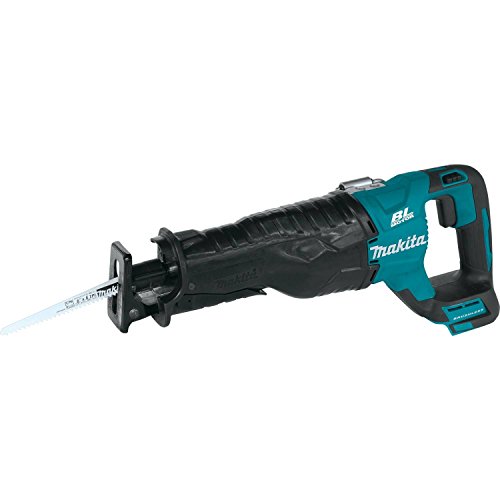
- Compact and ergonomic 17-1/4 inch length
- Lightweight design reduces operator fatigue
- Tool-less blade changes for faster swaps
Trade-offs
- Tool only: requires separate Makita 18V LXT battery and charger
- Shorter 1-1/4 inch stroke length than full-size models
At just over 17 inches long, this saw fits into tight spots where bulkier models simply won’t go. That compact size, paired with a well-balanced 8.2-pound weight, makes it remarkably easy to control overhead or in awkward positions. It’s the ideal choice for tradespeople or serious DIYers who need a full-featured recip saw that won’t wear them out during all-day demo or pruning work.
The trade-off for that handy size is a shorter 1-1/4 inch stroke, which can mean slightly slower cutting in thick, dense material compared to a longer-stroke tool like the DeWalt FLEXVOLT. You also need to factor in the cost of a battery if you’re not already invested in the Makita 18V LXT platform. For demolition that involves plunging into walls or cutting large branches, the Milwaukee SUPER Sawzall’s brute force might be better. But for the vast majority of cutting tasks, this Makita’s blend of power, control, and manageable size is hard to beat.
Product photos
How We Evaluated Cordless Reciprocating Saws
Our research focused on manufacturer documentation for hard specifications like stroke length and voltage, alongside professional assessments of performance and ergonomics. We also examined common patterns in long-term owner feedback regarding durability and real-world use.
We prioritized three criteria: cutting performance (determined by stroke length and motor power), user control (influenced by weight, vibration, and shoe design), and platform compatibility (whether the tool fits your existing battery ecosystem). For tasks like demolition, a long stroke and aggressive motor matter most, while overhead work demands a lighter, more compact tool.
A research-based evaluation has limits. We can identify the technical strengths and common user reports for each model, but we cannot replicate the subjective feel of the tool in your hand or predict its performance under every unique jobsite condition.
What To Look For In Cordless Reciprocating Saws
A cordless reciprocating saw is a powerful demolition tool, but its value depends on how well its features match your projects. Consider your primary materials, workspace constraints, and whether you need one-handed maneuverability.
Key factors are stroke length and power for speed, weight and grip for control, and battery platform compatibility. A long stroke (over 1 inch) cuts faster, while a compact, sub-5-pound design reduces fatigue.
Stroke Length and Power
Stroke length, the distance the blade travels, directly impacts cutting speed. Models here range from a 7/8-inch stroke on compact saws to a 1-1/8-inch stroke on heavy-duty models. A longer stroke removes more material per cycle. Power is tied to the battery system; 18V and 20V tools handle most DIY tasks, while 60V platforms like DeWalt FLEXVOLT offer corded-like power for demanding demolition. A brushless motor provides more efficient, durable performance.
Weight and Ergonomics
Weight affects control and user fatigue, especially during overhead or extended use. Our picks range from a remarkably light one-pound compact saw to nearly nine-pound demolition beasts. Vibration dampening is crucial for comfort; look for designs with counterbalance systems or rubber over-molding. The shoe, the part that braces against the work surface, should be adjustable to extend blade life and provide leverage in tough cuts.
Battery Platform and Features
Sticking with your existing battery platform saves significant money. Most major brands have 18V or 20V lines. Consider if you need a tool-only purchase or a full kit with battery and charger. Helpful features include a tool-free blade clamp for quick changes, an integrated LED light for dark spaces, and a variable speed trigger for better control in different materials. For a deep dive on features and performance, our comprehensive reciprocating saw guide is a valuable resource.
- Check the tool’s length if you often work in tight spaces between studs or joists.
- Ensure the grip allows for secure two-handed operation when needed for control.
- Verify that the shoe pivots and locks securely to maximize blade utility.
The best saw is the one you can control comfortably for the duration of your typical cutting task.
Cordless Reciprocating Saws Compared
The table below compares the key specifications of our top picks to help you see the differences in stroke, weight, and power system at a glance.
| Product | Weight | Stroke Length | Power Source |
|---|---|---|---|
| Milwaukee 2821-22 Cordless Reciprocating Saw | 6.8 Pounds | N/A | 18V Li-Ion |
| DeWalt 20V MAX XR Brushless Reciprocating Saw | 4.5 pounds | 1-1/8 in. | 20V MAX |
| DeWalt FLEXVOLT 60V Reciprocating Saw | 7.4 pounds | 1-1/8 inch | 60V MAX |
| Milwaukee M18 FUEL SUPER Reciprocating Saw | 8.8 Pounds | 1-1/4 inches | M18 Battery |
| Makita 18V LXT Brushless Compact Recipro Saw | 1.0 pounds | 7/8 inch | Makita 18V LXT |
| Ryobi ONE+ 18V Cordless Reciprocating Saw | 3.8 pounds | 1 inch | RYOBI ONE+ 18V |
| Black+Decker 20V MAX Brushless Reciprocating Saw Kit | N/A | 1 inch | 20V MAX |
| Black+Decker 20V MAX Cordless Reciprocating Saw Kit | 4.5 pounds | N/A | 20V MAX |
| Makita XRJ05Z Brushless Recipro Saw | 8.2 lbs | 1-1/4 inches | 18V LXT |
Frequently Asked Questions
Which cordless reciprocating saw is best rated?
Based on our research, our selection for the best overall option is the Milwaukee 2821-22. It consistently earns praise in expert round-ups and owner feedback for its durable QUIK-LOK blade clamp, integrated electronics for protection, and strong performance within the 18V platform.
Are cordless reciprocating saws any good?
Yes, modern cordless reciprocating saws are highly capable for demolition, pruning, and rough cutting. Advances in battery and brushless motor technology provide ample power for most tasks, offering crucial portability and convenience without the hassle of a cord, making them excellent for jobsite and homeowner use.
Which reciprocating saw is better, the DeWalt or the Milwaukee?
Both are excellent professional brands. DeWalt models, like the 20V MAX XR, often emphasize raw cutting speed and a balanced feel. Milwaukee saws, like our best overall, frequently integrate advanced electronics and durable components like wear-resistant blade clamps. The “better” choice depends on whether you prioritize sheer speed or long-term durability features.
What should I look for in a blade for my reciprocating saw?
Blade selection is critical. Use shorter, finer-tooth blades for metal and PVC, and longer, aggressive-tooth blades for wood demolition. A bi-metal blade offers versatility. For detailed advice on matching the blade to your material, our guide on choosing the right reciprocating saw blade can help.
Can I use a cordless reciprocating saw for precision cutting?
No, reciprocating saws are not designed for precision. The long, thin blade can flex and wander during the cut. They are ideal for aggressive demolition, rough openings, and cuts where finish doesn’t matter. For precise cuts, you would use a jigsaw or oscillating tool.
The Bottom Line
The Milwaukee 2821-22 Cordless Reciprocating Saw is the best overall cordless reciprocating saw. It offers a durable, smart design with excellent blade-change mechanics and battery communication within the M18 platform, making it a solid choice for serious DIYers and professionals.
For budget-conscious homeowners, the Ryobi ONE+ 18V or Black+Decker 20V MAX kits offer capable performance at an affordable price. If you need maximum power for heavy demolition, the DeWalt FLEXVOLT 60V or Milwaukee M18 FUEL SUPER are the tools to consider, despite their greater weight.
Ultimately, the most important factor is matching the saw’s power and size to your specific tasks. A lightweight, compact saw is a joy for quick cuts and tight spaces, but you’ll appreciate the aggressive stroke of a full-size model when tearing out a wall.
