
10 Best Saws in 2026
This post contains affiliate links. As an Amazon Associate, we earn from qualifying purchases.
Our best overall saw is the DEWALT 20V MAX Cordless Circular Saw for its high-speed motor and balanced, durable design. The SKIL 15 Amp Circular Saw with Laser is our top budget pick, while the Milwaukee M18 FUEL Hackzall wins for one-handed control. Choosing the wrong saw wastes time and money on projects that a better tool could handle easily.
A saw must match your most common material, cut type, and workspace. We researched specifications, expert insights, and owner feedback to identify the ten models that deliver the best performance for specific needs.
Top 10 Saws in the Market
Certain content that appears on this site comes from Amazon. This content is provided "as is" and is subject to change or removal at any time.
The Best Saws, Reviewed
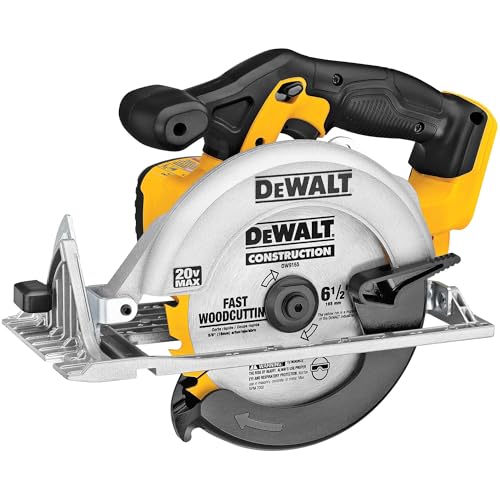
DEWALT 20V MAX Cordless Circular Saw
What We Like
- High 5150 RPM motor for demanding cuts
- Lightweight magnesium shoe for durability
- Optimized rubber grip for balance and control
- Wide 50-degree bevel capacity
Trade-offs
- Battery and charger sold separately
- Lacks the integrated laser guide of the SKIL 5280-01
With a 5150 RPM motor, this cordless saw delivers the power for demanding cuts in framing lumber. Its 0-50° bevel capacity handles aggressive angles for many applications, adding versatility on a jobsite. The 7.0-pound weight, aided by a magnesium shoe, provides durability without excessive heft, and the optimized rubber over-molded grip is designed for balance and control during use.
The main trade-off is that it’s a bare tool. You’ll need to factor in the cost of a compatible DeWalt battery and charger if you don’t already own them. While its magnesium construction strikes a good balance, it’s not the absolute lightest in the category. For users who prioritize a built-in cutting guide, the corded SKIL 15 Amp Circular Saw with Laser offers that feature at a higher overall weight.
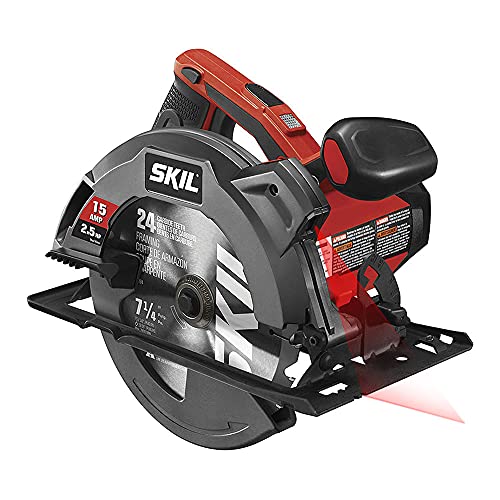
SKIL 15 Amp Circular Saw with Laser
What We Like
- Powerful 15-amp motor for fast cuts
- Dust blower clears the cutting path
- Safety lock and power indicator prevent accidental starts
Trade-offs
- Corded design limits portability away from outlets
- Not specialized for extensive metal cutting
It’s the right first circular saw for a DIYer because its laser guide and dust blower help you stay on your line, and its solid construction means you won’t outgrow it quickly. The value here comes from pairing that useful power with beginner-friendly features at an affordable price.
You do trade some finesse for that power and value. The blade adjustments for bevel angle and cutting depth are useful but quite basic, lacking the finesse found on more expensive saws. While the saw can tear through just about anything quickly, including metal, planning to cut a lot of metal might mean opting for a more specialized tool. For general carpentry and outdoor projects where a corded tool is acceptable, it delivers capable performance at a budget-friendly price.
Milwaukee M18 FUEL Hackzall Reciprocating Saw

What We Like
- One-handed design for superior control
- Brushless motor for increased cutting speed
- 7/8-inch stroke for faster material removal
- Pivoting shoe reduces vibration and bucking
Trade-offs
- Tool only: requires separate Milwaukee M18 battery and charger
A 7/8-inch stroke length and one-handed design let you make controlled cuts in tight spaces where a full-size saw won’t fit. This is the tool you grab for plumbing notches, pruning branches, or cutting conduit flush to a wall. The pivoting shoe maintains contact with the workpiece, which translates to less chatter and a smoother cut, especially in metal. It suits any tradesperson or serious DIYer who needs a compact, cordless saw for demolition and rough-in work.
Since this is a bare tool, you must already own or separately purchase a Milwaukee M18 battery and charger. For those invested in that system, this Hackzall adds a powerful, one-handed option. Its cordless design trades the unlimited runtime of a corded saw like the Skil 9206-02 for total jobsite portability without needing an outlet.
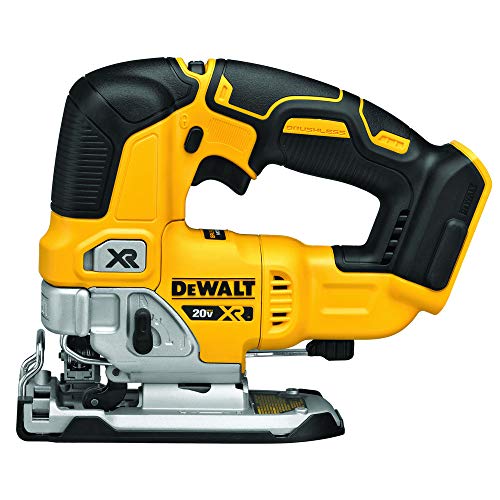
DEWALT 20V MAX XR Cordless Jigsaw
What We Like
- Keyless, lever-action blade change system
- Compact size for easy grip and control
- Bright LED light for dim work surfaces
- Integrated dust blower clears the cut line
Trade-offs
- Bare tool only: requires separate battery purchase
- Maximum cut angle limited to 45 degrees
An all-metal, lever-action keyless blade clamp makes swapping T-shank blades a one-handed affair, which is the single biggest time-saver on any job with frequent material or cut-type changes. This jigsaw is built for the user who values speed and simplicity in setup. Its compact 4.2-pound frame and variable speed trigger offer precise speed control, while the four-position orbital action lets you dial the aggression from a smooth finish cut to a faster rip.
This jigsaw is part of a cordless system, as it arrives without a battery or charger. That’s fine for a dedicated DEWALT 20V MAX XR setup. Where it truly excels is with its thoughtful job-site features. The dust blower and bright LED work together to keep your cut line visible on dimly lit surfaces, a small detail that prevents big mistakes.
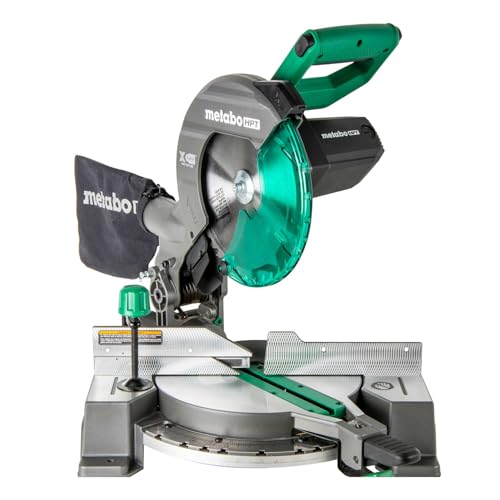
Metabo HPT 10-Inch Compound Miter Saw
What We Like
- Lightweight, 24.2 lb design for easy transport
- Improved miter scale and controls for accurate adjustments
- Powerful 15-Amp motor for effortless cuts
- Large table and vice clamp for secure workpiece handling
Trade-offs
- Single bevel limits compound cuts to one direction
- No cordless option; requires a power outlet
With a 15-amp motor that spins its blade up to 5,000 RPM, the Metabo HPT C10FCG2 delivers the power for clean cuts in woodworking projects. An improved miter scale and vice clamping system help users make accurate adjustments and secure workpieces. Weighing 24.2 pounds, its frame is easy to lift for transport, and the large table provides support for longer materials.
You give up the flexibility of a dual-bevel, so cutting complex crown molding flat against the fence requires flipping the workpiece. For a dedicated shop saw making frequent compound cuts in both directions, that’s a real limitation. But for on-site trim work, the accuracy and portability are a strong combination. Compared to a heavier, stationary option like the BOSCH GTS15-10 table saw, this Metabo HPT is built for mobility, not raw power or large sheet goods.
Makita 5007F Saw

What We Like
- Powerful 15 AMP motor for demanding cuts
- Two built-in LED lights illuminate cut line
- Lower guard improves bevel and narrow cuts
- All-ball bearing construction for durability
Trade-offs
- Heavier than cordless options like the DEWALT DCS391B (13.6 lb vs 7.0 lb)
- Corded design limits mobility on large jobsites
- No integrated laser guide like the SKIL 5280-01
A 15 AMP motor spinning at 5,800 RPM provides the power to cut through dense lumber without stalling. With a cutting capacity of 1-3/4 inches at a 45-degree bevel, it can handle standard dimensional lumber. Two built-in LED lights illuminate the cut line to increase accuracy, and a well-balanced design contributes to superior handling during use.
At 13.6 pounds, the saw is heavier than some cordless models like the 7.0-pound DEWALT DCS391B. The cord requires an outlet or extension cord, and the AC/DC switch allows for use with alternative power sources like generators. Its all-ball bearing construction is engineered for longer tool life under jobsite conditions.
Product photos
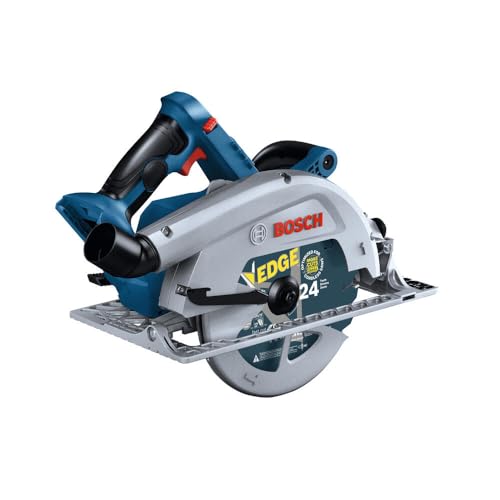
BOSCH GKS18V-25N Cordless Circular Saw
What We Like
- Electronic brake for quick blade stop
- Pivoting dust port rotates 360 degrees
- Auxiliary handle for ergonomic bevel cuts
- Ampshare system for multi-brand battery compatibility
Trade-offs
- Tool only: requires separate purchase of battery and charger
- At 11.6 lb, it is heavier than the 7.0 lb DEWALT DCS391B
- Deep 2-1/2 inch cut capacity demands a powerful, high-capacity battery
A 2-1/2 inch cut capacity lets you slice clean through a stack of two-by lumber in a single pass, which is why this saw stands out for serious framing and decking work. The Bosch GKS18V-25N is built for the contractor or advanced DIYer who needs corded-level power without the cord, relying on its Biturbo brushless motor to maintain speed under load. The front bevel lock and 50-degree range make angled cuts for rafters or trim straightforward, while the pivoting dust port keeps your line of sight clear whether you’re right or left-handed.
The tool’s weight of 11.6 pounds contributes to a stable feel during heavy cuts, though it is heavier than some other cordless circular saws. It is sold as a bare tool, so the cost of a compatible CORE18V High Power battery must be added to unlock its full performance. For projects involving dimensional lumber, its cut capacity and ergonomic features like the auxiliary handle are relevant, while a lighter saw could be easier to maneuver for sheet goods or overhead work.
Product photos
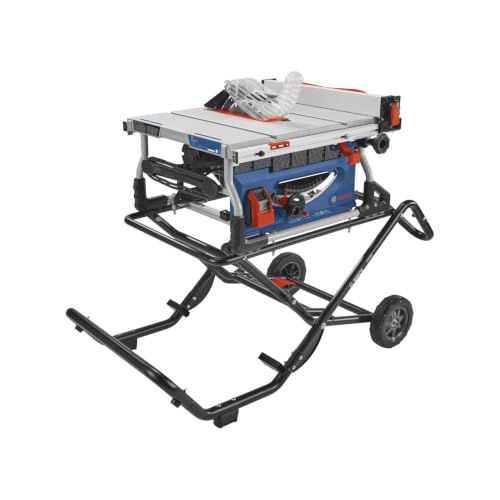
BOSCH GTS15-10 Portable Table Saw
What We Like
- Gravity-rise stand enables easy jobsite mobility
- Soft-start circuitry prevents circuit breaker trips
- Rack-and-pinion fence allows precise, easy adjustments
- Open frame design enhances durability and light-duty clamping
Trade-offs
- At 103 pounds, it's a two-person lift into a truck
- Open frame design limits tabletop support for very large panels
The integrated gravity-rise wheeled stand is the single feature that redefines portability for a table saw, letting one person roll it across a jobsite and set it up in a single action. That, combined with a 15-amp motor and electronic speed control, makes it a reliable workhorse for contractors and serious DIYers who need consistent power and precision away from a stationary shop. The brake that halts the blade in about three seconds is a legitimate safety and productivity boost when you’re making repeated cuts.
Weighing 103 pounds, the Bosch GTS15-10 is a substantial piece of equipment, but its integrated Gravity-Rise Wheeled Stand allows for single-action setup and easy rolling around a jobsite. This portability means you can move it where the work is without sacrificing a stable, dedicated cutting surface. While it’s not a quick-grab tool, the wheeled stand transforms a heavy saw into a mobile workstation.
Product photos
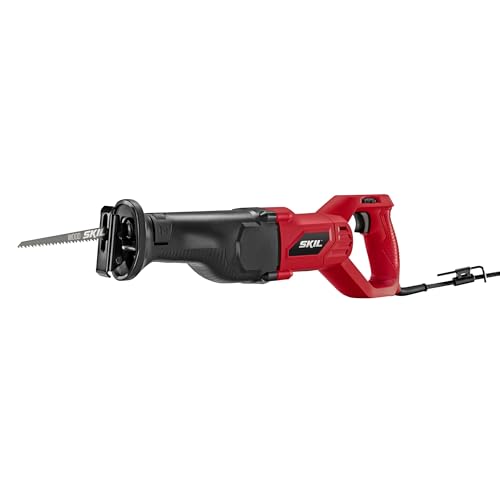
Skil 9206-02 Reciprocating Saw
What We Like
- Tool-less blade changes for quick swaps
- Counter balance reduces vibration during use
- Pivoting foot adds stability on tough cuts
- Metal gear housing promises durability
Trade-offs
- Corded design limits mobility on a jobsite
- No battery option; requires a power outlet
With a 7.5-amp motor, this corded reciprocating saw provides ample power for consistent performance, avoiding the need to manage batteries. The tool-less blade change allows for quick swaps, and the pivoting foot offers additional stability during operation. Its heavy-duty metal gear housing and counter balance contribute to durability and vibration control.
The trade-off for that simple, plug-in power is mobility and heft. At seven pounds, it demands more arm strength over long sessions compared to a compact cordless model. For focused demolition or cutting in a garage shop, this Skil saw is a solid performer. For a user who values ultimate portability for overhead work or quick cuts, a tool like the Milwaukee M18 FUEL Hackzall would be a more nimble, albeit more expensive, cordless alternative.
Product photos
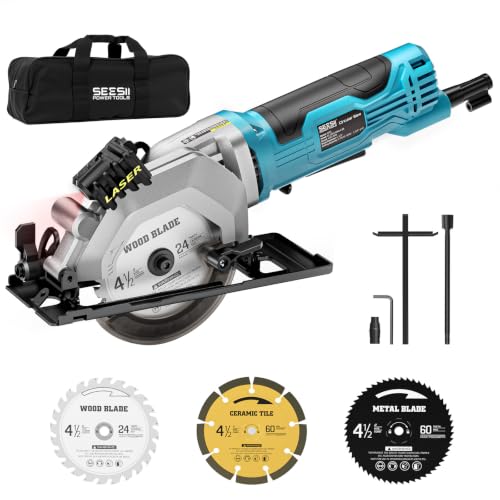
SEESII Compact Circular Saw
What We Like
- Includes three blades for wood, metal, tile, and plastic
- Laser guide and dust port for precise, clean cuts
- Double-switch safety and lightweight one-hand design
- Adjustable depth and bevel for versatile cutting angles
Trade-offs
- Corded design limits mobility compared to cordless saws
- Smaller blade and motor than full-size 7-1/4-inch models
A 4-1/2-inch blade paired with three included types. TCT, HSS, and diamond, means this saw transitions from a plywood sheet to a PVC pipe or aluminum trim without a blade change. That multi-material versatility, combined with a laser guide and dust extraction, makes it a focused problem-solver for detailed DIY projects and home renovations. It’s built for the craftsperson who values a clean, precise cut in varied materials over brute force, all in a package that’s about half the weight of a standard circular saw.
The trade-off is in capacity. This is a saw for precision work and sheet goods, not framing. For a homeowner tackling a deck or a quick furniture build, its light weight and included blade set eliminate tool clutter, but serious woodworkers will likely need a larger saw for dimensional lumber.
Product photos
How We Evaluated Saws
Our research focused on comparing manufacturer specifications and documented performance from expert round-ups. We prioritized three core criteria: cutting power and capacity for the intended material, ergonomics and control for user safety and accuracy, and overall versatility for the tool’s primary role. For example, a table saw needs a stable, accurate fence, while a reciprocating saw must manage vibration during demolition.
This is a research-led evaluation, so we cannot comment on long-term durability or hands-on feel, but we relied on consistent patterns in professional reviews and owner reports to gauge real-world performance. For specialized tasks, you may want to consult our guide to woodworking saws.
What To Look For In Saws
The right saw makes the job faster, safer, and more precise. Your main choice is between the broad power and speed of corded models and the portability of cordless systems, which require a battery platform investment.
Match the saw type to your primary cut: circular saws for straight lines, jigsaws for curves, miter saws for angles, and reciprocating saws for demolition. Consider power source, cutting capacity, and ergonomic controls.
Power Source
Corded saws, like our Best Corded Power pick, deliver consistent, unlimited power for stationary workstations or lengthy cuts. Cordless saws offer ultimate portability for jobsites or outdoor projects but require you to own compatible batteries and chargers. Battery voltage and amp-hour ratings affect runtime and cutting power; a deep-cut circular saw will drain a small battery quickly.
Cutting Capacity & Precision
This defines what the saw can physically do. For circular saws, check the blade diameter and maximum depth of cut. For miter saws, look at the bevel and miter ranges, a dual-bevel saw can tilt both left and right, saving time on compound cuts. Features like laser guides, dust blowers, and precise fence systems, like the rack-and-pinion design on our Best Portable Table Saw, directly impact accuracy and clean workflow.
Ergonomics & Control
A saw should feel secure and manageable. Weight is a major factor, especially for overhead or prolonged use. Features like an auxiliary handle, a pivoting shoe to reduce vibration, or a one-handed design for tight spaces improve control and reduce fatigue. Safety features like electric brakes and trigger locks are critical.
- Test the grip and trigger placement for comfort.
- Check the ease of key adjustments like bevel angle and cutting depth.
- For cordless models, assess the battery’s position and its effect on balance.
A saw that feels unwieldy in the store will be dangerous on the job.
Saws Compared
For a quick view of how these top saws differ, the table below compares their key attributes.
| Product | Weight | Power Source / Motor | Blade Speed / Stroke |
|---|---|---|---|
| DEWALT 20V MAX Cordless Circular Saw | 7.0 pounds | 20V MAX cordless | 5150 RPM |
| SKIL 15 Amp Circular Saw with Laser | 8.7 pounds | 15 amp | 5 300-RPM |
| Milwaukee M18 FUEL Hackzall Reciprocating Saw | 4.0 pounds | M18 Cordless (tool only) | 7/8 inch |
| DEWALT 20V MAX XR Cordless Jigsaw | 4.2 pounds | Cordless, Brushless Motor | 3,200 SPM |
| Metabo HPT 10-Inch Compound Miter Saw | 24.2 lbs | 15-Amp | 5,000 RPM |
| Makita 5007F Saw | 13.6 pounds | 15 AMP | 5,800 RPM |
| BOSCH GKS18V-25N Cordless Circular Saw | 11.6 pounds | Biturbo brushless | N/A |
| BOSCH GTS15-10 Portable Table Saw | 103.0 pounds | 15 Amp | 3,800 rpm |
| Skil 9206-02 Reciprocating Saw | 7.0 Pounds | 7.5 Amp | N/A |
| SEESII Compact Circular Saw | 4.7 pounds | 4.8A | 4000 RPM |
Frequently Asked Questions
What brand makes the best saws?
There is no single “best” brand, as top manufacturers excel in different categories. DeWalt and Milwaukee are renowned for their professional-grade cordless systems, while Bosch and Makita are praised for innovative engineering and durability. For budget-conscious DIYers, Skil offers tremendous value. The best brand for you depends on your existing battery tools and whether you prioritize raw power, innovative features, or affordability.
What saw is the best saw?
The “best” saw depends entirely on your project. For general construction and versatility, a circular saw like our Best Overall, the DEWALT 20V MAX, is an excellent choice. If you’re doing fine woodworking and need precise angles, a compound miter saw is superior. For demolition or cutting in tight spaces, a reciprocating saw is the right tool. Our list breaks down the best power saws for each specific task.
What are the top 10 table saws?
While we evaluated many saw types, our list includes one standout portable table saw: the BOSCH GTS15-10. It earns its spot with a gravity-rise stand for easy transport and a precise rack-and-pinion fence system. For a dedicated list of the best stationary and jobsite table saws, we recommend consulting specialized tool review sites that focus on cabinetry and fine woodworking.
What is the best quality hand saw?
High-quality hand saws from brands like Japanese manufacturers or specialty US makers offer exceptional precision for joinery and fine cuts. They feature thin, sharp blades that cut on the pull stroke for greater control and less tear-out. While our list focuses on power tools, a premium hand saw is an invaluable addition for detail work where power tools are too aggressive.
Should I choose a corded or cordless saw?
Choose corded for uninterrupted power at a stationary bench or for extended use, like with a high-amp circular saw. Choose cordless for jobsite portability, overhead work, or any project far from an outlet. If you already own cordless tools, sticking with that battery ecosystem is often the most cost-effective path forward.
The Bottom Line
For professionals and dedicated DIYers building a cordless system, the DEWALT 20V MAX Cordless Circular Saw is the best overall. It balances high RPM power with a lightweight, durable build. If you’re on a tight budget, the SKIL 15 Amp Circular Saw with Laser delivers strong corded power for its price. Those needing to work in confined spaces should consider the one-handed Milwaukee M18 FUEL Hackzall. No matter your pick, ensure the saw’s cutting capacity and power source align with your most common project to avoid frustration and ensure clean, safe results.
