
Cordless vs Pneumatic Impact Wrench: Which Should You Buy?
This post contains affiliate links. As an Amazon Associate, we earn from qualifying purchases.
In the cordless vs pneumatic impact wrench debate, cordless wins for portability and all-in-one convenience, while pneumatic wins for sustained power in a shop with an established 80-gallon air system. The real answer hinges on your workspace, workflow, and whether you value freedom of movement or raw, uninterrupted torque.
Forget the old rule that air tools are always more powerful. Modern cordless models like the Milwaukee M18 FUEL can hit 1,400 ft-lbs, which tops many industrial-grade pneumatic guns. But that headline number tells half the story. A pneumatic wrench’s performance lives and dies with your compressor’s CFM rating and hose size; a restricted system can slash its output by 40-60%.
What follows is a breakdown of torque, weight, noise, and the hidden costs of each system.
Key Takeaways
- Manufacturer torque stats can be misleading. Independent Skidmore testing found the Makita XWT08Z delivered about 650 ft-lbs of forward torque, 15-20% more than competing cordless models and nearly matching the top pneumatic gun tested.
- Pneumatic tools demand a robust air system. For a 1/2″ impact, you need a minimum of 4 CFM at 90 PSI, a 3/8″ air line (1/2″ preferred over 25 ft), and an 80-gallon tank for continuous use. Anything less strangles performance.
- Cordless batteries have a finite lifespan. Plan for replacement every 3-5 years, a running cost most comparisons miss. A pneumatic tool, with basic oiling, can last for many years.
- The #2 setting on a Milwaukee M18 impact delivers roughly 100 ft-lbs, ideal for lug nuts without over-torquing. Pneumatic impacts lack this electronic control, making a calibrated torque wrench a mandatory follow-up tool.
- Choose based on your mobility needs. If you work in a fixed shop with industrial air, go pneumatic. For field work, mobile mechanics, or any site without guaranteed air, cordless is the only practical choice.
Torque, Power & Real-World Performance
The spec sheet says one thing. The shop floor often says another.
Take the Makita XWT08Z. Its manufacturer rating is 740 ft-lbs. But when tested on a Skidmore torque tester, it produced about 650 ft-lbs of forward torque. That tested number was still 15-20% higher than three other top cordless models and was nearly equal to the most powerful pneumatic impact wrench in the same test. The lesson? Manufacturer stats, often “nut-busting” or reverse torque figures, don’t always translate to real fastening power.
Manufacturer-stated torque (like 740 ft-lbs) and independently tested forward torque (like 650 ft-lbs) can differ significantly. The testing methodology, such as an 8-second pressure build on a Skidmore tester versus testing until the tool can no longer move the needle, explains much of the gap. For real-world buying decisions, seek out third-party test data.
The debate gets murkier when you examine the cordless vs pneumatic impact wrench question. Some sources state pneumatics “typically offer more torque.” Others point to the Milwaukee M18 FUEL’s 1,400 ft-lb max torque, which dwarfs the Ingersoll-Rand 2315HA pneumatic’s 900 ft-lb. So who’s right? Both, conditionally.
A pneumatic impact wrench’s output is only as good as its air supply. Field reports indicate a 40-60% torque loss is common when the tool is fed by undersized lines or a struggling compressor. That 900 ft-lb gun might deliver only 360-540 ft-lbs on a weak system. Meanwhile, a fully charged 18V battery delivers its rated power every time, anywhere.
| Performance Factor | Cordless Impact Wrench | Pneumatic Impact Wrench |
|---|---|---|
| Stated Max Torque (Example) | Milwaukee M18 FUEL: 1,400 ft-lbs | Ingersoll-Rand 2315HA: 900 ft-lbs |
| Real-World Torque Consistency | High (delivers rated power with charged battery) | Variable (can drop 40-60% with poor air supply) |
| Key Limiting Factor | Battery charge & health | Compressor CFM, hose size, regulator |
| Best for Peak Power | Yes, with latest high-torque models | Yes, but only with optimal, industrial air system |
This isn’t about one type being universally stronger. It’s about guaranteed delivery. If you have a 5 HP compressor with an 80-gallon tank and properly sized lines, the pneumatic gun will hit its number all day, every day. If your air supply is uncertain, the cordless tool’s promise of consistent power is a colossal advantage.
Weight, Noise & the Physical Experience
Pick up an Ingersoll-Rand 2315HA pneumatic wrench. The bare tool weighs 4.8 lbs. Now pick up a Milwaukee M18 FUEL cordless model. The bare tool is 5.3 lbs. The difference is half a pound, the weight of a smartphone. This is where the “air tools are lighter” argument gets shaky. The real weight penalty for cordless comes from the battery. A full kit can push 7.5 to 7.9 lbs.
That extra heft is a trade-off for a much quieter, less chaotic work environment. A cordless impact’s noise is a sharp, rapid brrrrt. A pneumatic gun adds the constant, deafening HISSSSS of escaping air and the distant THUMP-THUMP-THUMP of the compressor motor cycling on and off. In a home garage or residential area, the difference in neighbor tolerance is measured in minutes.
The feel is different, too. A pneumatic tool has a raw, mechanical pulse you feel straight up your arm. A modern brushless cordless model has a more refined, electronic vibration. For all-day use, that refinement reduces fatigue. But for breaking loose a single, massively rusted bolt, many mechanics still swear by the brutal, tactile hammer of a pneumatic impact.
Where this goes sideways: Assuming a pneumatic tool is always lighter. While the bare tool often is, you must drag around a heavy air hose. That hose snags, kinks, and triples your effective working weight. For overhead or tight-space work, a cordless tool’s self-contained design is a clear win.
Cost, Setup & Running Expenses
Look at the sticker price of a DeWalt DCF899P2 cordless kit versus an Ingersoll-Rand 2315HA pneumatic gun. The air tool seems cheaper. This is a trap. The true cost of a pneumatic system is hidden in the compressor, plumbing, and maintenance.
For a 1/2″ impact wrench to perform as advertised, you need a compressor that can deliver a minimum of 4 CFM at 90 PSI. To run it continuously without waiting for the tank to refill, you need an 80-gallon tank driven by at least a 5 HP motor. That’s a major investment in equipment that often requires a dedicated 240V circuit and a large chunk of your shop floor. You also need to run 3/8″ minimum air lines (1/2″ preferred) and install proper filters and regulators.
Cordless, by contrast, is plug-and-play. The biggest upfront cost is the battery platform. If you already own Milwaukee M18 or DeWalt 20V MAX batteries, you’re just buying the “bare tool.” The ongoing cost is battery replacement. Batteries have a shelf life of 3-5 years. A premium high-capacity battery represents a significant recurring expense. Over a decade, that’s a significant recurring expense.
A pneumatic wrench, with occasional oiling, can literally last for generations. The compressor, however, needs regular oil changes, tank draining, and filter replacements. Neglect it, and moisture in the lines will kill your tools.
| Cost Category | Cordless System | Pneumatic System |
|---|---|---|
| Initial Tool Cost | Moderate to High ($300 – $600 for kit) | Low to Moderate ($150 – $400 for gun) |
| Required Infrastructure | Battery Charger, Outlet | 80+ Gal Compressor, 240V Circuit, Air Lines, Regulator |
| Hidden Setup Cost | Low (none if in existing battery ecosystem) | Very High ($1,000 – $2,500+) |
| Long-Term Running Cost | Battery replacement every 3-5 years | Compressor maintenance, electricity, tool oil |
| Typical Lifespan | Tool: 5-10 years; Batteries: 3-5 years | Tool: 20-40 years; Compressor: 10-20 years |
The financial decision isn’t about the tool. It’s about your commitment to an entire system. For a pro shop with existing industrial air, adding a pneumatic gun is trivial. For a mobile technician or a home garage, the space, power, and cost of that air system make cordless the default choice.
Best Use Cases & Where Each Excels
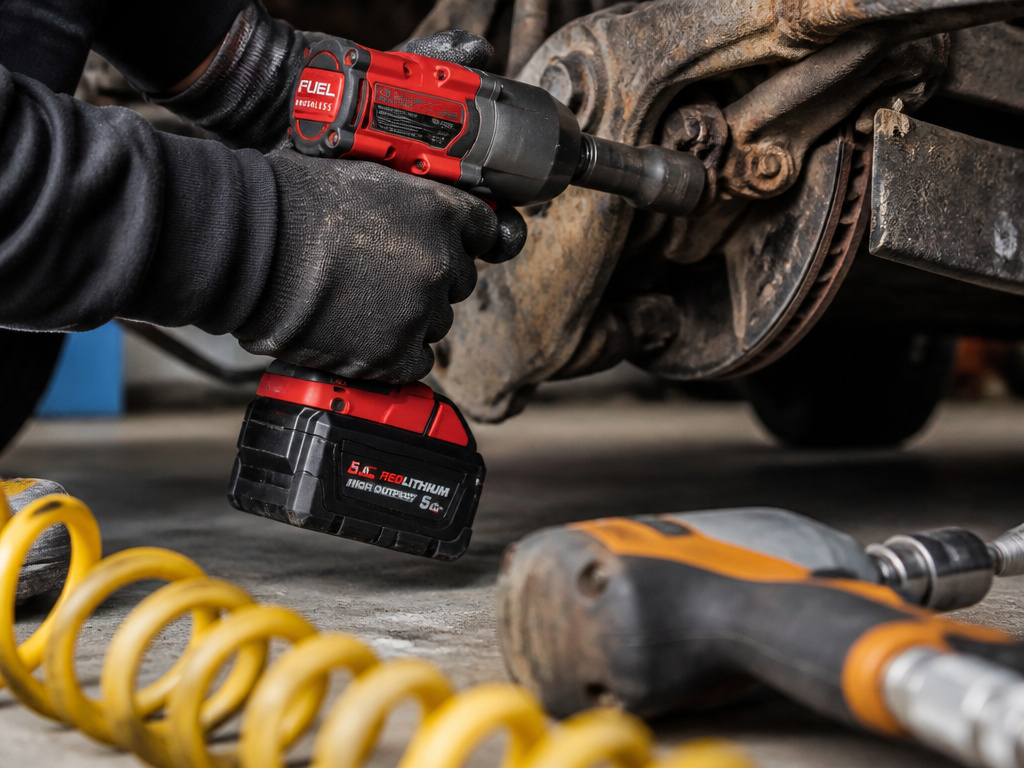
You don’t choose the tool. The job chooses it for you.
For mobile work, DIY, and car tire removal, the cordless impact wrench is king. There’s no hose to drag, no compressor to listen for, no 100-foot extension cord to run. You grab the tool and the socket and you’re working. This is why they dominate the category of auto impact wrenches for roadside repairs and why mobile mechanics have largely abandoned air hoses.
For unjamming and loosening stuck or rusted bolts, many still reach for the raw power of air, as HansTool notes they are great for this thanks to the extra torque they provide. However, Industrial Monitor Direct and Tool Show data show that top cordless models can now match or exceed the torque of some pneumatic guns. However, as our earlier torque comparison showed, a top-tier cordless model like the Milwaukee M18 FUEL is more than capable of this heavy-duty work, provided you have a fresh battery.
The clearest dividing line is the presence of an industrial air system. If your shop has an 80-gallon, 5+ HP compressor with properly sized plumbing, then investing in a suite of pneumatic impact wrenches makes perfect sense. They’ll work shift after shift without a performance drop. This is the typical environment for tire shops, production lines, and heavy equipment repair bays.
If your air supply is uncertain or inadequate, the equation flips. Cordless is the safe, high-performance bet. This also applies to the homeowner who doesn’t want a screaming compressor in their garage, and the construction worker who needs to carry their tools up three flights of stairs.
Maintenance, Control & Safety
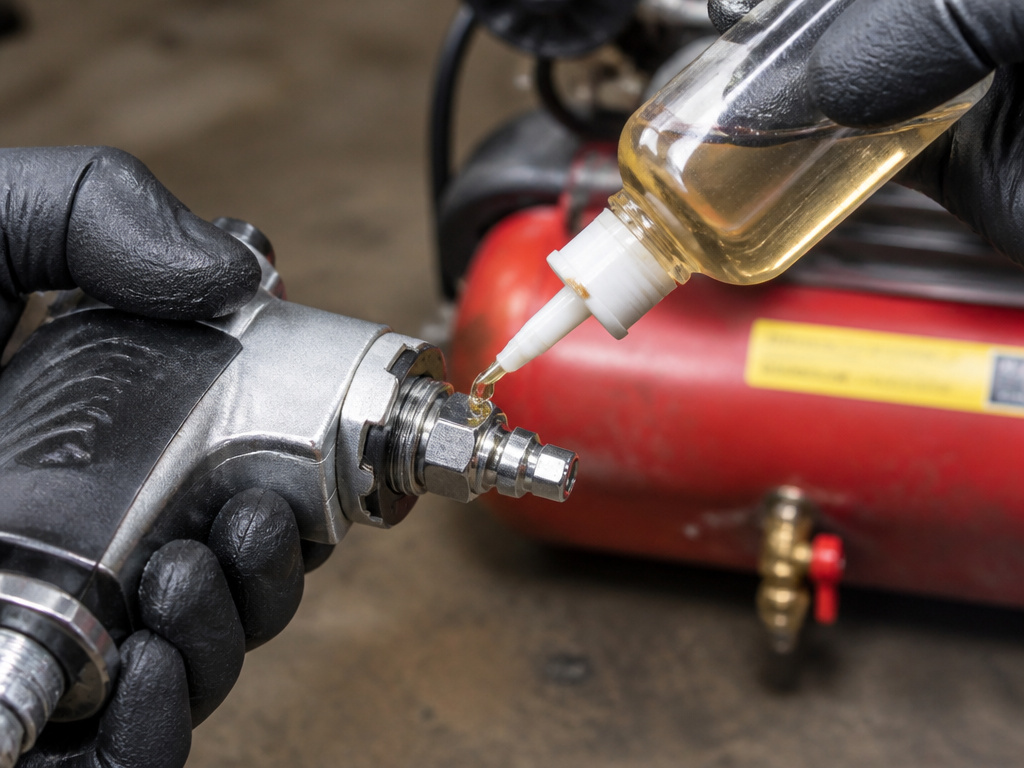
Maintaining a cordless impact wrench is simple: keep it clean and don’t drop the battery. Maintaining a pneumatic wrench is also simple: add a few drops of oil to the air inlet regularly. The complexity, and the real maintenance burden, shifts to the compressor. You must oil it regularly, drain the condensate from the tank, and keep the system free from moisture. Fail here, and water will rust your tank from the inside out and spray into your tools, corroding them.
Control is a major differentiator. Modern tools in the cordless vs corded impact wrench class offer multiple speed and torque settings. The #2 setting on a Milwaukee M18 impact delivers a consistent ~100 ft-lbs, perfect for lug nuts. You run the nut down with the impact, then finish with a calibrated torque wrench. This prevents over-tightening, which can stretch studs or warp brake rotors.
Common mistake: Using a pneumatic impact to final-tighten fasteners without a torque wrench. Pneumatic impacts have no torque-limiting feature. They will happily spin a fastener until it strips or snaps. Always follow up with a click-type torque wrench set to the manufacturer’s specification.
Safety for both tools revolves around respect for the power. Use impact-rated sockets, standard chrome sockets can shatter under the hammering force. Wear eye protection from flying debris. And be mindful of reaction torque, especially with high-torque models; a locked-up bolt can cause the tool to twist violently in your hand.
Environmental impact of cordless vs pneumatic impact wrenches
Choosing between tool types involves energy use and waste. Cordless tools rely on batteries, which have a finite shelf life and require eventual disposal or recycling. Their environmental cost is tied to electricity generation and battery manufacturing. Pneumatic tools draw power from an air compressor, which often runs on electricity but can be less energy-efficient due to air leaks and system losses. The compressor itself needs regular maintenance, including oil changes and managing moisture, to prevent waste from premature failure. For mobile or intermittent use, cordless may avoid the energy drain of maintaining a full air system. In a shop with an existing, well-maintained industrial setup, the pneumatic tool’s longevity and simplicity might be the more resource-conscious choice over time.
Frequently Asked Questions
Is a pneumatic impact wrench better than a battery-powered one?
“Better” depends entirely on context. For a fully equipped shop with industrial air, a pneumatic wrench offers longer continuous runtime and often a lower tool-cost. For any situation requiring mobility or lacking perfect air supply, a modern battery-powered high-torque model is objectively better. Its performance is consistent and untethered.
Is 300 ft-lbs enough to remove lug nuts?
Yes, absolutely. Most passenger car lug nuts are torqued between 80-120 ft-lbs. A tool rated for 300 ft-lbs of breaking torque has more than enough power to remove them, even if slightly corroded. This falls into the discussion of mid-torque vs high-torque impact wrenches; for standard automotive work, a mid-torque model is often sufficient and lighter.
Do air impacts have more torque?
They can, but it’s not a given. High-end pneumatic models for industrial use (3/4″ and 1″ drive) deliver incredible torque. However, in the common 1/2″ drive category, top cordless models now match or exceed the max torque of many professional pneumatic guns. The real advantage of air is the ability to sustain that torque output non-stop, which a battery cannot do.
What’s the difference between an impact driver and an impact wrench?
This is a crucial distinction. A comparison of impact driver vs impact wrench tools shows drivers are for smaller fasteners (screws, lag bolts) and have a 1/4″ hex chuck. Impact wrenches are for larger nuts and bolts and have a square drive (typically 1/2″ or 3/8″). Using a driver for lug nuts is underpowered; using a wrench for deck screws is overkill and will damage the fastener.
How do I choose between a 1/2″ and 3/8″ impact wrench?
Drive size relates to the fastener you’re tackling. A comparison of 1/2″ vs 3/8″ impact wrenches shows 1/2″ is the standard for automotive lug nuts, truck wheels, and general heavy-duty work. A 3/8″ drive is more compact, suited for suspension components, smaller engine work, and tighter spaces. Most professionals start with a 1/2″ model for its versatility.
The Bottom Line
Stop looking for a universal winner. The choice between cordless and pneumatic is a systems decision.
If you are building a workshop from scratch and will live there, investing in a pneumatic system for pneumatic vs electric tools with a large compressor pays off over decades. The tools are cheaper, they last forever, and the power never fades.
For everyone else, the mobile mechanic, the farmer fixing a baler in the field, the homeowner rotating tires in the driveway, or the contractor moving between sites, the math overwhelmingly favors cordless. The freedom from infrastructure, the consistent performance, and the sheer convenience are unbeatable. Just commit to a battery ecosystem and budget for a model from our list of the best cordless impact wrenches from a major brand like Milwaukee, DeWalt, or Makita, knowing your next battery purchase is a few years down the line.
My two cents? Unless you’re running a commercial tire shop, start with cordless. You can always add an air line later. You can’t add portability to a pneumatic tool.
