
Pneumatic vs Electric Power Tools: Which Should You Use?
This post contains affiliate links. As an Amazon Associate, we earn from qualifying purchases.
Pneumatic vs electric power tools comes down to one question: are you working where compressed air is already piped in? Pneumatic tools use air from a compressor, are often lighter and cheaper, and deliver consistent power. Electric tools, corded or cordless, run on electricity, offer more convenience anywhere there’s an outlet, and are the default for most home and job-site work. For a fixed shop with air lines, pneumatic tools are hard to beat. For everything else, electric is the answer.
The pneumatic vs electric power tools distinction isn’t just about the plug. It changes the tool’s weight, noise, upfront cost, and where you can even use it. A pneumatic sander is a third the price of a comparable electric model and runs quieter, but you can’t take it up a ladder unless you drag a hose and compressor with you.
What follows is a breakdown of where each type wins, loses, and why mechanics still reach for air guns when everyone else has gone cordless in the pneumatic vs electric power tools debate. We’ll cover the specs that matter, the hidden costs, and how to pick a system that won’t leave you stranded.
Key Takeaways
- Pneumatic tools are often a third the price of comparable electric models, but require a compressor investment.
- Electric tools provide constant power when corded and go anywhere when cordless, making them the versatile default.
- A running air compressor adds a constant background drone; the pneumatic tool itself is generally quieter than the electric motor.
- Without a shop air system, pneumatic tools are impractical; electric tools work with any standard outlet.
- For high-cycle professional use in a fixed location, pneumatic tools offer advantages in weight, cost, and noise.
Power, Torque, and Performance
Corded electric tools typically have more power and deliver more torque than cordless models. They provide a constant level of driving performance as long as they’re plugged in. Pneumatic tools can be more powerful and quicker than electric tools for certain applications, especially when fed by a large, capable compressor.
The difference is in the delivery. An electric motor spins to create rotational force. A pneumatic tool uses compressed air to drive a piston or cylinder, creating linear motion. That’s why a staple gun or nailer is pneumatic, it needs a sudden burst, not sustained rotation. For constant grinding or sanding, both types work, but the electric motor has to fight friction and heat buildup inside the tool itself. A pneumatic sander just passes the air through; the motor is back at the compressor.
Electric power tools are driven by a rotating motor within the tool housing. Pneumatic tools use compressed air delivered via hose to actuate a piston or turbine inside the tool, often creating linear or direct mechanical action without an internal electric motor.
Where this goes sideways: Assuming a cordless tool matches the torque of a big pneumatic impact wrench. Battery-powered impacts have come a long way, but for breaking truck lug nuts day in and day out, a 1/2-inch air impact fed by a 20-gallon compressor still wins on sustained peak torque. The electric one may overheat or experience reduced performance under sustained heavy use.
The Core Differences: Cost, Weight, and Noise
These three factors, what you pay, what you carry, and what you hear, often decide the argument before power even enters the conversation.
| Factor | Pneumatic Tools | Electric Tools (Corded) | Electric Tools (Cordless) |
|---|---|---|---|
| Typical Cost | Tool itself is often cheaper. A pneumatically driven hand sander can be a third of the price of a comparable electric sander. | Moderate tool cost. | Highest tool cost, plus battery investment. |
| Noise Level | Tool itself is generally quieter. Compressor noise is separate and constant. | Motor and gear noise at the tool, often louder than pneumatic action. | Similar motor noise to corded, no compressor drone. |
| Power Source | Compressor & air hose. | Wall outlet & power cord. | Battery pack. |
The cost advantage is tempting. But that cheaper pneumatic nailer needs a compressor, a hose, and fittings to even function. An electric nailer just needs a battery you might already own. The math flips if you’re outfitting a whole shop where one compressor feeds ten tools.
On weight, there’s no contest. That matters after hours of overhead sanding or driving screws.
Noise is a two-part story. The pneumatic tool itself is quieter, the hiss of air is less grating than the whine of an electric motor. But the compressor in the corner cycles on with a loud thump-whirrr every few minutes. An electric tool’s noise starts and stops with the trigger.
Where Each Type Is Used (and Why)
Mechanics use air tools because machine shops and garages are often fitted with accessible compressed air. The most common area for pneumatic power tools is in a machine shop or on a construction site with a permanent air supply. For everyone else, electric is the default.
Let’s get specific. For a home garage doing light auto work, a cordless electric ratchet and impact wrench are now perfectly capable. But in a professional bay removing suspension components all day, a technician will reach for an air ratchet and a pneumatic impact wrench every time due to the accessible compressed air and the tools’ advantages for sustained use.
I used to believe more power was always the answer, until I burned out the motor on a small electric sander by using it for a task far too heavy. Now I know matching the tool to the material, and the duty cycle, is key.
Conversely, try using a pneumatic saw or drill on a remote job site. You’re dragging a generator and a compressor. A cordless tool with a couple of batteries is a one-trip carry. Every room typically has an electrical outlet, making electric tools more functional for general use.
| Tool Type | Pneumatic Winner | Electric Winner | Why |
|---|---|---|---|
| Impact Wrench | High-torque, shop-based auto work. | Mobile repair, DIY, light-duty. | Air provides sustained high torque; electric offers cordless convenience. |
| Sander | Large-area finish sanding in a shop. | Detail work, job-site versatility. | Pneumatic is lighter, cheaper, and quieter for long sessions. |
| Nail Gun / Stapler | High-volume framing or trim work. | Small projects, remote sites. | Pneumatic is faster, lighter, and has lower tool cost; electric needs no compressor. |
| Sprayer | Automotive painting, fine finishing. | Small projects, occasional use. | Pneumatic delivers a finer, more controllable mist; electric is simpler setup. |
| Grinder | Heavy-duty metalwork in fixed location. | General-purpose grinding, cutting. | Pneumatic handles heat better in extended use; electric is more common and versatile. |
The Hidden Costs: Compressors, Batteries, and Maintenance
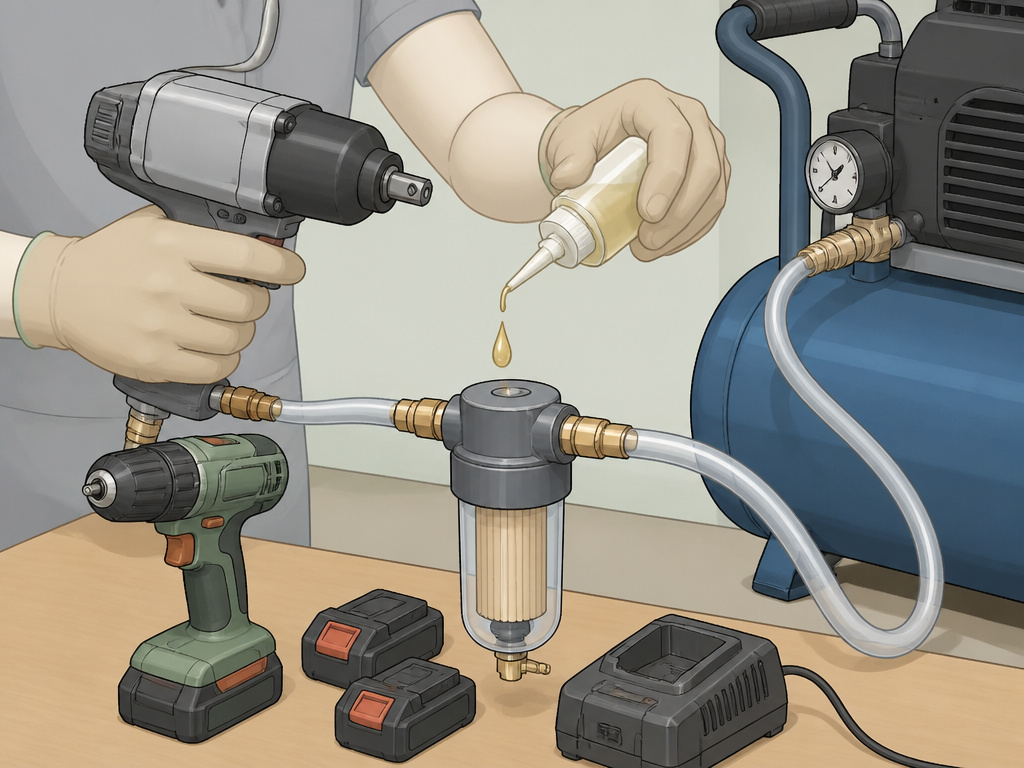
The sticker price is a trap. The real cost is in the system.
A pneumatic tool is useless without an air compressor. You need one with enough CFM (cubic feet per minute) to keep up, and a tank large enough to prevent it from cycling constantly. A small compressor might run a nailer, but may struggle to feed a high-demand tool like a grinder. This is where the compressor choice also lands, considering factors like portability and noise.
Electric tools have their own hidden cost: the battery ecosystem. If you commit to a brand like Milwaukee or Hilti, you’re buying into their battery platform. An extra high-capacity battery adds significant cost to a cordless system. Forget to charge it, and your cordless convenience becomes a paperweight. That’s the trade-off for ditching the hose.
Maintenance diverges too. Pneumatic tools demand clean, dry air. Moisture in the line rusts the internal chamber. An in-line filter/drier is non-negotiable. You also must add a few drops of pneumatic tool oil to the air inlet regularly, it’s the single best thing you can do for longevity. Electric tools need battery care, brush replacement (if not brushless), and keeping vents clear of dust.
The part nobody mentions: Running pneumatic tools without an in-line oiler but assuming the occasional squirt of oil into the coupler is sufficient. That leads to dried-out seals and a dead tool within a year. The oil has to aerosolize in the air stream, which only a proper oiler does consistently.
Choosing Your System: Shop vs. Remote Site
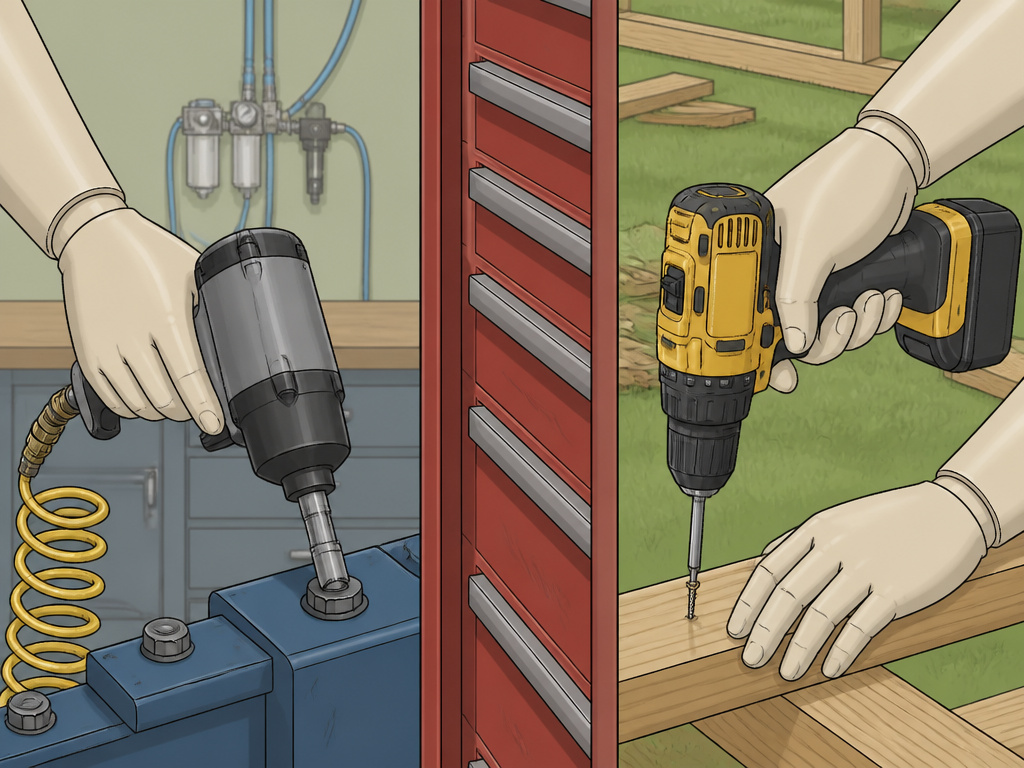
Your location decides for you.
If you are working in proximity to a compressor or with readily accessible house air, pneumatic air tools are lighter, cheaper, and quieter than their electric counterparts. This is the realm of the home workshop, the professional garage, or the fabrication shop. You install a central compressor, run overhead lines, and your tool cost per unit drops.
If you don’t have access to compressed air or are working on a remote site, you often have no option but to use electric power tools. You can opt for a battery-operated power tool so you can use it anywhere without connecting to power. This covers contractors, landscapers, and DIYers working in the house or yard.
For a beginner, the choice is simpler. Start with a cordless electric drill/driver kit from a major brand. It handles 80% of tasks. Then, if you find yourself sanding for hours or need a nail gun for a big project, consider adding a compressor and a specific pneumatic tool for that job. Don’t buy a pneumatic system hoping to use it for everything.
Common mistake: Buying a massive compressor because it’s “professional,” then realizing you only need it to run a small nailer once a month. Match the compressor to your actual air-hungriest tool, not your aspirations.
Are Pneumatic Tools Becoming Obsolete?
No. But their domain is shrinking.
In a world chasing cordless convenience, the pneumatic tool’s requirement for a fixed air supply seems like a relic. For high-volume, high-power applications in a fixed location, auto shops, industry, large woodshops, they are not just surviving but thriving. The tool is simpler, more durable, and often more powerful for the money.
The evolution of battery technology is the main pressure. A modern cordless impact wrench has improved significantly, but according to handymansworld.net, cordless tools are still typically less powerful than corded tools. But it does so with more weight than a comparable pneumatic tool. For the professional who needs that tool to work eight hours straight, the air line still delivers cool, consistent power.
So, pneumatic tools aren’t dying. They’re specializing. You’re less likely to see one on a residential construction site, but you’ll always see them in a tire shop or a body shop. They’ve moved from general-purpose to purpose-built.
How do energy efficiency and operating costs compare?
Pneumatic tools are often cheaper to purchase than their electric counterparts, sometimes costing a third of the price for a comparable tool. However, they require a compressed air hook-up, like a compressor or house air, which adds to the initial setup and energy cost. Electric tools, whether corded or battery-operated, rely on ubiquitous electrical outlets or battery charging. The operating cost for electric tools is tied directly to your electricity rate, while pneumatic systems also incur the cost of running and maintaining an air compressor. For shops with existing air lines, pneumatics can be very cost-effective, but for most home users, the simpler electric setup avoids the compressor investment.
Has modern battery tech changed the comparison?
Modern battery technology has made cordless power tools much more convenient than air-operated tools, as long as the battery is fully charged. This convenience is a major advantage on remote sites where compressed air is unavailable. However, cordless tools are still typically less powerful than corded electric tools and deliver less torque. They also weigh more than pneumatic tools. While battery tech improves portability, pneumatic tools retain advantages in shops and garages fitted with accessible compressed air, being lighter, cheaper, and often more powerful for sustained, heavy-duty tasks.
Frequently Asked Questions
Which is better, pneumatic or electric tools?
There’s no universal “better.” Pneumatic tools are better for high-power, continuous use in a fixed shop with compressed air. They are often lighter, cheaper, and quieter at the tool itself. Electric tools are better for versatility, portability, and use anywhere there’s an outlet or a charged battery. The right choice depends entirely on your workspace and the specific job.
What are the downsides of using pneumatic tools?
The main downside is the need for a compressor and hose, which kills portability and adds upfront cost and noise. Pneumatic tools also require clean, dry air to prevent internal rusting, necessitating maintenance of the air system (filters, dryers, oilers). Without a shop air system, they are impractical.
Are pneumatic sanders better than electric sanders?
In a fixed shop, often yes. According to the source material, a pneumatic sander is a lot quieter than an electric sander, it’s lighter, and usually a lot cheaper. In some cases, it can be more powerful, too. For job-site work or where you lack compressed air, an electric sander is your only realistic option.
Can I use pneumatic tools at home?
Yes, if you invest in an air compressor. For a home workshop where you’ll do a lot of sanding, painting, or nailing, it can be worthwhile. For occasional use, the cost and space taken by the compressor usually make electric or cordless tools more sensible.
Do professional mechanics still use air tools?
Yes, extensively. Mechanics work in shops fitted with accessible compressed air. Common pneumatic tools include impact wrenches, ratchets, and air guns for cleaning parts. The consistent power, light weight, and durability make them ideal for high-volume professional work.
The Bottom Line
Here’s the one rule that cuts through the noise: if your shop already has air lines, or you’re setting up a dedicated workspace for high-volume work, pneumatic tools are a smart, cost-effective investment. For everyone else. DIYers, mobile contractors, people working in a home garage, electric tools, particularly cordless ones, are the clear starting point.
Don’t overthink it. Start with the electric system that fits your immediate needs. If you later find yourself doing hours of sanding or needing a heavy-duty impact, then consider adding a compressor and a single pneumatic tool for that specific task. That’s how you build a practical toolkit without wasting money on a system you’ll rarely use.
And whichever path you take, stick with quality brands known for durability, names like Milwaukee and Hilti. A cheap tool that fails mid-job costs you more in the long run.
