
Extended Reach Ratchet Pros and Cons: Is It Worth It?
This post contains affiliate links. As an Amazon Associate, we earn from qualifying purchases.
An extended reach ratchet adds a few inches of handle length and a slim head profile to a cordless ratchet, giving you more mechanical advantage and access to deep, tight spaces in engine bays or machinery. The trade-off is increased size, a higher torque output that can damage smaller fasteners, and more challenging storage. For most automotive pros and serious DIYers tackling tight-access jobs, the pros outweigh the cons, but it’s a specialized tool that won’t replace your standard ratchets.
That extra length isn’t just for show. It multiplies your hand’s force on the fastener, turning a gentle push into serious breakaway torque. It also keeps your knuckles clear of sharp edges and hot components buried deep in an engine bay. Considering the extended reach ratchet pros and cons is key when choosing a tool for such tight spaces.
What follows: a breakdown of where extended reach ratchets shine, where they can cause problems, a close look at the leading models from Milwaukee, and a straight answer on who should buy one.
Key Takeaways
- The primary advantage is access and mechanical advantage, a longer handle and slim head reach past obstructions and provide more breaking force with less effort.
- The biggest risk is over-torquing, especially with 1/4″ drive models; the extra handle length makes it easy to shear small bolts or strip internal pawls.
- They don’t replace impact wrenches, they’re for spinning fasteners in confined spaces, not for high-torque breaking or final tightening.
- Choose your drive size based on fastener size: 1/4″ for small, delicate work; 3/8″ for general automotive; 1/2″ for larger suspension and drivetrain bolts.
- Storage is a genuine con, a 16-inch tool doesn’t fit in standard drawer organizers and requires a dedicated spot in your box or cart.
Extended Reach Ratchet Pros: Access and Leverage
The whole point is right there in the name: extended reach. But it’s not just about length. It’s about what that length allows you to accomplish.
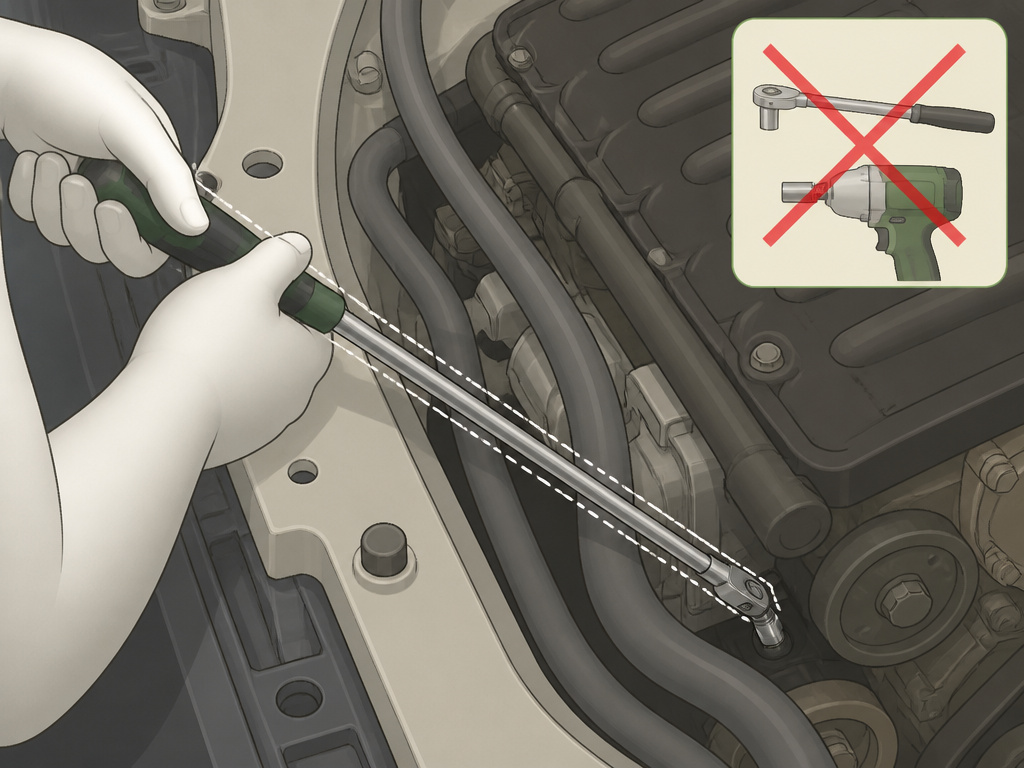
First, it gets you into places a standard ratchet can’t. Think about the back of an engine block, tucked behind the firewall. A standard ratchet head might bump the firewall before the socket even seats on the bolt. The slim head profile and extra few inches of an extended model slip right in. Your hand stays outside the work zone, away from hot exhaust manifolds or sharp bracketry. That’s less knuckle-busting and fewer burned forearms.
Second, it gives you a mechanical advantage. Physics is simple here: a longer lever arm means more torque from the same amount of hand force. Cracking loose a stubborn bolt often requires a cheater bar on a manual ratchet. With an extended reach cordless model, that mechanical advantage is built in. You can often break bolts free manually with the tool before even hitting the trigger, saving you a trip for the breaker bar.
Common mistake: Using an extended reach ratchet like an impact wrench. These tools are designed for access and speed, not for applying ultimate torque. Forcing them to break lug nuts or over-tighten suspension components is a direct path to stripped gears or a broken anvil.
The sensory payoff is immediate. You’ll feel the difference when a bolt that fought your standard ratchet spins out easily with the long handle. You’ll hear the satisfying, consistent whirr of the motor in a tight space where your impact wrench is too loud and bulky to fit. It turns a frustrating, time-consuming part of a job into a quick step.
Extended Reach Ratchet Cons: Size, Over-Torque, and Storage
Now for the other side of the wrench. The extended format introduces some real compromises.
The most critical con is the risk of over-torque. This is especially dangerous with 1/4″ drive models. The Milwaukee M12 FUEL 1/4″ Extended Reach Ratchet (3058-20) is rated for 0 – 45 ft-lbs. That’s a lot of torque for small fasteners like valve cover bolts or interior trim clips. The long handle makes it feel easy to apply that force, but it’s incredibly easy to exceed the bolt’s yield strength or the tool’s internal limit. You’ll shear a bolt head clean off with a surprisingly light pull. The internal pawls and gears in a fine-tooth ratchet are also smaller and can strip under excessive load.
The physical size is a double-edged sword. That 15- to 16-inch length that gives you reach also makes the tool awkward to store. It won’t lie flat in a standard socket drawer. It will protrude from your toolbox if you don’t have a deep enough compartment. In a packed service cart, it can get tangled with other tools. You need a dedicated spot for it, which is a real consideration in a crowded workspace.
Finally, there’s the issue of cost and specialization. An extended reach ratchet is not your go-to, all-purpose ratchet. It’s a solution for specific access problems. If you’re doing open-frame work or have plenty of clearance around your fasteners, a standard-length ratchet is more maneuverable and less cumbersome. Paying a premium for a tool that spends most of its time in the drawer is hard to justify unless your work regularly involves the deep, tight spaces it’s designed for.
The Milwaukee M12 FUEL Extended Reach Specs
Here are the specifics. Milwaukee’s M12 FUEL line is the benchmark for cordless extended reach ratchets, with three drive sizes. All the numbers below come straight from the official operator’s manual.
| Model (Cat. No.) | Drive Size | Max RPM | Torque Range | Tool Length | Weight (w/ 2.5Ah) |
|---|---|---|---|---|---|
| 3058-20 | 1/4″ | 550 | 0 – 45 ft-lbs | 15.4 in. | 2.4 lbs |
| 3059-20 | 3/8″ | 400 | 0 – 70 ft-lbs | , | 2.5 lbs |
| 3055-20 | 1/2″ | 300 | 0 – 80 ft-lbs | 16.5 in. | 2.6 lbs |
The Milwaukee M12 FUEL Extended Reach Ratchets operate on 12V DC power, require an M12™ battery and charger, and have a recommended ambient operating temperature range of 0°F to 125°F. The tools feature a brushless outer rotor motor, REDLINK PLUS™ intelligence for overload protection, and a modular trigger system.
A couple of things stand out. The 1/4″ model is the speed demon at 550 RPM, making it fantastic for running down long threads quickly in tight quarters. The 1/2″ model delivers the most torque at 80 ft-lbs, aimed at heavier-duty applications. Notice the weights are all within a few ounces of each other, the platform is consistent.
Where this gets tricky is when you compare specs across regions, as part of the extended reach ratchet pros and cons. Milwaukee’s Australian-market “High Speed” extended reach ratchets (M12 FHIR14LR/FHIR38LR) are listed with a max torque of about 35 ft-lbs and 450 RPM. So a 1/4″ extended ratchet sold in the US as the 3058-20 claims 45 ft-lbs, while a similar tool sold elsewhere claims 35. This isn’t a mistake on our part; it’s a documented variation. Always check the spec sheet for the exact model you’re buying.
Who Is an Extended Reach Ratchet For? (And Who Should Skip It)
This tool has a clear ideal user. If you regularly work on cars, trucks, or machinery where bolts are buried behind components, an extended reach ratchet is a major productivity boost. Automotive technicians, especially those working on engine bays, transmissions, and dashboards, will use it daily. Heavy equipment mechanics and aviation technicians also swear by them for accessing fasteners in cramped frames and panels.
For the serious DIYer with a project car or who tackles engine work, it can be worth the investment. Replacing a water pump, working on intake manifolds, or even doing suspension work on a tightly packaged modern car are all scenarios where the extra reach pays off.
Skip this if: Your mechanical work is mostly open and accessible, think lawn mower repairs, assembling furniture, or basic woodworking. A standard-length cordless ratchet is more versatile and less expensive. If you already own a powerful impact wrench and a set of long extensions, you might be able to mimic the access without the specialized tool.
The other group that should think twice is anyone on a tight budget or with limited storage. This is a “nice-to-have” tool for many, not an essential. If your toolbox is already overflowing, adding a 16-inch ratchet that needs its own home might create more problems than it solves.
Choosing Your Drive Size: 1/4″, 3/8″, or 1/2″?
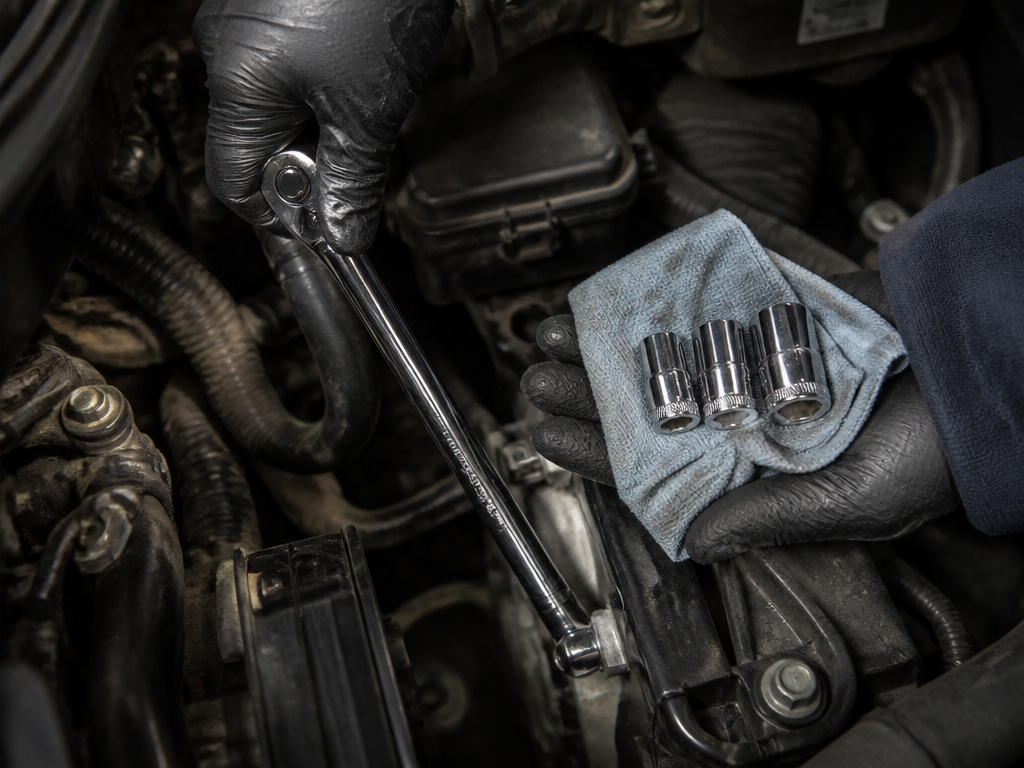
This is where most people get stuck. The drive size you choose should match the majority of the fasteners you’ll use it on. Don’t buy for the one big bolt; buy for the twenty small ones.
1/4″ Drive (3058-20): This is for small, precise work. Think interior trim, dashboard components, throttle bodies, and small engine accessories. The high speed (550 RPM) is great for running down lots of small bolts quickly. The 45 ft-lbs of torque is more than enough for these applications, but that’s also the danger, it’s easy to over-tighten. This is a finesse tool. If you’re debating between 1/4 vs 3/8 ratchet drive sizes for extended reach, lean towards 3/8″ unless you specifically work on electronics or small engines.
3/8″ Drive (3059-20): The goldilocks choice for most automotive work. It covers a huge range of fastener sizes, from smaller engine bolts to some suspension components. With 70 ft-lbs of torque and 400 RPM, it has a great blend of power and speed. It’s the most versatile of the three and the one I’d recommend as a first extended reach ratchet for a general mechanic.
1/2″ Drive (3055-20): This is for the heavier stuff. Suspension work, drivetrain components, larger frame bolts. The 80 ft-lbs of torque and slower 300 RPM are geared towards higher-torque, slower-speed applications. It’s less about speed and more about having enough muscle in a confined space. Remember, it won’t replace a right-angle impact wrench for ultimate breaking power, but it’s far more compact.
How It Compares: Impact Wrenches, Right-Angle Drills, and Standard Ratchets
It’s easy to confuse an extended reach ratchet with other tight-space tools. Here is a clarification.
Vs. Impact Wrench: An impact wrench delivers sudden, high-torque impacts to break loose or tighten fasteners. An extended reach ratchet provides continuous rotational force. Use an impact for lug nuts, crank bolts, and suspension work where power is key. Use the ratchet for confined spaces where you need control and access, not brute force. They are companions, not substitutes.
Vs. Right-Angle Drill: A right-angle drill is for drilling and driving in corners where a standard drill won’t fit. It lacks the ratcheting mechanism. If you need to drill a hole in a tight spot, use the drill. If you need to remove or install a bolt in a tight spot, use the ratchet.
Vs. Standard Length Ratchet: This is the direct comparison. The standard ratchet is more maneuverable in open spaces and fits in standard storage. The extended model wins only on reach and mechanical advantage in deep, obstructed areas. For most bolt-turning outside of those specific scenarios, the standard ratchet is the better, more efficient tool. When you’re looking at best cordless ratchets, you’re often choosing between standard and extended lengths based on your typical work environment.
Safety and Durability: What the Manuals Say
The operator’s manuals for these tools lay out essential rules. Ignoring them voids warranties and risks injury.
- Insulated Gripping Surfaces: Always hold the tool by the insulated grips when a fastener might contact hidden wiring. A “live” wire can make the tool’s metal parts live.
- Temperature Limits: Do not expose the battery or tool to fire or temperatures above 265°F (130°C). The recommended operating range is 0°F to 125°F. Charging outside this range can damage the battery.
- No Asbestos Work: Do not use the tool on asbestos-containing products.
- Qualified Service: Have the tool serviced only by a qualified person using identical Milwaukee replacement parts. Never service a damaged battery pack yourself.
On durability, the manuals are silent, but real-world use points to the gearing as the failure point. Applying torque beyond the tool’s rating, or using it as a breaker bar, will strip the internal pawls or gears. The telltale sign is a “skipping” or “slipping” sensation when the tool is under load. Once that happens, the tool needs a gearbox rebuild.
Extended Reach Ratchet Price and Cost
An extended reach ratchet is a premium tool with a price to match. You’re paying for the specialized design that combines a long neck, a compact head, and a powerful motor in a single unit. The cost isn’t just for the tool itself; remember to factor in the battery and charger system it requires, as these are often sold separately. For a professional who encounters confined spaces daily, the time saved and frustration avoided can justify the investment. For a casual user, a manual ratchet and a cheater bar might handle occasional jobs for a much lower upfront cost. Consider how often you’ll truly need its unique reach before deciding.
Frequently Asked Questions
What is the benefit of a long reach ratchet?
The benefit is twofold: increased access to fasteners hidden behind other components, and increased mechanical advantage to break them loose with less manual effort. It keeps your hands away from hot or sharp objects in deep engine bays.
What are the differences between a cordless ratchet with extended reach and a regular reach?
Regular reach cordless ratchet is shorter, more maneuverable, and easier to store. An extended reach model is several inches longer, providing more mechanical advantage and the ability to reach past obstructions, but it is bulkier and can be overkill for simple jobs.
Is a 72 tooth or 90 tooth ratchet better?
Which cordless ratchet has the best extended reach?
Among currently available electric ratchets, the Milwaukee M12 FUEL series (3055-20, 3058-20, 3059-20) is widely regarded as the best due to its combination of power, speed, compact head design, and robust M12 ecosystem. Brands like DeWalt and Makita also offer competent models, but Milwaukee’s extended reach lineup is the most complete.
Before You Go
Here’s the bottom line. An extended reach ratchet solves a specific problem: fasteners in deep, tight spaces. If you encounter that problem regularly, it’s worth every penny. The Milwaukee M12 FUEL models are the ones to beat.
But, and this is a big but, it’s not a do-everything tool. Respect its torque limits, especially on the smaller drive sizes. That 1/4″ model will snap an M6 bolt before you even feel like you’re pulling hard. Give it a dedicated home in your toolbox, because it won’t fit anywhere else.
For everyone else, a standard-length cordless ratchet and a set of long extensions will handle most jobs without the cost or storage headache. Master using a cordless ratchet properly first. Then, if you find yourself constantly adding extensions and still coming up short, you’ll know exactly when to make the jump to the extended version.
