
9 Best Mini Mills in 2026
This post contains affiliate links. As an Amazon Associate, we earn from qualifying purchases.
Our top pick for the best overall mini mill is the Proxxon Micro Mill MF 70, which balances precision and portability for small-scale work. The MechMaxx VM25LD wins for large capacity, and the INTBUYING RCOG-16V is our best compact pick. Choosing a mini mill involves balancing power, workspace, and your available bench space. Our research focused on spindle systems, travel capacity, and included tooling to help you find a capable machine that fits your shop. We evaluated nine models based on manufacturer specifications, expert round-ups, and patterns in owner feedback.
Top 9 Mini Mills in the Market
Certain content that appears on this site comes from Amazon. This content is provided "as is" and is subject to change or removal at any time.
The Best Mini Mills, Reviewed
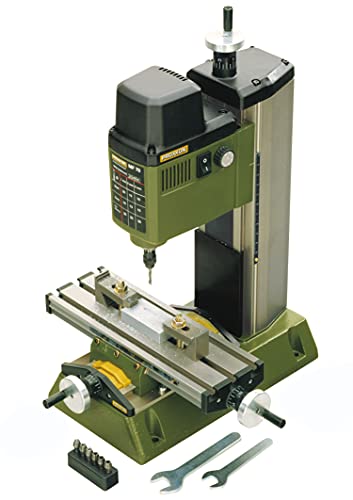
Proxxon Micro Mill MF 70
What We Like
- Compact 17.6 lb weight for easy portability
- Cast iron base provides stable foundation
- Play-free axes with adjustable slides
- Balanced motor for stability at high speeds
Trade-offs
- At 17.6 lb, it's a light-duty tool for small projects
- Smaller work envelope than full-size benchtop mills
The Proxxon MF 70 is the best benchtop milling machine for most people, according to research, making it a clear choice for those starting out. Weighing 17.6 pounds, it is truly portable and can be moved around a workshop or stored on a shelf. Its stable cast iron base and play-free slides help beginners achieve good results without struggling to position a heavy tool.
This stable, portable tool is described as the easiest for beginners to get good results from, and it is also the most affordable choice in its category. Its small and beautiful design is intended for lab, optician, jewelry, electronic, and model building projects. The balanced special motor provides stability even at high operating speeds.
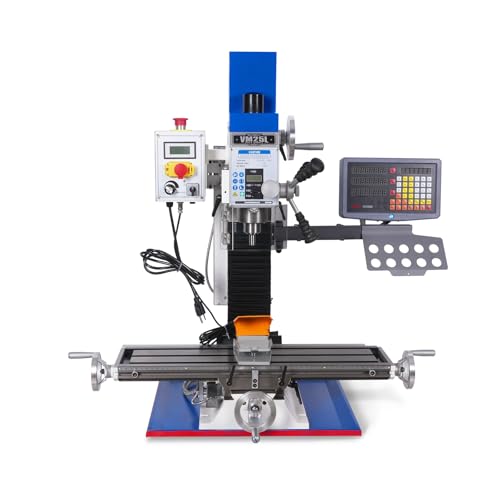
MechMaxx VM25LD Benchtop Mill
What We Like
- Large table handles bigger workpieces.
- R8 spindle offers wide accessory compatibility.
- Brushless motor is powerful and low-maintenance.
- Variable speed covers many material types.
Trade-offs
- At 37 inches wide, it requires significant bench space.
- Lacks a stand, needing a sturdy work surface.
- Its 36-inch height may challenge users in low-ceiling shops.
A 7 by 27-and-a-half inch table is the standout feature here, giving you room to fixture larger stock and tackle more ambitious projects without constantly repositioning the work. Combined with a 1.5 horsepower brushless motor, this mill is built for users who have outgrown the cramped work envelopes of typical mini mills. It suits a serious home machinist or a small fabrication shop where capacity and flexibility are priorities over a compact footprint.
With a 7 by 27-and-a-half inch table, the MechMaxx VM25LD can handle larger workpieces than many benchtop mills. This capacity comes at the cost of a larger footprint, requiring a dedicated and sturdy workbench to support it. Compared to the compact Proxxon Micro Mill, this machine is a stationary workshop tool. Its design includes precision ground ways for smooth movement and a head that tilts up to 90 degrees for angled cuts.
Product photos
HayWHNKN R8 Benchtop Mill

What We Like
- Includes a full set of R8-ER32 drill chucks
- 1300W motor with variable speed control
- Integrated cross worktable with T-slot for fixtures
Trade-offs
- Weighs 260 pounds, requiring a dedicated, sturdy bench
- Y-axis stroke of 6.9 inches limits side-to-side work area
- Maximum vertical milling capacity is only 0.79 inches
A complete set of R8-ER32 drill chucks comes with the machine, which means you can begin work immediately without sourcing separate tooling. Its 1300W brushless motor provides power for milling various materials, and the head can be tilted up to 90 degrees for operations at specific angles. This combination suits a home machinist looking for a ready-to-use package for detailed metal and wood projects.
You do trade some work envelope for that convenience. The Y-axis travel is a bit tight at under seven inches, which can be limiting for wider parts. Compared to the more compact Proxxon Micro Mill MF 70, this is a substantially heavier and more powerful machine suited for different tasks. The HayWHNKN is about getting a complete workshop-ready tool, not maximizing every cubic inch of travel in a minimal footprint.
Yokoma Benchtop Milling Machine
What We Like
- Micro-feed handle enables fine depth control.
- Solid all-metal construction with brass gears.
- Dual LCD screens show real-time speed and depth.
- Large workbench with integrated clamp.
Trade-offs
- At 297 pounds, moving it requires significant effort.
- Large 37.4-inch length demands a dedicated bench space.
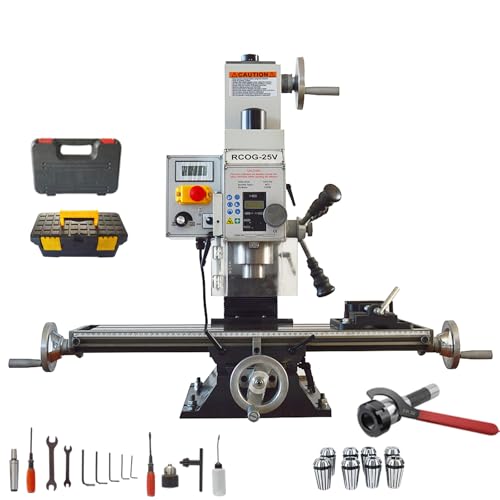
The micro-feed handle with auto-return allows fine manual adjustment of drilling and milling depths and automatically returns to the starting position, which is crucial for accurate depth control on repetitive tasks. This feature is part of a design focused on precision, supported by an all-metal construction with brass gears for rigidity and stability during operation. Dual high-definition LCD screens show real-time spindle speed and depth, providing clear feedback during use.
Its substantial 297-pound weight and large dimensions require a sturdy, permanent bench for stable operation. Compared to the 17.6-pound Proxxon Micro Mill MF 70, the Yokoma demands more space and a stronger support structure. This trade-off is common for machines with its power and feature set, so planning for its installation is a key consideration.
Product photos
INTBUYING RCOG-25V Benchtop Mill
What We Like
- Large 18.9-inch X-axis travel for long workpieces.
- Powerful 1.5 HP brushless motor for demanding cuts.
- R8 spindle offers wide, standard tooling compatibility.
- Substantial 320 lb all-metal construction minimizes vibration.
Trade-offs
- Its 37.8-inch cube footprint demands significant workshop space.
- At 320 pounds, moving it requires a permanent, sturdy bench.
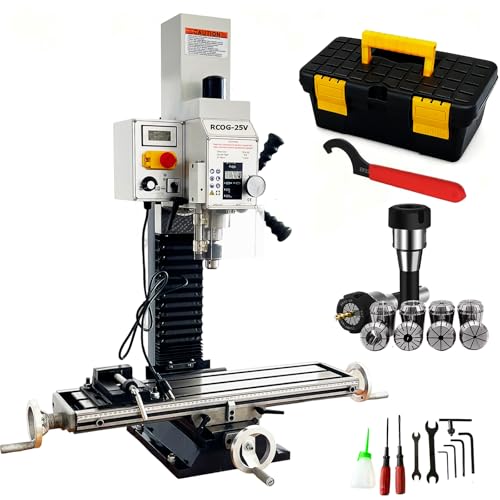
An 18.9-inch X-axis travel provides a key advantage, meaning you can handle long stock or fixture multiple smaller parts without constantly repositioning your setup. This capacity suits a serious hobbyist or small shop needing to process larger pieces of metal, wood, or plastic. A 1.5 HP brushless motor and rigid, 320-pound frame provide the muscle and stability for consistent, accurate cuts across that entire generous work envelope.
You pay for that capacity with a substantial physical footprint. The machine’s dimensions form a near 38-inch cube, so it will occupy a significant portion of a workbench. This scale provides a professional work area and stable platform, making it a logical step up from smaller mini mills when project size demands more capacity.
Product photos
INTBUYING RCOG-16V Mini Mill

What We Like
- Variable speed brushless motor for consistent torque.
- Tilting head enables angled milling and drilling.
- Includes a set of R8-ER32 chucks for toolholding.
- Micro-feed function provides fine depth control.
Trade-offs
- Weighs 215 pounds, requiring a sturdy, permanent bench.
- Table uses only metric scales, no imperial markings.
- Its 24.8-inch width still demands significant shop space.
A 600-watt brushless motor and 50 to 2250 RPM speed range give this mini mill the grunt to handle metals like stainless steel and aluminum, not just softer materials. The tilting head and precise 0.01mm micro-feed make it versatile for detailed hobby work and prototyping. It’s a solid choice for a home machinist who needs a capable, all-metal machine but has to fit it into a modest garage footprint. The included R8-ER32 chuck set means you can start milling right out of the box without hunting for collets.
You trade some work envelope for that compact form. The all-metric scales are a potential hiccup for those accustomed to imperial measurements. For a user whose projects demand a larger, heavier-duty machine, stepping up to a bigger benchtop mill is the logical move, but this one carves out a useful niche where space is tight.
Product photos
EQCOTWEA R8 Benchtop Mill

What We Like
- 90° tilting head for complex angled work
- All-metal construction for superior stability
- Includes comprehensive R8-ER32 chuck set
- 1100W brushless motor for low-maintenance power
Trade-offs
- Weighs 315 pounds, requiring a permanent, sturdy bench
A head that tilts a full 90 degrees in either direction defines this model’s capability, letting you tackle compound angles without complex fixture setups. This makes it a natural fit for machining parts with tapers, bevels, or any geometry that isn’t square to the table. The 1100W brushless motor provides solid, maintenance-free power for longer jobs. Reviewers also report the included set of R8-ER32 collets allows you to start working on a wide range of stock sizes immediately.
Weighing 315 pounds and measuring 37 inches long by 22 inches wide, this all-metal mill demands a dedicated, rock-solid workbench for stable operation, as it’s not a tool you’ll be moving around the shop.
Product photos
ZHRUI All-Metal Mini Mill
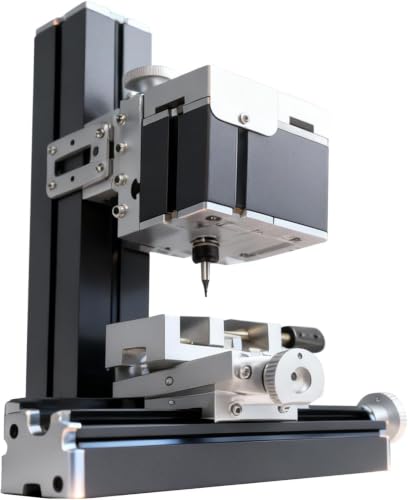
What We Like
- Extremely high 20,000 RPM spindle speed
- Fine 0.02 mm graduations on all handwheels
- Full metal construction for durability
- Compact 250 x 208 x 300 mm footprint
Trade-offs
- 36W motor limits milling to soft materials
- 150 mm X-axis travel restricts part size
A 20,000 RPM spindle is the core of this machine, letting you run tiny end mills at their proper speeds for clean cuts in plastic, wood, or soft metals. That high speed, combined with the fine 0.02 mm graduations on every handwheel, makes it a natural fit for detail-oriented hobbyists working on small, intricate parts like model components or circuit boards. Its all-metal build gives it a solid feel on the bench, and the compact size means it won’t dominate a small workshop.
You trade raw power for that finesse. The 36W motor and light-duty construction mean it’s strictly for light milling and drilling; trying to take a deep cut in steel will stall it. For larger, more substantial projects in harder metals, you’d step up to a machine like the MechMaxx VM25LD. But within its intended scope, this ZHRUI mill offers a level of precision and speed that’s hard to match at its size.
TECHTONGDA MT3 Mini Mill

What We Like
- Comes with a set of MT3-ER32 drill chucks
- Integrated, finely ground 700mm cross worktable
- Provides 18.9 inches of X-axis travel
Trade-offs
- Weighs 296 pounds, requiring a very sturdy bench
- Maximum face milling capacity is limited to 2.5 inches
The TECHTONGDA’s MT3 spindle system and included chucks offer a distinct path to precision for those who prefer that tooling standard. Its 1100W brushless motor and wide speed range deliver the controlled power needed for detailed metal and wood work, while the substantial 27.5-inch table provides a stable platform for longer pieces. Its integrated cast worktable and tilting head cater to users who prioritize rigidity, accuracy, and the flexibility for complex angles.
Weighing 296 pounds, the TECHTONGDA MT3 Mini Mill requires a dedicated, sturdy workbench due to its substantial mass. Its MT3 spindle taper offers a specific tooling path, which differs from the R8 spindle standard used on some other benchtop mills. This means your accessory and collet choices will be tied to the MT3 system.
Product photos
How We Evaluated Mini Mills
Our evaluation began with a detailed review of manufacturer specifications for each machine. We compared spindle types, motor power, table dimensions, and axis travel to understand each mill’s capabilities. We also studied expert round-ups and mini mill reviews to identify common recommendations and performance insights.
The key criteria were spindle compatibility, work envelope size, and motor type. The spindle system, like R8 or MT3, dictates your tooling options and cost. Table size and axis travel determine what size parts you can realistically mill. We also considered whether a brushless motor offered more reliable, low-maintenance power for demanding cuts. This guide is based on documented specifications and reported feedback, so long-term durability notes are limited.
What To Look For In Mini Mills
Selecting a mini mill requires matching its physical limits to your project goals and shop constraints. You must consider the machine’s footprint, its power for your materials, and the tooling system it uses.
Focus on spindle type (R8 vs. MT3), table size and travel, motor power, and overall weight. Ensure the mill’s work envelope fits your typical parts and that its mass provides enough stability for your intended materials.
Spindle And Tooling Compatibility
The spindle taper is the heart of your tooling system. R8 is a common, well-established standard in the U.S., offering wide accessory availability. MT3 (Morse Taper #3) is another popular system, often found on imports. Your choice here locks you into a specific ecosystem of collets, end mill holders, and chucks. Some mills include a basic set of tooling, which can save significant upfront cost and get you running immediately.
Work Envelope And Travel
The work envelope is defined by the table’s dimensions and the travel of the X, Y, and Z axes. X-axis travel, often the longest, determines how long a workpiece you can mill in one setup. Y-axis travel controls side-to-side movement and is frequently the most limited dimension on smaller mills. Consider both the physical table size and the actual travel distances; a large table with short Y-axis travel still restricts your part width. For a deeper look at compact options, explore our guide on small milling machines.
Power, Construction, And Footprint
Motor power, measured in watts or horsepower, indicates the mill’s ability to cut tougher materials like steel versus being limited to aluminum and plastics. A brushless motor typically offers more consistent torque and requires less maintenance. The machine’s weight and construction material are critical for stability; a heavier, all-metal mill will vibrate less during cuts, improving precision.
However, this mass demands a permanent, sturdy bench. Before purchasing, understand the full footprint, including the space needed for handwheel operation and part loading. For those considering even smaller units, our article on desktop mills covers the most space-conscious options.
- Measure your available bench space, including clearance for the handwheels.
- Check the machine’s weight to ensure your work surface can support it.
- Verify the spindle speed range matches the materials you plan to mill.
- Confirm if the scales are metric, imperial, or both for your measurement preference.
- Look for features like a tilting head or fine-feed handles if your projects require them.
A heavier mill on a solid bench generally produces cleaner cuts than a lighter machine, even with a more powerful motor.
Mini Mills Compared
The comparison table below highlights the key specifications of our top picks side-by-side, including spindle type, table size, and motor power.
| Product | Motor Power | Spindle Speed Range | Weight |
|---|---|---|---|
| Proxxon Micro Mill MF 70 | N/A | N/A | 17.6 pounds |
| MechMaxx VM25LD Benchtop Mill | 1.5 HP DC Brushless | 0-2500 RPM | N/A |
| HayWHNKN R8 Benchtop Mill | 1300W brushless | 50-2250 rpm | 260.0 pounds |
| Yokoma Benchtop Milling Machine | 1100W brushless | 50-2250 RPM | 297.0 pounds |
| INTBUYING RCOG-25V Benchtop Mill | 1.5 HP | 50-2250 RPM | 320.0 pounds |
| INTBUYING RCOG-16V Mini Mill | 600W brushless | 50-2250 RPM | 215.0 Pounds |
| EQCOTWEA R8 Benchtop Mill | 1100W brushless | 50-2250 RPM | 315.0 Pounds |
| ZHRUI All-Metal Mini Mill | 36W fan-cooled | 20,000 RPM | 9.3 Pounds |
| TECHTONGDA MT3 Mini Mill | 1100W brushless | 50-2250 rpm | 296.0 Pounds |
Frequently Asked Questions
Which mini milling machine is the best?
The best mini mill depends on your primary need. For a balanced blend of precision, stability, and manageable size for beginners, the Proxxon Micro Mill MF 70 is our best overall pick. It uses a cast iron base to minimize vibration and offers play-free axes for accurate small-part work.
What is the best mini milling machine for home use?
The best mini mill for home use fits your available space and material needs. For general small-part fabrication in limited spaces, our best compact pick, the INTBUYING RCOG-16V, offers a tilting head and capable brushless motor. For larger home shop projects, the MechMaxx VM25LD provides a substantial R8 spindle and table.
What should I look for in a milling machine for a home workshop?
Prioritize the machine’s physical footprint and weight relative to your bench strength, the spindle system’s tooling availability, and the axis travel for your typical workpiece sizes. Understanding the benchtop mill pros and cons can help you weigh these trade-offs. A variable speed motor is also crucial for working with different materials safely and effectively.
Can a mini mill handle steel?
It depends on the mill’s construction and power. Very lightweight mills with small motors are best for plastics and soft metals. More substantial benchtop mills with rigid frames and motors of 1 HP or more, like the INTBUYING RCOG-25V, can handle steel with light, slow cuts. Proper technique and sharp tooling are always essential.
Where can I buy a mini mill?
Mini mills are available from a variety of online retailers specializing in machinery and tools. Many manufacturers also sell directly. It’s important to purchase from a reputable seller that offers clear specifications, customer support, and a sensible return policy for such a significant investment.
The Bottom Line
The Proxxon Micro Mill MF 70 is the best overall choice for hobbyists and beginners tackling precise, small-scale projects in electronics or model making. Its compact weight and stable cast iron base make it a practical entry point.
If your budget is tight or you need maximum capacity, look to our award winners: the HayWHNKN R8 Benchtop Mill for its included tooling or the INTBUYING RCOG-25V for its long travel. For those exploring multi-function machines, research on lathe mill combos might be useful.
Ultimately, honestly assess your available bench space and the largest part you need to mill. Choosing a machine that fits your shop physically is the most important step toward successful projects.
