
10 Best Electric Sanders in 2026
This post contains affiliate links. As an Amazon Associate, we earn from qualifying purchases.
For consistent power and smooth finishes in a workshop setting, the DEWALT DWE6423 Random Orbit Sander is our best overall pick, thanks to its variable speed control and vibration-reducing design. We also highlight the BOSCH GET75-6N as the best for heavy-duty removal and the Makita BO5030K for the best value with a case.
Choosing the right sander transforms a tedious chore into an efficient step toward a professional result. The wrong tool can leave swirl marks, cause fatigue, or fail to collect dust. Our research focused on specifications, expert insights, and patterns in user feedback to identify these ten sanders that excel across different needs and projects.
Top 10 Electric Sanders in the Market
Certain content that appears on this site comes from Amazon. This content is provided "as is" and is subject to change or removal at any time.
The Best Electric Sanders, Reviewed
DEWALT DWE6423 Random Orbit Sander

What We Like
- Variable speed from 8,000 to 12,000 OPM
- Separate counterweight design reduces vibration
- Improved dust-sealed switch for longer life
- Shorter height for getting closer to the workpiece
Trade-offs
- Corded design limits mobility compared to cordless models
- Dust port requires an adapter for standard 1-1/4 inch hoses
A 3-amp motor spins the 5-inch pad at up to 12,000 orbits per minute, giving you the power for aggressive stock removal without bogging down. The real benefit is in the details, like the separate counterweight that reduces vibration for more comfort during long sessions. Combined with a dust-sealed switch and a shorter height that lets you get closer to the workpiece, this sander is built for the workshop user who needs reliable, comfortable power for tasks like furniture building or deck refinishing.
You do trade away the cord-free convenience of something like the DEWALT DCW210D1, so it’s not the pick for a job site far from an outlet. The dust collection works brilliantly with DEWALT’s own vacs, but you’ll need their universal connector if your shop vacuum uses a standard hose. That’s a minor quibble for a tool that otherwise feels purpose-built to endure years of sawdust and hard use, striking a balance of power, control, and durability that’s hard to beat.
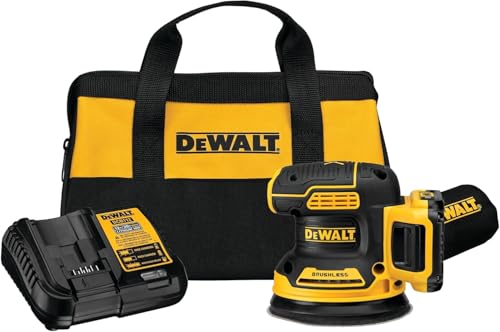
DEWALT DCW210D1 Cordless Orbital Sander
What We Like
- Brushless motor for runtime and efficiency
- Wide variable speed dial for precise control
- Low-profile design for sanding near edges
- Dust-sealed switch for increased durability
Trade-offs
- At 4.3 lb, it's heavier than most 5-inch corded sanders
- Weighs 4.3 pounds
An 8,000 to 12,000 OPM variable speed dial gives you the control to tackle everything from delicate finish work to aggressive material removal, all without being tethered to an outlet. This cordless design is the clear choice for anyone working on a ladder, across a job site, or in a shop where extension cords are a constant tripping hazard. The brushless motor maximizes runtime from your 20V battery, making it a practical workhorse for extended sessions.
The trade-off for cordless freedom is added weight and a dependency on your battery ecosystem. At 4.3 pounds, it carries more heft than tools like the 3.4-pound DEWALT DWE6423, which can lead to faster fatigue during overhead work. For a contractor already invested in DEWALT’s 20V platform who needs one sander for multiple tasks, this model delivers serious versatility. For a stationary shop user who sands for hours, a lighter corded sander might be the less tiring option.
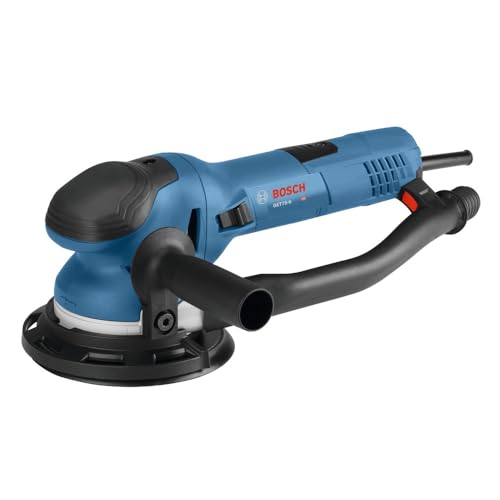
BOSCH GET75-6N Dual-Mode Orbital Sander
What We Like
- Turbo mode for aggressive stock removal
- Powerful 7.5-amp motor for unlimited runtime
- Includes two vacuum hose adapters
Trade-offs
- At 5.7 lb, it's heavier than most 5-inch sanders
- Requires a separate shop vacuum for dust collection
- Larger footprint than compact palm sanders
A turbo mode delivers three times the stock removal of the standard random-orbit mode, making this sander an alternative to a belt sander. The 7.5 amp corded motor provides unlimited runtime for extended tasks like refinishing furniture or wood floors. This dual-mode design handles both aggressive material removal and finishing work without needing a tool change.
Weighing 5.7 pounds, this sander is heavier than many 5-inch palm sanders. Its passive dust collection system requires a separate vacuum cleaner and compatible hoses. The variable speed motor offers a range from 290 to 640 RPM, providing control for different sanding and polishing applications.
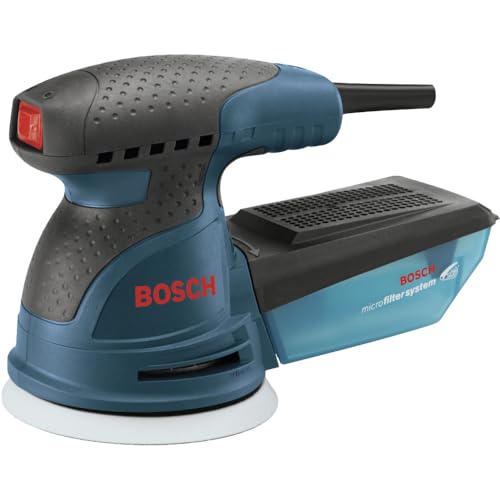
BOSCH ROS20VSC Variable Speed Sander
What We Like
- Hard plastic dust canister with micro-filter
- Pad dampening system minimizes swirl marks
- Includes vacuum adapter for shop vac connection
Trade-offs
- Corded design limits mobility compared to battery models
- 3.5-pound weight may fatigue arms on overhead surfaces
A dust collection system that traps particles as small as half a micron makes this sander a standout for anyone who values a clean workspace and their own respiratory health. The hard plastic canister is a genuine upgrade over flimsy bags, it’s easy to see when it’s full and simple to detach without making a mess. This Bosch model suits the detail-oriented woodworker or refinisher who spends hours at the bench and wants to minimize both cleanup time and airborne dust.
This is a corded sander, designed for use near a power outlet. Its compact 5-inch pad is suited for detailed work on furniture and cabinets. The tool includes a vacuum adapter to connect to a shop vac, enhancing its dust collection for bench-top tasks.
Makita BO5030K Random Orbit Sander

What We Like
- Rubberized grip for comfort and control
- Pad control system for smooth start-up
- Includes a protective hard plastic case
- Runs quieter at 86 dB for pleasant use
Trade-offs
- No variable speed dial for delicate work
- Small dust port requires an adapter for a vacuum
The Makita BO5030K finished second in a six-sander test, indicating strong overall performance. Its 12,000 OPM motor and large 1/8-inch orbit deliver smooth, fast material removal for general sanding tasks. It also comes with a hard plastic case, which reviewers note is a bonus for protection during transport and storage.
You do trade away variable speed control, so feathering edges or working with very soft woods requires a more careful touch. The dust collection is merely okay with its bag, falling short of the integrated vacuum-ready systems on models like the BOSCH ROS20VSC. For a straightforward, smooth-running sander that comes ready to work and store, the Makita BO5030K is hard to beat on value.
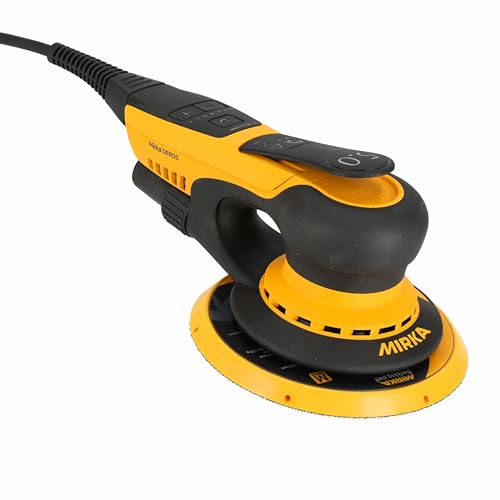
Mirka DEROS II 550X Random Orbital Sander
What We Like
- Extremely lightweight at just 2.2 pounds.
- Brushless motor for consistent power.
- Integrated dust extraction system.
- Bluetooth connectivity for tool settings.
Trade-offs
- Battery and charger sold separately.
- Bluetooth features require a compatible app.
At 2.2 pounds, the Mirka DEROS II is one of the lightest 5-inch sanders you can get, which is a massive advantage for overhead work or long sessions where fatigue is your real enemy. That featherweight feel, combined with its low vibration operation, makes it a standout choice for professionals or serious DIYers who need to sand for hours without their arms going numb. The brushless motor delivers smooth, consistent power, and the built-in dust collection keeps your line of sight clear, so you can focus on the finish.
The major trade-off is that it’s a bare-tool purchase, so you’ll need to factor in the cost of a Mirka battery and charger. This places it in a different category than a ready-to-run kit like the DEWALT DCW210D1. While its smart features and compact design are excellent, its premium, system-based approach is best for those already invested in or planning to build around the Mirka ecosystem for the long haul.
Product photos
BLACK+DECKER BDEMS600 Detail Sander

What We Like
- Compact design for cramped corners
- Includes detail finger for hard-to-reach spots
- Dust-sealed switch for improved durability
Trade-offs
- Corded design restricts mobility
- Specialized for detail work, not large surface area
At just over 10 inches long, this sander’s compact profile is its defining trait. It’s built to fit where a palm or orbital sander can’t, making it a specialist for trim, corners, and intricate furniture repairs. The 16,000 orbits per minute provide plenty of speed for material removal in those confined spaces, while the included detail finger attachment lets you get right into crevices and tight joints. This tool is for the finisher or DIYer who regularly needs to sand in spots where a full-sized sander is simply too bulky to be effective.
This corded detail sander trades broad sanding capacity for tight-space access. Its 1.2 Amp motor delivers 16,000 orbits per minute, sufficient for focused tasks but not for leveling large surfaces quickly. The cord provides unlimited runtime for long sessions, though it requires an outlet. This is a focused tool designed for its specific job.
Product photos
Makita BO4556K Finishing Sander

What We Like
- 14,000 OPM for fast, smooth finishing
- Rubberized palm grip reduces operator fatigue
- Large lever allows quick paper changes
- Integrated dust port for vacuum connection
Trade-offs
- Lacks variable speed control for delicate work
With a fixed speed of 14,000 orbits per minute, the Makita BO4556K is built for fast, smooth finish sanding. Its ball bearing construction reduces vibration and noise, while the contoured rubberized palm grip improves comfort during longer sessions. This 1/4 sheet sander includes a tool case, making it a straightforward option for consistent work on furniture or trim.
The trade-off for its simplicity is the lack of variable speed, which can make it less versatile for tasks on softer woods or intricate projects where you need to dial down the aggression. Dust collection is functional with its through-the-pad system, but you’ll want to use it with a shop vacuum for best results, as the included bag is messy. For a more feature-packed corded sander in a similar category, the BOSCH ROS20VSC offers variable speed control in a palm-sized package, though it doesn’t come with a hard case.
Product photos
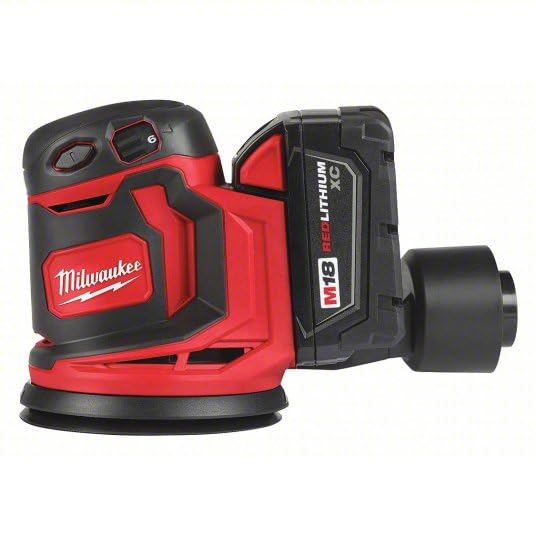
Milwaukee M18 Random Orbit Sander Kit
What We Like
- Ergonomic shape with multiple grip options
- Powerful 12,000 OPM max speed for material removal
- Kit includes battery and charger for immediate use
Trade-offs
- At 8.0 lb, it's heavier than corded models like the 3.4 lb DeWalt DWE6423
- Bulkier dimensions than dedicated palm sanders
- Kit format adds weight versus tool-only options
The flexible, oblong handle lets you switch between a top grip and wrapping your hand around the base for detailed control during longer sessions.
That cordless kit convenience comes with a weight of eight pounds, making it substantially heavier than a basic corded sander like the 3.5-pound Bosch ROS20VSC. This heft can lead to fatigue on overhead or vertical surfaces compared to lighter dedicated models. For extended fine-finishing work where low weight is a priority, a corded alternative would be less taxing on the arms.
BLACK+DECKER BDEQS300 Sheet Sander

What We Like
- Paddle switch with lock for one-handed use
- Flush sanding on three sides for tight spaces
- Quick-change paper clamps for simple swaps
- Corded design for unlimited runtime
Trade-offs
- Corded design limits mobility compared to cordless models
- 16,000 OPM is fixed, lacks variable speed control
- Standard 1/4 sheet size, not a larger 5-inch disc
With a 2.0 Amp motor generating 16,000 orbits per minute, this sander is designed for finish sanding, surface preparation, and detail work on wood, metal, and plastic. The soft-grip paddle switch locks into position, which allows for one-handed use and reduces hand fatigue. Its 270-degree flush sanding clearance on three sides provides access to corners and other tight spaces.
The corded design offers unlimited runtime, but it requires proximity to a power outlet. Its orbital speed is fixed at 16,000 OPM, unlike variable-speed models such as the BOSCH ROS20VSC which provide adjustable control.
Product photos
How We Evaluated Electric Sanders
Our evaluation was research-based. We examined manufacturer specifications, professional round-ups, and consistent patterns in owner feedback across many sources. We prioritized criteria that directly impact real-world results: power and speed control for efficient material removal, ergonomics and weight for user comfort during long sessions, and dust collection effectiveness for a cleaner workspace and finish. A research-led approach cannot replicate the feel of a tool in your hand over hundreds of hours, but it effectively identifies which models are consistently praised for reliability, performance, and value by those who use them daily.
What To Look For In Electric Sanders
Your primary sanding tasks dictate the best tool type, but several key features affect performance and comfort across all categories.
Prioritize variable speed for control, effective dust collection for a clean finish, and a comfortable weight/balance to reduce fatigue. Consider whether a corded model’s unlimited runtime or a cordless tool’s mobility better suits your typical projects.
Power Source: Corded vs. Cordless
Corded sanders provide consistent, unlimited power, making them ideal for extended shop work on large projects like refinishing furniture. They eliminate the worry of a battery dying mid-task. Cordless models, powered by modern battery platforms, offer excellent freedom of movement for jobs where dragging a cord is impractical, such as working on ladders or around a vehicle. However, sanding draws significant power, so battery runtime is a key consideration; having spare batteries is often necessary for longer sessions.
Speed Control and Power
Variable speed control, measured in orbits per minute (OPM), is crucial for versatility. A wide speed range allows you to dial down for delicate work on veneers or to prevent burning softwoods, and crank up for faster stock removal on raw lumber. More powerful motors, measured in amps for corded tools, sustain performance under load and help prevent slowdowns that can lead to an uneven finish. For heavy material removal, look for a sander with a dedicated turbo or aggressive mode.
Ergonomics and Dust Collection
A sander’s weight and balance directly affect user fatigue, especially during overhead or extended use. Look for features like a low-profile design for sanding near edges and rubberized grips for better control. Effective dust collection systems are not just about cleanliness; they keep the workpiece surface clear for more efficient sanding and protect your lungs. Systems range from integrated canisters with fine filters to ports that connect directly to a shop vacuum.
-##
- Check the dust port size to ensure compatibility with your vacuum hose; many require a simple adapter.
- Consider the noise level, as some models operate significantly quieter, which is more pleasant for long sessions.
- Evaluate the sandpaper mounting system; a reliable hook-and-loop pad that secures paper firmly is essential.
- Look for a sander with a sealed switch to prevent dust ingress, which can extend the tool’s lifespan.
The best sander for you balances the raw power needed for your projects with the comfort required to use it effectively.
Electric Sanders Compared
The following table compares key specifications across our top picks to help you see the differences at a glance.
| Product | Power Source | Orbit Speed (OPM) | Weight | Dust Collection |
|---|---|---|---|---|
| DEWALT DWE6423 Random Orbit Sander | Corded Electric | 8,000 – 12,000 OPM | 3.4 Pounds | Fits DWV010/DWV012 collectors |
| DEWALT DCW210D1 Cordless Orbital Sander | Cordless (20V MAX) | 8,000 to 12,000 OPM | 4.3 pounds | Dust-sealed switch |
| BOSCH GET75-6N Dual-Mode Orbital Sander | Corded Electric | 3300 to 7300 OPM | 5.7 pounds | Passive system with adapter |
| BOSCH ROS20VSC Variable Speed Sander | Corded Electric | 7,500-12,000 OPM | 3.5 Pounds | vacuum dust collector |
| Makita BO5030K Random Orbit Sander | Corded Electric | 12,000 OPM | 2.9 pounds | Through-the-pad system |
| Mirka DEROS II 550X Random Orbital Sander | Tool only / sold separately | N/A | 2.2 pounds | integrated dust extraction system |
| BLACK+DECKER BDEMS600 Detail Sander | Corded | 16,000 OPM | N/A | Dust Collection Canister |
| Makita BO4556K Finishing Sander | Corded Electric | 14,000 OPM | 2.5 Pounds | Through-the-pad with port |
| Milwaukee M18 Random Orbit Sander Kit | Cordless (M18 battery) | 12,000 OPM | 8.0 Pounds | N/A |
| BLACK+DECKER BDEQS300 Sheet Sander | Corded Electric | 16,000 orbits per minute | 3.0 pounds | Tri-layer bag |
Frequently Asked Questions
What is the best electric sander for home use?
For most home DIY projects, a 5-inch random orbital sander offers the best balance of speed, finish quality, and ease of use. Our best overall pick, the DEWALT DWE6423, is an excellent choice for its variable speed and smooth operation, suitable for tasks from furniture refinishing to deck maintenance. If your projects are smaller or involve intricate details, a compact detail sander like the BLACK+DECKER BDEMS600 might be more appropriate.
Which is better, a Makita or a DeWalt orbital sander?
Both brands offer highly reliable tools, and the better choice often depends on the specific model and your existing tool ecosystem. For a premium cordless experience, DeWalt’s brushless models are top performers, while Makita often excels in ergonomics and includes thoughtful extras like a hard case. It’s best to compare individual models based on your needs for speed control, dust collection, and whether you already own batteries for one brand’s platform.
Is an orbital or palm sander better?
The terms are often used interchangeably, but “orbital sander” typically refers to a tool that uses a square or rectangular sheet of sandpaper, ideal for fine finishing on flat surfaces. A “random orbit sander” uses a round disc and combines spinning and orbiting motions to provide a faster, swirl-free finish. For most woodworking and refinishing, a random orbit sander is the more versatile and effective type of power sander.
Are Festool sanders worth the money?
For professionals or serious hobbyists where sanding is a frequent and critical part of the workflow, Festool sanders are often considered worth the investment. They are renowned for exceptional dust collection, extremely low vibration, and a polished finish quality. For occasional DIY use, a high-quality model from brands like DeWalt, Bosch, or Makita typically provides more than enough performance at a more accessible price point.
What’s the difference between a belt sander and an orbital sander?
A belt sander is designed for aggressive stock removal on large, flat surfaces using a continuous loop of sandpaper. It is powerful but can be difficult to control and is not suited for fine finishing. An orbital sander, particularly a random orbit model, is designed for smoothing and preparing surfaces for finish. It removes material more slowly but leaves a much smoother result without the deep scratches a belt sander can create.
The Bottom Line
The DEWALT DWE6423 Random Orbit Sander earns our best overall recommendation for its blend of variable speed, reduced vibration, and reliable power, making it a top choice for the workshop-focused woodworker. If your budget is tight, start with the BLACK+DECKER BDEQS300, our best budget pick, and if you need to tackle intricate trim and corners, the BLACK+DECKER BDEMS600 detail sander is purpose-built for that task. Ultimately, matching the sander’s core strength, whether it’s raw power, dust control, or cordless mobility, to your most common projects is the single most important factor in choosing confidently.
