
10 Best Corded Sanders in 2026
This post contains affiliate links. As an Amazon Associate, we earn from qualifying purchases.
For a powerful, durable sander ready for frequent use, the DEWALT DWE6423 Random Orbit Sander is our best overall pick for its separate counterweight design and dust-sealed switch. The Makita BO5041K wins for its adjustable front handle, and the BLACK+DECKER BDERO100 is the best budget pick.
Choosing a corded sander means balancing power, control, and dust management. A pro-grade model can handle all-day sanding, while a compact detail sander is perfect for furniture touch-ups. We researched specifications, expert round-ups, and owner feedback to identify these ten top-performing models. You’ll find a sander here for every project and priority.
Top 10 Corded Sanders in the Market
Certain content that appears on this site comes from Amazon. This content is provided "as is" and is subject to change or removal at any time.
The Best Corded Sanders, Reviewed
DEWALT DWE6423 Random Orbit Sander

What We Like
- Separate counterweight design reduces vibration
- Improved dust-sealed switch for longer life
- Shorter height allows closer workpiece access
- One-handed locking dust bag for convenience
Trade-offs
- Dust port requires an adapter for most shop vacuums
A 3-amp motor driving the pad between 8,000 and 12,000 orbits per minute gives you the power to move through material efficiently without bogging down. This sander suits anyone who needs reliable, corded muscle for extended sessions, from refinishing furniture to prepping large surfaces. Its shorter profile and overmolded rubber grip make it easier to control in tight spots and during long runs, while the dust-sealed switch is built to handle the fine particulate that kills lesser tools.
The trade-off for that power is a bit more vibration in the hand compared to the notably smooth Makita BO5041. It’s a conscious choice DeWalt made, and one that many users find acceptable for the extra grunt. The integrated dust collection works well with DeWalt’s own extractors, but you’ll need their universal connector if your shop vac has a standard 1-1/4-inch hose.
Makita BO5041 Random Orbit Sander

What We Like
- Variable speed dial for matching speed to material
- Adjustable front handle for corners and tight spots
- Rubberized palm grip for improved comfort and control
- Smoother, lower-vibration operation than many competitors
Trade-offs
- Dust collection bag is difficult to clean effectively
- Small dust port requires an adapter for shop vacuum hookup
You can dial the speed from 4,000 all the way to 12,000 orbits per minute, which provides the precision needed for both aggressive stock removal and delicate finish work. This adjustability isn’t just about comfort; it allows you to pivot your grip and apply even pressure in corners or along edges, a common challenge with fixed-handle designs. Combined with notably smooth and quiet operation, this makes the sander ideal for long sessions on furniture or cabinetry where control is key.
You do make a trade-off for that finesse, primarily in dust management. The included soft bag is a hassle to empty, and reviewers report the small port requires an adapter to connect to a shop vacuum. For a dedicated shop where dust collection is critical, this is a genuine drawback. However, research notes that Makita models typically have lower vibration than some competitors, a fair exchange for many finish projects that saves your hands from fatigue.
Makita BO4556K Finishing Sander

What We Like
- 14,000 OPM provides a fast, smooth finish
- Ball bearing construction reduces vibration and noise
- Rubberized palm grip improves operator comfort
- Large clamping lever for quick paper changes
Trade-offs
- Single-speed operation only
- Dust collection requires a vacuum adapter
At 14,000 orbits per minute, this sander removes material quickly for efficient panel flattening and surface prep. Its contoured, rubberized palm grip and ball bearing construction reduce vibration, making longer sanding sessions more comfortable. The tool also includes a case for storage and transport.
This Makita finishing sander is a single-speed tool, so its pace cannot be adjusted for different materials or finer control. That fixed speed is a limitation compared to variable-speed sanders like the Makita BO5041. For consistent, aggressive stock removal on general woodworking tasks, however, its operation is straightforward and effective.
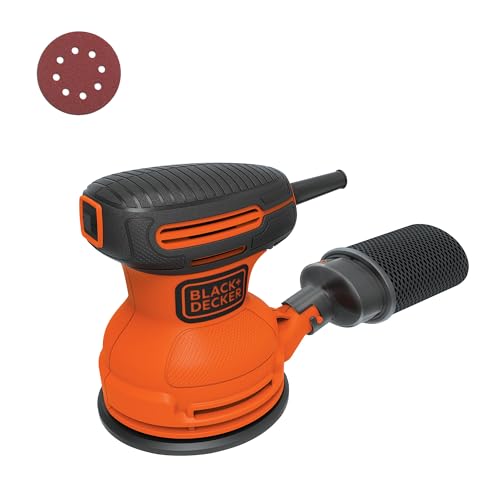
BLACK+DECKER BDERO100 Orbital Sander
What We Like
- Compact, lightweight design for tight spaces
- Comfort grip handle reduces user fatigue
- Hook and loop system for fast paper changes
- Dust-sealed switch for improved tool longevity
Trade-offs
- Single-speed 12000 OPM operation lacks versatility
- Dust bag system is less effective than a vacuum port
A 12000 OPM motor and a 5-inch pad deliver enough power and coverage to handle most common sanding tasks without leaving swirl marks. This sander is built for the DIYer who needs reliable performance for weekend projects without the frills. Its compact shape and 3.2-pound weight make it easy to maneuver, while the comfort grip helps you work longer. The included dust bag keeps the worst of the mess contained, a basic but appreciated feature for anyone working in a garage or shed.
This orbital sander runs at a consistent 12,000 orbits per minute, offering a high removal rate for jobs like smoothing drywall or prepping surfaces for paint. Its single-speed operation keeps things simple, though it doesn’t have the adjustable settings you’d find on a variable-speed model like the DEWALT DWE6423. The tool focuses on core function, providing a straightforward approach for general sanding work.
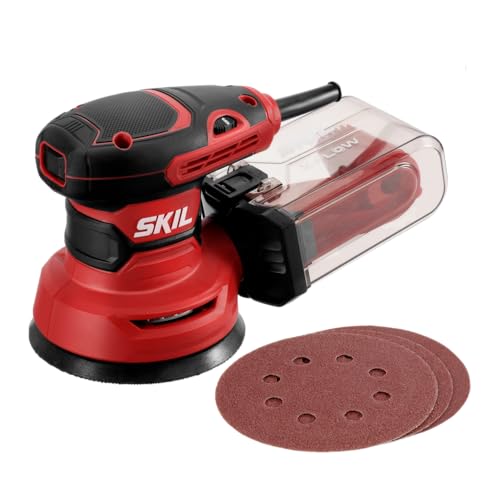
SKIL SR211601 Random Orbital Sander
What We Like
- Powerful 2.8 amp motor for a DIY-focused model.
- Excellent cyclonic dust collection in a transparent, easy-empty box.
- Variable speed control for different materials.
- Compact, ergonomic design for work in tight spaces.
Trade-offs
- Lacks the heavy-duty build of professional-grade sanders.
With a 2.8 amp motor and variable speed control, the SKIL SR211601 delivers smooth performance for a range of sanding applications. Its compact, ergonomic design helps it reach into tight spaces while the soft grip reduces hand fatigue. The cyclonic dust collector uses a transparent, easy-to-empty container to manage debris during use.
Research suggests this model is a strong option for DIYers needing a sander for small or occasional projects. It offers more power than some other DIY-focused models and includes variable speed, all at a notably low price point. The combination of its dust collection system and capable motor aims to provide a professional-looking finish for the home workshop.
DEWALT DWE6411 Sheet Sander

What We Like
- Separate counterweight design significantly cuts vibration.
- Rubber overmold provides comfortable, secure control.
- Improved paper clamp system for better retention.
- Dust port locks a vacuum hose in place.
Trade-offs
- At 3.7 lb, it's heavier than many sheet sanders.
- Fixed 14,000 OPM speed lacks variable control.
A separate counterweight design reduces vibration, which can help lessen hand fatigue during long sanding sessions. The 2.3 AMP motor sands at 14,000 OPM, and the reduced overall height gets the pad closer to the work surface. A rubber overmold texture provides comfortable control, while a locking dust-port system secures a vacuum hose and a rubber boot protects the switch from dust.
At 3.7 pounds, it is heavier than some other sanders like the 2.5-pound Makita BO4556K. Research mentions that corded DEWALT sanders are often noted for having a little more power compared to brands like Makita, which may trade some power for lower vibration. The improved paper clamp features are designed for better paper retention during use.
Product photos
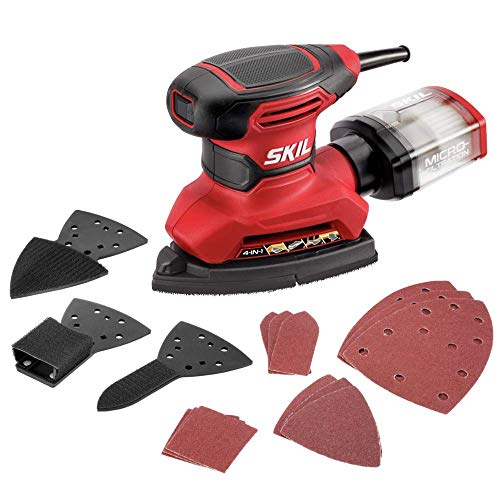
SKIL SR232301 Detail Sander
What We Like
- Four-in-one versatility with three quick-change attachments
- Effective dust control with micro-filter box and vacuum port
- Low-vibration, ergonomic design reduces hand fatigue
- Hook-and-loop system for fast sandpaper changes
Trade-offs
- Fixed 13,500 OPM speed lacks variable control
- Detail sanders have a narrower use case than random orbit models
The SKIL SR232301 operates at 13,500 orbits per minute, which delivers a smooth performance for finishing tasks. At 2.6 pounds with a soft rubber grip and counterweight balance, the ergonomic design reduces hand fatigue from vibration so you can work longer. Its 4-in-1 design includes three attachments for large surfaces, corners, and contours that change with no tool needed, providing versatility for different surfaces in a refinishing project.
This is a detail sander, not a tool for flattening large surfaces like tabletops. For surfacing big areas, research indicates a random orbit sander like the Skil SR211601 is a better choice for DIYers, noting it has variable speed. When a project calls for precision finishing, the SKIL SR232301’s focused design and dust management, with a micro-filtration system and vacuum port, help keep you in control up to the final edge.
Product photos
BLACK+DECKER BDEMS600 Detail Sander

What We Like
- Ergonomic comfort grip for reduced fatigue
- Compact size for cramped corners and tight spaces
- Dust collector keeps the work surface cleaner
- Includes attachments for hard-to-reach spots
Trade-offs
- Single-speed 16,000 OPM motor lacks variable control
- Corded design limits mobility in large, outlet-sparse areas
Powered by a 1.2-amp motor that spins at 16,000 orbits per minute, this sander has the focused power for detail work without stalling. Its main advantage is the compact, ergonomic body paired with a three-position grip, allowing comfortable work in tight spaces where a larger sander won’t fit. This design suits intricate tasks like refinishing furniture trim or smoothing window sashes. The included dust canister and finger attachment help manage mess and reach into crevices.
This focused design means it isn’t versatile for larger surfaces. Sanding an entire tabletop or cabinet face is better suited to a random orbital sander like the DEWALT DWE6423. The BDEMS600 is a specialist. Its corded power is consistent, but the cord can be a limitation in a large workspace. Consider it a precision tool for your workshop, not a general-purpose workhorse.
Product photos
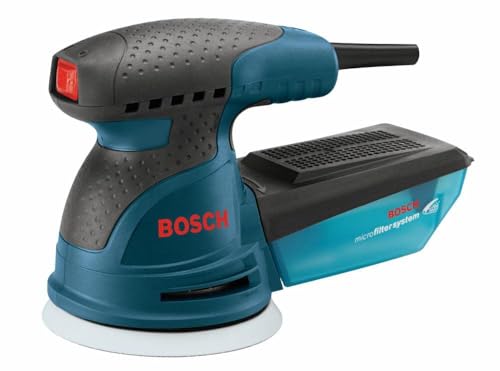
BOSCH ROS10 Random Orbit Sander
What We Like
- Integral pad dampening prevents swirl marks
- Microcellular pad for smooth fine finishes
- 12,000 OPM provides a fast removal rate
- Hook-and-loop disc attachment offers firm grip
Trade-offs
- Single-speed operation limits control for polishing
- At 3.5 lb, it's heavier than the 3.1 lb Makita BO5041
- No variable speed for different materials
An integral pad dampening braking system is the key feature here, designed to stop the pad immediately when you lift the sander. This prevents the telltale swirl marks that can ruin a final finish, making it a strong choice for cabinet doors and furniture where a flawless surface is the goal. The 2.5 Amp motor provides a solid 12,000 orbits per minute, removing material efficiently without being too aggressive on delicate woods. It’s a single-speed workhorse built for final project stages where smoothness matters most.
The Bosch ROS10 is a single-speed sander, a design choice that provides consistent operation for general sanding tasks. This means you trade the fine control of a variable-speed model, like the DEWALT DWE6423, for a simpler, dedicated tool focused on its primary function. It delivers a well-blended, ultra-smooth finish as intended, but without the speed adjustments some other sanders offer.
Product photos
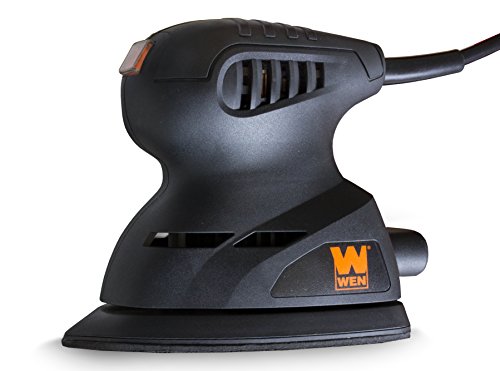
WEN 6301 Electric Palm Sander
What We Like
- Extremely lightweight two-pound design
- Angled pad tip for precision detailing work
- Velcro base for quick paper changes
- Compact footprint for tight spaces
Trade-offs
- Single-speed 13,500 OPM lacks variable control
- Small pad area reduces stock removal speed
The WEN 6301 weighs two pounds, which can help reduce user fatigue during extended use. Its dimensions are 3.8 by 5.2 by 6.0 inches, and it features an angled pad tip designed for precision work. This combination of a lightweight body and a shaped pad aims to enhance control in confined spaces.
While the tool feels featherweight, its motor runs at a fixed speed of 13,500 orbits per minute. This provides a good general-purpose pace, but you can’t dial it down for delicate surfaces or up for more aggressive removal. For that kind of versatility across a wider range of projects, a variable-speed model like the DEWALT DWE6423 would be a more capable, though heavier, alternative.
Product photos
How We Evaluated Corded Sanders
Our evaluation is based on a thorough review of manufacturer specifications, expert tool round-ups, and consistent patterns in owner feedback. We focused on the criteria that matter most for this category: sanding power and speed, operator comfort and control, and the effectiveness of dust collection.
We also considered design features like variable speed controls and ergonomic grips that impact real-world use. Since this is a research-based guide, we cannot comment on long-term durability or personal feel, but we prioritized models with documented performance and features that experienced users consistently praise.
For a broader look at all sanding tools, you can explore our guide to the best sanders.
What To Look For In Corded Sanders
Choosing the right sander depends on your project type and how you plan to use it. A random orbit sander is the most versatile for general woodworking, while a detail sander is indispensable for tight corners. Consider where you’ll work and what you’ll be sanding most often.
Look for a sander that balances power with low vibration for comfort. A variable speed dial offers control for different materials, and a dust port that fits your shop vacuum is crucial for a clean workspace.
Sanding Action and Speed
The two most common types are random orbit and sheet sanders. A random orbit sander uses a spinning and orbiting motion to remove material quickly without leaving circular swirl marks, making it ideal for most finishing work. A sheet sander, which moves in a simple back-and-forth or orbital pattern, is excellent for fast stock removal on flat surfaces but can leave more pronounced scratch patterns.
Variable speed control, measured in orbits per minute (OPM), lets you slow down for delicate veneers or speed up for aggressive shaping. For a deep dive into the mechanics, our article on types of sanders explains the differences.
Comfort and Control
Sanding can be a long, taxing job, so ergonomics are critical. Look for features like a rubberized palm grip and a separate counterweight design, which significantly reduces the vibration transmitted to your hands. An adjustable front handle, like on our top pick for that feature, provides better leverage and control in tight spots.
The tool’s weight and balance also affect fatigue; a lighter model is easier to maneuver for detail work, while a slightly heavier sander can feel more stable for large, flat surfaces. If you need a tool specifically for one-handed operation, check out our reviews of the top handheld sanding tools.
Dust Collection
Effective dust collection keeps your workspace clean and your lungs safe. Most sanders include a fabric bag, but these can be messy and difficult to empty. A dedicated dust port that locks a shop vacuum hose in place is far more effective.
Some models feature innovative designs like a transparent, cyclonic collection box that’s easy to see and empty. Be aware that many ports require a specific adapter to connect to a standard shop vacuum hose, which can be an extra purchase. For a tool focused on this feature, our review of the best corded random orbital sanders for dust collection is a great resource.
- Check the dust port size and shape to see if it matches your shop vacuum hose.
- Consider whether the included dust bag or box is easy to detach and clean.
- Look for a dust-sealed power switch to prevent fine particles from damaging the tool’s internal components.
- Test the paper clamping system; a large lever or hook-and-loop pad makes changes fast.
A good sander should feel like an extension of your arm, not a fight against vibration and dust.
Corded Sanders Compared
The following comparison table highlights the key specifications and features of our top picks at a glance.
| Product | Motor | Speed (OPM) | Weight | Dust Collection |
|---|---|---|---|---|
| DEWALT DWE6423 Random Orbit Sander | 3-Amp | 8,000 – 12,000 | 3.4 Pounds | Fits DWV010/DWV012 collectors |
| Makita BO5041 Random Orbit Sander | 3.0 AMP | 4,000-12,000 | 3.1 pounds | N/A |
| Makita BO4556K Finishing Sander | N/A | 14,000 OPM | 2.5 Pounds | Through-the-pad with port |
| BLACK+DECKER BDERO100 Orbital Sander | 2.0 Amp | 12000 OPM | 3.2 Pounds | Built-in bag |
| SKIL SR211601 Random Orbital Sander | 2.8 amp | 13,000 orbits per minute | 3.4 pounds | Cyclonic X-flow with container |
| DEWALT DWE6411 Sheet Sander | 2.3 AMP | 14,000 OPM | 3.7 Pounds | Fits DEWALT DWV010/DWV012 |
| SKIL SR232301 Detail Sander | N/A | 13,500 orbits per minute | 2.6 pounds | 1-1/4 inch for vacuum |
| BLACK+DECKER BDEMS600 Detail Sander | 1.2 Amp | 16,000 OPM | N/A | Collection canister |
| BOSCH ROS10 Random Orbit Sander | 2.5 Amp | 12,000 OPM | 3.5 pounds | N/A |
| WEN 6301 Electric Palm Sander | 1 amp | 13,500 OPM | 2 pounds | Port included |
Frequently Asked Questions
Who makes the best corded sander?
There is no single “best” brand, as different manufacturers excel in different areas. DEWALT and Makita are consistently praised for building powerful, durable professional-grade sanders. Bosch is renowned for models that deliver exceptionally smooth, swirl-free finishes. The best brand for you depends on your specific needs for power, finish quality, or budget.
What is the best electric sander to buy?
For most users, a 5-inch random orbit sander is the most versatile electric sander to buy. It offers a good balance of power, control, and finish quality for a wide range of projects, from furniture building to deck refinishing. Our best overall pick, the DEWALT DWE6423, is a strong example of this category, built for frequent use and effective dust management.
What is the best sander to use?
The best sander to use depends entirely on the task. For rapid material removal on large, flat surfaces, a sheet sander or a powerful corded belt sander is most efficient. For finish work and general-purpose sanding, a random orbit sander is ideal. For intricate work on furniture, trim, or corners, a compact detail sander is the right tool. Understanding the difference between a belt sander and an orbital sander will help you choose.
Are Harbor Freight orbital sanders any good?
Harbor Freight sanders can be a reasonable choice for very occasional, light-duty DIY projects where low cost is the primary concern. However, based on expert comparisons and owner feedback, they generally lack the power, durability, and refined ergonomics of models from established tool brands. For frequent use or professional results, investing in a mid-range sander from a brand like SKIL or a corded orbital sander from Makita offers better long-term value and performance.
Do I need a variable speed sander?
Variable speed is a valuable feature but not always essential. It provides greater control when working with delicate materials, polishing, or when you need to slow the tool for better maneuverability. For most standard sanding tasks on wood, a fixed high-speed sander works perfectly well. If your projects are varied or include finishing work on different materials, the added control of a variable speed dial is worth seeking out.
The Bottom Line
The DEWALT DWE6423 Random Orbit Sander earns our best overall recommendation for its durable construction, effective vibration reduction, and excellent dust collection when hooked to a vacuum. It is a suitable choice for DIYers and professionals who need a reliable tool for frequent projects. For those on a tight budget, the BLACK+DECKER BDERO100 handles occasional tasks capably, while woodworkers focused on fine finishes should consider the BOSCH ROS10 for its swirl-free results.
No matter your pick, prioritize a sander with low vibration and good dust management, your hands and your workshop will thank you.
