
10 Best Belt Sanders in 2026
This post contains affiliate links. As an Amazon Associate, we earn from qualifying purchases.
Our research found the Makita 9403 Belt Sander to be the best overall for its aggressive material removal and dust-sealed durability. The Metabo HPT SB8V2 excels for woodworking control, and the WEN HB321V is a standout lightweight value. Choosing the wrong belt sander means fighting a tool that’s too heavy, too weak, or too cumbersome for your projects. This guide is built from specifications, manufacturer data, and patterns in expert and owner feedback to help you match a sander’s strengths to your actual sanding tasks.
Top 10 Belt Sanders in the Market
Certain content that appears on this site comes from Amazon. This content is provided "as is" and is subject to change or removal at any time.
The Best Belt Sanders, Reviewed
Makita 9403 Belt Sander

What We Like
- Fast material removal with 1,640 ft./min. belt speed
- Low 84dB noise for operator comfort
- Dust-sealed motor for longer tool life
- Design sands flush to walls
Trade-offs
- Fixed speed lacks variable control
- Larger 4×24 belt size may be unwieldy for fine detail work
A 4×24 belt moving at 1,640 feet per minute means you’ll strip paint or level a tabletop in short order. Research notes that despite its smaller belt, it removes material nearly as quickly as larger models like the Makita 9903, while its labyrinth construction keeps abrasive dust out of the motor so it lasts. This combination of speed, durability, and a design that lets you sand right into a corner makes it the reliable, go-to workhorse for a shop that needs to get jobs done.
Despite its small belt size, research indicates this sander removes material nearly as quickly as larger models like the Makita 9903, making it a surprisingly capable option for stock removal. It’s also noted for being light, which aids in maintaining control during use. Add in its low price, and it presents a strong value proposition for general workshop tasks.
Metabo HPT SB8V2 Belt Sander

What We Like
- Excellent control and aggressiveness for material removal.
- Clear front cover for visibility when sanding flush.
- Left-side dust bag improves corner sanding access.
- Lever release system for quick, easy belt changes.
Trade-offs
- Weighs 9.5 lb, which is noticeable during overhead work.
- Dust collection relies on a bag, not a vacuum port.
- Smaller belt than 4×24 models for large, flat surfaces.
A 9-amp motor driving a 3×21-inch belt gives you the forcible power needed to quickly level wood and remove old finishes, a core demand for furniture makers and carpenters. The variable speed dial at the base of the handle lets you dial down for finer work on delicate edges without sacrificing that raw muscle. This sander suits anyone who needs a reliable, pro-grade corded tool for shop work, where its excellent tracking and flush-surface design translate to smooth, controlled results on tabletops and cabinet frames.
Research and owner feedback highlight its top-tier performance in tracking and belt-change ease, matching heavier models in aggressiveness. The trade-off is its heft; at 9.5 pounds, it demands more arm strength than lighter options like the 6.6-pound CRAFTSMAN CMEW213 for extended use on vertical surfaces. For sanding large, flat areas like floors or plywood sheets, the narrower belt can’t cover ground as fast as a 4×24 sander like the Makita 9403. For detailed woodworking, however, its balance of power and precision is hard to beat.
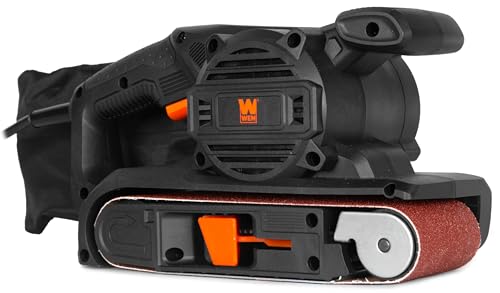
WEN HB321V Belt Sander
What We Like
- Extremely lightweight at 6.4 pounds
- Variable speed for material control
- Lock-on switch reduces hand fatigue
- Quick-release belt tension lever
Trade-offs
- 7.5-amp motor less powerful than 9-amp+ models
- Includes only one 80-grit sanding belt
At a mere 6.4 pounds, this sander is built for jobs where you’ll be holding it overhead or working vertical surfaces for extended periods. The lock-on power switch means you don’t have to maintain a death grip on the trigger, which is a genuine relief during long sessions. It’s a straightforward, compact machine ideal for DIYers and woodworkers who prioritize comfort and control over raw material removal speed.
The trade-off for that lightness is a 7.5-amp motor, which owner feedback suggests is competent but won’t match the aggressive stock removal of heavier sanders like the Metabo HPT SB8V2. Think of it as a precision instrument for finish work and moderate material leveling, not a brute for heavy-duty reshaping. For someone who values a tool that won’t wear out their arm by lunchtime, this WEN delivers solid value in a user-friendly package.
WEN HB424V Belt Sander

What We Like
- Converts from handheld to benchtop sander
- Variable speed for different materials
- Lock-on switch for extended use
- Quick-release lever for belt changes
Trade-offs
- Larger 4×24 belt less nimble than 3×21 models
- Dust collection relies on included bag, not a shop vac
With a 10-amp motor, this sander has the power to remove material quickly on large surfaces like tabletops. The belt speed adjusts from 660 to 1310 feet per minute, letting you dial down for fine finishing or crank it up for rough shaping. It also converts into a benchtop sander using the included clamps and pad, which locks it down for stationary tasks like tool sharpening. You get the control of a fixed machine without losing the ability to pick it up and work on a door.
The trade-off for this versatility is that it’s inherently a compromise. As a handheld, its larger belt size and motor make it less nimble than a dedicated 3-by-21-inch model like the Makita 9903 for tight corners. The included dust bag is a basic catch-all, but the 1.2-inch port suggests it’s designed for the bag rather than a high-volume shop vacuum. For a user who needs a dedicated, aggressive floor sander or a supremely balanced handheld, a more specialized tool would be better. But if your space or budget demands one sander to cover most bases, this one’s dual nature is its core strength.
Product photos
DeWalt DCW220B Cordless Belt Sander

What We Like
- Quick-release, tool-free belt changes
- Comfortable two-handed grip and balance
- Variable speed trigger with 25-position dial
Trade-offs
- Battery and charger sold separately
- Dust collection system requires separate purchase
Compared to the Milwaukee M18 Fuel belt sander, this DeWalt model has 16.7% more sanding surface area, which helps finish large jobs faster. Its brushless motor is designed for efficiency and long runtime on a single battery charge, letting you move freely around a project. A variable speed trigger with a 25-position dial allows you to optimize speed for different materials, and reviewers report dialing it down worked well for delicate curves. The overmolded auxiliary handle is designed for comfortable two-handed operation during long sessions.
The dust collection system is compatible with a tool-free DeWalt Airlock vacuum port, which is sold separately, and is rated for up to 95% dust collection efficiency under ideal conditions. Since the tool is sold without a battery, you must provide your own DeWalt 20V MAX pack. For continuous, heavy-duty sanding where an outlet is always nearby, a corded workhorse like the Makita 9403 will still outlast it. But for maneuverability and professional-grade results on sizable cordless jobs, this DeWalt stands out.
CRAFTSMAN CMEW213 Belt Sander
What We Like
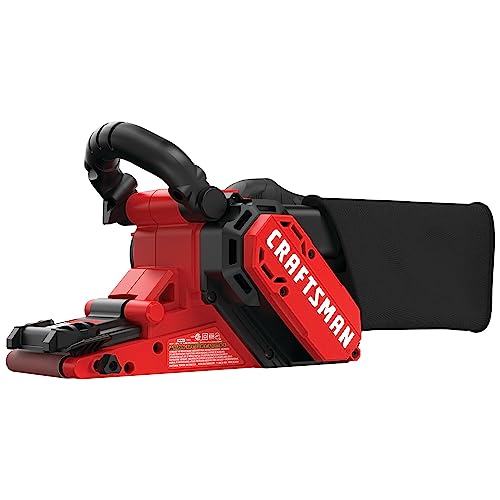
- Angled belt sands closer to adjoining surfaces
- Tool-free belt release for quick changes
- Three-position over-molded handle for comfort
Trade-offs
- Single speed at 800 fpm lacks versatility
- Fixed dust bag, not a port for a vacuum
With a 7 Amp motor driving the belt at 800 feet per minute, this Craftsman delivers plenty of power for fast material removal on annual projects. Its angled belt design lets you work closer to edges and corners, a practical touch for trim work or furniture fixes. For the DIYer who needs a sander for a weekend deck refinish or to strip paint off a door a couple of times a year, it offers capable performance without a complex feature set. The tool-free belt changes and onboard dust bag keep the operation straightforward.
This Craftsman sander is built for straightforward value, offering a focused set of features for occasional projects. Its single-speed operation and maximum belt speed of 800 feet per minute prioritize fast material removal over adjustable control for delicate finishes. Weighing 6.6 pounds, the tool has a substantial feel that provides stability during aggressive sanding but may require more effort during extended use. Research suggests it represents a ton of value for users who tackle just a few projects each year, making it a practical choice for a home workshop where advanced features are not a necessity.
Makita 9903 Belt Sander

What We Like
- Variable speed dial for matching task
- Auto-tracking belt requires no adjustment
- Nose and side design for flush sanding
- Front grip for comfortable operation
Trade-offs
- Corded design limits mobility compared to cordless options
The Makita 9903’s defining feature is its innovative nose and side design, letting you sand flush against a wall or into a corner without a separate attachment. That makes it a specialist for finish carpenters and detail-oriented renovators tackling trim, doors, and built-ins. Its 8.8 AMP motor and variable speed control provide enough muscle for material removal while the auto-tracking belt keeps you working instead of fiddling. This is a sander for the craftsman who needs precision in tight spaces.
With a 9.5-pound weight, the Makita 9903 is lighter than many full-size belt sanders, making it easier to maneuver for detailed tasks. Its innovative design allows sanding flush to a wall with both the nose and side, which is essential for working in corners and along baseboards. The variable speed control, from 690 to 1,440 feet per minute, lets you match the sanding pace to different materials.
Product photos
Milwaukee M18 Fuel Belt Sander
What We Like
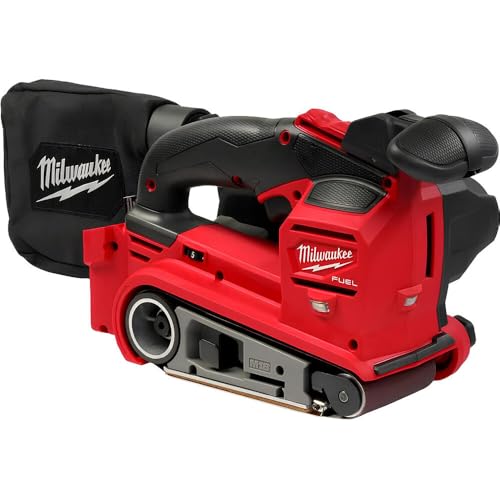
- Brushless motor delivers corded-class torque
- Variable speed dial for controlled material removal
- Quick, tool-free belt changes minimize downtime
- Intelligent electronics protect from overload and heat
Trade-offs
- Limited to 3" x 18" belts, not larger widths
- Tool only: requires M18 battery and charger
Milwaukee’s M18 Fuel Belt Sander uses a brushless motor that generates the power and torque of larger 8-amp corded models, so cordless operation doesn’t require a performance compromise. A variable speed dial provides a belt speed range from 1350 to 750 surface feet per minute for greater control of the removal rate. Its tool-free belt change lever allows for quick swaps to minimize downtime between tasks.
The trade-off is its dedicated 3×18 belt size, which offers a narrower sanding path than models like the Makita 9403. That makes it less ideal for sanding very large, flat surfaces quickly. For a dedicated shop tool where corded power and a wider belt are priorities, a corded model often makes more sense. But for pure cordless muscle and jobsite versatility, this sander stands out.
Product photos
VEVOR 7A 2-in-1 Belt Sander
What We Like
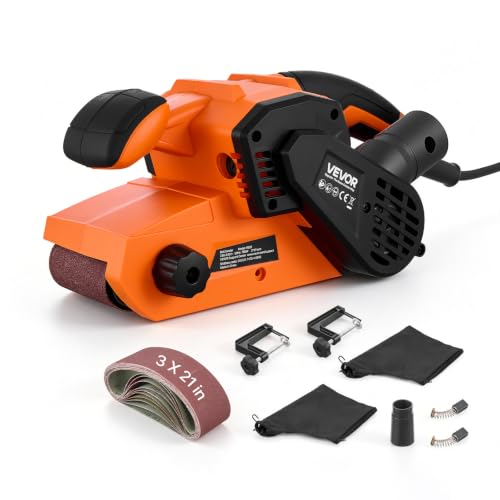
- Secure benchtop conversion with clamps
- Six speed settings for different tasks
- Includes belts for coarse to fine work
- Dust collection bags and vacuum adapter
Trade-offs
- 7A motor is less powerful than some 9-10A models
- Benchtop use requires clamping, not a dedicated stand
The 2-in-1 design is the defining feature here. You get a full-sized handheld sander that can be locked down as a stationary tool with the included clamps. That flexibility is a real advantage for a crowded shop or someone tackling varied projects, letting you switch from smoothing a large tabletop to precisely shaping a small piece on the bench. The 7A motor and six speeds provide decent control for a machine in this class, and the set of ten belts means you can start working right out of the box.
A key feature of this sander is its 2-in-1 design, which allows it to switch between handheld and benchtop use. The included clamps let you secure it to a work surface, reducing fatigue for detailed tasks. This dual functionality makes it a versatile choice for DIYers who need both a portable tool and a fixed station.
Product photos
SKIL 7510-01 Belt Sander

What We Like
- Pressure control warns against excessive force
- Auto track keeps belt centered during use
- Flush edge sanding maximizes work capacity
- Lightweight design reduces user fatigue
Trade-offs
- Lacks variable speed control for different materials
The 5.5-pound weight and pressure control technology make this sander a forgiving tool for beginners and occasional users. The system alerts you when you’re pushing too hard, which prevents belt stalling and gouging the workpiece. This focus on user guidance suits those still developing their sanding technique, where preventing costly mistakes is a priority.
That user-friendly design comes with trade-offs. Its 6.0 Amp motor delivers less raw power than workhorses like the 9.0 Amp Metabo HPT SB8V2. Also, the 3×18-inch belt is shorter than the common 3×21-inch size, meaning you’ll change belts more often on large projects. It excels at controlled, precise material removal rather than aggressive stock hogging.
Product photos
How We Evaluated Belt Sanders
Our evaluation reviews specifications, manufacturer documentation, expert round-ups, and consistent patterns in owner feedback. We prioritized criteria that directly affect real-world sanding performance. These include motor power and belt speed for efficient material removal, weight and ergonomics for user control over long sessions, and design features like dust collection and belt change systems that impact workflow. A key limit of a research-led approach is that we cannot measure subjective feel or long-term durability firsthand, so we rely on aggregated experiences from professional and DIY users.
What To Look For In Belt Sanders
The right belt sander turns a laborious chore into an efficient process. Your choice hinges on the scale of your projects and the level of control you need.
Key buying criteria include power (motor amperage and belt speed), weight and ergonomics, belt size, and features for dust management and ease of use. Consider whether you need a dedicated handheld, a cordless belt sander for mobility, or a versatile benchtop belt sander.
Power & Speed
A sander’s aggressiveness is driven by its motor amperage and belt speed, measured in feet per minute. Higher amperage provides torque for heavy stock removal, while higher belt speeds increase the material removal rate. Variable speed control offers greater versatility for different materials and finish work, allowing you to slow down for delicate shaping or when using a belt sander on softer woods.
Weight & Ergonomics
A sander’s weight directly impacts user fatigue and control. Models around 6-7 pounds are easier to manage for overhead work or long sessions, while heavier sanders (9-12 pounds) often deliver more power but can be taxing. Look for features that improve handling: a trigger lock reduces hand cramp, a well-balanced design prevents the tool from tipping, and a comfortable front grip provides stability. For detailed tasks, a handheld belt sander with good ergonomics is crucial.
Design & Features
Practical design elements make a sander more pleasant and effective to use. A quick-release lever for tool-free belt changes saves time. Effective dust collection, either via a bag or a shop vacuum port, keeps your workspace clear and your line of sight unobstructed.
For sanding flush to walls or into corners, a sander with an open-side design or a narrow nose roller is important. Finally, consider if you need a dedicated tool or a hybrid model; some convert to a stationary belt sander, which is excellent for sharpening or small parts.
- Check if the dust port is compatible with your shop vacuum hose.
- Ensure the belt tracking adjustment is accessible and easy to use.
- Look for a design that sands close to an adjacent surface for fitting tasks.
- Consider whether a corded or cordless platform best suits your workspace.
Your most frequent project type should dictate your primary choice between a fast, powerful sander for large surfaces and a lighter, more controllable one for detail work.
Belt Sanders Compared
The following table provides a quick comparison of our top picks across key specifications to highlight their differences.
| Product | Belt Size | Belt Speed | Motor (Amp/Type) | Weight |
|---|---|---|---|---|
| Makita 9403 Belt Sander | 4" x 24" | 1,640 ft./min. | N/A | 13.0 pounds |
| Metabo HPT SB8V2 Belt Sander | 3 x 21 Inch | Variable speed dial | 9.0 Amp | 9.5 pounds |
| WEN HB321V Belt Sander | 3-by-21-Inch | 620 to 1200 feet per minute | 7.5-amp | 6.4 pounds |
| WEN HB424V Belt Sander | 4-by-24-inch | 660 to 1310 FPM | 10-amp | N/A |
| DeWalt DCW220B Cordless Belt Sander | N/A | Variable trigger + 25-position dial | Brushless | 1.0 pounds |
| CRAFTSMAN CMEW213 Belt Sander | 3-in. x 21-in. | 800 fpm | 7 Amp | 6.6 Pounds |
| Makita 9903 Belt Sander | 3" x 21" | 690 – 1,440 ft./min. | 8.8 AMP | 9.5 pounds |
| Milwaukee M18 Fuel Belt Sander | 3" x 18" | 750-1350 SFM | POWERSTATE Brushless | 8.8 pounds |
| VEVOR 7A 2-in-1 Belt Sander | 3" x 21" | 630-1200 FPM (6 speeds) | 7A | 8.8 pounds |
| SKIL 7510-01 Belt Sander | 3"x18" | N/A | 6.0 Amp | 5.5 pounds |
Frequently Asked Questions
What is the best brand of belt sander?
There is no single “best” brand, as different manufacturers excel in different areas. Our research shows Makita and Metabo HPT are consistently praised for powerful, durable corded belt sanders ideal for professionals, while brands like WEN and Craftsman offer reliable value for DIYers. The best brand for you depends on your need for raw power, ergonomic design, or budget-friendly performance.
What are the best sanding belts?
The best sanding belts are matched to your material and task. For rapid stock removal, start with a coarse 40- or 60-grit aluminum oxide belt. For smoothing and preparing for finish, move to 80- or 120-grit. For final smoothing, 180-grit or higher is used. Always use sharp, fresh belts for the best results and to avoid burning the wood or overworking the sander’s motor.
Which belt sander offers the best value for money?
Value depends on your usage. For the occasional DIYer, the budget-friendly CRAFTSMAN CMEW213 provides reliable corded power. For those wanting more features without a premium price, the WEN HB321V offers variable speed and a lightweight design at a mid-range cost. The best value is the tool that reliably performs your most common tasks without unnecessary expense.
Should I choose a belt sander or an orbital sander?
Choose based on your primary goal. A belt sander is for fast, aggressive material removal and flattening large surfaces. An orbital sander is for finer finish work, smoothing, and preparing surfaces for paint or stain without leaving directional marks. For a full workshop, many owners find both types useful.
What is the most important feature in a belt sander for a beginner?
For a beginner, a manageable weight and good ergonomics are most important, as they promote control and reduce the risk of gouging the workpiece. Features like a trigger lock and a simple belt change system also help. Some models, like the SKIL 7510-01, even include a pressure alert to help novices avoid using excessive force, which can damage the project and the sander belt.
The Bottom Line
The Makita 9403 Belt Sander is our best overall pick for its high-speed performance and durable construction, ideal for contractors and woodworkers tackling large-scale stock removal. For those on a budget or who prioritize comfort for finish work, the WEN HB321V (Best Lightweight Value) is an excellent choice. The Metabo HPT SB8V2 (Best For Woodworking) offers superior control for detailed material removal.
Your decision should start with honestly assessing your most common project scale. A powerful, heavier sander will frustrate you on small trim work, just as a lightweight model will struggle and overheat on a large deck refurbishment. Matching the tool’s core strengths to your actual workload is the single most important factor in choosing a belt sander you’ll enjoy using for years.
