
How to Cut Tree Roots With a Reciprocating Saw
This post contains affiliate links. As an Amazon Associate, we earn from qualifying purchases.
To cut tree roots with a reciprocating saw, you must match three things: the root size, the correct bimetal blade, and a controlled, patient cutting technique. Roots under 1 inch (2.5 cm) in diameter are manageable with hand tools or a saw, but cutting roots over 3 inches (7.5 cm) should be avoided. The process requires exposing the root, using steady strokes, and understanding that this tool was not designed for this gritty, high-wear job.
Here’s the truth. This isn’t a tool’s ideal use case. A reciprocating saw is a demolition and construction tool designed for clean wood, not soil packed with grit and stones. Using it for roots is a compromise, a way to solve a problem when you don’t have the right, specialized equipment. The key is knowing exactly where that compromise breaks, and how to work within its limits to avoid destroying your saw or your tree. This includes understanding how to cut tree roots with a reciprocating saw.
What follows is the real-world procedure for how to cut tree roots with a reciprocating saw, grounded in arborist science and tool specs. We’ll cover the hard size limits, the only blade that stands a chance, the step-by-step cut, and the maintenance that keeps your saw from dying after one job.
Key Takeaways
- Consider hand tools for roots under 1 inch (2.5 cm) in diameter; avoid cutting roots over 3 inches (7.5 cm).
- Use only a bimetal pruning blade, standard blades blunt instantly in soil.
- Cut slowly and steadily, as some guides advise, to prevent blade binding, snapping, and excessive vibration.
- Always perform a tree risk assessment before cutting any root.
- Clean your saw immediately after use; dirt left inside grinds down the mechanism.
The 2.5cm and 7.5cm Rules That Decide Your Job
Before you touch a tool, you need to know if you should. Arboriculture isn’t guesswork. According to Bartlett Tree Experts, a leading authority, roots less than one inch (2.5 cm) in diameter can easily be cut with hand tools. That’s your green light for a reciprocating saw on smaller roots.
Roots less than one inch (2.5 cm) in diameter can easily be cut with hand tools. Cutting roots greater than three inches (7.5cm) in diameter should be avoided whenever possible. – Bartlett Tree Experts Technical Report
The red line is three inches (7.5 cm). Cutting roots larger than that risks severe harm to the tree’s structural stability and health. At that size, you’re dealing with major structural roots. A reciprocating saw will struggle, vibrate terribly, and likely stall. More importantly, the tree might not survive the loss. If your root is thicker than a soda can, you need a different plan, like consulting an arborist or using a mechanical root pruner.
Where this goes sideways: Assuming all roots are fair game. Cutting a large root because it’s in your way can destabilize the tree. The damage might not show for a year, but when a storm hits, that’s the tree that falls.
Why Distance From the Trunk Matters
The other critical number is distance. The further from the trunk you cut, the better. Bartlett’s guideline is to keep cuts at a minimum distance of 5 to 6 times the tree’s Diameter at Breast Height (DBH). If a tree is 1 foot thick at chest height, don’t cut any root closer than 5-6 feet from the trunk.
Root cuts made outside the tree’s normal drip line (the area under its branch spread) rarely cause permanent damage. Inside that zone, you’re in the critical root area. Every cut is a wound the tree must compartmentalize. This isn’t scare talk. It’s the predictable outcome of vascular damage.
Blade Selection: The Only Choice That Isn’t a Choice
You cannot use a standard wood-cutting blade. This is the single most common point of failure. The forum posts and anecdotal guides that shrug and say “any blade will do” are how you burn through a $20 blade in 30 seconds.
Standard pruning blades are not hardened for repeated contact with grit and soil particles. One pass through sandy soil acts like sandpaper on the teeth. They go dull immediately. A dull blade binds, heats up, and snaps. I’ve seen it happen, a sharp ping, then a useless stump of metal vibrating in the chuck.
You need a bimetal blade. Bimetal blades have a high-speed steel edge welded to a flexible spring steel body. They resist abrasion and can handle the occasional buried stone without shattering. For root work, look for a pruning-specific bimetal blade with a low Teeth-Per-Inch (TPI), like 5-8 TPI. The large, aggressive gullets clear woody debris and soil better than fine-tooth blades.
Common mistake: Using a general-purpose demolition blade. Those are for nails and drywall. In root wood and dirt, they load up and overheat in seconds.
Your best bet is to start with a dedicated guide on choosing the best blades for cutting roots. It’s cheaper than learning by wrecking three packs of blades. For broader cutting needs, understanding the different types of reciprocating saw blades is essential.
Reciprocating Saw Limitations vs. The Right Tool
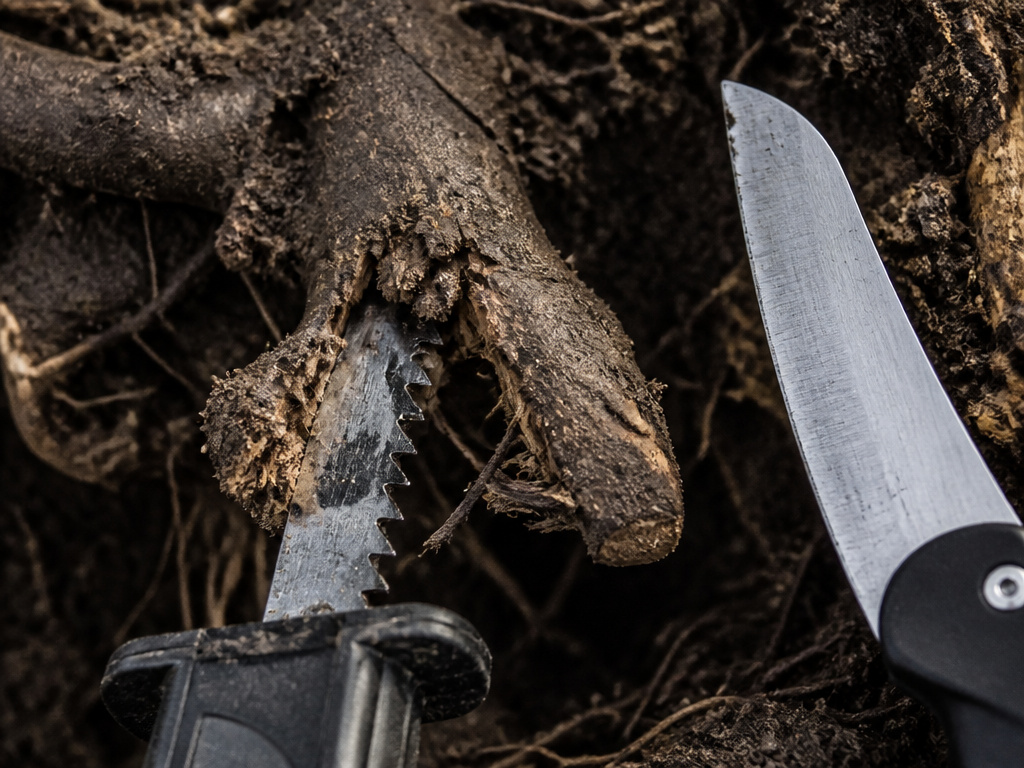
To be clear. Sources disagree on suitability: for regular professional use, suppliers like Seddon Plant state a standard reciprocating saw is the wrong tool, while some anecdotal guides imply it can be used for cutting roots. Commercial equipment suppliers like Seddon Plant are blunt about it: for root systems with depth, soil contact, or unpredictability, it’s not the right choice.
Why? Three reasons.
- No Depth Control: The blade goes where you push it. In uneven ground, maintaining a straight, consistent cut at a specific depth is a constant fight.
- Blade Flex: A single blade can flex under lateral pressure, especially longer ones. This makes the cut wander and increases the chance of binding.
- Torn Edges: It won’t produce a clean, square cut in soil. Torn root edges heal poorly and torn turf is a rework job.
The right tool for frequent root work is a dedicated root pruner (like a Dosko or Vermeer) or, for precise arborist work, an AirSpade for excavation followed by hand pruning. These tools are designed for the environment.
However, for the DIYer facing one or two small, accessible roots, a reciprocating saw is a viable compromise. It’s about managing expectations. You’re using a demolition saw for precision surgery. It will work, but it’s not what it was built for. If your project involves significant pruning of trees, reassess your tool choice first.
Safety and Preparation: The Non-Negotiable First Steps
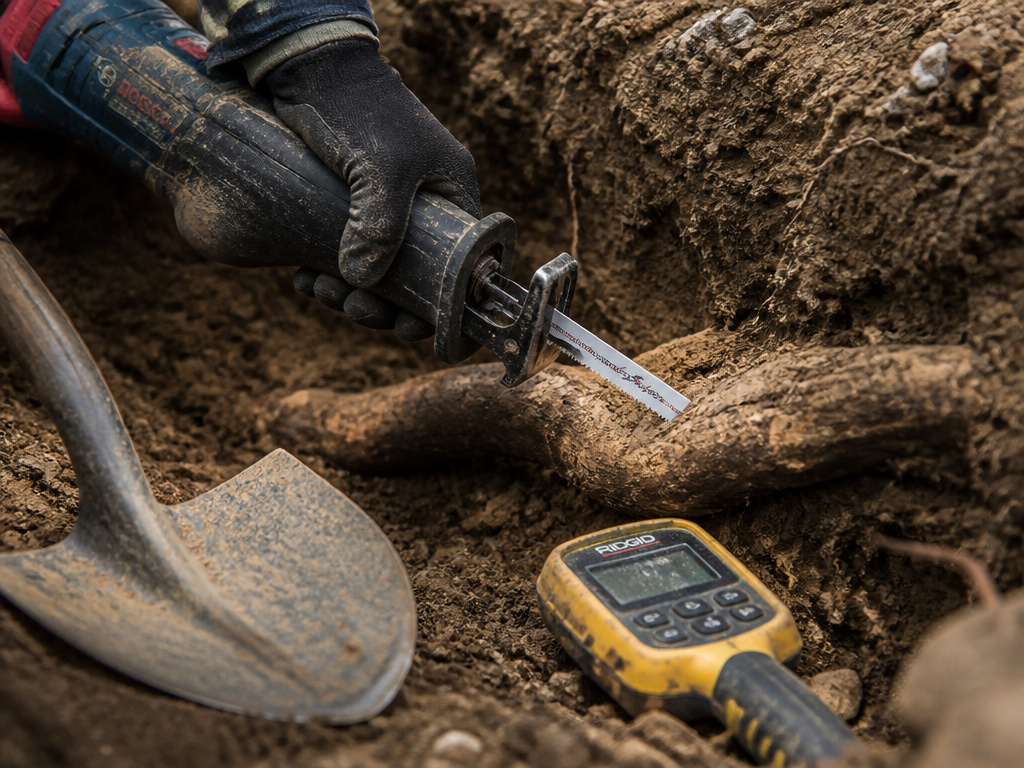
This isn’t just about goggles and gloves. Cutting into soil is a game of hidden hazards. The Draper Tools manual for their 230V saw has warnings that apply universally.
Before you start: Assume every patch of soil hides electrical wiring, gas lines, or water pipes. Use a cable/pipe detector. Never cut into a wall or floor without checking. Wear safety glasses, hearing protection (reciprocating saws can be loud, with models like the Draper RSAW710SF having a sound power level of 93.8 dB(A)), gloves, and steel-toe boots.
Step 1: Call Before You Dig. In many regions, this is the law. Contact your local utility locating service (like 811 in the US) to mark public lines. This is free and prevents catastrophic, or fatal, strikes.
Step 2: Expose the Root. Don’t just stab the blade into the dirt. Use a shovel, trenching shovel, or even a hand trowel to carefully excavate around the root. You need to see what you’re cutting, its full diameter, and its path. This also allows you to check for rocks wrapped in the root.
Step 3: Perform a Tree Risk Assessment. As Bartlett states, this is mandatory. Look at the tree. Is it leaning? Are there large cracks in the trunk or major limbs? Does it have significant deadwood? If you have any doubt about the tree’s health or stability, stop. Consult a certified arborist. Cutting the wrong root on a compromised tree can be the final straw.
The Step-by-Step Cutting Process
Now, for the actual cut. Patience is your most important tool. Rushing is how blades snap and motors burn out.
- Install the Blade. Use a bimetal pruning blade. Ensure it’s locked securely in the quick-release chuck. A wobbly blade is a broken blade.
- Set the Foot. The adjustable foot on your saw must be installed and positioned. The Draper RSAW710SF manual is explicit: DO NOT operate the saw without the adjustable foot. Position it so the blade extends about an inch beyond the root and the foot can rest firmly against the root or soil for stability.
- Position the Saw. Place the foot firmly against the root. Grip the saw with both hands. Let the tool do the work, don’t lean into it.
- Start the Cut. Begin at a medium speed. Let the blade teeth establish a kerf (the cut slot). You’ll feel and hear the difference between cutting clean wood and hitting gritty soil, a gritty, grinding vibration versus a smoother hum.
- Use Controlled, Full Strokes. Don’t “peck” at the root. Allow the blade to complete its full stroke length (20mm on the Draper model) with each cycle. This is more efficient and reduces heat buildup.
- Employ a “Rocking” Motion for Thicker Roots. If the blade begins to bind, gently rock the saw forward and backward along the cut line to widen the kerf and free the blade. Forcing it will stall the motor or snap the blade.
- Make Multiple Passes. For roots over an inch thick, don’t try to cut through in one go. Make a series of shallow cuts from the top, working your way down. This reduces load and keeps the blade cooler.
- Clear Debris. Periodically pull the blade out and clear wood chips and soil from the kerf with a stick or blast of air.
The part nobody mentions: The saw will get hot. The Draper manual warns that blades can be hot enough to burn you immediately after use. Let it cool before changing it.
Post-Cut: Tool and Root Care
The job isn’t done when the root is severed. You have two things to care for: the tool and the tree.
For the Saw:
- Clean it immediately. Blow out the chuck mechanism, vents, and foot with compressed air. Wipe down the entire tool. Soil left inside acts as an abrasive, accelerating wear on the reciprocating mechanism.
- Inspect the blade. Is it dull? Are teeth chipped? Bimetal blades can be sharpened, but for the cost, most DIYers just replace them. This is why buying the right blades designed for landscaping upfront matters.
- Check for damage. Look for cracks in the foot or excessive play in the blade clamp.
For the Tree:
- Make a Clean Cut. If your saw left a ragged tear, use a sharp pruning saw or lopper to clean up the end of the remaining root stub. A clean cut seals over faster.
- Backfill Gently. Replace the soil around the remaining root system, but don’t compact it heavily. The tree needs oxygen and water to reach the roots.
- Water the Area. Give the root zone a deep watering to help mitigate transplant-like shock from the root loss.
When to Choose a Different Tool Entirely
Use this matrix to decide if you should even start with a reciprocating saw.
| Root Size & Scenario | Reciprocating Saw? | Better Tool Choice |
|---|---|---|
| Root < 1″ (2.5cm), shallow, accessible | Yes, with caution | Hand pruning saw, lopper |
| Root 1″-3″ (2.5-7.5cm), in clean soil | Maybe, with premium blade | Dedicated root pruner |
| Root > 3″ (7.5cm) | No | Professional arborist with root pruner |
| Multiple roots, trenching work | No | Trencher (followed by hand-pruning cuts) |
| Root near foundation, utilities | No | AirSpade excavation, then hand tools |
| Precision cut for tree health | No | Hand saw, arborist tools |
If your project clearly points to needing the best reciprocating saw for cutting trees, you’re likely dealing with above-ground cutting or demolition. For in-ground roots, the tool category often changes.
How to make your blade last when cutting dirty roots
Standard pruning blades are not hardened for repeated contact with grit and soil particles. Every grain of dirt acts like sandpaper, rapidly dulling the teeth. When you must cut in soil, start by clearing as much dirt and debris from around the root as possible with a shovel or trowel. This simple step exposes more clean wood and reduces the amount of abrasive material your blade contacts when you learn how to cut tree roots with a reciprocating saw. Expect to use more blades for this job than for clean woodcutting, and have spares ready.
Frequently Asked Questions
Is a reciprocating saw good for cutting tree roots?
It’s a compromise tool for small roots. It’s not “good” in the sense of being ideal or designed for the job, but it can be effective for roots under 1 inch (2.5 cm) in diameter when used with a bimetal pruning blade and extreme patience. For anything larger or more frequent, it’s the wrong tool.
What is the best blade for cutting tree roots with a reciprocating saw?
Bimetal pruning blade with 5-8 TPI is the only type you should consider. Brands like Diablo make specific “pruning” blades that are hardened to resist soil abrasion. Never use a standard wood-cutting or demolition blade.
Can you cut tree roots without killing the tree?
Yes, if you follow the rules. Limit cuts to roots under 3 inches (7.5 cm), make cuts as far from the trunk as possible (ideally outside the drip line), and Avoid removing a large portion of a tree’s total root system.
How do you prevent the blade from binding in the cut?
Cut slowly, use full strokes, and make multiple shallow passes instead of one deep cut. If binding starts, gently rock the saw forward and backward to widen the kerf. Keeping the cut area clear of debris also helps prevent pinching.
Can you use a cordless reciprocating saw for roots?
You can, but understand the trade-off. Cordless offers superior maneuverability and no cord to cut accidentally. However, cutting roots is a high-load, high-vibration task that drains batteries quickly and can strain smaller motors. A high-torque, brushless cordless model with a large-capacity battery is the minimum for anything beyond the smallest root.
The Bottom Line
Using a reciprocating saw on tree roots is always a workaround. It saves you from buying a root pruner for a one-time job, but it demands respect for the tool’s limits and the tree’s biology.
The rule that decides it all: if the root is thicker than 3 inches (7.5 cm), walk away from the saw. That’s the line where DIY becomes “call a pro.” For the smaller stuff, your success hinges on the blade, a bimetal pruning blade, and a pace so slow it will feel wrong. Clean the saw the moment you’re done; the dirt you leave inside today is the repair bill you get in six months.
If you’re unsure about any part of the process, from how to use a reciprocating saw safely to selecting the right blades for cutting trees, the information is there. The right research is always cheaper than a broken tool or a fallen tree.
