
Electric vs Pneumatic Staple Gun: Which Should You Buy?
This post contains affiliate links. As an Amazon Associate, we earn from qualifying purchases.
Electric staple guns plug into an outlet for medium-duty tasks like insulation and upholstery, while pneumatic staple guns connect to an air compressor for heavy-duty construction work like roofing and subflooring. Tool Nerds recommends electric models for occasional users as they are easier to use. Tool Nerds recommends pneumatic models for devoted professionals as they offer more versatility and far better power output.
That power gap isn’t just about speed. It decides what you can fasten, how long the tool lasts, and the entire setup in your workspace. An electric gun hums; a pneumatic one hisses with each shot. One fits in a toolbox, the other needs a cart.
What follows is a breakdown of where each type wins and loses in the electric vs pneumatic staple gun debate, grounded in specs that actually matter, not marketing. This section addresses power, long-term cost, staple compatibility, and the required maintenance. By the end, you’ll know whether to grab a cord or an air hose.
Key Takeaways
- Tool Nerds states that pneumatic units are, hands down, the best possible solution for bonding construction materials.
- Tool Nerds notes electric models are significantly smaller and more portable, and stapandnail.blog states they are ideal for medium-duty work such as insulation.
- For upholstery, 20 and 22 gauge staples are the most common staples (Ponfish).
- Unplug or disconnect the air hose before loading any staple gun to prevent accidental firing.
- Tool Nerds states that electric guns are notorious for having a high rate of failure, especially when used frequently and daily.
The Core Difference: Power Source and Performance
You’ll feel the difference before you fire the first staple. An electric gun has a weight to it, the motor and gears are inside the handle. A pneumatic gun is startlingly light; all the power is back at the compressor, fed through a hose.
Electric staple guns use a motor to drive a piston, converting electrical energy into mechanical force. Pneumatic staple guns use compressed air from an external compressor to actuate a piston, delivering instantaneous, high-impact force with each trigger pull. This fundamental difference dictates power output, consistency, and tool longevity.
That compressed air delivers a sharper, more consistent blow. It’s why the industry standard for roofing underlayment is a pneumatic gun with long, galvanized staples, you fire every 6 to 8 inches along seams, and each one sinks flush without thinking. Try that with an electric model on a cold roof deck, and you’ll hear the motor strain. It might work, but not for a full roll.
Electric guns have their own advantage: control. Because they pack less punch, they’re safer for thin or fragile materials. They’re the right call for attaching fabric to a furniture frame where a pneumatic gun could tear through the material or drive the staple too deep. The tooltrip.com source notes they provide more power than a manual gun with less user strain, making them suitable for prolonged use on a single project.
Here’s where the sources disagree on a key point. Tool Nerds claims the cost of running an electric model is “far higher than using an air compressor.” However, product insights from Alibaba focus on the higher initial investment for a pneumatic system (compressor, hose, filters) versus the lower upfront cost of an electric gun. The real cost depends on your electricity rates, compressor efficiency, and how many thousands of staples you fire a year. For a weekend project, the difference is negligible. For a production shop, the math matters.
Electric vs Pneumatic: A Side-by-Side Breakdown
This table cuts through the noise of the electric vs pneumatic staple gun question. It’s not about which is better, but which is better for your situation.
| Factor | Electric Staple Gun | Pneumatic Staple Gun |
|---|---|---|
| Power & Best Use | Medium-duty: insulation, drywall, baseboards, light upholstery. Less force, more control. | Heavy-duty: roofing, subflooring, heavy carpentry. Maximum force for construction materials. |
| Portability & Setup | High. Plug-and-play with an outlet. No extra equipment. | Low. Requires an air compressor, hose, and potentially filters. “Definitely not easy to transport” (Tool Nerds). |
| Noise Level | Moderate hum. Bearable without hearing protection for short periods. | Loud hiss/popping with each shot. Hearing protection is non-negotiable. |
| Cost Consideration | Lower upfront cost. Potential for higher long-term electricity cost with heavy use. | Higher initial investment for compressor setup. Lower per-staple energy cost for high-volume professionals. |
| Durability & Maintenance | Higher rate of failure with frequent daily use. Simpler maintenance (often just clearing jams). | Generally more robust and durable. Requires compressor maintenance (draining tanks, checking oil). |
Where Electric Staple Guns Excel (And Where They Don’t)
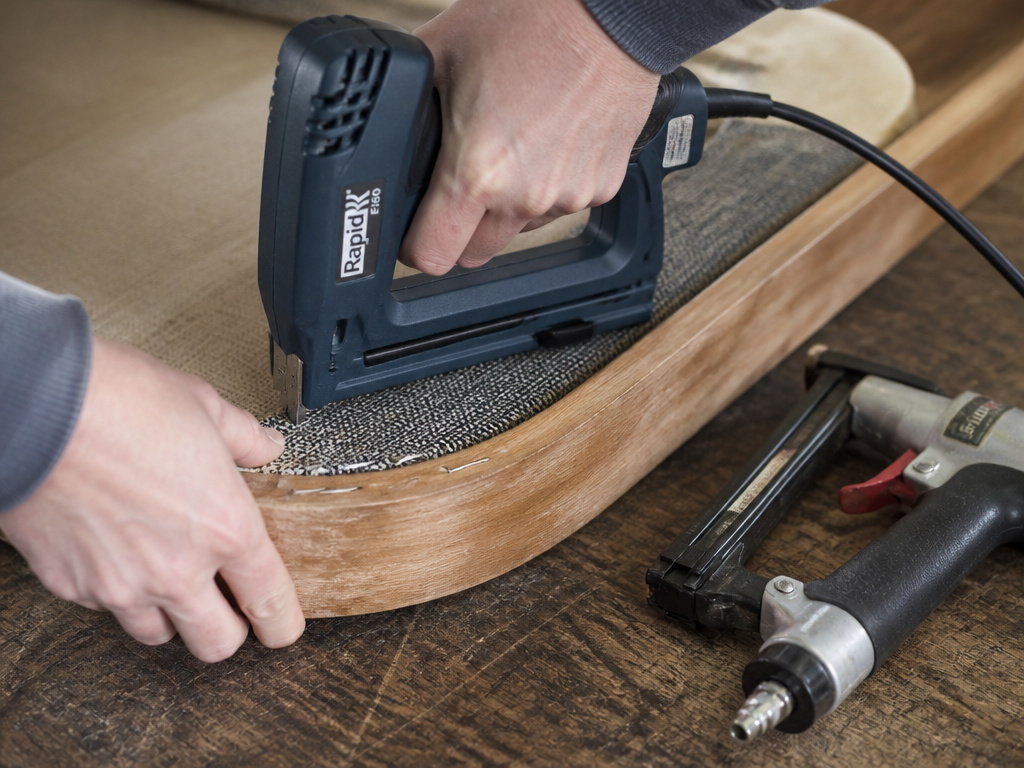
To be honest. For the vast majority of home projects, an electric staple gun is the right tool. You’re probably attaching insulation in the attic, securing a corner of carpet, or redoing a dining room chair seat. These are medium-duty jobs.
The plug-and-play convenience is the biggest sell. You don’t own a compressor, and you don’t want to. You need to finish a job this afternoon. An electric gun, like those covered in our guide on electric staple guns, gets you from unboxing to working in under a minute. They are, as the research states, “significantly smaller and more portable.”
But that convenience has a trade-off. The internal motor and gears are complex. According to Tool Nerds, these guns are “notorious for having a high rate of failure, especially when used frequently and on a daily basis.” If you’re a professional upholsterer running 5,000 staples a week, a corded electric gun will likely burn out its motor within a year or two. It’s simply not built for that life.
They also struggle with the hardest materials. Driving a 1.5-inch galvanized staple into a roof deck is asking for a jammed tool or a stalled motor. The power just isn’t there. For those tasks, you’ve stepped into pneumatic territory.
The Pneumatic Advantage: Power and Endurance
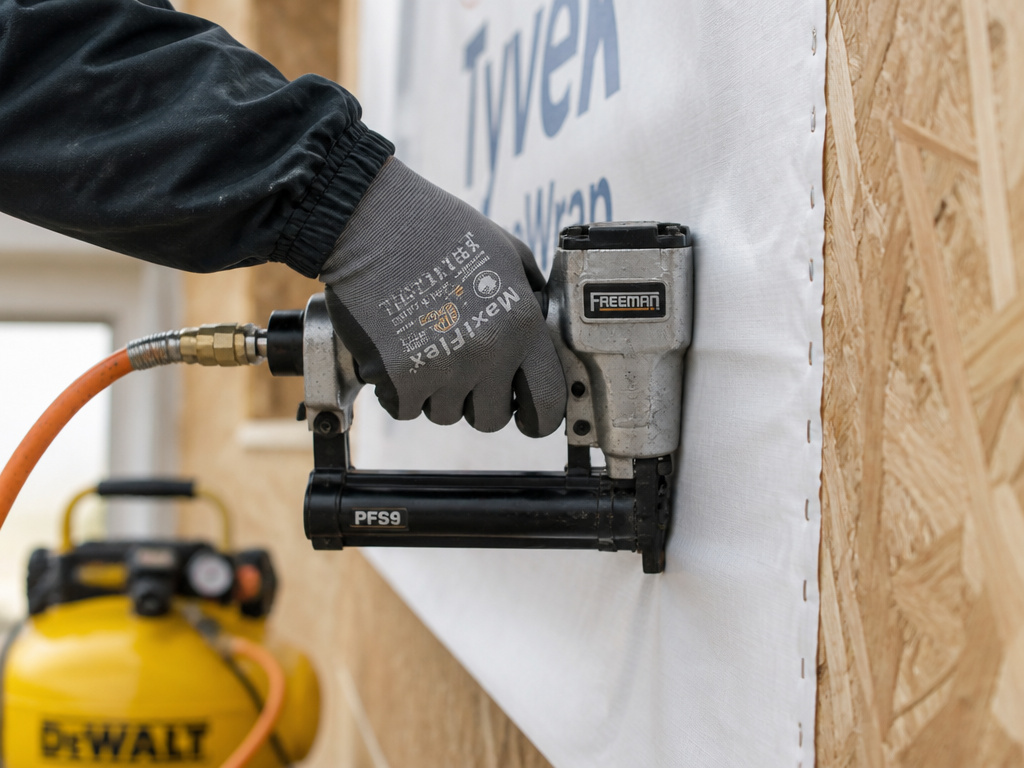
If your work involves the words “underlayment,” “sheathing,” or “production shop,” you need air. A pneumatic staple gun is a simple, brutal machine. The compressor does the hard work, and the gun is just a valve and a piston. Fewer moving parts means less to break.
The power is instant and relentless. You can fire staples as fast as you can pull the trigger, and each one hits with the same force. This is why they are, as cited, the “best possible solution for bonding construction materials.” Securing house wrap on a windy day? A pneumatic gun pins it in one shot where an electric gun might skip.
Common mistake: Using a pneumatic gun on delicate veneers or thin fabrics without adjusting the air pressure. At full compressor power (often 90-120 PSI), it will blow right through the material, leaving a mangled hole. Dial the pressure down or use a lighter trigger touch.
The setup is the hurdle. You need a compressor, a hose long enough to reach your work, and you have to maintain that system, draining moisture from the tank, checking oil levels on oil-lubricated models. The Alibaba insights note the “lower” portability due to the hose and compressor limiting range. It’s a workshop tool, not a tote-around-the-house tool. But for tasks requiring speed and reduced strain, the trade-off can be worth it, as seen in our list of the best pneumatic staplers for upholstery.
Staple Compatibility: It’s Not One-Size-Fits-All
The gun is only half the system. The staple is the other half, and getting it wrong causes more jams than any mechanical failure. Guns are built for specific staple series.
For upholstery, 20 and 22 gauge staples are the standard. Common series are #7 (22 gauge), #8/80 (20 gauge), and the heavy-duty T-50 (20 gauge). The gauge refers to the thickness of the wire, a lower number is thicker. A 20-gauge staple holds fabric to a wood frame better than a thinner 22-gauge, but it’s also more visible.
For insulation and house wrap, you need 140 Series staples. These are made from flat, galvanized steel wire. The wide, flat crown holds plastic sheeting and fiberglass batts securely without tearing through. They are not for wood.
The leg length rule is critical. The default is that the staple should be three times longer than the material thickness. For hard wood, use a staple twice as long as the wood’s thickness. A staple that’s too short won’t hold; one that’s too long protrudes, creating a safety hazard. An electric gun for insulation typically uses medium-leg staples between 1/2 inch and 3/4 inch.
Most guns have a depth adjustment knob. Turn it clockwise to drive the staple deeper, counterclockwise for a shallower set. This is your control for perfect placement without damaging the surface.
Making the Choice: DIY vs. Professional Needs
This is the final filter. Your frequency of use dictates the economics and the logic.
Choose an Electric Staple Gun if:
- You tackle projects occasionally (a few times a year).
- Your work is light- to medium-duty: upholstery, crafts, insulation, securing cables.
- You value portability and simple setup over raw power.
- Your budget is tighter upfront. Our review of the best electric staplers for upholstery is the next stop if this is your lane.
Choose a Pneumatic Staple Gun if:
- You use a staple gun frequently (weekly or daily).
- Your work is heavy-duty: roofing, fencing, subflooring, commercial upholstery.
- You already own an air compressor for other tools.
- You need speed, consistency, and top-tier durability for professional results. The investment in a compressor opens the door to a whole system of tools, as discussed in our comparison of pneumatic vs electric tools.
There’s a third option the query hints at: the manual staple gun. For a full picture of all your options, our overview of the types of staple guns breaks down where manual, electric, and pneumatic each fit.
Safety and Operation Non-Negotiables
A staple gun is not a toy. It drives a sharpened metal fastener with enough force to penetrate bone. The safety rules don’t change much between types, but the risks do.
Before you start: Always disconnect the power source. Unplug electric guns and disconnect the air hose from pneumatic guns before loading or clearing a jam. Wear safety glasses, a ricocheted or misfired staple travels fast enough to cause eye damage. Never point the tool at anything you don’t intend to staple.
Pneumatic guns add a tripping hazard (the hose) and the risk of hearing damage. Electric guns can suffer cord damage, leading to shock risk. The fundamental rule of operating a staple gun safely applies to both: keep your free hand away from the business end, and always know what’s behind your workpiece.
Loading is another critical step. Most jams start here. Whether it’s a bottom-loading or side-loading design, always ensure the staples are oriented correctly (legs pointing the right way) and seated fully in the magazine. For a step-by-step visual, see our guide on loading a staple gun, which walks you through the process for common models.
Frequently Asked Questions
Which is better, a pneumatic or an electric staple gun?
There is no universal “better.” For high-volume, heavy-duty professional work, pneumatic is better due to its power and durability. For most DIY and home improvement tasks, electric is better due to its convenience, lower cost, and sufficient power. The choice is entirely dependent on your specific projects and frequency of use.
Are electric staplers worth it?
Absolutely, for the right user. If you do periodic projects like upholstering furniture, installing insulation, or securing landscape fabric, an electric stapler saves significant time and hand strain compared to a manual gun. They are worth the investment over a manual gun for anyone beyond the most casual user, but they are not a replacement for pneumatic tools in a professional setting.
What is the best staple gun for home use?
For general home use, a corded electric staple gun is the best all-around choice. It provides a balance of power for medium-duty work such as insulation, light upholstery, or crafts without requiring a bulky air compressor. It’s more capable than a manual gun for larger jobs and simpler to set up than a pneumatic system.
What staple gun do upholsterers use?
Professional upholsterers who work daily almost universally use pneumatic staple guns. They are lighter in the hand (reducing fatigue), faster, and more reliable under constant use. They often use 20-gauge narrow-crown staples for a clean, secure hold. Hobbyists and those doing occasional projects can achieve excellent results with a heavy-duty electric stapler.
The Bottom Line
Don’t overthink the electric vs pneumatic staple gun debate. It comes down to a simple fork in the road.
If your work lives indoors, involves fabric, insulation, or trim, and happens on weekends, walk the electric path. Grab a reliable corded model, a box of the right staples, and get to work. The simplicity wins.
If your work is outside, involves structural wood, roofing, or happens every day for a paycheck, you need air. Invest in a compressor and a pneumatic gun. The speed and muscle will pay for themselves.
One final rule that applies to both: never compromise on staple quality or safety glasses. A cheap staple jams a $200 gun just as easily as a premium one, and a ricochet doesn’t care what brand you’re using.
