
10 Best Compressor Oil in 2026
This post contains affiliate links. As an Amazon Associate, we earn from qualifying purchases.
Our best overall compressor oil is the Ingersoll Rand All Season Select Synthetic Lubricant for its exceptional all-temperature protection and factory-specified formulation. We also highlight premium synthetics like Triax Kompressor and a budget pick from Campbell Hausfeld. Choosing the wrong oil shortens pump life and leads to costly repairs. This research-driven guide compares key specs and owner feedback on ten top oils to help you protect your investment.
Top 10 Compressor Oils in the Market
Certain content that appears on this site comes from Amazon. This content is provided "as is" and is subject to change or removal at any time.
The Best Compressor Oils, Reviewed
Ingersoll Rand All Season Select Synthetic Lubricant

What We Like
- Maintains viscosity in all temperatures
- Quadruple the life of petroleum oil
- Prevents carbon buildup on valves and rings
- Genuine OEM factory-fill lubricant
Trade-offs
- 1-litre bottle is smaller than some bulk options
An all-temperature synthetic that holds its viscosity from cold winter starts through summer heat means you can run the same oil year-round and forget seasonal changes. That reliability, combined with a lifespan four times longer than standard petroleum oil, makes it a set-it-and-forget-it solution for the serious home shop or demanding jobsite. It’s the genuine lubricant used at the factory, engineered specifically for the loads of a reciprocating compressor, which protects bearings and cylinder walls even under continuous operation. For anyone with an Ingersoll Rand compressor or a similar high-use unit, this oil eliminates guesswork and reduces maintenance downtime.
If your compressor sees lighter, intermittent use, a more affordable conventional oil like the Campbell Hausfeld ST1253 might suffice. However, for protecting a significant investment in a quality air compressor, this synthetic’s ability to prevent carbon buildup and extend change intervals delivers clear long-term value. It’s a focused formula, so for a rotary screw compressor, you’d look to a product like Ingersoll Rand’s own Ultra Coolant Screw Oil instead.
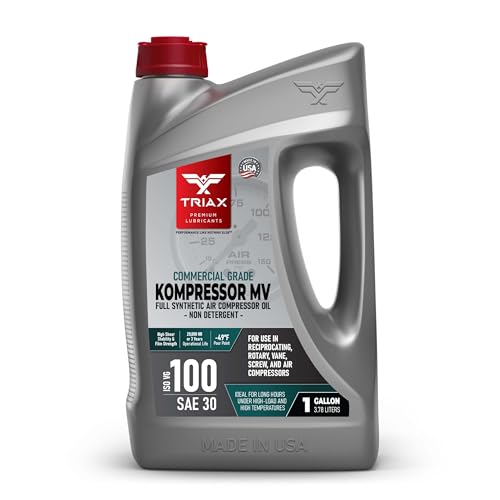
Triax Kompressor Full Synthetic ISO 100 Oil
What We Like
- Extreme 20,000-hour service life
- All-season multi-viscosity performance
- Runs 30% cooler to prevent burnoff
- Wide compatibility with major brands
Trade-offs
- Not for oxygen or LNG compressors
An over 20,000-hour service life means you can forget about frequent oil changes for years, even in a busy shop. This is the pick for someone running industrial rotary screws or heavy-duty reciprocating compressors daily, where downtime costs more than the oil. Its true multi-vis formulation handles Arctic cold and desert heat without thinning out or gumming up, so you get consistent protection year-round.
Triax Kompressor is engineered for severe-duty commercial use, so its extended service life and high-temperature protection are unnecessary for a compressor that runs only occasionally. The manufacturer explicitly states it is not for use in oxygen air or Liquid Natural Gas compressors, as its formulation is incompatible with those specific extreme environments.
Product photos
Campbell Hausfeld ST1253 Air Compressor Oil

What We Like
- 30 wt viscosity for reliable lubrication
- Helps prevent rust, corrosion, and sludge
- Convenient 16 oz. easy-pour bottle
- Formulated to extend pump life
Trade-offs
- 16 oz. volume is small for large compressors.
- Limited to general industrial and home workshop applications.
A 30 weight oil formulated for both pump and motor lubrication means you can service most common home and workshop compressors with one bottle. This is a straightforward, no-fuss lubricant designed to reduce wear and prevent sludge, which is exactly what you need for seasonal maintenance or a top-up. It suits the DIYer or shop owner who needs reliable protection for their equipment without overcomplicating the task.
This is a conventional 30-weight oil in a 16-ounce bottle, which makes it straightforward for topping up a typical workshop compressor. The formulation helps extend pump life and prevent rust or sludge under normal operating conditions. While the convenient size is perfect for mess-free refills, a complete oil change on a larger unit would require multiple bottles.
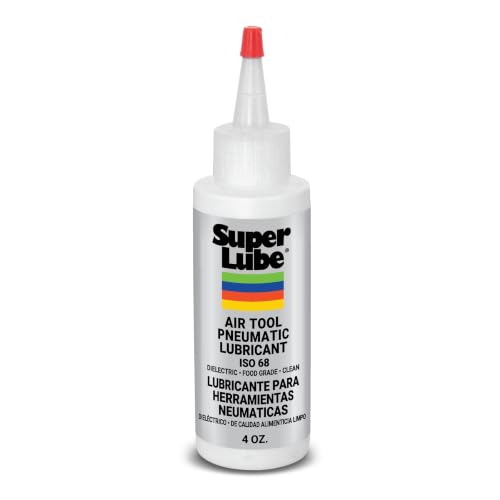
Super Lube 12004 Compressor Oil
What We Like
- NSF H1 registered for food-grade safety
- Operates down to -40°F without frost buildup
- Synthetic formula reduces wear and corrosion
- Absorbs water in pneumatic systems
Trade-offs
- 4 oz bottle is very small for large compressor sumps
- Packaged for tool lubrication, not bulk oil changes
NSF H1 registration makes this a food-grade lubricant, so it’s suitable for incidental contact in sensitive environments like food processing areas or automotive shops where contamination is a concern. The synthetic oil also provides wide temperature protection down to -40°F to prevent frost and reduces wear and corrosion in pneumatic equipment. While its industrial strength performance benefits high-pressure air tools, the food-safe certification defines its primary use case.
The practical trade-off is in the bottle size. At just four ounces, this isn’t your cost-effective choice for filling the crankcase of a large stationary compressor. Compare it to the five-gallon pail of Mobil Rarus 827, and the difference in application is obvious. Super Lube 12004 is engineered for lubricating air tools directly or for very small compressors in specific settings. You’re buying the certification and the precise formulation for a controlled task, not a bulk supply for general workshop duty.
Product photos
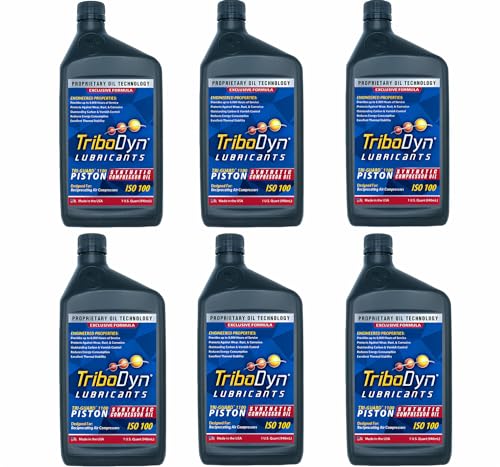
TriboDyn Tri-Guard 1100 Piston Compressor Oil
What We Like
- Exceptional 8,000-hour service life reduces maintenance frequency
- Ultra-high flash point provides thermal stability for high-heat applications
- Low pour point ensures reliable cold starts in freezing conditions
- Zero foam tendency and rust protection for consistent lubrication
Trade-offs
- The 11.4-pound, 6-quart pack is a large, heavy format not suited for small, infrequent top-ups
- Non-detergent formulation, while excellent for compressors, is not a multi-purpose oil
- Packaging dimensions (9"L x 9"W x 11"H) require significant storage space
An 8,000-hour service life means this oil can protect a heavily used workshop compressor for years, dramatically cutting downtime and oil changes. That extended interval is combined with proven resistance to carbon, varnish, and rust. This makes it a premium choice for anyone running a piston compressor hard in demanding conditions, from a busy auto shop to a production woodworking space. It’s built for the long haul.
The trade-off is in the packaging. This oil comes in a substantial 6-quart pack, which is efficient for a large compressor reservoir but overkill for a small pancake compressor used occasionally. For those lighter-duty needs, a product like the Campbell Hausfeld ST1253 in its 16-ounce bottle offers a more practical format. The TriboDyn oil delivers outstanding protection, but you need a compressor that can use that much volume before it goes stale.
Product photos
Coilhose Pneumatics ATL016 Air Tool Lubricant

What We Like
- Specifically formulated for air tool longevity
- Flip-top cap allows for precise, direct application
- Stable, non-decomposing formula protects components
- Can be used in both lubricators and tool ports
Trade-offs
- 16-ounce bottle size may be insufficient for high-volume shop use
This lubricant is specially formulated for air tools and pneumatic accessories, which makes it a focused choice for anyone running impacts, sanders, or nail guns. Its non-detergent, non-corrosive, and stable properties are designed to protect internal parts without breaking down, while the rust inhibitor helps tackle the moisture that plagues air systems. For a workshop where air tools see regular action, this bottle delivers targeted protection to keep them running smoothly and extend their service life.
This lubricant is specially formulated to prolong the life of air tools, cylinders, and pneumatic accessories, which means it’s focused on protecting the equipment you hold in your hands. While it can be applied via a conventional air line lubricator, the product description emphasizes its use for tools rather than the compressors that power them. For maintaining a compressor’s internal sump, a dedicated, graded oil like the Triax Kompressor Full Synthetic ISO 100 would be the appropriate match according to its listing.
Product photos
Milton Premium Full Synthetic ISO-100 Oil

What We Like
- Extreme all-season performance down to -36°F
- Advanced anti-foaming, moisture-displacing formula
- Prevents sludge, carbon, and varnish deposit formation
- Provides maximum wear, oxidation, and corrosion protection
Trade-offs
- Specifically for reciprocating compressors, not rotary screw types
- 32-ounce size is a smaller volume than some commercial 1-gallon or 5-gallon options
The ability to perform down to -36°F makes this a true set-it-and-forget-it lubricant for shops that aren’t climate-controlled. That low-temperature fluidity means your compressor won’t struggle to start on a frigid morning, reducing wear on the motor from the first crank. It’s a premium full synthetic built for the user who needs year-round reliability from a reciprocating compressor, with a formula that fights moisture and foam to protect internal components over the long haul.
This oil is formulated specifically for oil-lubricated reciprocating air compressors, so it’s not suitable for rotary screw units like the Ingersoll Rand Ultra Coolant. For the correct compressor type, it provides maximum wear, oxidation, and corrosion protection, which helps prevent sludge and varnish deposits during demanding use. Its full synthetic, all-season formula performs in low temperatures down to -36°F.
Product photos
Mobil Rarus 827 Compressor Oil

What We Like
- Large 5-gallon pail for high-volume users
- ISO VG 100 viscosity for consistent lubrication
- From a major industrial lubricant brand
Trade-offs
- The 41-pound pail is not easily portable
- Requires significant storage space for the container
- Impractical for infrequent or small-scale topping off
A 5-gallon pail of compressor oil is for the shop that runs its equipment hard and often. This Mobil offering delivers a substantial volume of ISO VG 100 fluid, which means you can service multiple large compressors or handle frequent oil changes without constantly reordering. It’s the logical choice for a busy professional workshop or industrial setting where downtime for maintenance needs to be minimal and bulk purchasing makes sense.
Its packaging is the main consideration. That 41-pound pail is a two-handed lift and needs a dedicated, stable storage spot in your shop. You’ll also need a clean pump or a steady hand to transfer the oil, which adds a step compared to a simple bottle. For a single large compressor or a fleet, this bulk format is efficient. For someone with a single portable compressor they use occasionally, this large volume may be excessive.
Milton High Performance Conventional Oil

What We Like
- Non-detergent formula for older reciprocating pumps
- ISO-100 viscosity matches many manufacturer specs
Trade-offs
- Not formulated for modern rotary screw compressors
Milton’s High Performance Conventional Oil comes in a full one-gallon container, providing a substantial volume for maintenance tasks. Its ISO-100 SAE 30W specification and non-detergent formulation align with the requirements for many reciprocating air compressors. This is a machine lubricant packaged in a container measuring roughly a foot long, seven inches wide, and three and a half inches tall.
The product is a conventional, rather than synthetic, lubricant as indicated by its listing among other conventional oils. Research mentions categorize it as a high-performance conventional oil. Its designated application is for reciprocating air compressors, which differs from synthetic oils listed for rotary, vane, and screw types.
Ingersoll Rand Ultra Coolant Screw Oil

What We Like
- Extends oil change intervals to 8,000 hours
- High 520°F flash point enhances safety
- 10% higher thermal conductivity for cooler operation
- Non-foaming formula minimizes oil carryover
Trade-offs
- Specifically formulated for rotary screw compressors only
Ingersoll Rand Ultra Coolant lasts up to 8,000 hours, so you can skip oil changes for years instead of months in a hard-working rotary screw compressor. Its formula has 10% higher thermal conductivity to move heat away from the airend faster, lowering operating temperatures. A flash point of 520°F also provides a critical safety margin when the system runs hot.
This is a genuine Ingersoll Rand OEM fluid engineered for their rotary screw systems, not a universal oil. For a general-purpose synthetic that handles various compressor types, the Triax Kompressor ISO 100 is a more versatile contender.
How We Evaluated Compressor Oils
Our evaluation focused on manufacturer specifications, expert maintenance guides, and consistent patterns in user feedback. We prioritized oil type (synthetic vs. Conventional), viscosity grade, service life, and specific compressor compatibility, like whether a formula is for reciprocating pistons or rotary screws. A guide to the best compressor oils is a great starting point for understanding these core differences. Our research-based method cannot replicate long-term wear testing, so we emphasize documented service intervals and thermal performance claims from the brands themselves.
What To Look For In Compressor Oils
Selecting the right oil protects your compressor’s internals from wear, heat, and moisture. The wrong choice can cause sludge, carbon buildup, and premature failure.
Match the oil type to your compressor’s duty cycle and environment. Check your manual for the required viscosity and whether it specifies a non-detergent or synthetic formula. For high-hour use, synthetics offer longer service life and better thermal stability.
Oil Type: Synthetic vs. Conventional
Synthetic oils are engineered for severe duty, offering longer service intervals, often 8,000 hours or more, and superior resistance to thermal breakdown and oxidation. They maintain consistent viscosity across a wider temperature range, making them ideal for shops in unheated spaces or for compressors that run hot and long. Conventional, petroleum-based oils are a cost-effective choice for lighter, intermittent use, such as in many home workshops, but require more frequent changes.
Viscosity & Grade
Viscosity, measured as an ISO VG or SAE weight, determines the oil’s thickness and flow. A common specification is ISO 100 or SAE 30, which provides a strong lubricating film for most industrial reciprocating pumps. Thinner oils (like ISO 32) may be specified for colder climates or certain rotary screw models. Always defer to your compressor manufacturer’s manual; using the wrong viscosity can lead to poor lubrication or difficult cold starts. Matching the specified grade is foundational to pump longevity, as noted in a review of durable oil-lubricated compressors.
Compressor Compatibility
The most critical step is confirming the oil is formulated for your compressor type. Reciprocating piston compressors typically use a non-detergent oil, while modern rotary screw units require a specific synthetic lubricant designed for continuous circulation and high heat. Using a piston oil in a screw compressor, or vice versa, can cause rapid degradation and damage. For a successful oil change, always start by verifying compatibility.
Application & Special Requirements
- Duty Cycle: For continuous industrial use, invest in a premium synthetic with a high flash point. For occasional DIY projects, a reliable conventional oil is sufficient.
- Volume: Consider container size. A 5-gallon pail is efficient for a shop with multiple compressors but impractical for topping off a single small tank.
- Certifications: For environments where incidental contact with consumables is possible, a food-grade (NSF H1 registered) oil is mandatory.
- Air Tools: Use a lubricant specifically formulated for pneumatic tools to prevent gumming and extend tool life.
When in doubt, your owner’s manual is the final authority.
Compressor Oils Compared
The table below summarizes key specifications to help you compare our top picks at a glance.
| Product | Oil Type | Viscosity Grade | Container Size/Volume | Primary/Compatible Compressor Types |
|---|---|---|---|---|
| Ingersoll Rand All Season Select Synthetic Lubricant | Synthetic lubricant | ISO 100 SAE 30 | 1 litre bottle | N/A |
| Triax Kompressor Full Synthetic ISO 100 Oil | Full Synthetic | ISO 100 / SAE 30 | 1 Gallon | Rotary, vane, screw, reciprocating |
| Campbell Hausfeld ST1253 Air Compressor Oil | 30 weight | 30 weight | 16 oz. | Industrial & home workshop compressors |
| Super Lube 12004 Compressor Oil | N/A | N/A | 4 oz | Air tool pneumatic lubricant |
| TriboDyn Tri-Guard 1100 Piston Compressor Oil | Non-detergent synthetic | ISO 100 | 6 Quart Pack | Piston |
| Coilhose Pneumatics ATL016 Air Tool Lubricant | Non-detergent, non-corrosive | N/A | 16-Ounce Bottle | Air tools, cylinders, accessories |
| Milton Premium Full Synthetic ISO-100 Oil | Full Synthetic | ISO-100 | 32 ounces | Oil-lubricated reciprocating |
| Mobil Rarus 827 Compressor Oil | N/A | ISO VG 100 | 5 gallon pail | N/A |
| Milton High Performance Conventional Oil | Conventional | ISO-100 SAE 30W | 1 Gallon | Reciprocating Air Compressors |
| Ingersoll Rand Ultra Coolant Screw Oil | 10W-20 synthetic | 10W-20 | 5 liters | Rotary Screw |
Frequently Asked Questions
What is the best oil to use in an air compressor?
The best oil is the one specified by your compressor’s manufacturer in the owner’s manual. This ensures the correct viscosity and formulation (synthetic or conventional, non-detergent) for your specific pump type. For a versatile, high-performance choice suitable for many reciprocating compressors, our best overall pick is the Ingersoll Rand All Season Select Synthetic.
Is synthetic compressor oil better?
Synthetic oil is better for demanding applications. It resists thermal breakdown, lasts significantly longer between changes (often 4-8 times longer than conventional oil), and performs reliably in extreme temperatures. For light, infrequent use, a quality conventional oil is a perfectly adequate and more budget-friendly option.
Can I use 10W30 motor oil in my air compressor?
We do not recommend it. Most 10W30 motor oils contain detergents and additives that can cause harmful foaming and sludge formation in an air compressor’s unique high-heat, high-moisture environment. Always use a non-detergent oil specifically formulated for compressors to ensure proper lubrication and pump protection.
What is food-grade compressor oil used for?
Food-grade compressor oil, certified NSF H1, is required in facilities where compressed air has incidental contact with food products or packaging. It’s formulated with ingredients that are safe for incidental food contact, preventing contamination in sensitive environments like bakeries, breweries, or pharmaceutical labs.
How often should I change my compressor oil?
Change intervals vary by oil type and compressor use. Synthetic oils in rotary screw units can last up to eight thousand hours. Always check your manufacturer’s recommended service schedule, and perform an initial break-in oil change after the first fifty to one hundred hours of operation.
The Bottom Line
For most owners of oil-lubricated reciprocating air compressors, the Ingersoll Rand All Season Select Synthetic Lubricant is the best overall choice, offering genuine OEM protection and all-season performance. Budget-conscious users should consider the reliable Campbell Hausfeld ST1253, while operators of high-demand rotary screw compressors will want the specialized Ingersoll Rand Ultra Coolant Screw Oil.
Regardless of your pick, the single most important factor is matching the oil’s type and viscosity to your specific compressor model as outlined in the owner’s manual. This simple step is the best investment you can make in your tool’s long-term health.
