
5 Best 7 1 4 Miter Saws in 2026
This post contains affiliate links. As an Amazon Associate, we earn from qualifying purchases.
For the best blend of portability and pro-grade accuracy in a compact 7 1/4 miter saw, we recommend the DEWALT 20V MAX 7-1/4-Inch Cordless Miter Saw as the best overall. For value in a cordless kit, consider the RYOBI ONE+ 18V Cordless Sliding Compound Miter Saw, and for ultimate portability, the BOSCH GCM18V-07SN PROFACTOR Cordless Slide Miter Saw.
These smaller saws excel at trim work and projects where a full-size saw is overkill. Their lighter weight and smaller footprint make them ideal for mobile professionals and DIYers working in tight spaces.
Choosing the right compact miter saw means balancing cutting capacity against portability. You need a tool that can handle baseboard, crown molding, and decking without the bulk of a 10-inch or 12-inch model. The key is finding a saw that fits your workspace, your battery platform, and the complexity of your cuts.
We built this guide by analyzing manufacturer specifications, expert round-ups, and patterns in owner feedback. Our goal is to help you understand the trade-offs between single and double-bevel designs, cordless freedom, and integrated features like laser guides.
Top 5 7 1/4 Miter Saws in the Market
Certain content that appears on this site comes from Amazon. This content is provided "as is" and is subject to change or removal at any time.
The Best 7 1/4 Miter Saws, Reviewed
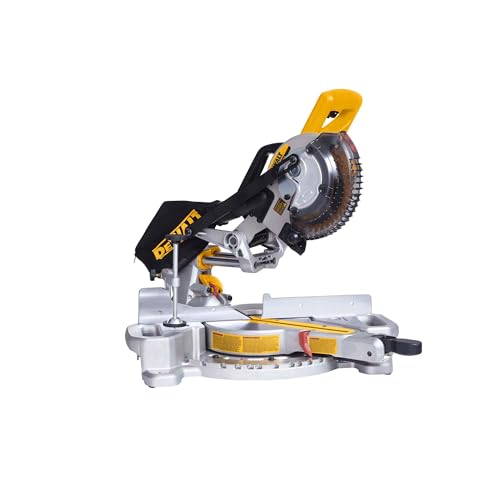
DEWALT 20V MAX 7-1/4-Inch Cordless Miter Saw
What We Like
- Integrated cut line system for adjustment-free accuracy
- Compact, 30-pound design for easy transport
- 11 positive miter stops for quick, precise angles
Trade-offs
- Tool only: requires separate battery and charger purchase
- Single-bevel design limits complex compound cuts
- 30-pound weight is noticeable for a compact saw
The integrated cut line system means you can start making accurate crosscuts right away, without fiddling with lasers or guides. That, combined with its capacity to handle crown molding up to 3 5/8 inches, makes this DeWalt the go-to for trim carpenters and serious DIYers who need cordless freedom without sacrificing precision. Its user-friendly design, from the oversized bevel scale to the cam lock miter handle, reflects a tool built for productivity on a job site or in a tight shop.
Going cordless does come with a trade-off: you’re buying the tool bare, so factor in the cost of a DeWalt 20V battery and charger. For stationary shop work where power outlets are plentiful, a corded model like the Evolution R185SMS+ might offer more value. But if your work takes you to different rooms or unfinished spaces, the DCS361B’s balance of power, portability, and pro-grade features is hard to beat.
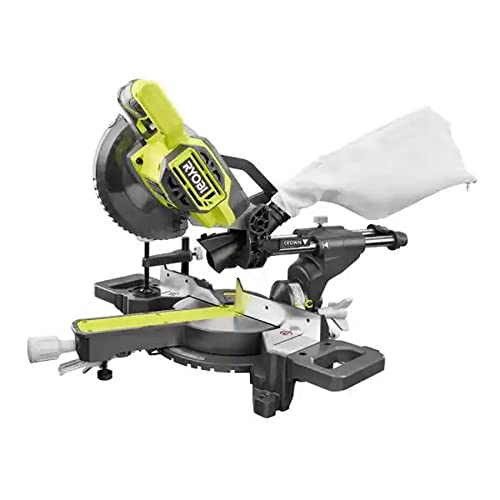
RYOBI ONE+ 18V Cordless Sliding Compound Miter Saw
What We Like
- Excellent battery life for cordless use
- Wide compatibility with 260+ ONE+ tools
- Complete kit includes battery and charger
Trade-offs
- Single bevel design limits complex crown cuts
- 30.2-pound weight requires careful transport
This cordless miter saw delivers up to 800 cuts per charge, letting you work a full day on trim or decking without hunting for an outlet. It comes as a complete kit with battery and charger, so you can start cutting immediately. The design provides a best-in-class 2×10 crosscut capacity, which handles common dimensional lumber for many projects.
For framing or heavy trim, you’ll hit its limits. Compared to a more premium option like the Bosch GCM18V-07SN, the Ryobi offers greater value for the casual user but gives up some crosscut reach and refined features. It’s a practical, battery-powered solution for light construction and finish work where cord-free convenience trumps raw power.
BOSCH GCM18V-07SN PROFACTOR Cordless Slide Miter Saw

What We Like
- Light 26-pound weight for easy transport
- Integrated carry handle for convenient portability
- Smooth sliding bars for precise operation
- Tall fence supports taller material securely
Trade-offs
- Tool only: requires a separate Core18V battery purchase
- Single-bevel design limits compound cutting versatility
At 26 pounds, this saw is easy to lift and move, and its built-in handle makes carrying it across a jobsite simple. Its ability to crosscut boards up to eight and a quarter inches wide means it can handle common dimensional lumber without needing a cord. The brushless motor is designed to work with Bosch’s high-power batteries, delivering enough strength for demanding cuts while keeping the work area free of extension cords.
The tool is sold without a battery or charger, so you need to factor in that additional purchase if you aren’t already in the Bosch 18V system. While it weighs 26 pounds, it is lighter than many other sliding saws in its class, like the 30-pound Ryobi ONE+ 18V sliding model. The sliding mechanism provides its substantial crosscut capacity, which is a clear advantage over non-sliding cordless miter saws when cutting wider stock.
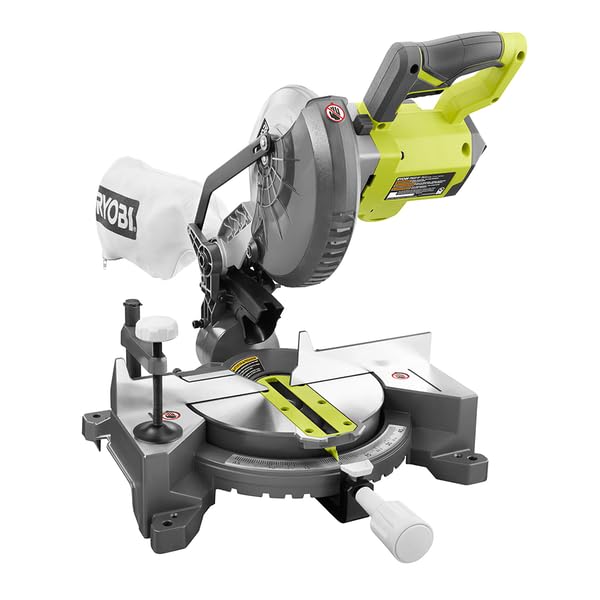
RYOBI ONE+ 18V Cordless Compound Miter Saw
What We Like
- Lightweight 19-pound design for easy carrying
- Cordless 18V ONE+ platform for job site mobility
- Compact footprint for use in tight spaces
Trade-offs
- Tool only: battery and charger sold separately
- Less capable than larger sliding models
- Has limitations for heavy-duty cutting
At just 19 pounds, this is a miter saw you can easily carry from the truck to the job site with one hand. That compact, lightweight design makes it a natural fit for finish carpenters or remodelers who need to make quick trim cuts upstairs or in tight spaces without dragging a cord.
You trade some cutting capacity for that portability, so it’s not the saw for framing decks. For bigger jobs on a cordless platform, you would step up to a model like the RYOBI ONE+ Cordless Sliding Compound Miter Saw, which offers greater crosscut capacity but adds significant weight to the load.
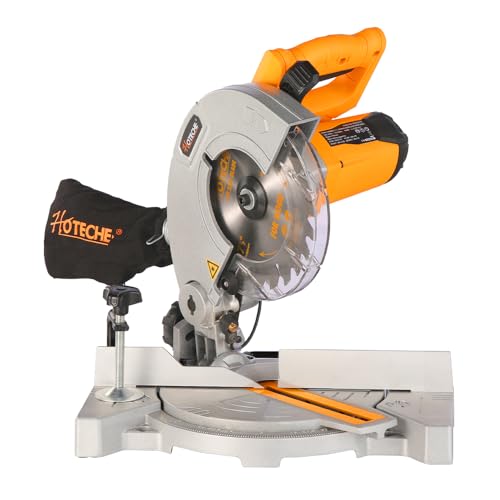
Hoteche 7-1/4-Inch Compound Miter Saw
What We Like
- Built-in laser guide for cutline accuracy
- Sliding arm extends cutting capacity
- Complete kit includes essential accessories
- Lightweight aluminum base with rubber feet
Trade-offs
- Maximum bevel cut capacity is only 85mm x 45mm
- Corded design limits portability compared to cordless rivals
The laser guide system is the standout feature here, projecting a clear line to follow for precise cuts in trim and molding. That, combined with a sliding arm that handles 2×4 lumber at 90 degrees, makes this a solid, budget-friendly choice for a home workshop tackling detailed finish carpentry. It’s a plug-and-play tool ready for a North American outlet, and the included extension bars and dust bag mean you can start a project right out of the box without hunting for extras.
A corded 7.5A motor delivers the power needed to cut through hardwoods and soft metals, so you can tackle materials like PVC or aluminum trim without stalling. This ties the saw to an outlet, unlike cordless models from DEWALT or RYOBI that offer true jobsite mobility. For a homeowner building picture frames or installing baseboards, the laser-guided precision and complete kit with extension bars offer real value.
Product photos
How We Evaluated 7 1/4 Miter Saws
Our evaluation was research-based. We focused on specifications from manufacturers, insights from expert tool round-ups, and consistent patterns found in owner reviews. We looked for criteria that matter most for this specific, portable category: cutting capacity for common trim and dimensional lumber, overall weight and design for transport, and the accuracy features that save time on the job.
We prioritized crosscut capacity on 2x material, as that’s a primary task for these saws, and whether the design included sliding arms or a tall fence to support taller workpieces. Battery platform compatibility was a major factor for cordless models, as it significantly impacts the total cost. We also noted features like integrated cut lines or laser guides that aid precision without constant manual adjustment.
The main limit of our research-led approach is that we cannot verify hands-on performance claims like dust collection efficiency or the exact feel of a miter detent override. We rely on documented specs and repeated user experiences, which provide a strong foundation for comparison but lack the nuance of physical testing.
What To Look For In 7 1/4 Miter Saws
The appeal of a 7 1/4-inch miter saw lies in its balance of capability and convenience. It’s powerful enough for most trim and framing tasks yet light enough to carry from the truck to the job site. Your choice hinges on whether you need sliding capacity, cordless operation, and the ability to make complex compound cuts.
Focus on cutting capacity for 2x lumber, overall weight for portability, and whether a single-bevel or double-bevel design matches your project needs. Battery platform compatibility is a critical cost factor for cordless models.
Cutting Capacity & Design
The maximum depth and width a saw can cut determines its usefulness. A sliding 7 1/4-inch model can typically crosscut a full 12 inches on a 2×12 at 90 degrees, while a non-sliding compound saw is more limited. For bevel cuts, check the maximum thickness at 45 degrees; some models can handle a 2×8, others less.
A tall fence is valuable for vertically mounting crown molding or other tall trim pieces. Our research into compact miter saws confirms that these tools are designed for finish carpenters and flooring installers who need full crosscuts on dimensional lumber without the bulk.
Portability & Power Source
Weight is a primary consideration, with models ranging from under 20 pounds to over 30. A built-in carry handle significantly improves transport. Cordless models offer ultimate job-site freedom but require investment in a battery platform.
If you already own tools from a brand like DeWalt, Ryobi, or Bosch, sticking with that ecosystem for your next miter saw makes financial sense. Corded models provide consistent power and are often more budget-friendly, but they limit where you can work. For many DIYers, understanding the difference between 10 and 12 inch miter saws helps clarify why a smaller, lighter 7 1/4-inch model is the right choice for their space and tasks.
Accuracy & Ease of Use
Features that reduce setup time and improve cut precision are highly valuable. An integrated cut-line system or laser guide projects your blade path onto the workpiece, eliminating guesswork. Positive miter stops at common angles allow for quick, repeatable settings.
A miter detent override lets you smoothly set custom angles without fighting the stops. Good miter saw reviews often highlight these usability features as key differentiators between basic and professional-grade tools. Finally, remember that the factory blade is often just adequate; upgrading to a high-quality miter saw blade is one of the best ways to improve cut quality on any saw.
-## Practical Checks Before You Buy
- Verify the saw’s maximum crosscut width at 90 degrees and its capacity at a 45-degree bevel against your common materials.
- Check the weight and look for a dedicated carry handle if you’ll be moving it frequently.
- For cordless models, confirm the battery type and whether it’s included or sold separately.
- Ensure the miter and bevel scales are clear and that the fence is tall enough for your intended work. Review our guide to compound miter saws to understand the functional differences between single and dual-bevel designs.
Here is a good rule of thumb. If you frequently cut wide crown molding or need to make compound cuts without flipping the workpiece, a dual-bevel sliding saw is worth seeking out. These models are less common in the 7 1/4-inch size.
7 1/4 Miter Saws Compared
The following table compares the key specifications of our top picks to help you see the differences in capacity, design, and power at a glance.
| Product | Weight | Crosscut Capacity | Power Type |
|---|---|---|---|
| DEWALT 20V MAX 7-1/4-Inch Cordless Miter Saw | 30.0 pounds | N/A | 20V MAX cordless |
| RYOBI ONE+ 18V Cordless Sliding Compound Miter Saw | 30.2 pounds | 2×10 best in class | RYOBI ONE+ 18V |
| BOSCH GCM18V-07SN PROFACTOR Cordless Slide Miter Saw | 26.0 pounds | 8-1/4 inches | 18V cordless |
| RYOBI ONE+ 18V Cordless Compound Miter Saw | 19.0 pounds | N/A | 18V Cordless |
| Hoteche 7-1/4-Inch Compound Miter Saw | N/A | 120mm x 45mm | 110-120V plug-and-play |
Frequently Asked Questions
What’s the best 7 1/4 miter saw?
Our research points to the DEWALT 20V MAX 7-1/4-Inch Cordless Miter Saw as the best overall for its combination of pro-grade accuracy features, like the integrated cut-line system, and a portable 30-pound design. It’s particularly well-suited for trim carpenters and mobile DIYers who need reliable performance without a cord.
Which mitre saw is considered the best quality?
In the 7 1/4-inch category, quality is often defined by precision engineering, durable construction, and thoughtful features that enhance accuracy. Brands like DEWALT, Bosch, and Metabo HPT are frequently noted in expert round-ups for their build quality and performance, though the “best” model depends heavily on whether you prioritize cordless portability, sliding capacity, or budget.
Is a 7 1/4 miter saw worth it?
A 7 1/4 miter saw is absolutely worth it for specific users. It’s ideal for finish carpentry, trim work, decking, and DIY projects where a full-size saw is unnecessary. Its lighter weight and smaller footprint make it perfect for transport and use in tight spaces. It won’t replace a 12-inch saw for cutting large timbers, but for its intended tasks, it’s a highly capable and convenient tool.
What is the best brand of mitre saw?
ThereĠisĠnoĠsingleĠbestĠbrand,ĠasĠdifferentĠbrandsĠareĠstrongĠinĠdifferentĠareas.ĠDEWALTĠisĠknownĠforĠdurableĠtoolsĠforĠjobĠsitesĠandĠaccurateĠsystems.ĠBoschĠisĠoftenĠnotedĠforĠinnovativeĠdesignsĠandĠeaseĠofĠcarrying.ĠRyobiĠprovidesĠveryĠgoodĠvalueĠandĠaĠlargeĠbatteryĠsystemĠforĠDIYĠusers.ĠTheĠbestĠbrandĠforĠyouĠisĠtheĠoneĠwhoseĠbatteryĠsystemĠyouĠalreadyĠownĠorĠwhoseĠfeaturesĠmatchĠtheĠworkĠyouĠdoĠmostĠoften.
Can a 7 1/4 miter saw cut a 4×4?
A standard 7 1/4-inch blade cannot cut through a 4×4 post in a single pass due to its limited depth of cut. You would need to rotate the workpiece and make cuts from at least two sides. For frequent cutting of 4×4 lumber, a saw with a larger blade diameter, such as a 10-inch or 12-inch model, is a more efficient choice.
The Bottom Line
For professionals and serious DIYers who demand accuracy and mobility, the DEWALT 20V MAX 7-1/4-Inch Cordless Miter Saw is our top recommendation. Its integrated cut-line system and compact design deliver pro-level results where a cord can’t reach.
If you’re budget-conscious and already invested in the Ryobi ONE+ ecosystem, the RYOBI ONE+ 18V Cordless Sliding Compound Miter Saw offers excellent value as a complete kit. For those who prioritize carrying weight above all else, the 26-pound BOSCH GCM18V-07SN is the most portable full-capacity option.
Ultimately, your decision should center on battery compatibility and cutting capacity. Choosing a saw that fits your existing tool system and can handle the width and depth of your most common materials will ensure it’s a worthwhile investment for years of precise cuts.
