
10 Best Miter Saws For Trim Work in 2026
This post contains affiliate links. As an Amazon Associate, we earn from qualifying purchases.
For accurate trim work, the DEWALT DWS779 12-Inch Sliding Compound Miter Saw is our best overall, combining tall fence capacity with excellent dust collection. The DEWALT DCS361B is our top compact cordless pick, and the BOSCH CM10GD wins for its space-saving design. Choosing the right miter saw transforms installing baseboards and crown molding from a chore into a precise craft.
The wrong saw leaves you fighting for accuracy or struggling with portability. We researched specifications, manufacturer data, and owner feedback to rank ten models. This guide helps you match a saw’s capabilities to your specific trim projects and workspace.
Top 10 Miter Saws For Trim Work in the Market
Certain content that appears on this site comes from Amazon. This content is provided "as is" and is subject to change or removal at any time.
The Best Miter Saws For Trim Work, Reviewed
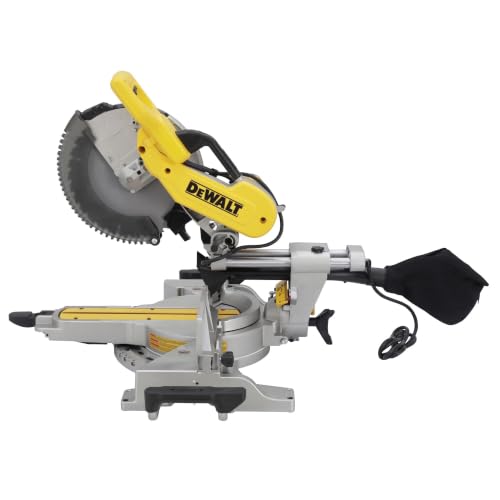
DEWALT DWS779 12-Inch Sliding Compound Miter Saw
What We Like
- Tall sliding fence supports wide crown molding
- Adjustable stainless steel miter detent plate for accuracy
- Super-efficient dust collection captures over 75% of dust
- Oversized bevel scale for easy angle adjustments
Trade-offs
- Weighs 67.7 pounds, making it a substantial bench tool
- No cordless option for job sites without power
A crosscut capacity for 2×14 lumber means this saw handles nearly any interior trim piece you’ll encounter, from thick casings to wide baseboards. The tall sliding fence securely holds crown molding up to seven and a half inches nested, a common challenge on simpler saws. For a contractor or serious DIYer running a mix of finish work, that versatility and the solid detent plate for repeatable accuracy make it a reliable shop anchor. It’s built to be the one saw you grab for most trim and framing tasks.
The trade-off is its size and heft. For purely fine trim work in a finished house, a more compact saw like the DEWALT DCS361B might be easier to maneuver. But if your projects vary and you need a single saw that won’t flinch at larger stock, the DWS779’s power and capacity deliver day in and day out.
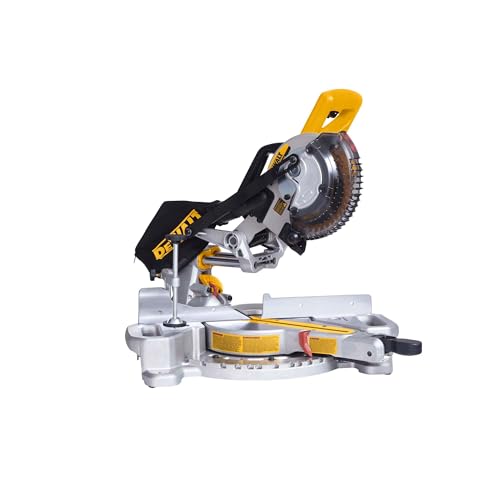
DEWALT DCS361B 7-1/4-Inch Cordless Miter Saw
What We Like
- Integrated cut line system for adjustment-free accuracy
- Compact 30 lb design for easy transport and storage
- Oversized bevel scale for easy, accurate adjustments
- Capacity handles crown and base molding vertically
Trade-offs
- Tool only: requires separate purchase of battery and charger
- 7-1/4-inch blade limits depth for some wider trim profiles
Cordless operation and a 30-pound weight make the DEWALT DCS361B easy to transport and use where outlets are unavailable. Its compact design supports work in small spaces where storage is a premium. The integrated cut line positioning system and stainless steel miter detent plate with 11 positive stops provide adjustment-free indication and repeatable accuracy for trim work.
The trade-off is in the cut capacity; that 7-1/4-inch blade can’t match the crosscut width of a larger sliding saw like the DeWalt DWS779. You’re buying into a system here, too, since it’s tool-only. For a contractor already invested in 20V MAX batteries, that’s a perk. For someone setting up their first shop, the initial cost climbs once you add a battery and charger. It excels at portability and precision, not at ripping through wide stock.
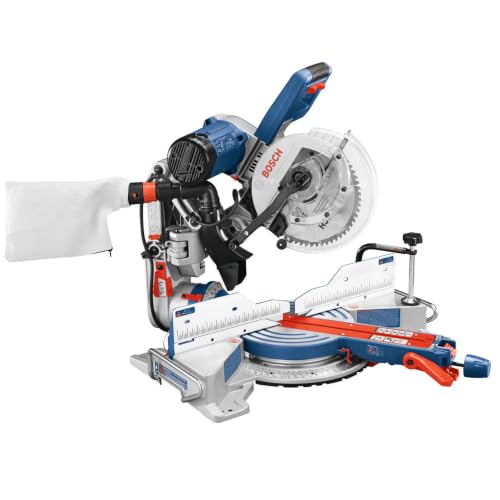
BOSCH CM10GD 10-Inch Axial Glide Miter Saw
What We Like
- Axial-Glide system eliminates rear clearance needs
- Compact footprint saves significant bench space
- Powerful motor handles demanding trim materials
- Front bevel controls for easy angle adjustments
Trade-offs
- At 64 pounds, it is not easily portable
- Requires a sturdy, permanent mounting surface
Bosch’s unique Axial-Glide System eliminates the long rail projection behind the saw, so you can place it flush against a wall and save rear clearance. Research mentions note this saw’s base takes up just 21 inches of workbench front-to-back. That stable design, combined with a 15 Amp motor and wide cutting capacities, makes it suited for a dedicated, space-conscious workshop.
The trade-off for that compact, stable design is substantial heft. At 64 pounds, this isn’t a saw you’ll want to haul to a job site regularly; it’s built for a semi-permanent station. The Bosch justifies its positioning by solving the rear-clearance problem completely. For those prioritizing mobility over fixed installation, other models in the category are notably lighter.
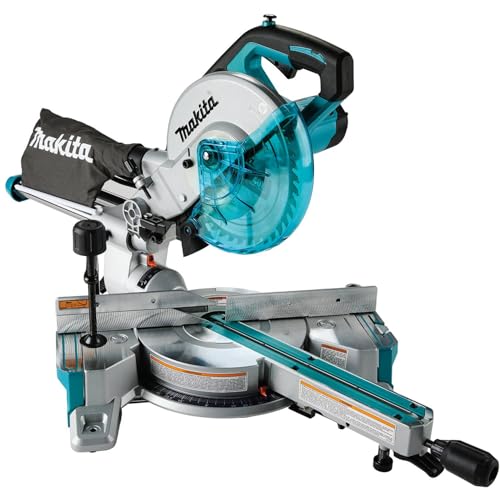
Makita LS0816F 8-1/2-Inch Slide Compound Miter Saw
What We Like
- Remarkably portable at just 30.9 pounds
- Linear ball bearing system for accurate cuts
- Built-in LED light illuminates cut line
- Soft start for smooth, controlled startups
Trade-offs
- 8-1/2 inch blade limits depth for wider crown molding
- Single bevel design only tilts to the left
Weighing just over 30 pounds, this saw is easy to carry from the truck to the final room, making it a dream for finish carpenters who are constantly on the move. Its compact slide mechanism and 8-1/2-inch blade deliver precise, clean cuts in trim and casing without the bulk of a full-sized saw. The soft-start motor and LED cut line are thoughtful touches that directly support accuracy in fine work. It’s the clear choice for any pro who values a tool that won’t wear them out before the job even starts.
Its lightweight portability does come with a limit on raw cutting capacity. This saw is limited to a 12-inch crosscut, so while it handles baseboard and door casing with ease, wider crown or tall base might require a flip. Compared to a larger 12-inch sliding model like the heavier DEWALT DWS779, the Makita is a specialist. It excels in its niche, offering pro-grade precision in a package that’s genuinely easy to handle all day, but you pick it for agility, not maximum board width.
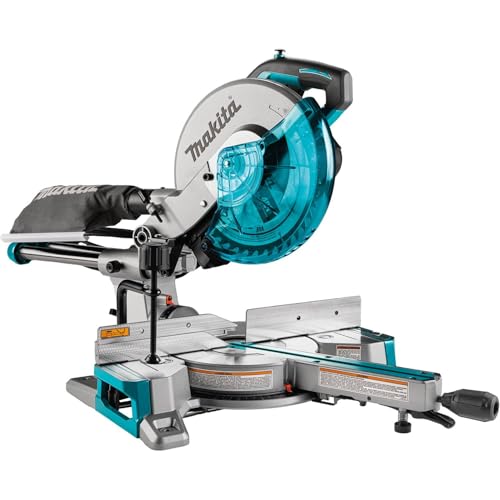
Makita LS1110F 10-Inch Slide Compound Miter Saw
What We Like
- Linear ball bearing system for dead-on accuracy
- Built-in LED light illuminates cut line
- Soft start feature for smooth startup
- Compact, 36.2 lb design for job site portability
Trade-offs
- Single-bevel design limits complex crown cuts from the right
- Bevel range is only 0-2° to the right
With a crosscut capacity of 12 inches at 90 degrees, the Makita LS1110F can handle wide boards like casing and fascia in one pass. Its linear ball bearing slide system is engineered for ‘dead-on’ accurate cuts, which is essential for creating tight-fitting joints. At 36.2 pounds, the saw is described as compact and lightweight for job site portability.
The saw is a single-bevel design, tilting 47 degrees to the left but only 2 degrees to the right, unlike a true dual-bevel model. For general trim work like door casings and baseboards, its accuracy and 12-inch capacity are significant features. The dual rear handle bevel lock is designed to be easily accessible for adjustments.
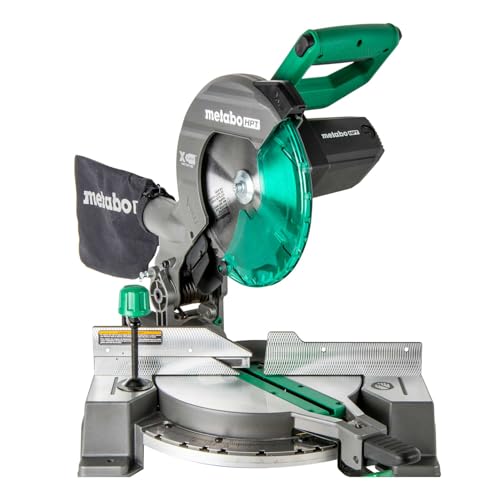
Metabo HPT C10FCG2 10-Inch Compound Miter Saw
What We Like
- Exceptionally lightweight at just over 24 pounds
- Large table provides solid workpiece support
- Vice clamping system secures material for safety
- 5-year warranty offers long-term security
Trade-offs
- Single-bevel design requires flipping wide stock for compound cuts
- Non-sliding blade limits crosscut capacity to 10 inches
- Fixed design lacks the extended reach of a sliding saw
At just over 24 pounds, this saw is a standout for its easy portability, making it a natural fit for moving between rooms or job sites where you’re setting up on sawhorses. The 15-amp motor and 5,000 RPM deliver plenty of power for clean trim cuts, and the 0-52° miter range handles common crown molding angles. It’s a straightforward, reliable tool for the installer or serious DIYer who needs a precise, transportable saw for standard casing, baseboard, and basic crown work without the complexity or cost of more feature-rich models.
The main compromise for that portability is the fixed, non-sliding blade. Cutting width is limited to the 10-inch blade’s diameter, so wider boards require multiple cuts. Compared to the heavier 36.2-pound Makita LS1110F sliding saw, this model trades crosscut capacity for lighter weight and easier transport. For standard interior trim where quick setup is key, this design offers a practical balance.
Product photos
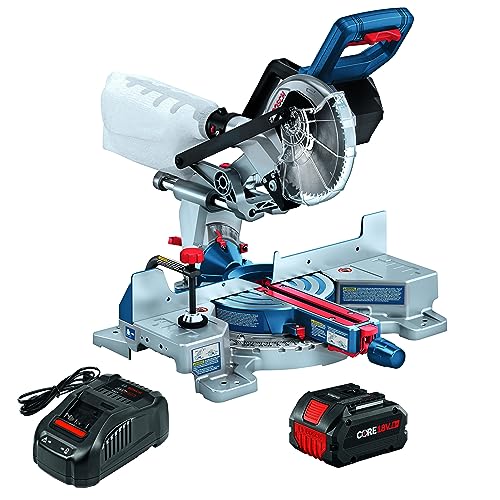
BOSCH GCM18V-07SN14 7-1/4-Inch Cordless Slide Saw
What We Like
- Extremely portable at just 26 pounds
- Integrated carry handle for easy transport
- Biturbo brushless motor for high-performance cuts
- Precisely centered sliding bars for accuracy
Trade-offs
- Tool only: requires separate purchase of Core18V battery and charger
- 7-1/4-inch blade limits maximum stock thickness compared to 10- or 12-inch saws
- Single-bevel design requires flipping wide workpieces for compound cuts
Weighing only 26 pounds, this saw is built for the trim carpenter who needs to move from room to room or job to job without wrestling a heavy tool. Its 7-1/4-inch blade and slide mechanism deliver an 8-1/4-inch crosscut and can handle 3-3/4-inch nested crown, covering most common trim profiles. That makes it a perfect fit for finish carpenters and installers prioritizing mobility and cordless convenience over maximum cutting capacity. The Biturbo brushless motor is engineered to pair with Bosch’s high-power batteries, aiming for the runtime needed to get through a day’s trim list.
This compact design does mean some sacrifices in cut size. You won’t be slicing through thick lumber or wide, stacked crown with this tool. For larger dimensional stock, a corded sliding saw like the DEWALT DWS779 offers a bigger blade and greater capacity, though it weighs over twice as much. This Bosch excels as a dedicated, go-anywhere trim saw, but remember it’s a tool-only kit, so factor in the cost of the battery if you’re not already invested in the Bosch 18V platform.
Product photos
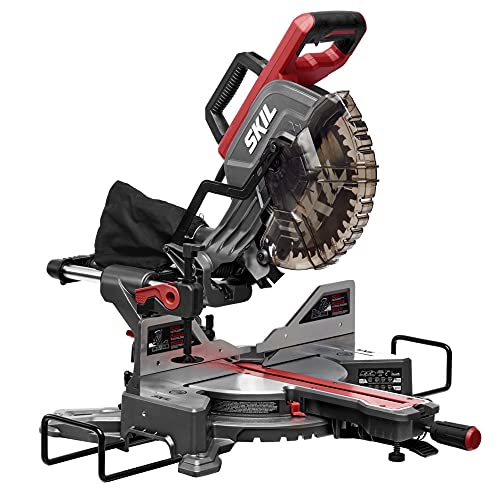
SKIL MS6305-00 Dual Bevel Sliding Miter Saw
What We Like
- LED shadow line guide for high-precision cuts
- Dual-bevel design with four positive stop positions
- Powerful 15-amp motor for quick, detailed cuts
- Cuts at common angles with 11 positive stops
Trade-offs
- Weighs 39.4 lb, making it less portable than lighter saws
- No cordless option for job sites without power
The SKIL MS6305-00 delivers precision where trim carpenters need it most, with an LED shadow line that casts a clear, accurate cut line without the fuss of aligning a laser. Its dual-bevel capability and 11 positive miter stops mean you can handle complex crown and casing work without constant tool adjustments. The 15-amp motor has the guts to power through detailed cuts, and a capacity for a 2×12 at 90 degrees gives you room for wider stock. This saw is built for the installer who values a clear, reliable guide system and needs the flexibility of compound angles in a stationary shop setup.
Its capability comes at the cost of portability, as it weighs 39.4 pounds. The sliding rails and length of 35.4 inches also require significant space behind the workpiece on a bench. Compared to the 30.9-pound Makita LS0816F, the SKIL saw is heavier.
Product photos
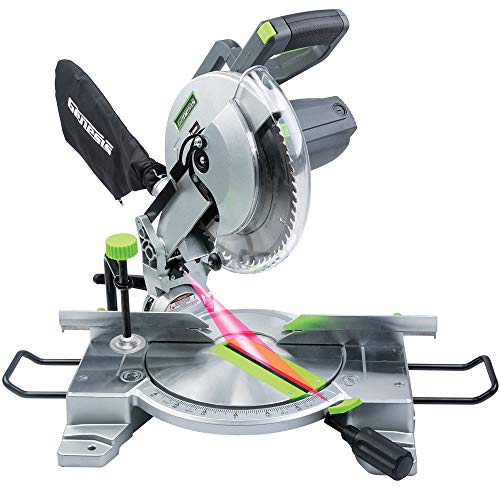
Genesis GMS1015LC Compound Miter Saw
What We Like
- Integrated laser guide for alignment
- Electric brake for quick blade stop
- Lightweight die-cast aluminum base
- Nine positive stops at common miter angles
Trade-offs
- Single-bevel design limits compound cuts to one direction
- Non-sliding design reduces crosscut capacity versus sliding saws
For the budget-conscious trim carpenter, the Genesis GMS1015LC offers a straightforward 15-amp motor and a laser guide for quicker alignment. The laser shows your cut line before you pull the trigger, which can save time on repetitive tasks like crown molding or picture frames. Its die-cast aluminum base is designed for portability and better accuracy. This saw suits anyone who needs reliable basic miter and bevel cuts without the complexity or cost of a sliding mechanism.
That simplicity and low cost do limit the saw’s capacity. As a non-sliding 10-inch saw, it can’t handle the wider boards a model like the DEWALT DWS779 tackles with its sliding action. The single-bevel design means you’ll have to flip the workpiece for certain compound cuts, which adds a step. It’s a focused tool that does a few common trim jobs well, leaving the heavy-duty crosscuts to more expensive machines.
Product photos
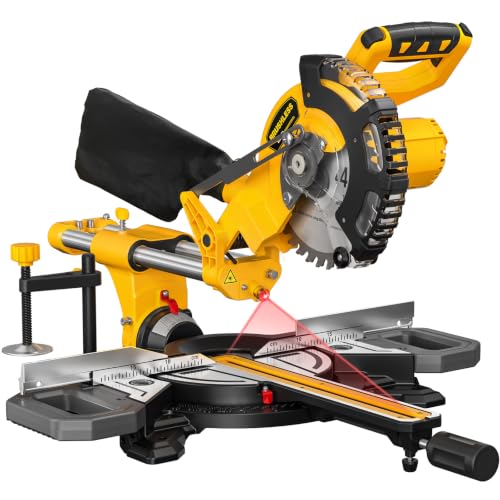
Baikemon 8-1/4-Inch Cordless Sliding Miter Saw
What We Like
- Brushless motor for longer runtime and durability
- Works with existing DEWALT 20V battery platform
- Generous 12.2-inch cross-cut capacity for trim
- Built-in laser guide for accurate cuts
Trade-offs
- Single bevel limits compound cuts from one side
- Smaller 8-1/4-inch blade limits depth on thick stock
Compatibility with DEWALT 20V MAX batteries is the core advantage here, letting you add a capable sliding miter saw to your kit without buying into a new battery ecosystem. The brushless motor spins at 4100 RPM for clean cuts in trim and molding, and the 12.2-inch cross-cut capacity means you can handle wider boards without flipping them. This makes it a logical, cost-effective upgrade for a DIYer or pro already invested in yellow-tool batteries who needs cordless convenience for finish work.
You gain cordless flexibility and a lighter 27-pound frame, but you give up some cutting capacity. Compared to a corded beast like the DEWALT DWS779, its 8-1/4-inch blade and single-bevel design can’t match the depth or the double-bevel versatility for complex crown molding setups. It’s a focused tool: excellent for baseboards, casing, and flooring where you value a quick, unplugged setup, but you’ll need a larger saw for heavy framing or frequent compound cuts.
Product photos
How We Evaluated Miter Saws For Trim Work
This evaluation is based on manufacturer specifications, expert tool round-ups, and patterns in owner feedback. The primary criteria were cutting capacity for crown and base molding, the accuracy and convenience of adjustment systems, and overall portability or space efficiency. Features that directly impact trim carpentry, like tall fences, positive miter detents, and guide systems, were prioritized. A limitation of this approach is that real-world cut quality or long-term durability claims cannot be verified firsthand.
What To Look For In Miter Saws For Trim Work
The ideal trim saw balances precision, capacity, and setup for your work environment. A saw that excels in a permanent shop might be a burden on a job site, and vice versa.
Look for a saw with a fence tall enough to support crown molding vertically. It should also have accurate miter detents at common angles like 22.5° and 45°. Finally, choose a guide system you trust for alignment, like a shadow line or laser.
Cutting Capacity
Trim work demands specific capacities. Check the saw’s maximum vertical capacity for cutting crown molding nested against the fence, and its crosscut capacity for wide casing or baseboard. A 12-inch slider like the DEWALT DWS779 handles large dimensional lumber and tall moldings, while a 7-1/4-inch model is limited to standard profiles. Our research on miter saws for crown molding highlights how saw design affects this key metric. Sliding mechanisms add reach but also weight and footprint.
Accuracy & Adjustability
Precise miter and bevel adjustments are non-negotiable. Look for a saw with a positive miter detent plate, preferably adjustable like the DEWALT DWS779’s stainless steel plate, which provides solid stops at common angles. An oversized bevel scale and front-mounted controls, as on the BOSCH CM10GD, make angle settings easier and more accurate. A dual-bevel design saves time on complex crown cuts, but a well-designed single-bevel saw can be sufficient for many trim and molding tasks.
Portability & Footprint
Consider where you’ll use the saw. For job-site mobility, weight is critical; the Makita LS0816F and Metabo HPT C10FCG2 are notably light. Cordless models like the DEWALT DCS361B offer ultimate portability but require a battery investment. In a cramped workshop, a saw’s depth behind the fence matters. Traditional sliders need rear clearance for their rails, while axial-glide or compact rail designs, like on the BOSCH CM10GD, save significant bench space and can sit flush against a wall.
- Verify the saw’s weight if you’ll move it frequently.
- Measure your bench depth to ensure a slider will fit.
- For cordless models, confirm battery compatibility with your existing tools.
The best saw is the one you’ll use confidently for every inside and outside corner.
Miter Saws For Trim Work Compared
The following table compares key specifications across our picks to help you see the differences at a glance.
| Product | Motor | Weight | Blade Size |
|---|---|---|---|
| DEWALT DWS779 12-Inch Sliding Compound Miter Saw | 15 Amp, 3800 RPM | 67.7 pounds | 12 Inch |
| DEWALT DCS361B 7-1/4-Inch Cordless Miter Saw | N/A | 30.0 pounds | 7-1/4 inches |
| BOSCH CM10GD 10-Inch Axial Glide Miter Saw | 15 Amp, 4800 RPM | 64.0 pounds | 10 In. |
| Makita LS0816F 8-1/2-Inch Slide Compound Miter Saw | 10.5 AMP, 5,000 RPM | 30.9 pounds | 8-1/2 inches |
| Makita LS1110F 10-Inch Slide Compound Miter Saw | 13.0 AMP, 4,500 RPM | 36.2 pounds | 10” |
| Metabo HPT C10FCG2 10-Inch Compound Miter Saw | 15-Amp | 24.2 pounds | 10-Inch |
| BOSCH GCM18V-07SN14 7-1/4-Inch Cordless Slide Saw | N/A | 26.0 pounds | 7-1/4 inches |
| SKIL MS6305-00 Dual Bevel Sliding Miter Saw | 15 Amp, 4800 RPM | 39.4 Pounds | 10" |
| Genesis GMS1015LC Compound Miter Saw | 15-amp | 1.0 Pounds | 10-Inch |
| Baikemon 8-1/4-Inch Cordless Sliding Miter Saw | 4100 RPM brushless | 27.0 pounds | 8-1/4-inch |
Frequently Asked Questions
What is the best miter saw for trim work?
The best miter saw for trim work depends on your needs. For a powerful, corded saw with maximum capacity for large moldings, the DEWALT DWS779 12-Inch Slider is our top choice. For ultimate portability without sacrificing precision, consider the compact, cordless DEWALT DCS361B.
Which mitre saw is considered the best quality?
Quality in a miter saw manifests in accurate, repeatable cuts and durable construction. Saws with strong sliding mechanisms like linear ball bearings (Makita) or axial-glide systems (BOSCH), along with precision-machined detent plates, are consistently noted for high quality in expert evaluations and owner feedback.
What saw to use for trim work?
A compound miter saw is the standard tool for trim work, allowing for both miter (horizontal) and bevel (vertical) angle cuts needed for corners. A sliding compound model adds capacity for wider boards. For standard baseboards and casing, a 10-inch or high-quality 7-1/4-inch saw is often sufficient. Our guide to the best saws for trim carpentry details these options.
What is the best miter saw blade for trim work?
For clean, chip-free cuts in trim, use a blade with many teeth designed for fine finish work. A thin-kerf blade reduces resistance and yields a smoother cut in softer molding materials. Choosing the right blade for clean cuts is as important as selecting the saw itself.
How do I choose between a 10-inch and a 12-inch miter saw for trim?
Choose based on the size of your typical material. A 10-inch saw is lighter, often more affordable, and handles most interior trim. A 12-inch saw, like our best overall, provides greater vertical capacity for tall crown molding and can crosscut wider stock. If you regularly work with large, ornate profiles, the extra capacity is worth the added weight and cost.
The Bottom Line
For most trim carpenters needing a versatile, powerful saw for a workshop or fixed station, the DEWALT DWS779 12-Inch Sliding Compound Miter Saw is the best overall choice, offering exceptional capacity and accuracy. If your priority is a lightweight, job-site-friendly tool, look to the Makita LS0816F or the budget-friendly Metabo HPT C10FCG2. For those investing in a cordless ecosystem, the DEWALT DCS361B provides excellent cord-free precision. Ultimately, matching the saw’s cutting capacity and physical footprint to your most common projects is the single most important step to a confident purchase.
