
10 Best Miter Saws For Crown Molding in 2026
This post contains affiliate links. As an Amazon Associate, we earn from qualifying purchases.
The best miter saw for crown molding is the DEWALT DWS779 12-Inch Sliding Compound Miter Saw, which wins for its tall fences supporting large molding and accurate dual-bevel capability. For compact precision, choose the Makita LS1019L, and for ultimate portability, the DEWALT DCS361B cordless saw leads.
Cutting crown molding demands precision for complex joints, and the wrong saw makes waste. You need a saw that holds angles accurately and offers the right capacity for your molding size. We researched specifications, expert round-ups, and owner feedback to find the ten best saws for this specific task, helping you make a confident, well-informed choice.
Top 10 Miter Saws for Crown Molding in the Market
Certain content that appears on this site comes from Amazon. This content is provided "as is" and is subject to change or removal at any time.
The Best Miter Saws for Crown Molding, Reviewed
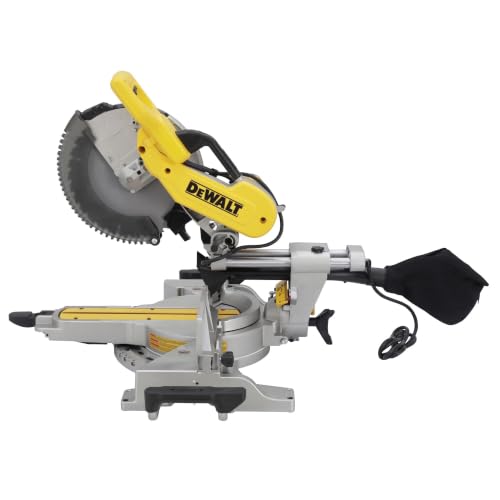
DEWALT DWS779 12-Inch Sliding Compound Miter Saw
What We Like
- Tall sliding fences support large crown molding
- Double-bevel design for efficient compound cuts
- Adjustable stainless miter detent plate for accuracy
- Powerful 15-amp motor for demanding cuts
Trade-offs
- Weighs 67.7 lb, making it heavy for frequent transport
- Large footprint requires significant workshop space
A 12-inch blade and tall sliding fences that support crown molding up to seven and a half inches nested make this saw a natural fit for trim carpenters and serious DIYers tackling complex projects. The double-bevel capability and broad miter range handle the odd angles common in older homes without constantly flipping the workpiece. It’s built for a shop or a permanent stand, where its power and generous capacity can be fully utilized on everything from delicate moldings to dimensional lumber.
At 67.7 pounds, this saw’s substantial weight provides stability for shop work or stationary installs, but makes frequent transport a significant task. For maximum portability, the Bosch GCM18V-07SN offers a cordless, lighter-weight alternative. The DEWALT DWS779 delivers pro-grade versatility where accuracy on wide stock matters most.
Makita LS1019L 10-Inch Sliding Compound Miter Saw

What We Like
- Excellent nested crown molding capacity for a 10-inch saw
- Compact, wall-flush sliding system saves space
- Linear ball bearings for dead-on accurate cuts
Trade-offs
- 57.9 lb weight still requires a sturdy stand
- Vertical cut capacity limited to 5-1/4 inches
A 10-inch saw that handles nested crown molding like a 12-inch model means you can tackle complex trim projects without needing a larger, bulkier tool. This makes the Makita LS1019L a superb choice for finish carpenters and serious DIYers who value precision in tight spaces and need to move the saw to the job. Its unique sliding system tucks the rails in tight, so you can set it up flush against a wall in a cramped workshop or on a benchtop.
That compact design does come with the expected trade-offs of a 10-inch blade, particularly in vertical cutting capacity. For users who will primarily be cutting crown and other trim, it’s an ideal balance of capability and portability.
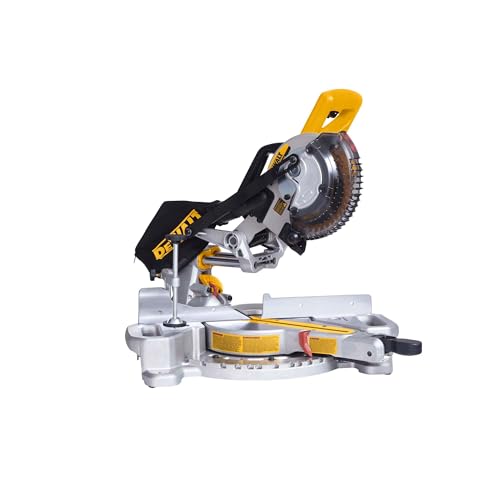
DEWALT DCS361B 7-1/4-Inch Cordless Miter Saw
What We Like
- Integrated cut line system for adjustment-free accuracy
- Lightweight 30 lb design for easy transport
- Cam lock miter handle for quick angle changes
- Stainless steel miter detent plate with 11 stops
Trade-offs
- Tool only: requires separate battery and charger purchase
- 7-1/4-inch blade limits cut depth versus 10- or 12-inch saws
A capacity for 3 5/8-inch nested crown molding makes this cordless saw a genuine option for trim carpenters who need to move fast. Its 30-pound, compact frame is the key feature, letting you carry it up a ladder or between job sites without a cart. The integrated cut line system and 11 positive miter stops mean you can set common angles quickly and trust your mark. This is the saw for the installer who values getting the tool to the workpiece over having the absolute largest cutting capacity on the bench.
This cordless miter saw is a compact tool that weighs 30 pounds, allowing for easy transport between job sites or storage in a vehicle. Its design centers on portability over maximum cut capacity, with vertical crown capacity up to 3 5/8 inches. For installers working in finished rooms without convenient outlets, the lack of a cord can be a significant advantage, though the battery and charger are sold separately.
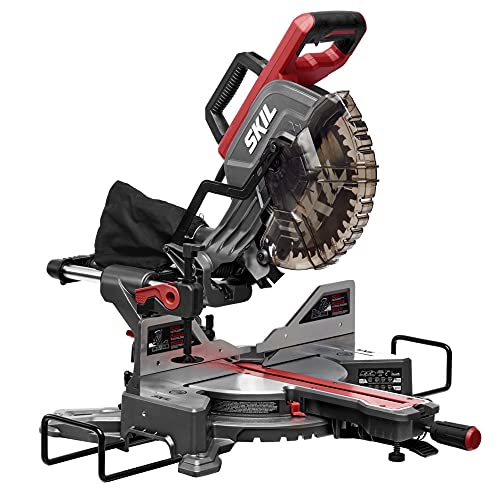
SKIL MS6305-00 10-Inch Sliding Compound Miter Saw
What We Like
- LED shadow line for precise alignment
- Dual bevel with four positive stop positions
- Powerful 15-amp motor for quick cuts
- Cuts common angles with 11 positive stops
Trade-offs
- At 35.4 inches long, it requires a deep bench space.
- Sliding rail design is less compact than a glide mechanism.
- Weight of 39.4 lb is substantial for frequent job-site moves.
The SKIL MS6305-00 delivers a dual-bevel sliding saw with a serious 15-amp motor and a clever LED shadow line guide, a combination that tackles crown molding’s compound angles with solid accuracy at a very accessible point. It’s a fit for the dedicated DIYer or a contractor setting up a semi-permanent station, where the 2×12 crosscut capacity and the four positive bevel stops handle not just trim but also larger framing lumber efficiently.
The saw’s sliding mechanism requires space, with a length of 35.4 inches, so it needs a substantial bench. At 39.4 pounds, it is heavier than some cordless models like the 30-pound DEWALT DCS361B, making it less suited for frequent job-site transport. You get a powerful, capable saw, but its size and weight favor a more stationary workshop setup.
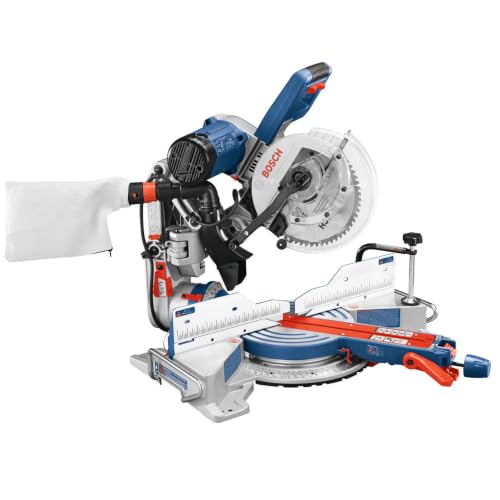
Bosch CM10GD 10-Inch Dual-Bevel Glide Miter Saw
What We Like
- Articulated arms reduce front-to-back footprint by 10 inches.
- Axial-Glide System for durable, precise sliding action.
- Tall sliding fences for increased crown molding capacity.
- Forward bevel lock and range selector for easy adjustments.
Trade-offs
- At 64 pounds, it is heavier than many 10-inch saws.
- 6-inch nested crown capacity is less than some 12-inch models.
Its articulated hinge arms shrink the front-to-back footprint by up to 10 inches compared to traditional sliders, making this the saw you want when working in a tight corner or against a wall. The 6-inch crown cut capacity nested against the fence handles typical molding profiles, and the forward-mounted bevel controls let you set angles without fumbling behind the saw. It’s a premium, space-conscious solution for installers and serious DIYers who need a full-capacity sliding saw without the rear clearance demands.
The trade-off for that compact, wall-flush design is heft; at 64 pounds, it’s a solid chunk of machinery to move around. While its 10-inch blade and glide system deliver smooth, accurate cuts, professionals might find the cutting capacities of a 12-inch model more fitting for their daily workflow. This is especially true for those regularly tackling very wide crown or tall baseboard, like with the DEWALT DWS779. This Bosch excels where floor space is at a premium, offering pro-grade power in a uniquely engineered package.
Makita LS1219L 12-Inch Sliding Compound Miter Saw

What We Like
- Unique sliding system allows flush-wall operation
- Large 8-inch vertical crown molding capacity
- Dual dust collection ports for cleaner cuts
- In-front bevel lock for convenient adjustments
Trade-offs
- At 81.6 lb, it's a two-person lift onto a stand
- Heavier than the 67.7-pound DeWalt DWS779
An 8-inch vertical crown molding capacity means you can tackle the widest, most ornate profiles without flipping the stock, a genuine advantage for serious trim work. This saw is built for the craftsman who needs maximum material handling in a stationary shop setup. The innovative two-rail sliding system glides smoothly and tucks the saw body tight to a wall, a smart design for saving precious floor space in a crowded garage.
The Makita LS1219L’s unique 2-steel rail sliding system reduces its footprint, allowing it to operate flush against a wall, which is a major space-saver in a tight workshop. That capability, along with its weight of 81.6 pounds, makes it better suited as a permanent fixture on a sturdy stand than as a frequent job-site traveler. Compared to the more compact DeWalt DWS779, which weighs 67.7 pounds, the Makita trades some mobility for its greater cutting envelope and specialized rail design.
Product photos
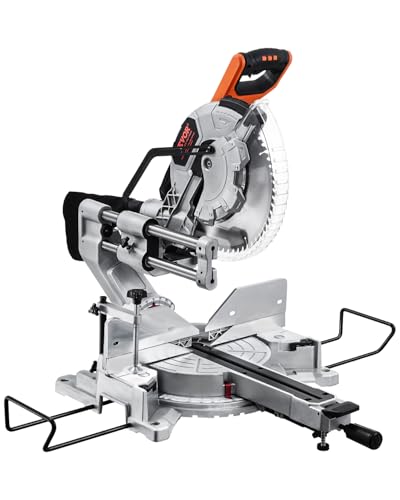
VEVOR 12-Inch Double Bevel Sliding Miter Saw
What We Like
- Dual bevel capability for complex crown joints.
- Axial sliding system for wider crosscut capacity.
- LED guide system for precise alignment.
- Lightweight aluminum base for easier portability.
Trade-offs
- At 46.4 lb, it's heavier than some cordless options like the Bosch GCM18V-07SN.
- Its 33.5-inch length requires more bench space than compact models.
- Corded design limits placement compared to battery-powered saws.
A 12-inch blade paired with a dual-bevel sliding head gives you the essential capacity and flexibility for tackling large crown molding profiles. The 2500W motor and 5000 RPM speed provide the straight-line power needed to push through hardwoods without bogging down. This combination of core features makes it a serious contender for the woodworker who needs full-size saw performance but is mindful of their budget. The aluminum base keeps the weight manageable at 46.4 pounds, so moving it around a workshop or loading it for a job is less of a chore.
The 33.5-inch length requires a stable, dedicated space on a workbench. Its axial sliding system moves forward and backward, a design that allows placement against a wall to save workspace. For intricate projects demanding high precision, its LED guide system projects clear cutting lines to aid alignment.
Product photos
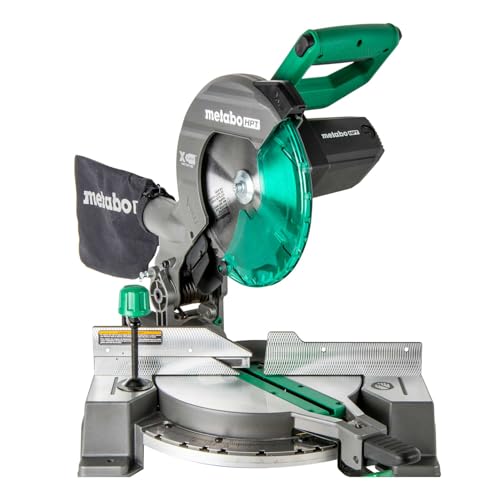
Metabo HPT C10FCG2 10-Inch Compound Miter Saw
What We Like
- Lightweight at 24.2 pounds for easy transport
- Large table provides better material support
- Vice clamping system secures workpiece for safety
- Improved miter scale and controls for accurate adjustments
Trade-offs
- Single-bevel design requires flipping wide boards for compound cuts
- No sliding mechanism to extend crosscut capacity
Weighing only 24 pounds, this compound miter saw is easy to maneuver and transport to any job site. Its 15-amp motor delivers a no-load speed up to 5,000 RPM for high power. The design includes an improved miter scale and a large table for better material support and accurate adjustments.
Its easy portability comes with fewer advanced features. You won’t get the double-bevel convenience of the Makita LS1019L, which lets you tilt the head both ways without flipping the workpiece. That’s a real time-saver on complex crown installations. The fixed 10-inch blade also means your crosscut capacity is limited to the blade diameter, so you can’t tackle wider boards like a sliding model can. This saw excels at being a simple, powerful, and easy-to-move tool for standard cuts.
Product photos
Bosch GCM18V-07SN 7-1/4-Inch Cordless Slide Miter Saw

What We Like
- Lightweight 26 lb design with carry handle
- 3-3/4 in. nested crown cutting capacity
- Smooth sliding from centered bars
Trade-offs
- Tool only: requires separate battery and charger purchase
- Single-bevel design limits compound angle flexibility
Its 26-pound weight and carry handle make this saw a genuine go-anywhere tool, a true asset for finish carpenters moving between job sites or rooms. The 3-3/4 inch nested crown capacity handles typical molding profiles, and the smooth sliding action from the centered bars promotes clean, accurate cuts. This is the saw you grab when outlet access is unreliable or you need to set up in a finished space without dragging a cord. It delivers pro-grade capacity in a package designed for constant relocation.
This mobility is balanced by a single-bevel design and a 7-1/4 inch blade. You’ll need to flip the workpiece for certain compound cuts, and the crosscut capacity won’t tackle wide casing or shelving stock. For stationary shop work with larger materials, a corded model like the Bosch CM10GD offers greater capability. Its dual-bevel action and axial-glide system provide more versatility without the battery consideration. This cordless model excels specifically where its portability is the primary requirement.
Product photos
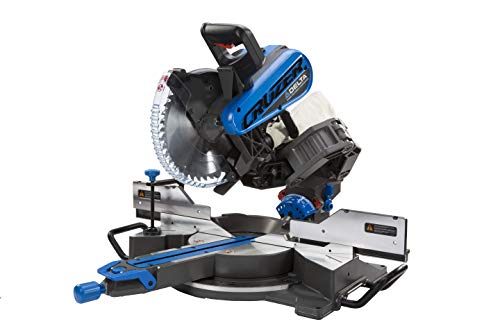
DeltaĠ26-2241Ġ10-InchĠSlidingĠMiterĠSaw
What We Like
- Shadow guide provides consistent visual alignment
- Front-mounted miter and bevel controls for one-hand operation
- Comfortable molded handle for right or left-handed users
- 10 positive miter detents and 7 bevel stops for common angles
Trade-offs
- 7-foot cord limits placement flexibility in a large shop
- Sliding design requires 29.5 inches of rear clearance
The Delta’s shadow guide system is the core of its appeal for crown molding. It projects a consistent line directly onto the workpiece, eliminating the parallax error you get with a traditional laser. This means you can align complex compound angles by sighting the shadow against your pencil marks, not a floating dot. For a woodworker who values visual precision and repeatability in trim work, this design offers a tangible advantage. The saw’s 50-degree left and 60-degree right miter range, combined with full dual-bevel capability, handles the vast majority of crown cuts without needing to flip the workpiece.
That accuracy comes with a physical footprint. The sliding mechanism needs nearly 30 inches of depth behind the fence, so you’ll need a dedicated, spacious bench. At 62 pounds, this isn’t a saw you’ll want to haul to a job site every day. It’s built for a stationary setup where its weight becomes a benefit for stability. If shop space is tight, a compact glide saw like the Bosch CM10GD sacrifices some cutting depth but needs far less room behind it.
Product photos
How We Evaluated Miter Saws for Crown Molding
Our evaluation started with manufacturer specifications, focusing on key metrics like nested crown capacity, bevel capability, and footprint. We then examined professional tool reviews and expert round-ups to understand real-world performance and reliability patterns for trim work. Finally, we analyzed consistent themes in owner feedback regarding accuracy, ease of use, and durability over time.
The most critical criteria were cutting capacity for nested crown molding, the convenience of dual-bevel functionality for efficient compound cuts, and the overall design’s impact on precision and workspace needs. A saw’s weight and power source were also considered for their effect on portability and job site flexibility.
This evaluation is based on product specifications, expert reviews, and user reports. Performance of individual tools may vary.
What To Look For In Miter Saws for Crown Molding
Choosing the right miter saw for crown molding involves matching the tool’s capabilities to your specific project needs and workspace. The goal is a saw that makes precise compound cuts effortlessly while fitting your work environment.
Focus on nested crown cutting capacity, dual-bevel functionality for efficiency, and the saw’s footprint. A sliding mechanism increases crosscut width, while a compact or cordless design improves portability for job-site work.
Cutting Capacity
The most important specification is the saw’s capacity for cutting crown molding in the nested position. This is the vertical measurement it can cut when the molding is angled against the fence and table as it would sit against a wall and ceiling. A 12-inch saw typically offers more capacity, but some innovative 10-inch models rival them.
Also, check the maximum crosscut width, which determines how wide of a board you can cut flat. For many trim projects, a 12-inch sliding miter saw provides the versatility needed for wider moldings and boards.
Bevel and Miter Capability
A dual-bevel saw, which tilts both left and right, is a significant time-saver for crown molding. It allows you to make all your compound cuts without flipping the long, awkward workpiece. The miter system’s accuracy is equally crucial; look for a solid detent plate with positive stops at common angles and a reliable locking mechanism. Understanding single vs dual bevel miter saws will help you decide if the added cost and complexity are necessary for your workflow.
Design and Portability
Consider where you’ll use the saw. A large 12-inch sliding saw has a significant footprint and may require rear clearance for its rails, while a “wall-flush” glide design saves space. Weight is a major factor for portability; a heavier saw is a workshop anchor, while a lighter cordless model is easy to carry. For mobile professionals, a sliding compound miter saw that balances capacity with a manageable weight is ideal. Your choice of blade for molding also directly impacts cut quality and finish.
- Check the saw’s length and depth to ensure it fits on your workbench or stand.
- Verify the power cord length if working in a large shop.
- Consider if a cordless model’s runtime fits your cutting needs before investing in the battery platform.
The best saw is the one with enough capacity for your largest planned molding, the accuracy to make tight joints, and a form factor you’ll actually use.
Miter Saws for Crown Molding Compared
The comparison table below highlights the key specifications and features of our top picks side-by-side.
| Product | Blade Size | Crown Molding Capacity | Weight |
|---|---|---|---|
| DEWALT DWS779 12-Inch Sliding Compound Miter Saw | 12 Inch | Up to 7-1/2 in. nested | 67.7 Pounds |
| Makita LS1019L 10-Inch Sliding Compound Miter Saw | 10-inch | 6-5/8 inches | 72.8 pounds |
| DEWALT DCS361B 7-1/4-Inch Cordless Miter Saw | 7-1/4 inches | 3 5/8 in. nested | 30.0 Pounds |
| SKIL MS6305-00 10-Inch Sliding Compound Miter Saw | N/A | N/A | 39.4 pounds |
| Bosch CM10GD 10-Inch Dual-Bevel Glide Miter Saw | N/A | 6 inches | 64.0 Pounds |
| Makita LS1219L 12-Inch Sliding Compound Miter Saw | 12 inches | 8 inches | 81.6 pounds |
| VEVOR 12-Inch Double Bevel Sliding Miter Saw | 12 inches | N/A | 46.4 Pounds |
| Metabo HPT C10FCG2 10-Inch Compound Miter Saw | N/A | N/A | 24.2 pounds |
| Bosch GCM18V-07SN 7-1/4-Inch Cordless Slide Miter Saw | 7-1/4 Inch | 3-3/4 inches | 26.0 pounds |
| DeltaĠ26-2241Ġ10-InchĠSlidingĠMiterĠSaw | 10” | N/A | 62.0 Pounds |
Frequently Asked Questions
What is the best miter saw for crown molding?
For most users tackling crown molding, the best saw is a 12-inch sliding compound miter saw with dual-bevel capability, like our top pick, the DEWALT DWS779. This combination provides the necessary cutting capacity for large moldings and the efficiency to handle complex compound angles without flipping the workpiece. A 10-inch sliding saw can be an excellent choice for standard-sized trim if portability or space is a greater concern.
What type of saw is best for cutting crown molding?
A compound miter saw is essential, as it can tilt (bevel) and rotate (miter) simultaneously to create the complex angles required for crown molding joints. A sliding compound miter saw adds even more versatility by allowing you to cut wider boards and moldings when laid flat. For detailed guidance on the process, our guide on how to cut crown molding walks through the necessary steps.
Can you do crown molding with a miter saw?
A miter saw is the standard tool for cutting crown molding. You can cut it using the “nested” method, where the molding is angled against the fence, or flat using compound angles. The saw requires sufficient bevel range and cutting height to accommodate the molding’s dimensions. Using a dedicated blade for trim work will produce cleaner, chip-free cuts compared to a general-purpose blade.
Why 31.6 degrees for crown molding?
The 31.6-degree angle is used for cutting crown molding with a common 38-degree spring angle. This spring angle describes how the molding sits where the wall meets the ceiling. For a standard corner, you first divide the corner angle in half. Then, using trigonometry based on the molding’s spring angle, you get a saw setting near 31.6 degrees for the miter and 33.9 degrees for the bevel.
Is a 10-inch or 12-inch miter saw better for crown?
A 12-inch miter saw generally offers greater capacity for cutting large crown molding nested against the fence and can handle wider boards when cutting flat. However, a high-quality 10-inch sliding compound miter saw can be perfectly adequate for most common crown molding sizes and offers benefits in weight, cost, and a more compact footprint. Your choice should be based on the specific dimensions of the molding you plan to install most often.
The Bottom Line
For the trim carpenter or advanced DIYer installing large, complex crown molding in a workshop, the DEWALT DWS779 12-Inch Sliding Compound Miter Saw is the best overall tool, offering unmatched capacity and dual-bevel efficiency. If your budget is tighter or you need a highly portable solution, look to the SKIL MS6305-00 for value or the DEWALT DCS361B for cordless freedom.
Ultimately, the most important factor is matching the saw’s nested crown capacity and bevel capability to your specific molding profiles and workspace. Investing in the right saw from the start turns a challenging task into a series of precise, confident cuts.
