
10 Best Resaw Bandsaw Blades in 2026
This post contains affiliate links. As an Amazon Associate, we earn from qualifying purchases.
Our pick for the best overall resaw bandsaw blade is the Timber Wolf 3/4 Inch Resaw Bandsaw Blade for its durable, sharp teeth that produce a smooth veneer-ready surface. The best premium option for extreme longevity is the Dark Stone Carbide-Tipped Resaw Bandsaw Blade, while those with a 14-inch shop saw should consider the best value set, the POWERTEC 93.5 Inch Bandsaw Blade Assortment.
Choosing the wrong blade leads to wasted wood, motor strain, and poor-quality cuts. The right one makes resawing, splitting thick lumber into thinner boards, efficient and precise. This research-based guide compares 10 top blades by material, tooth design, and compatibility to match you with the ideal tool for your bandsaw and projects.
Top 10 Resaw Bandsaw Blades in the Market
Certain content that appears on this site comes from Amazon. This content is provided "as is" and is subject to change or removal at any time.
The Best Resaw Bandsaw Blades, Reviewed
Timber Wolf 3/4 Inch Resaw Bandsaw Blade

What We Like
- Induction-hardened teeth for durability
- Milled for true tracking and a thin kerf
- Made from Swedish Silicon Steel
- Leaves a very nice finish on veneers
Trade-offs
- 116-inch length fits specific saws only
- 3 TPI geometry limits fine detail work
- Optimal for 6-10 inch hardwoods, not thicker
This blade is built for resawing expensive woods into veneers, leaving a very nice finish that reduces cleanup work. Its 3/4-inch width and 3-teeth-per-inch configuration are intended for straight-line cutting of hardwoods up to 10 inches thick. The blade is made of Swedish Silicon Steel, and its teeth are induction hardened and milled for true tracking, producing a thin .048-inch kerf.
The Timber Wolf blade is generally used for straight-line cutting of 6- to 10-inch hardwoods and 5- to 8-inch softwoods. Compared to a carbide-tipped blade like the Dark Stone, which is also listed for hardwood resawing, this Timber Wolf option uses a different tooth material and tooth-per-inch count.
Product photos
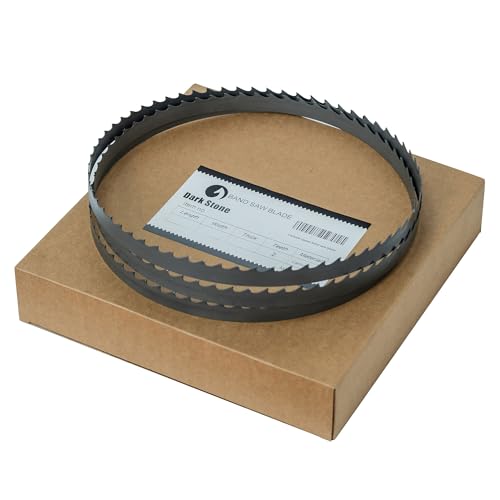
Dark Stone Carbide-Tipped Resaw Bandsaw Blade
What We Like
- Long-life carbide teeth for extended sharpness
- 3/4-inch width minimizes drift for straighter cuts
- Coarse 2 TPI hook design for fast chip removal
- Alloy steel backer provides stable, smooth tracking
Trade-offs
- Requires a bandsaw capable of tensioning a 3/4-inch blade
- 105-inch length fits only specific machines; verify before purchase
- Aggressive 2 TPI geometry is not for fine, detailed cuts
Carbide-tipped teeth are the single most decisive feature here, offering a level of edge retention that carbon steel blades simply can’t match. This translates directly into less downtime for blade changes and consistent performance through dense hardwoods like oak and maple. For a professional whose shop time is money, or a serious woodworker who resaws thick stock regularly, this blade is built to last. It’s engineered for the long haul, turning a premium material into a practical investment in productivity.
This carbide-tipped blade is built for longevity, with teeth that maintain a sharp edge far longer than standard carbon steel during heavy hardwood resawing. That premium performance requires a bandsaw with enough power to properly tension its rigid 3/4-inch width, so it’s not a universal upgrade. You’re investing upfront in carbide to reduce how often you change blades, making it a specialist’s tool for demanding shop use.
Product photos
Timber Wolf Low Tension Resaw Bandsaw Blade

What We Like
- Milled teeth are 50% sharper than stamped blades
- Precision induction hardening for uniform durability
- Tooth edge is 20% harder for extended sharpness
- More ductile steel for cooler running and longer flex life
Trade-offs
- 93.5-inch length fits only specific bandsaw models
Milled teeth are 50 percent sharper than stamped or crush-ground blades, which means noticeably cleaner initial cuts. Precision induction hardening creates a tooth edge 20 percent harder than high-carbon steel, leading to extended sharp time. The silicone steel’s greater ductility results in extended flex life and a cooler running blade compared to high-carbon alternatives.
As a dedicated resaw blade, its design prioritizes a specific type of cut over general-purpose versatility. The 0.4-pound weight reflects a lighter build than some other 3/4-inch blades like the 0.8-pound Timber Wolf 116-inch model. For applications demanding maximum tooth longevity against abrasives, carbide-tipped options such as the Dark Stone blades exist in the market.
Dark Stone 93.5 Inch Carbide Resaw Blade
What We Like
- Carbide teeth for long edge retention in hardwood
- 3/4" width provides beam strength for straight cuts
- Coarse 2 TPI hook geometry for fast chip clearance
- Alloy steel backer for smooth tracking and reduced vibration
Trade-offs
- Requires a bandsaw capable of tensioning a 3/4" wide blade
- Aggressive 2 TPI geometry is less suited for delicate or thin stock
Carbide-tipped teeth maintain sharpness significantly longer than standard carbon steel blades, which is critical for consistent performance during demanding hardwood resaw operations. The 3/4″ wide blade body provides increased beam strength and rigidity to minimize blade drift and wandering, delivering cleaner, straighter cuts in thick stock. An aggressive 2 TPI hook tooth geometry with deep gullets evacuates chips efficiently and reduces heat buildup, supporting faster feed rates in dense hardwoods. This combination makes the blade ideal for professional cabinet shops, furniture makers, and woodworking environments where durability and straight cuts matter most.
The coarse 2 TPI hook tooth design and focus on straight-line resawing make this blade a poor choice for cutting curves or thinner, more delicate materials. It is engineered for heavy-duty hardwood resaw applications where material removal is the priority. Before ordering, users must verify their bandsaw requires a 93-1/2″ blade length and can properly tension a 3/4″ wide resaw blade, as specified in the product details.
Product photos
POWERTEC 93.5 Inch Bandsaw Blade Assortment

What We Like
- Carbon steel construction promises long-term durability
- Heat-resistant weld maximizes performance under load
- Three widths cover general resawing and scroll work
Trade-offs
- No dedicated 3/4" or wider blade for heavy resawing
Offering three distinct blade widths in a single pack provides a practical foundation for a 14-inch bandsaw. The half-inch and quarter-inch blades, both with six teeth per inch, are suited for general woodworking tasks like resawing and cutting curves. A narrow one-eighth-inch blade is designated for scroll cutting, which addresses fine detail work. All three are made from carbon steel and feature a heat-resistant weld, a construction intended to maintain performance during use.
This assortment covers several common tasks but does not include a blade wider than half an inch. Other products designed specifically for resawing, like the Timber Wolf or Dark Stone models, are available in three-quarter-inch widths. For a workshop that needs to process thick hardwoods frequently, a dedicated wider blade would be the next step. For general woodworking or a first purchase, this set delivers immediate versatility.
Product photos
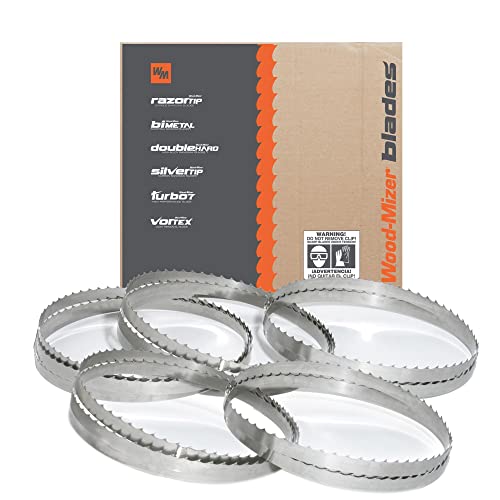
Wood-Mizer DoubleHard Sawmill Bandsaw Blades
What We Like
- DoubleHard alloy for twice the sharp life.
- 10-degree hook for mixed wood species.
- Fits a wide range of portable sawmill brands.
- Can be resharpened with a CBN wheel.
Trade-offs
- 158-inch length is specific to large portable sawmills.
- 1-1/4 inch width is too wide for most 14-inch shop bandsaws.
Designed for the frame and wheels of a portable sawmill, this 158-inch blade fits select Wood-Mizer, Baker, and TimberKing mills, so it’s built for turning logs into lumber, not for a shop bandsaw. Its DoubleHard high-alloy steel delivers twice the sharp life versus standard carbon steel, which means more board feet between sharpening sessions. The 10-degree hook angle is specified for sawing mixed wood species, providing a practical balance for various logs without requiring a blade change for each species.
The trade-off is specialization. This blade won’t fit the vast majority of shop bandsaws, like those that would use a Timber Wolf 3/4-inch blade. You’re buying a five-pack of a consumable item sized for one specific, heavy-duty machine. For the owner of that machine, the value is clear: less downtime changing blades and a predictable, durable cutting performance. If your work involves processing mixed logs on a portable mill, this blade’s specifications are targeted directly at that job. For resawing on a stationary bandsaw, a narrower, shorter blade like the Dark Stone carbide-tipped model is the appropriate tool.
Product photos
POWERTEC 62 Inch Bandsaw Assortment
What We Like
- Assortment of three useful widths
- Covers resawing to fine scroll work
- Carbon steel construction for durability
- Compatible with several popular 9" saw brands
Trade-offs
- Maximum width is 3/8", not the 3/4" common for dedicated resaw blades.
- The 62-inch length fits only smaller 9" class saws.
A 62-inch length and a 3/8-inch maximum blade width define this set’s purpose. It’s built for the common 9-inch benchtop bandsaw, the kind found in many home workshops. The three-blade assortment is the real draw here, giving you a tool for different jobs. It includes a 3/8-inch blade for modest resawing and curves, a 1/4-inch one for tighter work, and a fine 1/8-inch blade for intricate scroll cuts. If your shop centers on a small saw from brands like Ryobi or Craftsman, this pack gets you cutting right away without buying blades individually.
These blades are made from premium high-grade carbon steel, which contributes to long-term durability for general workshop use. The set is intended for functions like re-sawing, rip cuts, and curve cuts on wood, plastic, or non-ferrous metals. However, its maximum width is 3/8 inch, while dedicated resaw blades from other brands, like Timber Wolf, are 3/4 inch wide for greater stiffness in thick stock.
Product photos
PS Wood D4710 or 16-3 Resaw Bandsaw Blade

What We Like
- Made from Swedish silicon steel.
- Engineered as a low-tension blade.
- Fits several specific 14-inch bandsaw models.
- 3/4-inch width is suitable for resawing.
Trade-offs
- The 120-inch length only fits specific saw models.
This blade’s defining feature is its 120-inch length. That means it’s not a universal fit but a precise solution for the specific 14-inch bandsaws listed. If you own a Grizzly G0817, Shopfox D4710, or DoAll 16-3, this is a purpose-built resaw blade for your machine. The Swedish silicon steel and low-tension design suggest it should run smoothly and stay sharp on thick hardwood stock. This makes it a logical choice for owners of those models who need to maximize their saw’s resaw capacity.
Its 120-inch length limits it to the saws listed, unlike common 93.5-inch blades for standard 14-inch machines. While carbide-tipped blades exist for extended wear, this one uses Swedish silicon steel. It solves a fitment problem for a narrow range of workshops.
Olson 93.5 Inch HEFB Bandsaw Blade

What We Like
- Works on wood, plastic, and multiple metals
- Heavy-duty, commercial-grade construction
- Fits most common 14-inch stationary band saws
Trade-offs
- 93.5-inch length excludes many larger saw models
- 0.032-inch thickness demands adequate saw power
The Olson blade is listed for hard and soft wood, plastic, mild steel, and non-ferrous metal, so one blade can be used across different project materials. It is described as a heavy-duty, commercial-grade blade for industrial, DIY, and professional use. Its specifications match most 14-inch vertical, stationary band saws.
The blade has a 3 TPI hook tooth design. Among other products, blades like the Dark Stone Carbide-Tipped Resaw Bandsaw Blade are listed with a 2 TPI carbide tooth geometry for hardwood resawing. The Olson HEFB blade is packaged in a 12 by 12 by 2 inch box.
Product photos
Olson 93.5 Inch Titanium Alloy 2-Pack

What We Like
- Titanium alloy steel for enhanced longevity
- Two blades in the pack for extended value
- Three TPI hook teeth for efficient material removal
- Compact style allows for quick installation
Trade-offs
- A 3 TPI hook tooth design is more aggressive than finer-tooth blades for smooth cuts
- Two-pack format may be excessive for infrequent users
This two-pack of titanium alloy steel blades provides a straightforward value for general workshop use. The material offers enhanced strength and maintains sharpness over time, which means you can tackle demanding woodworking or metalworking tasks without frequent blade changes. Each blade measures 93.5 inches long, fitting band saws designed for that specific length, and having two on hand allows for quick replacement to minimize downtime.
With a width of 1/2 inch and three teeth per inch, the blade is designed for clean, precise cuts in both straight and curved applications. This tooth configuration aids efficient material removal, making the blade suitable for a variety of projects. Its compact style is noted for quick installation on various band saw models, simplifying the process when you need to swap it out.
How We Evaluated Resaw Bandsaw Blades
We compared manufacturer specifications, expert round-ups, and patterns in owner feedback to identify the key factors that define a capable resaw blade. Our evaluation focused on blade width for stiffness, tooth geometry for chip removal, and material durability like carbide-tipped or induction-hardened steel. We also verified the specific length each blade is manufactured for, as this is the most critical fitment detail for your bandsaw.
This guide is based on documented design features and consistent user reports of performance.
What To Look For In Resaw Bandsaw Blades
A good resaw blade is defined by its ability to make straight, smooth cuts through thick wood with minimal waste and strain on your saw. You’ll need to match the blade’s technical specifications precisely to your machine and intended use.
Look for a blade that fits your saw’s exact length, is wide enough (3/4″ or more) for beam strength, and has a coarse tooth count (2-3 TPI) for fast chip clearance in thick stock.
Length & Machine Compatibility
The single most important factor is the blade length, which must match your specific bandsaw model. Common sizes include 93.5 inches for many 14-inch saws, 105 or 116 inches for saws with riser blocks, and much longer lengths for portable sawmills. An ill-fitting blade simply will not install or track correctly. Always verify your saw’s required blade length before purchasing; many manufacturers list compatible saw models. This is more critical than brand reputation.
Width & Tooth Geometry
For resawing, blade width provides the beam strength necessary for straight cuts. A 3/4-inch width is a common sweet spot, offering good stiffness without overtaxing smaller saws’ tensioning systems. Tooth geometry is equally vital: a low TPI (teeth per inch) count, like 2 or 3, with a hook-style tooth is ideal.
This design aggressively removes large chips from deep cuts, preventing clogging and burn marks. For help choosing the right blade, our guide on band saw blade selection covers these factors in detail. These features are not suited for intricate curves, which require narrower, finer-toothed blades.
Blade Material & Construction
The blade’s material determines its sharpness lifespan and performance. Standard carbon steel blades offer a good balance of performance and value. Blades made from Swedish silicon steel, like Timber Wolf’s, are often induction-hardened for a harder, longer-lasting tooth edge.
For the ultimate in edge retention, carbide-tipped blades can last many times longer in abrasive hardwoods but come at a premium cost. Thinner blades, like some specialty models at 0.022 inches, reduce kerf waste, a crucial consideration when resawing expensive lumber into veneers. Setting up your saw properly is also key; ensure you understand proper blade tension for optimal performance and safety.
- Check your bandsaw’s maximum recommended blade width to ensure it can properly tension a 3/4″ or wider resaw blade.
- Verify the exact cutting length your saw requires; don’t assume a “14-inch bandsaw” takes a 93.5-inch blade.
- Consider your primary wood species: carbide excels in hard or exotic woods, while hardened steel is excellent for most domestic hardwoods.
A wider, low-TPI blade made of durable material is your primary tool for successful resawing.
Resaw Bandsaw Blades Compared
The following table compares the key specifications and best-use cases for our top picks to help you see the differences at a glance.
| Product | Blade Length | Blade Width | Blade Material |
|---|---|---|---|
| Timber Wolf 3/4 Inch Resaw Bandsaw Blade | 116" | 3/4 inch | Swedish Silicon Steel |
| Dark Stone Carbide-Tipped Resaw Bandsaw Blade | 105 inches | 3/4 inch | Alloy Steel Backer |
| Timber Wolf Low Tension Resaw Bandsaw Blade | 93.5 inches | 3/4 inch | Silicone steel |
| Dark Stone 93.5 Inch Carbide Resaw Blade | 93.5 inches | 3/4 inch | Alloy Steel Backer |
| POWERTEC 93.5 Inch Bandsaw Blade Assortment | 93.5 inches | N/A | Premium high grade carbon steel |
| Wood-Mizer DoubleHard Sawmill Bandsaw Blades | 158 inches | 1-1/4 inches | DoubleHard High-Alloy Steel |
| POWERTEC 62 Inch Bandsaw Assortment | 62 inches | N/A | High grade carbon steel |
| PS Wood D4710 or 16-3 Resaw Bandsaw Blade | 120 inches | 3/4 inch | Swedish silicon steel |
| Olson 93.5 Inch HEFB Bandsaw Blade | 93.5 inches | 3/4 inch | N/A |
| Olson 93.5 Inch Titanium Alloy 2-Pack | 93.5 inches | 1/2 inch | Titanium alloy steel |
Frequently Asked Questions
What is the best bandsaw blade for resawing wood?
The best blade depends on your saw and needs. For most woodworkers using a standard 14-inch bandsaw, a 3/4-inch wide blade with 2-3 TPI hook-style teeth is ideal. Our top overall pick, the Timber Wolf 3/4 Inch blade, uses induction-hardened teeth for durability and produces a very clean cut, making it excellent for veneer work. Always confirm the blade length matches your specific saw model first.
What TPI is best for resawing wood?
A low TPI (teeth per inch) is best for resawing. Look for 2 or 3 TPI. This coarse spacing allows the blade to remove large chips quickly from deep cuts, preventing the blade from clogging and the wood from burning. Fine-tooth blades (e.g., 10-14 TPI) are for scroll work and thin stock, not for efficiently slicing through an 8-inch thick hardwood board.
Who makes the best quality bandsaw blades?
Several manufacturers are renowned for quality. Brands like Timber Wolf and Dark Stone produce well-regarded blades using premium materials like Swedish silicon steel and carbide-tipped teeth. Highland Woodworking’s “Wood Slicer” blade is also frequently cited in expert round-ups for its performance. The “best” is subjective to your budget and application; a premium carbide blade offers the longest life, while a hardened steel blade provides excellent performance at a mid-range price.
What is the main difference between a resaw blade and a regular bandsaw blade?
Resaw blades are designed for one specific task: making straight, vertical cuts through thick wood. They are significantly wider (often 3/4″ or more) for stiffness, have a very low TPI (2-3) for aggressive chip clearance, and often feature specialized tooth hardening. A regular, general-purpose blade is narrower and has a higher TPI, making it versatile for curves and crosscuts but inefficient and prone to drift in thick resawing tasks.
Can I use a resaw blade on a small benchtop bandsaw?
It depends on the saw’s capacity. Most 9-inch benchtop saws cannot properly tension a full 3/4-inch wide resaw blade, which is the standard width for the task. They also typically use much shorter blade lengths, like 62 inches. For small saws, use the widest blade your machine recommends (often 3/8 inch) with a low TPI. Our “Best For Small Saws” pick, the POWERTEC 62 Inch Assortment, includes a 3/8-inch blade suitable for limited resawing on compatible machines.
The Bottom Line
For most woodworkers seeking a reliable, high-performance blade for producing veneers and straight-line resawing, the Timber Wolf 3/4 Inch Resaw Bandsaw Blade is our best overall recommendation, provided your saw accepts the 116-inch length. If your budget allows and you process a lot of hardwood, the premium Dark Stone Carbide-Tipped blade is a worthwhile investment for its exceptional edge life.
For owners of a common 14-inch bandsaw just starting out, the POWERTEC 93.5 Inch Assortment offers great versatility and value. Ultimately, the most important step is to double-check your bandsaw’s exact blade length requirement before you buy anything.
