
10 Best Sanders For 3d Prints in 2026
This post contains affiliate links. As an Amazon Associate, we earn from qualifying purchases.
Our best overall sander for 3D prints is the HOZO NeoSander Reciprocating Detail Sander, which wins for its patented, low-vibration control and wet-sanding capability. Other notable picks include the DSPIAE ES-A for precision models and the Proxxon 38520 as a stable bench-top option. Smoothing layer lines without melting plastic or losing detail is the core challenge.
Success hinges on matching the tool’s motion, size, and power to your print size and finish goals. We built this guide by analyzing specifications, manufacturer data, and patterns in owner feedback to identify the ten most reliable tools for this specific task.
Top 10 Sanders For 3D Prints in the Market
Certain content that appears on this site comes from Amazon. This content is provided "as is" and is subject to change or removal at any time.
The Best Sanders For 3D Prints, Reviewed
HOZO NeoSander Reciprocating Detail Sander
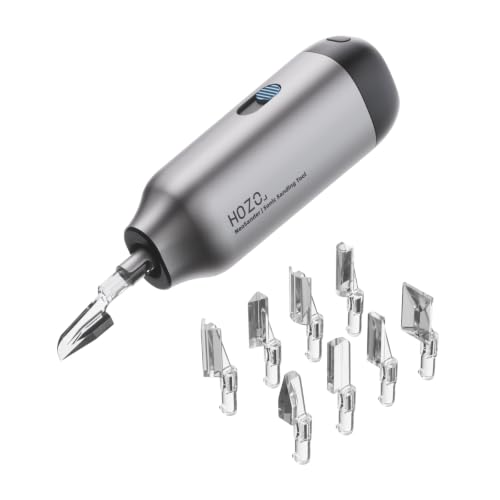
What We Like
- Patented counterweight reduces vibration by 85%
- IP54 dustproof front allows for wet sanding
- Eight quick-release heads for detailed contours
- Compact, 4.1-inch body fits tight spaces
Trade-offs
- 45-minute runtime may require breaks on large projects
- Limited to adhesive-backed sandpaper for its specific heads
A true 13,000 SPM linear reciprocating motor is the key here, delivering the controlled, back-and-forth motion that’s ideal for smoothing layer lines without creating swirl marks. That precision, combined with a stroke you can dial from a fine 0.6mm up to 1.8mm, makes this sander uniquely suited for the meticulous post-processing that 3D prints demand. The ergonomic aluminum body and significant vibration reduction mean you can work on delicate parts for longer without fatigue. It’s the tool for a maker who values finesse and control over raw speed.
This sander is designed for precision sanding in tight spaces, a focus reflected in its 104mm length and 89-gram weight. The product’s Amazon category and title position it as a power detail sander for 3D printing, model making, and crafts. For removing larger support structures or sanding bigger surfaces, the other-products list includes tools like the Fanttik F2 Master Mini Rotary Tool Kit, which is described for 3D printer sanding.
Product photos
DSPIAE ES-A Electric Reciprocating Mini Sander
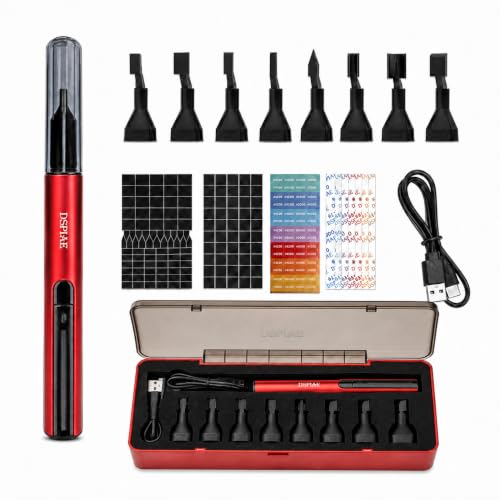
What We Like
- Three speeds for delicate to aggressive sanding.
- Eight head shapes for various surfaces and details.
- Complete set of pre-cut adhesive sandpaper.
- Quick-charge USB battery with overload protection.
Trade-offs
- Reciprocating action is less aggressive than a rotary tool.
- Requires adhesive-backed paper, limiting abrasive choices.
Its focused linear reciprocating action is the key here, simulating natural hand sanding to carefully remove gate marks and mold lines without gouging delicate plastic. This makes the DSPIAE ES-A a perfect fit for modelers who need controlled material removal on small, intricate parts like Gunpla or resin kits. The three speeds and array of head profiles let you transition from shaping to final smoothing with precision, and the quick-change system keeps you working instead of fumbling with tools.
Its linear reciprocating motion simulates natural hand sanding, which provides controlled, focused action for removing gate marks and mold lines from plastic models and resin kits. This design reduces repetitive manual work while maintaining precision on delicate details. The trade-off is that this finesse-oriented approach may not match the material removal rate of rotary tools designed for heavier shaping.
Product photos
HARDELL Mini Cordless Rotary Tool Kit
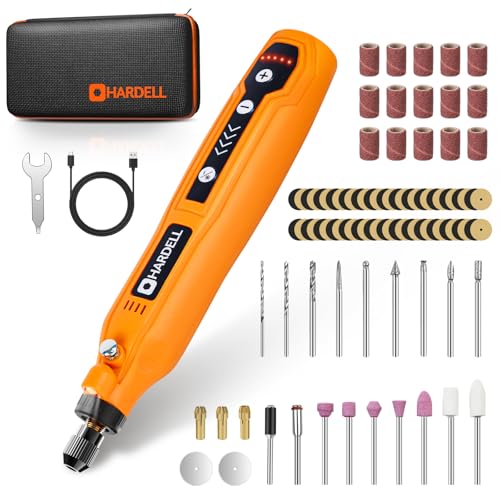
What We Like
- Extremely light weight for pen-like control.
- Long 200-minute runtime per charge.
- Five speed settings for staged sanding.
- Includes LED light for shadow-free detail work.
Trade-offs
- Maximum 18000 RPM lacks power for aggressive material removal.
- Manufacturer states it is not suitable for heavy-duty projects.
Weighing just 0.3 pounds, this tool feels like a thick pen in your hand, which is a major advantage for the precise, delicate sanding that 3D prints often require. It’s a natural fit for anyone who spends hours on finishing work, as the lightweight design minimizes hand fatigue. Combine that with a solid 200-minute runtime, and you have a kit built for marathon detail sessions in a comfortable, controlled manner.
The trade-off for that featherweight comfort is outright power. At its top speed of 18000 RPM, this is a finesse tool, not a brute. The listing explicitly says it’s not for heavy-duty work, so don’t expect to quickly hog off large support structures or level major layer lines. For those more aggressive tasks, a dedicated reciprocating sander like the HOZO NeoSander, with its linear motion, would be a more efficient choice. The HARDELL excels at the final smoothing, polishing, and hard-to-reach detail work where control is everything.
Product photos
Fanttik F2 Master Mini Rotary Tool Kit

What We Like
- Magnetic rotating stand organizes 35 accessories.
- Extremely lightweight at 0.2 pounds for portability.
- Hollow cup motor reduces noise by 30%.
- Integrated speed control with LED indicator.
Trade-offs
- Proprietary 2.3mm collet limits accessory compatibility.
- Sealed, non-removable battery complicates long-term replacement.
A 360-degree magnetic stand that corrals 35 tiny accessories is the single biggest reason to consider the Fanttik F2 Master. For anyone who’s wasted workshop time digging through a jumbled pouch for the right sanding drum or burr, this built-in organization is a legitimate solution. Its whisper-quiet motor and featherweight build make it a natural fit for detailed 3D print finishing where control and a tidy workspace matter more than brute power.
The trade-off is its specialized 2.3mm collet, which locks you into the included bits. For dedicated, high-volume sanding of prints, a tool like the HOZO NeoSander, with its linear reciprocating motion, is fundamentally better suited to the task. The Fanttik excels as a compact, all-in-one rotary toolkit for the crafter who values a clutter-free bench and needs to drill, polish, and engrave in addition to sanding.
HOTO Cordless Rotary Tool Kit
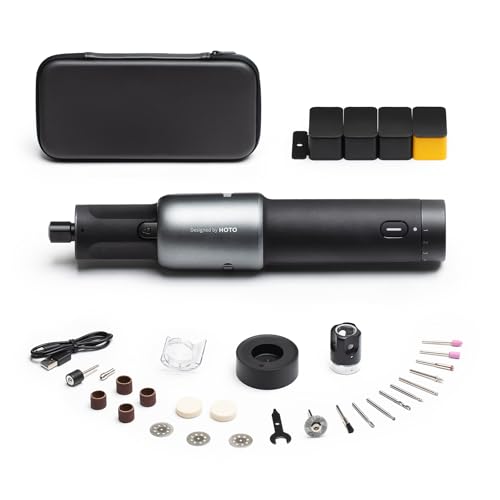
What We Like
- Pen-style ergonomic design reduces hand fatigue
- Built-in LED light for illuminating tight spaces
- Low-vibration, quiet motor suitable for shared spaces
- Includes dust shield and 35 accessories for versatility
Trade-offs
- At 1.7 lb, it's heavier than the 0.2 lb Fanttik F2
- Larger footprint than a dedicated pen sander like the HOZO
A 25,000 RPM motor with five clearly stepped speeds allows moving from aggressive support removal to fine polishing without changing tools. Its pen-style design and balanced, 1.7-pound weight are ergonomically designed to reduce hand fatigue during extended projects. The tool includes a snap-on dust shield for debris protection and an integrated LED light for illuminating tight spaces during detailed work.
That solid, comfortable build comes with some weight, as it is heavier than some dedicated mini sanders like the 0.2-pound HOZO NeoSander. For projects requiring a single, versatile tool that can sand, carve, and polish, its ergonomic design and low-vibration motor support comfortable use. The cordless, quiet operation is suited for desktop work in shared spaces.
Product photos
Creality Mini Cordless Rotary Tool

What We Like
- Wide 21-attachment kit for diverse tasks
- Six-speed adjustment for material control
- Ergonomic grip with three anti-slip textures
- Magnetic storage case for organization
Trade-offs
- Rotary sanding action can dig into soft prints if not careful
A six-speed range up to 18,000 RPM gives you the finesse to switch from aggressive support removal to delicate polishing without swapping tools. This Creality rotary tool is for the maker who needs one compact kit to handle the entire finishing process, sanding, drilling, engraving, right at the bench. The one-touch operation and quick-lock chuck mean you spend less time fiddling and more time refining your print’s surface. It’s a versatile finisher that turns a rough model into a presentation-ready piece.
Using a rotary tool demands a steadier hand than a tool designed solely for linear sanding; its spinning action can leave swirl marks or gouge a surface if you linger too long. It excels at detail work and reaching into crevices where a flat sander can’t go, but for large, flat areas, you’ll need patience and a light touch. Think of it as a precision engraver and polisher that also sands, rather than a dedicated sander that also engraves.
Product photos
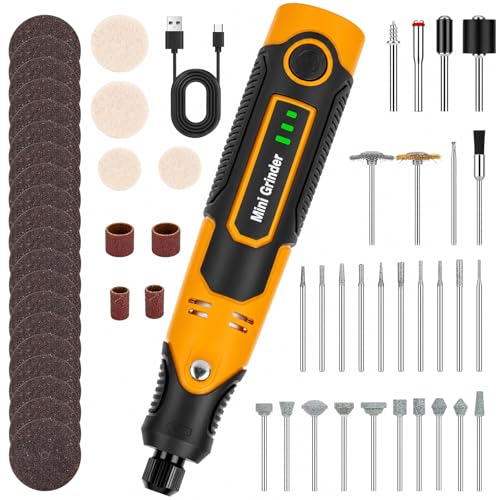
GRENTOOL Cordless Mini Rotary Tool
What We Like
- Three adjustable speeds prevent over-sanding resin
- Pen-style design reduces hand fatigue during detail work
- Double bearing system ensures low vibration and clean lines
- Type-C charging and 130-minute runtime for extended sessions
Trade-offs
- 3.6V motor offers less torque than bulkier rotary tools
- 17000 RPM maximum speed is lower than many corded competitors
With a pen-style design and three-speed control, this cordless rotary tool is described as perfect for beginners and hobbyists. Its lightweight, cordless form factor is noted as a way to reduce hand fatigue during extended sessions on resin figurines or epoxy crafts. The adjustable RPM range allows users to match speed to material, with a slower setting recommended for fragile items like cured resin models to help prevent over-sanding.
Its compact design comes with a trade-off in raw power. The 3.6V motor reaches a maximum of 17000 RPM, which is enough for resin work but lacks the force for aggressive material removal. A tool built specifically for linear sanding motion will be far more efficient for smoothing larger, flat areas on a big print. This one excels in the final stages, cleaning up support marks and polishing curves where a bulkier tool would be clumsy.
Product photos
Proxxon 38520 Super Oscillating Sander

What We Like
- Oscillating motion eliminates vibration and kickback.
- Die-cast zinc housing ensures stability and longevity.
- Hook & loop system allows for quick pad changes.
- Comes with a stable, dedicated storage case.
Trade-offs
- Requires a power outlet, unlike cordless alternatives.
Its true oscillating motion provides a platform without vibration or kickback, which allows for steady sanding. The 2 1/2-inch square hook-and-loop pad makes changing sandpaper quick. A die-cast zinc housing provides a stable structure for the moving parts, and the tool comes complete in a high-quality PP storage case for organized repacking.
The sander’s dimensions and design suggest a stationary tool for bench use, not for handheld detail work on intricate cavities. For that type of task, other listed products like the HOZO NeoSander have a pen-sized body. The Proxxon’s oscillating motion and stable housing are features for a specific sanding application.
GOXAWEE Mini Cordless Rotary Tool

What We Like
- Wide 5-speed range for varied materials
- Compact, pen-like ergonomic design
- Extensive 105-piece accessory set
- USB-C charging for high convenience
Trade-offs
- Not suitable for heavy-duty projects
- Accessory shanks require full insertion for safety
The GOXAWEE’s five distinct speed settings, from 8,000 to 18,000 RPM, give you precise control for the layered work of 3D print finishing. You can start with a low speed for sanding cured resin or EVA foam without melting the surface, then ramp up to carve or drill into harder plastics and soft metals. This granular control, combined with its featherlight 3.5-ounce pen shape, makes it a natural fit for the detailed, patient work required on intricate prints and models. It’s a tool built for finesse, not force.
This tool is built for light-duty precision, which defines its main limitation. The motor and battery are designed for extended, controlled use on small projects, not for aggressive material removal. For smoothing a large, flat surface on a print, a purpose-built linear sander will be far more efficient. It excels in the nooks and crannies where a bulkier tool can’t reach, but you’ll need patience for bigger jobs.
Product photos
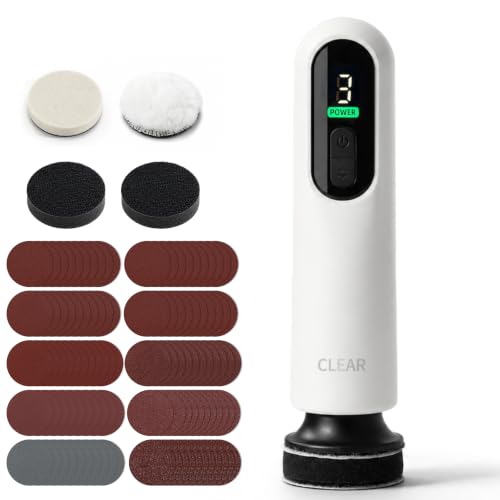
Winartton Cordless Rotary Sander Kit
What We Like
- Cordless design enables unrestricted movement
- Comprehensive kit with 104 total pieces
- Three speeds for fine to intensive work
- Ergonomic handle for single-handed control
Trade-offs
- Rotary motion is less forgiving on flat surfaces
This cordless sander is powered by a rechargeable battery, so you can work on a balcony or outdoors without being tied to an outlet. The kit includes 100 sanding discs across ten grits, two sponge pads, and two wool polishing discs, meaning you can start projects immediately. For resin crafters who value convenience, it provides a comprehensive set of consumables right in the box.
Its functionality is shaped by the rotary action. That 2-inch spinning pad is designed for precision contour and edge control, which helps when working on curves. For broad, flat sanding tasks, the rotary motion may be less forgiving than the back-and-forth action of a linear sander. Ultimately, this is a versatile kit for detailed finishing, not a bulk material remover.
Product photos
How We Evaluated Sanders For 3D Prints
Our research focused on comparing specifications, manufacturer documentation, and expert round-ups. We prioritized criteria that directly impact 3D print finishing. This includes the tool’s motion, whether it’s reciprocating, rotary, or oscillating, and how that affects heat and control. We also looked at its size and weight for maneuvering around intricate details, and its accessory ecosystem for tackling various contours.
We also considered reported user experiences regarding comfort during extended use and the practicality of dust management. The main limit of this research-led approach is that we cannot personally verify long-term durability or the exact feel of each tool in hand, so we encourage reading detailed owner reviews for those final insights. For a broader look at tools in this category, our guide to the best rotary tools for 3D printing offers complementary information.
What To Look For In Sanders For 3D Prints
Choosing the right sander transforms a rough print into a smooth, professional-looking piece. The goal is to remove layer lines without generating excessive heat that can melt plastic or distort fine details.
Look for a tool whose motion and size match your work. Reciprocating or oscillating motions are gentler on plastic than high-speed rotary tools. A compact, lightweight design is crucial for detailed areas, while a stable bench sander excels on flat surfaces.
Motion Type
The sanding action determines control and heat risk. Reciprocating tools, like the top-rated HOZO NeoSander, move back-and-forth quickly; this brief contact minimizes heat buildup, which is critical for thermoplastics like PLA and resin. Oscillating motions, found in tools like the Proxxon 38520, are even gentler and offer excellent stability for flat areas.
High-speed rotary tools are versatile but require a lighter touch to avoid digging grooves or melting the print surface. If you need a tool specifically for detailed corners, our review of the best sanders for tight spaces dives deeper into this niche.
Size & Ergonomics
For 3D prints, especially miniatures and models, a sander must fit comfortably in your hand for precise control. Weight is a key factor; a tool like the Fanttik F2 Master weighs only 0.2 pounds, reducing fatigue during long sessions. Pen-style designs offer pinpoint accuracy for tiny details, while larger, ergonomic grips, like on the HOTO Cordless Rotary Tool, provide comfort for bigger projects. Consider where you’ll be working: a compact, cordless model offers complete freedom of movement compared to a stationary, corded unit. For options, see our picks for the best mini sanders.
Accessories & Power
A good accessory kit saves time. Look for a variety of sanding head shapes (conical, flat, ball) to match your print’s contours. Many tools use adhesive-backed sandpaper for their specific heads, which is convenient but can limit your abrasive choices. Battery life matters for cordless models; a 45-minute runtime may require breaks on large projects, while a 200-minute runtime allows for uninterrupted work. For tasks beyond light sanding, a comprehensive kit like the Winartton’s 104-piece set provides grinding and polishing options.
- Check if the tool supports wet sanding to further reduce heat and dust.
- Verify the battery type (USB-C is convenient) and whether it’s removable.
- Ensure the included sandpaper grits cover your needs from coarse removal to fine polishing.
The most versatile tool is rarely the best for a single job. Prioritize precision over raw power for 3D print finishing.
Sanders For 3D Prints Compared
The table below compares key specifications to help you see the differences at a glance.
| Product | Speed/Speed Settings | Weight | Included Accessories / Heads |
|---|---|---|---|
| HOZO NeoSander Reciprocating Detail Sander | 13,000 SPM | 0.2 pounds | N/A |
| DSPIAE ES-A Electric Reciprocating Mini Sander | 3 (2800, 3100, 3600 cpm) | N/A | 8 interchangeable nylon heads |
| HARDELL Mini Cordless Rotary Tool Kit | 5-Speed (5000/8000/11000/14000/18000RPM) | 0.3 pounds | 69-piece kit |
| Fanttik F2 Master Mini Rotary Tool Kit | 5 adjustable | 0.2 Pounds | 35 organized accessories |
| HOTO Cordless Rotary Tool Kit | 5 clearly stepped | 1.7 pounds | N/A |
| Creality Mini Cordless Rotary Tool | 6 adjustable speeds | N/A | 21 different attachments |
| GRENTOOL Cordless Mini Rotary Tool | 3-Speed (12000/14000/17000 RPM) | N/A | 58 Attachments |
| Proxxon 38520 Super Oscillating Sander | N/A | 0.0 pounds | N/A |
| GOXAWEE Mini Cordless Rotary Tool Kit | 5 speeds (8000-18000 RPM) | 3.5 oz | 105-piece kit |
| Winartton Cordless Rotary Sander Kit | 3 adjustable levels | N/A | 104-Pc kit |
Frequently Asked Questions
What is a good sander for 3D prints?
A good sander for 3D prints offers control and minimizes heat. Reciprocating detail sanders or low-RPM rotary tools are excellent choices because they are less likely to melt plastic. Look for a compact, lightweight design that can navigate curves and tight spaces on your models.
What is the best foot sander for 3D printing?
The term “foot sander” likely refers to a stationary bench sander. For 3D prints, a small oscillating sander like the Proxxon 38520 is a great bench-top option. Its stable, vibration-free motion is ideal for carefully smoothing flat surfaces and straight edges on larger prints.
What to use for sanding 3D prints?
Start with hand sanding or a powered detail sander using fine-grit sandpaper (often 180-grit or higher). For powered tools, a detail sander with a gentle oscillating or reciprocating motion is safest for plastic. Always wear a respirator and safety glasses to avoid inhaling plastic dust.
Is there anything illegal to 3D print?
Yes, it is illegal to 3D print certain items, including firearms or components intended for illegal firearms, copyrighted objects without permission, and items designed to circumvent security measures. Laws vary by location, so it is crucial to research local regulations regarding intellectual property and controlled items.
Can I use a regular power sander on 3D prints?
Using a large, aggressive power sander like a belt sander on 3D prints is generally not recommended. Their high power and speed generate too much heat, which can quickly melt plastics and destroy fine details. They are better suited for wood or metal, not delicate print finishing.
The Bottom Line
For most makers seeking professional-grade control, the HOZO NeoSander Reciprocating Detail Sander is the best overall choice. Its low-vibration design and wet-sanding capability make it uniquely suited for detailed work on plastics and resins without the risk of melting.
If you’re on a budget or just starting out, the GRENTOOL Cordless Mini Rotary Tool offers a gentle, beginner-friendly introduction. For those who work primarily at a bench on flat surfaces, the Proxxon 38520 Super Oscillating Sander provides unmatched stability.
Ultimately, the single most important factor is matching the tool’s motion to your material. A gentle, controlled sanding action will do more for your finish than raw power ever could.
