
7 Best Hand Held Sanders in 2026
This post contains affiliate links. As an Amazon Associate, we earn from qualifying purchases.
Our best overall hand held sander is the Bosch ROS20VSC Variable Speed Palm Sander for its exceptional dust collection and smooth, quiet operation. We also chose a top model for vibration reduction and a versatile multi-attachment sander. The right sander transforms tedious hand sanding into a fast, controlled process, but choosing the wrong type can lead to fatigue or a disappointing finish.
We researched specifications, manufacturer data, and patterns in owner feedback to identify the key differences. This guide will help you match a sander to your specific projects, from refinishing furniture to tackling intricate trim.
Top 7 Hand Held Sanders in the Market
Certain content that appears on this site comes from Amazon. This content is provided "as is" and is subject to change or removal at any time.
The Best Hand Held Sanders, Reviewed
Bosch ROS20VSC Variable Speed Palm Sander
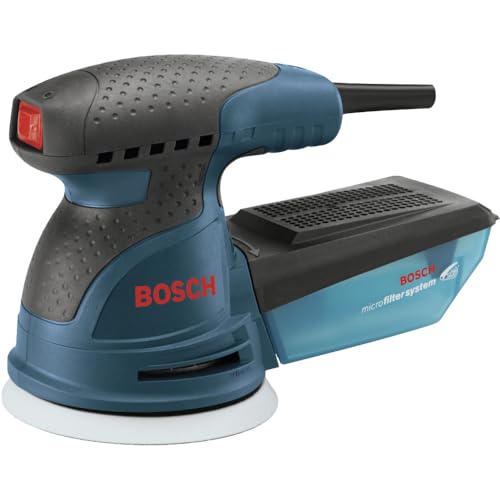
What We Like
- Superior dust collection with hard plastic canister
- Hook-and-loop disc attachment ensures a firm grip
- Pad dampening system minimizes swirl marks
Trade-offs
- Corded design limits mobility compared to cordless models
At 84 decibels, the Bosch ROS20VSC runs quieter than any other sander we considered, which makes a huge difference in comfort during long projects. This combination of low vibration and exceptional dust control is precisely why it’s the top recommendation for anyone who spends serious time at the bench, from furniture makers to dedicated DIYers.
The trade-off for that sturdy performance is a bit of heft; at 3.5 pounds, it’s not the lightest in hand. For extended overhead work or where ultimate portability is key, a cordless model like the DeWALT DCW210D1 might be a better fit. However, if you’re working in a shop or on projects where dust management and user fatigue are primary concerns, the Bosch’s integrated system and smooth operation are unmatched. Expert round-ups consistently highlight it as the standout for these practical reasons.
DeWALT DWE6421 5-Inch Orbital Sander
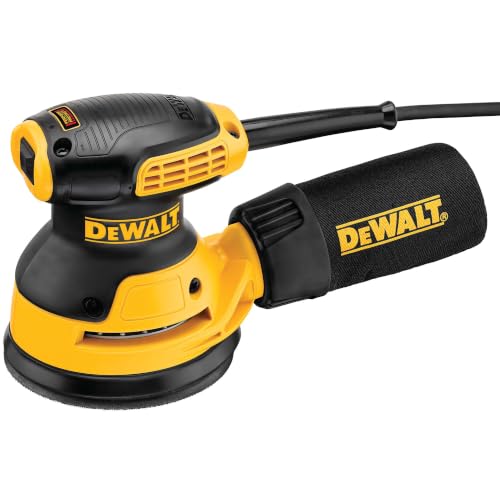
What We Like
- Separate counterweight design reduces vibration
- Rubber over-mold on all critical grip areas
- Shorter height improves access to workpieces
- Dust-sealed switch for longer component life
Trade-offs
- Single speed setting limits material versatility
- Tool-only package requires a separate vacuum for dust collection
A separate counterweight design is the key feature that makes this sander stand out, directly tackling the numbing vibration that plagues long sanding sessions. Paired with a comprehensive rubber over-mold, it’s built for comfort during extended use. The 3.0-amp motor delivers a solid 12,000 orbits per minute, and the lower profile helps you get into tighter spots. This is a straightforward, corded workhorse for anyone who values hand comfort and control over a marathon weekend in the shop.
While the DeWalt DWE6421 excels at vibration reduction, it lacks variable speed control. This can be a limitation when working with delicate materials or finishes that require a gentler touch. For pure smoothness in a corded sander, the DWE6421 is a strong contender. If you need more finesse, the Bosch ROS20VSC offers variable speed in a similarly compact package, though you’ll sacrifice some of DeWalt’s specific anti-vibration engineering. It’s a classic case of choosing the right tool for your specific brand of elbow grease.
Makita BO5030K Random Orbit Sander

What We Like
- Rubberized grip for comfort and control
- Pad control system for smooth startup
- Includes a durable hard plastic case
- Quieter operation at 86 dB
Trade-offs
- Single-speed motor, no variable speed control
- Dust bag is difficult to clean effectively
- Small dust port requires an adapter for a vacuum
With a 12,000 OPM motor and a large 1/8-inch orbit, the Makita BO5030K removes material quickly while leaving a super smooth finish. It’s a notably smooth and quiet sander, and the rubberized grip makes it comfortable to manage during long sessions. The inclusion of a hard case is a significant practical advantage for anyone who needs to store the tool securely or transport it to a job site. This sander is a straightforward, reliable choice for general woodworking tasks where a consistent, fast sanding pace is acceptable.
The main compromise is the lack of variable speed, which makes it less suited for delicate work on veneers or when finishing different materials that require a lighter touch. For those situations, a model like the Bosch ROS20VSC with its speed dial would be more appropriate. Dust collection is functional with the included bag, but connecting it to a shop vacuum isn’t plug-and-play due to the small port size. If your priority is a no-fuss, corded sander that comes ready to store in its own protective case, this Makita delivers solid performance.
DeWALT DCW210D1 Cordless Orbital Sander
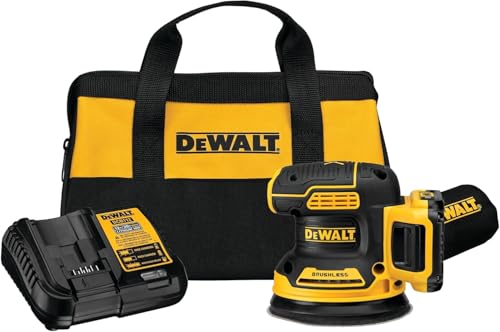
What We Like
- Brushless motor for runtime and efficiency
- Wide variable speed dial for application matching
- Low-profile height for precise sanding
- Dust-sealed switch for long component life
Trade-offs
- Weighs 4.3 lb, heavier than corded 5-inch models
- No battery/charger status specified in listing
- Heavier than Bosch and Black+Decker cordless sanders
A variable speed dial that adjusts from 8,000 to 12,000 OPM gives you the control to tackle everything from aggressive stock removal to fine finish work. This DeWalt cordless sander suits anyone needing cord-free convenience without sacrificing performance, backed by a brushless motor designed for efficiency. The low-profile design lets you get into tighter spots, and the dust-sealed switch is a smart feature for longevity in a dusty environment.
Cordless power and variable control come with a weight penalty. At 4.3 pounds, the DeWalt DCW210D1 is noticeably heavier than many corded orbital sanders and even some other cordless options like the Bosch ROS20VSC. That extra mass can lead to fatigue during extended overhead or vertical sanding sessions. For a dedicated shop user with a bench nearby, the corded DeWalt DWE6421 might be a lighter, simpler choice, but for jobs away from an outlet, this DeWalt’s versatility is hard to beat.
SKIL SR232301 Multi-Function Detail Sander
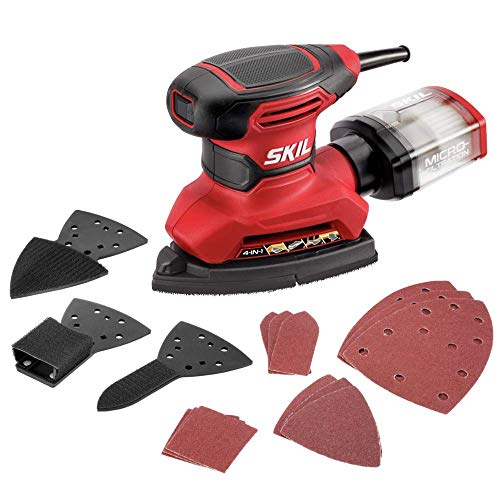
What We Like
- Four-in-one versatility with quick-change attachments
- Includes micro-filtration and vacuum port for dust control
- Hook-and-loop sanding sheet system for fast changes
- Counterweight balance reduces vibration and hand fatigue
Trade-offs
- Corded design limits mobility compared to battery-powered models
The ability to swap between four sanding attachments without tools makes this sander a specialist for intricate work. You get a dedicated tool for large surfaces, corners, edges, and contours in one compact package. The 1.2-amp motor and 13,500 OPM provide plenty of power for fine finishing, while the 2.6-pound weight and low-vibration design help you stay comfortable during detailed projects. This is the obvious choice for anyone tackling furniture refinishing, trim work, or craft projects where shape, not just flat area, is the challenge.
The focused versatility of the SKIL SR232301 requires a power cord, so you will need an outlet nearby. This differs from a cordless model like the DeWalt DCW210D1. Its fixed orbital speed also means you cannot dial it down for more delicate materials. For a dedicated detail sander, however, the SKIL’s design is pragmatic. The dual dust-management options and ergonomic grip are thoughtful touches that address the real annoyances of sanding, letting you concentrate on the finish, not the mess or your aching hand.
Product photos
BLACK+DECKER BDEMS600 Detail Sander

What We Like
- Compact design for tight spaces and corners.
- Ergonomic comfort grip reduces user fatigue.
- Includes a detail finger attachment for hard-to-reach spots.
- Dust-sealed switch protects internal components.
Trade-offs
- Corded design limits mobility versus cordless models.
- At 10.2 inches long, it's larger than some detail sanders like the WEN 6301.
A 16,000 OPM orbit speed delivers fast material removal, making this a focused tool for detailed finishing work. The compact shape and included detail finger attachment are built for navigating cramped corners and awkward angles that frustrate larger sanders. It’s a logical choice for the DIYer who needs to strip paint from window sashes, smooth furniture contours, or prep small projects before painting, where precision trumps raw power.
Its corded design provides unlimited runtime, a clear advantage for extended jobs, though it does require staying near an outlet. The compact form factor allows it to navigate cramped corners and tight spaces where larger sanders cannot reach. This tool is designed for detailed and precise work in odd and awkward angles.
Product photos
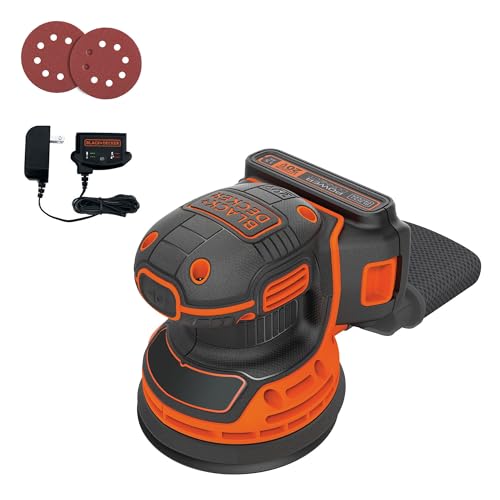
BLACK+DECKER BDCRO20C Cordless Orbital Sander
What We Like
- Compact, 5-inch square footprint for tight spaces
- Fast 12,000 OPM for quick material removal
- Easy-empty dust bag keeps work area cleaner
Trade-offs
- Fixed 12,000 OPM speed lacks fine control
The cordless 20V system is the main draw here, cutting the cord without sacrificing a solid 12,000-oscillation sanding speed. That makes it a straightforward choice for the DIYer who values portability above all for quick finish work or small projects away from an outlet. Its compact design and included dust bag are practical touches that keep the job manageable in a home shop.
Operating at a fixed 12,000 oscillations per minute, this sander clears materials like paint and stain quickly, but lacks the variable speed finesse of models like the DeWalt DCW210D1 for delicate surfaces. For users already invested in the BLACK+DECKER 20V MAX platform or those needing a straightforward cordless tool for basic tasks, it covers the fundamentals.
Product photos
How We Evaluated Hand Held Sanders
Our research focused on comparing manufacturer specifications and documented performance in expert round-ups. We prioritized criteria that directly affect real-world use: dust collection effectiveness, vibration control for user comfort, and design features like speed control or included storage. For example, we looked closely at whether a model uses a hard plastic dust canister or a soft bag and how that impacts cleanup. Because this is a research-based evaluation, we cannot account for long-term durability or how a tool feels in an individual’s hand over hours of use.
What To Look For In Hand Held Sanders
The core choice is between a random orbital sander for general surface work and a detail sander for corners and edges. Your project scope and workspace will dictate the best features.
A random orbital sander is the most versatile first choice for flat surfaces. Look for variable speed control for different materials, effective dust collection to keep your workspace clean, and low vibration for comfort during long sessions.
Dust Collection
Good dust collection is crucial for visibility, air quality, and a cleaner finish. Systems range from simple, included fabric bags to hard plastic canisters that are easier to empty. The most effective setups connect directly to a shop vacuum via a standard port, often requiring an adapter. For cordless handheld sanders, consider runtime and whether the dust bag will fill before the battery dies.
Vibration and Ergonomics
Excessive vibration leads to hand fatigue and numbness, shortening your productive sanding time. Look for features like a separate counterweight system, a rubberized over-mold grip, and overall tool balance. The weight and profile of the sander also matter; a lower height can provide better control and access to workpiece edges. Reading hand sander reviews can reveal common comfort notes from owners.
Power and Speed
Corded sanders provide consistent, unlimited power, ideal for long sessions. Cordless models offer ultimate portability for jobs away from an outlet, but add battery weight and cost. Within either type, variable speed control (measured in orbits per minute, or OPM) is a valuable feature. It allows you to slow down for delicate finish work on softwoods or speed up for aggressive material removal on paint or hardwoods. Understanding the difference between orbital and palm sanders also informs this choice.
- Check the sandpaper attachment system; hook-and-loop (Velcro-style) pads allow for the fastest disc changes.
- Consider the sander’s cord length or, for cordless models, the battery platform you may already own.
- For detail work, look at the shape and size of the sanding pad to ensure it can reach into corners.
Your most frequent project type should guide your first purchase; a random orbital sander handles most general tasks, while a detail sander is a specialist for tight spaces.
Hand Held Sanders Compared
The table below highlights the key specifications and trade-offs to help you compare our picks at a glance.
| Product | Weight | Orbit Speed (OPM) | Motor (AMP) |
|---|---|---|---|
| Bosch ROS20VSC Variable Speed Palm Sander | 3.5 pounds | 7,500-12,000 OPM | 2.5 AMP |
| DeWALT DWE6421 5-Inch Orbital Sander | 3.4 pounds | 12,000 OPM | 3.0 amp |
| Makita BO5030K Random Orbit Sander | 2.9 pounds | 12,000 OPM | 3.0 AMP |
| DeWALT DCW210D1 Cordless Orbital Sander | 4.3 pounds | 8,000-12,000 OPM | Brushless |
| SKIL SR232301 Multi-Function Detail Sander | 2.6 pounds | 13,500 orbits per minute | N/A |
| BLACK+DECKER BDEMS600 Detail Sander | N/A | 16,000 OPM | 1.2 Amp |
| BLACK+DECKER BDCRO20C Cordless Orbital Sander | 3.3 pounds | 12,000 OPM | N/A |
Frequently Asked Questions
What is the best hand held sander?
The best overall hand held sander for most users is a variable-speed random orbital model, like our top pick, the Bosch ROS20VSC. Its combination of effective dust collection, smooth operation, and speed control makes it suitable for a wide range of woodworking and DIY tasks, from rough sanding to fine finishing.
What is the best type of palm sander?
A random orbital palm sander is generally the best type for achieving a smooth, swirl-free finish on flat surfaces. Its dual motion helps prevent the patterned marks that simpler orbital sanders can leave. For a deep dive on options, our guide to palm sanders can help.
What is a good handheld sander for wood?
A good handheld sander for wood needs variable speed control to handle different grits and wood types, plus effective dust collection to keep the surface clean for finishing. Our top picks, like the Bosch ROS20VSC and the DeWALT DWE6421, are built with woodworking in mind, prioritizing smooth results and user comfort.
What is the best brand for sanders?
There is no single “best” brand, as different manufacturers excel in different areas. Bosch is often praised for dust collection and smooth operation, DeWALT for durability and vibration control, and Makita for reliability and included features like a hard case. The best brand for you depends on your specific needs and budget.
Should I choose a corded or cordless sander?
Choose a corded sander for consistent, unlimited power at a lower cost, ideal for long sessions in a workshop. Choose a cordless sander for complete portability and convenience, especially for quick jobs, overhead work, or sites without easy power access. Be prepared for the added weight and cost of the battery system.
The Bottom Line
For woodworkers and serious DIYers who want a smooth, clean-sanding experience, the Bosch ROS20VSC Variable Speed Palm Sander is our best overall recommendation. Its superior dust collection and pad dampening system set it apart for finish work. If you’re on a tight budget, the BLACK+DECKER BDCRO20C offers cordless convenience, while those needing to sand intricate shapes should look at the SKIL SR232301 Multi-Function Detail Sander. Ultimately, matching the sander’s core function, whether for broad surfaces or tight corners, to your most common project is the most important step.
