
10 Best Saws To Cut Drywall in 2026
This post contains affiliate links. As an Amazon Associate, we earn from qualifying purchases.
Our best overall pick is the Goldblatt Folding Drywall Jab Saw for its secure folding design and versatile triple-ground teeth. The IRWIN Tools Standard Drywall Jab Saw is our best basic model, while the Klein Tools Fixed Blade Rasping Jab Saw excels for jobs needing integrated smoothing.
Choosing the wrong saw for drywall can lead to ragged edges, clogged blades, and a lot of frustration. You need a tool that punches in cleanly, cuts smoothly, and fits your workspace. We built this list by analyzing specifications, manufacturer data, and patterns in professional feedback and owner reviews to find the most reliable tools for this specific task.
Top 10 Saws to Cut Drywall in the Market
Certain content that appears on this site comes from Amazon. This content is provided "as is" and is subject to change or removal at any time.
The Best Saws to Cut Drywall, Reviewed
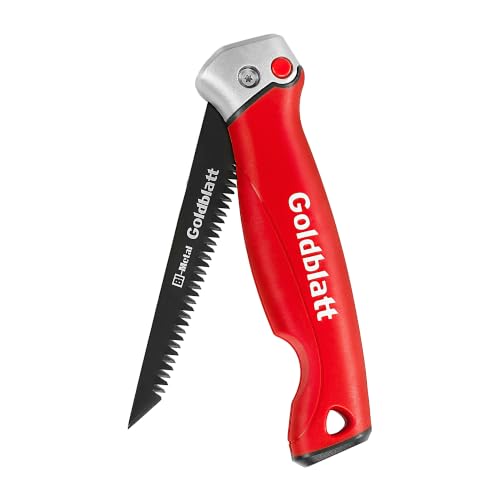
Goldblatt Folding Drywall Jab Saw
What We Like
- Folding design with secure lock for safe storage
- Triple-ground teeth cut in both push and pull directions
- Anti-slip ergonomic handle fits most hand sizes
- Sharpened tip punches through drywall quickly
Trade-offs
- 5.2-inch blade limits reach in deep cavities
- Folding mechanism adds complexity versus fixed blades
A 5.2-inch bi-metal blade with triple-ground teeth makes this saw a workhorse for drywall. It cuts smoothly on both the push and pull stroke, and the hardened HRC 66-68 steel holds an edge. The anti-slip handle is genuinely comfortable, which matters when you’re cutting out a dozen electrical boxes. This combination of a durable, fast-cutting blade and thoughtful ergonomics makes it the most reliable all-around jab saw for contractors and serious DIYers.
The folding design is a double-edged sword. It protects the blade and makes the saw pocket-safe, but the mechanism adds a bit of weight and bulk compared to a simple fixed blade like the Klein Tools model. If your work is entirely about speed inside a wall cavity, a fixed blade might feel more direct. But for anyone who tosses a saw in a bag or belt, the Goldblatt’s locking fold is the smarter, safer choice for daily carry.
Product photos
IRWIN Tools Standard Drywall Jab Saw

What We Like
- Rigid blade provides solid cut control
- Bi-ground teeth for fast, smooth cuts
- Comfortable, balanced hardwood handle
Trade-offs
- Shorter 5-inch blade limits reach for deep cuts
With a rigid 5-inch blade and bi-ground teeth, the IRWIN Tools Standard Drywall Jab Saw delivers solid control and fast, smooth cuts for roughing in openings for electrical, HVAC, or plumbing work. Its hardwood handle is designed for comfort and balance during use. This construction provides a straightforward tool focused on the core task of cutting drywall and similar materials.
The trade-off for that simplicity is a fixed blade that demands careful handling when not in use, as it lacks a sheath or folding capability. For a user who needs to toss a saw in a pouch with other tools, the exposed teeth are a legitimate concern. If pocket-safe storage is a priority, a model like the Goldblatt Folding Drywall Jab Saw would be a more suitable comparison, though you’d gain that feature at the cost of this one’s straightforward, no-moving-parts construction.
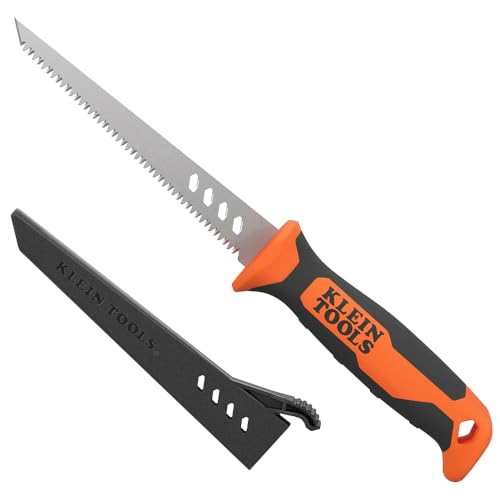
Klein Tools Fixed Blade Rasping Jab Saw
What We Like
- Integrated rasping holes for fast material removal
- Cuts smoothly in both push and pull directions
- Sheath locks blade securely for safe transport
- Wide handle base for comfortable punching
Trade-offs
- 12.7-inch overall length may be cumbersome in tight spaces
- Fixed blade lacks the compact profile of a folding saw
- At 0.5 lb, it is heavier than the 0.3 lb HAUTMEC model
The integrated rasping holes are what set this jab saw apart, letting you quickly enlarge a cutout or smooth a rough edge without switching tools. That makes it a standout for drywallers and remodelers who frequently need to modify openings for electrical boxes or plumbing. The triple-ground teeth cutting in both directions also speed up the work, while the cushioned handle base provides the leverage and comfort you need when punching through a wall. This is a tool built for efficiency on repetitive tasks.
Because of its rugged, fixed-blade design, this saw has a less compact profile. You can’t fold it up to slip into a pocket like some other models, so it demands a bit more forethought for storage on your belt or in your bag. Compared to the simpler, lighter IRWIN Tools Standard Drywall Jab Saw, the Klein is a more feature-rich and purpose-built option, but that added utility comes with slightly more bulk. It’s a focused solution where the rasp function is regularly needed.
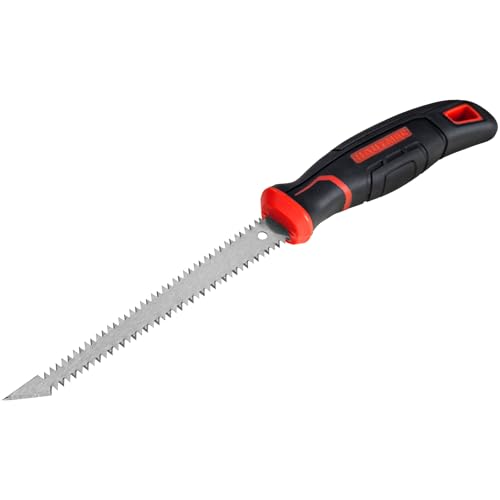
HAUTMEC Double-Edge Drywall Jab Saw
What We Like
- Double-edge blade for faster cutting from any angle
- Sharp tip pierces drywall without pre-drilling
- Thick, heat-treated blade minimizes flex for control
- Deep gullets reduce clogging during cuts
Trade-offs
- Non-folding 12.2-inch length is less compact for a tool belt
- Fixed blade design lacks the storage safety of a folding saw
With a double-edge blade, this saw cuts on both the push and pull stroke. That dual-sided action means faster, smoother cuts from an edge or through the center of a sheet. Its sharp tip pierces drywall directly, so no pre-drilling is required. For cutouts like electrical boxes, the thick carbon steel blade provides control and minimizes flex during the job.
It won’t fold down like the Goldblatt or SUIZAN models for ultra-compact storage in a pouch. You’re committing to its full length, which is managed well by the comfortable soft grip but is a consideration for purely occasional users. Compared to a dedicated rasping saw like the Klein Tools model, it’s a lighter tool focused on fast, clean cuts rather than aggressive shaping of other materials.
Product photos
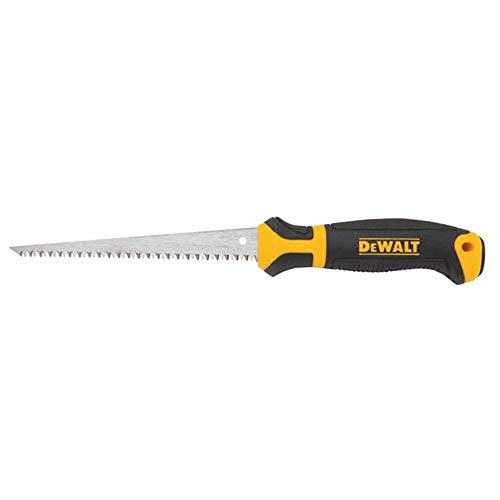
DEWALT Jab Saw
What We Like
- Induction-hardened teeth resist dulling for long-term use
- Extremely lightweight for easy maneuverability and control
- Versatile blade works on plastic and other building materials
Trade-offs
- 7-inch blade may be short for deep, thick cuts
- Non-folding fixed design requires careful storage
The aggressive tooth design cuts up to 50% faster than traditional designs, which can noticeably speed up repetitive work. Induction-hardened teeth are built to stay sharp for a long life, reducing the frequency of blade changes. At 0.1 pounds, it is exceptionally light, so it minimizes wrist fatigue during extended use.
Its 7-inch blade limits the depth of plunge cuts compared to longer models like the 14.9-inch GreatNeck saw. This compact tool is designed for multiple material usage on drywall, plastic, and other building materials. The fixed blade design suits quick, surface-level cuts and detailed work where a longer blade is unnecessary.
SUIZAN Folding Drywall Jab Saw

What We Like
- Unique twin-point tip for precise jab starts
- Exceptionally rigid 1.3mm thick blade
- Folds to just over 6 inches for easy carry
- Push-cut action keeps debris away from user
Trade-offs
- 4.72-inch blade is shorter than many 5-6 inch competitors
- Specialized for drywall, less versatile for other materials
A folding length of just over six inches is the defining feature here. This saw collapses down small enough to disappear into a tool belt or pocket. That makes it the natural choice for anyone constantly navigating cramped attics, crawlspaces, or finished rooms where a full-size saw is a nuisance. The twin-point tip bites instantly into drywall, eliminating frustrating skittering. The unusually thick blade provides a confidence-inspiring rigidity that keeps your cut on track from the first jab. It’s built for the technician who needs to start a cut exactly where intended, in a space where every inch matters.
With a blade just under five inches long, the SUIZAN saw is built for precision starts and modifications in tight spaces rather than large openings. Its 2-angle folding design locks securely to adapt to confined areas, and it folds down to about six inches for safe storage in a pocket or tool belt. This tool is specialized for cutting drywall, so tasks involving other materials like wood or PVC may be better suited to a more versatile saw.
Product photos
GreatNeck Rasping Jab Saw and Sheath

What We Like
- Includes a durable protective sheath
- Built-in rasping holes smooth edges
- Pointed tip for easy plunge cuts
- Ergonomic handle reduces hand fatigue
Trade-offs
- Fixed blade lacks the compact storage of a folding saw
- Sheath protects the blade but adds to overall length
The inclusion of a durable sheath is the standout feature, transforming this from a simple cutting tool into a complete, safe storage solution. For anyone who tosses tools in a bag or bucket between jobs, that sheath prevents the sharp teeth from snagging on cords or slicing into other gear. The 8 TPI tri-bevel blade and pointed tip make quick work of plunge cuts, while the ergonomic handle is a thoughtful touch for longer cutting sessions. This is a straightforward, durable saw built for the user who values tool protection and job-site safety as much as cutting performance.
At 14.9 inches long, the GreatNeck 74027 is a full-size hand saw that requires dedicated storage space, unlike more compact or folding alternatives. Its fixed blade and included protective sheath prioritize durability and immediate readiness over pocket-sized portability. This design suits users who value a tool that’s always assembled and protected when not in use.
Product photos
109TOOLS Drywall Utility Knife & Rasp

What We Like
- Combines four essential tools into one compact unit
- Integrated tape hook enables one-handed rip cuts
- Built-in rasp smooths edges without tool switching
- Auto-lock stopper and durable blade handle tough materials
Trade-offs
- No sheath included with the base K300 model
- More moving parts than a simple fixed-blade saw
The 109TOOLS K300 consolidates a utility knife, rasp, jab saw, and tape measure hook into one 0.4-pound tool, which streamlines a tool belt by combining four functions. This design solves the real-world frustration of constantly switching tools for scoring, cutting, and smoothing edges on the job site. It enables accurate rip cuts in one motion using the integrated tape hook and allows for immediate edge cleanup with the built-in rasp. The high-durability SK-2 blade and auto-lock stopper are designed for handling thick plaster, drywall, and commercial packaging.
This tool’s versatility means it’s not as slim or lightweight as a dedicated jab saw. That simpler tool is a pure, simple cutter. The 109TOOLS K300 asks you to carry a slightly more complex piece of gear, but it gives back that space on your belt by eliminating three others. If your projects regularly involve making long cuts, fitting outlets, and finishing edges, this multi-tool’s integrated approach is a logical and time-saving choice.
Jorgensen Drywall Jab & Keyhole Saw

What We Like
- Ergonomic PP/TPR handle reduces fatigue
- Triple-ground teeth cut 50% faster
- Black coating resists corrosion and friction
- Versatile for drywall, plywood, and plastic
Trade-offs
- Fixed 6-inch blade limits reach in deep cavities
- Non-folding design requires more storage space
A 6-inch bi-metal blade with triple-ground, inverted teeth pulls through drywall and plywood fast, claiming a 50% speed increase over traditional designs. That cutting efficiency is paired with a handle molded from PP and TPR to fit most hands. This design directly targets user comfort during repetitive cutting tasks. This saw is for the DIYer or pro who values a tool that feels good in the hand over long sessions, where a comfortable grip can mean the difference between finishing a job sore or ready for the next one.
This saw’s solid, ergonomic handle comes with a fixed-blade design. You can’t fold it up for safe pocket carry, so you’ll need to use the hanging hole for storage. It’s a straightforward tool built for performance and comfort in the hand, not for compact portability. If your priority is a saw that disappears into a tool belt, a folding model is a better fit.
Product photos
KATA Folding Drywall Jab Saw
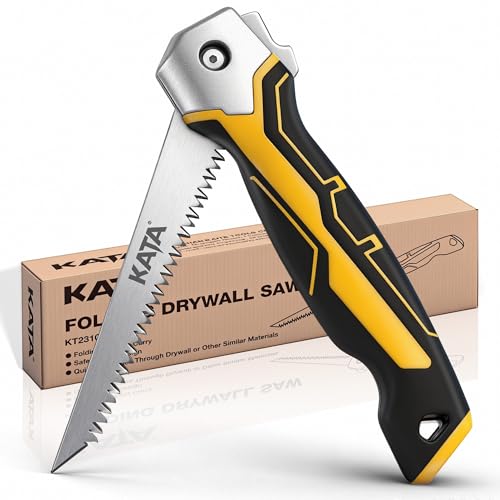
What We Like
- Folding blade design for safe, compact storage
- Sharp pointed tip for fast starts in drywall
- Secure locking system prevents accidental closure
- Soft grip handle aids control during repetitive tasks
Trade-offs
- Aggressive 7 TPI teeth are less suited for fine finishing cuts
- Lightweight build may feel insubstantial for heavy-duty all-day work
Its folding blade design reduces exposed edges for safer and easier storage in a tool bag or drawer, making it a compact choice for home repair kits. The pointed 65Mn steel blade tip helps start cuts in drywall for outlet or pipe access, and a secure lock prevents accidental closing during use. This saw suits quick patches, light remodeling, or being packed for camping where space is limited and jobs are straightforward.
The overall compact size, at 6.9 inches long and 0.3 pounds, prioritizes portability and storage over an extended reach. For deeper cuts into a wall cavity, a fixed-blade model like the 12.7-inch Klein Tools saw offers a longer cutting stroke. The KATA excels as an unobtrusive, problem-solving tool for the specific, contained cuts it was designed to handle.
Product photos
How We Evaluated Saws to Cut Drywall
Our research focused on manufacturer specifications and documented features like blade length, tooth design, and handle ergonomics. We also reviewed expert round-ups and aggregated common themes from owner feedback regarding durability, cutting speed, and real-world usability. The key criteria were the blade’s ability to start a plunge cut, its cutting efficiency in both push and pull strokes, and the overall design for safety and portability.
Since this is a research-based evaluation, we cannot provide hands-on data on long-term wear or precise blade longevity, but we prioritized tools with consistent reports of reliable performance.
What To Look For In Saws to Cut Drywall
A good drywall saw, commonly referred to as a jab or keyhole saw, is designed for one job: cutting through gypsum board and its paper face cleanly and quickly. The right choice depends on the task, such as roughing in a new room or making precise cutouts in a finished wall.
Look for a sharp, pointed tip to start holes, teeth designed for fast material removal, and a handle that provides control. Consider if you need a folding design for safe storage or a fixed blade for maximum rigidity.
Blade Design and Tip
The blade’s tip is critical. A sharp, pointed end lets you punch through drywall without pre-drilling a hole. Look for triple-ground or bi-directional teeth that cut on both the push and pull stroke for faster work. Blade length typically ranges from about 5 to 7 inches; a shorter blade offers more control in tight spaces, while a longer one provides better reach for deep cutouts. Some models feature an integrated rasp with filing holes along the blade for smoothing edges immediately after cutting.
Handle and Ergonomics
Comfort and control during repetitive plunging and cutting motions are essential. A handle with an anti-slip grip or ergonomic contours reduces hand fatigue. The handle’s shape also affects leverage; a wider base can give you more power for the initial jab into the wall. For professionals, a secure locking mechanism on a folding saw or a dedicated protective sheath is a major safety and convenience feature for tool belt carry.
Portability and Special Features
Consider how you’ll store and carry the tool. A folding saw collapses to a compact, safe size for a pocket or pouch, while a fixed-blade saw often feels more solid and rigid during cuts. Some models combine functions, like including a built-in rasp or, in the case of multi-tools, integrating a utility knife and tape hook. Your choice here depends on whether you prioritize a minimalist, single-purpose tool or value having multiple functions in one unit.
-Hold the saw and mimic a plunging motion to check the grip.
-Examine the blade lock on a folding model for positive engagement.
-Verify the blade thickness if you need extra rigidity for long cuts.
-Consider if you’ll need to smooth edges often, pointing you toward a rasping model.
-Think about your typical workspace, tight attics favor compact, folding designs.
For most DIY tasks, a simple jab saw with a 5- to 6-inch blade and a comfortable handle will get the job done efficiently.
Saws to Cut Drywall Compared
The table below compares key features like blade length, special functions, and design to help you see the differences at a glance.
| Product | Blade Length | Teeth Per Inch (TPI) | Handle Type |
|---|---|---|---|
| Goldblatt Folding Drywall Jab Saw | 5.2 inches | 8 TPI | Anti-slip super grip |
| IRWIN Tools Standard Drywall Jab Saw | N/A | Bi-Ground | Hardwood |
| Klein Tools Fixed Blade Rasping Jab Saw | 6 inches | 8 TPI | Wide, cushioned |
| HAUTMEC Double-Edge Drywall Jab Saw | 6 inches | 7 TPI | Soft grip, non-slip rubber |
| DEWALT Jab Saw | 7.0 inches | N/A | N/A |
| SUIZAN Folding Drywall Jab Saw | 4.72" | N/A | Ergonomic handle |
| GreatNeck Rasping Jab Saw and Sheath | N/A | 8 TPI | Ergonomic anti-slip |
| 109TOOLS Drywall Utility Knife & Rasp | N/A | N/A | N/A |
| Jorgensen Drywall Jab & Keyhole Saw | 6 inches | N/A | PP and TPR |
| KATA Folding Drywall Jab Saw | N/A | 7 TPI | Rubberized grip |
Frequently Asked Questions
What type of saw is best for cutting drywall?
For most cutouts in installed drywall, such as for electrical boxes or vents, a dedicated jab saw is the best tool. Its sharp, pointed tip lets you plunge directly into the wall, and its fine teeth cut the gypsum board cleanly. For long, straight cuts on uninstalled panels, a utility knife used to score and snap the board is often faster and creates less dust.
What is the most efficient way to cut drywall on a wall?
First, clearly mark your cutout. For a clean plunge, position the saw’s tip at a slight angle, apply firm pressure, and rock it into the wall. Once through, use smooth, full strokes, letting the saw’s teeth do the work. For a tool that offers incredible control in tight spaces, consider an oscillating tool with a drywall blade for very precise cuts.
Is it okay to cut drywall with a circular saw?
A standard circular saw creates an enormous, fine dust cloud that is unhealthy and difficult to clean up. It is not recommended. If you need power-tool speed for long, straight cuts on many sheets, a track saw with dust collection is a cleaner, more accurate option. For most jobs, hand tools or specialized drywall saws are more appropriate.
What is a good small saw for cutting drywall?
Look for a compact, folding jab saw. Models like the SUIZAN or KATA fold down to around 6 inches for easy pocket carry and have sharp tips for starting holes in confined spaces. These are ideal for technicians working in finished interiors or attics where a full-size saw would be cumbersome.
Can I use a drywall saw on other materials?
Many drywall saws can also cut soft plastics, ceiling tiles, or plywood, but they are optimized for gypsum. The aggressive teeth may tear finer materials. For a truly versatile blade, look for a model marketed for multiple building materials, or keep a separate fine-tooth saw for woodworking tasks.
The Bottom Line
The best overall choice balances secure storage, cutting efficiency, and comfortable control, making the Goldblatt Folding Drywall Jab Saw ideal for most DIYers and pros. If you’re on a tight budget, the IRWIN Tools Standard Drywall Jab Saw provides reliable performance for basic cuts. Professionals who frequently need to shape edges should look at the Klein Tools Fixed Blade Rasping Jab Saw. No matter your pick, the most important factor is a sharp, pointed tip that lets you start your cut cleanly and quickly.
