
10 Best Circular Saws For Woodworking in 2026
This post contains affiliate links. As an Amazon Associate, we earn from qualifying purchases.
For a reliable, high-output corded saw, the DEWALT DWE575SB is our best overall pick for woodworking, thanks to its lightweight design and powerful motor. For enhanced cut-line visibility, consider the Makita 5007MG, and for cordless freedom, the Makita XSR01Z delivers serious power. Choosing the right circular saw for your shop or project means balancing power, precision, and portability.
A saw that feels awkward or can’t keep its line clear will slow you down and compromise your work. Our research focuses on the specifications and owner feedback that matter most to woodworkers, helping you find a saw that fits your specific tasks and workflow.
Top 10 Circular Saws For Woodworking in the Market
Certain content that appears on this site comes from Amazon. This content is provided "as is" and is subject to change or removal at any time.
The Best Circular Saws For Woodworking, Reviewed
DEWALT DWE575SB Circular Saw

What We Like
- Lightweight design for a corded saw
- Powerful 15-amp motor for tough cuts
- Wide 57-degree bevel capacity with positive stops
- Electric brake enhances safety
Trade-offs
- Corded operation limits mobility on a job site
A 15-amp motor delivers consistent, corded power for ripping through thick stock and long sheet goods without a hiccup. Paired with a weight of just 8.8 pounds, it offers a blend of brawn and balance that makes it easy to control for extended periods. This saw is for the woodworker who values reliable, plug-in power above all and needs a tool that can handle the demands of a busy shop or a major project. The durable aluminum base and ball-bearing lower guard are built to last, making it a dependable choice for years of hard use.
This corded saw trades job-site mobility for unlimited runtime, making it ideal for extended tasks like breaking down sheet goods in a garage or driveway. Its 15-amp motor provides consistent power for demanding cuts. The saw features quick-release levers for blade-angle and cut-depth adjustments, a system reviewers prefer over thumbscrews for faster changes.
Makita 5007MG Circular Saw

What We Like
- Two built-in LED lights illuminate cut line
- Magnesium construction for lightweight balance
- Powerful 15-amp motor for fast cutting
- Positive stops at 22.5° and 45° for common angles
Trade-offs
- At 10.6 lb, it's heavier than many cordless 7-1/4-inch saws
- One-year warranty is shorter than some competitors
A 15-amp motor spinning at 5,800 RPM means this saw won’t bog down in dense lumber, a key reason it’s a jobsite staple. The magnesium build keeps the weight manageable at 10.6 pounds, which helps with control during long cuts. Its real advantage for precise work comes from the two LED lights that cast a clear shadow on the cut line, eliminating guesswork in dim conditions. This combination of power, balance, and visibility makes it a top choice for framers and woodworkers who need reliable, accurate cuts without fiddling with a laser.
The Makita 5007MG is a corded workhorse designed to survive years of hard use, not a specialized tool for fine cabinetry. Research notes a finish carpenter found a stiff guide paired with a circular saw could provide equal or better results than a dedicated track saw for sheet goods. At 10.6 pounds, it weighs more than some competitors like the 8.8-pound DEWALT DWE575SB, which can affect portability over a long day. This is the saw you grab when you need to make a lot of accurate cuts quickly and dependably, not the one for intricate off-site trim work where a cordless tool might be preferable.
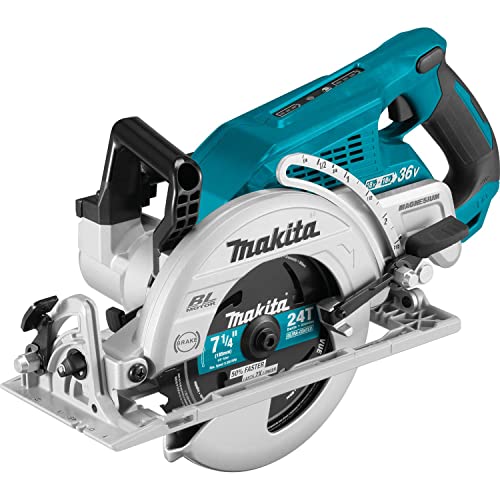
Makita XSR01Z Rear-Handle Circular Saw
What We Like
- Brushless motor and automatic speed change for efficient cuts
- Large 2-9/16 inch cutting depth for thick material
- Electric brake enhances control and productivity
Trade-offs
- Tool only: requires two separate 18V LXT batteries and charger
- At 12.1 pounds, it's heavier than many corded 7-1/4 inch saws.
- The rear-handle design has a larger footprint for storage.
Powered by two 18V LXT batteries, this rear-handle saw delivers cordless convenience with a 2-9/16-inch depth of cut. That capacity allows it to cut three times the material in one pass. Automatic Speed Change technology adjusts cutting speed and torque during operation to help maintain momentum.
The tool-only configuration requires purchasing two batteries separately, and the saw weighs over 12 pounds. Research mentions that the corded Makita 5007MGA was ranked as a top tool in its group for speed and handling.
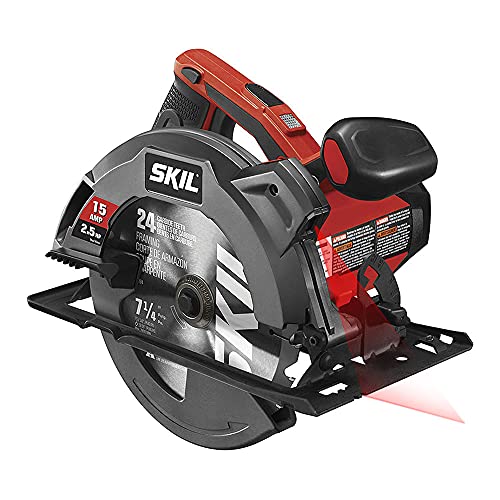
SKIL 5280-01 Circular Saw
What We Like
- Powerful 15-amp motor for fast cuts
- Laser guide improves cut-line visibility
- Dust blower keeps the line clear
- Positive stop at 45° for common bevels
Trade-offs
- No blade brake, unlike premium corded models
- Corded design limits mobility on large sites
This Skil model is built for the woodworker who needs reliable, corded power without the premium price tag. The integrated laser and dust blower are thoughtful touches that help you follow your line, while the spindle lock makes blade changes straightforward. It’s a solid, no-frills workhorse that gets the job done.
Circular saws like this one are best for breaking down panels or long boards, as they cannot achieve the accuracy of a table, miter, or band saw. Some track or edge guide arrangements can improve output, depending on the blade and operator skill. The tool is corded, so it requires an outlet, and it lacks a blade brake, a feature found on some other models.
DEWALT DCS590B Cordless Circular Saw

What We Like
- Brushless motor delivers up to 5,500 RPM.
- Electric brake stops blade quickly after release.
- Cuts up to 2-9/16 inches deep at 90°.
- Reported to make up to 368 cuts per charge.
Trade-offs
- Tool only: requires separate battery and charger purchase.
- Weighs 9.9 pounds, heftier than some corded models like the 8.8 lb DWE575SB.
- Depth of cut at 45° is limited to 2 inches.
With a brushless motor spinning up to 5,500 RPM, this saw chews through lumber with a speed that feels more like a corded tool. That high no-load speed translates to fewer bog-downs in dense material, making it a strong candidate for pros or serious DIYers who need cordless convenience without sacrificing cutting aggression. It’s built for users already invested in the 20V MAX platform who prioritize raw cutting speed for framing, decking, or other high-volume tasks.
The trade-off for that cordless power is heft; at 9.9 pounds, it demands more arm strength than lighter corded options, especially on overhead cuts. Compared to a dedicated corded workhorse like the Makita 5007MG, you’re paying a premium in weight and upfront cost for the battery system to gain complete jobsite mobility. Owner feedback consistently highlights that this tool truly shines when paired with DeWalt’s higher-capacity batteries, which are needed to fully leverage its claimed 368 cuts per charge.
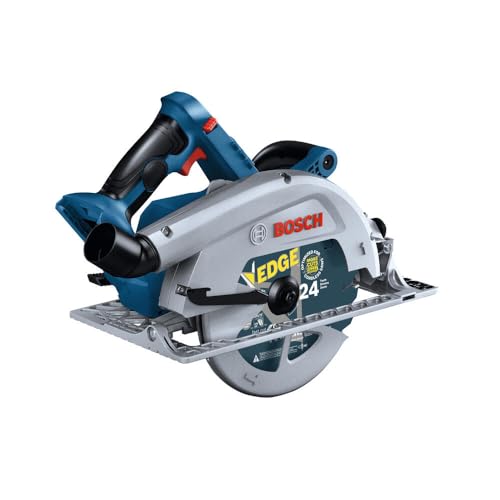
BOSCH GKS18V-25N Circular Saw
What We Like
- Electronic brake stops blade quickly for repeat cuts
- 360-degree pivoting dust port for cleaner work
- Auxiliary handle for secure control in either hand
- Ampshare system is multi-brand battery compatible
Trade-offs
- Tool only: requires separate purchase of battery and charger
- At 11.6 lb, it's heavier than some 7-1/4-inch corded competitors
- Cut capacity is standard, not class-leading for deep rips
A 2-1/2-inch cut capacity means you can cleanly slice through two-by lumber at any bevel angle. This saw offers cordless freedom while retaining the muscle needed for a full day of framing or sheathing. Its Biturbo brushless motor and PROFACTOR system deliver the consistent power you’d expect from a corded tool, so you can rip a sheet of plywood without worrying about a fade. The front bevel lock and ambidextrous auxiliary handle make angled cuts feel secure and controlled, even when you’re working in an awkward position.
This Bosch circular saw delivers corded-level performance from an 18V platform, making it a viable cordless choice for demanding cuts. Its 11.6-pound weight gives it a planted, stable feel on the workpiece. For users already invested in a compatible 18V system, features like the electronic brake and pivoting dust port help streamline all-day cutting operations.
Product photos
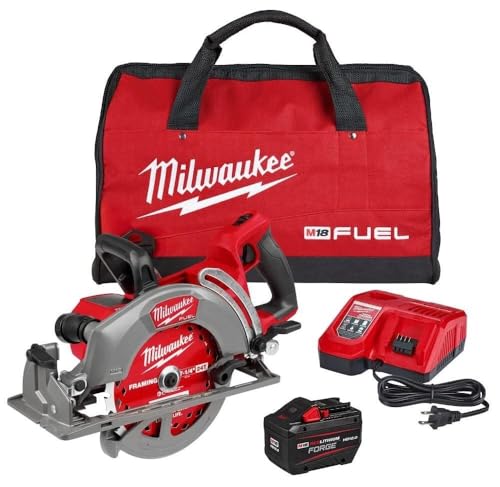
Milwaukee 2930-21HD Rear-Handle Saw
What We Like
- Unmatched runtime for cordless convenience
- Rear-handle design provides excellent leverage
- Rotating dust port allows clear view of cut line
Trade-offs
- Rear-handle design is bulkier than sidewinder saws
- Primarily suited for rough framing and sheet goods
Up to 700 cuts on a single charge means you can leave the cord behind for an entire day of sheathing or deck framing. This Milwaukee is built for the contractor or serious DIYer who needs cordless freedom without sacrificing muscle. The rear-handle design gives you superior control and pushing power when working through stacks of plywood or thick dimensional lumber, and the 2-5/8″ cut capacity lets you handle 3x material in a single pass. It’s a tool for making quick, clean work of big jobs.
This saw is built for production framing, not precision finish work. Its power and balance are well-suited for rough plywood tasks like subflooring and roof sheathing, where speed matters more than a perfect edge. For detailed trim or cabinet work, a lighter saw would be a better choice. While it excels in its lane, turning cordless convenience into a primary tool for heavy cutting, it is a more specialized tool compared to general-purpose compact saws.
Bosch CSW41 Worm Drive Saw
What We Like
- Left-side blade for clear cut-line view.
- Magnesium construction reduces weight for a worm drive.
- On-board multi-function wrench and tool hook.
- Anti-snag lower guard for smooth operation.
Trade-offs
- Length of 20.8 inches demands more storage space.
- Corded design limits mobility on a job site.
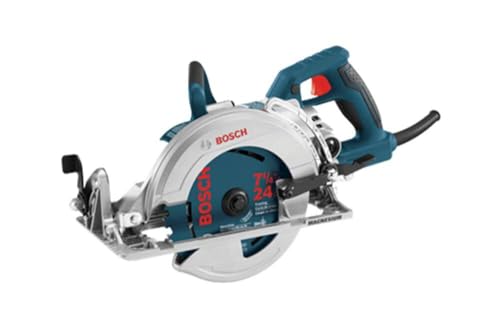
A worm drive design and left-side blade deliver unmatched clarity of the cut line and increased torque, making this saw a natural choice for precise, heavy-duty ripping and framing. The magnesium construction brings the weight down for a tool of this type, which helps manage user fatigue during long sessions. It suits the woodworker who values accuracy and power in a corded saw over ultimate portability.
The trade-off for that power and precision is bulk; at 15 pounds and over 20 inches long, it’s a substantial tool to maneuver in tight spaces. For comparison, the DEWALT DWE575SB is nearly half the weight and significantly more compact, making it a more nimble option for general carpentry. The Bosch CSW41’s built-in wrench and tool hook are thoughtful touches that keep you working instead of searching, cementing its role as a dedicated shop or jobsite workhorse.
Product photos
Greenworks 24V Circular Saw Combo

What We Like
- Combo includes drill, saw, two batteries, and charger
- 24V brushless motor provides fade-free power
- USB-C batteries double as portable power banks
- Lightweight and compact for tight spaces
Trade-offs
- 6.5-inch blade limits depth versus 7-1/4-inch models
- 2.0Ah batteries may require swaps on long rips
This combo kit delivers a capable 6.5-inch saw and a full-featured drill in a single, cordless package. The 24V brushless motor spins at 4,800 RPM, giving it enough grunt for crosscuts and sheet goods, while the included USB-C batteries add versatility beyond the workshop. It’s an ideal starter set for a homeowner or DIYer building a first tool collection, offering a complete cordless system without the premium price tag of pro-grade brands. The three-year warranty provides genuine peace of mind.
The trade-off is in cutting capacity. Its 2-1/4-inch maximum depth means it can’t quite handle a 2×6 at a 45-degree bevel, a cut a standard 7-1/4-inch saw like the DEWALT DWE575SB handles easily. For a dedicated woodworker planning to build decks or cut thick stock regularly, that limitation is real. But for general carpentry, furniture projects, and home repairs, this Greenworks kit packs remarkable utility into a compact, user-friendly format.
Product photos
DEKOPRO 1200W Circular Saw

What We Like
- Includes a straight cutting guide rail for accuracy
- 1200W motor provides consistent power for demanding cuts
- Steel base plate minimizes vibration for cleaner cuts
- Double protection switch and VDE cord enhance safety
Trade-offs
- Maximum 55mm depth limits capacity on thicker stock
What sets this saw apart is its dedicated guide rail, which transforms it from a basic cutter into a tool capable of making factory-straight edges on sheet goods. That 1200W motor has the guts to push through the cut without bogging down, which is essential when you’re locked into a track. It’s a clear choice for anyone needing repeatable, precise rip cuts or clean panel breakdowns without investing in a separate track saw system.
Its maximum 55mm depth means it won’t cut through a standard 2×6 at a 90-degree angle, limiting its capacity on thicker framing lumber. While the included guide rail aids with sheet goods, the tool’s overall dimensions make it less compact than rivals like the SKIL 5280-01, so it takes up more space in a tool bag.
Product photos
How We Evaluated Circular Saws For Woodworking
We based our evaluation on manufacturer specifications, expert round-up comparisons, and consistent patterns in owner feedback. Our criteria prioritized motor power for tough cuts, features that aid precision like blade visibility and positive stops, and design factors affecting daily use, such as weight and ergonomics. This research-led approach identifies tools that perform reliably for their intended tasks. It cannot, however, replicate the personal feel of a saw in your hand, which is why we emphasize matching the tool’s design to your common jobs.
What To Look For In Circular Saws For Woodworking
The right saw should feel like an extension of your arm for the jobs you do most. It’s not just about raw power; it’s about control, clarity, and how the tool handles over a long session in the shop.
Prioritize a powerful motor (15-amp for corded, brushless for cordless), clear sightlines to the blade, and positive bevel stops at common angles like 45°. Weight and balance are critical for overhead work or all-day use.
Power & Motor Type
For corded saws, a 15-amp motor is the standard for woodworking, providing consistent, high-torque power for ripping hardwoods and sheet goods. Cordless models rely on brushless motors for efficiency and battery life; the voltage platform (18V or higher) determines the overall power ceiling and dictates your investment in batteries. Our research shows that a quality brushless cordless saw can now rival corded performance for many tasks, but runtime depends heavily on battery capacity.
Precision & Visibility
Accurate cuts start with seeing the blade. Look for features like a built-in dust blower, LED work lights, and a left-side blade orientation (common on worm-drive saws) that gives you a direct view of the cut line. An electric brake stops the blade quickly after a cut, enhancing safety and allowing for faster repeat cuts. The quality of the footplate also matters; a thick, machined base with a crisp 90-degree edge will ride smoothly against a straightedge guide for better straight cuts.
Ergonomics & Design
Weight and balance directly affect control and fatigue. Magnesium construction reduces weight without sacrificing durability. Consider the handle design: a traditional sidewinder is more compact, while a rear-handle provides greater leverage for heavy ripping. The ease of adjusting depth and bevel, preferably with lever locks rather than thumbscrews, makes setup faster and more repeatable. For those with space constraints or who handle lighter materials, a compact circular saw might be the right fit.
- Check that depth and bevel scales are easy to read in your shop lighting.
- Ensure the power cord (if corded) is long and supple for maneuvering around sheet goods.
- Verify the saw includes a spindle lock for easier, safer blade changes.
A saw that feels heavy in the store will feel even heavier after your third rip cut of the day.
Circular Saws For Woodworking Compared
The table below compares key specifications across all ten picks to help you weigh the trade-offs at a glance.
| Product | Motor Power | Max Cut Depth (90°) | Weight |
|---|---|---|---|
| DEWALT DWE575SB Circular Saw | 15 amp | 2 9/16 in. | 8.8 lbs |
| Makita 5007MG Circular Saw | 15.0 AMP | 2-1/2 inches | 10.6 pounds |
| Makita XSR01Z Rear-Handle Circular Saw | 36V (18V X2) cordless | 2-9/16 inches | 12.1 pounds |
| SKIL 5280-01 Circular Saw | 15 amp | N/A | 8.7 pounds |
| DEWALT DCS590B Cordless Circular Saw | Up to 1,700 MWO | 2-9/16 inches | 9.9 pounds |
| BOSCH GKS18V-25N Circular Saw | Biturbo Brushless | 2-1/2 inches | 11.6 pounds |
| Milwaukee 2930-21HD Rear-Handle Saw | N/A | 2-5/8" | N/A |
| Bosch CSW41 Worm Drive Saw | 15-amp | N/A | 15.0 Pounds |
| Greenworks 24V Circular Saw Combo | Brushless Motor | 2-1/4 inches | 11.0 Pounds |
| DEKOPRO 1200W Circular Saw | 1200W | 55mm | N/A |
Frequently Asked Questions
What is the best circular saw for woodworking?
For most woodworkers, a corded 7 1/4-inch saw with a 15-amp motor offers the best balance of power, reliability, and value. Our top pick, the DEWALT DWE575SB, exemplifies this with its lightweight build and wide bevel range, making it a dependable choice for shop work and major projects.
Which circular saw is better, DeWalt or Makita?
Both brands offer excellent tools, and the better choice depends on your needs. DeWalt models often emphasize power and a favorable power-to-weight ratio. Makita saws, like our precision pick, frequently incorporate features for visibility and durability. It’s best to compare specific models based on the features you value most.
What should I look for in a circular saw for cutting plywood?
For breaking down sheet goods, prioritize a saw with a smooth, flat footplate that rides cleanly against a straightedge guide. A dust blower or LED light helps maintain a visible cut line. Many woodworkers also use a dedicated guide rail system or build a simple jig for repeatable, accurate straight cuts.
Is a corded or cordless circular saw better for a home workshop?
A corded saw provides unlimited runtime and consistent high power at a lower upfront cost, ideal for a stationary shop. A cordless saw offers unmatched portability and convenience for projects around the property or in spaces without easy power access, but requires an investment in a battery system.
How important is the blade on a circular saw?
Extremely important. The stock blade is often suited for rough cuts. Upgrading to a high-quality circular saw blade designed for your material, like a fine-tooth blade for plywood, will dramatically improve cut quality, reduce tear-out, and make the saw feel more powerful.
The Bottom Line
The DEWALT DWE575SB is the best overall circular saw for woodworkers who need dependable, high-power corded performance for shop projects and lumber breakdown. If you’re on a tight budget, the SKIL 5280-01 offers core cutting power for sheet goods, while those needing cordless freedom for framing should look at the Makita XSR01Z. Ultimately, matching the saw’s design and features to the specific cuts you make most often is the surest path to confident, accurate work.
