
10 Best Saws To Cut Aluminum in 2026
This post contains affiliate links. As an Amazon Associate, we earn from qualifying purchases.
Our best overall saw for cutting aluminum is the Evolution S210CCS Metal Cutting Circular Saw for its clean, cool cuts that require little finishing. For repetitive angled cuts, the DEWALT 14-Inch Chop Saw excels, while the VEVOR Abrasive Chop Saw offers quick, tool-free adjustments. Cutting aluminum requires a saw that manages heat and prevents material from sticking to the blade, which can ruin both your cut and your tool.
We researched specifications, expert recommendations, and patterns in owner feedback to compile this list of ten tools suited for different workspaces and project needs.
Top 10 Saws For Cutting Aluminum in the Market
Certain content that appears on this site comes from Amazon. This content is provided "as is" and is subject to change or removal at any time.
The Best Saws For Cutting Aluminum, Reviewed
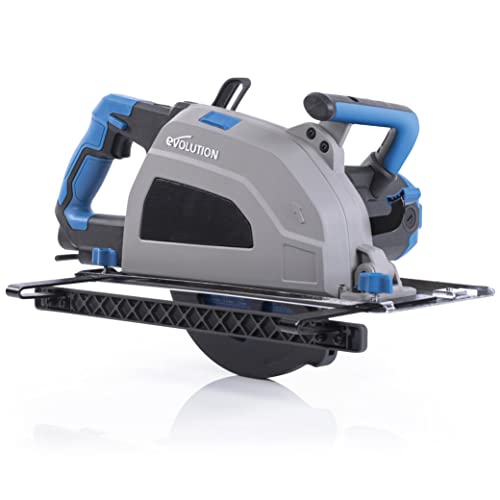
Evolution S210CCS Metal Cutting Circular Saw
What We Like
- Clean, cool cuts with no heat or burrs.
- Heavy-duty motor handles 1/2-inch steel plate.
- LED cutline light and edge guide for precision.
Trade-offs
- At 23.2 inches long, it's less portable than compact cordless models.
- Corded operation limits range of motion versus battery-powered tools.
The ability to make clean, burr-free cuts in 1/2-inch steel plate without generating heat or sparks is the core reason this saw stands out. That advanced TCT blade technology means you get a work-ready edge straight from the cut, saving significant time on grinding or deburring for fabrication and welding. It’s built for the shop, with a high-torque motor and overload protection designed for all-day use on metal roofing, framing, or repeat cutting tasks. The full-length parallel edge guide and LED cutline light translate specs into straight, accurate cuts you can trust.
The trade-off for that power and clean-cut performance is a dedicated, corded tool. You give up the cord-free convenience of a model like the DEWALT 20V MAX XR for the relentless, plugged-in performance this Evolution delivers. Its 3-inch depth capacity and efficient chip collection system make it a workhorse, but its size anchors it to a workshop or jobsite with power. For the user who needs to process a lot of metal with minimal post-cut finishing, this saw’s design eliminates a major bottleneck.
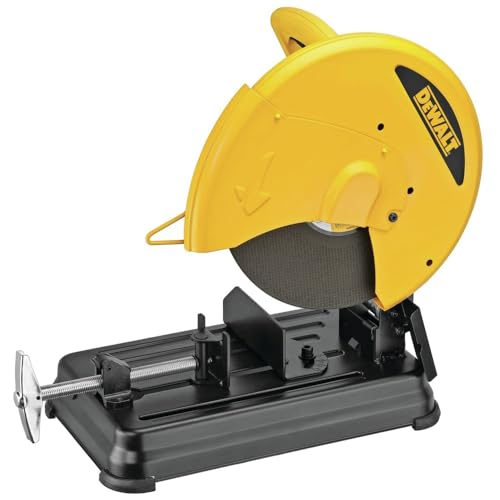
DEWALT 14-Inch Chop Saw
What We Like
- 2300W motor provides overload protection
- Ergonomic handle reduces user fatigue
- Quick-Lock vise for fast material clamping
- 45-degree pivoting fence for accurate angles
Trade-offs
- Large 22.1-inch length demands significant bench space.
- Weighs 0.5 pounds, which is very light for its size and may affect stability during heavy cuts.
A 45-degree pivoting fence makes this saw a dedicated station for repeatable miter and bevel cuts in aluminum stock. The 2300W motor has the guts to drive a large abrasive or non-ferrous blade through thick material without bogging down, while the Quick-Lock vise secures workpieces fast. It’s built for the shop where you need to batch-cut angles for frames or structures with precision and minimal setup time between cuts.
Its 22.1-inch length and 17.3-inch height require a substantial, permanent spot on a workbench. Compared to the 13.4-inch long DEWALT 20V MAX XR circular saw, this tool is clearly designed as a stationary anchor for the shop. The Quick-Lock vise and pivoting fence support fast, accurate cuts on fixed material, not for moving around a site.
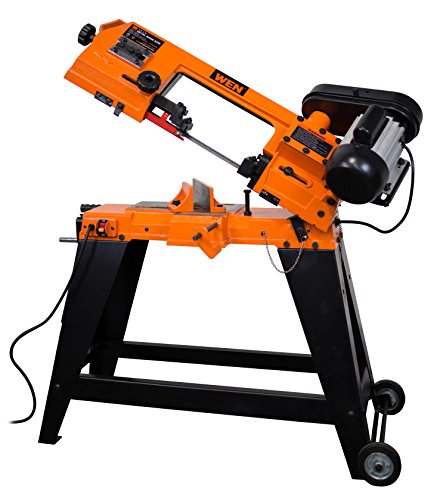
WEN Metal Band Saw with Stand
What We Like
- Automatic shut-off after a cut.
- Three-speed adjustment for different metals.
- Built-in stand with wheels for mobility.
- Versatile vertical and horizontal operation.
Trade-offs
- At 118 pounds, moving it requires its wheels.
- A 4.6 amp motor is modest for heavy industrial use.
- Its 37 x 20.5 inch footprint demands significant shop space.
The ability to switch between vertical and horizontal operation makes this saw a uniquely adaptable fixture for a home metal shop. Its three blade speeds let you dial in the right pace for aluminum, and the automatic shut-off is a thoughtful safety feature. With the included stand on wheels, you can roll it into position for a long piece of stock. This is the machine for a serious hobbyist or small fabricator who needs one saw to handle notching, trimming, and cutting down lengths with equal ease.
Weighing 118 pounds, the WEN BA4664 is designed as a permanent shop tool rather than a portable jobsite saw. Its ability to operate in both vertical and horizontal positions supports a wide range of cutting angles and workpiece shapes. The three blade speeds, from 80 to 200 feet per minute, provide compatibility with different types of metal.
DEWALT 20V MAX XR Metal Cutting Circular Saw

What We Like
- Integrated chip collector keeps the work area clean
- Electronic brake provides enhanced control and safety
- Connectivity for asset management via Tool Connect+
Trade-offs
- Tool only: requires separate purchase of 20V battery and charger
- Weight of 13.3 pounds demands steady handling during operation
- Depth of cut is shallower than the Evolution S210CCS's 3 inches
A 2-5/8 inch depth of cut means this cordless saw can handle a wide range of metal stock, from steel studs to corrugated decking, without being tethered to an outlet. It’s built for a professional who needs to move freely across a jobsite and values the brushless motor designed for challenging applications. The integrated chip collector helps maintain a clean work area by containing debris. This saw is for the tradesperson who needs a reliable, go-anywhere tool for serious metal fabrication.
You need to supply your own battery for this cordless tool, which adds to the initial cost if you are new to the system. When deeper cutting capacity is required for thicker materials, a corded model like the Evolution S210CCS provides a full 3 inches of depth.
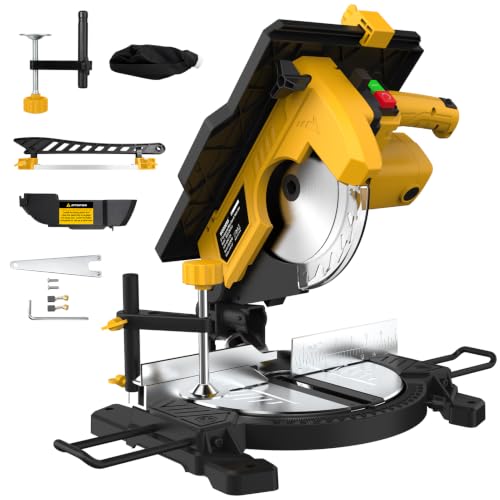
WOODERS 2-in-1 Miter Saw & Table Saw Combo
What We Like
- Converts between miter saw and table saw
- Heavy-duty aluminum table with extension rails
- Built-in overload and anti-start safety
- Compact 13.4 x 8.9 x 12.2 inch footprint
Trade-offs
- Max cutting depth is only 30mm as a table saw
- Left-only bevel limits some compound angle setups
Its compact 2-in-1 design is the key fact here. You get a dedicated miter saw and a small table saw in a single unit that fits on a modest workbench, which is a huge space-saver for a garage workshop or an apartment DIYer. This makes it a compelling choice for anyone needing to handle a variety of cuts, crosscuts, bevels, and rip cuts, on wood, plastic, and aluminum without dedicating floor space to two separate machines. The 80-tooth TCT blade and 5500 RPM motor are specified for clean cuts in softer metals, so it’s well-suited for light fabrication and trim work.
The trade-off is capacity, especially in table saw mode where you’re limited to a 30mm cutting depth. That’s fine for sheet aluminum and thin stock, but it rules out deeper cuts. For someone whose primary need is cutting aluminum angle or tube quickly, a dedicated tool like the Evolution S210CCS circular saw offers greater depth and is built specifically for metal. The WOODERS combo excels as a space-conscious multi-tasker, not a heavy-duty metal-cutting specialist.
Product photos
VEVOR Abrasive Chop Saw

What We Like
- Tool-less angle adjustment for quick setup
- Thick, patterned vise for secure, wobble-free clamping
- Protective spark guard for safer operation
- 80-tooth blade designed for smooth, long-lasting cuts
Trade-offs
- Heavier at 30 pounds, less portable than handheld saws
- Abrasive blade generates sparks, unsuitable for flammable work areas
- Fixed 14-inch abrasive blade limits material thickness vs. band saws
The tool-less angle adjustment is the standout feature here, letting you switch from a straight cut to a 45-degree bevel in seconds without fumbling for a wrench. That makes this VEVOR saw a solid fit for a workshop where you’re frequently chopping aluminum angle, bar stock, or rebar to length and need to pivot quickly between different miter cuts. Its 2300W motor and 80-tooth blade are built to handle the grind of metal work, and the hefty vise is designed to lock material down tight to minimize blade deflection.
As an abrasive chop saw, this tool generates sparks and leaves a burr, unlike cold-cut saws that produce clean edges. Its 30-pound weight makes it a stationary benchtop machine, not a tool for easy transport to different job sites. The design is built for cutting various shapes of steel and aluminum, as used in construction sites and workshops.
Ecarke Cordless Band Saw

What We Like
- Tool-free blade change for quick swaps
- Brushless motor for efficiency and long life
- Built-in LED work light for visibility
- Lightweight design allows one-handed operation
Trade-offs
- Tool only: requires a separate DeWalt 20V battery
- 2-1/2 inch capacity limits stock thickness
A 2-1/2 inch cutting capacity and 630 SFPM brushless motor deliver clean, spark-free cuts through aluminum conduit and sheet, which is perfect for on-site fabrication and repairs. If you’re already invested in DeWalt’s 20V platform, this saw turns your existing batteries into a highly portable cutting tool. Its compact, 10.9-pound build and one-handed design let you work in tight spots or overhead without wrestling a cord.
With a 2-1/2 inch capacity, this cordless band saw handles conduit and pipe easily but isn’t built for the largest stock. Its real purpose is portability, not replacing a stationary shop saw. For electricians or plumbers needing quick, clean cuts on the job, it’s a logical extension of a cordless kit, though you must supply the compatible DeWalt 20V battery.
Product photos
Hoteche Professional Miter Box with Saw

What We Like
- Heavy-duty aluminum frame resists flex for stable cuts
- Extra-wide capacity handles workpieces up to 160mm wide
- Portable, no-power solution for precise cuts anywhere
- Laser-etched guides for multiple precise angle settings
Trade-offs
- Manual operation requires physical effort for each cut
- Cutting speed is limited by user stamina and technique
- Blade length limits cut depth to the saw's stroke
Its heavy-duty aluminum frame and 160mm cutting capacity provide remarkable stability for a manual tool, letting you make clean, repeatable angle cuts in aluminum trim without the tool flexing. This makes it a perfect fit for installers and detail-oriented DIYers who need exact miter joints on-site but want to avoid the noise, sparks, or setup of a power saw. You get the control of a handsaw with the repeatable accuracy of a jig.
The trade-off is sweat equity. Every cut is powered by you, which is fine for trim work but becomes a serious workout on longer projects or thicker stock. For cutting aluminum angle iron or pipe in volume, a powered option like the Evolution S210CCS circular saw will save significant time and labor. The Hoteche excels where precision, portability, and quiet operation are the priorities over raw cutting speed.
Product photos
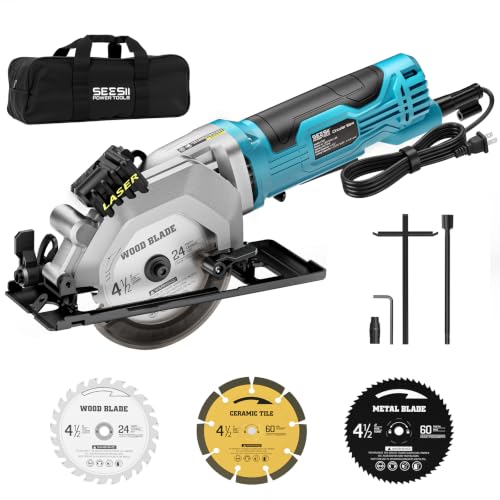
SEESII Mini Circular Saw
What We Like
- Includes TCT, HSS, and diamond blades for multi-material use
- Laser guide and rail system for straighter cuts
- Double-switch safety lock prevents accidental starts
- Lightweight, compact design for one-handed operation
Trade-offs
- Maximum cutting depth limits work on thick aluminum stock
- Corded design restricts mobility compared to battery-powered tools
- Smaller blade diameter reduces cut speed on long sections
A 4.8-amp motor delivers a no-load speed up to 4000 RPM, which the brand states yields a 20% increase in cutting efficiency compared to general mini circular saws. It comes with three blades, including a TCT blade, for cutting wood, soft metal, tile, and plastic, aiming for multi-material versatility. The laser guide is designed for better precision, and a dust hose adapter fits most vacuums to reduce flying wood for improved workspace visibility.
This tool’s handy size comes with a trade-off in capacity. Its maximum cutting depth is just over one and a half inches, so it cannot slice through large aluminum structural members. For that kind of heavy-duty work, a dedicated metal cutter like the Evolution S210CCS is a better choice. However, for cutting aluminum angle, tube, or sheet to size, this model packs the necessary features into a package that is about half the weight of a full-size saw. It is a focused tool that does several jobs well, particularly where space is limited or the project requires frequent material changes.
Product photos
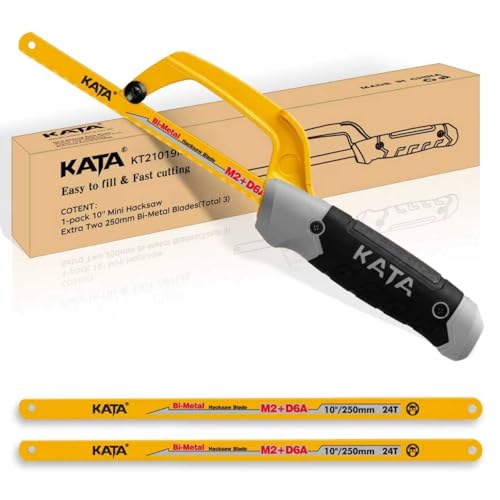
KATA 10 Inch Mini Hacksaw
What We Like
- Compact 10-inch aluminum frame
- Includes three 24 TPI bi-metal blades
- Ergonomic handle for secure grip
- Lightweight at 0.3 pounds
Trade-offs
- Frame is only 11.4 inches long, limiting stroke
- Not intended for heavy-duty cutting tasks
An 11.4-inch frame and 0.3-pound weight make this the tool you grab when you can’t fit anything else into the work area. Its compact size is the entire point, turning awkward corners and cramped spots into manageable cutting zones. This mini hacksaw suits the DIYer or mechanic who needs to trim a bolt, cut a small aluminum rod, or notch a piece of thin tubing in place. It’s for the short, precise cuts where a full-size saw is simply too much tool.
The KATA Mini Hacksaw is built for tight spaces, with a 10-inch frame that fits easily into a tool bag and offers better control than a full-size saw in cramped areas. Its design is focused on light-duty household tasks, like cutting PVC pipe, plastic parts, and small metal rods or bolts. While the included 24 TPI bi-metal blades handle those materials, the tool is not intended for heavy-duty demolition, large lumber, or thick hardened steel.
Product photos
How We Evaluated Saws For Cutting Aluminum
Our research focused on manufacturer specifications, expert round-ups, and consistent patterns in owner feedback. We prioritized cutting performance for aluminum specifically, looking at blade type, motor power, and features that manage heat and chip removal, as aluminum’s softness and thermal conductivity present unique challenges. We also weighed practical factors like portability, workspace footprint, and value for the intended user.
This guide provides a starting point for selecting a saw by outlining key features and specifications that contribute to effective performance on common metals.
What To Look For In Saws For Cutting Aluminum
Choosing the right saw means matching its capabilities to the aluminum work you do most. The wrong tool leads to clogged blades, heat damage, and ragged edges that need extensive cleanup.
For clean cuts in aluminum, prioritize a saw with a blade designed for non-ferrous metals, sufficient power to maintain cutting speed, and features that manage heat and chips. Consider your primary need: portability for job sites, precision for fabrication, or versatility for a multi-material shop.
Blade Type & Tooth Geometry
The blade is the most critical factor. Standard wood-cutting blades will clog and overheat almost immediately. You need a blade designed for non-ferrous metals, typically with a triple-chip grind (TCG) or a negative hook angle.
Carbide-tipped teeth are essential for longevity, as they resist wear from aluminum’s abrasiveness far better than high-speed steel. A higher tooth count (like 80-100 teeth on a 10-inch blade) generally produces a smoother finish on sheet and extrusion, while a lower count may be used for thicker stock where chip clearance is paramount.
For deeper guidance on this topic, see our separate resource on the best blades for aluminum.
Power & Cutting Speed
Aluminum cuts best with a high cutting speed to prevent the material from melting and gumming up the blade. This requires a motor with enough power to maintain that speed under load. Corded saws often provide more consistent high RPMs, while modern brushless cordless motors offer impressive power in a portable package.
Look at the motor’s wattage or amp rating as a general indicator, but understand that the saw’s overall design, including gear train and blade diameter, determines the final cutting performance. A saw that bogs down will create heat and poor-quality cuts.
Chip Management & Heat Control
Aluminum produces sticky, stringy chips that must be cleared from the cut path. Some saws have integrated chip blowers or collectors, while others rely on blade geometry and cutting fluid. Using a lubricant like a wax stick or mist coolant significantly reduces heat, extends blade life, and improves cut quality.
For stationary shop saws, a built-in coolant system is a major advantage. Always ensure your saw has adequate guarding to contain hot chips and sparks, especially when using abrasive blades. Learning proper techniques for cutting metal with a reciprocating saw or a circular saw emphasizes these safety and performance principles.
- Check that the saw’s design allows chips to eject safely away from you.
- Verify if the tool is compatible with cutting fluids or has a port for a misting system.
- For abrasive chop saws, ensure the spark guard is intact and you’re working in a fire-safe area.
Always use a blade and technique that keeps the cut cool; a smoking blade is a sign you’re damaging both the tool and your material.
Saws For Cutting Aluminum Compared
Our comparison table below puts key specs side-by-side to help you quickly differentiate our picks.
| Product | Blade Size | Motor Power/Type | Weight |
|---|---|---|---|
| Evolution S210CCS Metal Cutting Circular Saw | 8-1/4 inches | High torque | 1.0 Pounds |
| DEWALT 14-Inch Chop Saw | 14-Inch | 2300W | 0.5 pounds |
| WEN Metal Band Saw with Stand | N/A | 4.6 amp | 118.0 pounds |
| DEWALT 20V MAX XR Metal Cutting Circular Saw | 7-1/4 in. | Brushless motor | 13.3 Pounds |
| WOODERS 2-in-1 Miter Saw & Table Saw Combo | 8-1/4" | 12A 1200W pure copper | N/A |
| VEVOR Abrasive Chop Saw | 14in/35cm | 2300W | 30.0 pounds |
| Ecarke Cordless Band Saw | N/A | Brushless motor | 10.9 pounds |
| Hoteche Professional Miter Box with Saw | 550mm (21.6") | N/A | 2.2kg (4.8lbs) |
| SEESII Mini Circular Saw | 4-1/2" | 4.8A | 4.7 pounds |
| KATA 10 Inch Mini Hacksaw | 10 inches | N/A | 0.3 pounds |
Frequently Asked Questions
What kind of saw is best to cut aluminum?
For most fabricators needing clean, ready-to-weld cuts, a metal-cutting circular saw like our top pick is best. For angled cuts in bar stock, a chop saw is ideal, while a band saw offers versatility for both intricate shapes and straight cuts. The “best” tool depends entirely on your material form and workspace; our guide to saws for cutting aluminum breaks down the options.
What is the best tool for cutting aluminum?
There is no single “best” tool, as it varies by task. A metal-cutting circular saw excels on sheet and plate, a chop saw dominates solid bar stock, and a portable band saw is perfect for conduit and pipe. The key is using a tool designed for metal, equipped with the correct blade, as outlined in our evaluation of the best metal-cutting saws.
What type of saw blade is best for cutting aluminum?
A carbide-tipped blade with a triple-chip grind (TCG) tooth design is best for cutting aluminum. These blades are specifically made for non-ferrous metals, resist clogging, and stay sharp much longer than standard blades. The exact blade you need depends on your saw type, whether it’s for a 12-inch miter saw, a circular saw, or another tool.
Can you cut aluminum with a regular skill saw blade?
Technically you can, but you shouldn’t. A standard wood-cutting blade will quickly become clogged with aluminum, overheat, and produce dangerously rough, jagged edges. It’s a good way to ruin a blade and potentially damage your saw or workpiece. Always use a blade rated for non-ferrous metals.
What should I look for in a portable saw for aluminum?
For portability, prioritize a cordless design if you’re off-grid, but ensure it has enough battery power (like a 20V system) to maintain cutting speed. Tool-free blade changes and a built-in work light are valuable features for efficiency on a jobsite. Remember that portability often comes with a trade-off in maximum cutting depth or capacity.
The Bottom Line
For shop-based fabricators and welders who need clean, production-ready cuts in aluminum plate and sheet, the Evolution S210CCS Metal Cutting Circular Saw is our clear best overall choice. If your budget is tight or your work is exclusively light-duty angled cuts, look to the dedicated award winners like the VEVOR Abrasive Chop Saw or the compact WOODERS 2-in-1 combo.
Ultimately, the single most important factor is using the correct blade. Investing in a quality carbide-tipped blade designed for aluminum will make a dramatic difference in cut quality and tool life, no matter which saw you choose.
