
8 Best Saws For Cutting Aluminum in 2026
This post contains affiliate links. As an Amazon Associate, we earn from qualifying purchases.
The Evolution S14MCS 14″ Mitering Chop Saw is our best overall saw for its ability to deliver burr-free, weld-ready cuts in aluminum with impressive speed. For those with limited space, the Evolution R8MTS is the best compact multi-tool, while the VEVOR Mini Miter Cut-off Chop Saw excels at detail work.
Aluminum’s soft, sticky nature and high heat conductivity demand the right tool to avoid clogged blades and melted edges. We built this guide by analyzing specifications, manufacturer data, and patterns in owner feedback to help you find a saw that matches your project scale and workspace.
Top 8 Saws For Cutting Aluminum in the Market
Certain content that appears on this site comes from Amazon. This content is provided "as is" and is subject to change or removal at any time.
The Best Saws For Cutting Aluminum, Reviewed
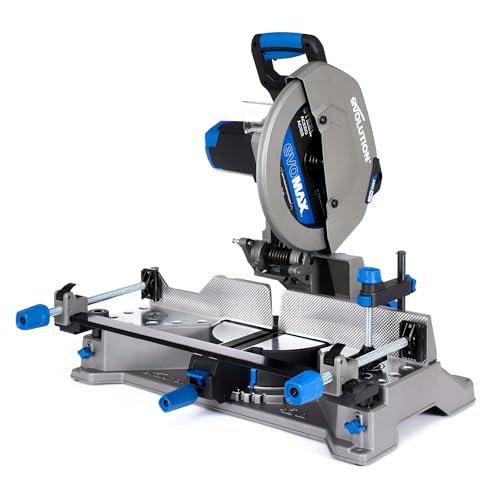
Evolution S14MCS 14" Mitering Chop Saw
What We Like
- Cold cutting leaves burr-free, weld-ready edges.
- EVOMAX blade delivers over 3500 cuts in steel.
- Reinforced base and fence ensure zero flex.
- Soft start and electronic brake enhance safety.
Trade-offs
- At 72.4 lb, it's a substantial, stationary benchtop tool.
- Requires firm, consistent feed rate to avoid sparking.
- The 14-inch blade and 17.5-inch length demand significant workspace.
This cold-cutting saw slices through metal four times faster than an abrasive saw, a core advantage for fabricators who need speed and a weld-ready finish. Its 1,100 RPM blade produces cool, burr-free cuts without creating hazardous airborne dust. A reinforced alloy base and stainless-steel miter gauge provide the rock-solid stability needed for precise +/-46° miters in a professional shop.
The trade-off for this professional-grade performance is heft and footprint. Weighing 72.4 pounds, this is not a tool you will move around a job site easily. For someone needing extreme portability, the VEVOR Mini Miter Cut-off Chop Saw at just 3 pounds is a stark contrast. For a dedicated shop setup where accuracy and volume matter, the Evolution’s intelligent motor and 3500+ cut blade life justify its positioning.
Evolution R8MTS 8-1/4" Convertible Miter/Table Saw

What We Like
- Converts between miter saw and table saw modes
- Cuts aluminum, steel, and wood with one TCT blade
- Compact size ideal for tight workspaces
- Integrated blade guard and riving knife for safety
Trade-offs
- 1-1/2 inch rip capacity limits width of table-sawn boards
- Smaller 8-1/4 inch blade reduces cutting depth
Combining a compound miter saw and a table saw in one tool is the core advantage of the Evolution R8MTS, delivering dual functionality from a single, compact unit. For a DIYer or homeowner with a tight workshop, this convertible design saves significant space while still handling common cutting tasks. It suits someone who needs to make precise miter cuts on trim and also wants a small table saw for ripping narrow stock, all without changing the multi-material blade. The included TCT blade cuts wood, plastic, and mild steel, allowing transitions between different materials during a project.
That versatility comes with clear limits, particularly in table saw mode. The 1-1/2 inch rip capacity confines it to narrower tasks, preventing the ripping of wider boards. For frequent aluminum or steel cutting, a tool like the Evolution S14MCS cold cut saw offers a larger blade and is described as providing a burr-free finish. The R8MTS trades pure cutting capacity for its compact, convertible design, making it a space-saving solution for light- to medium-duty jobs where floor space is limited.
VEVOR 14" Cold Cut Chop Saw

What We Like
- Dry-cut ceramic alloy blade eliminates sparks
- Thick, patterned vise reduces material wobble
- Tool-less 45-degree angle adjustment
- Protective spark guard and soft-start motor
Trade-offs
- At 51 pounds, it's a heavy benchtop machine
- Blade not recommended for cutting stainless steel
- No speed adjustment mentioned for different materials
A 2800W motor and a 14-inch ceramic alloy blade deliver the raw power needed for fast, burr-free cuts in aluminum and steel bar stock. This is a dry-cut saw, so you get a cool, clean finish without the shower of sparks common to abrasive models. That high power and clean operation make it a natural fit for a busy workshop or construction site where you’re regularly processing angle iron, rebar, or aluminum sections. The tool-less miter adjustment up to 45 degrees adds versatility for fabrication projects.
Weighing 51 pounds, this saw requires a sturdy, permanent workbench rather than a lightweight cart. Its dimensions mean it occupies a significant footprint in a workshop. The design includes a thicker vise with wave patterns for increased friction and clamping tightness, and the blade clamping is processed to fit better and wobble less during cuts, which supports accurate results.
VEVOR Mini Miter Cut-off Chop Saw

What We Like
- Extremely compact and portable at 3 pounds
- Quiet 90W motor for indoor or bench use
- Includes clamping fence for secure cuts
- Protective housing over half the blade
Trade-offs
- Maximum cut depth of 10mm limits material thickness
- Benchtop clamping required for stability on every use
A cutting depth of just 10mm for soft material and a footprint smaller than a shoebox define this saw’s purpose. It’s built for precision work on small tubing, model parts, and craft pieces, not for chopping stock. The 7800 RPM motor provides high-speed performance, and the whole unit weighs only 3.0 pounds, so it’s light enough to store in a drawer. This is the tool you reach for when a full-size chop saw is overkill and a hand saw lacks the perfect square cut.
The trade-off for its tiny size is obvious capacity. You won’t be slicing through thick bar with this, as its maximum cutting depth for ferrous metal is 4 mm. For larger metal cutting jobs, the other-products list includes full-sized cold cut chop saws like a VEVOR 14″ model with a 2800W motor. But for a hobbyist trimming rod, cutting tubing, or making precise miter joints in small frame, this mini saw eliminates the hassle of setting up a giant machine. It’s a dedicated specialist for the detail-oriented workshop.
Product photos
WORKPRO 12-Inch Adjustable Hacksaw

What We Like
- Lightweight aluminum frame reduces user fatigue
- Adjustable 45/90-degree cutting angles for versatility
- Comfortable, skid-resistant TPR rubber handle
- Includes blades for both metal and wood
Trade-offs
- Manual operation for every cut
- Includes only three total blades
A 12-inch bi-metal blade and a lightweight aluminum frame make this hacksaw a practical choice for the occasional aluminum trim job or small DIY project. The adjustable head lets you tackle flush cuts or standard angles, and the comfortable TPR handle provides a secure grip during those short, controlled strokes aluminum demands. It’s the tool you grab for a quick cut on a bracket, a pipe, or a piece of angle iron when setting up a dedicated power saw isn’t worth the time.
Every cut requires manual effort, making it slower than motorized saws like the 2800W VEVOR 14″ Cold Cut Chop Saw. The package includes two blades for metal and plastic and one for wood, so you must switch blades when changing materials. This tool is defined as suitable for daily basic cutting tasks, not for high-volume work where powered tools save time.
Product photos
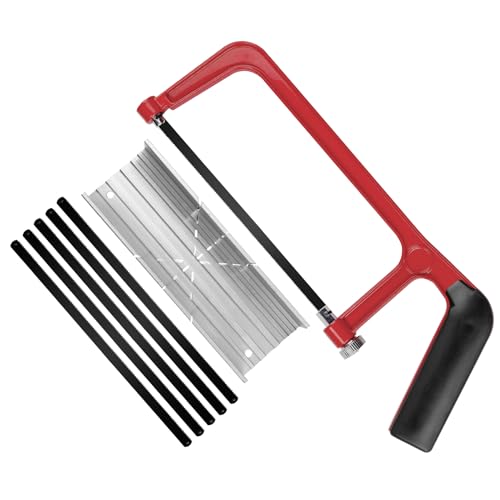
HAUTMEC Mini Hacksaw with Miter Box
What We Like
- Compact, all-in-one kit with miter box
- Sturdy aluminum miter box for precision
- Includes six high-performance bi-metal blades
Trade-offs
- 6-inch blade limits cut depth and length.
- Hand-powered, requires more effort than a power saw.
This kit bundles a 6-inch mini hacksaw with a dedicated aluminum miter box, delivering a complete manual system for exact-angle cuts in small materials. It’s the right pick for a model builder, fine woodworker, or DIYer tackling delicate trim, craft projects, or precise repairs where control is more critical than speed. The light alloy construction and compact size make it a natural fit for a crowded bench or a portable tool bag.
This HAUTMEC kit is a hand-powered alternative to electric saws, trading motorized speed for quiet, dust-free operation. Its aluminum miter box guides cuts at common angles for tasks like framing or trimming small moldings, while the included blades handle materials from wood and PVC to steel pipe. The manual effort required means it’s suited for lighter jobs where the precision of a guided cut is more critical than raw cutting speed.
Product photos
Hoteche Professional Miter Box & Saw

What We Like
- Aircraft-grade aluminum frame for stability
- Extra-wide capacity for larger trim and molding
- Compact, portable design requires no electricity
- Laser-etched guides for precise angled cuts
Trade-offs
- Manual operation demands more user effort than power saws
- 550mm blade is long but fixed; cannot use other blades
The 160mm wide cutting capacity at 90 degrees lets you handle thick aluminum trim and wide baseboards that won’t fit in a standard miter box. This is the tool for a carpenter or serious DIYer who needs to make clean, repeatable cuts on site without hauling a generator. Its aircraft-grade aluminum frame locks down your workpiece, and the laser-etched angle guides take the guesswork out of setting up for crown molding. You get the precision of a dedicated shop tool in a package that fits in a toolbox.
The trade-off is entirely in your arms. Every cut is manual, so ripping a long aluminum extrusion will be a workout compared to pulling a trigger on the Evolution S14MCS. It excels at portability and setup speed, not high-volume production. For a handful of precise cuts on aluminum, wood, or plastic at various angles, this miter box delivers. If you’re facing a stack of fifty pieces, the fatigue factor makes a powered cold-cut saw like the VEVOR a more practical choice.
AIRAJ 12-Inch Adjustable Hacksaw

What We Like
- Includes ten spare blades for extended use
- Adjustable tension for secure blade mounting
- Rubberized grip reduces hand fatigue
- Offers both flush and standard cutting angles
Trade-offs
- Blades are consumable and must be monitored for wear
A package of ten spare blades allows for extended cutting sessions, which is practical for projects with multiple parts. This manual hacksaw is designed for general metal cutting, construction, and decoration tasks. Its adjustable tension lets you secure the blade properly for different materials, and the rubber grip helps reduce hand fatigue during continuous use.
As a completely manual tool, every cut requires physical effort. The included instructions note that the blades are consumable and must be replaced when teeth are worn, which can interrupt longer jobs. For high-volume metal cutting, a powered saw like the VEVOR 14″ model operates without user force.
Product photos
How We Evaluated Saws For Cutting Aluminum
Our evaluation is research-based, comparing manufacturer specifications on blade type, motor power, and cutting capacity. We studied expert discussions on the unique challenges of cutting aluminum, particularly its tendency to gum up blades and conduct heat, to identify which saw designs manage these issues effectively.
We also looked for consistent patterns in owner feedback regarding cut quality, ease of use, and durability. The most important criteria were the saw’s ability to produce a clean, burr-free edge; its power and stability for consistent feed rates; and its overall size and portability for different workshop environments.
This is not a hands-on test, so we cannot verify long-term durability claims or assess the exact feel of a cut. Our research instead highlights tools that owners and experts consistently report work well for aluminum.
What To Look For In Saws For Cutting Aluminum
Choosing the right saw for aluminum depends on balancing cutting power with the need for a clean, cool cut. Aluminum’s softness and thermal conductivity mean the wrong blade or technique leads to clogging, heat buildup, and rough edges.
The key is matching the tool to your material thickness and workspace. Look for carbide-tipped or specialized alloy blades that resist heat and gumming. Stationary chop saws offer power for thick stock, while compact miter saws and hand tools suit smaller projects.
Blade Type & Tooth Geometry
For power saws, a carbide-tipped or specialized alloy blade is essential. Our research shows these blades stay sharp longer and handle aluminum’s high cutting speeds better than standard steel blades. Look for a tooth geometry designed for non-ferrous metals, often with a triple-chip grind or a negative hook angle, that helps pull chips away to prevent clogging and sticking. The right aluminum saw blades make a dramatic difference in finish quality and tool life.
Power, Stability & Feed Rate
Aluminum cuts best with a steady, consistent feed rate; forcing the material or moving too slowly can cause blade grabbing or melting. A powerful motor, like the 15-amp units found in our top picks, provides the consistent torque needed for this control. Stability is equally critical, a reinforced base and a sturdy vise or fence, as seen on the Evolution S14MCS and VEVOR 14″ Cold Cut Chop Saw, eliminate material flex for perfectly square cuts.
For larger projects, understanding how to cut metal with a circular saw emphasizes the same principles of steady pressure and proper support.
Workspace & Material Size
Consider both the saw’s physical footprint and the size of aluminum you need to cut. A heavy-duty 14-inch chop saw requires a permanent benchtop and handles thick bar stock, but its 72-pound weight makes it a shop-only tool. For smaller extrusions or thin sheet, a compact 8-inch saw or a manual miter box may be sufficient and saves considerable space.
Always check the maximum cutting depth and capacity against your most common project dimensions. If you frequently work with various metals, our broader guide to metal cutting saws explores other capable tool types.
- Measure your available bench space before choosing a stationary saw.
- Match the saw’s maximum cut depth to the thickest aluminum stock you use.
- For portable work, prioritize lightweight frames and integrated clamping.
The best saw minimizes post-cut filing by delivering a clean edge right off the blade.
Saws For Cutting Aluminum Compared
The table below compares key features of our top picks to help you see the differences at a glance.
| Product | Blade Diameter | Weight | Miter Range |
|---|---|---|---|
| Evolution S14MCS 14" Mitering Chop Saw | 14" | 72.4 pounds | +/-46° |
| Evolution R8MTS 8-1/4" Convertible Miter/Table Saw | 8-1/4 inches | 28.6 pounds | 45° left to 45° right |
| VEVOR 14" Cold Cut Chop Saw | 14 inches | 51.0 pounds | 0-45° |
| VEVOR Mini Miter Cut-off Chop Saw | 2-5/16 inches | 3.0 pounds | 0-45° |
| WORKPRO 12-Inch Adjustable Hacksaw | N/A | 1.3 pounds | 45 degrees or 90 degrees |
| HAUTMEC Mini Hacksaw with Miter Box | 6 inches | N/A | 45°, 90°, 135° |
| Hoteche Professional Miter Box & Saw | 550mm | 2.2kg | 15°-90° |
| AIRAJ 12-Inch Adjustable Hacksaw | N/A | 1.0 pounds | 45° and 90° |
Frequently Asked Questions
What kind of saw is best to cut aluminum?
A carbide-tipped chop saw or miter saw is often best for cutting aluminum, as it provides a clean, burr-free cut with controlled power. For thick stock and high-volume work, a stationary cold cut saw like our best overall pick is ideal. For thinner materials and detail work, a compact miter saw or a manual hacksaw with the right blade works well.
What is the best tool for cutting aluminum?
The best tool depends on your project scale. For professional shops, a dedicated cold cut chop saw offers the fastest, cleanest cuts. For versatile DIY work, a convertible miter/table saw provides flexibility. For precision on small tubing and trim, a mini chop saw or a manual saw with a miter box delivers controlled accuracy. The core requirement is using a blade designed for aluminum.
What type of saw blade is best for cutting aluminum?
A carbide-tipped blade with a tooth geometry designed for non-ferrous metals is best. Look for blades labeled for aluminum or non-ferrous cutting; they typically have a triple-chip grind and a higher tooth count than blades for steel to ensure a smooth finish. UsingĠtheĠcorrectĠbladeĠforĠyourĠmiterĠsawĠorĠotherĠpowerĠtoolĠisĠcrucialĠtoĠpreventĠcloggingĠandĠoverheating.
Can you cut aluminum with a regular skill saw blade?
You should not use a regular wood-cutting skill saw blade for aluminum. Its positive hook angle and tooth shape will likely cause the soft metal to gum up and overheat the blade, creating a dangerous situation. You can, however, use a circular saw fitted with a specialized metal-cutting blade. Proper technique for cutting metal with a circular saw requires a steady feed and secure material clamping.
What should I know about using a reciprocating saw on aluminum?
A reciprocating saw can cut aluminum, especially for demolition or rough cuts in awkward spaces, but it will not leave a clean edge. You must use a fine-toothed, bi-metal blade designed for metal, and secure the workpiece to minimize vibration. ForĠcleanerĠresultsĠonĠstraightĠcuts,ĠotherĠsawĠtypesĠareĠpreferable,ĠbutĠhavingĠtheĠrightĠbladesĠforĠaluminumĠonĠhandĠmakesĠtheĠjobĠpossible.
The Bottom Line
For most metalworking professionals and serious DIYers, the Evolution S14MCS 14″ Mitering Chop Saw is the best overall choice, delivering fast, precise, and remarkably clean cuts in a shop setting. If your budget is tighter or your workspace is small, look to the award-winning Evolution R8MTS for its space-saving versatility or the VEVOR Mini Miter for hobbyist detail work. Whichever saw you choose, pairing it with the correct blade designed for aluminum is the single most important factor for a successful, safe cutting experience.
