
10 Best 5 Random Orbital Sanders in 2026
This post contains affiliate links. As an Amazon Associate, we earn from qualifying purchases.
For a versatile, comfortable sander ready for all-day use, we chose the Makita BO5041 5-Inch Random Orbit Sander as our best overall. The multi-mode Festool Rotex RO 150 excels for heavy stock removal, and the low-vibration Mirka DEROS II 550X leads in cordless comfort. The right random orbital sander dramatically cuts down on the drudgery of finishing work.
You need a tool that removes material efficiently, leaves a scratch-free surface, and is comfortable to hold for extended periods. Our research compares ten top models, drawing from specifications, manufacturer data, and patterns in professional feedback to help you pick the right tool for your projects.
Top 10 Random Orbital Sanders in the Market
Certain content that appears on this site comes from Amazon. This content is provided "as is" and is subject to change or removal at any time.
The Best Random Orbital Sanders, Reviewed
Makita BO5041 5-Inch Random Orbit Sander

What We Like
- Variable speed control dial for matching speed to the task
- Lightweight, ergonomic design improves comfort during long sessions
- Lock-on button on the trigger aids in continuous sanding
- Adjustable front handle allows work in corners and tight spaces
Trade-offs
- Dust collection port is small, requiring an adapter for a shop vac
- Dust bag is soft and can be difficult to clean effectively
The Makita BO5041 pairs a 3.0 AMP motor with a wide 4,000 to 12,000 OPM speed range, giving you the muscle for aggressive stock removal and the finesse for delicate finishing work. This versatility, combined with its light 3.1-pound build and excellent ergonomics, makes it a reliable daily driver for pros and serious DIYers who need one sander to handle most tasks. It’s a straightforward, no-nonsense tool that gets the job done comfortably.
The trade-off comes in its dust collection, which relies on a soft bag that’s a chore to clean and a small port that needs an adapter for a vacuum. For a flawless, scratch-free surface, some owner feedback suggests you’ll need to work through the grits a bit longer or go up to 220. Still, for the vast majority of workshop sanding, the Makita’s balance of power, control, and comfort is hard to beat.
Festool Rotex RO 150 Multi-Mode Sander

What We Like
- FastFix system for quick pad changes
- Eccentric motion delivers scratch-free finishes
- Sands up to edges with Festool Protector
- ROTEX mode for aggressive material removal
Trade-offs
- At 11.5 lb, it's heavy for overhead work
With its unique dual-mode design, the Festool RO 150 delivers both aggressive material removal and a fine finish. The ROTEX rotary motion efficiently chews through stock, while the eccentric orbital mode can produce scratch-free surfaces after sanding to only 180 grit. That result at a coarser grit can save steps in a multi-stage finishing schedule. The FastFix tool-less pad system also means less time swapping discs and more time sanding.
The trade-off is its substantial 11.5-pound weight, which demands more arm strength during extended use, especially on vertical surfaces. Research mentions indicate the Festool was rated ‘best’ for performance alongside the Mirka DEROS, though not as the best value. Its dimensions are larger than many 5-inch sanders, like the 3.1-pound Makita BO5041, so it occupies more space in a tool bag.
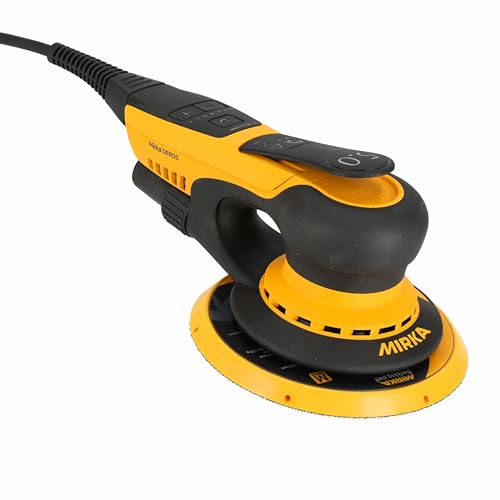
Mirka DEROS II 550X Random Orbital Sander
What We Like
- Lightweight, low-vibration design for comfort
- Brushless motor for consistent power
- Integrated dust extraction keeps workspace clean
- Bluetooth connectivity for customized settings
Trade-offs
- Tool only: battery and charger sold separately
- At 8.0 inches long, it's compact but lacks a battery compartment
- Requires a separate app for full smart feature use
Weighing only 2.2 pounds, the Mirka DEROS II 550X is designed for user comfort, supporting longer sanding sessions with a lightweight build and low vibration operation. Its brushless motor delivers consistent power for woodworking, automotive, and surface preparation tasks. Features like an integrated dust extraction system help maintain cleaner workspaces, and Bluetooth connectivity allows access to additional tool information and settings.
This model is sold as a tool only, requiring the separate purchase of a compatible battery and charger. Its compact dimensions of 8.0 by 5.0 by 3.9 inches contribute to its ergonomic handling. Variable speed control with LED indicators is designed to provide clear operation feedback for matching settings to different materials.
Product photos
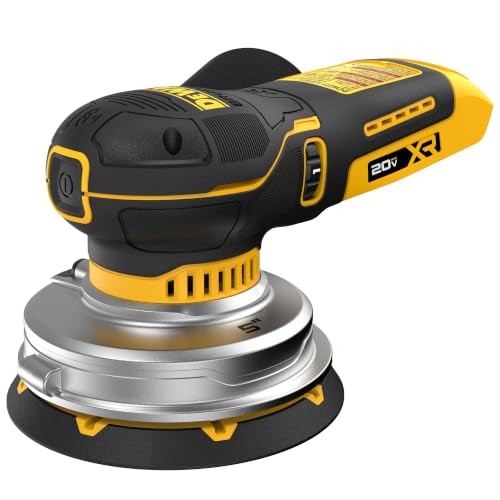
DeWalt DCW211B Cordless Random Orbital Sander
What We Like
- Industry-leading material removal rate
- Up to 40% less vibration for reduced fatigue
- Lowest profile design for tight spaces
Trade-offs
- Compatible dust extractor sold separately
- At 3.8 lb, heavier than some corded competitors
For large, mobile projects like a deck or furniture, this sander can work up to 50 square feet per charge, allowing extended use without a cord. Its low profile design helps it reach into tight corners where larger models cannot fit. The tool also operates with up to 40% less vibration than some alternatives, which reduces hand fatigue over long sanding sessions.
This sander is best for DIYers and pros who need cordless freedom for large, mobile projects. It is not ideal for users who work exclusively in a shop with ample outlets, where a dedicated corded model might be simpler. To use its dust collection, which captures up to 95% of dust, a compatible vacuum must be purchased separately.
Product photos
DeWalt DWE6423 Variable Speed Sander

What We Like
- Separate counterweight design reduces vibration
- Dust-sealed switch for longer life
- Shorter height for closer workpiece access
- Improved grip from rubber overmold
Trade-offs
- Corded design limits mobility
- Requires adapter for standard 1-1/4 in. vacuum hoses
The separate counterweight design reduces vibration for improved comfort, directly tackling the numbing buzz that can ruin a long sanding session. Its shorter height allows the user to get closer to the workpiece, making it easier to apply even pressure on flat surfaces. For anyone facing hours of smoothing cabinets or refinishing floors, that engineered reduction is the difference between finishing the job and having to call it quits with tingling hands.
You do trade away the cord-free convenience of a model like the DeWalt DCW211B for the smooth, consistent power of a 3-amp corded motor. The dust collection is designed to fit directly to DeWalt’s own vacuum systems, so you’ll likely need a universal connector for other shop vacs with 1-1/4 inch hoses. It’s a straightforward, rugged sander built with a dust-sealed switch for longer life in dusty workshop conditions.
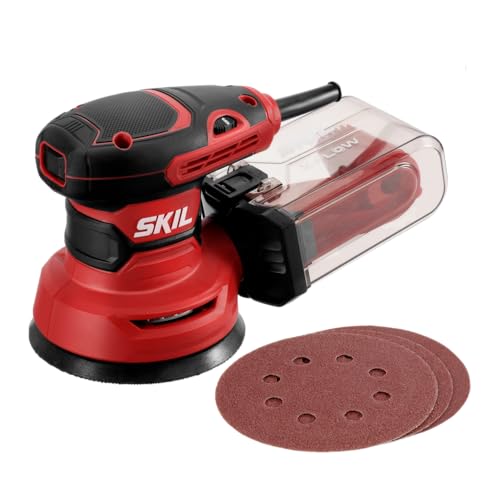
SKIL SR211601 Random Orbital Sander
What We Like
- Effective cyclonic dust box for easy cleanup.
- Variable speed control for different materials.
- Low vibration design reduces hand fatigue.
- Compact size for working in tight spaces.
Trade-offs
- Corded design limits mobility compared to cordless models.
- At 3.4 lb, it is heavier than the 2.2 lb Mirka DEROS.
A 2.8 amp motor spinning at 13,000 orbits per minute provides enough muscle for most common sanding tasks without bogging down. This sander is built for the cost-conscious DIYer who needs reliable performance and hates cleaning up dust. Its standout feature is the integrated cyclonic dust box, which actually captures a good amount of debris right at the source, saving you time on cleanup. The compact, ergonomic shape and soft grip make it comfortable to maneuver for extended periods, especially in corners and other confined areas.
You trade some premium features for that straightforward utility. It’s a dedicated random orbital sander, so it won’t switch to a more aggressive gear-drive mode like the Bosch GET75-6N for heavy stock removal. The cord is a reminder of its budget-friendly nature, but it also means you never have to stop to swap batteries. For weekend projects like refinishing a table or smoothing drywall patches, this Skil model delivers capable sanding and excellent dust management without complicating the job.
3M 20325 Non-Vacuum Random Orbital Sander

What We Like
- Pneumatic power for continuous industrial use
- Lightweight aluminum body enhances durability
- Precision balanced motor for smooth operation
- Low-profile ergonomic design improves control
Trade-offs
- Requires a compressed air source to operate
- Designed for industrial use, not consumer applications
- Non-vacuum model lacks integrated dust collection
Designed for industrial and occupational use, this pneumatic sander is not intended for consumer sale. Its 0.28 hp motor provides power for sanding and finishing applications, and the precision-balanced design operates smoothly for greater comfort and control. The aluminum body and durable composite cover reduce the risk of cracked housings, which contributes to durability in a shop environment.
The trade-off is clear: you gain relentless pneumatic power but lose the plug-and-play convenience of an electric model. You’ll need a quality air compressor and hose setup, which adds to the initial investment and limits portability. Compared to a corded workhorse like the DeWalt DWE6423, this 3M sander is lighter and arguably more durable for pure sanding tasks, but it tethers you to your shop’s air system. It’s a specialist’s tool, not a grab-and-go option for quick home projects.
Product photos
Dynabrade X62H Non-Vacuum Random Orbital Sander

What We Like
- Industry-leading power-to-weight ratio.
- Ergonomic design with integrated comfort platform.
- Premium, weight-mated pad for low vibration.
- Recessed throttle lever avoids palm pressure points.
Trade-offs
- Non-vacuum design requires separate dust management.
- 0.3 hp motor is less powerful than larger, heavier sanders.
- Rear exhaust can direct fine dust back toward the user.
At just 1.8 pounds, the Dynabrade X62H feels like a feather in your hand, yet its 0.3 hp motor delivers a consistent speed under load that heavier sanders struggle to match. This combination makes it the clear choice for overhead work, vertical surfaces, or any extended sanding session where fatigue is the real enemy. The soft-grip housing and recessed throttle are thoughtful touches that translate directly to less hand strain, letting you focus on the finish rather than your grip.
Weighing just 1.8 pounds, the Dynabrade X62H is exceptionally light for a 6-inch sander, which makes it easy to maneuver for extended periods. It is a non-vacuum model, so dust is managed via its rear exhaust without a dedicated port. The tool is American-made from high-grade materials, and its ergonomic design includes an integrated comfort platform for wrist support.
Product photos
Festool ETS EC150/5 EQ-Plus Sander

What We Like
- Extremely light at 2.5 pounds
- Constant speed under load
- Low vibration reduces fatigue
- Compact, ergonomic design
Trade-offs
- No included dust collection container
- Slightly larger footprint than some 5-inch models
Weighing just 2.5 pounds, this sander is built to disappear in your hand during long sessions, a direct result of its compact design and Vibration Control System. It’s the ideal choice for finish work and overhead sanding where fatigue is the enemy. The 5 mm orbit and stepless speed control deliver efficient material removal and a scratch-free finish, with expert research noting it achieved polished results at 180 grit where others needed more work. This is a tool for the craftsman who values precision and comfort over raw power.
This sander relies on a shop vacuum for dust collection, as it does not include a container. Its body is larger than some 5-inch models, yet it weighs only 2.5 pounds for comfortable handling. Research notes that Festool and Mirka sanders with brushless motors outperformed others, sharing a top award. However, the Mirka is positioned at a significantly higher price point than the already premium Festool, without a clear performance advantage.
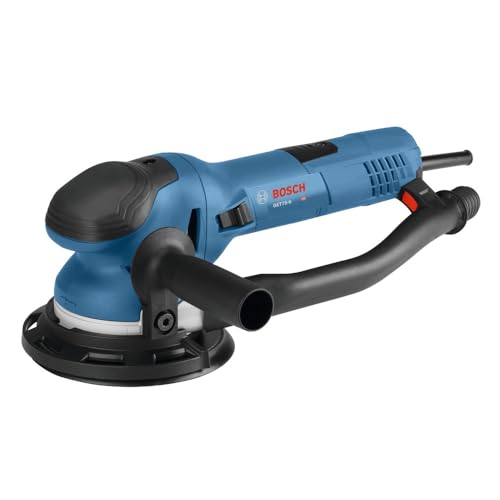
Bosch GET75-6N Dual-Mode Sander
What We Like
- Turbo mode delivers aggressive stock removal
- Variable speed motor for power and flexibility
- Multi-hole pad accepts wide variety of discs
- Includes vacuum hose adapters for dust control
Trade-offs
- Requires a separate vacuum for dust collection
- Weighs 5.7 pounds, heavier than many 5-inch sanders
- Front handle is removable, not integral
A direct-drive turbo mode that triples the stock removal rate of its standard orbital setting is the headline feature. This Bosch sander is built for the user who needs to aggressively shape material or remove old finishes quickly, essentially functioning as a faster alternative to a belt sander for many tasks. Its 7.5-amp motor and variable speed dial provide the muscle and control to handle everything from heavy grinding to fine finishing on wood floors or furniture. It’s a serious tool for workshops where time is material and sanding isn’t just a final touch-up.
Its turbo-driven mode removes material at five times the normal rate, making it a corded alternative to a belt sander for aggressive stock removal. The trade-off is a tool weighing 5.7 pounds, which is heavier than compact 5-inch sanders like the 2.2-pound Mirka DEROS. The passive dust collection requires a separate vacuum and compatible hose, as no built-in bag is included.
Product photos
How We Evaluated Random Orbital Sanders
This evaluation is based on a synthesis of technical specifications, manufacturer documentation, expert reviews, and consistent patterns in user feedback. The goal is to identify which models are consistently praised or criticized for specific, measurable traits.
We focused on three core criteria: sanding performance, user ergonomics, and dust management. Performance includes material removal rate and the quality of the final finish. Ergonomics covers weight, vibration dampening, and grip design, which are critical for fatigue during long sessions. Effective dust collection, whether through an integrated bag or a vacuum port, is essential for a clean workspace and health.
A research-based guide has limits. We cannot verify a model’s long-term durability or its feel in your hand. We can, however, identify the tools that experts and experienced users repeatedly recommend for specific tasks, like the best corded sanders for workshop power or the top cordless sanders for mobility.
What To Look For In Random Orbital Sanders
Choosing the right sander involves balancing power, comfort, and control to match the work. A tool designed for rapid stock removal might be less suitable for fine finishing, while a model focused on comfort might have different power characteristics.
Prioritize a variable-speed motor for control across materials, a low-vibration design to reduce hand fatigue, and a dust collection system that connects easily to your shop vacuum or has an effective onboard container.
Sanding Performance
Performance is defined by both speed and finish quality. The orbit diameter, typically between 3/32-inch and 3/16-inch, influences how aggressively the tool cuts. A larger orbit removes material faster but can leave deeper scratches that require more sanding to eliminate. Look for models praised for delivering a scratch-free surface at finer grits, which indicates a well-balanced orbit and pad stability. Variable speed control is valuable for preventing disc loading on sticky materials like paint or sap.
Ergonomics and Control
Weight and vibration are the primary factors in user fatigue. A heavier sander like the 11.5-pound Festool Rotex provides stability for aggressive work but becomes tiring for overhead or detailed tasks. Lighter models, some under 3 pounds, are easier to maneuver for long finishing sessions.
Features like a lock-on button for continuous operation, an adjustable front handle for corner work, and a rubber overmold for grip all contribute to better control and comfort. The right sanding technique involves letting the tool’s weight do the work, so a sander that feels balanced in your hand is crucial.
Dust Collection and Ports
No sander captures 100% of dust, but a good system keeps your workspace and lungs cleaner. Onboard containers, like the cyclonic box on the SKIL model, are convenient for quick jobs but often fill rapidly. For serious work, connecting to a shop vacuum is far more effective.
Check the dust port size and shape; a non-standard port requires an adapter, adding frustration. Some premium models are designed for integrated dust extractors. Whether you use a bag or a vacuum, effective collection also improves sanding performance by keeping the abrasive disc clean.
- Check the dust port size against your shop vacuum hose to see if you’ll need an adapter.
- Consider if an onboard dust box or bag is sufficient for your project scale, or if a vacuum connection is mandatory.
- Look for a pad that accepts standard 5-inch hook-and-loop sanding discs for easy supply replacement.
- For most woodworking, a 5-inch sander with a 3/32-inch orbit offers a balance of speed and finish quality.
Random Orbital Sanders Compared
The table below summarizes the key specifications and strengths of our top picks to help you compare them at a glance.
| Product | Weight | Motor/Power | Dust Collection |
|---|---|---|---|
| Makita BO5041 5-Inch Random Orbit Sander | 3.1 pounds | 3.0 AMP | N/A |
| Festool Rotex RO 150 Multi-Mode Sander | 11.5 pounds | N/A | FastFix tool-less |
| Mirka DEROS II 550X Random Orbital Sander | 2.2 pounds | Brushless | Integrated system |
| DeWalt DCW211B Cordless Random Orbital Sander | 3.8 pounds | Cordless (20V MAX XR) | Up to 95% with vacuum |
| DeWalt DWE6423 Variable Speed Sander | 3.4 pounds | 3-Amp | Fits DeWalt DWV010/DWV012 |
| SKIL SR211601 Random Orbital Sander | 3.4 Pounds | 2.8 amp | Cyclonic box |
| 3M 20325 Non-Vacuum Random Orbital Sander | 2.2 pounds | Pneumatic | N/A |
| Dynabrade X62H Non-Vacuum Random Orbital Sander | 1.8 lbs | 0.3 hp | N/A |
| Festool ETS EC150/5 EQ-Plus Sander | 2.5 lbs | N/A | Port for vacuum |
| Bosch GET75-6N Dual-Mode Sander | 5.7 pounds | 7.5 amp variable speed | Passive system, requires vacuum |
Frequently Asked Questions
What is the best 5-inch random orbital sander?
Our research points to the Makita BO5041 as the best overall 5-inch model for most users. It combines a variable-speed dial so you can match the sanding speed to different tasks, from fine finishing to more aggressive work. The design is lightweight and ergonomic for comfort during long sessions. Useful features like a lock-on button and an adjustable front handle also make it a versatile and reliable choice.
Which random orbital sander is the best?
The most suitable sander depends entirely on the primary need. For all-around versatility, the Makita BO5041 is an excellent choice. For heavy stock removal and fine finishing in one tool, the Festool Rotex RO 150 is highly capable. For cordless, low-vibration comfort, the Mirka DEROS II 550X is a notable option among the top random orbital sanders.
What are the best 5 inch orbital sanding discs?
The best discs depend on the sander’s pad and the material. Generally, look for high-quality abrasive like ceramic alumina or zirconia alumina for longer life. Hook-and-loop backing is the standard attachment for 5-inch random orbital sanders. For fine wood finishing, progressively finer grits are typical.
What are the best brands of orbital sanders?
Leading brands consistently noted for quality in this category include Festool, Mirka, and Makita for their performance and ergonomics. DeWalt, Bosch, and SKIL offer strong options in the mid-range and budget segments, often praised for value and specific strengths like dust collection or power.
What’s the difference between an orbital and a random orbital sander?
A standard orbital sander moves in a fixed circular pattern, which can leave noticeable swirl marks on the workpiece. A random orbital sander adds a second, irregular “random” motion to that orbit, which scatters the scratches and makes them far less visible, resulting in a much smoother finish ready for stain or clear coat.
The Bottom Line
For the woodworker or renovator seeking a dependable, comfortable corded sander for daily use, the Makita BO5041 5-Inch Random Orbit Sander is our best overall recommendation. Its thoughtful design reduces fatigue, and the variable speed provides needed control.
If your budget is tight but you want effective dust containment, the SKIL SR211601 is a standout value pick. For pros who need one tool to both shape and finish, the multi-mode Festool Rotex RO 150 is worth the premium investment.
Ultimately, matching the sander’s weight, power, and dust collection to your most common tasks will ensure you spend less time sanding and more time building.
