
Ceramic vs Aluminum Oxide Sanding Discs: How to Choose
This post contains affiliate links. As an Amazon Associate, we earn from qualifying purchases.
Ceramic sanding discs excel in high-pressure, high-heat grinding on hard materials like stainless steel and last longer, while aluminum oxide discs are a versatile, cost-effective choice for general sanding, finishing, and woodworking tasks. The right pick depends entirely on your material and how much force you’ll use, making the choice between ceramic vs aluminum oxide sanding discs a key consideration.
To be clear: this is not a minor improvement. You can burn through many aluminum oxide discs trying to grind down a single weld on stainless steel. The problem isn’t the brand; it’s matching the abrasive’s internal structure to the job’s demands. The grain decides whether you’re working efficiently or just wasting time and money.
What follows: the mechanics behind ceramic’s self-sharpening grit, the seven application areas where aluminum oxide still wins, a direct decision table for five common jobs, and the one beginner mistake that ruins both types of discs faster than anything else.
Key Takeaways
- Ceramic discs are for stainless steel, hard metals, and weld removal under high pressure. Their microcrystalline grains fracture to expose new sharp edges.
- Aluminum oxide discs are for wood, general surface prep, and finishing. They offer a practical balance of performance and cost for moderate-pressure work.
- Never use a ceramic disc on softwood or drywall; it will clog instantly and you’ll waste the disc’s potential on a material that can’t resist it.
- The grit sequence matters more than the disc type. Skipping from 80 to 220 grit guarantees deeper scratches that take longer to fix.
- For most home workshops, aluminum oxide is the default. Step up to ceramic only when you’re grinding metal all day or working exclusively with stainless.
How Abrasive Grain Structure Defines Performance
The difference in the ceramic vs aluminum oxide sanding discs isn’t just marketing. It’s in the literal crystal structure of the cutting grains. This structure determines how the disc wears, how hot it gets, and ultimately, what it’s good for.
Ceramic abrasive grains have a microcrystalline structure. According to Fujistar Abrasives, this allows for controlled fracturing during use. As worn particles break away, new sharp cutting edges are continuously exposed. This is the self-sharpening effect that defines high-performance ceramic discs.
According to Fujistar Abrasives, aluminum oxide grains have a structure ‘designed for versatile sanding’; they cut reliably but don’t regenerate. As they wear, they become rounded and lose their sharpness. That’s fine for jobs where you’re not pushing the disc to its thermal or mechanical limit.
This self-renewing process allows ceramic abrasives to perform well even under high pressure and extended grinding conditions, according to Fujistar Abrasives. Aluminum oxide, by comparison, provides good durability for general-purpose use.
When you compare a ceramic vs aluminum oxide sanding discs, you’ll feel this difference within the first minute on a tough material. A ceramic disc maintains a consistent, aggressive bite. An aluminum oxide disc starts strong but the cut quality falls off as the grains dull. On softwood, you won’t notice, the material yields so easily that both discs seem fine. That’s why picking the right one starts with your material, not with a brand preference.
The Ceramic vs Aluminum Oxide Decision Table
Stop guessing. This table matches the disc type to the job based on material, tool pressure, and desired outcome. It synthesizes the manufacturer data into a direct, scannable guide.
| Your Job | Best Disc Type | Why It Wins | Tool & Pressure |
|---|---|---|---|
| Grinding stainless steel welds | Ceramic | Maintains aggressive cutting and manages heat under high pressure. | Angle grinder, high pressure |
| Sanding wood for refinishing | Aluminum Oxide | Cost-effective, versatile, and provides a reliable finish without excessive heat. | Random orbital sander, light-moderate pressure |
| Heavy-duty metal fabrication | Ceramic | Longer lifespan and stable performance during continuous, aggressive grinding. | Angle grinder or disc sander, high pressure |
| Surface prep on painted metal | Aluminum Oxide | Efficiently removes paint and rust without the premium cost of ceramic. | Random orbital sander, moderate pressure |
| Deburring soft aluminum edges | Aluminum Oxide | Sufficient sharpness for light material removal; ceramic is overkill and more expensive. | Hand block or orbital sander, light pressure |
The “Tool & Pressure” column isn’t optional. Slapping a ceramic disc on a low-speed palm sander wastes its high-pressure capability. Conversely, forcing an aluminum oxide disc on an angle grinder at full tilt will glaze it over in seconds. Match the tool’s aggression to the disc’s design.
Ceramic Sanding Discs: Built for the Heavy Stuff
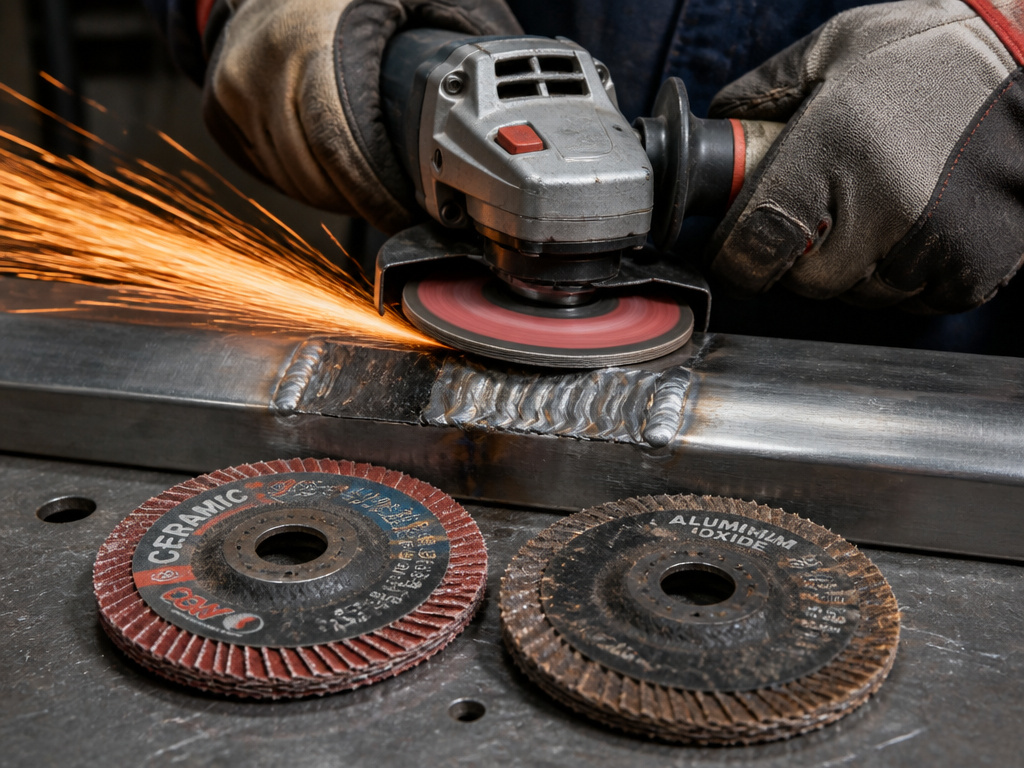
These discs are the specialist tool in your abrasive kit. You don’t reach for them first, but when you need them, nothing else will do.
Fujistar Abrasives states ceramic discs are commonly selected for applications involving stainless steel, hard metals, weld removal, and heavy-duty fabrication. That’s the key phrase: heavy-duty. They are designed for demanding grinding environments where long service life and stable performance are required. If your project involves automotive components, structural steel, or continuous production line work, this is your abrasive.
The advantage comes down to physics. The ceramic grain’s microcrystalline structure and its self-sharpening behavior let it manage heat generation more effectively. When you’re leaning into an angle grinder, the point of contact can get extremely hot. Aluminum oxide can overheat, glaze, and lose its cutting teeth. Ceramic grains resist this, maintaining performance.
Where this goes sideways: Using a ceramic disc on softwood or drywall. The open pores of the wood or compound will clog the disc’s aggressive grain structure instantly. You’ll generate excessive heat from friction, load the disc with material, and waste a premium abrasive on a job a basic disc handles easily.
The sensory cue is sound. A properly working ceramic disc on stainless steel has a consistent, sharp rasping sound. When it’s loaded or glazed, or if you’re using it on too soft a material, the sound turns into a higher-pitched whine with less bite. That’s your signal to check your application.
Aluminum Oxide Sanding Discs: The Reliable Workhorse
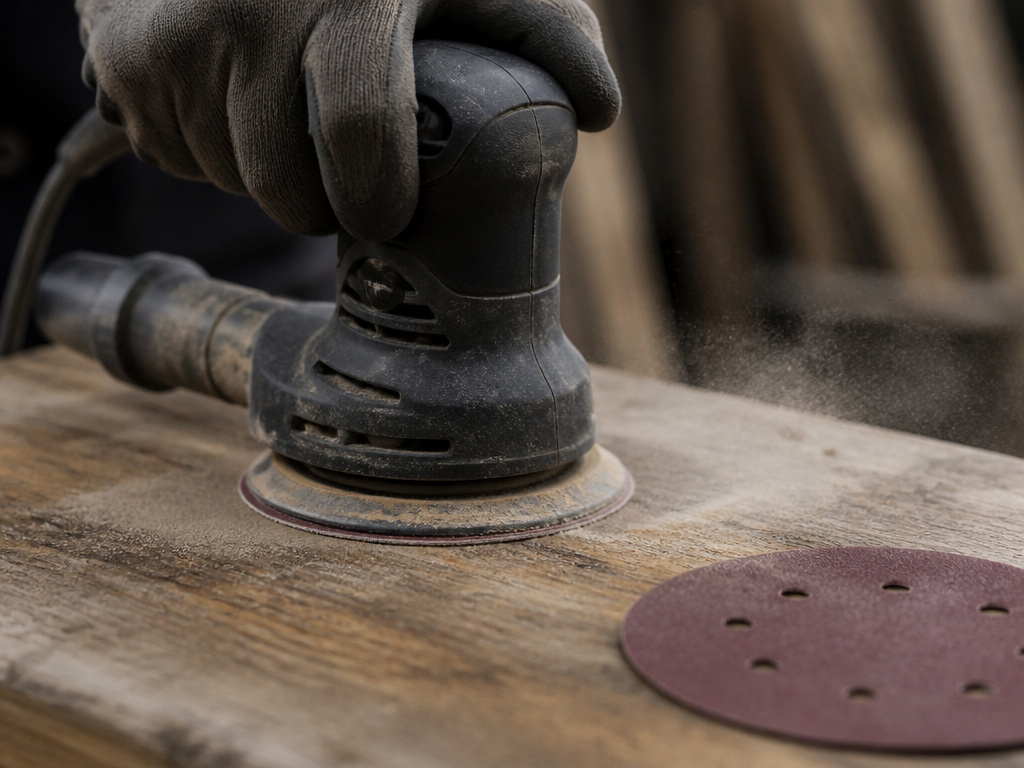
For much of what happens in a home workshop, aluminum oxide is the right answer. It’s the versatile chef’s knife of abrasives, it can handle a wide variety of tasks competently, even if it’s not the absolute best at any single one.
Fujistar Abrasives positions aluminum oxide sandpaper as a traditional abrasive known for balanced performance and versatility. It’s suitable for general sanding, finishing, surface preparation, and many maintenance applications. Think woodworking projects, prepping a metal surface for paint, cleaning up rust, or smoothing drywall patches. Fujistar Abrasives states it provides reliable performance for general sanding tasks.
Its limitation is its strength. Fujistar Abrasives notes that aluminum oxide may wear faster when exposed to heavy grinding pressure or extremely hard materials. It’s better suited for light to medium material removal. This makes it a poor choice for grinding down a heavy weld but a suitable one for smoothing a wooden tabletop.
You’ll feel this limitation as a loss of cutting power. A fresh aluminum oxide disc on an orbital sander feels eager. After a while on a tough job, you have to press harder to get the same result. That’s the grains wearing down.
Matching Discs to Your Power Tool
The tool in your hand changes the equation. An abrasive rated for “high pressure” assumes you’re using a tool that can deliver it.
Angle Grinders and Right-Angle Die Grinders are the high-pressure champions. They spin fast and are built for aggressive material removal. This is the native environment for ceramic discs. The tool’s power and your ability to apply force activate the ceramic’s self-sharpening, heat-resistant potential. Trying to use a standard aluminum oxide disc here for heavy grinding is a fast path to frustration and worn-out discs.
Random Orbital Sanders and Disc Sanders operate at lower RPMs with a floating action designed for finish work. This is where aluminum oxide excels. The moderate, consistent pressure is exactly what this abrasive is built for. You can use ceramic discs on these tools for metalwork, but you’re not getting their full high-pressure advantage, you’re just paying for longevity you might not need.
Hand Sanding Blocks are the domain of aluminum oxide sheets. The pressure is entirely user-controlled and rarely reaches the levels that would necessitate ceramic. For detailed woodworking or final finish passes, the control and cost-effectiveness of aluminum oxide are often sufficient.
The rule is simple: match the disc’s capability to the tool’s potential for aggression.
Common Beginner Mistakes and How to Avoid Them
We’ve all been there. You buy the “best” disc, use it wrong, and blame the product. Here are the specific missteps that waste money and time.
Skipping Grit Sequences. This is my most-seen workshop error. Jumping from a coarse-grit disc straight to a fine-grit disc doesn’t save time. The deeper scratches from the 80-grit disc are simply too large for the 220-grit to remove efficiently. You’ll sand for twice as long. Follow a grit progression, regardless of disc type.
Using the Wrong Disc for the Material. It bears repeating: putting a ceramic disc on pine or drywall is like using a racing tire on a gravel road. Conversely, using an aluminum oxide disc to grind a stainless steel weld flat will consume discs at an alarming rate. Consult the decision table first.
Applying Too Much or Too Little Pressure. Aluminum oxide needs a moderate, consistent pressure. Bear down too hard and you’ll overheat it, reducing its effectiveness. Let the disc do the work.
Easy to miss: Not cleaning the backing pad. Grit, dust, and debris stuck to the hook-and-loop or PSA backing on your sander create an uneven mounting surface. This causes the disc to wear unevenly and fail faster. A quick brush-off between disc changes takes five seconds and extends disc life dramatically.
Ceramic vs Zirconia and Silicon Carbide Grains
While zirconia and silicon carbide are other common abrasive grains, ceramic is distinguished by its microcrystalline structure. This structure allows ceramic grains to fracture in a controlled way during use, creating a self-sharpening effect as worn particles break away to expose new sharp cutting edges. This makes ceramic abrasives particularly suitable for aggressive and continuous grinding on hard materials like stainless steel. For general sanding, finishing, and maintenance, aluminum oxide remains a practical and economical solution, while ceramic provides faster cutting and longer life in heavy-duty applications.
What Grit Ranges Are Available
Both ceramic and aluminum oxide discs are manufactured across a spectrum of grits to handle different stages of a job. Coarse grits are used for aggressive material removal, which is a typical application for ceramic discs. Surface preparation and finishing are typical applications for aluminum oxide sandpaper. When selecting a grit, consider the material and the desired outcome. For heavy stock removal on stainless steel, ceramic discs are usually recommended. For final smoothing or paint preparation on wood or general metals, aluminum oxide is usually the appropriate and economical choice.
Best Sanding Discs for Knife Making
Knife making involves grinding hard metals and achieving precise bevels, which generates significant heat and pressure. Ceramic sanding discs are designed for exactly this type of demanding environment. Their microcrystalline structure provides a self-sharpening effect and excellent heat resistance, allowing for aggressive and continuous grinding on hard steel without premature wear. This leads to faster cutting performance and a longer disc lifespan. While aluminum oxide can be used for lighter shaping or finishing, ceramic abrasives are designed for demanding grinding environments on hard metals where long service life and stable performance are required.
Frequently Asked Questions
Is ceramic or aluminum oxide sandpaper better?
Neither is universally better. Ceramic sanding discs generally provide faster cutting performance, longer service life, and better heat resistance for heavy-duty metal grinding, according to Fujistar Abrasives. Aluminum oxide sandpaper remains a cost-effective choice for general sanding and finishing applications on wood, painted surfaces, and light metalwork.
What is ceramic sandpaper used for?
Per Fujistar Abrasives, ceramic sanding discs are mainly used for demanding grinding applications such as stainless steel processing, weld removal, heavy metal fabrication, and industrial surface preparation where high cutting performance is required. They are the specialist choice for tough, heat-generating jobs on hard materials.
When should I use aluminum oxide sandpaper?
Use aluminum oxide for general-purpose tasks. The manufacturer states it is suitable for general metal sanding, paint and coating preparation, woodworking, maintenance work, and other tasks where extreme cutting performance is not necessary. It’s your go-to for workshop tasks that don’t involve continuous, high-pressure grinding on hardened metals.
Can aluminum oxide sandpaper be used for metal?
Yes. Fujistar Abrasives confirms aluminum oxide sandpaper can be used for many metal-related tasks, including surface preparation, finishing, deburring, and light grinding operations. It is perfectly capable for removing rust, smoothing edges, or prepping a surface for paint. It only struggles with aggressive stock removal on hard metals like stainless steel.
Why do ceramic sanding discs last longer?
Ceramic sanding discs have a longer lifespan because they use advanced abrasive grains that fracture in a controlled way during grinding. This self-sharpening process continuously exposes new cutting edges, maintaining performance. Aluminum oxide grains wear down and become rounded, losing their sharpness more quickly under similar conditions.
How do I choose between hook and loop or PSA backing?
Your tool dictates this. Most modern random orbital sanders use hook and loop discs for quick changes. Larger disc sanders and some angle grinder attachments use PSA (pressure-sensitive adhesive) discs for a solid, non-slip bond under high torque. Check your tool’s pad before you buy. The abrasive type (ceramic vs aluminum oxide) is available in both backing systems.
The Bottom Line
For the weekend warrior, aluminum oxide is often the right first choice. It’s affordable, versatile, and will handle many of your sanding needs on wood, drywall, and light metal perfectly well. Buying a stack of ceramic discs for your occasional stainless steel project is like keeping a Formula 1 tire in your garage for your yearly track day, overkill.
The threshold to switch is clear: when your project involves grinding hardened metal, stainless steel, or welds for more than a few minutes at a time. That’s when the heat management and self-sharpening of a ceramic disc pay for itself in saved time, disc changes, and frustration. For everything else, trust the workhorse. Don’t overthink it.
