
10 Best Disc Sanders in 2026
This post contains affiliate links. As an Amazon Associate, we earn from qualifying purchases.
The Powermatic 31A Belt & Disc Sander is selected as the best overall disc sander for its 12-inch disc and industrial-grade precision. The WEN 6502T is the best value combination sander, and the Makita GV7000C is the top choice for handheld variable-speed work.
Choosing the right disc sander involves more than just power; it’s about matching the tool’s size and capabilities to your shop space and typical projects. This guide is based on specifications, manufacturer data, expert round-ups, and patterns in owner feedback. We’ve organized ten top options to help you find a sander that fits.
Top 10 Disc Sanders in the Market
Certain content that appears on this site comes from Amazon. This content is provided "as is" and is subject to change or removal at any time.
The Best Disc Sanders, Reviewed
Powermatic 31A Belt & Disc Sander

What We Like
- 12-inch disc provides large, stable sanding surface.
- Multi-position belt head locks at any angle up to 90°.
- Full cast iron platen and crowned drums for smooth operation.
- Belt and disc tables have miter slots for precision work.
Trade-offs
- Weighs 247 pounds, requiring a permanent, sturdy shop floor space.
- Large footprint at 31.2" W x 54.5" H demands significant room.
A 1.5 HP motor paired with a 12-inch disc and a 6×48-inch belt delivers power and surface area that simply won’t bog down under normal shop use. This is the machine for the serious woodworker or metal fabricator who demands precision and durability, not just occasional utility. The cast iron construction and tables with miter slots translate directly to the rigidity needed for repeatable, accurate bevels and miters, making it a cornerstone tool for a production shop or a dedicated hobbyist’s space.
The trade-off for that industrial-grade performance is its substantial size and weight; this isn’t a benchtop unit you can tuck away. It commands permanent floor space. For those with more modest needs or limited room, a model like the JET JSG-96 offers a capable 9-inch disc and 6×48-inch belt in a benchtop form. However, if your projects regularly push the limits of smaller sanders, the Powermatic’s unwavering performance and precision justify its footprint.
WEN 6502T Belt and Disc Sander

What We Like
- Two-in-one belt and disc sanding functionality
- Fully tiltable belt for versatile edge work
- Sturdy cast iron base minimizes vibration
- Simple belt changes with tension release lever
Trade-offs
- At 3600 RPM, it lacks variable speed control
- Benchtop design requires dedicated workspace
A single benchtop unit combining a four-inch belt and a six-inch disc offers serious versatility for a small shop. Its cast iron base provides a solid foundation that minimizes vibration during use, while the belt can tilt a full ninety degrees for sanding into tight corners. This design makes it a functional introduction to stationary sanding without a major investment, fitting well where space is limited.
The trade-off is in specialization. The fixed 3600 RPM speed is fine for most wood, but it doesn’t offer the finesse for metals or plastics that a variable-speed model provides. Think of it as a highly capable generalist that covers the fundamentals exceptionally well for its class.
Bucktool Belt Disc Sander

What We Like
- Maintenance-free direct drive eliminates belt tensioning
- Belt tilts fully for horizontal or vertical sanding
- Dual cast aluminum tables provide solid support
- Direct drive is 25% more efficient than traditional designs
Trade-offs
- The 6-inch disc is smaller than many 8- or 12-inch models
- Lacks the variable speed control of Bucktool's own VFD model
A direct-drive motor that requires no belt tensioning or pulley adjustments makes this sander uniquely hands-off. That’s the core appeal for anyone tired of fiddling with tracking and alignment on a traditional machine. The 3/4 HP induction motor delivers quiet, consistent power through both the 4×36 belt and 6-inch disc, while the belt’s ability to swing to vertical opens up edge sanding and sharpening tasks. It’s a solid, pragmatic choice for the woodworker who values shop time over setup and maintenance.
You trade some mass and disc size for that simplicity. At 35.5 pounds, it’s a benchtop unit that benefits from a sturdy stand, especially when sanding heavier pieces. The 6-inch disc is perfectly functional for tools and smaller parts, but can’t match the surface area of something like the Powermatic 31A’s 12-inch disc for smoothing large panels. If your projects demand a larger abrasive surface or you need variable speed, look at the heavier, more feature-rich models. For straightforward, reliable sanding with zero mechanical hassle, this Bucktool design is hard to beat.
Product photos
DEWALT 4×36 Belt and 8 Disc Sander

What We Like
- Large 8-inch disc for fast material removal
- Powerful 7.0 AMP motor for demanding tasks
- Separate, stable die-cast aluminum tables
- Two-in-one belt and disc sanding versatility
Trade-offs
- Disc is smaller than dedicated 12-inch models like the Powermatic
Its 8-inch sanding disc provides a substantial work surface for flattening wide boards and achieving even finishes on large panels. The two-in-one design combines a 4 x 36 inch belt with that disc for versatile sanding capabilities. Separate die-cast aluminum tables tilt up to 45 degrees, which ensures stability and accuracy for precise angle work.
You get a capable two-in-one tool, but the disc size is a clear middle ground. It’s larger than the 6-inch disc on the WEN 6502T, offering more usable area, yet it doesn’t match the capacity of a 12-inch disc sander like the Powermatic. That trade-off suits a craftsman who values consolidated function without sacrificing too much disc real estate.
Product photos
Makita GV7000C Disc Sander

What We Like
- Variable speed dial for material matching
- Soft start and electronic speed control
- Convenient trigger lock-on button
- Motor-over-pad design improves balance
Trade-offs
- Lacks the large fixed table of a benchtop sander for precise angles
- Weighs 7.1 pounds, which can be tiring for overhead work.
Variable speed control from 2,500 to 4,700 RPM is the core feature here, letting you dial down for delicate finishes or crank it up for aggressive stock removal. This range allows adjustment to suit different materials and tasks. Its motor-over-pad design and 7.1-pound frame give it a balanced, manageable feel in the hand, while features like soft start and a lock-on button reduce fatigue during longer sessions.
This handheld flexibility comes with a trade-off in workpiece control. You won’t get the dead-accurate miters possible with a benchtop sander like the WEN 65812, which has a fixed table and fence. This model is about freehand control and portability. For squaring many edges, a stationary model from the other-products list, such as the Powermatic 31A, is a dedicated choice. The Makita’s variable-speed package suits handheld applications.
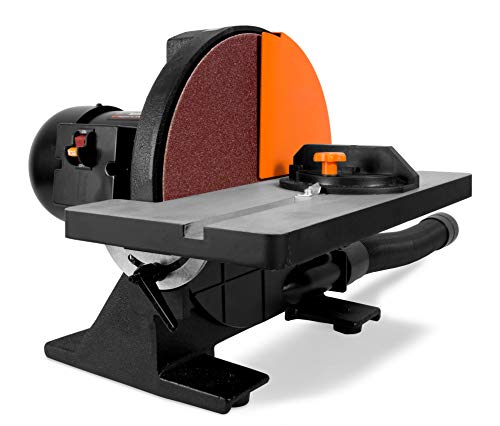
WEN 65812 Benchtop Disc Sander
What We Like
- Large 12-inch disc for heavy-duty material removal
- Powerful 8-amp motor for consistent work
- Includes sliding miter gauge and beveling table
- Integrated dust collection system with hose
Trade-offs
- At 60.1 pounds, it requires a dedicated, sturdy benchtop
- The 5-inch wide work table limits support for very large pieces
- Lacks the variable speed control found on some premium models
A 12-inch sanding disc gives you a serious work surface for flattening large panels or squaring up long boards. The 8-amp motor provides plenty of muscle to keep that disc spinning under pressure without bogging down. This is a sander built for the workshop where you need to move material quickly and accurately, not for quick touch-ups. It suits a woodworker who has outgrown smaller combo units and needs a dedicated, high-volume disc for dimensioning and final fitting.
Weighing 60 pounds, this 12-inch disc sander needs a dedicated spot on your workbench. Its large disc and motor deliver heavy-duty material removal, but you sacrifice the belt sanding function found in more compact combo units like the WEN 6502T. This makes it a specialist tool. For smoothing long edges or cleaning up large face frames, its size is an asset. For general shop tasks where you switch between disc and belt, a combo might still be more practical.
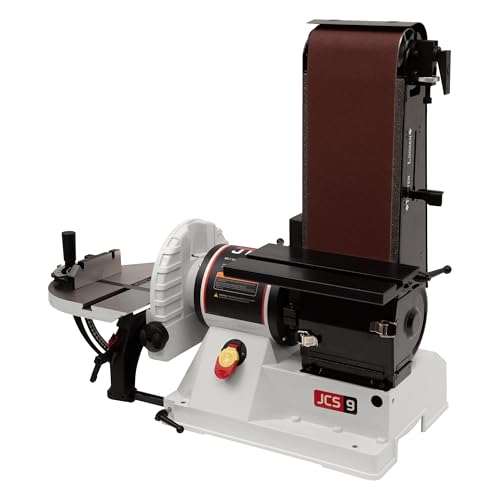
JET JSG-96 Belt & Disc Sander
What We Like
- Cast iron table with preset 90° and 45° stops
- Graphite-covered steel platen runs cooler
- Dual thumbscrew belt tracking adjustment
- Built-in handles for easier portability
Trade-offs
- Weighs 91 pounds, requiring a sturdy, permanent bench.
- The 9-inch disc is smaller than some 12-inch competitors.
A 6-inch by 48-inch sanding belt gives you a massive, continuous surface for shaping long boards and flattening large panels. This machine is built for the serious woodworker who needs to remove material quickly and consistently. The heavy cast iron construction and a motor designed for sustained use mean it won’t bog down or chatter under pressure. It’s the shop workhorse you set up once and rely on for years.
That solidity comes with a real footprint and heft; at 91 pounds, you’re not moving this off your bench often. Compared to a compact unit like the WEN 6502T, the JET demands dedicated space. The trade-off is professional-grade stability and a full-width belt guard that lets you use every inch of that 6-inch belt without compromise. For dust collection, plan to connect it to a proper collector, as owner feedback notes the port isn’t sized for a standard shop vac hose.
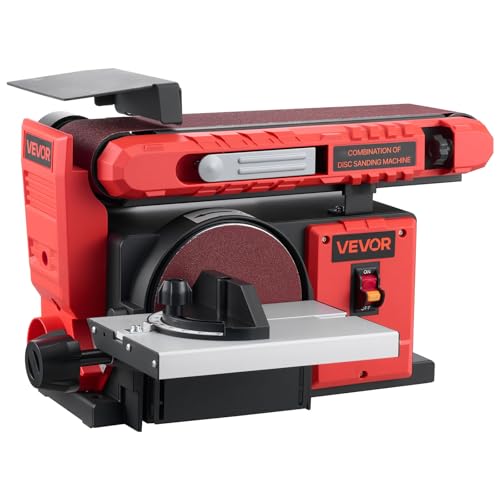
VEVOR Belt Disc Sander Combo
What We Like
- Belt adjusts 0-90° for horizontal or vertical sanding
- Compact, stable frame fits easily on a benchtop
- Includes dust collection port for cleaner workspace
- Spacious tilting disc table with miter gauge
Trade-offs
- 400W motor, less powerful than larger models.
- 6-inch disc, smaller than some competitors.
That 33.7-pound weight keeps it planted for stability, yet you can still move it when needed. For the DIYer or home woodworker who needs to sharpen knives, smooth small parts, or refine edges on furniture, this combo delivers essential belt and disc functions in one tidy, user-friendly package. The adjustable belt and tilting table provide real flexibility for common tasks.
You trade some power and size for that compact form. The 6-inch disc and 4-inch belt are adequate for most hobbyist work, but they won’t handle large panels or aggressive shaping like the larger Powermatic 31A can. Think of it as a capable all-in-one station for a compact shop, not a high-production machine.
Product photos
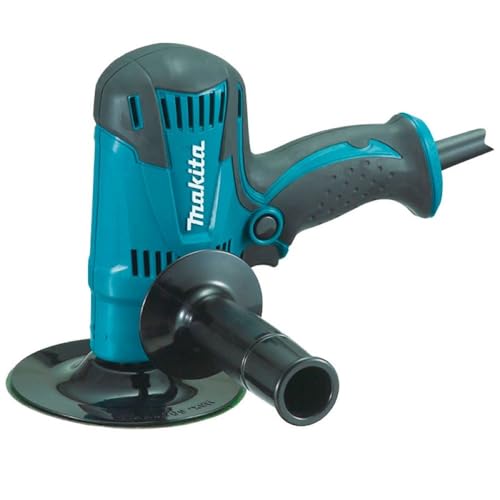
Makita GV5010 Disc Sander
What We Like
- Very light at 2.4 pounds for easy handling
- Rubberized housing and grip for precise control
- Lock-on button for continuous operation
- Spiral bevel gears for smooth, efficient power transfer
Trade-offs
- 5-inch disc offers less surface area than larger models
- Compact size limits stock support for large pieces
- Not a stationary benchtop tool for heavy-duty shaping
Weighing just 2.4 pounds, the Makita GV5010 is the sander you’ll grab for overhead work or detailed shaping where arm fatigue is a real concern. Its compact, rubber-wrapped body and balanced design give you a firm, comfortable grip for following contours and edges without the tool getting away from you. That 3.9-amp motor spins at 5,000 RPM, delivering faster material removal in tight spaces where a bulkier sander simply can’t fit.
Its featherweight portability does mean a smaller work surface. The 5-inch disc can feel limiting when you’re trying to flatten the face of a wide board quickly. For that task, the larger disc on the Makita GV7000C or a benchtop unit like the WEN 65812 would excel. This is a dedicated handheld tool, so you won’t get the versatility of a belt-and-disc combo sander for edge work. For the jobs it’s built for, like detailed material removal, smoothing joints, or working in confined areas, its focused design and exceptional comfort are hard to beat.
Product photos
Bucktool VFD Belt Disc Sander
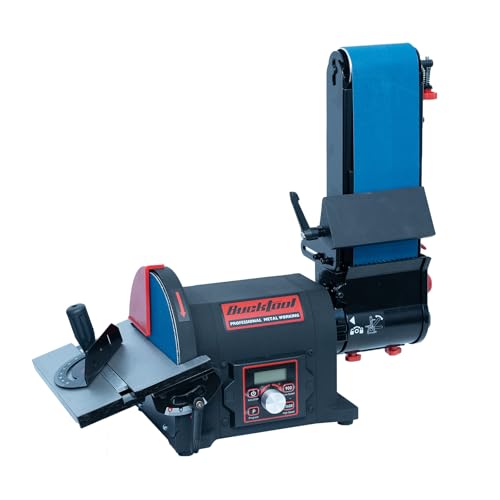
What We Like
- Full-range variable speed control with memory
- Belt operates in both horizontal and vertical positions
- Includes sharpening attachment for bevel stabilization
- Steel miter gauge and adjustable disc table
Trade-offs
- VFD motor is incompatible with GFCI outlets
- Requires an HACR circuit breaker for safe operation
- Belt and disc are smaller than some stationary models
The 900 to 3600 RPM variable speed range, controlled by a knob and locked in with a memory button, gives you precise control over material removal. This makes the Bucktool BD4802IV a standout for tasks where heat management is critical, like sharpening tools or working with plastics, and for craftsmen who frequently switch between materials. Its 1 HP VFD motor maintains torque at low speeds, so you can start a delicate sanding operation without the belt stalling, while the ability to flip the belt to a vertical orientation adds versatility for sanding edges and contours.
Its 1 HP variable-frequency drive motor maintains high torque even at the lowest settings, providing consistent power for gradual material removal. However, the manufacturer warns this motor type can trip GFCI outlets, so you’ll need to plug it into a standard circuit with an HACR breaker. The ability to use the belt in both horizontal and vertical positions, combined with adjustable miter and work tables, makes it suitable for everything from flattening board edges to shaping knife blades.
Product photos
How We Evaluated Disc Sanders
This evaluation is based on a comparison of manufacturer specifications, analysis of expert reviews from woodworking publications, and patterns in user feedback. Key criteria included sanding capacity, build quality and stability, and versatility. This approach allows for comparison on paper but cannot replicate the feel of a tool in use or predict its long-term durability in a specific shop.
What To Look For In Disc Sanders
Disc sanders range from compact benchtop units to massive floor-standing tools. Your choice should be guided by your available space, the materials you work with, and the precision you require.
For stationary models, prioritize a large, stable disc and a powerful motor. For handhelds, consider weight and variable speed. Always match the tool’s footprint and power to your shop’s capacity.
Sanding Capacity and Power
A sander’s capacity is defined by its disc diameter and motor strength. A 12-inch disc provides a large, stable surface for flattening panels, while a 6-inch disc is better for smaller, detailed work. Motor power, measured in amps or watts, determines how well the sander resists bogging down under pressure.
A high-amperage motor, like the 7.0 AMP unit in the DEWALT model, handles aggressive material removal on hardwoods or metals. For handheld models, a variable speed dial, like on the Makita GV7000C, is crucial for matching the sanding pace to different materials without causing damage.
Build Quality and Stability
A stable sander produces smoother, more accurate results. Look for heavy-duty construction that minimizes vibration. Cast iron bases and tables, like those on the WEN 6502T and Powermatic, add mass and rigidity. A sturdy, flat platen behind the sanding belt is also essential for consistent contact. Benchtop models must be securely mounted, as a 60-pound unit like the WEN 65812 can still shift if not properly fastened. For handheld sanders, a balanced design, such as the motor-over-pad layout of the Makita GV7000C, improves control and reduces user fatigue.
Versatility and Features
Many users benefit from a combination belt and disc sander for its two-in-one functionality. A belt that tilts to a vertical position, like on the Bucktool, is invaluable for sanding edges and tool sharpening. Features like miter slots on the disc table, found on the Powermatic and WEN 65812, enable precise angle work. Dust collection is a critical health and cleanliness feature; look for models with integrated ports. For a dedicated stationary machine, our guide to the best benchtop sander models offers a deeper dive.
- Check if the disc table tilts for bevel sanding.
- Ensure the belt tracking mechanism is easy to adjust.
- Look for tool-free belt changes for quicker swaps.
- Verify dust port sizes match your shop vacuum or collector.
- Consider if you need a miter gauge or fence for repeatable work.
Ultimately, the best sander is the one you have space for and will use regularly.
Disc Sanders Compared
Use the table below to quickly compare key specifications and features across our top picks.
| Product | Disc Size | Motor Power/Type | Belt Size |
|---|---|---|---|
| Powermatic 31A Belt & Disc Sander | 12" | 1.5 HP, 115/230V 1Ph | 6" x 48" |
| WEN 6502T Belt and Disc Sander | 6" | 4.3 Amp | 4×36 inch |
| Bucktool Belt Disc Sander | 6" | 3/4 HP fully enclosed | 4 x 36 inches |
| DEWALT 4×36 Belt and 8 Disc Sander | 8" | 7.0 AMP | 4" x 36" |
| Makita GV7000C Disc Sander | 7" | N/A | N/A |
| WEN 65812 Benchtop Disc Sander | 12-inch | 8-amp direct-drive | N/A |
| JET JSG-96 Belt & Disc Sander | 9" disc | 3/4 HP, 115V | 6" x 48" |
| VEVOR Belt Disc Sander Combo | 6" | 400W | 4 x 36 inches |
| Makita GV5010 Disc Sander | 5" | 3.9 AMP | N/A |
| Bucktool VFD Belt Disc Sander | 8 inch | 1 HP VFD | 4×36 inch |
Frequently Asked Questions
What is the best disc sander?
The best disc sander depends on your needs. For a stationary shop tool with industrial capacity, the Powermatic 31A is our top choice. For a versatile, budget-friendly benchtop combo, consider the WEN 6502T. For handheld tasks requiring speed control, the Makita GV7000C excels.
Which brand of sander is considered the best?
There is no single “best” brand, as different manufacturers excel in different categories. Brands like Powermatic and JET are renowned for heavy-duty stationary tools, while Makita is a leader in ergonomic handheld power tools. DEWALT and WEN offer strong options in the mid-range and value segments, respectively.
What’s the difference between a disc sander and an orbital sander?
A disc sander spins on a single fixed axis, making it ideal for aggressive stock removal, flattening, and creating crisp, flat edges. An orbital sander uses a random-orbit motion that leaves no swirl marks, making it the preferred tool for fine finishing and preparing surfaces for paint or stain.
Is a combination belt and disc sander worth it?
For many workshops, yes. A combination sander saves space and cost compared to buying two separate machines. It provides a belt for fast shaping and edge work and a disc for flattening and squaring, covering a wide range of common sanding tasks in a single footprint.
How do I use a disc sander safely?
Always wear safety glasses and a dust mask. Secure the workpiece firmly against the table or a miter gauge, and never sand with your hands unsupported near the spinning disc. Work on the downward-rotating side of the disc to prevent the tool from grabbing and throwing the material. For a full guide on disc sander safety and technique, consult dedicated resources.
The Bottom Line
For the serious craftsperson with dedicated shop space, the Powermatic 31A Belt & Disc Sander is the definitive choice, offering unmatched power, a massive 12-inch disc, and precision cast-iron construction. Budget-conscious DIYers should look to the WEN 6502T for exceptional value, while those needing portable power for varied materials will find the Makita GV7000C‘s variable speed indispensable. Before you buy, honestly assess the permanent space you can give to a stationary bench sander, this single factor will narrow your options faster than any other.
