
9 Best Saws For Home Projects in 2026
This post contains affiliate links. As an Amazon Associate, we earn from qualifying purchases.
Our best overall saw for home projects is the Skil 5280-01 Circular Saw, thanks to its powerful motor and helpful laser guide for accuracy. We also highlight the Metabo HPT C10FCG2 Miter Saw for precise angles and the versatile Toolan 8-in-1 Multi-Blade Hand Saw for quick, portable cuts.
The right saw turns a daunting project into manageable work. The challenge is matching a tool’s specific strengths, like cutting depth, power source, and portability, to your actual tasks and workspace. We built this guide by analyzing specifications, manufacturer data, and patterns in owner feedback to identify which saws deliver reliable performance for common DIY scenarios.
Top 9 Saws For Home Projects in the Market
Certain content that appears on this site comes from Amazon. This content is provided "as is" and is subject to change or removal at any time.
The Best Saws For Home Projects, Reviewed
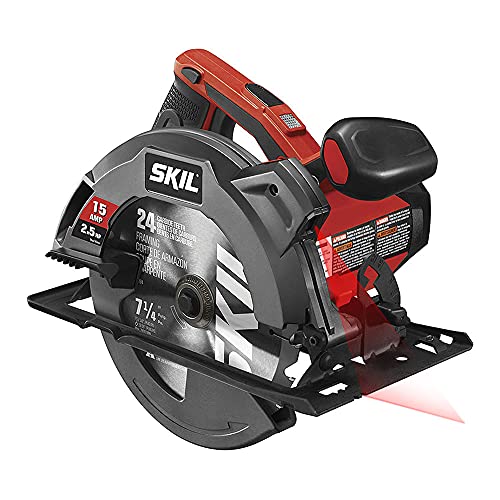
Skil 5280-01 Circular Saw
What We Like
- Powerful 15-amp motor for fast cuts
- Laser guide improves cut-line visibility
- Wide 51-degree bevel capacity for angled cuts
- Dust blower keeps your cut line clear
Trade-offs
- 8.7-pound weight can tire the arm on overhead cuts
- Corded design limits mobility compared to cordless models
- No included carrying case for storage
This is the corded workhorse you want for repeated, precise cuts in the shop or on a deck build. The single-beam laser and dust blower are no gimmick, they work together so you can actually see your marked line from start to finish, which is half the battle for a straight cut. It’s a straightforward, dependable saw that forms the reliable core of a home workshop.
The trade-off for that reliable power is the cord and the 8.7-pound heft. Dragging an extension cord is a minor hassle, and you’ll feel the weight after a long day of overhead work. It’s a pure, focused tool. If your projects are more about quick, mobile cuts around the yard, a lighter cordless option like the Makita XSH04ZB might be a better fit. But for plug-in power and visibility features that just work, this Skil delivers where it counts.
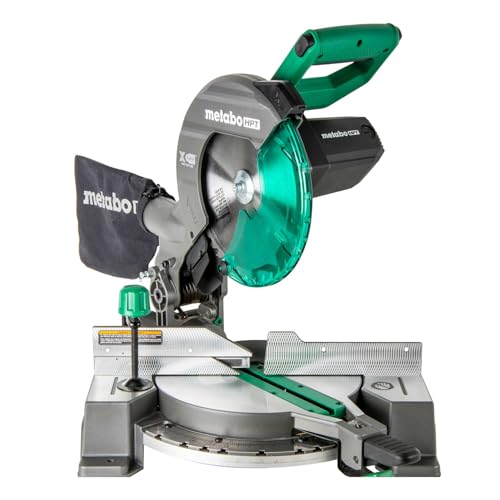
Metabo HPT C10FCG2 Miter Saw
What We Like
- Lightweight, portable 24-pound design
- Wide 0-52° miter range for complex angles
- Large table provides excellent material support
- Includes a 5-year manufacturer warranty
Trade-offs
- Single-bevel design limits compound cuts to one direction
- Corded design requires outlet access
A 0-52° miter range in both directions makes this saw a natural for crown molding and detailed trim work where you need to hit precise angles without constantly flipping the workpiece. The lightweight, 24-pound build is a genuine benefit for moving it from the workshop to the job site, and the large table offers stable support for longer boards. It’s built for the DIYer or pro who values accuracy and portability for finish carpentry.
The trade-off is the single-bevel design; you can only tilt the blade to the left for beveled cuts. For complex picture frames or trim needing compound angles from both sides, you’ll have to reorient the workpiece. Compared to a versatile compact like the Makita XSH04ZB circular saw, this is a dedicated station for precise crosscuts, not a general-purpose cutter you grab for quick rips. Its power and precision come with a specific focus.
Toolan 8-in-1 Multi-Blade Hand Saw

What We Like
- Compact size saves significant toolbox space
- Lockback mechanism securely clamps large and small blades
- Includes eight specialized HSS blades for varied materials
- Uses common, widely available replacement reciprocating blades
Trade-offs
- The 6.7-inch length limits cutting depth on thick stock
- Manual operation requires more effort than power tools for large jobs
Eight different high-speed steel blades in one compact frame let you tackle drywall, PVC, and metal without needing separate tools. The Toolan 8-in-1 Multi-Blade Hand Saw suits DIYers who value a clutter-free kit and need to switch tasks quickly. At half a pound with a professional clamping mechanism, it fits in a go toolbox or belt pouch for home repair and woodworking projects.
Its handy 6.7-inch body is the source of its main limitation. This tool simply can’t match the cutting speed or capacity of a dedicated circular saw for framing a deck. It’s a specialist in versatility, not raw power. For quick, precise cuts in sheet goods and common building materials, it’s a brilliant space-saver, but you’ll want to pair it with a full-size tool for any serious lumber milling or demolition work.
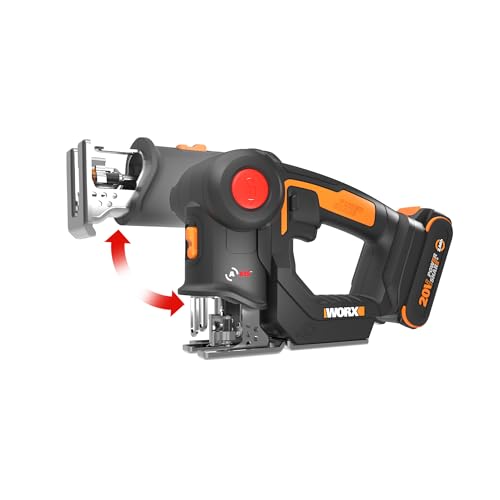
Worx WX550L 2-in-1 Reciprocating & Jigsaw
What We Like
- Dual function in one compact tool
- Pivoting head for angled cuts
- Built-in LED light and blower
- Lightweight design reduces fatigue
Trade-offs
- 3/4-inch stroke limits aggressive demolition
- Power depends on single 20V battery capacity
The ability to switch between a jigsaw and a reciprocating saw with a simple head pivot is the core advantage here. This single tool tackles everything from cutting sink openings and pruning branches to making curved cuts in plywood. For a homeowner with limited storage space or a budding DIYer building a first toolkit, the WX550L consolidates two essential cutting actions into one affordable, cordless package. Its lightweight build and tool-free blade changes make it approachable for weekend projects.
Its 2-in-1 design packs a reciprocating saw and jigsaw into a single, compact tool, so you can switch between demolition and detail cuts without grabbing another machine. The pivoting head and tool-less blade change make these transitions fast. This cordless saw is built for versatility in confined spaces, not for the heaviest construction tasks.
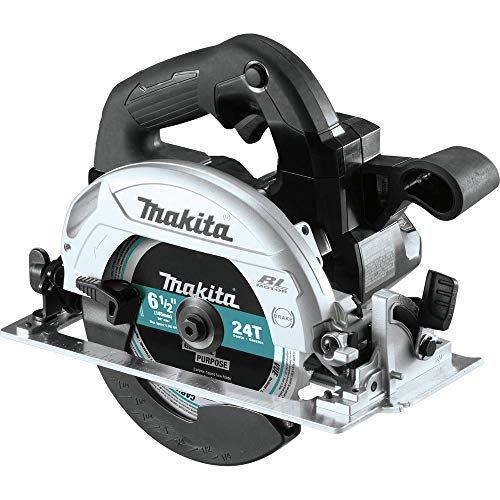
Makita XSH04ZB Sub-Compact Circular Saw
What We Like
- Brushless motor runs efficiently for longer life
- Wide 50-degree bevel capacity for angled cuts
- Compact blade-right design for tight spaces
Trade-offs
- Tool only: requires separate Makita 18V battery and charger
- 6-1/2" blade limits depth versus 7-1/4" models
Weighing just over six pounds with a battery, this saw feels almost weightless in your hand, which is a serious advantage for long sessions of framing or sheathing. That lightness, combined with its compact 10-5/8-inch length, makes it incredibly easy to maneuver in tight spaces or control with one hand on a ladder. This is the cordless circular saw you grab for all-day deck building or quick trim jobs where a heavier saw would wear you out.
You get a 6-1/2-inch blade for that portability, which maxes out at a 2-1/4-inch cut depth. That’s enough to cleanly slice through a 2×8 at 90 degrees, but it falls short of the capacity you’d get from a full-size 7-1/4-inch model for deep cuts on thick timbers. Since it’s a bare tool, you must already own Makita’s 18V LXT battery platform. For a DIYer invested in that ecosystem who values comfort above brute cutting depth, this sub-compact design is a brilliantly executed tool.
Product photos
Milwaukee M18 Fuel 6-1/2" Circular Saw

What We Like
- Brushless motor for efficient power and runtime.
- Cordless 18V design offers full jobsite mobility.
- Compact 13.5-inch length eases handling in tight spaces.
Trade-offs
- Tool only: requires separate Milwaukee M18 battery and charger.
- Smaller blade limits maximum cut depth versus 7-1/4 inch models.
The brushless motor and 18V platform deliver the cordless freedom and sustained cutting power that lets you tackle decking or sheathing without hunting for an outlet. This saw is for the DIYer already invested in the Milwaukee M18 ecosystem who needs a workhorse for extended projects where a cord would be a constant hassle. Its compact frame manages the battery weight well, giving you control for precise crosscuts and long rips alike.
You trade some brute cutting depth for that cordless convenience, so it won’t plow through a 4×4 post in one go like the heavier Bosch CSW41 worm drive. It’s a premium tool built for a system, making the most sense if you own other M18 tools. For a one-off project, a lighter corded model might be the more pragmatic grab off the shelf.
Product photos
Skil 5080-01 Circular Saw
What We Like
- 13-amp motor provides solid cutting power
- Lightweight design reduces user fatigue
- Spindle lock enables easy blade changes
- Dust blower keeps cut line clear
Trade-offs
- Corded design limits mobility on large sites
- No laser guide like the Skil 5280-01 model
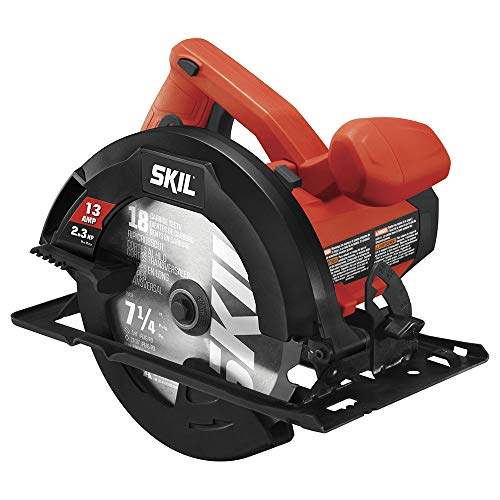
A 13-amp motor and a 7-1/4-inch blade give this saw the guts to handle most dimensional lumber and sheet goods a DIYer will face. At just seven pounds, it’s noticeably lighter than many competitors, which makes a real difference when you’re making repetitive cuts up on a sawhorse. This is the saw for the homeowner who needs reliable, corded power for weekend projects like building a deck or framing a shed, without the complexity or cost of a pro-grade model.
You won’t find a laser guide like the one on Skil’s heavier 5280-01 model. The design includes a spindle lock to make blade changes easier and an improved dust blower to help keep the cutting line visible. It offers a 51-degree bevel capacity with positive stops for angled cuts.
Product photos
Bosch CSW41 Worm Drive Circular Saw
What We Like
- Left-side blade offers clear view of cut line.
- 15-amp motor and worm drive gearing provide high torque.
- Magnesium construction reduces weight for a worm drive saw.
- On-board wrench and tool hook add worksite convenience.
Trade-offs
- Its 20.8-inch length demands more storage space.
- Lacks the portability of cordless or sub-compact models.
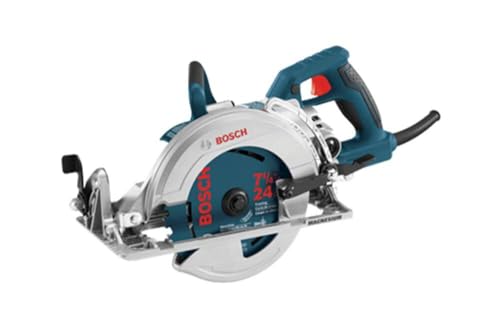
A worm drive design delivers the torque and precision needed for dense framing lumber and repetitive cuts on a job site. The left-side blade placement gives you an unobstructed view of your mark, which is a real advantage for long, straight rips. This saw is built for the user who faces demanding material all day, where control and power trump a lightweight design. The magnesium housing helps, but this is fundamentally a tool for heavy lifting.
The Bosch CSW41’s worm drive design delivers increased accuracy and a clear view of the cut line, which is crucial for making precise rip cuts in framing lumber. Its magnesium construction results in a weight of 13.2 pounds, a balance that provides control during heavy-duty cutting but makes it heavier than many cordless models. Features like the on-board wrench and built-in tool hook support efficient workflow at a fixed cutting location.
Product photos
DEWALT DCS571B Atomic Circular Saw

What We Like
- Brushless motor for extended runtime
- Electronic blade brake for safety
- Removable auxiliary handle for control
- On-board blade key storage
Trade-offs
- Tool only: requires separate DEWALT 20V battery and charger
- 4-1/2-inch blade limits depth versus full-size 7-1/4-inch saws
A 4-1/2-inch blade powered by a brushless motor makes this a genuinely capable cordless cutter in a package that’s easy to manage with one hand. Its bevel gear allows it to cut 2x material at 90 degrees, which covers a huge portion of common framing and DIY tasks. For someone already invested in the DEWALT 20V ecosystem who needs a saw for quick crosscuts, trim work, or breaking down sheet goods on a pair of sawhorses, it delivers serious utility without the bulk of a full-size circular saw.
Its design prioritizes precision and portability over raw depth. The saw is built to bevel at 45 degrees to cut 1x dimensional lumber, not thicker stock. Compared to the ultra-light Makita sub-compact, the DEWALT Atomic carries more heft, which can aid stability in thicker material but adds fatigue over a long day. Choose this for its balance of power and compact form, not for maximum cutting capacity.
Product photos
How We Evaluated Saws For Home Projects
Our research focused on specifications, manufacturer documentation, and consistent patterns in expert and owner reviews. We prioritized cutting power, measured by motor amperage for corded tools and platform compatibility for cordless models, as this determines a saw’s ability to handle dense lumber. We also assessed versatility through features like bevel capacity for angled cuts and, for hand tools, the range of included blades for different materials.
Finally, we considered practical design elements that affect user experience, such as weight, corded versus cordless operation, and included guides for accuracy. A research-led evaluation like this cannot replicate the feel of a tool in your hand over hundreds of cuts, but it effectively identifies the models that reliably meet the stated needs of most DIYers.
What To Look For In Saws For Home Projects
The ideal saw balances power for your materials, control for your skill level, and practicality for your workspace. Your primary project type will point you toward a specific saw category, but within that category, key specs determine real-world performance.
Key buying criteria include the saw type, like circular, miter, or reciprocating. You’ll also consider power source, with corded saws offering unlimited runtime and cordless ones providing mobility. Finally, look at cutting capacity and features that aid precision, such as lasers or dust blowers.
Saw Type & Primary Use
The saw type dictates what it can do. A circular saw is the most versatile for straight cuts in sheet goods and lumber, making it a foundational tool. A miter saw is specialized for precise, repeatable angled cuts in trim and molding.
For demolition or cutting in tight spaces, a reciprocating saw is the tool of choice, while a jigsaw handles curves. If your space and budget are limited, a quality tool comparison can help you decide which foundational tool offers more utility for your planned projects. For intricate joinery or fine woodworking, you may eventually need dedicated woodworking saws.
Power & Runtime
Power determines a saw’s capability. Corded saws provide consistent, unlimited power, which is suitable for extended use such as ripping plywood or framing. A circular saw with a 13-amp or 15-amp motor offers strong performance.
Cordless saws provide excellent mobility for outdoor projects or moving around a worksite, but their runtime and power are tied to your battery platform. For serious cordless cutting, invest in a model from a major tool system you already own. Understanding the differences between different types of saws helps clarify the trade-offs between raw strength and convenience.
Cutting Capacity & Control
A saw’s cutting capacity is defined by its blade size and design. A 7-1/4-inch circular saw blade can cut through a 2×4 in a single pass, while a 6-1/2-inch or smaller blade may require flipping the board. For miter saws, a 10-inch blade has a greater crosscut capacity than a 7-1/4-inch model.
Control features are equally important: a laser guide or LED light illuminates your cut line, a dust blower keeps it clear, and an electric brake stops the blade quickly for safety. For beginners, a tool with these assistive features and a manageable weight, like many recommended models, builds confidence and improves results.
- Check the maximum depth of cut at 90 and 45 degrees for your common materials.
- Ensure the saw has a secure, comfortable grip for the hand positions you’ll use.
- Verify that blade changes are straightforward, often requiring a single tool or a spindle lock.
Choose a saw that can handle the thickest material in your project plan with a little capacity to spare.
Saws For Home Projects Compared
The table below compares key specifications to help you see the differences between our top picks at a glance.
| Product | Motor Power / Type | Blade Size | Weight |
|---|---|---|---|
| Skil 5280-01 Circular Saw | 15 Amp | 7-1/4 Inch | 8.7 pounds |
| Metabo HPT C10FCG2 Miter Saw | 15 Amp | 10-Inch | 24.2 pounds |
| Toolan 8-in-1 Multi-Blade Hand Saw | N/A | N/A | 0.5 pounds |
| Worx WX550L 2-in-1 Reciprocating & Jigsaw | 20V Cordless | N/A | 4.2 lbs |
| Makita XSH04ZB Sub-Compact Circular Saw | 18V Brushless | 6-1/2” | 4.0 pounds |
| Milwaukee M18 Fuel 6-1/2" Circular Saw | 18V Brushless | 6-1/2 inches | 8.4 pounds |
| Skil 5080-01 Circular Saw | 13 Amp | 7-1/4 inches | 7.0 pounds |
| Bosch CSW41 Worm Drive Circular Saw | 15-amp | 7-1/4-Inch | 15.0 Pounds |
| DEWALT DCS571B Atomic Circular Saw | 20V MAX* cordless | 4-1/2 inches | 6.5 pounds |
Frequently Asked Questions
Which saw is best for DIY projects?
For most DIYers, a 7-1/4-inch circular saw is the best single saw. It handles the majority of cuts in lumber and sheet goods. Our top pick, the Skil 5280-01, adds a laser guide for accuracy, making it an excellent starting point for building a tool collection.
What is the best all-purpose saw for home improvement projects?
The best all-purpose power saw is a circular saw due to its ability to make straight cuts, rip lumber, and crosscut boards. For an all-purpose hand saw, a multi-tool like the Toolan 8-in-1 is remarkably versatile, with blades for wood, metal, and plastic in one compact frame.
What is the best saw for cutting wood at home?
For cutting dimensional lumber (like 2x4s) and sheet goods (plywood), a circular saw is the most efficient and effective choice. For detailed cuts in trim or molding, a miter saw is superior. Our guide to the best circular saws for home use delves deeper into top models.
Should I buy a corded or cordless saw for home use?
A corded saw is often the better choice for a primary, workshop-based tool because it offers consistent power with no battery concerns. A cordless saw is ideal for mobility, outdoor projects, or quick cuts where running an extension cord is inconvenient. Your decision may hinge on whether you already own a compatible battery platform.
What is the difference between a miter saw and a table saw?
A miter saw is designed for precise crosscuts and angled cuts on the ends of boards, perfect for trim and framing. A table saw is designed for ripping (cutting boards lengthwise) and handling large sheet goods. For projects like building cabinets, understanding the miter saw vs table saw distinction is crucial, as they are complementary tools.
The Bottom Line
For most homeowners tackling a variety of projects, the Skil 5280-01 Circular Saw is the best overall choice. It offers ample power, a useful laser guide, and a practical dust blower to keep your line visible. If your budget is tight, the Skil 5080-01 provides reliable corded power at an affordable price. Those focused on detailed trim work should consider the award-winning Metabo HPT C10FCG2 Miter Saw for its accuracy and wide angle range.
Ultimately, the single most important factor is matching the saw’s core function to your most frequent task. Buying a saw meant for demolition to do fine trim work will lead to frustration, just as using a small, compact saw to frame a deck will test its limits. Be honest about your primary project needs, and let that guide your choice.
