
10 Best Dust Collection Systems For Small Shop in 2026
This post contains affiliate links. As an Amazon Associate, we earn from qualifying purchases.
Our best overall dust collection system for a small shop is the WEN DC3401, winning for its strong 660 CFM suction and practical mobility. For OSHA-compliant fine dust capture, the Bosch VAC140AH is our best cyclone pick, while the Milwaukee 2712-DE excels as the most lightweight cordless option.
In a confined workshop, every square foot matters. Choosing the wrong dust collector can waste precious floor space or fail to capture hazardous particles from your tools. We researched specifications, manufacturer data, and owner feedback patterns to compare ten systems.
This guide highlights the best choices for different small shop priorities, from wall-mounted space savers to portable extractors.
Top 10 Dust Collection Systems For Small Shops in the Market
Certain content that appears on this site comes from Amazon. This content is provided "as is" and is subject to change or removal at any time.
The Best Dust Collection Systems For Small Shops, Reviewed
WEN DC3401 Woodworking Dust Collector
What We Like
- 660 CFM provides strong suction for small tools
- Lockable swivel casters and handle aid mobility
- Optional wall mount saves floor space
- Two-year warranty offers peace of mind
Trade-offs
- 5-micron bag allows fine dust to pass through
- 12-gallon capacity needs frequent emptying on big jobs
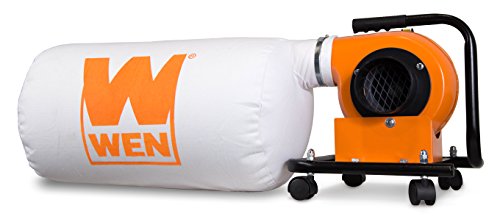
Moving 660 cubic feet of air per minute gives this collector enough muscle to handle the main dust port on a table saw or planer effectively. Its 17-pound weight and integrated carrying handle make it easy to roll from one tool to the next, a perfect fit for a compact shop where floor space is at a premium. The optional wall mount is a smart design choice for those who want to get it off the floor entirely. For a small shop owner looking for a capable, mobile central unit without a complex setup, this combination of power and portability is hard to beat.
The WEN DC3401 moves up to 660 cubic feet of air per minute, which provides enough suction for general chip collection from tools like table saws. Its included 5-micron bag captures visible sawdust, but finer particles may escape. For tasks where capturing ultra-fine dust is critical, systems like the DEWALT DWV010 with a HEPA filter are listed as alternatives.
Bosch VAC140AH Dust Collection System
What We Like
- Automatic filter cleaning maintains suction
- HEPA filter captures fine silica dust
- OSHA silica compliance system included
- Power-tool-activated on/off and suction control
Trade-offs
- At 38 pounds, it's heavier than cordless extractors
- 14-gallon capacity requires more floor space
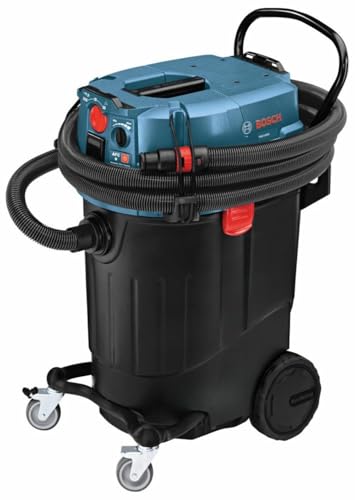
With a maximum airflow of 150 CFM and a sustainable 97 inches of water lift, the Bosch VAC140AH has the suction to handle fine particulate from tools like sanders. Its automatic filter cleaning cycle activates every 15 seconds to help maintain that power during extended use. This end-to-end PRO+GUARD system is designed to help users move toward OSHA silica compliance, making it a fit for small shops where consistent dust control is required.
That performance comes in a 38-pound package, a weight that defines its primary use case. When compared to a cordless unit like the 4.7-pound Milwaukee 2712-DE, the Bosch is less suited for scenarios where minimal weight is the priority. Its 14-gallon capacity and self-cleaning filter are advantages for longer, more demanding jobs where portability is secondary.
Product photos
Milwaukee 2712-DE Dust Collection System

What We Like
- Extremely lightweight at under five pounds
- Compact cordless design for easy portability
- Part of the extensive Milwaukee 18V tool system
Trade-offs
- Small physical size suggests limited dust capacity
- Lightweight build may not suit heavy-duty, continuous use
Weighing just 4.7 pounds, this cordless system is exceptionally easy to carry from one job to the next in a busy shop. It’s a natural fit for Milwaukee 18V platform users who need quick, targeted cleanup after sanding or drilling. The compact design makes it simple to stash on a shelf or under a bench, perfect for tradespeople and DIYers who prioritize mobility over high-volume collection.
That portability comes with a clear trade-off in capacity. Compared to stationary dust collectors like the 35.5-pound POWERTEC DC5371, this 4.7-pound unit is built for different applications. For high-volume collection, a dedicated wall-mounted system is the more appropriate choice.
DEWALT 20V MAX Dust Extractor

What We Like
- Compact and lightweight for high mobility
- Wireless tool control for remote activation
- Optimized for SDS plus rotary hammers
- Includes a HEPA filter
Trade-offs
- Tool only: battery and charger sold separately
- Wireless key fob is a separate purchase
- Small capacity compared to full-size shop collectors
Weighing only 3.7 pounds, the DEWALT 20V MAX Dust Extractor is a compact and lightweight unit designed for high mobility. Multiple strap connection points and a belt hook let users position it for the best ergonomic solution, which helps keep it accessible during a job. Its 20V MAX brushless motor helps provide long run time, and an included HEPA filter captures fine particles. The extractor is optimized for SDS plus rotary hammers while drilling and chipping.
The dust extractor’s capacity is 45% greater than the DWH302DH dust box. Its wireless tool control feature allows linking with a tool for remote extractor activation, though the required key fob is sold separately. The tool-only listing means a battery and charger must be purchased separately.
Dust Right Wall Mount Dust Collector
What We Like
- 1250 CFM supports multiple tools at once
- Space-saving vertical wall-mount design
- Remote control for shop-wide operation
- Clear bag with window and zipper for easy cleanup
Trade-offs
- No mobility; tools must be brought to it
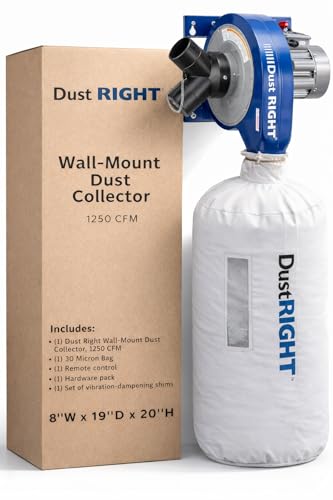
With 1250 CFM, this wall-mounted collector supports multiple tools at once for a central shop system. Its vertical design mounts using keyhole slots, keeping the floor clear for other shop equipment. That space-saving layout organizes a workshop where floor area is limited.
The trade-off is that it stays put. You can’t wheel it over to a messy job like the mobile WEN DC3401. The included 30-micron bag does the job, but fine dust will pass through. For a cleaner shop, you’ll want the optional 1-micron canister upgrade. Compared to the single-tool portability of a cordless extractor like the Milwaukee, this is a fixed, shop-centric system designed for power and space efficiency over flexibility.
Festool CT MIDI I Dust Extractor
What We Like
- Bluetooth for remote start/stop
- Touch controls for intuitive operation
- Tool-free filter changes
- Compact and easy to move
Trade-offs
- No dust bag capacity listed in specs
- Lacks physical dimensions for space planning
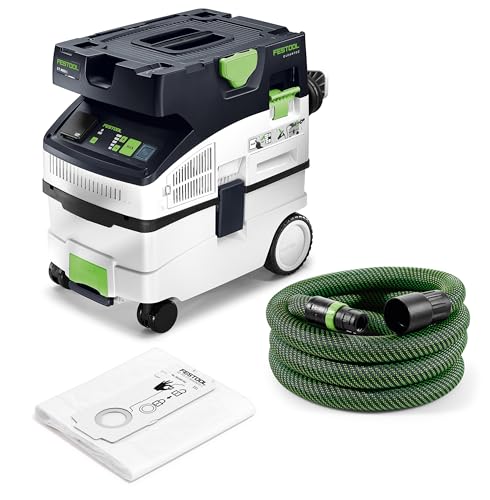
Integrated Bluetooth technology allows you to start and stop this dust extractor remotely, so you can control suction from your tool’s location without walking back to the unit. Touch controls provide an intuitive interface for operation. A manual filter cleaning feature helps maintain optimum suction and filtration performance, while the HEPA filter is designed to capture fine dust.
The trade-off is that you’re investing in a system built around finesse and integration, not raw suction power or large capacity. For heavy-duty planing or jointing that generates big chips quickly, a dedicated collector like the WEN DC3401 with its 12-gallon bag might be a more practical primary machine. Think of the Festool as your connected, high-filtration partner for sanders, routers, and saws, not the brute for the big chip producers.
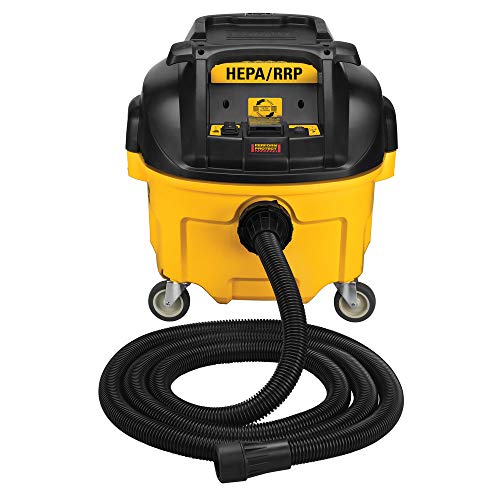
DEWALT DWV010 HEPA Dust Extractor
What We Like
- Automatic filter cleaning enables continuous operation
- Power Tool Actuation controls vacuum with tool
- Heavy duty wheels and casters for jobsite mobility
- Meets EPA RRP Rule when using specified HEPA filters
Trade-offs
- 150 CFM is lower than dedicated wall-mount collectors
- Requires specific DWV9330 filters for HEPA RRP compliance
The automatic filter clean is the key feature here, pulsing every 30 seconds to maintain suction without you stopping to bang out a clogged filter. That makes it a serious contender for anyone connecting it to a tool like a planer or sander that generates a lot of fine dust. The 8-gallon capacity and 22-pound weight with wheels strike a practical balance for a small shop, letting you move it easily but not having to empty it constantly. For a DIYer or small shop owner dealing with fine particulates, this extractor delivers the core HEPA functionality without overcomplicating the setup.
The 150 CFM airflow is less than dedicated high-volume systems like the Dust Right Wall Mount unit, which is rated for 1250 CFM. It meets EPA RRP rules for lead containment when used with specific HEPA filters, a key feature for renovation work. Power Tool Activation allows the unit to start and stop automatically when connected to a compatible tool.
Product photos
POWERTEC DC5371 Wall Mount Dust Collector

What We Like
- Compact wall-mount design saves floor space
- 1-micron bag with window traps fine dust
- Vortex base design improves dust removal efficiency
- Dual voltage motor offers installation flexibility
Trade-offs
- Built-in grate on inlet port requires regular cleaning to prevent clogging
A 1-micron reusable filter bag makes this wall-mounted unit a serious option for anyone prioritizing air quality in a confined space. The fine filtration stops dust from recirculating, which is crucial for a healthy small shop. Its compact footprint and 560 CFM airflow are well-suited for a single woodworking machine at a time, like a table saw or planer. This collector is for the hobbyist or small pro who needs effective dust capture without sacrificing precious floor space to a larger system.
This wall-mounted collector’s 1-micron bag filters fine dust to protect air quality, making it a permanent solution for clean air in small shops. Its built-in grate over the 4-inch inlet prevents large debris from damaging the impeller, but debris can collect and reduce efficiency if the port is not checked regularly. The unit’s 560 CFM airflow and compact 19-inch by 19-inch footprint prioritize a space-saving, dedicated installation over the portability of lighter mobile collectors.
Product photos
WEN DC3474 Woodworking Dust Collector

What We Like
- Strong 600 CFM airflow from 7.4-amp motor
- Mobile base with swivel casters for shop movement
- Optional wall mount saves floor space
- Includes a 15-gallon zippered collection bag
Trade-offs
- The 5-micron bag allows fine dust to pass through
- Requires dedicated floor or wall space in a small shop
Its motor moves up to 600 cubic feet of air per minute, which provides the airflow capacity for basic dust collection from a single tool. The 7.4-amp induction motor is a type known for durability in shop environments. With a 15-gallon collection bag and a 4-inch port, the unit offers a practical setup for connecting to common woodworking equipment. A mobile base with swivel casters and an onboard handle allow for repositioning around a workshop.
Filtration is handled by a 5-micron zippered collection bag. The product’s feature set includes a two-year warranty, an optional wall mount, and the integrated carrying handle and casters. Its dimensions of 43.3 inches in length and 17.7 inches in width require a dedicated floor or wall space in a shop. At 41.1 pounds, the unit is light enough for one person to maneuver when needed.
Product photos
Shop Fox W1826 Wall Dust Collector

What We Like
- Strong 537 CFM airflow for a wall unit
- 1 HP motor runs on standard 110V power
- Offers 2.5 micron filtration
- Compact 17.3-inch tall wall-mount design
Trade-offs
- 4-inch intake may limit ducting options for some shops
- Static pressure of 7.2 inches is moderate for a 1 HP unit
- No integrated mobility; requires permanent wall mounting
Its 537 CFM airflow provides enough suction for a single tool or a short duct run, pulling visible debris effectively. The 2.5-micron filtration is noted in expert round-ups as a valued characteristic when combined with good airflow. Setup is straightforward since it comes prewired for a standard 110-volt outlet, requiring no electrical modifications.
Because it is a wall-mounted unit, it lacks the mobility of a collector on a rolling stand. Your ducting must be planned for a fixed location. Research that prioritized filtration and airflow placed a similar Shop Fox model among top choices, indicating this type of unit can meet core dust collection needs in a stationary setup.
Product photos
How We Evaluated Dust Collection Systems For Small Shops
This evaluation is based on a review of product specifications, manufacturer documentation, and patterns in expert and user reviews. The key criteria for a small shop are airflow (CFM) for effective suction, physical footprint and mobility to fit limited space, filtration level for health protection, and overall value.
We prioritized systems that make specific trade-offs suitable for compact workshops, like wall-mount designs or tool-activated portables. A limitation of this research-based approach is that we cannot verify long-term durability or real-world noise levels, which vary by installation and use.
What To Look For In Dust Collection Systems For Small Shops
Selecting a system for a small shop means balancing power against your available space and the specific dust your tools create. The right choice keeps your air clean without dominating your workspace.
Key considerations include airflow (CFM), which must be strong enough for your primary tool; physical form factor, whether mobile, wall-mounted, or compact; and filtration level, critical for capturing fine, hazardous dust.
Airflow (CFM)
Cubic feet per minute (CFM) measures a system’s ability to move air and debris. For small shops, a minimum of 400 CFM is often cited to keep dust suspended in short duct runs, but stationary tools like planers may need more. Our picks range from 150 CFM for targeted extraction to 1250 CFM for multi-tool wall units. Higher CFM generally means better chip collection, but it often comes with a larger motor and footprint, so match the power to your most demanding tool’s needs.
Form Factor & Mobility
Your shop’s layout dictates whether you need a mobile unit on casters, a permanent wall mount, or a lightweight portable extractor. Mobile collectors with handles, like our best overall pick, let you move suction to different tools. Wall-mounted units, such as our best space-saver, free up all floor space but require you to bring tools or hoses to them. For ultimate portability with cordless tools, a compact dust extractor might be the best fit, though it typically has lower capacity.
Filtration & Health
Effective dust collection isn’t just about chips; it’s about capturing the fine, inhalable particles that pose a health risk. Look for the filter’s micron rating, a 1-micron bag or a HEPA filter captures far more hazardous dust than a standard 5-micron bag. Systems like our best cyclone pick include automatic filter cleaning to maintain suction. For any system, a tight seal on bags and ports is essential to prevent leaks, a common issue noted in expert advice on setting up dust collection.
- Check the filter micron rating, 1-micron is superior to 5-micron for fine dust.
- Consider if the system includes a HEPA filter for compliance with silica dust rules.
- Look for features that maintain airflow, like automatic filter cleaning or a clear bag window.
- Ensure collection bags are easy to seal and remove without creating a mess.
- Verify port sizes match your tools; you may need adapters for a tight fit.
For health protection, prioritize fine filtration over maximum CFM if you work with materials like MDF or do a lot of sanding.
Dust Collection Systems For Small Shops Compared
The table below compares key specifications across our top picks to help you see the differences in airflow, filtration, and design at a glance.
| Product | Motor Power | Airflow (CFM) | Collection/Filtration |
|---|---|---|---|
| WEN DC3401 Woodworking Dust Collector | 5.7-amp brushed | 660 cubic feet per minute | 12-gallon, 5-micron |
| Bosch VAC140AH Dust Collection System | N/A | 150 CFM maximum | HEPA filter (99.97% at 0.3 microns) |
| Milwaukee 2712-DE Dust Collection System | 18V Cordless | N/A | N/A |
| DEWALT 20V MAX Dust Extractor | 20V MAX brushless | N/A | N/A |
| Dust Right Wall Mount Dust Collector | N/A | 1250 CFM | 30 micron clear bag |
| Festool CT MIDI I Dust Extractor | N/A | N/A | HEPA filter |
| DEWALT DWV010 HEPA Dust Extractor | 15-amp motor | 150 CFM | 8-gallon |
| POWERTEC DC5371 Wall Mount Dust Collector | 1 HP induction | 560 CFM | 1 micron bag |
| WEN DC3474 Woodworking Dust Collector | 7.4-amp induction | 600 CFM | 15-gallon, 5-micron |
| Shop Fox W1826 Wall Dust Collector | 1 HP | 537 CFM | 2.5 micron |
Frequently Asked Questions
What is the best dust collector for a small shop?
The best single unit depends on your shop’s needs. For a powerful, mobile central collector, the WEN DC3401 is an excellent overall choice. If floor space is extremely limited, a wall-mounted unit like the Dust Right Wall Mount Dust Collector provides high CFM without using any floor area.
What is the best dust extraction system for a small workshop?
A dust extraction system often refers to a portable, high-filtration vacuum for use with hand-held power tools. For this, the Bosch VAC140AH offers excellent cyclone performance and automatic filter cleaning, while the DEWALT DWV010 provides strong HEPA value. Understanding the types of dust collectors helps clarify if an extractor or a full collector suits your tools.
What is the best DIY dust collection system for a small shop?
For a DIY approach, starting with a quality shop vac paired with a cyclone dust separator is a cost-effective upgrade. This setup can handle many tools before investing in a larger system. Our research on using a shop vac for dust collection explores this option further.
What is the best dust separator for a shop vac?
A cyclone separator, like a Dust Deputy, attaches to your shop vac and spins out most debris before it reaches the vacuum bag, preserving suction and filter life. This is a smart upgrade for small shop owners using a shop vac as their primary dust collection solution.
How important is HEPA filtration in a small shop?
HEPA filtration is crucial for capturing fine silica and wood dust particles, which are the most harmful to lungs. This is especially true in a poorly ventilated small space. If you do a lot of sanding or work with composites, a system with a true HEPA filter is a wise health investment. It complements a broader air filtration strategy, much like the filters in our best cyclone and best value HEPA picks.
The Bottom Line
For most small shops needing a balance of power and practicality, the WEN DC3401 is the best overall dust collection system. Its strong suction, mobility, and optional wall mount address core small-shop challenges effectively. Budget-focused woodworkers should look at the WEN DC3474, while those with stationary tools and no floor space will find the Dust Right Wall Mount Dust Collector indispensable.
Ultimately, choose a system whose CFM matches your primary tool and whose physical form fits your workflow, because in a small shop, the right tool in the right place makes all the difference.
