
10 Best Air Finish Nailers in 2026
This post contains affiliate links. As an Amazon Associate, we earn from qualifying purchases.
Our best overall air finish nailer is the Senco TN51P1P Pneumatic Finish Nailer for its reliable, maintenance-free operation and user-friendly controls. The Bostitch Smart Point 15GA Finish Nailer Kit earns our award for Best with On-Center Gauge, which helps with fast layout work. For a lightweight professional tool, the Metabo HPT 16 Gauge Finish Nailer is our top choice.
Choosing the right pneumatic nailer means balancing gauge, weight, and features to match your specific trim and molding tasks.
Top 10 Air Finish Nailers in the Market
Certain content that appears on this site comes from Amazon. This content is provided "as is" and is subject to change or removal at any time.
The Best Air Finish Nailers, Reviewed
Senco TN51P1P Pneumatic Finish Nailer

What We Like
- Oil-less design eliminates daily maintenance.
- Tool-free depth adjustment and jam clearance.
- 360-degree exhaust directs air away from work.
- Dry fire lockout prevents wear on empty.
Trade-offs
- At 9.6 lb, it's heavier than the 4.3 lb Bostitch.
- Requires a separate air compressor to operate.
At 9.6 pounds with an aluminum body, this pneumatic nailer has a solid, durable feel suited for frequent use. Its oil-less design eliminates routine lubrication, saving maintenance time on the job. A selectable trigger offers either contact or sequential firing modes for control, while a dry fire lockout protects the mechanism by preventing operation when nails are low.
The heft is the trade-off for that solid construction, so it feels less nimble over a full day compared to lighter options like the Metabo HPT. Still, the quick-clear latch and tool-free depth adjustment mean you spend less time fiddling and more time driving nails flush. If your priority is a rugged, feature-complete pneumatic nailer that minimizes downtime, this model’s design justifies its place at the bench.
Product photos
Bostitch Smart Point 15GA Finish Nailer Kit

What We Like
- Built-in 16-inch on-center gauge for layout
- Tool-free jam release for quick clearing
- Dial-A-Depth control for precise countersinking
- Integrated air blower clears debris from work surface
Trade-offs
- Angled magazine requires specific FN-style nails
- At 4.3 pounds, it's heavier than some 16-gauge rivals
- Pneumatic operation needs a separate air compressor
The integrated 16-inch on-center gauge flips out from the nose to measure stud spacing for wall trim. A tool-free jam release allows for quick nail removal, and the Dial-A-Depth control adjusts how deep nails are countersunk. The selectable trigger offers a choice between sequential or contact operation modes.
You do pay for that convenience with a bit of heft and bulk. At 4.3 pounds, it’s not the lightest in the category, and its angled magazine, while great for tight corners, requires you to stock the specific FN-style nails. If your projects are more varied or you prioritize a lighter tool, the straight 16-gauge Metabo HPT NT65M2S at 3.7 pounds might be a more versatile and nimble companion for smaller trim and furniture work.
Metabo HPT 16 Gauge Finish Nailer

What We Like
- Extremely lightweight at 3.7 pounds reduces fatigue
- Selectable firing modes for speed or precision
- Adjustable exhaust keeps air away from user
- Integrated duster button clears debris instantly
Trade-offs
- 16-gauge fasteners leave a slightly larger hole than 15-gauge models
- 16-gauge fasteners are thicker than 15-gauge
Weighing just 3.7 pounds, this nailer is built for all-day overhead work without wearing out your arm. That balance, combined with its selective actuation switch, lets a pro toggle between rapid-fire production and careful, sequential placement for delicate trim. The tool-free depth adjustment and built-in air duster support a professional finish directly on the job. Builder and Developer Magazine rated it the Pro Preferred Nailer for twelve consecutive years.
The 16-gauge nail it drives is thicker than the 15-gauge fasteners used by tools like the Senco TN51P1P. For applications where hiding the fastener is critical, that is a consideration. However, for general trim and finish where speed and reduced user fatigue are priorities, the Metabo HPT’s lightweight design excels. It is a tool that prioritizes user endurance over the entire workday.
3PLUS HDA1564SP Angled Finish Nailer

What We Like
- Tool-free depth adjustment for flush fastening
- 360-degree adjustable exhaust directs air away
- Interchangeable trigger for firing mode flexibility
- No-mar tip protects workpiece surfaces
Trade-offs
- At 5.5 lb, it's heavier than the 4.3 lb Bostitch model
- Uses specialized DA-style angled nails, not common straight nails
- No weight or size advantage over lighter 16-gauge options
Its tool-free depth adjustment allows quick setting of the nail head flush with the material, which is critical for a clean finish without hammer marks. Paired with a selectable trigger for either single shots or rapid bumper fire, this nailer suits varied trim jobs where control and speed both matter. The design uses angled finish nails, a common style for improved access in framing cavities.
You pay for that adjustability with some heft. At five and a half pounds, it’s not the lightest in the guide, so overhead work on crown molding can become fatiguing faster than with a tool like the Metabo HPT. It’s a trade-off: you get superior control and versatility in firing and exhaust direction, but you’re managing more weight throughout the day. For a pro focused on meticulous finish work, that’s often an acceptable compromise.
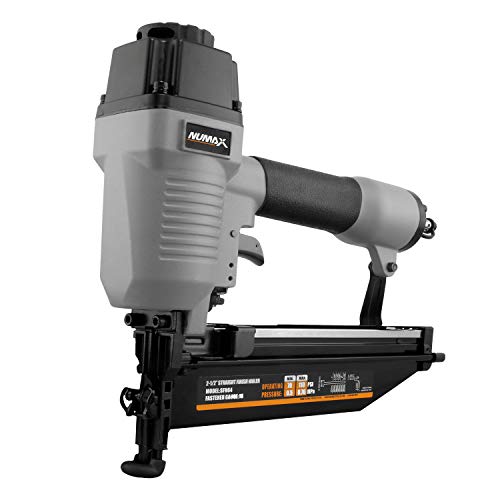
NuMax SFN64 Straight Finish Nailer
What We Like
- One-piece hardened steel drive blade for durability.
- Lightweight 4.1-pound body reduces user fatigue.
- Tool-free depth adjustment for versatile material handling.
- No-mar safety tip protects finished work surfaces.
Trade-offs
- At 4.1 lb, it's heavier than the 3.7 lb Metabo HPT model.
- Weighs 4.1 pounds, heavier than the 3.7-pound Metabo HPT model.
A one-piece hardened steel drive blade is the core of a finish nailer built to withstand job site knocks without failing. That construction, paired with a tool-free depth adjust and a no-mar tip, means this nailer is set up for years of reliable service in trim and casing work. It’s a straightforward choice for the frugal craftsman who needs a dependable pneumatic driver for frequent use but doesn’t require the lighter weight or different magazine angle of pricier models.
At 4.1 pounds, the NuMax SFN64 is lighter than many pneumatic nailers, which helps reduce fatigue during long projects like installing window casing or chair rails. Its one-piece hardened steel drive blade is built for durability, resisting damage from heavy use on tasks such as door installation. A tool-free wheel lets you change the driving depth for different materials. The quick jam release is a practical feature that minimizes downtime, allowing you to clear jams without stopping to find a tool.
DEWALT Pneumatic 15-Gauge Finish Nailer

What We Like
- Precision Point nose aids exact nail placement
- Tool-free depth adjustment for flush nail setting
- Selectable trigger for control or speed
- Quick, tool-free jam clearance mechanism
Trade-offs
- Length of 15.7 inches requires clearance in tight spaces
- Pneumatic design needs a compressor and hose
Precision Point Technology shrinks the nose of this nailer, giving you a clear line of sight to place fasteners exactly where you want them on trim and moulding. That, combined with the selectable trigger, makes it a standout for detailed finish work where every nail head matters. A simple dial lets you set the perfect countersink for different wood densities in seconds. It’s built for the installer who measures their cuts twice and doesn’t want to fill unnecessary holes.
The trade-off for that precision placement is a tool that measures over 15 inches long. It can feel a bit cumbersome when you’re working inside a cramped cabinet or a corner. For comparison, the more compact Metabo HPT NT65M2S is significantly shorter and lighter, which can be a real advantage in confined spaces, though it uses a slightly finer 16-gauge nail. The DEWALT’s design prioritizes control and accuracy over ultimate maneuverability.
Makita AF601 Straight Finish Nailer

What We Like
- Built-in duster clears debris quickly
- Tool-less depth adjustment for precise control
- Nail lock-out prevents dry-fires
Trade-offs
- Duster function adds complexity over basic tools
A built-in air duster clears sawdust from the work surface before nailing, keeping your workflow moving on tasks like trim installation where a clean line matters. This feature pairs with a tool-less depth adjuster for precise flush or countersink results. Reviewers liked the depth adjustor’s stepped nut, which offers nine increments of approximately 1/32″ for fine control.
You trade some compactness for that duster convenience, however. At 15 inches wide, it’s broader than tools like the 11.6-inch-long Metabo HPT nailer. For general trim work where space isn’t a major constraint, the Makita’s thoughtful features justify its size, but the bulk is a consideration in very tight spaces.
Product photos
Arrow Fastener 0079055180104 Air Finish Nailer

What We Like
- Complete kit includes nails and wrenches
- Oil-free design requires no maintenance
- Dryfire-lockout protects tool and work surface
- Adjustable exhaust cover enhances hand safety
Trade-offs
- Kit includes only 2-inch nails, not the full length range
- No carrying case mentioned for tool storage
The kit includes a thousand finish nails and two wrenches, so you can begin installing trim or cabinets immediately. An oil-free design means no routine lubrication is required, reducing maintenance. Its dry-fire lockout prevents firing when only a few nails remain, protecting the tool and work surface from damage.
This nailer drives 16-gauge straight finish nails from 1-1/4 to 2-1/2 inches, covering many common trim and repair tasks. Its depth adjustment allows for control over how deeply nails are set into different materials. The tool is designed for applications like cabinet backs, vinyl trim, and house wrapping.
Product photos
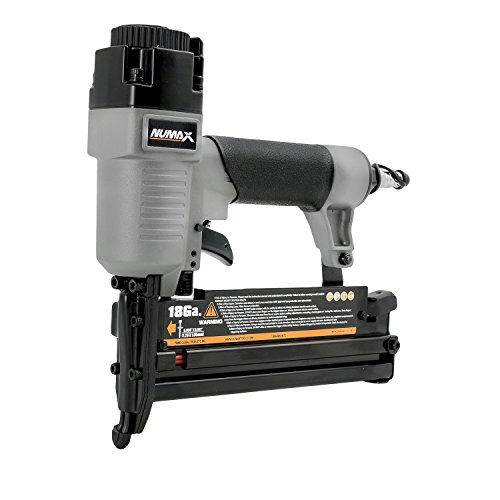
NuMax 3-in-1 Multi-Purpose Nail Gun
What We Like
- Single tool handles three fastener types
- Lightweight, ergonomic body for reduced fatigue
- Clear reload indicator eliminates guesswork
- Tool-free depth adjustment for different materials
Trade-offs
- Maximum 2-inch nail length limits thicker stock
- Staple crown is 1/4-inch, not suitable for wider-crown tasks
A 3-in-1 design that drives finish nails, brads, and narrow-crown staples means you can tackle most trim and light assembly without swapping tools. At just 2.8 pounds, it’s easy to manage for overhead work or long sessions. This makes it a logical choice for a DIYer or handyman who needs flexibility for varied projects like baseboards, furniture, and cabinet backing without investing in multiple dedicated guns. A dial for depth control and a no-mar tip help deliver clean results across different materials.
The trade-off is specialization. You get versatility, but the maximum 2-inch nail length and straight magazine design can’t match the reach or angled access of a dedicated 15-gauge nailer like the Bostitch Smart Point for heavier crown moulding. It consolidates three common light-gauge tools into one reliable package. For someone building a toolkit from scratch or who values a clutter-free toolbox for common finish work, this NuMax handles the fundamentals well.
Product photos
HBT Magnesium Finish Nailer

What We Like
- Magnesium housing reduces weight for durability
- Tool-free depth adjustment and jam clearing
- Includes two no-mar rubber tips to protect work
- Dry-fire lockout prevents damage on empty magazine
Trade-offs
- Requires a separate air compressor to operate
The magnesium housing reduces weight while maintaining durability, which means less arm fatigue during long sessions of installing trim or molding. It drives 16-gauge finish nails from one inch up to two-and-a-half inches, covering a solid range for most finish carpentry tasks. A dual-mode trigger allows switching between sequential and bump-fire operation with a flip of a switch, offering control for precision work or speed for repetitive nailing.
The trade-off is the inherent tether of a pneumatic tool, you’ll need an air compressor on hand, which adds to the setup. Compared to a dedicated angled model like the Bostitch Smart Point, the straight magazine can be less nimble in extremely tight spaces. However, the 360-degree swivel air fitting keeps the hose from tangling, a small but thoughtful design touch that improves control during longer sessions of baseboard or casing installation.
Product photos
How We Evaluated Air Finish Nailers
Our evaluation focused on manufacturer specifications, documented performance in expert round-ups, and consistent patterns in owner feedback. We prioritized criteria that directly impact real-world use. This includes the nail gauge and length capacity for project suitability, the tool’s weight and ergonomics for user fatigue, and the availability of key features like tool-free adjustments and jam clearing. This research-led approach provides a strong comparison of features and reported reliability. The main limitation is that we cannot replicate long-term durability testing or hands-on feel, so we emphasize specs and widely reported user experiences.
What To Look For In Air Finish Nailers
Selecting an air finish nailer involves more than just power. You need to match the tool’s capabilities to your most common projects, considering the fastener size, the tool’s heft during long sessions, and the features that save time and frustration on the job.
The key is matching the nail gauge (15 or 16) to your work, choosing a comfortable weight, and ensuring it has tool-free adjustments for depth and jams. Don’t forget you’ll need a compatible air compressor.
Nail Gauge and Length
The nail gauge determines the fastener’s thickness and holding power. A 15-gauge nail is thicker, leaves a slightly larger hole, and offers more strength for heavy trim like baseboards and crown molding. A 16-gauge nail is thinner, leaves a smaller hole that’s easier to fill, and is ideal for finer work like cabinet face frames and window casings. Our guide to 15-gauge finish nailers details their specific applications. Also check the maximum nail length, typically 2 to 2.5 inches, to ensure it can handle your thickest stock.
Weight and Ergonomics
A nailer’s weight directly affects control and fatigue, especially during overhead work or long installation runs. Professional models can vary significantly in weight. A lighter tool, like many 16-gauge models, is easier to maneuver and reduces arm strain over hours. Heavier 15-gauge tools offer more driving power but demand more from the user. Consider the balance and grip comfort as well; a well-designed heavier tool can still feel manageable if it’s well-balanced.
Key Features and Maintenance
Look for features that streamline your workflow. Tool-free depth adjustment is essential for setting nails flush without damaging the wood surface. A tool-free jam release mechanism allows for quick clearing without stopping to find an Allen wrench. An adjustable or 360-degree exhaust port keeps air and debris away from your face. For a broader look at these features across different types, see our air nailer reviews. Also, consider whether the tool requires daily oiling; an oil-less design simplifies maintenance.
- Confirm the magazine style (angled or straight) matches the nail type you plan to use.
- Check for a no-mar tip to protect finished surfaces from scratches.
- Look for a dry-fire lockout to prevent damage when the magazine is empty.
A good rule of thumb: prioritize tool-free adjustments and a comfortable grip, as these are the features you’ll interact with on every single nail.
Air Finish Nailers Compared
The table below provides a quick side-by-side comparison of our top picks across essential specifications.
| Product | Gauge | Nail Length Range | Depth Adjustment |
|---|---|---|---|
| Senco TN51P1P Pneumatic Finish Nailer | 15 gauge angled | Up to 2-1/2" | Tool-free |
| Bostitch Smart Point 15GA Finish Nailer Kit | 15 GA FN angle finish | 1-1/4-inch to 2-1/2-inch | Dial-A-Depth control |
| Metabo HPT 16 Gauge Finish Nailer | 16-gauge | 1" to 2-1/2" | Tool-free |
| 3PLUS HDA1564SP Angled Finish Nailer | 15-gauge angled (DA) | 1-1/4" to 2-1/2" | Tool-free |
| NuMax SFN64 Straight Finish Nailer | 16-gauge | 1" to 2-1/2" | Tool-free wheel |
| DEWALT Pneumatic 15-Gauge Finish Nailer | 15-Gauge | 1/4 in. | Tool-free depth-of-drive |
| Makita AF601 Straight Finish Nailer | 16 gauge | Up to -1/2" | "Tool-less" |
| Arrow Fastener 0079055180104 Air Finish Nailer | 16 gauge | 1-1/4" to 2-1/2" | Depth Adjustable |
| NuMax 3-in-1 Multi-Purpose Nail Gun | 16GA finish, 18GA brad, 18GA staples | 5/8" to 2" | Tool-free wheel |
| HBT Magnesium Finish Nailer | 16 gauge | 1" to 2-1/2" | Depth-drive |
Frequently Asked Questions
What air pressure is recommended for a finish nail gun?
Most pneumatic finish nailers operate effectively within a range of 70 to 120 PSI (pounds per square inch). The ideal setting depends on the nail length, wood hardness, and desired depth. Start at the lower end of the manufacturer’s recommended range and increase pressure gradually until the nail is driven flush without countersinking too deeply.
What is the best pneumatic finish nailer?
The “best” model depends entirely on your specific needs. For general-purpose, low-maintenance use, our top pick is the Senco TN51P1P. For detailed comparisons of various high-performing models, our guide to choosing a pneumatic finish nailer can help you narrow down your options based on project type and feature preferences.
What size air compressor do I need for a finish nailer?
You need a compressor with sufficient CFM (cubic feet per minute) output to keep up with the tool. Most finish nailers require 2-4 CFM at 90 PSI. A small “pancake” compressor is usually adequate for intermittent use. For continuous, high-volume nailing, a larger tank or higher CFM rating is better to prevent the motor from cycling constantly.
What is the difference between a finish nailer and a framing nailer?
They are designed for completely different tasks. A framing nailer drives large, thick nails for structural work like building walls and decks. A finish nailer drives smaller, thinner nails for trim, molding, and cabinetry where appearance matters. For a full breakdown, read our article on the finish nailer vs framing nailer.
Should I choose a 15-gauge or a 16-gauge finish nailer?
Choose a 15-gauge nailer for maximum holding power on heavier trim like baseboards and crown molding, accepting that the nail leaves a slightly larger hole to fill. Opt for a 16-gauge nailer for finer work like cabinet face frames, window casings, and furniture assembly, where the thinner nail leaves a less conspicuous hole. Our comprehensive finish nailer guide explores this decision in more detail.
The Bottom Line
For a durable, low-maintenance 15-gauge nailer that excels in general trim work, the Senco TN51P1P Pneumatic Finish Nailer is a top choice. If you’re on a tight budget but still need a durable tool, consider the NuMax SFN64 for its straightforward value, or the HBT Magnesium Finish Nailer as a dedicated budget option. Ultimately, the most important factor is matching the nail gauge and tool features to the specific trim, molding, or assembly projects you tackle most often.
