
10 Best Battery Reciprocating Saws in 2026
This post contains affiliate links. As an Amazon Associate, we earn from qualifying purchases.
The Milwaukee 2821-22 Battery Reciprocating Saw is the best overall pick for its QUIK-LOK blade clamp and communication-driven performance. The DeWalt Flexvolt 60V Reciprocating Saw earns the award for Best High-Voltage Power, while the Metabo HPT 18V wins for the best lightweight professional design.
Cordless reciprocating saws offer the freedom to cut anywhere, but choosing the right one depends on the task, such as tearing out walls or trimming pipes in a crawlspace. This guide analyzes specifications, manufacturer data, and patterns in expert and owner feedback to clarify your options.
You’ll get clear comparisons on power, weight, and key features to match the tool to your specific jobs.
Top 10 Battery Reciprocating Saws in the Market
Certain content that appears on this site comes from Amazon. This content is provided "as is" and is subject to change or removal at any time.
The Best Battery Reciprocating Saws, Reviewed
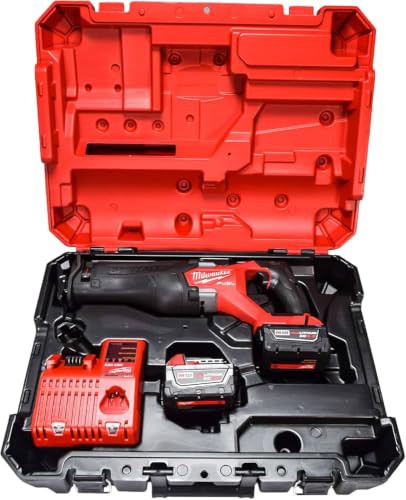
Milwaukee 2821-22 Battery Reciprocating Saw
What We Like
- QUIK-LOK blade clamp allows fast, easy blade changes
- Built-in LED light illuminates the cutting surface
- REDLINK intelligence provides overload protection
Trade-offs
- At 6.8 lb, it's heavier than compact models like the 2.7 lb Makita XRJ01Z
- 22-inch length can be cumbersome in tight spaces
The 18-volt brushless motor and REDLINK intelligence deliver the sustained power and communication between tool and battery that contractors need for demanding demolition. This is the saw for tearing out walls or cutting through nails where stalling out isn’t an option. Its metal-reinforced battery connection and wear-resistant blade clamp are built for the jobsite, so it handles the abuse that comes with being a daily driver. It balances capability and the proven reliability that makes it a first choice for serious users.
You pay for that capability with some bulk. At 6.8 pounds and over a foot and a half long, it demands two hands and more arm strength than a one-handed model. For lighter trim work or overhead cuts, a compact saw like the Ryobi One+ HP is far more maneuverable. But when the task is straight demolition, this Milwaukee’s combination of power, smart electronics, and rugged construction simply gets more work done between charges.
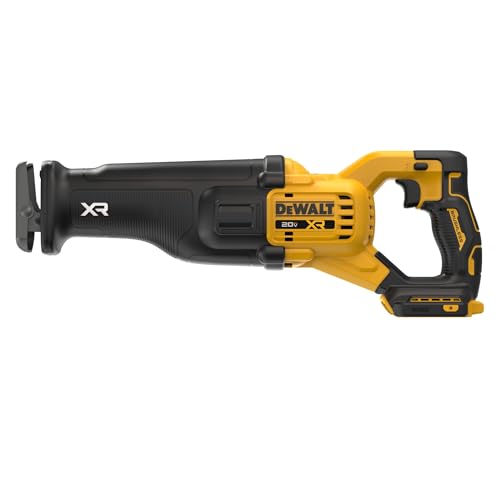
DeWalt 20V Max XR Reciprocating Saw
What We Like
- Fast cutting speed with long stroke
- Keyless blade clamp for quick changes
- Counterbalance mechanism reduces vibration
- Onboard LED illuminates the work area
Trade-offs
- Tool only: battery and charger sold separately
- At 4.5 lb, it's heavier than compact one-handed models
- Less powerful than the 60V Flexvolt platform
DeWalt’s 20V Max XR reciprocating saw is their fastest cordless model in that lineup, which helps users work quickly with its 1-1/8 inch stroke. It can deliver up to 102 cuts per charge under ideal conditions, aiming to maximize efficiency on tough jobs. A brushless motor provides power for heavy-duty demands, while a counterbalance mechanism is designed to limit vibration during longer sessions.
The tool is designed for ease of use, featuring a keyless lever-action blade clamp for quick changes. A variable speed trigger offers a maximum of 3,000 strokes per minute for control, and a pivoting shoe allows for several points of contact with the material. An onboard LED helps brighten work areas, and the tool is ready for a TOOL CONNECT chip system to simplify asset management, though the chip is sold separately.
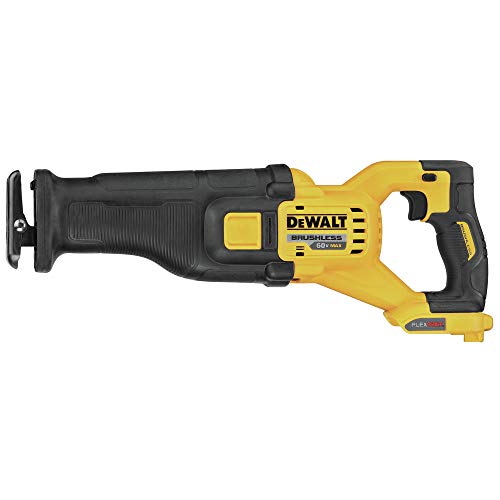
DeWalt Flexvolt 60V Reciprocating Saw
What We Like
- Provides corded-like power without a cord
- Variable-speed trigger for instant control
- Pivoting shoe for leverage in tight spots
- LED light illuminates dark workspaces
Trade-offs
- Tool only: requires separate battery and charger purchase
- Weighs 7.4 lb, which is heavy for overhead work
- Larger footprint than compact one-handed models
DeWalt’s 60V Max battery system gives this cordless reciprocating saw the power of a corded tool, so you can cut dense materials without being tethered to an outlet. Research describes it as a dependable workhorse that has proven itself since its launch. It offers up to 19% more power than the previous DCS388 model, providing solid cutting performance for demanding applications.
The trade-off for that power is bulk. At 7.4 pounds, it’s heavier than many other saws, such as the 3.8-pound Ryobi One+ HP, and its length of over 19 inches makes it less nimble in tight spots. This tool is sold without a battery or charger, which requires a separate purchase. For users who prioritize cordless cutting power, DeWalt is recognized as a top-of-the-line manufacturer.
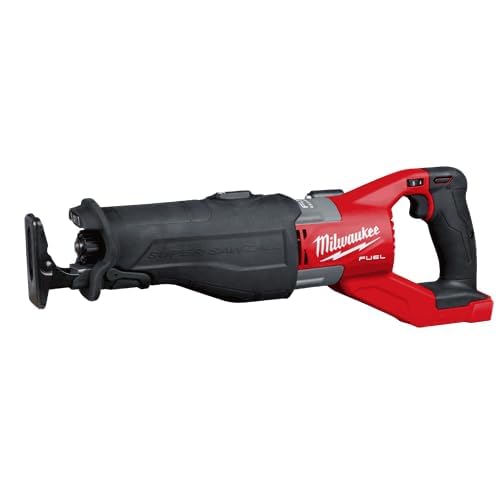
Milwaukee M18 Fuel Super Sawzall
What We Like
- Brushless motor delivers corded-like power.
- Long stroke length removes more material per cut.
- Variable speed trigger and 5-speed dial for control.
- Integrated rafter hook and LED light for convenience.
Trade-offs
- Bare tool: requires separate M18 battery and charger purchase.
- At 8.8 lb, it's heavy for overhead or one-handed work.
- Its size and power are overkill for light trim or plumbing.
A 1-1/4-inch stroke length moves a lot of material fast, making it a beast for tearing out walls, cutting thick pipe, or pruning large limbs. The brushless motor and intelligence system are built to handle the heat and strain of all-day demolition without bogging down. This is the saw you grab when the job is big, dirty, and demands relentless power. It suits contractors and serious DIYers who need to plow through tough materials without a cord holding them back.
This bare tool weighs 8.8 pounds without a battery, so it demands two hands and some muscle, especially on vertical cuts. That heft is the trade-off for a brushless motor built to provide the power of a 15-amp corded reciprocating saw. For comparison, the Makita 18V LXT One-Handed Saw weighs just a pound, highlighting the difference between raw power and compact maneuverability.
Ryobi One+ HP Compact Reciprocating Saw

What We Like
- Compact one-handed design for tight spaces
- Lightweight 3.8-pound construction reduces fatigue
- Brushless motor provides 3,000 SPM for efficient cutting
- Tool-free blade change system for quick swaps
Trade-offs
- Tool-only listing requires separate battery and charger purchase
- Cutting speed lags behind pricier, full-power models
A 1-inch stroke length and 3.8-pound frame make this saw a natural choice for anyone working in cramped quarters or overhead. The brushless motor spins at 3,000 strokes per minute, giving it enough muscle to chew through stacked lumber and metal bolts without bogging down. It’s a prime pick for renovators and DIYers who need a capable cordless saw that won’t wear out their arm in tight spots.
This compact design does come at a cost in raw cutting speed. While it completes the job, it won’t race through material as fast as a full-size sawzall like the Milwaukee M18 Fuel. That makes it a specialist. For demolition in open spaces where maximum power is key, you’ll want a larger tool. But for the specific niche of confined cutting, this Ryobi delivers reliable performance without the bulk.
Black+Decker 20V Max Brushless Saw Kit

What We Like
- Brushless motor for increased power
- Long runtime of 33 cuts per charge
- Tool-free blade changes for convenience
- Built-in LED light for dark spaces
Trade-offs
- Shorter 1-inch stroke length limits cut speed
Up to 33 cuts on a single charge means you can tackle a full afternoon of pruning or a small demolition project without constantly swapping batteries. This Black+Decker kit delivers the core benefits of a brushless motor, more power and better efficiency, in a package that’s straightforward and comfortable to use. The variable speed trigger and dual settings give you control for different materials, while the soft-grip handle reduces fatigue. It’s a solid fit for the DIYer who needs reliable cordless cutting power without the complexity or investment of a pro-grade system.
A one-inch stroke length provides controlled cuts through wood, pipes, and steel, but this tool won’t match the speed of saws with longer strokes on thick lumber. Its dimensions of 15.5 inches long and 7.5 inches tall are greater than some one-handed models like the Ryobi, which could affect maneuverability in confined spaces. Built with a metal gearcase and including three blades, it arrives prepared for a variety of DIY tasks.
Product photos
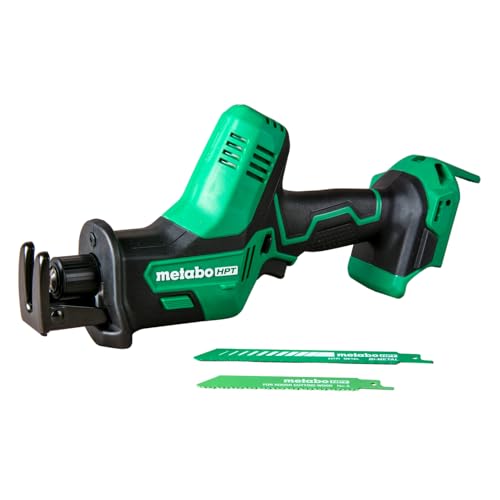
Metabo HPT 18V One-Handed Reciprocating Saw
What We Like
- Exceptionally light at 2.9 pounds for minimal fatigue
- Best-in-class 3,200 SPM speed for fast cutting
- Tool-less blade and shoe changes for quick adjustments
Trade-offs
- Compact size may limit leverage for heavy demolition
- One-handed design trades raw power for maneuverability
Weighing just 2.9 pounds, this saw is built for overhead work and tight spaces where a full-size saw would be a burden. Its 3,200-stroke-per-minute speed and variable trigger give you control for precise cuts in wood, while the ability to use jigsaw blades adds surprising versatility. This is the tool for professionals who need a lightweight companion for plumbing, electrical, or HVAC jobs all day without arm strain. The lifetime warranty on the tool body shows Metabo HPT’s confidence in its Japanese engineering.
At just 2.9 pounds, this is one of the lightest cordless reciprocating saws available, so it’s easy to manage overhead or in tight spaces without tiring your arm. The compact 13.8-inch length further improves maneuverability compared to larger two-handed models. Expert testing noted its vibration control was among the best available, matching the performance of a top-scoring model.
Product photos
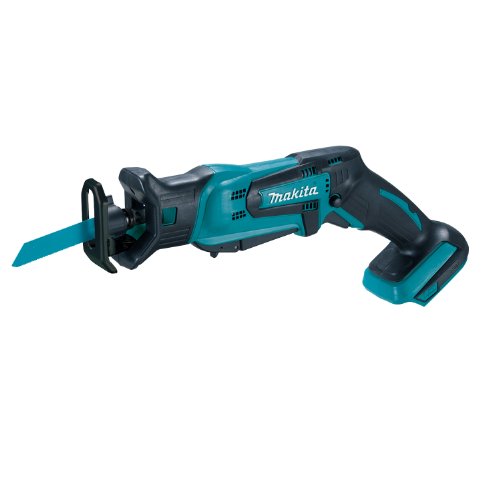
Makita 18V LXT Compact Reciprocating Saw
What We Like
- Compact design for work in tight spaces
- Variable speed up to 3,000 strokes per minute
- Dual-position on/off switch for versatile handling
- Tool-less blade change for quick swaps
Trade-offs
- Tool only: battery and charger sold separately
- Shorter 1/2-inch stroke length than full-size models
- Competes with lighter one-handed saws like the Ryobi HP
The Makita XRJ01Z measures 15-5/8 inches long, letting it reach into confined spaces where larger saws cannot go. At 3.9 pounds with a battery, this light weight reduces fatigue during overhead work or in tight spots like finished walls. A variable speed trigger and dual-position switch provide control for both pistol-grip and paddle-style operation.
This saw has a 1/2-inch stroke length. That means it cuts efficiently but may not remove material as fast as a model with a longer stroke, such as the Milwaukee M18 Fuel Super Sawzall. Its compact design and light weight are suited for controlled cutting in close quarters rather than heavy demolition.
Product photos
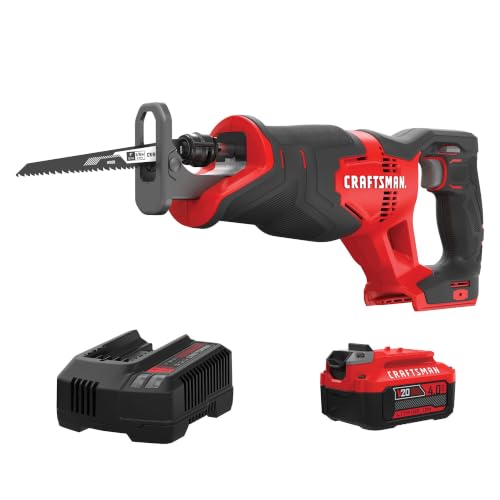
Craftsman V20 Reciprocating Saw Kit
What We Like
- Tool-free blade release for quick swaps
- Compact 14.5-inch length fits in tight spaces
- Variable speed trigger for precise control
- Comes with battery and charger included
Trade-offs
- At 7.1 lb, it's heavier than the 3.8 lb Ryobi One+ HP
- Shorter 1-inch stroke may limit cutting speed in thick materials
The kit includes a battery and charger, so you can start cutting right away. A 14.5-inch compact size helps it fit into tight spaces, and the contoured handle aids grip during demolition. Its motor provides up to 3,000 RPM for common cutting tasks.
The complete kit weighs 7.1 pounds, which adds mass for overhead work. Its 1-inch stroke length moves the blade for speed, but a longer stroke on other models can clear material faster in dense cuts. Compared to the 7.4-pound DeWalt Flexvolt 60V model, this Craftsman kit offers a different balance of included components and weight.
Product photos
Makita 18V LXT One-Handed Saw

What We Like
- Extremely light at just one pound.
- Low-vibration design for reduced fatigue.
- One-handed grip for precise control in tight spots.
- Brushless motor for efficient power delivery.
Trade-offs
- Tool only: requires separate Makita 18V LXT battery and charger.
- 7/8-inch stroke length is shorter than full-size models.
- Compact size limits leverage for heavy demolition.
At one pound, the Makita 18V LXT One-Handed Saw is significantly lighter than most cordless reciprocating saws, which can weigh over six pounds. This low weight, combined with a one-handed grip positioned to transmit force to the workpiece, makes it suitable for use in tight spaces where a larger tool would be cumbersome. The design also reduces vibration by up to 40%, which can help limit hand fatigue during extended use. Its compact size of 14.4 inches long allows it to fit into tool bags or confined work areas more easily than bulkier models.
Its compact form does limit raw cutting aggression. With a 7/8-inch stroke, it won’t devour material as quickly as a full-size Sawzall like the Milwaukee 2821-22. This design prioritizes precision over demolition. For builders already invested in the Makita 18V LXT platform, this tool fills a specific niche perfectly. If your primary need is tearing out walls or cutting large branches, you’ll want a saw with a longer stroke and more mass behind it.
Product photos
How We Evaluated Battery Reciprocating Saws
Our evaluation is based on a thorough review of manufacturer specifications, expert round-up articles, and consistent patterns in professional and DIY user feedback. We prioritized criteria that impact real-world use: cutting power, influenced by stroke length and motor design; weight and ergonomics, which affect control and fatigue; and convenience features like blade-change systems and LED lights.
For a deeper dive into top-performing models across the board, see our research on the best cordless recip saws. The key limitation of a research-led approach is we cannot measure hands-on factors like balance or long-term durability, so we emphasize reported owner experiences where available.
What To Look For In Battery Reciprocating Saws
Your ideal cordless recip saw depends on the balance of power, weight, and control you need for your typical tasks.
Look for a brushless motor for efficient power, a stroke length of at least 1 inch for speed, and a tool-free blade clamp. A weight under 5 pounds is a significant advantage for overhead work, while a variable-speed trigger provides control for different materials.
Power And Stroke Length
Cutting power is determined by the motor and the stroke length, which is the distance the blade travels back and forth. A longer stroke, like the 1-1/4 inches on some pro models, removes more material per pass for faster demolition. Higher-voltage platforms, like 60V systems, deliver corded-like power for the toughest jobs, but often add significant weight and cost. For a comprehensive look at models known for sheer power, our best reciprocating saws guide is a helpful resource.
Weight And Ergonomics
A saw’s weight directly impacts fatigue and control, especially during overhead cuts or all-day use. Full-size demolition saws can weigh over 8 pounds with a battery, while compact one-handed models are often under 4 pounds. Ergonomics also include grip design and vibration control; some models feature counterbalance mechanisms to reduce user fatigue. If low weight is your primary goal, exploring other battery-powered saws designed for portability is a smart move.
Features For Convenience
Key features enhance usability and speed on the job. A tool-free blade clamp, preferably with a lever release on the housing, is now a standard expectation for quick swaps. An adjustable shoe lets you extend blade life by exposing fresh teeth. An onboard LED light is invaluable for illuminating dark workspaces inside walls or under sinks. Understanding these features helps you get the most from your tool, much like learning proper reciprocating saw techniques.
- Check if the blade clamp is truly tool-free and easy to operate with one hand.
- Ensure the shoe is adjustable without needing a hex key.
- Look for a variable-speed trigger for starting cuts slowly and controlling speed in different materials.
- Verify the battery platform compatibility if you’re already invested in a brand.
The most important factor is matching the saw’s power and size to your most common task, don’t buy a demolition beast for light plumbing work.
Battery Reciprocating Saws Compared
The following table compares the key specifications and features of our ten picks at a glance.
| Product | Weight | Stroke Length | Max Speed |
|---|---|---|---|
| Milwaukee 2821-22 Battery Reciprocating Saw | 6.8 pounds | N/A | N/A |
| DeWalt 20V Max XR Reciprocating Saw | 4.5 pounds | 1-1/8 inches | 3,000 SPM |
| DeWalt Flexvolt 60V Reciprocating Saw | 7.4 pounds | 1-1/8 inch | 3000 spm |
| Milwaukee M18 Fuel Super Sawzall | 8.8 pounds | 1-1/4 inches | N/A |
| Ryobi One+ HP Compact Reciprocating Saw | 3.8 pounds | N/A | 3,000 SPM |
| Black+Decker 20V Max Brushless Saw Kit | N/A | 1 in. | N/A |
| Metabo HPT 18V One-Handed Reciprocating Saw | 2.9 pounds | N/A | 3,200 strokes per minute |
| Makita 18V LXT Compact Reciprocating Saw | 3.9 pounds | 1/2 inch | 3,000 SPM |
| Craftsman V20 Reciprocating Saw Kit | 7.1 pounds | 1 inch | 3,000 RPM |
| Makita 18V LXT One-Handed Saw | 1.0 pounds | 7/8 inch | 3,100 strokes per minute |
Frequently Asked Questions
Who makes the best battery-powered reciprocating saw?
Major power tool brands like Milwaukee, DeWalt, Makita, and Metabo HPT all produce highly-rated models. The “best” depends entirely on your needs: Milwaukee is renowned for its durable, full-power Sawzalls, DeWalt offers high-voltage Flexvolt options, and brands like Metabo HPT excel in lightweight, professional-grade designs. It’s less about a single best brand and more about which model best fits your specific job requirements and preferred battery ecosystem.
What is the best rated reciprocating saw?
Among the highly-rated options, the Milwaukee 2821-22 stands out for its combination of reliable power, innovative QUIK-LOK blade clamp, and durable feature set. This makes it a top choice for contractors and serious DIYers. However, ratings often reflect different use cases; a compact saw like the Ryobi One+ HP or Makita 18V LXT may be the top-rated tool for users who prioritize lightweight maneuverability in tight spaces over raw demolition power.
What kind of reciprocating saw is the best?
The best kind of reciprocating saw for you depends on your primary tasks. For heavy demolition like tearing out walls or cutting thick lumber, a full-size, high-voltage brushless saw with a long stroke is best. For renovation work in tight spaces, plumbing, or overhead cuts, a compact, one-handed saw under 4 pounds is ideal. For general DIY and homeowner tasks, a mid-range brushless model offers a great balance of capability and value.
Are cordless reciprocating saws as good as corded?
Modern high-end cordless reciprocating saws, particularly those using 60V or advanced 18V brushless platforms, deliver power that rivals many corded models for the vast majority of professional and DIY tasks. The primary advantage is complete portability and the elimination of extension cords. The trade-off is that continuous, all-day heavy use will require battery swaps or a collection of batteries, whereas a corded tool provides unlimited runtime.
What should I look for in a cordless reciprocating saw?
Focus on four key aspects: power (stroke length and voltage), weight, blade-change mechanism, and control features. A longer stroke (over 1 inch) and brushless motor provide faster, more efficient cutting. Weight under 5 pounds greatly reduces fatigue. A tool-free blade clamp with a lever is essential for productivity. Finally, a variable-speed trigger gives you precision for starting cuts and working with different materials like metal or PVC.
The Bottom Line
The Milwaukee 2821-22 Battery Reciprocating Saw is the best overall pick, a reliable and powerful full-size saw ideal for contractors and dedicated DIYers tackling heavy demolition who value fast blade changes and overload protection. For budget-conscious buyers needing a complete kit, the Craftsman V20 offers solid value, while those requiring maximum power for the toughest jobs should consider the DeWalt Flexvolt 60V Reciprocating Saw.
Before you choose, honestly assess whether your most frequent jobs demand brute force in open spaces or nimble control in tight quarters, this single decision will guide you to the right saw.
