
10 Best Corded Belt Sanders in 2026
This post contains affiliate links. As an Amazon Associate, we earn from qualifying purchases.
For woodworkers and serious DIYers, the best corded belt sander is the Makita 9404 4×24, thanks to its powerful motor and excellent flush sanding design. Our other picks include the variable-speed Metabo HPT SB8V2 for top control and the benchtop WEN 6502T for stationary workshop work.
Corded belt sanders deliver consistent power for leveling floors, fitting cabinets, or shaping wood, making them indispensable for renovation and woodworking. We researched specifications, expert testing, and owner feedback to identify the top ten performers, providing clear advice on which model fits your specific project needs.
Top 10 Corded Belt Sanders in the Market
Certain content that appears on this site comes from Amazon. This content is provided "as is" and is subject to change or removal at any time.
The Best Corded Belt Sanders, Reviewed
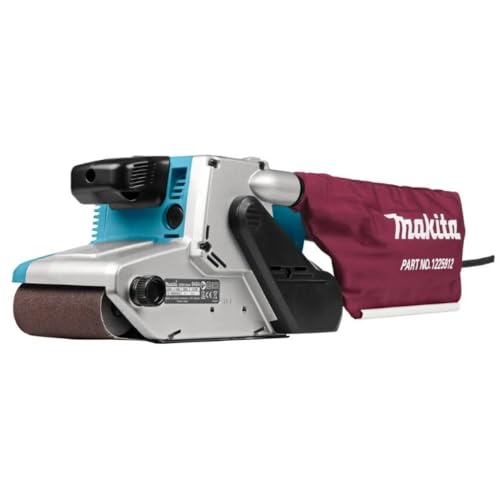
Makita 9404 4×24 Belt Sander
What We Like
- Powerful 8.8 AMP motor for fast material removal
- Auto-tracking belt requires no manual adjustment
- Flush sanding design for edges and corners
- Long power cord enhances maneuverability
Trade-offs
- At 10.3 lb, it's heavier than some 3×21 models
- 4-inch width may be less efficient for very large surfaces
- Corded operation limits mobility away from outlets
An 8.8 AMP motor gives this sander the guts to remove material nearly as quickly as larger models, but a 10.3-pound weight keeps it manageable during long sessions. The auto-tracking system saves you from constantly fiddling with the belt, and the design lets you sand flush against walls. That combination of power, control, and thoughtful features makes it a standout choice for woodworkers who need a reliable, do-it-all sander for shop and jobsite use.
For a portable belt sander, the Makita 9404 removes material nearly as quickly as larger models like the Makita 9903, according to research, giving it strong performance in a compact form. Its 4×24 inch belt is smaller than a benchtop unit’s but allows the tool to sand flush to a wall with its nose and side. The design trades a wide work surface for full maneuverability around projects.
Metabo HPT SB8V2 Belt Sander

What We Like
- Powerful 9 amp motor for tough jobs
- Variable speed dial for improved control
- Clear front cover for better visibility
Trade-offs
- At 9.5 lb, it's heavier than the 6 lb Craftsman CMEW213
- Smaller 3×21 belt vs. a 4×24 model like the Makita 9404
A 9.0 amp motor provides forcible power for tough sanding jobs. That strength is paired with a variable speed dial at the base of the handle, allowing you to adjust for different applications and improve manageability. The flush surface design and clear front cover improve visibility when sanding up against a surface, enabling work right up to edges.
This power and versatility come with some heft. At 9.5 pounds, it’s noticeably heavier than some compact 3×21 models, which can lead to fatigue during extended overhead or vertical sanding sessions. While its left-side dust bag improves corner access, the system is less comprehensive than a shop vacuum hookup. If your primary need is rapid stock removal on large, flat surfaces, a larger-belt sander like the Makita 9404 will cover more ground per pass. Still, the Metabo HPT SB8V2 strikes a compelling balance of aggression and precision in a handheld format.
Makita 9903 3×21 Belt Sander

What We Like
- Variable speed dial for different applications
- Auto-tracking belt requires no manual adjustment
- Flush sanding design with nose and side
- Front grip for comfortable operation
Trade-offs
- A 3-inch belt is narrower than 4-inch models like the Makita 9404
- At 9.5 pounds, it's heavier than the 6.6-pound Craftsman CMEW213
- Requires a power outlet, unlike cordless tools
At only 85dB, this sander lets you work for hours without the ear-ringing fatigue common with louder models. That’s a huge benefit in a home workshop where noise travels. The 8.8-amp motor and variable speed control from 690 to 1,440 feet per minute give you the power to strip material aggressively or the finesse for finish work. Its design allows you to sand right into corners and flush against walls, making it a versatile choice for detailed renovations and furniture building where control and a quieter operation are priorities.
A slightly narrower 3-inch belt is part of the package for this quieter, controlled performance. You’ll cover less surface area per pass compared to a 4-inch sander like the Makita 9404, so large, flat projects like refinishing a tabletop will take a bit more time. However, research indicates its material removal rate is surprisingly close to larger models. The lighter weight reported by owners also helps maintain precision over long sessions, prioritizing manageable power and user comfort over brute, wide-area force.
WEN 6502T Benchtop Belt Sander

What We Like
- Two-in-one benchtop belt and disc sander
- Cast iron base minimizes heavy vibrations
- Belt tilts fully for sanding edges and contours
- Simple belt changes with tension release lever
Trade-offs
- Benchtop design lacks portability for on-site work
- Larger 22-inch footprint requires dedicated workshop space
A 4-by-36 inch belt paired with a 6-inch disc gives you two dedicated sanding stations in one, making it a fixture for detailed shaping, sharpening, and finishing in a permanent shop setup. The sturdy cast iron base is the key here, soaking up vibration so your workpiece stays steady for precise results. This is the right choice for a woodworker or metalworker who needs a reliable, always-ready sander bolted to the bench, not hauled to a job site.
The trade-off is you lose all portability. For sanding cabinet faces or floorboards, you’d need a handheld model like the Makita 9404. Where the WEN 6502T excels is as a stationary hub for smaller, controlled work. The belt tilts to 90 degrees, which is perfect for sanding square edges on a jig or tool handle, and the separate disc is ideal for flattening end grain. It’s a dedicated space-taker that pays its rent by being ready to go the moment you are.
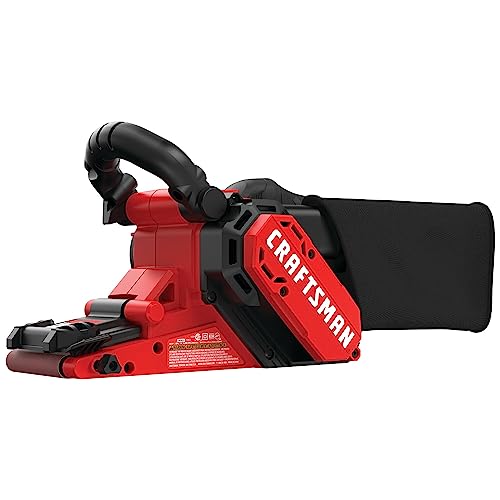
Craftsman CMEW213 Belt Sander
What We Like
- Tool-free belt changes for quick swaps
- Angled belt design sands closer to edges
- Three-position over-molded handle improves grip
- Lightweight build reduces user fatigue
Trade-offs
- Single belt speed limits control for delicate tasks
- Standard 3×21 belt size, not a wide 4-inch model
At 6.6 pounds and with a 7-amp motor, this Craftsman is a lightweight workhorse built for the occasional user who needs reliable material removal without the heft or cost of a pro model. The tool-free belt release and angled front end mean you spend less time fumbling and more time sanding close to corners. It’s the logical choice for the DIYer tackling a deck refinish or a furniture flip a few times a year, where a pricier sander would sit idle most of the time.
With a maximum belt speed of 800 feet per minute, the Craftsman CMEW213 is built for fast material removal on occasional projects. Its tool-free belt release allows for quick changes, and the angled belt design helps sand closer to adjoining surfaces. Research suggests this model offers significant value for users who only need a sander a few times a year, avoiding the cost of a high-end unit.
WEN HB424V Combination Belt Sander

What We Like
- Lock-on switch for continuous use without finger fatigue
- Converts from handheld to benchtop sander with included clamps
- Quick-release lever simplifies belt changes and grit swaps
- Variable-speed motor handles delicate to aggressive material removal
Trade-offs
- Only includes 80-grit belts, requiring purchase of other grits for finishing work
- Dust collection relies on a bag, not a direct shop-vacuum hookup
The 10-amp variable-speed motor gives you the control to go from a gentle touch on veneer to hogging off material on a rough tabletop. That, combined with its ability to lock onto a workbench, makes this a uniquely flexible sander. It’s a solid pick for the workshop-focused woodworker who needs one tool to handle both detailed handheld tasks and the repetitive stock removal of a stationary machine.
This dual-purpose design does add some bulk. While the exact weight isn’t specified, a motor this size means it’s a handful for extended overhead sanding compared to a dedicated handheld like the lighter Makita 9903. You’re getting a benchtop sander that can go portable, not a featherweight finisher. For a garage shop where space is tight and you want to avoid buying two separate tools, the WEN HB424V covers a lot of ground.
Product photos
DeWalt 4×36 Belt and Disc Sander

What We Like
- Two-in-one belt and disc sander design
- Powerful 7.0 AMP motor for demanding tasks
- Independent, adjustable tables for stability
Trade-offs
- Benchtop design requires a dedicated workspace
- No variable speed control for the belt
- Larger footprint than handheld belt sanders
The combination of a 4×36 inch belt and an 8-inch disc in one tool means you can handle everything from aggressive shaping to fine finishing without switching machines. Separate, adjustable die-cast aluminum tables provide the rigid, precise support needed for accurate bevels and consistent edges. This sander suits the meticulous woodworker or metal fabricator who values a stable, dedicated station for repeatable results. Its 7.0 AMP motor delivers consistent power, but the design prioritizes control over portability.
The DeWalt DXBD4801 combines a 4-inch belt and an 8-inch disc sander into one benchtop unit, providing a stable and versatile sanding station. Unlike handheld models like the Makita 9404 belt sander, this tool is designed to be anchored, trading portability for a solid platform. Its two-in-one design means you can handle both rapid material removal and detailed finish work without switching tools.
Product photos
SKIL 7510-01 Belt Sander

What We Like
- Pressure control warns against excessive force
- Lightweight design at just 5.5 pounds
- Auto-track system for consistent belt alignment
- Flush edge sanding for maximum capacity
Trade-offs
- Shorter 18-inch belt reduces work surface per pass.
- Fixed speed limits adjustment for different materials.
The pressure control technology is the standout feature, actively warning you when you’re pushing too hard. That feedback loop is invaluable for preventing gouges and achieving a consistent finish, especially on softer woods. Paired with a light 5.5-pound frame, this sander suits anyone who values control and finesse over raw aggression, making it a smart pick for detailed work and finish sanding where preserving surface integrity is key.
You trade some muscle and belt length for that finesse, however. Its 6-amp motor and 18-inch belt mean it won’t remove material as quickly as a workhorse like the Makita 9903. Think of it as a precision instrument rather than a bulk stock remover. It excels at the final stages of a project or on smaller surfaces, but for rapidly leveling a large tabletop, you’ll want a sander with more power and a longer platen.
Product photos
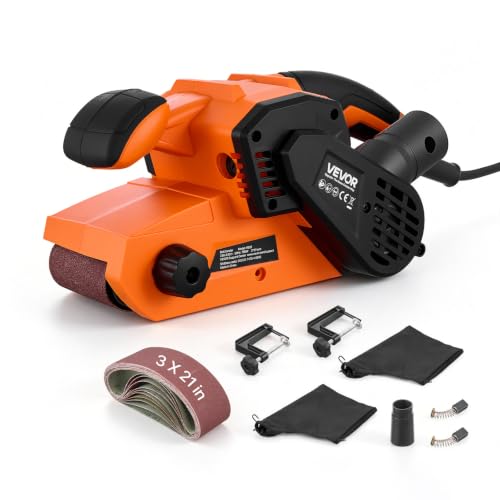
VEVOR 3×21 Belt Sander
What We Like
- Includes a comprehensive 10-piece assortment of sanding belts
- Converts between handheld and benchtop use with included clamps
- Six-speed control allows for detailed and aggressive sanding
- Offers both dust bags and a vacuum port for debris control
Trade-offs
- The 3-inch belt width is narrower than 4-inch models for large surface work.
A 7-amp motor paired with a full suite of accessories makes this sander a ready-to-work package right out of the box. It’s the complete kit that gets you started, covering everything from coarse stock removal with the 40-grit belts to final smoothing with the 180-grit, all while offering the flexibility of handheld or stationary operation. This setup is ideal for the DIYer or small shop that wants to tackle a variety of projects without an immediate need for additional purchases. You get a tool that can handle a door refinishing job one minute and be clamped down for precision work on a small workpiece the next.
You get that versatility with a bit of heft and a standard belt width. At 8.8 pounds, it demands more forearm stamina during extended handheld sessions compared to lighter-duty options. For sanding vast surfaces like tabletops, the 3-inch belt will require more passes than the wider 4-inch belt on a tool like the Makita 9404. However, for the woodworker who values a single, multifaceted tool and appreciates having every necessary accessory from the start, the VEVOR delivers notable value and immediate capability.
Product photos
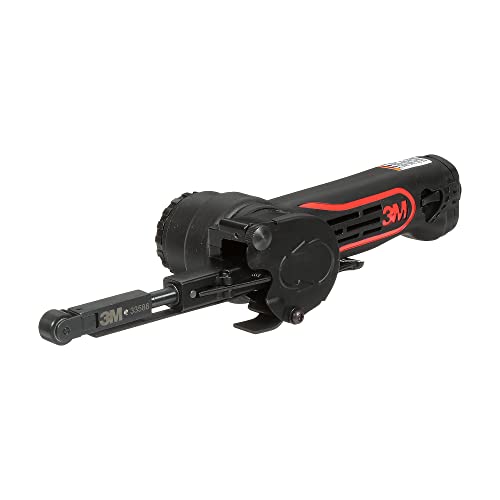
3M 33575 File Belt Sander
What We Like
- Extremely lightweight at just 2.0 pounds
- Rotatable housing for tight spaces
- Compatible with specialized abrasive belts
Trade-offs
- Industrial-only designation excludes home DIYers
Weighing only two pounds, this file belt sander is built for the precision and endurance needed in a body shop. Its lightweight design and rotatable housing let you maneuver into tight door jambs and wheel wells without fatigue, while the 495W motor provides focused power for spot weld removal and contour sanding. Engineered for the automotive technician or dedicated restorer, this specialist tool blends and finishes metal all day long. Compatibility with 3M’s Cubitron II and Scotch-Brite belts makes it part of a professional finishing system, not a general-purpose tool.
That specialization comes with clear trade-offs. The industrial-only label is a firm boundary, marking it as a tool for professional use rather than garage DIY projects. For its intended automotive work, however, the design is ruthlessly efficient. It excels at the detailed, often awkward work of collision repair where a heavier, bulkier sander would be a constant hindrance.
Product photos
How We Evaluated Corded Belt Sanders
Our research process focused on manufacturer specifications for power, belt size, and weight, combined with analysis of expert round-ups and patterns in owner feedback for real-world reliability. We prioritized criteria like motor power for material removal, belt size and platen design for access to edges, ease of belt changes, and the tool’s overall weight and ergonomics.
Our goal was to distinguish the nuances between a powerful general-purpose sander, a lightweight option for overhead work, and a stable benchtop model. Since this is a research-based evaluation, we cannot comment on long-term durability from personal testing, but we highlight features and trade-offs supported by consistent feedback from experienced users.
Readers looking for a broader view of the category should check our comprehensive belt sander guide.
What To Look For In Corded Belt Sanders
Power, access, and control are the main factors separating a frustrating sander from a workshop hero. Choose based on whether your work happens on-site or at a bench, and how much precision you need.
For handheld work, look for an 8-9 amp motor and a good dust collection port. For a shop fixture, prioritize a solid cast iron base and adjustable tables. Consider if you need variable speed for finish work.
Motor Power and Belt Size
Motor amperage, typically between 7 and 9 amps, dictates how aggressively a sander can remove material. A wider belt, like a 4×24-inch, covers more surface area per pass for efficient work on large panels. Conversely, a standard 3×21-inch belt is perfectly capable for most tasks and fits flush-sanding platens well. For heavy-duty shaping or metalwork, the higher amperage and wider belt of models like the Makita 9404 are significant advantages. The best corded sanders often feature this combination.
Design for Access and Control
A sander’s platen, or bottom plate, should allow you to get close to vertical surfaces. Look for a flush front edge or side for sanding right up to corners. Ergonomics matter greatly; a tool with a well-placed auxiliary handle and a trigger lock reduces fatigue during extended use. Weight is a double-edged sword: heavier sanders (9-10 lbs) often provide better stability and less bounce, while lighter models (around 6 lbs) are easier to maneuver overhead or on vertical surfaces. Many handheld belt sanders excel in these ergonomic details.
Fixed vs. Benchtop Use
Your primary use case is the ultimate decider. A dedicated benchtop sander, like the WEN 6502T, offers unmatched stability for precise bevels and repeated stock preparation, but sacrifices all portability. Handheld models offer the flexibility to bring the tool to the workpiece, essential for on-site fitting and scribing. Some hybrid models can be clamped to a bench, offering a compromise. Understanding the core differences between belt and orbital sanders is also key; a belt sander is for aggressive removal, not fine finishing.
- Check if the dust port accepts a standard shop vacuum hose for cleaner air and better visibility.
- Ensure the belt-tracking adjustment is easy to access and operates smoothly to prevent belt wander.
- Look for a tool-free belt change system if you frequently swap grits during a project.
- For stationary use, verify the base is heavy enough to resist tipping or vibration.
- Consider if variable speed is necessary for your materials, like when working with plastics or for final passes.
Choose a handheld sander for site work and a benchtop model for a dedicated shop station.
Corded Belt Sanders Compared
The following table compares key specifications across our picks to help you quickly identify which features align with your needs.
| Product | Motor | Belt Size | Weight |
|---|---|---|---|
| Makita 9404 4×24 Belt Sander | 8.8 AMP | 4" x 24" | 10.3 lb |
| Metabo HPT SB8V2 Belt Sander | 9.0 Amp | 3 x 21 Inch | 9.5 Pounds |
| Makita 9903 3×21 Belt Sander | 8.8 AMP | 3" x 21" | 9.5 pounds |
| WEN 6502T Benchtop Belt Sander | 4.3 Amp | 4 x 36 in. | N/A |
| Craftsman CMEW213 Belt Sander | 7 Amp | 3-in. x 21-in. | 6.6 Pounds |
| WEN HB424V Combination Belt Sander | 10-amp variable-speed | 4-by-24-inch | N/A |
| DeWalt 4×36 Belt and Disc Sander | 7.0 AMP | 4" x 36" | N/A |
| SKIL 7510-01 Belt Sander | 6.0 Amp | 3"x18" | 5.5 pounds |
| VEVOR 3×21 Belt Sander | 7 Amp | 3" x 21" | 8.8 pounds |
| 3M 33575 File Belt Sander | N/A | 457 mm (18 in) | 2.0 pounds |
Frequently Asked Questions
What is the best corded belt sander?
The best overall corded belt sander for most woodworkers is the Makita 9404. Its 8.8 amp motor provides strong performance for material removal, and its flush-sanding design makes it highly versatile for edges and corners. For those prioritizing control for detailed finish work, the Metabo HPT SB8V2 with its variable speed dial is an excellent alternative.
Who makes the best belt sander belts?
Sanding belts are consumables, and quality varies by manufacturer. While many sander brands include a starter belt, for consistent performance and longevity, specialized abrasive manufacturers like 3M, Norton, and Klingspor produce highly regarded belts. Their products often feature superior bonding and a wider range of grits and materials for wood, metal, or paint.
Which belt sander is the best?
“Best” depends entirely on the job. The Makita 9404 is our best overall for its blend of power and versatility. For controlled, finish-oriented sanding, the SKIL 7510-01 with its pressure control feature helps prevent gouging. For automotive metal finishing in tight spaces, the specialized 3M 33575 is the professional choice.
What is the best corded sander?
A corded belt sander excels at rapid material removal on flat surfaces and edges. For finer finish work, a random orbital sander is typically a better choice. Our guide focuses specifically on corded belt sanders, which offer sustained power for demanding tasks that drain batteries quickly.
Can a belt sander be used on metal?
Yes, a belt sander can be used on metal, but you must use the appropriate abrasive belt designed for metalwork, such as aluminum oxide or ceramic belts. A variable-speed model is highly beneficial, allowing you to slow the belt to prevent burning the material. Benchtop models like the DeWalt 4×36 are particularly stable for precise metal shaping.
The Bottom Line
For woodworkers and serious DIYers tackling a mix of stock removal and flush sanding, the Makita 9404 4×24 Belt Sander is the best overall corded belt sander. It stands out thanks to its powerful motor and thoughtful design for edges. If your budget is tight or your projects are occasional, the Craftsman CMEW213 offers capable performance and tool-free belt changes.
For those who work exclusively at a bench, the WEN 6502T provides a stable, dual-function sanding station. Ultimately, choosing between a portable handheld and a stationary benchtop model is the most important decision, as it dictates how and where you can work effectively. You can explore alternative power sources in our review of battery-powered belt sanders.
